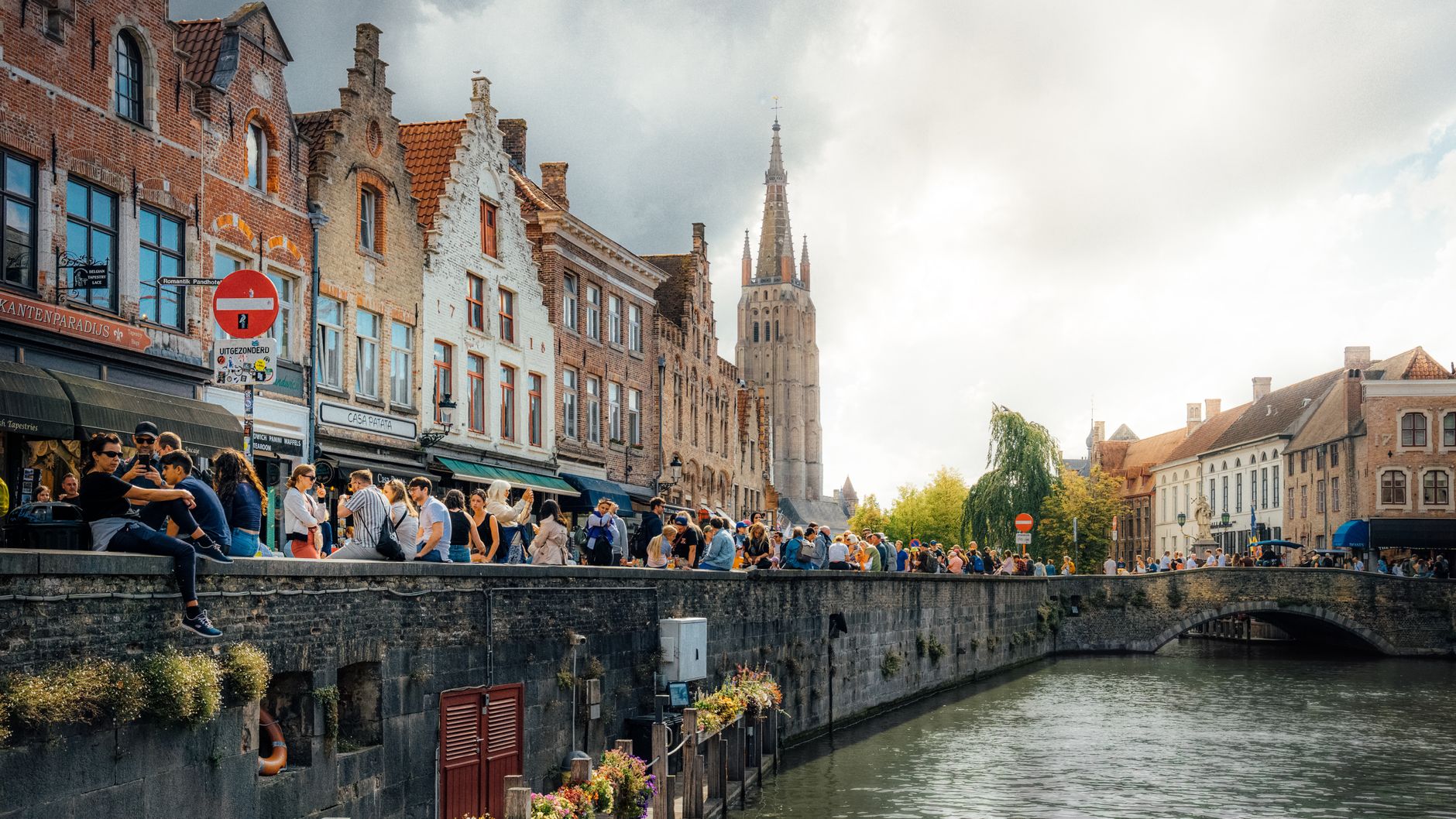
Museum Sint-Janshospitaal on Mariastraat is a hospital ward with the beds taken out. The brick vaulting runs the length of it, the windows are tall and pointed, and the room is long enough that anyone at the far end of it looks small. A first ward stood on this street around 1150, and the three that survive went up through the thirteenth century, the great one dated by its own roof timbers to about 1234. They stopped taking patients in the middle of the nineteenth century, when new wards were built alongside them, and the site went on working as a hospital until 1977.
The paintings are at the far end, in the old hospital church, which was opened back into the ward in a redisplay in 2023. Musea Brugge keeps seven works by Hans Memling here and four of them were painted for this building: two triptychs of 1479, a Lamentation of 1480, and the Shrine of Saint Ursula, consecrated in 1489, a gilded reliquary with the saint's journey painted along both flanks. Nowhere else in the world are so many of his pictures still in the place they were made for. A seventeenth-century pharmacy survives in the old brothers' cloister with its jars and its herb garden.
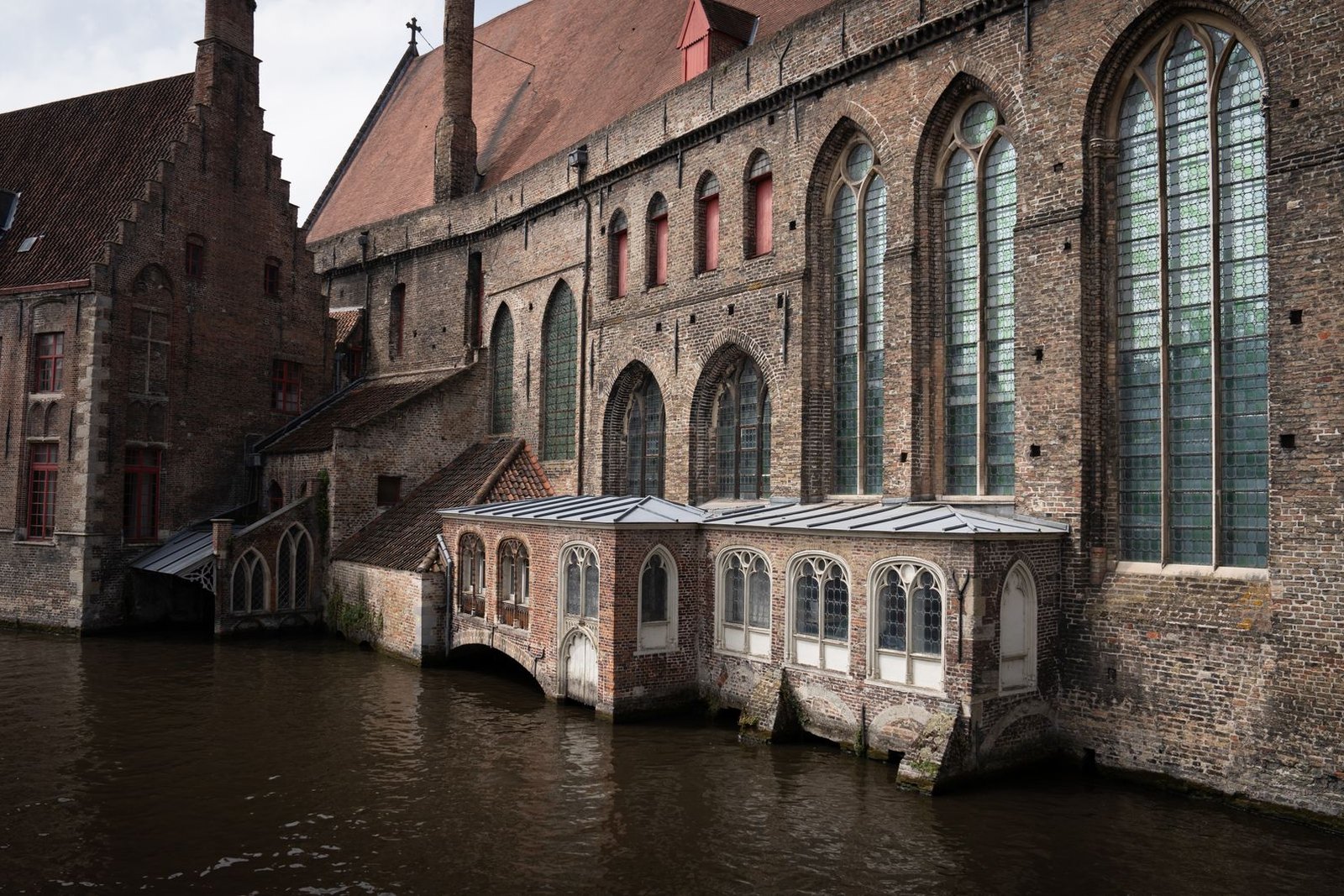
Nothing moved them because nothing needed to. Bruges was rich in the fourteenth century, the point where the Hanseatic routes met the Mediterranean ones, with exchange rates published on the Beursplein from 1370. The channel that carried the ships was the Zwin, opened by a storm surge in 1134 and silting almost from the start. By about 1500 it was unusable, the trade went to Antwerp, and four centuries followed in which the city could not afford to pull anything down.
The Groeningemuseum on the Dijver is ten minutes' walk from the hospital and holds the other half of it. Jan van Eyck's Virgin and Child with Canon Joris van der Paele was finished in 1436 for a canon of St Donatian's, the church that used to stand on the Burg, and the canon is in the picture, kneeling in a surplice with his spectacles in his hand. It is the largest surviving Van Eyck after the Ghent Altarpiece and it still sits in its own frame. Rogier van der Weyden, Memling's Moreel triptych, a Last Judgement the museum gives to Bosch himself, and Bruegel the Elder are in the same run of rooms.
That visit has a deadline on it. The Groeninge closes for a full renovation from 2027 and is not due to reopen until the end of the decade, with the best of the collection, the Van Eyck included, moving next door to BRUSK, which opened on the Dijver in May 2026. A combination ticket covers both while the Groeninge is still open.
Onze-Lieve-Vrouwekerk is two minutes further on, under a brick tower of 115.6 metres, which the city reckons the second tallest brick church tower in the world after St Martin's at Landshut. The nave costs nothing to walk into. Behind the choir, in the ticketed half, are the tombs of Charles the Bold and his daughter Mary of Burgundy, painted grave niches lifted out of the floor, and a marble Madonna and Child that the Mouscron family, Bruges cloth merchants, bought from Michelangelo in 1504 and gave to the church ten years later. It was the first sculpture of his to leave Italy in his lifetime. Unlike the museums, the church opens every day of the week.
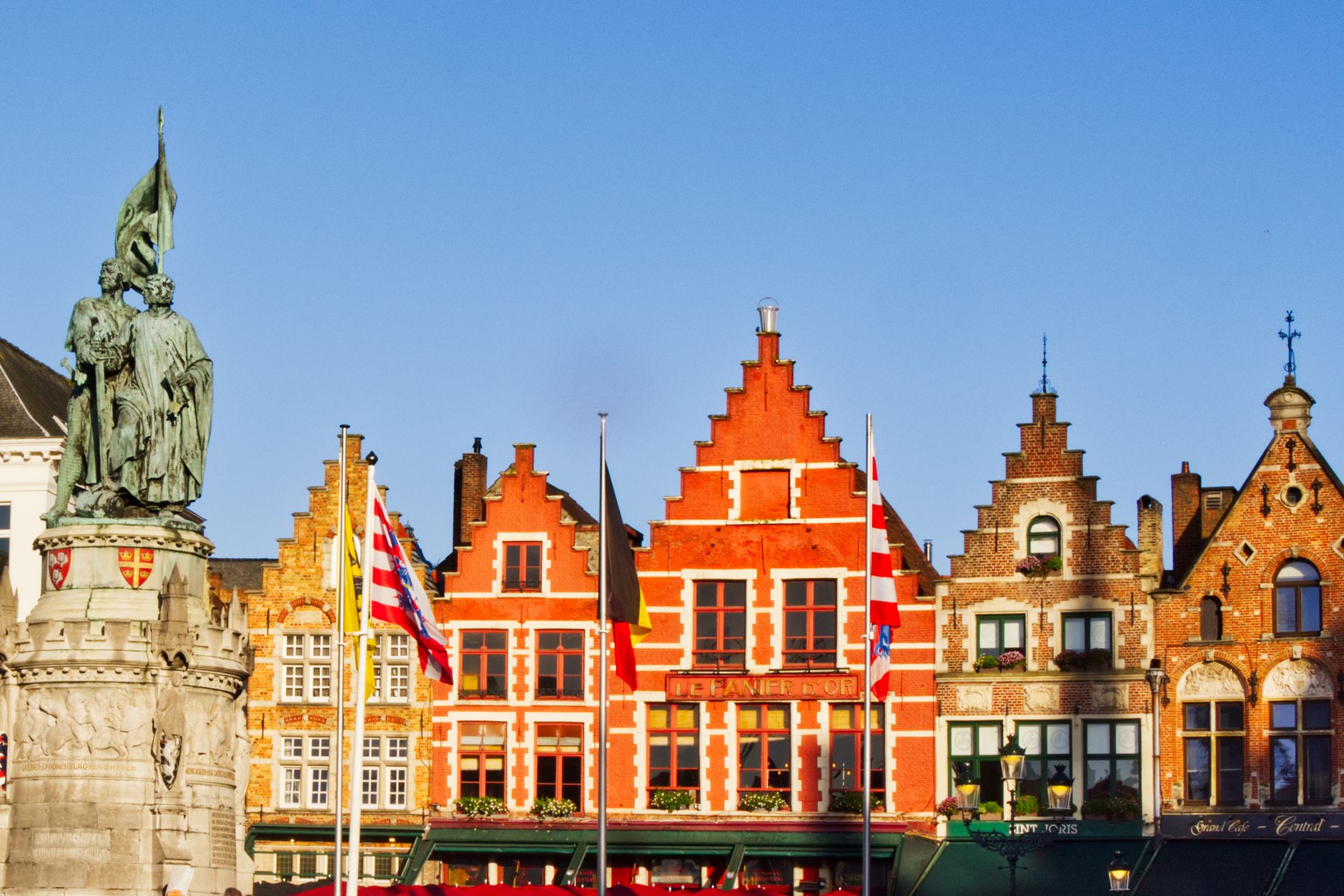
Above ground, the centre is two squares and the lanes between them. The Markt is the postcard, a run of gabled guild-house fronts in red and ochre with the Belfry standing over them, and it is where the coach groups land. The Burg, one street east, is the older square and the more interesting one: the Gothic city hall begun in 1376, the old civil registry beside it, and the Basilica of the Holy Blood in the corner.
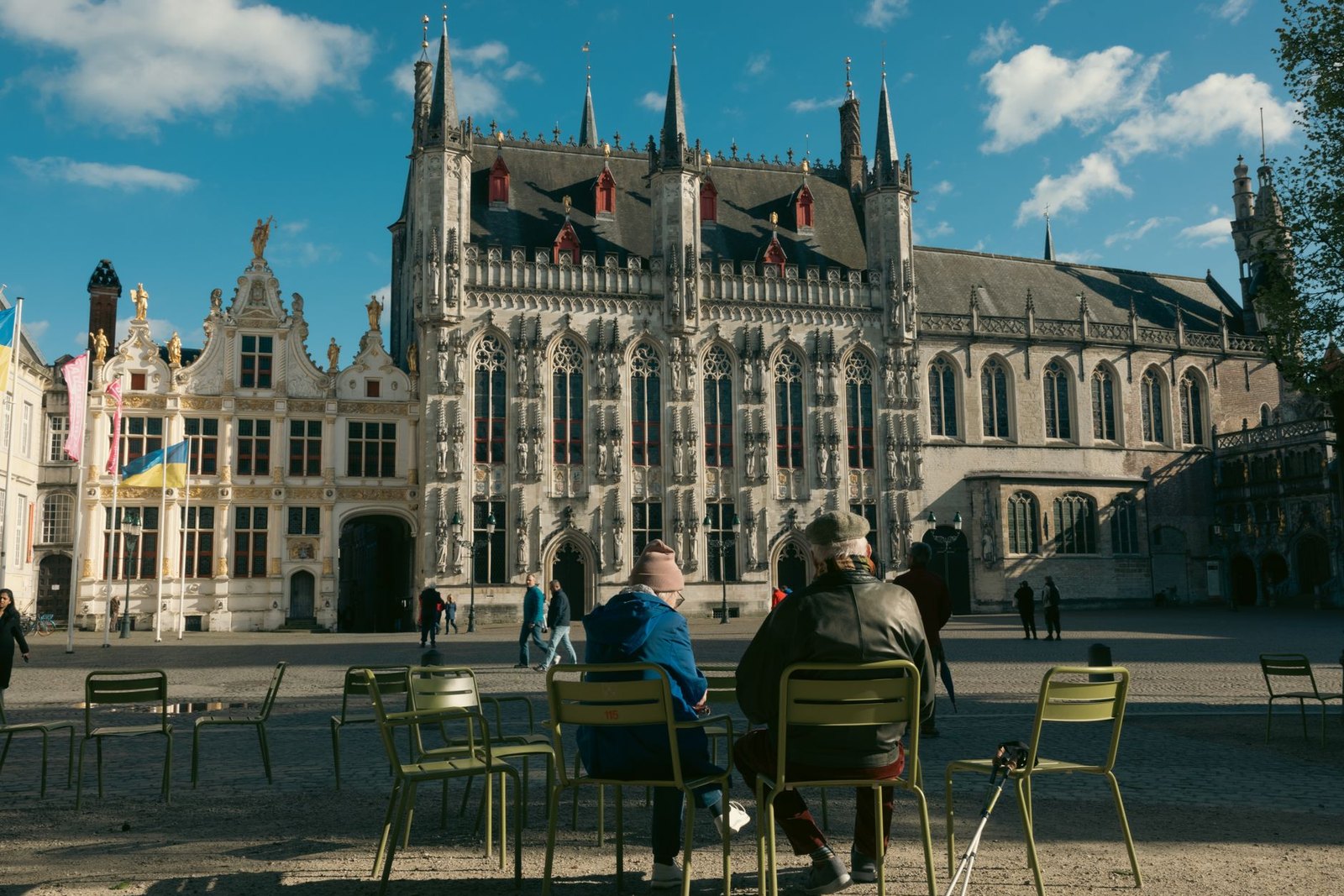
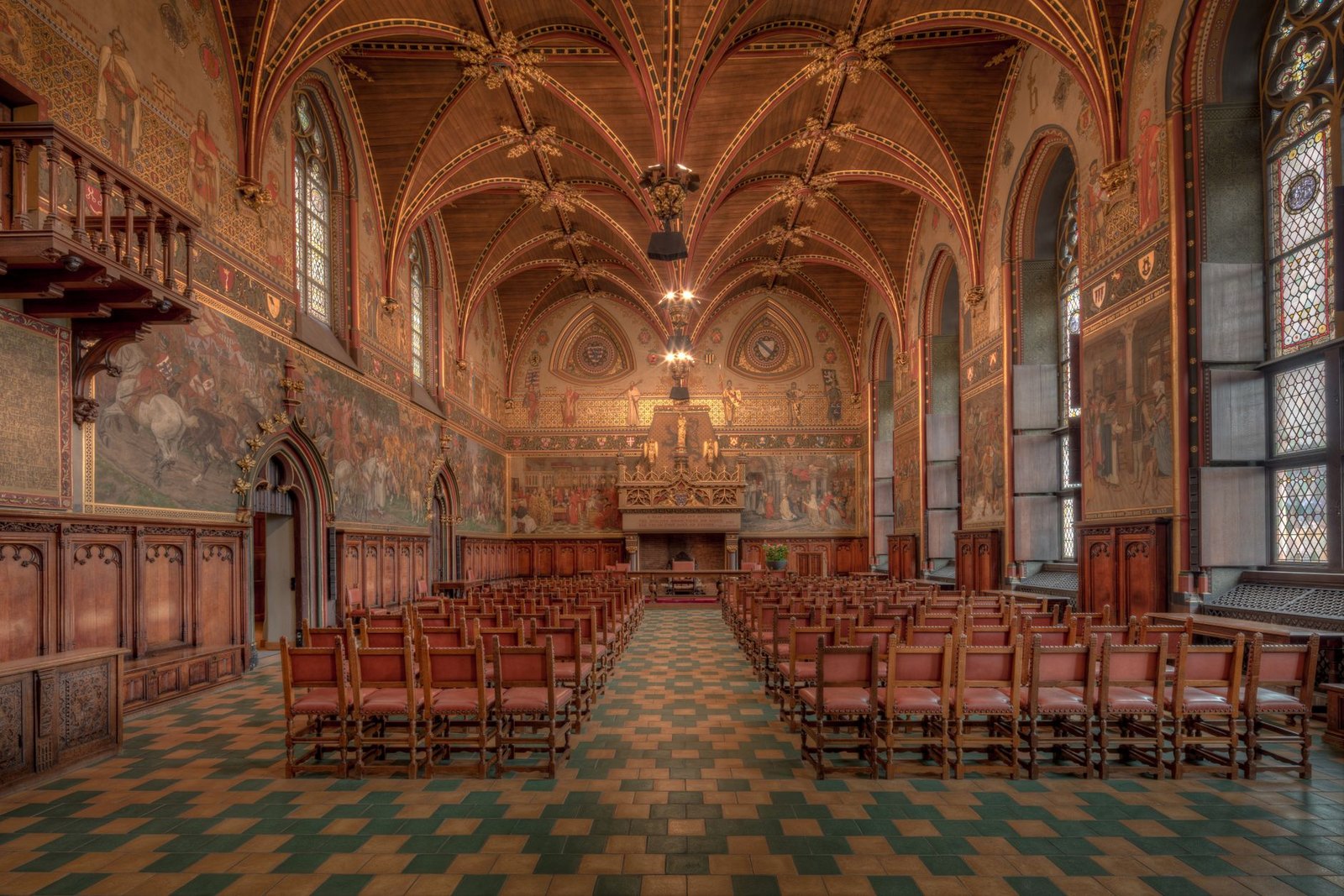
Upstairs in the city hall is a single room with a timber vault and murals of Bruges history round the walls, painted over the medieval structure in the nineteenth century. It is ticketed and it is usually calm. The basilica below is free and is the easiest visit in the city to get wrong, on a timetable few people read first: the relic is brought out for veneration in the afternoon, and on Friday mornings, and at any other hour there is a chapel, a treasury and nothing to venerate. It goes through the streets once a year on Ascension Day, next on 6 May 2027.
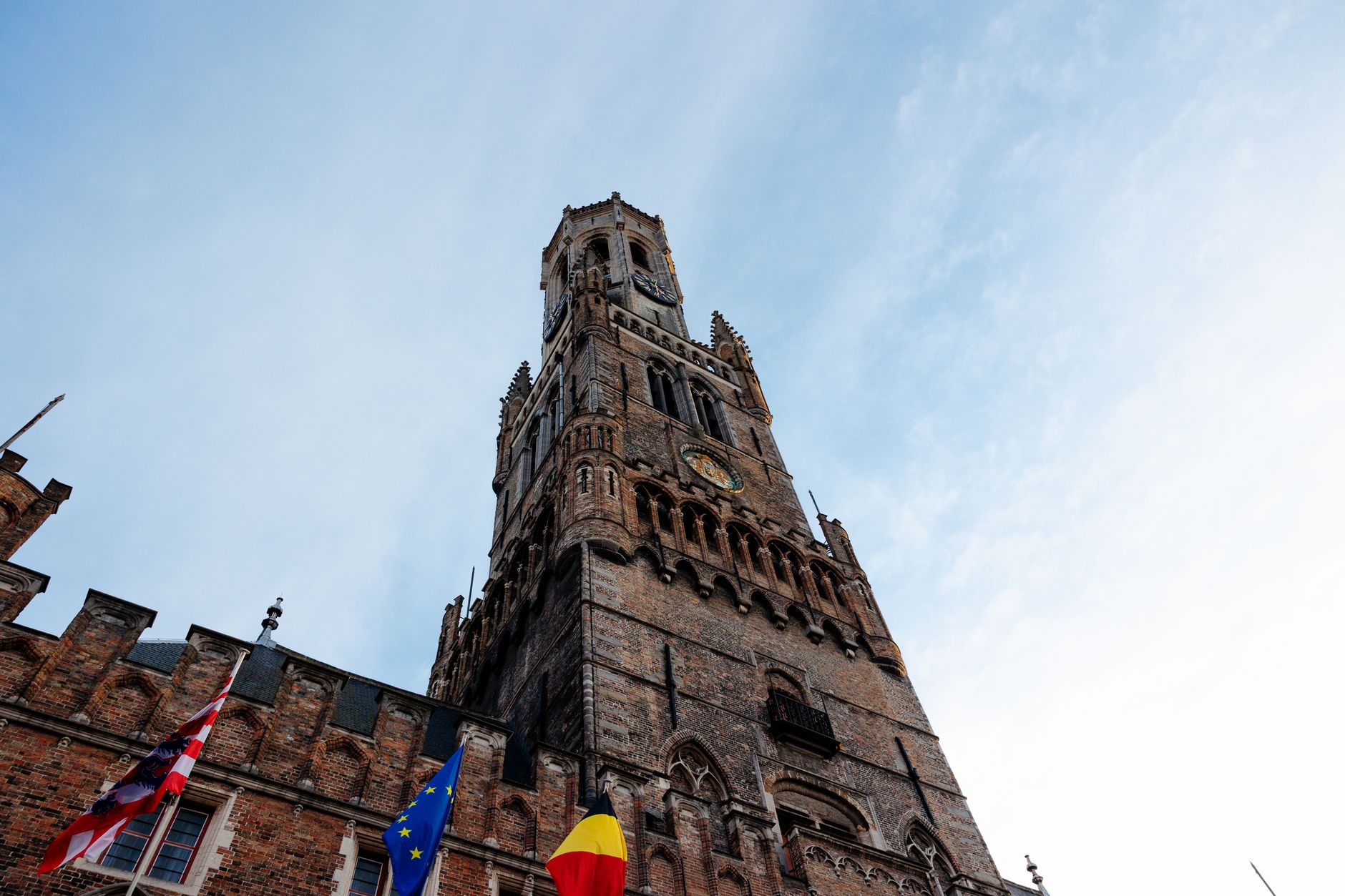
The Belfry is the one climb. Three hundred and sixty six steps, no lift, eighty three metres, and forty seven bells at the top, cast by Joris Dumery and weighing something like twenty seven tonnes between them. Wim Berteloot, the city carillonneur, plays them by hand on Wednesday, Saturday and Sunday mornings, and hearing protection is offered at the door for that hour. The rest of the week they are worked by clockwork: a copper drum of 1748, two metres across and nine tonnes, pierced with some thirty thousand square holes for the pins that set the tune, re-pinned with new melodies every two years and last changed in 2026.
Musea Brugge recommends a timed slot without requiring one, and about fifteen to twenty five people start the climb every twenty minutes, so the good hours go in season. The tower closes in high wind and in storms.
The historic centre covers 410 hectares. Everything ticketed in it stands within a twenty-minute walk of everything else.
The clock decides more than the season does. Belgian day visitors arrive from about nine and cruise passengers from ten, coach groups hold the Burg and the lanes off it from roughly eleven until four, and after four the centre drains. By eight in the evening it has reverted. Sunday and Monday evenings are the emptiest of the week and also the most closed: the Groeninge and Sint-Janshospitaal both shut on Mondays, so a Monday in Bruges gets neither the Van Eyck nor the Memlings, and the Gruuthuse takes Wednesday instead.
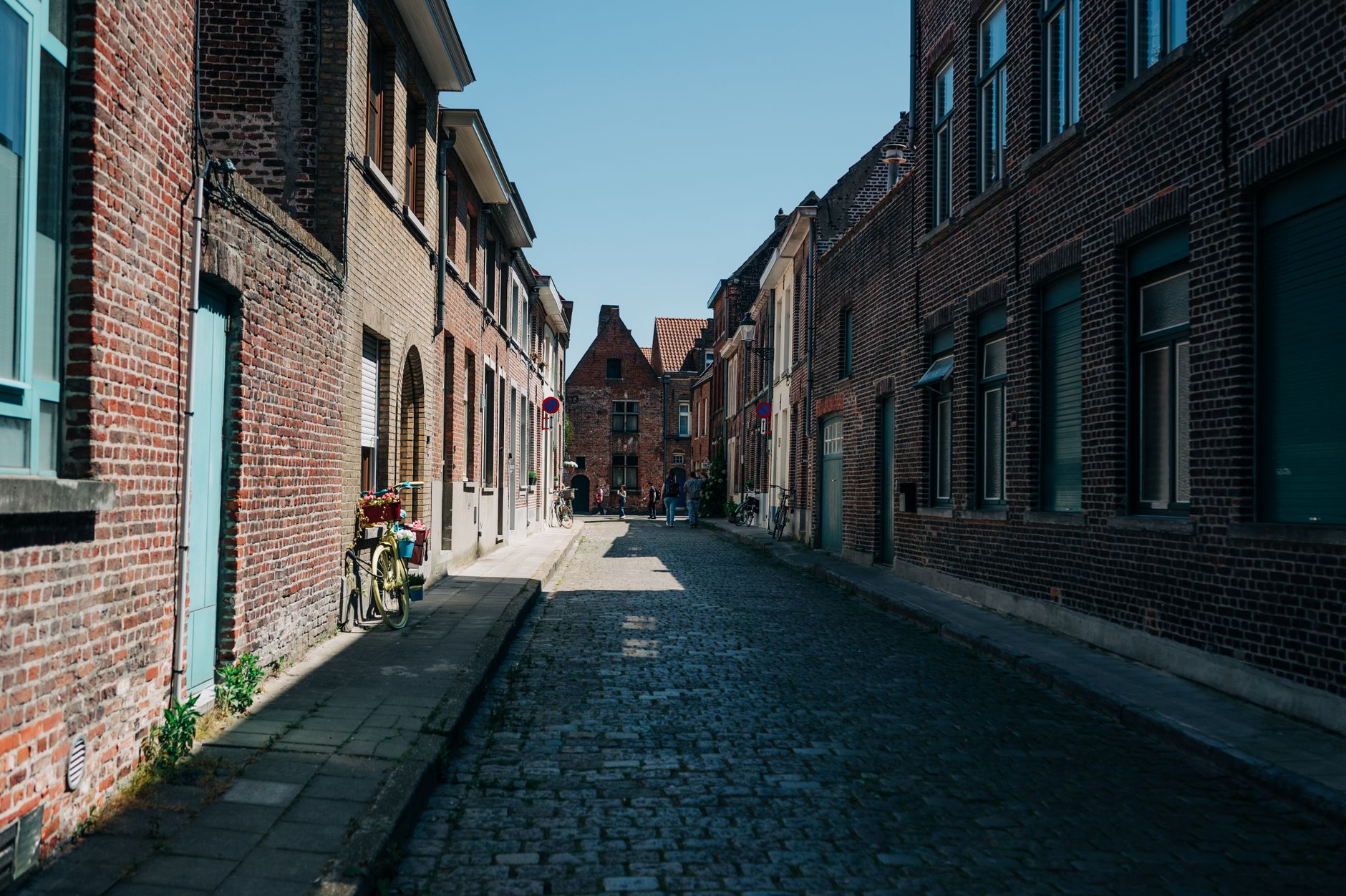
The lanes themselves changed in March 2026. A police regulation now caps an organised walking tour at twenty people to a guide, where groups had been running to seventy, and bars guides from stopping at all in ten places, among them the Stoofstraat, the Blinde-Ezelstraat, the Bonifacius and Wijngaard bridges, the Beguinage and the almshouse courtyards.
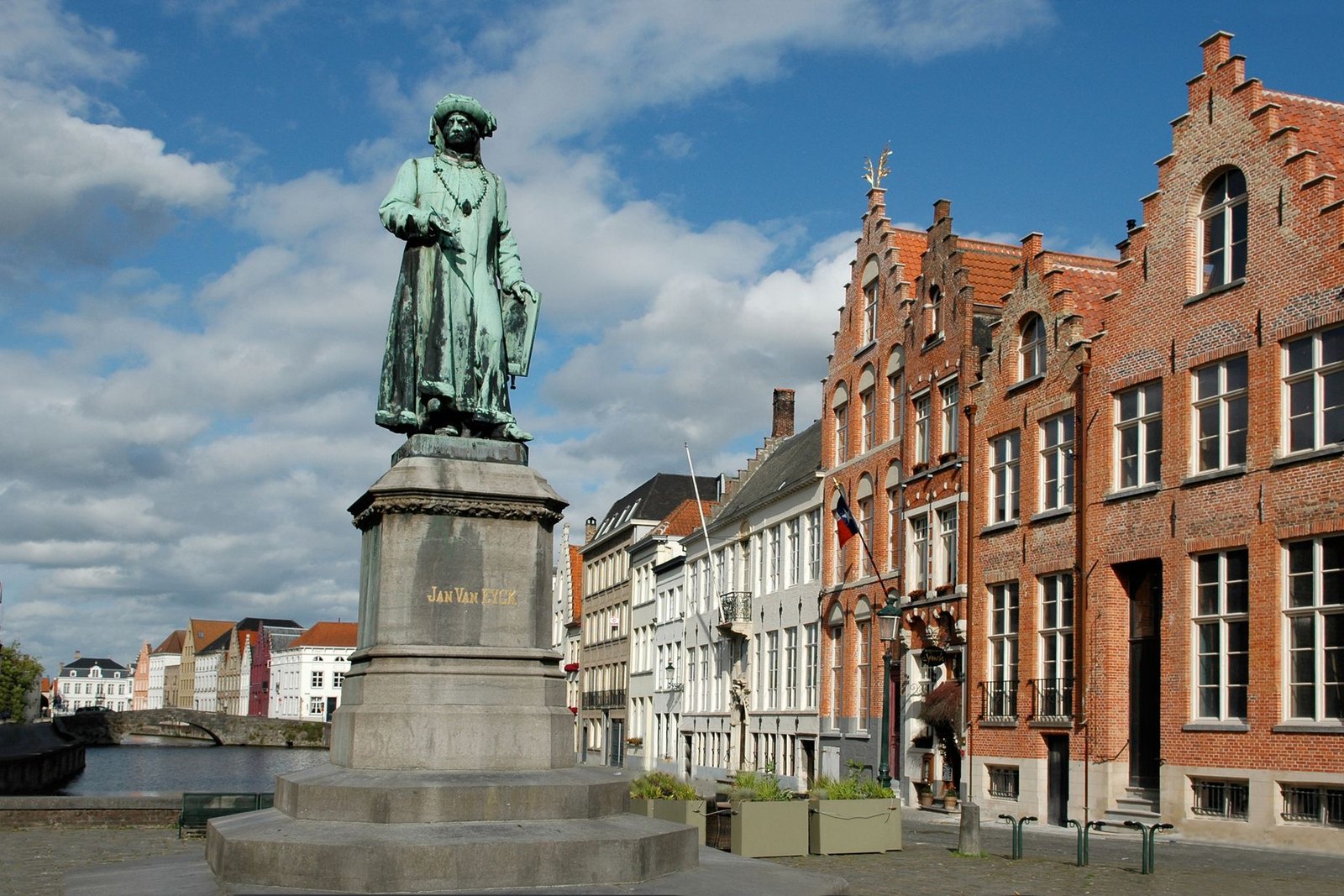
Bruges is crowded over a very small area. North and east of the Markt the crowd stops within a few streets. Jan van Eyckplein and the merchants' quarter around it, the Sint-Anna parish, the towpath on the ring canal, four surviving city gates and four windmills on the eastern rampart are all a ten-minute walk from the busiest square in Flanders, and the Minnewater closes the centre at the southern end. Only one of the mills still turns. The Sint-Janshuismolen was put up in 1770 by twenty six master bakers, is the only one of the four still standing where it was built, and it grinds when the wind allows.
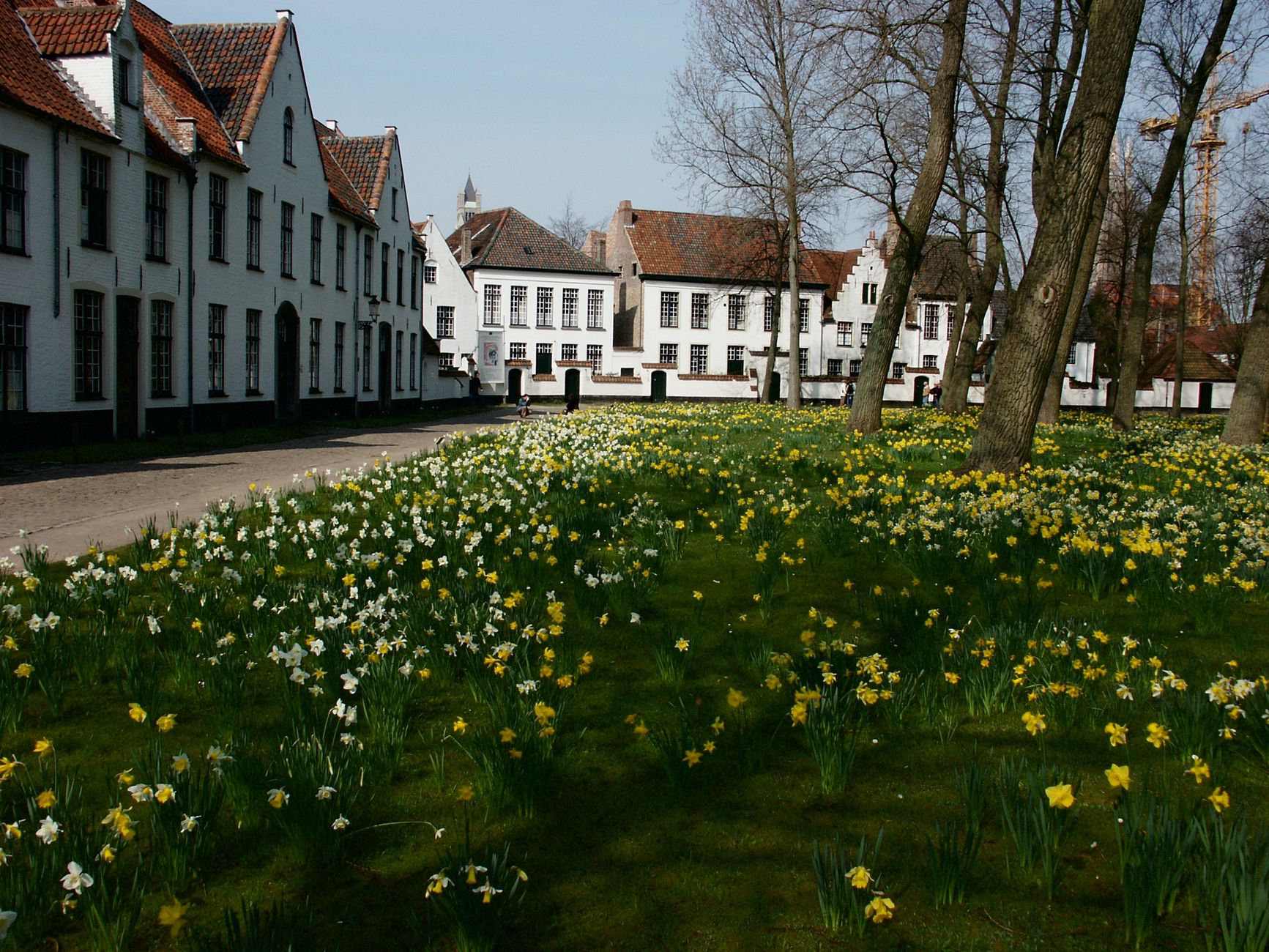
The Princely Beguinage Ten Wijngaerde was founded in 1245 and listed by UNESCO in 1998 with twelve other Flemish beguinages. Benedictine nuns have lived behind the white fronts since 1927. The gates shut in the early evening, which is the thing to plan around, and the lawn inside is one of the few places in the centre that is quiet at midday.
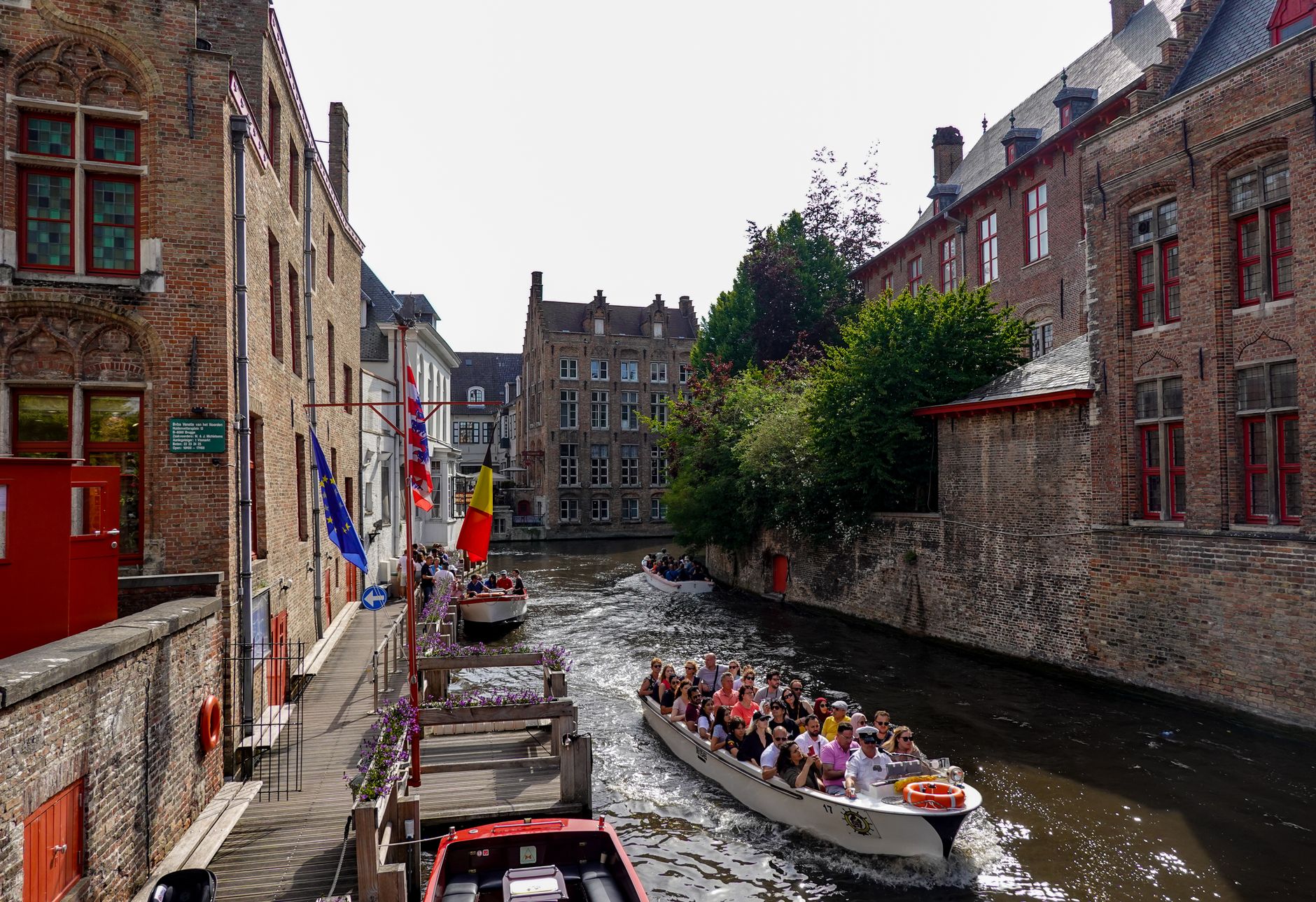
The canal boats are the thing nearly every visitor does, and they leave exactly one decision. The circuit is thirty minutes, and it is the same circuit at the same fare from all five jetties, at Huidenvettersplein, the Rozenhoedkaai, Wollestraat, Nieuwstraat and Katelijnestraat. Individuals cannot book online. Boats leave when they fill at around forty people, so which queue to join is the only lever anyone has.
High season runs roughly March to October with every jetty working, and one opens by rotation through the quiet months. The boats are open to the sky and sailings stop in sustained heavy rain, so a wet forecast can take the trip out of the day altogether. Boarding is down a set of steps at every landing stage, so neither the boats nor the jetties are wheelchair accessible.
Eating well means leaving the squares. The Markt terraces are set up for people with a coach to catch; Langestraat and Ezelstraat are where the town eats. The register worth ordering in is moules-frites, carbonnade flamande, written stoofvlees on a Flemish menu, and chips from a frietkot rather than a restaurant kitchen. Chez Vincent, the frituur on Sint-Salvatorskerkhof opposite the cathedral, is the one to know, and it closes on Mondays and between lunch and the evening on weekdays. Patisserie Schaeverbeke on Schaarstraat bakes on the premises and keeps a weekday closing day, so check before walking over.
't Brugs Beertje on Kemelstraat keeps around three hundred Belgian beers and catches day visitors twice over, because it does not open until four in the afternoon and it shuts altogether on Wednesdays. Carry cash as well. Small cafés, market stalls and the public toilets still expect it.
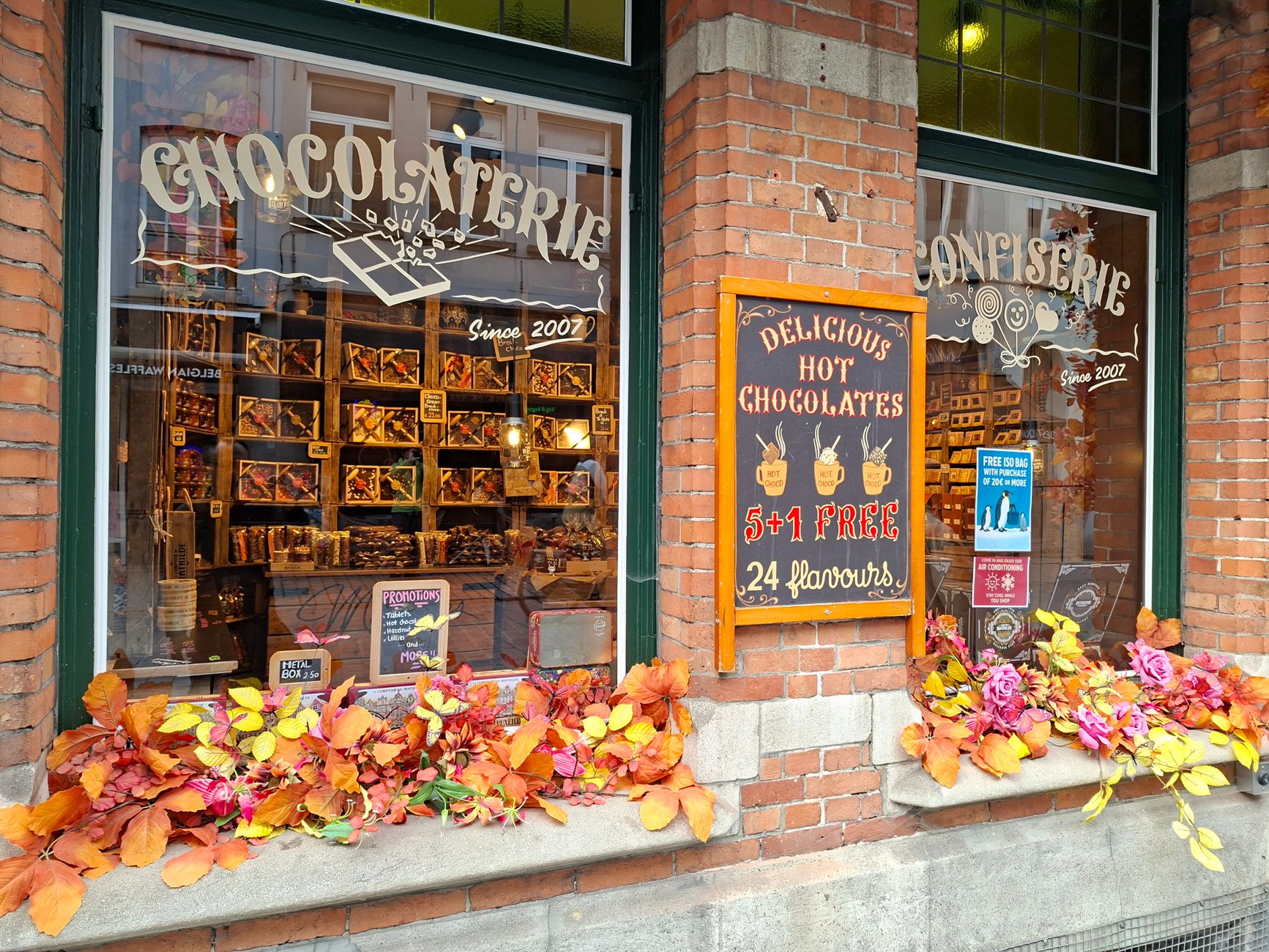
Chocolate and lace are where most visitors part with their money, and one question covers both. Is the thing made where it is sold? Most of the chocolate shopfronts between the Markt and the Beguinage are resellers and a good number are franchise branches. The Chocolate Line on Simon Stevinplein is Dominique Persoone's, and the bean-to-bar work is done behind the shop, from a plantation the business has run in Yucatán since 2012. Dumon is made by Stefan and Marie-Anne Dumon, who have more than one door in the city.
Lace makes its claim on the label, and an item sold as handmade in Belgium for what these shops charge cannot be both, so it is machine-made, imported, or both. Wollestraat and Balstraat sell the whole spectrum. The Kantcentrum on Balstraat occupies the Apostoline sisters' old lace school, a building of 1899 on the Adornes estate, and runs bobbin-lace demonstrations every afternoon but Sunday. It is the quickest way to learn the difference between bobbin, needle and machine work.
Trains reach Brugge station in about an hour from Brussels-Zuid, hourly and direct from Brussels Airport, and in twenty five minutes from Ghent. The Markt is a signposted twenty-minute walk from the platform. The buses do not go to it: lines 1 and 2 run to 't Zand every five minutes, a few streets short, and an electric shuttle works between the station and the centre through the day, stopping at Wollestraat. The station area is being rebuilt until 2028, with the walking and cycling routes kept open throughout.
Do not drive in. The centre is a thirty kilometre an hour zone and, since October 2025, a bicycle zone of three hundred and ninety streets, the largest in Belgium, in which a car may not overtake a bicycle. The underground car parks are Centrum-'t Zand and Centrum-Station, ten and twenty minutes out on foot, with Biekorf under the city library a few steps from the Markt. Coaches are banned from the core: they park at Kanaaleiland and set down at Bargeplein.
Sleeping in the centre is what buys the early morning and the late evening, and the supply of beds is now fixed. New hotels are banned in the historic centre, no new holiday-home permits are issued anywhere in Bruges, and cruise calls at Zeebrugge are capped at two ships a day, down from five in 2019. The city has even pulled its own advertising out of Brussels Airport. Book early.
Brouwerij De Halve Maan on Walplein has brewed since 1856, is six generations into the same family, and is the only place pouring Brugse Zot and Straffe Hendrik unfiltered. The tours have to be booked: about forty five minutes in Dutch, French and English, or ninety minutes at weekends with more of the range at the end of it. Both include two hundred and twenty steep steps, which makes it a poor choice for the same afternoon as the Belfry.
On 16 September 2016 that brewery stopped sending tankers across the cobbles. It laid a polyethylene pipe three and a quarter kilometres long from the brewhouse on the Walplein out to its bottling plant at Waggelwater, running under the canals, under the 't Zand car park and under the line of the old city walls, thirty four metres down at its deepest, at about four thousand litres an hour. Three hundred and ninety four people paid towards it and were promised beer for life, which for the twenty one who gave most means a bottle a day.