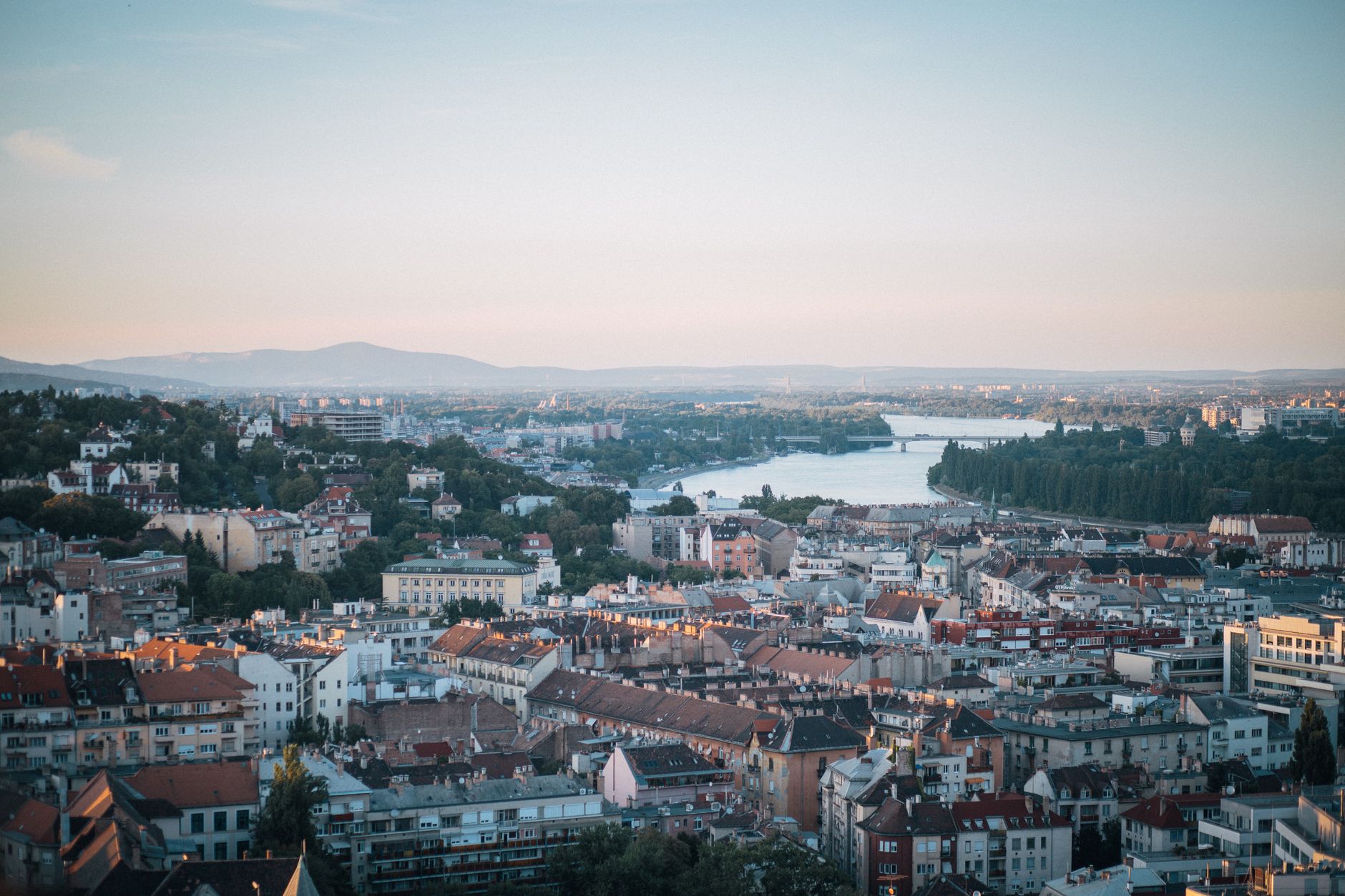
Budapest is built along a fault at the seam of the Buda hills and the Pest plain, and deep water heated at pressure comes up through it at roughly 125 thermal springs, delivering on the order of 70 million litres a day. Beneath the streets runs the largest thermal water cave system in the world. Romans, Ottomans and Habsburg-era architects have all tapped that same aquifer, and each built a different kind of room around it.
The Romans were first. A military base went up at Aquincum in what is now Obuda somewhere between AD 41 and 54, and by the early second century the settlement had become the capital of the province of Pannonia Inferior. By the end of that century it held at least thirty thousand people, with central heating, public baths, a Mithraeum and two amphitheatres, one civil and one military. The site is open to visitors as an archaeological park.
The Ottomans left the buildings that still take bathers. Rudas was founded in 1571 for Sokollu Mustafa Pasha, governor of Buda, and its octagonal pool under a domed roof is among the oldest working bathing rooms in the city. It now runs six therapy pools and one swimming pool, water ranging from about 10 to 42 degrees. It was never converted into a museum. Tickets are sold at a desk to whoever turns up, and the room is still in use for bathing.
One closure governs any 2026 trip. The Gellert Thermal Bath, the Zsolnay-tiled Art Nouveau one that appears on every list, closed in October 2025 for a full renovation and is not expected to reopen until 2028. The hotel it sits inside has been shut since November 2021 and its own reconstruction is only expected to begin late the following year. Between 1,500 and 1,800 people a day used to bathe there, and they have spread across the baths that stayed open.
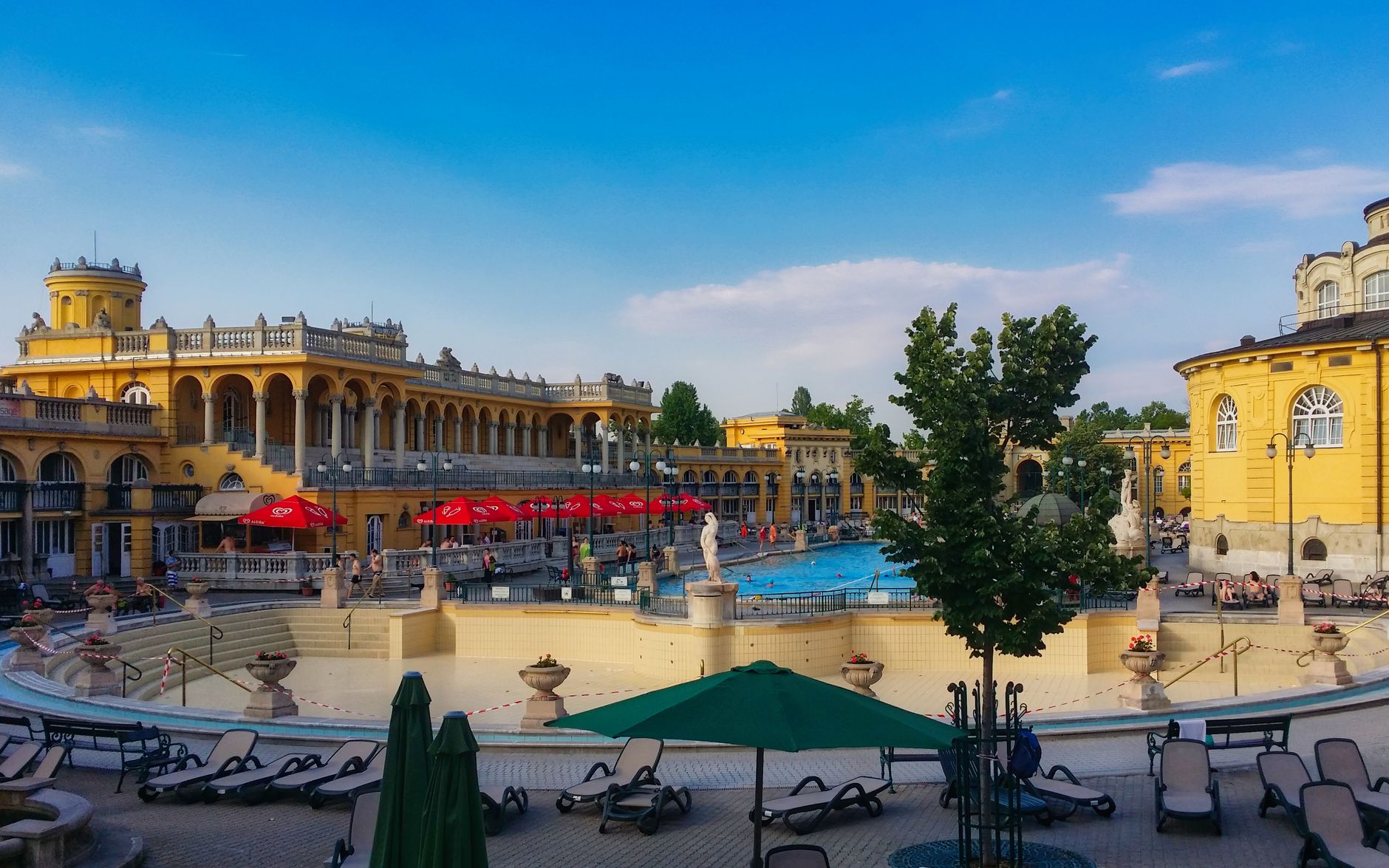
Most of them went to Szechenyi, which absorbs crowds better than anything else because it is enormous. Construction began in 1909 and the bath opened in 1913, built by Gyozo Czigler working from designs by Eugene Schmitterer. It covers 6,220 square metres and holds 18 pools, three outdoor and fifteen indoor, the outdoor water between 27 and 38 degrees. The chess players on their floating boards in the hot outdoor pool are a genuine fixture of the place.
One aquifer, three empires' worth of architecture, and the water has never been switched off.
Doors at Szechenyi open at six in the morning, the indoor pools close at eight in the evening and the complex two hours after that. Tickets bought for the first three hours of the day cost less, which puts the cheapest entry and the emptiest water in the same slot. It is paid for with an alarm set before six and a walk across a cold deck in the dark for half the year. The first hour is close to solitary before the room fills. By mid-afternoon in season bathers are physically knocking into each other. Weekdays are materially calmer than weekends. The fast-track entrance is on the opposite side of the building facing City Park, and people who pay for it routinely queue at the wrong door.
Bring more than expected. Towels are not supplied and one soaks through in the walk between pools, so pack two. Flip-flops have been an enforced requirement at Szechenyi since July 2024, and a swim cap is required for the lap pool. The wristband is ticket and locker key in one and works wet at the poolside, so nothing needs carrying. Lockers are included and hold a winter coat, boots and a backpack; the paid cabin upgrade is sold as fitting two and is tight for them. Showering before entering is expected and skipping it is noticed. Two things to plan around. The building is a maze and staff directions are unreliable, so orient to the outdoor pools first and navigate from there. And women have consistently reported staring and unwanted touching at Szechenyi; the smaller baths draw far fewer such reports.
Lukacs is the locals' bath, open from seven in the morning until seven at night, with ticket sales stopping an hour before close, three indoor and two outdoor thermal pools, and residents reading newspapers in the water. There is usually no queue at all. The trade is architectural: the tiling is vintage, the rooms look their age, and the scale is a fraction of Szechenyi's.
Veli Bej, an immaculately restored Ottoman room, caps entry at eighty people and visits at three hours, sells tickets at the cash desk only with no online booking, and gives latecomers a number and a seat in the cafe. Its main octagonal pool runs 36 to 38 degrees with four smaller pools around it and no outdoor water at all. That cap can be reached, and there is no way to book around it, so the opening hour is the one to aim for.
Rudas needs one extra check that catches out more trip planners than anything else in the city: it has traditionally run single-sex days for the old Turkish bath, with mixed access only on part of Friday and at weekends, and the schedule changes. The official site must be read before booking. Night bathing runs Friday and Saturday only, from ten at night until three in the morning, mixed, over-14s, with sauna, massage and the restaurant all closed. It is a pool session only. The rooftop tub with the Danube view is the reason most people come and it is small, more crowded hot tub than serene terrace, and often bookable only in advance.
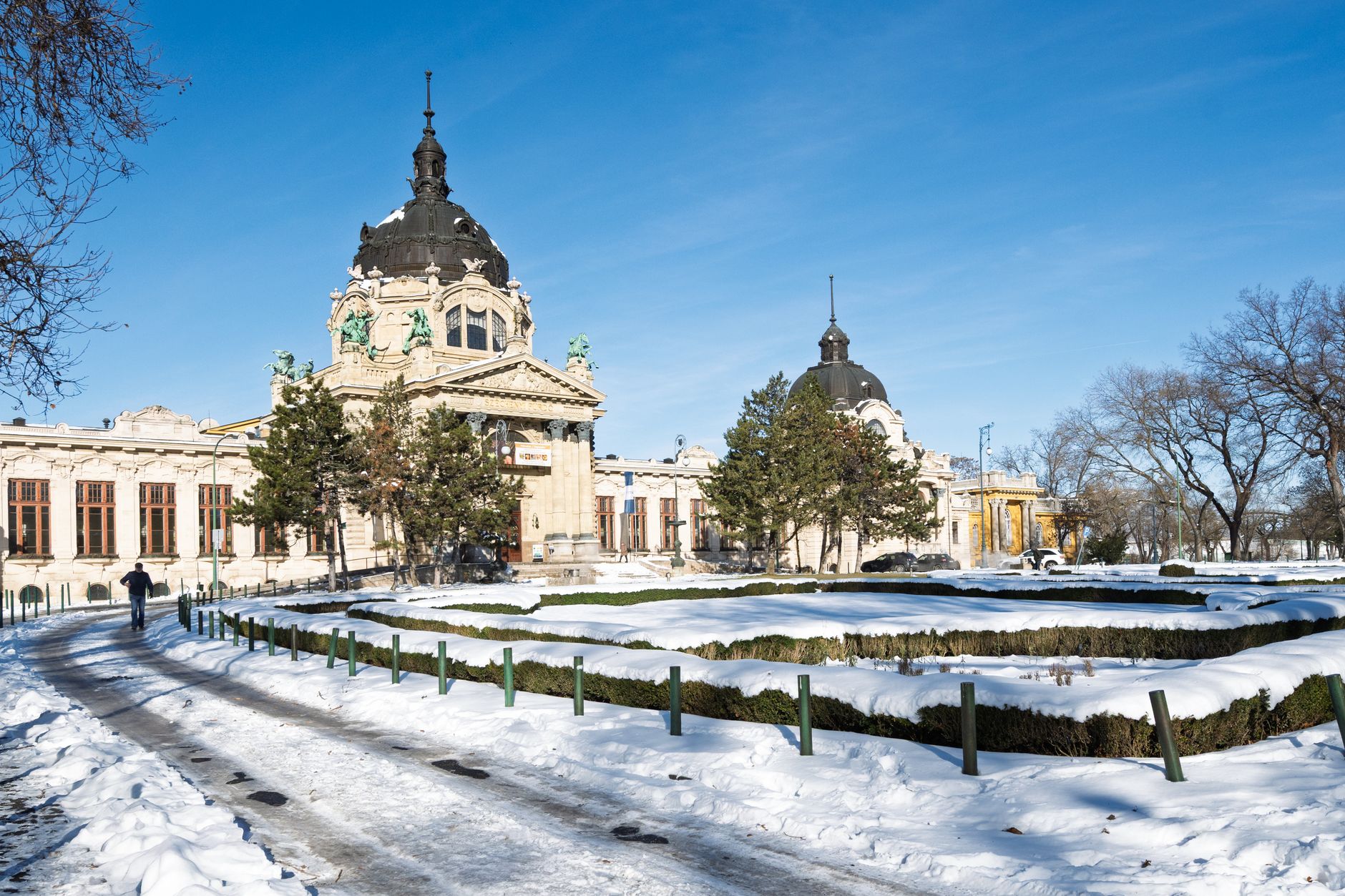
Winter is the better soak. Outdoor water at 38 degrees with cold air on the face is what the city is for, and the walk out from the changing room in February is the price of it. Cold weather does not guarantee an empty pool, and Szechenyi can still be busy on a freezing January morning. Late spring and early autumn buy long light and mild air instead. Whichever season is chosen, go inside as well. The outdoor pools carry the photographs. The indoor rooms carry the architecture, and skipping them misses most of the building. Skip the on-site massages, which are brisk and basic, and put the money toward a second bath.