The drive in from Casablanca runs three hours east on a flat motorway and stops at the edge of the medina, because that is where the road stops. Fes el Bali does not take cars. You leave yours against the wall, pick up your bag, and walk in through a gate into a city that has run on foot for twelve hundred years. Arrive without a guide and with no plan beyond a pin dropped on a phone, and within ten minutes the pin and the person holding it have lost each other.
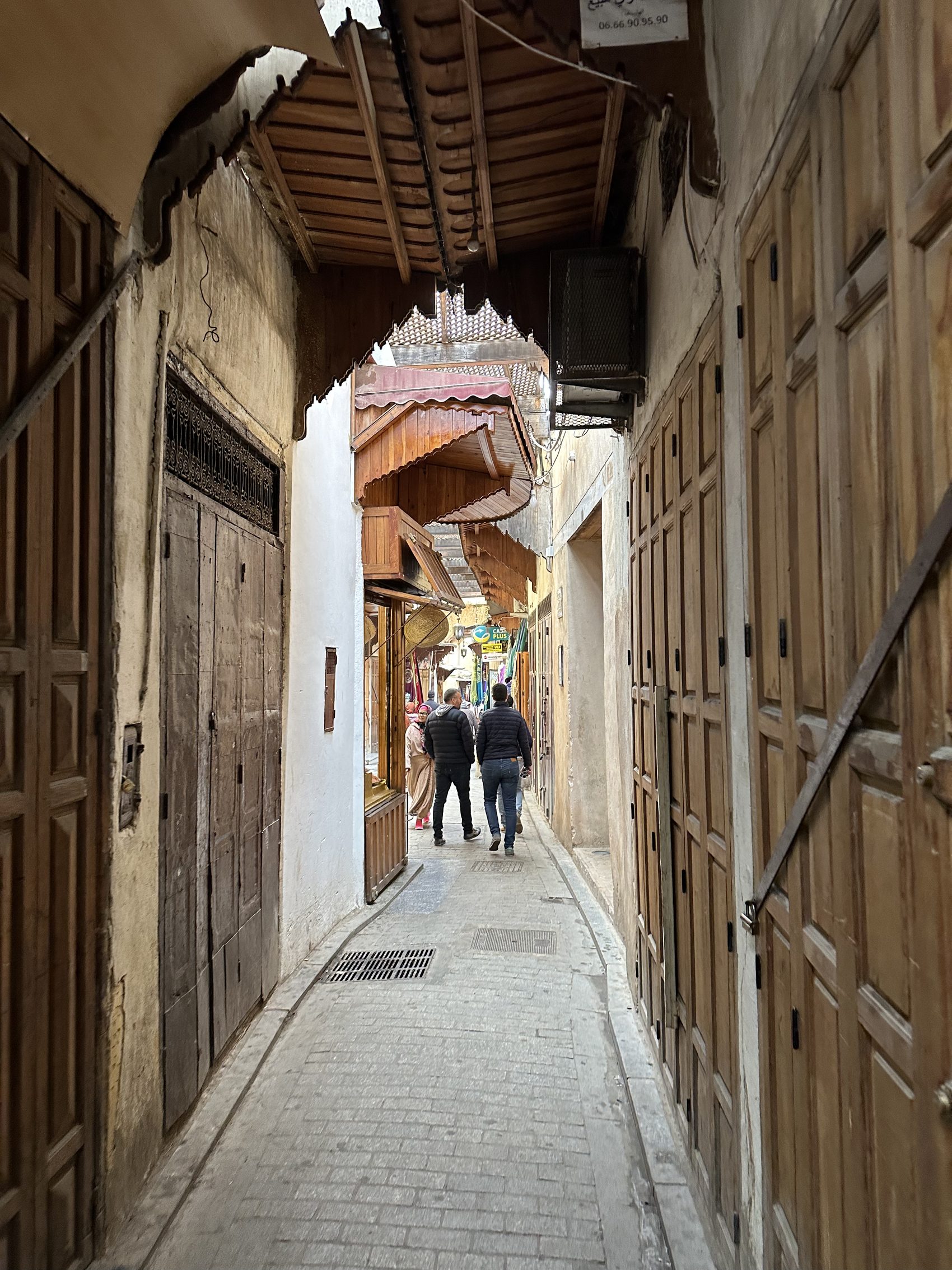
Fez is the city for anyone after somewhere that does not arrange itself for visitors. The lanes close over your head and fork without warning, and the walls give nothing away, blank and high, the occasional studded cedar door the only hint that anything lies behind them. People move fast and know where they are going; a newcomer plainly does not. It takes a day to see that the blankness is deliberate: Fez shows the street a plain face and saves the colour, the craft and the light for the rooms you have to find your way into.
Fez shows the street a blank wall and keeps the colour for the rooms behind the door.
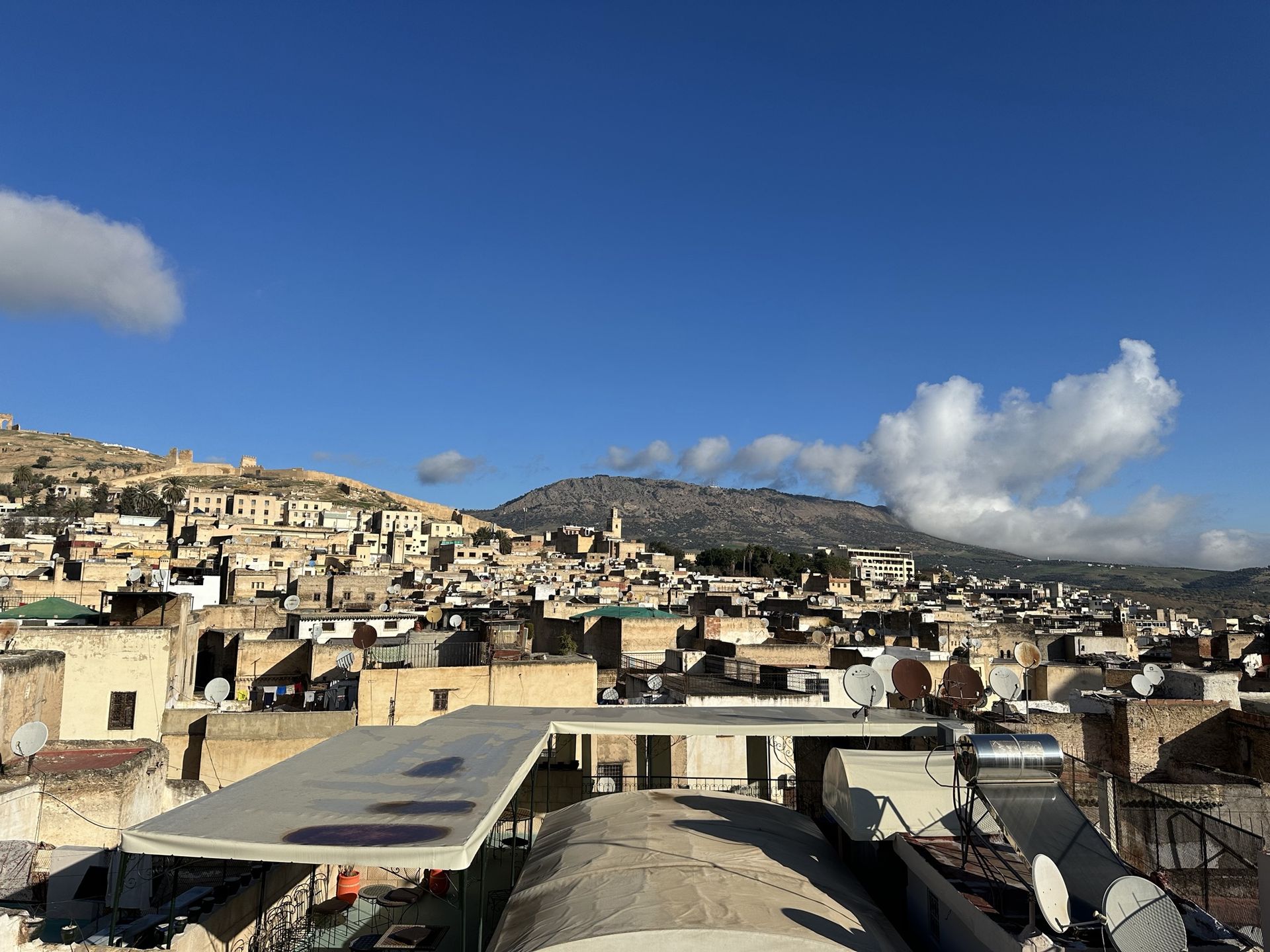
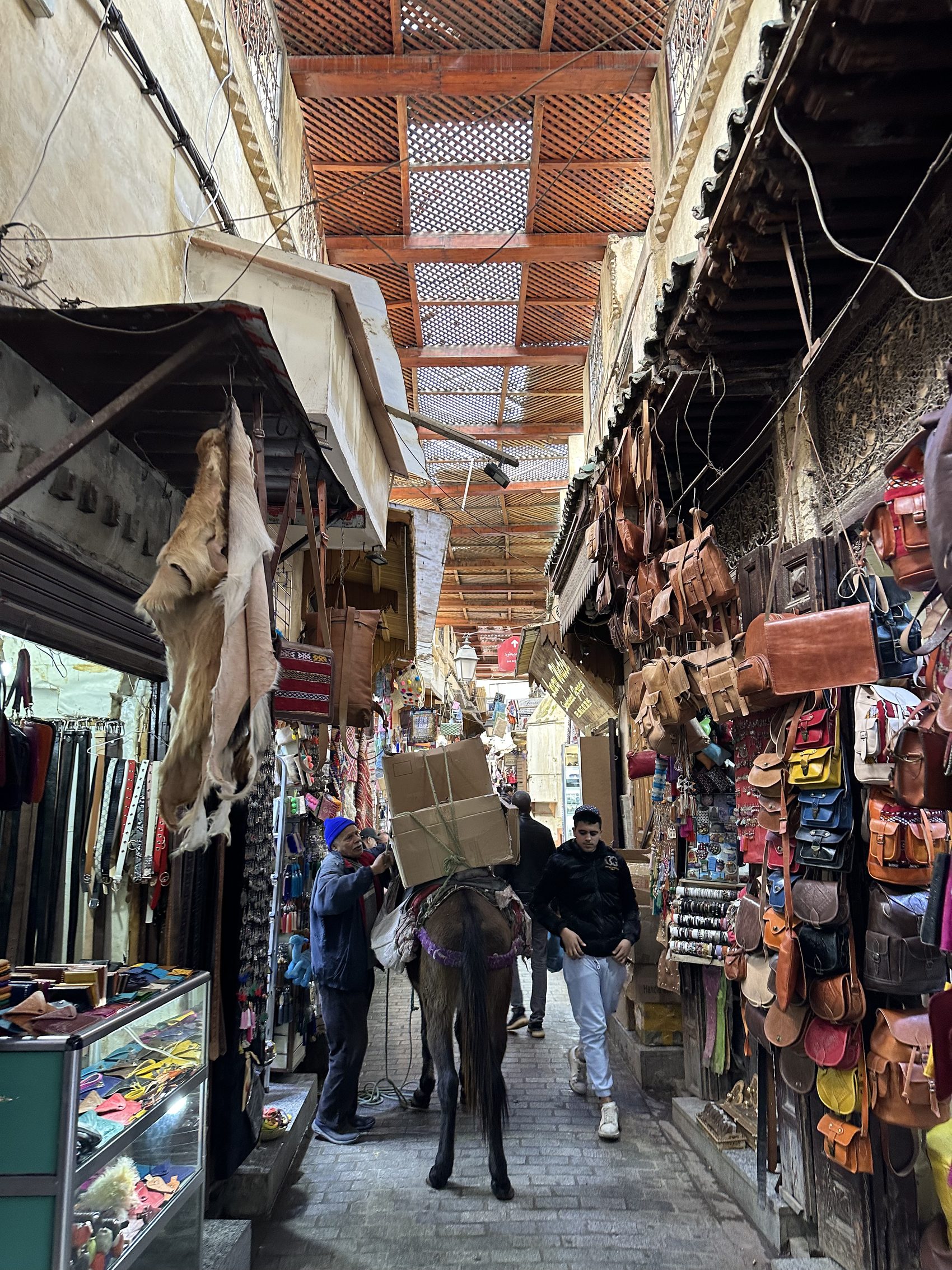
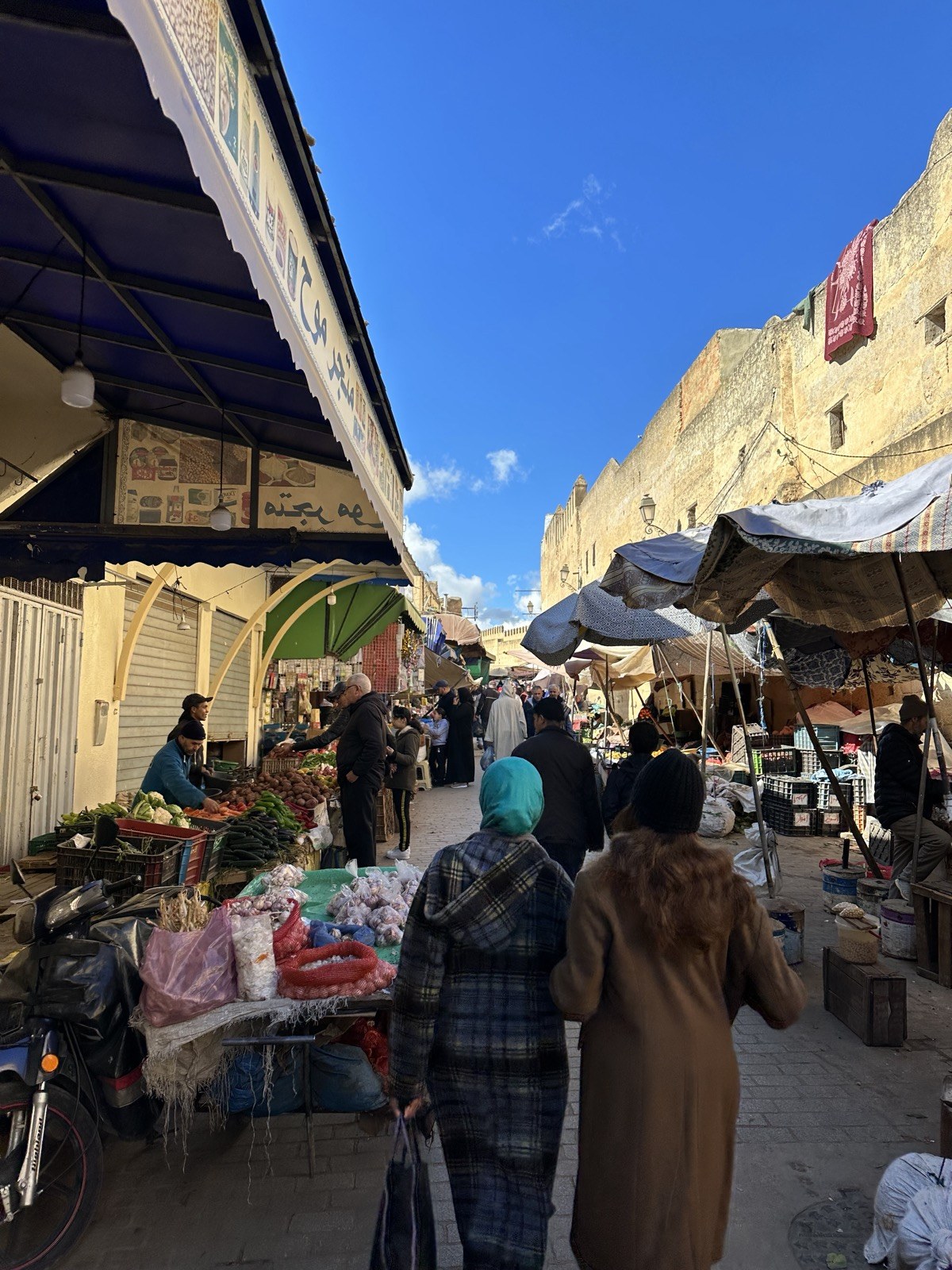
The medina works as one great interior. Some nine thousand lanes are folded into a bowl under the hills, and the whole of it still runs as a market and a workshop at once. A shout of balak from behind means a loaded mule is coming through and there is no room to argue, so you press into a doorway and let it pass. Satellite dishes sit on roofs six hundred years old. January is a good month to come: the light runs low and clean, the crowds thin, and the medina is simply a city getting through its winter, people in heavy coats buying cauliflowers and haggling over the price of socks. Fez is a working city before it is a sight, and after Marrakech that comes as a relief.
Food is the one thing Fez does not make easy for a vegetarian, because this is a meat town. The tagines arrive with lamb or chicken, the pastilla the city is famous for is built on pigeon, and the grills along the lanes run to skewers of kefta and liver. The meat-free eating is the food that was never aimed at visitors in the first place: bissara, a thick soup of dried split peas finished with olive oil and cumin, ladled out at a counter for a few dirham and eaten standing up before the medina is properly awake; maakouda, little fried potato cakes; vegetable couscous, which is a Friday thing; and bread carried warm from the neighbourhood oven. Mint tea comes with everything, green tea taken almost to syrup with sugar and poured from a height into a small glass.
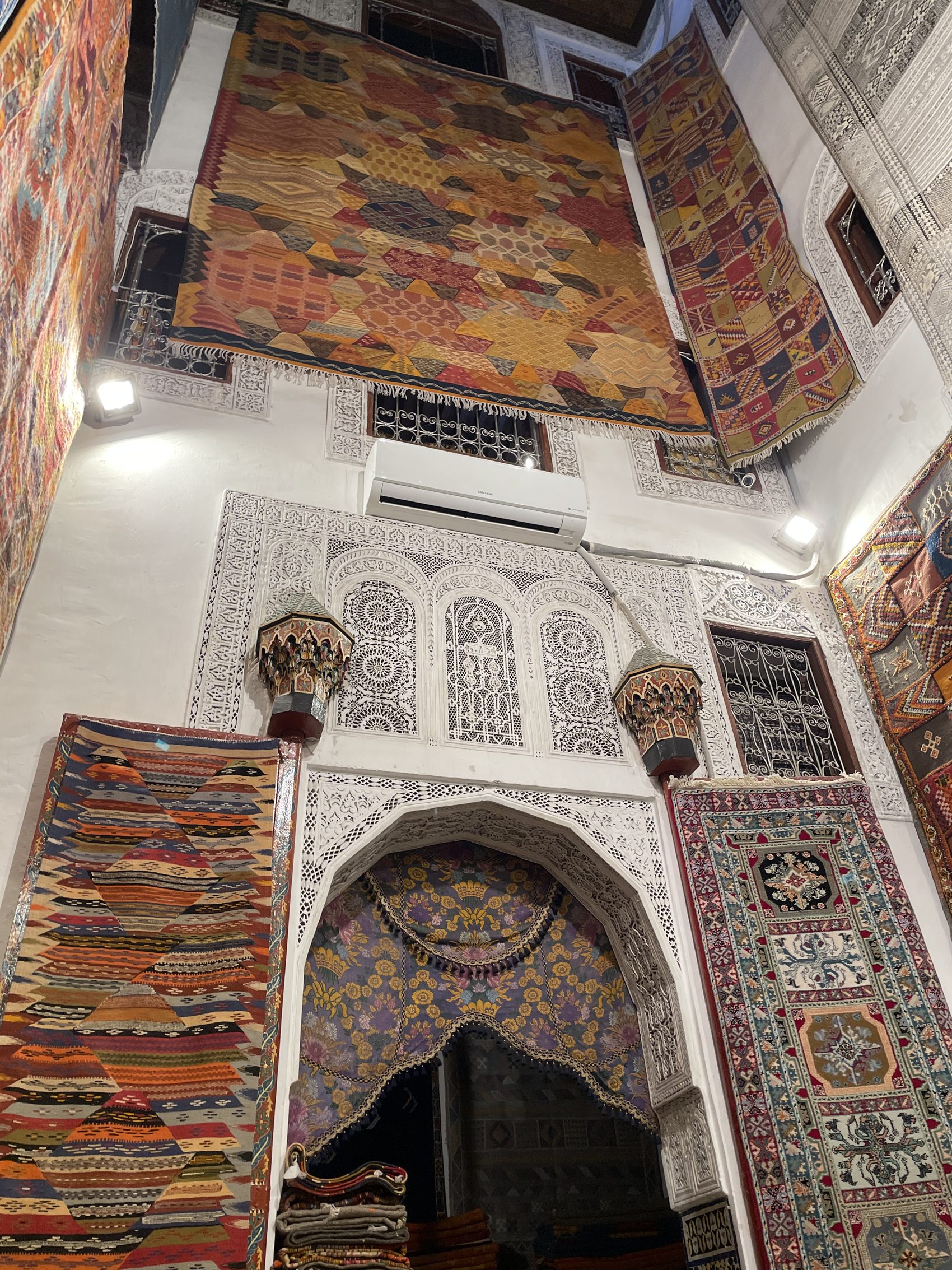
The crafts are the other reason to come, and they are not staged. Each trade still keeps to its own quarter. At Place Seffarine the coppersmiths sit in their doorways and beat tea trays and kettles into shape, and the little square rings with it, a few steps from the gate of the al-Qarawiyyin library. A hand-planished brass kettle is the thing to carry off from here, and it comes only after the long back and forth that buying anything in Fez asks of you: the first price is never the price, the glass of tea is part of the pitch, and you are expected to walk off at least once before it is done. A few lanes away, in the carpenters' souk, the wood is cedar and fragrant thuya, worked into small boxes with lids set by hand in a pale and dark geometry of inlay. Going without a guide means no one walks you to a cousin's shop for a cut of the sale, which is the real argument for finding your own way.
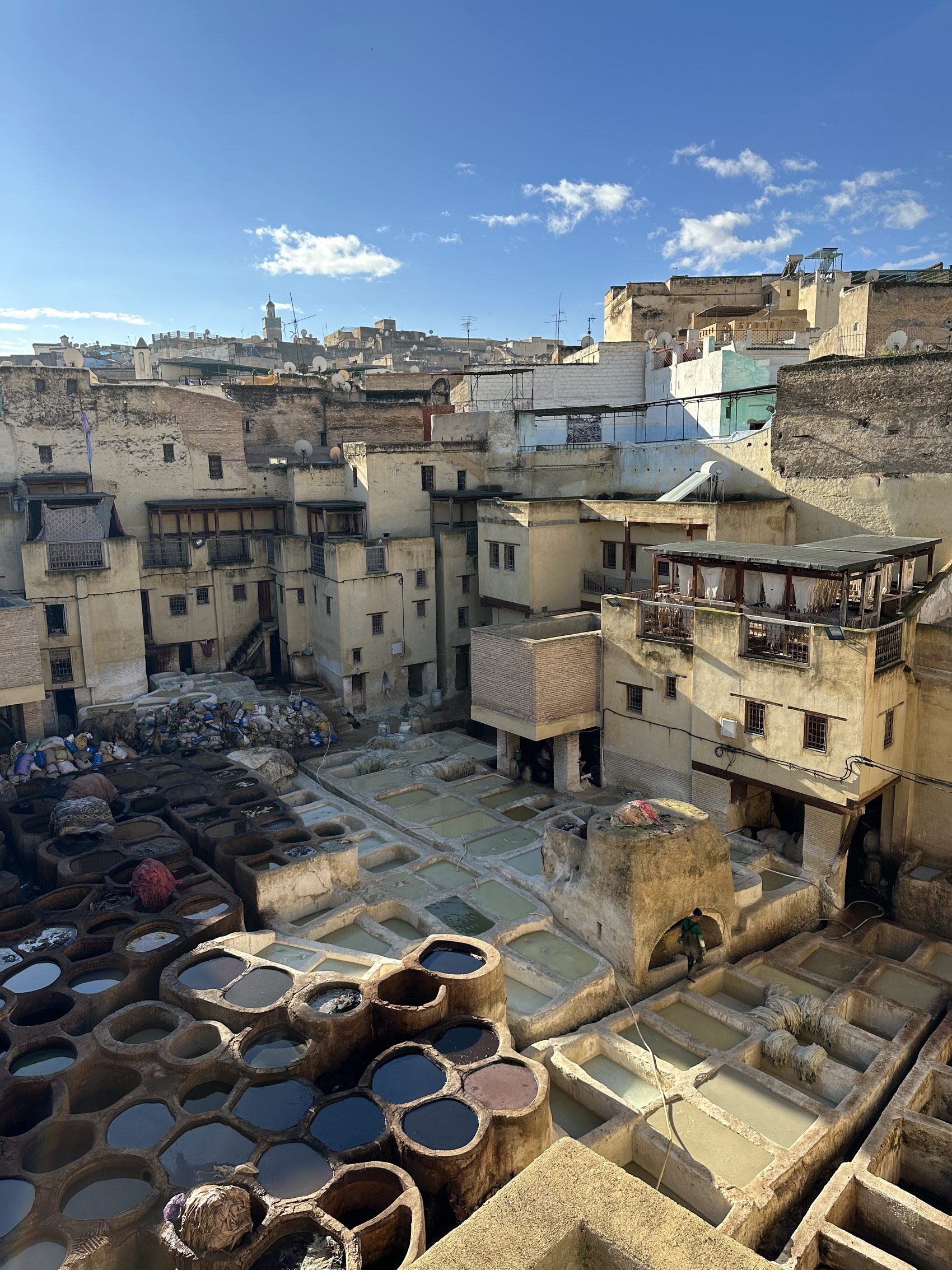
Everyone photographs the Chouara tannery, and it is worth seeing once, though it is really a leather shop with a view. You find it by the smell, and by the sellers who steer you toward a free terrace, then hand you a sprig of mint for the stench, which genuinely helps and which, you work out later, was not free. But the view earns the climb. From the roof the vats are a honeycomb of colour, ochre and blood red and a saffron so bright it stains the eye, pale wells of lime and pigeon white banked among them, and the men work waist deep in it with the dye driven so far into their hands it will never wash out. Then comes the price of the view, a hard sell on a jacket at ten times what it should cost. Leave ten or twenty dirham for the terrace, take your photographs, and walk out with nothing if you like.
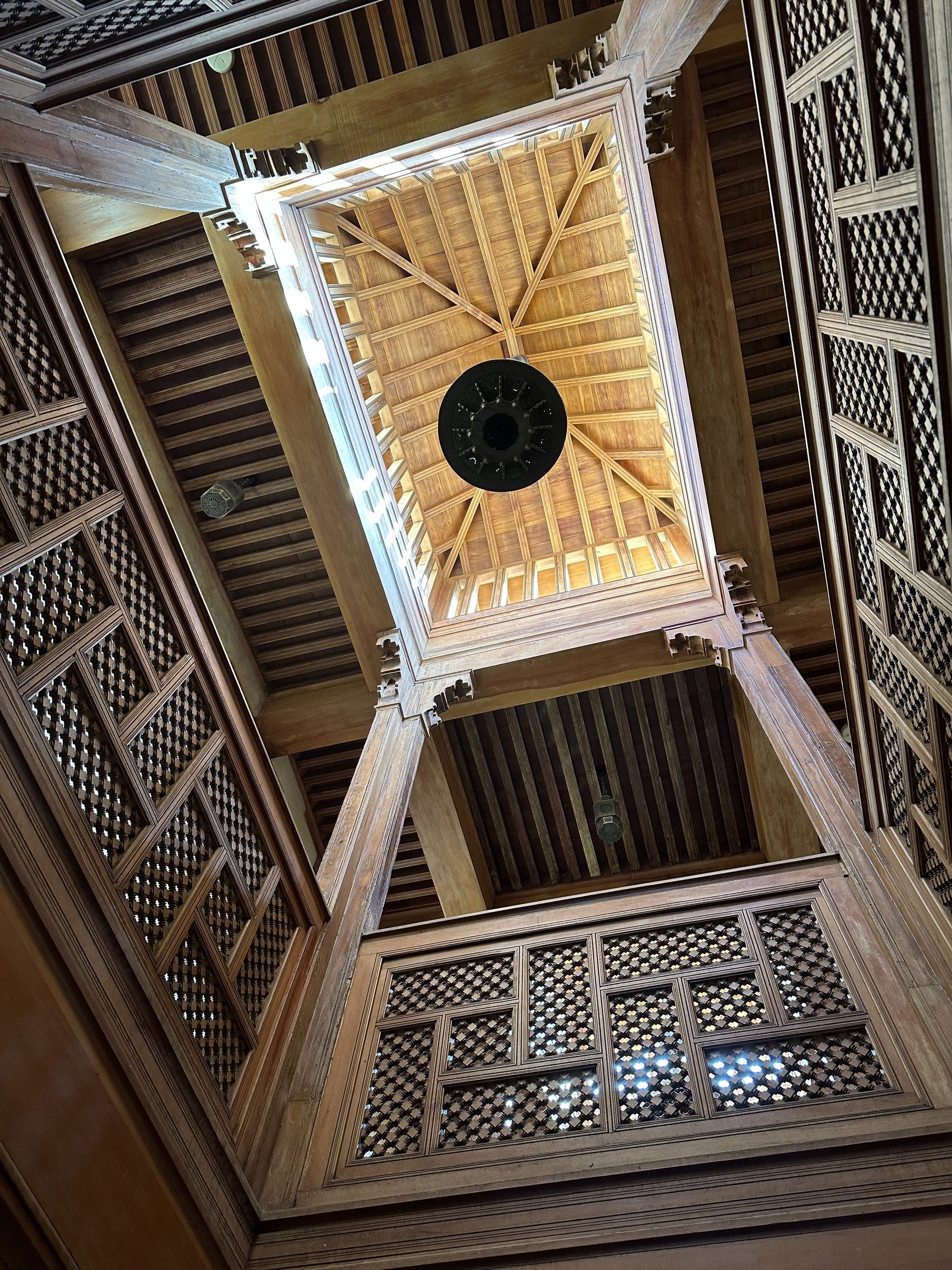
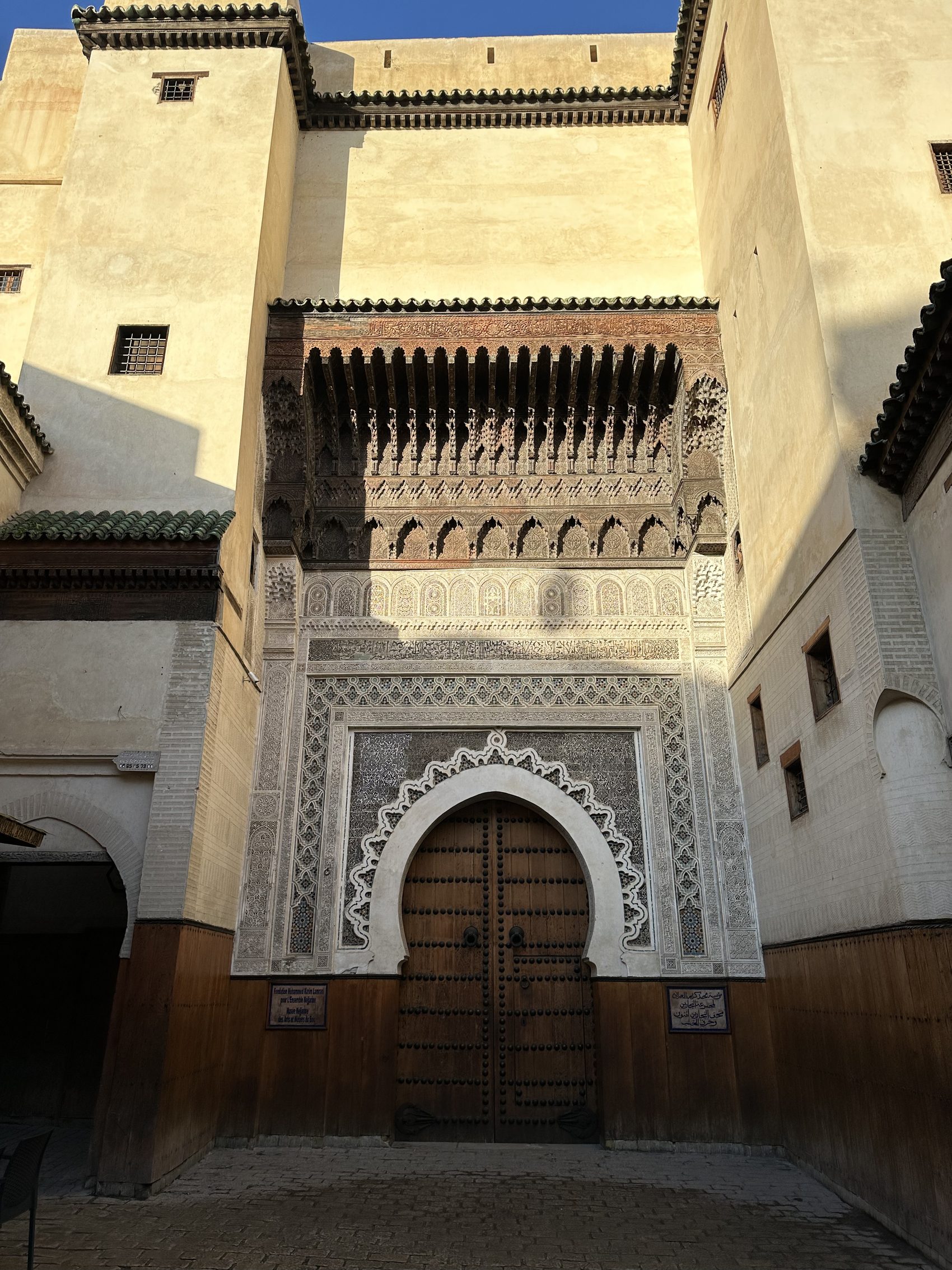
The few doors that open to you are the whole reward. Step off the lane into the Bou Inania or the Al-Attarine medersa and the noise drops at once. Every surface has been worked: zellij underfoot in cold points of colour, cedar overhead gone soft grey with age, plaster cut so fine it reads as lace, and a stillness the street never has. Put a hand to the wall and it is cool as water. The great mosque and university of al-Qarawiyyin, founded by tradition in 859 and often called the oldest still-running university in the world, is closed to you if you are not Muslim, but you can stand in the doorway and look down the long aisles of arches to the courtyard and the light in it. That glimpse is the thing people mean when they say Fez keeps its best behind a wall. They are right. The lanes are only the way to the door.
Three days and two nights is enough for the place, if not enough to learn the map. The climb out of the walls to the Merenid tombs on the hillside gives the long view back, and from up there the whole medina makes sense at last: not a maze but a field of courtyards, every flat roof a lid on a room turned away from the street, the call to prayer rising from all of it at once. Three days of getting lost turn out to have been three days of looking for the door. Fez hands you that without making any effort at all.