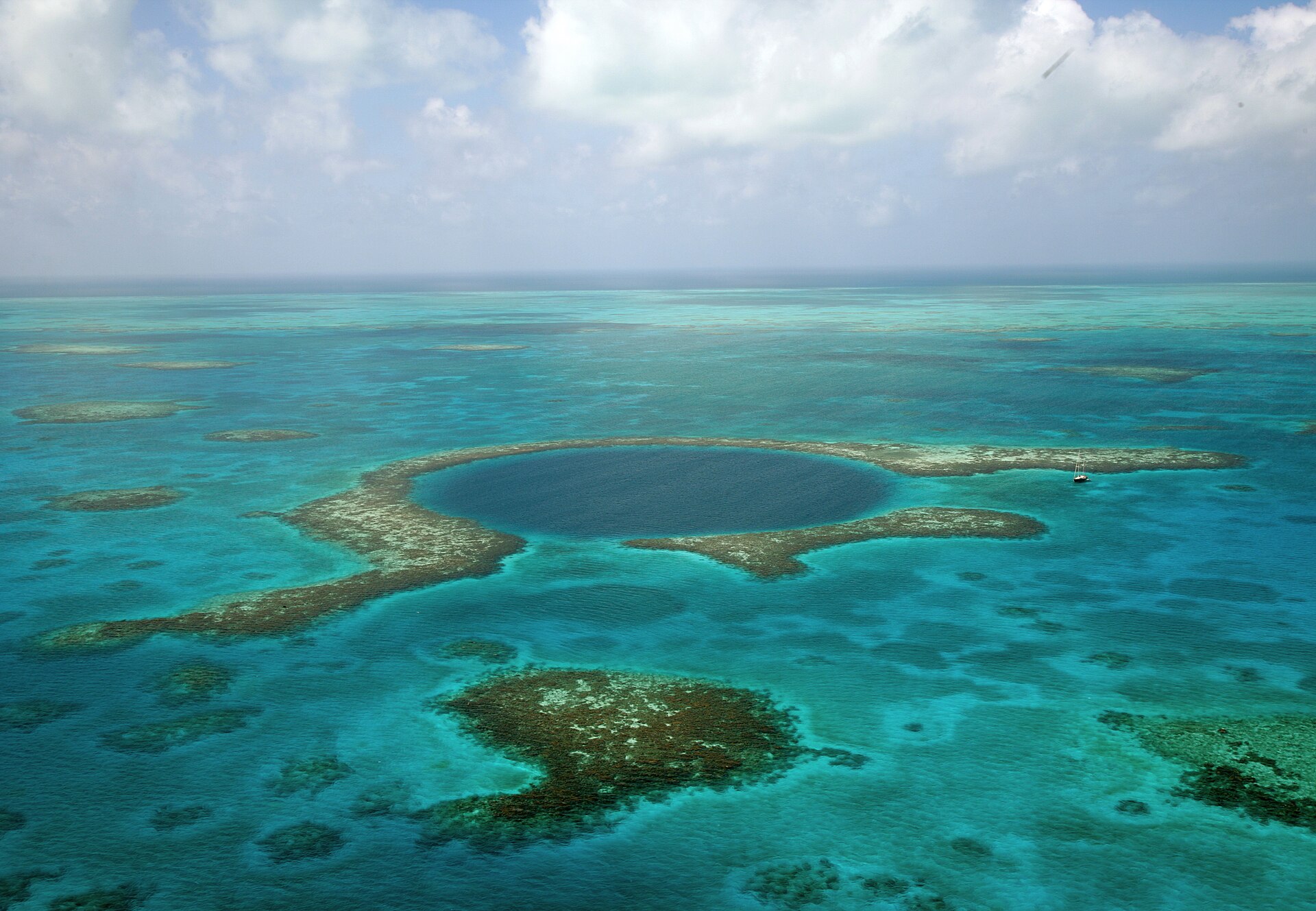
None of what the submersible found is within reach of anyone on a day boat. The recreational profile bottoms out at about 40 metres, which is fifty metres of clear water above the anoxic lid. It starts over a sandy limestone shelf at around 40 feet, then the floor withdraws and the rest is a free descent in open blue, nothing to fix on until a wall comes out of the dark.
The wall carries the speleothems, at roughly 130 to 160 feet, angled back under an overhang, and divers reach for domestic comparisons to convey the size of them, houses or chandeliers. Then the group turns and goes back up. Time at maximum depth is about five minutes, ten at the alcove on a generous profile, inside a total dive of 25 to 35 minutes including descent, ascent and safety stop, and one diver's log at almost 45 metres records five minutes of no-decompression time available there.
Operators treat Advanced Open Water plus deep-dive experience as the working requirement, and many want 24 to 30 logged dives on top of it. The bar varies by shop, so confirm it before booking. Certification card and dive insurance are checked at the counter, and buoyancy is assessed in the water. An Open Water certification caps a diver at 18 metres, which puts the overhang out of reach and leaves nothing to see.
Water clarity inside is the other gap between the dive and the photograph: the 2018 expedition logged visibility anywhere from zero to 80 feet, and first-hand accounts describe swimming past the stalactites in murk at 30 to 40 metres. Nitrogen narcosis at that depth is normal, briefed in advance, and reported openly by divers who felt buzzed. Many operators run enriched air in the EAN 24 to 27 range for this dive.
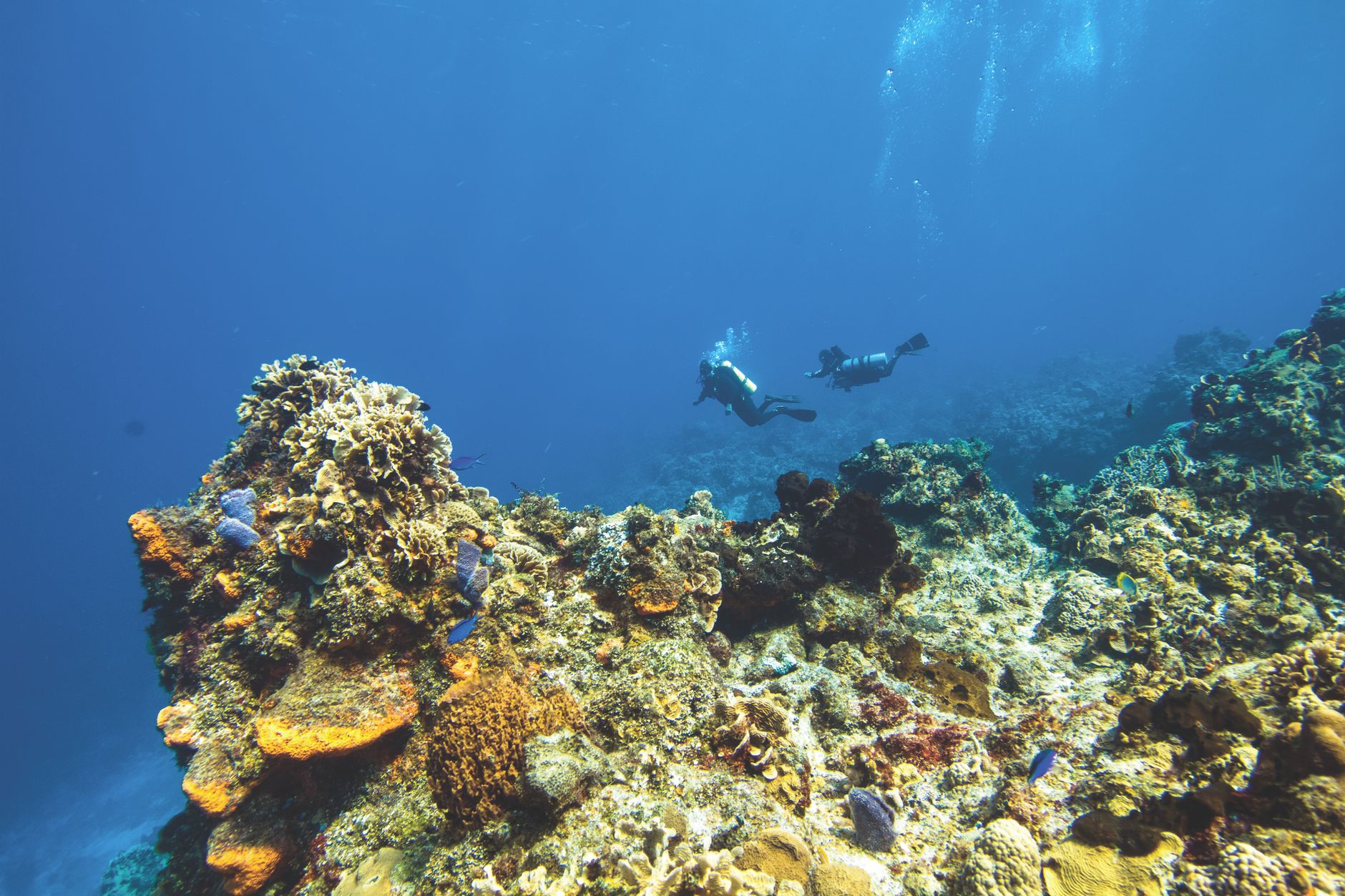
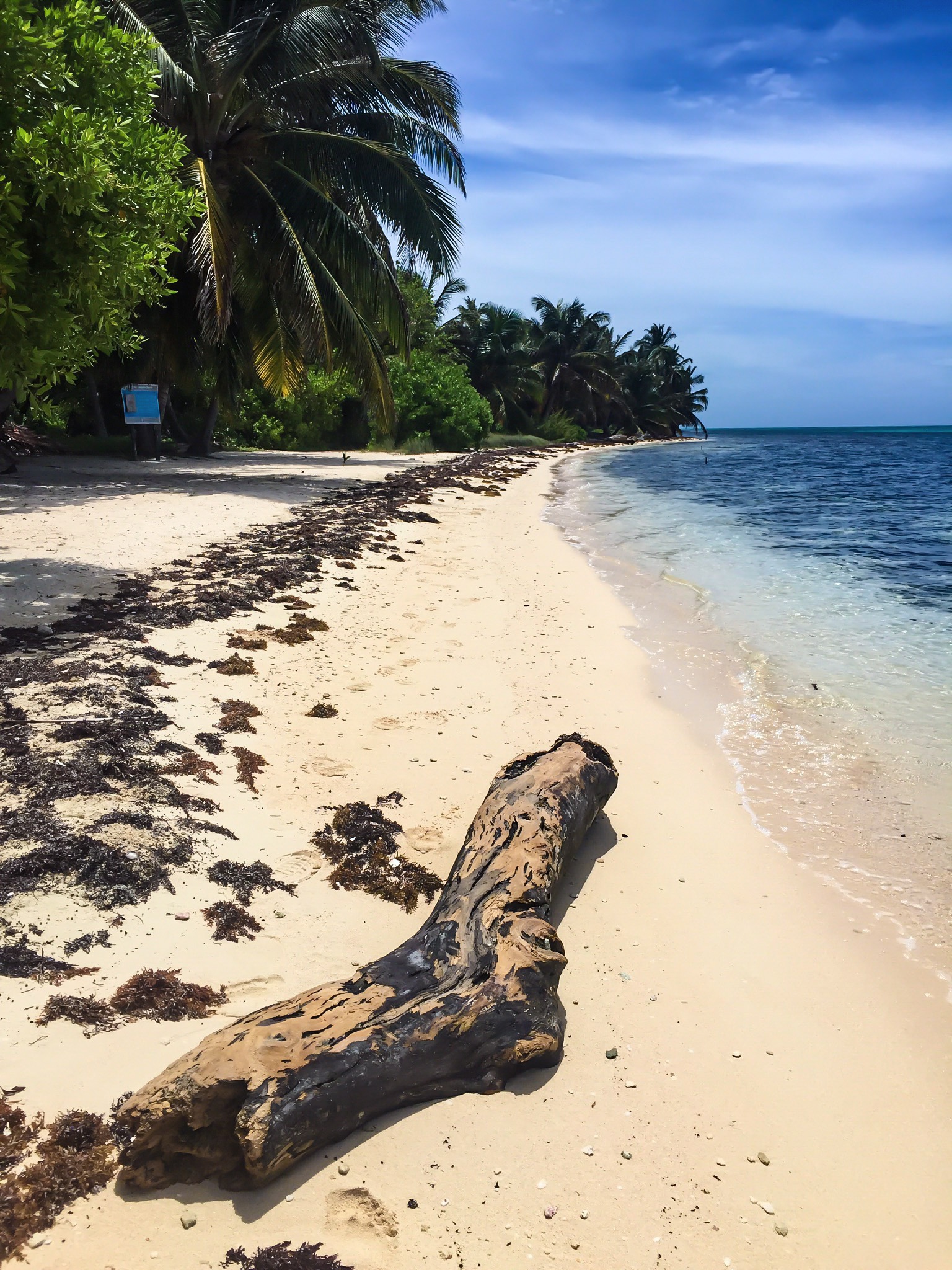
The standard day is three dives. The Blue Hole first, deep and short. Then Half Moon Caye Wall at about 18 metres, then the Aquarium off Long Caye at about 15 metres, the second two running near 70 minutes each as drift dives. Lunch is ashore on Half Moon Caye, which became Belize's first protected area in 1982 and is managed, along with the Blue Hole Natural Monument itself, by the Belize Audubon Society.
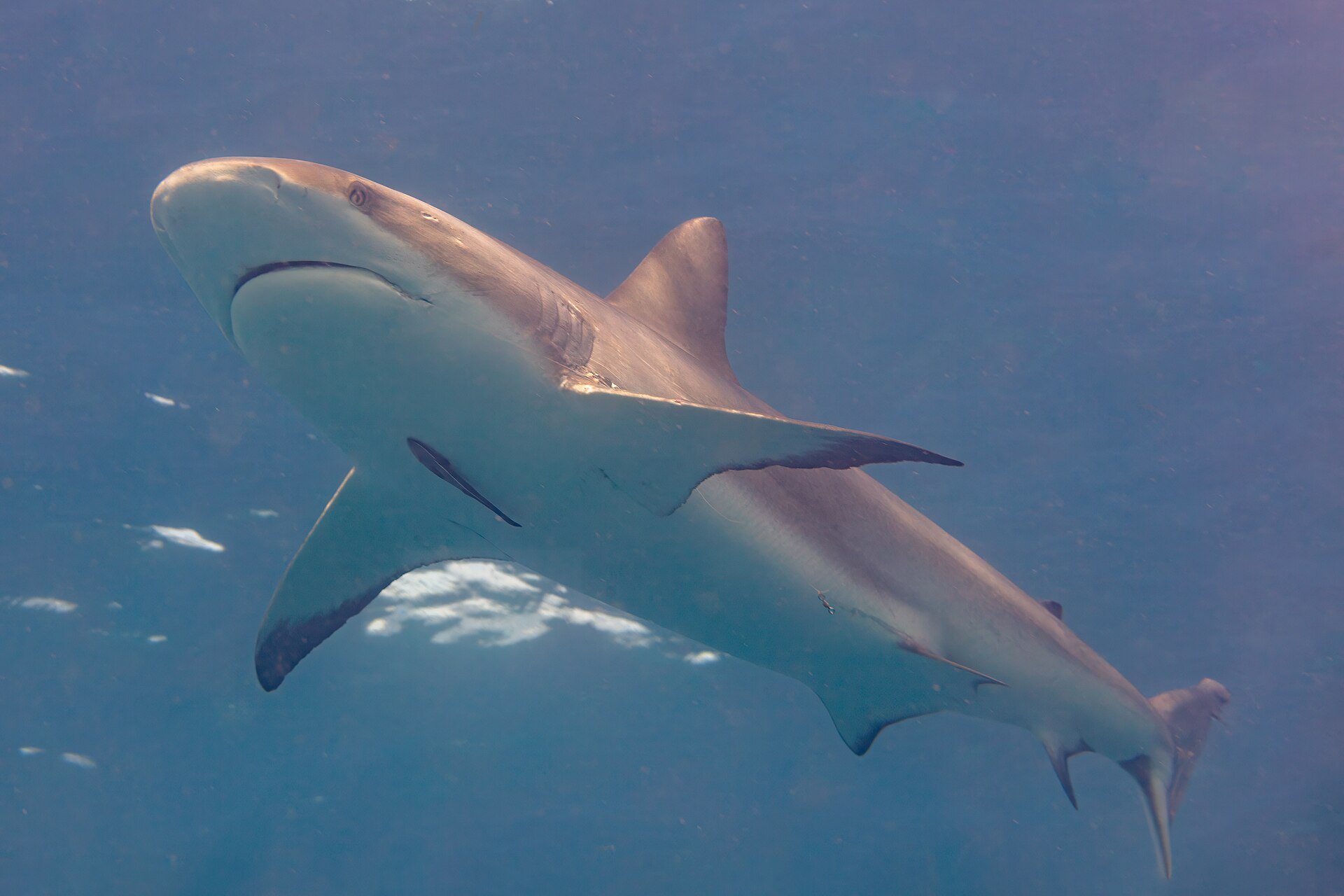
Wildlife is luck and no operator can promise it. Some descents are accompanied by ten to fifteen Caribbean reef sharks circling below the group. Others produce nothing alive inside the hole at all, one diver logging a single lobster at about 75 feet. Both outcomes are ordinary, and the moray eels, the spotted eagle rays and a two-metre roughback stingray reported at Long Caye all turned up on the shallow dives.
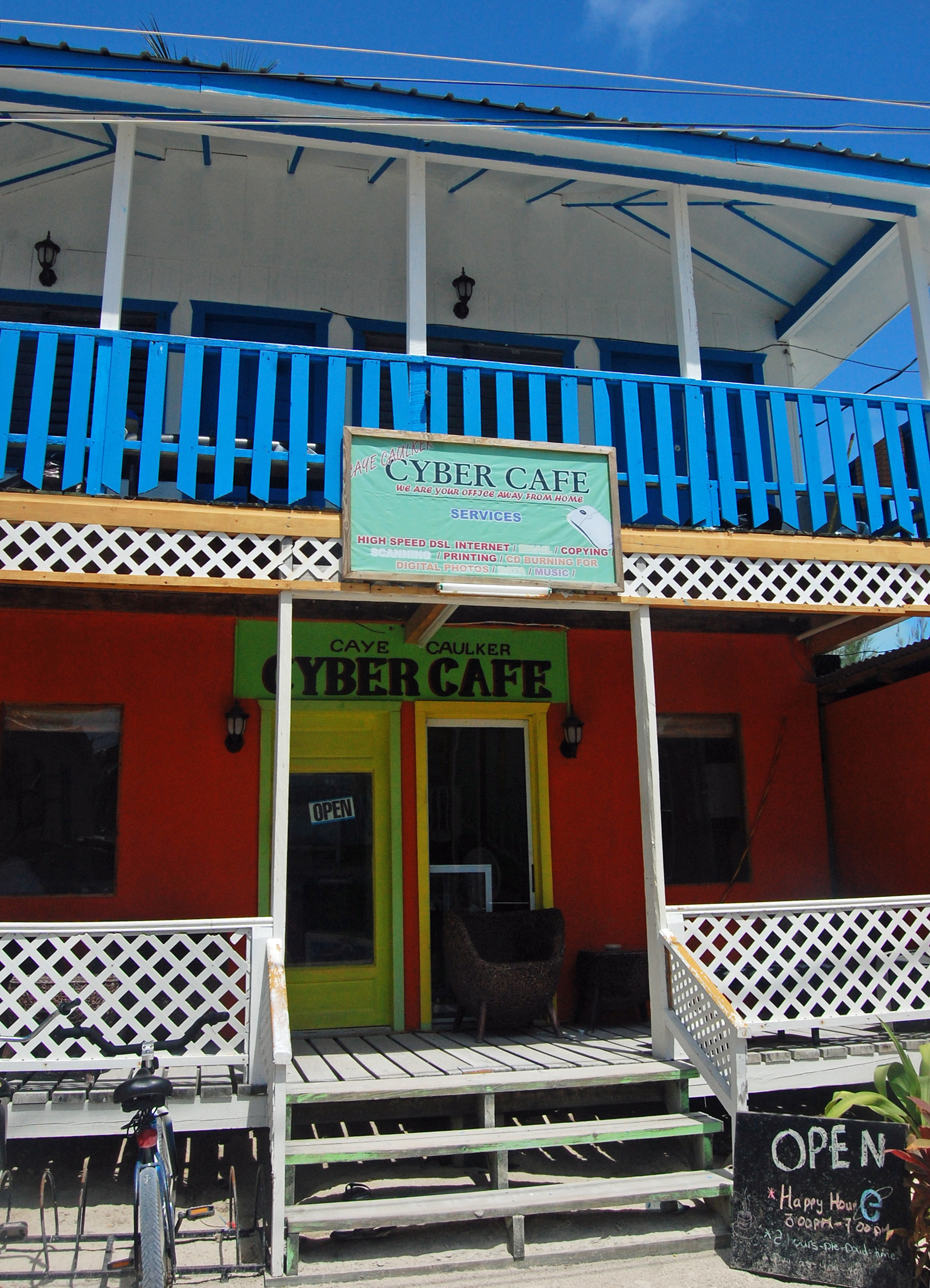
The day is long and most of it is boat. From San Pedro on Ambergris Caye or from Caye Caulker, pickup falls between half past four and half past five, the boat leaves around six, and the crossing takes two to two and a half hours each way.
Call it ten to twelve hours, roughly five of them sitting on a boat. The run out from Ambergris Caye is some 36 miles, and once past the lee of the cayes it is exposed and frequently choppy, choppy enough that getting in and out of the water becomes awkward. Breakfast is served on board and several operators hand out rum punch on the way home. Take the motion-sickness tablets before boarding, not once the symptoms start.
It is also the expensive end of Belizean diving, and the quoted figure is usually a dive fee plus tax plus a park fee collected separately. Operator pages quote it consistently at about US$40 per person, cash, handed over at Half Moon Caye and normally excluded from the tour price, but the Belize Audubon Society's own page for the Blue Hole Natural Monument has been offline, so that figure rests on operator sources alone.
Whether it is one fee covering both Audubon-managed monuments or two separate charges is settled nowhere, so ask the operator at the time of booking what the park fee is and whether it is included. Belize dollars are pegged to the US dollar and US currency circulates freely, but the caye has no bank, so carry the US dollars in cash and assume the fee is payable.
"A very deep, short dive to see a rock formation." That is how divers on ScubaBoard summarise the site, and the description is fair.
Whether the day is worth buying is contested, and the disagreement has a consistent shape. Language in the reviews and on the dive forums runs from spiritual at one end to overhyped, overrated and a boring deep hole at the other. The complaints cluster: cost with no amenities to match, the shortage of marine life next to the neighbouring reef dives, a crossing of one and a half to two and a half hours in rough sea, and twenty-five minutes of dive time at the end of it.
A minority are unreservedly delighted and say they would pay it twice. The resolution that recurs most often is that the Blue Hole is the ticket and the other two dives are the value: one blogger calls Half Moon Caye Wall a much superior dive, another rates the hole kind of meh, and one line recurs on the review pages in near-identical form: "I went for the Blue Hole, but I fell in love with the Aquarium."
The scenic flight is the honest way to get the famous image, and it costs less than diving. It runs about an hour, on eleven-seat aircraft where every passenger has a window, and the pilot orbits the hole for one side of the cabin before turning to repeat it for the other. Departures go from Belize City Municipal, Caye Caulker and San Pedro, with Maya Island Air and Tropic Air each flying it on their own days; the days move with the season and every flight is weather-dependent, so telephone rather than trust a timetable found online. Snorkelling shows none of it: the snorkel day trips are good value on the surrounding reef, but the ring shape of the hole exists only from the air over Lighthouse Reef.
There is a third way in, which removes the crossing. The Belize Aggressor IV, formerly the Sun Dancer II, runs Saturday to Saturday out of the Fort George Marina in Belize City, seven nights on Turneffe and Lighthouse Reef, boarding closing on the Saturday evening and diving from Sunday morning to Friday midday. From a boat already sitting on the atoll, the Blue Hole is a short first dive on an ordinary morning rather than the pivot of a twelve-hour day, and the two shallow dives beside it stop being a consolation and become the week.
The choice comes down to what you want to take home. If it is the image, fly: the aerial exists nowhere else, and the flight is also the answer for anyone certified only to 18 metres or prone to seasickness. If it is the dive, come with Advanced Open Water and genuine deep experience and accept the trade of five minutes at the bottom, knowing the two reef dives will probably be the part you talk about. If it is neither, the reef is the better purchase anyway. Book the snorkel day and let the hole go.
What lies underneath the dive was only mapped in 2018, when a three-person submersible made twenty-two crewed descents and came back with the first sonar survey of the interior. The shaft runs about 318 metres across and somewhere past 120 deep, and the findings explain why the water below the tourist depth stays empty: a hydrogen sulphide layer at roughly 90 metres seals the hole like a lid, nothing lives beneath it, and the floor holds a graveyard of conch that fell over the rim, drag marks still legible where they crawled their last few feet. The crew also reported, and chose not to film, what they believed were the remains of two of the divers lost here over the years.
The hole itself is a drowned cave. It formed dry during the ice ages, when the sea sat some 150 metres lower; the roof fell, the ocean returned, and stalactites that can only grow in air were left hanging at 30 to 50 metres underwater, which is exactly the band the dive descends into. Cousteau's team cut one out in 1970, nearly a tonne of it, and researchers have been reading the hole's sediments and stones ever since, most recently pulling a core that records five millennia of Caribbean storms.
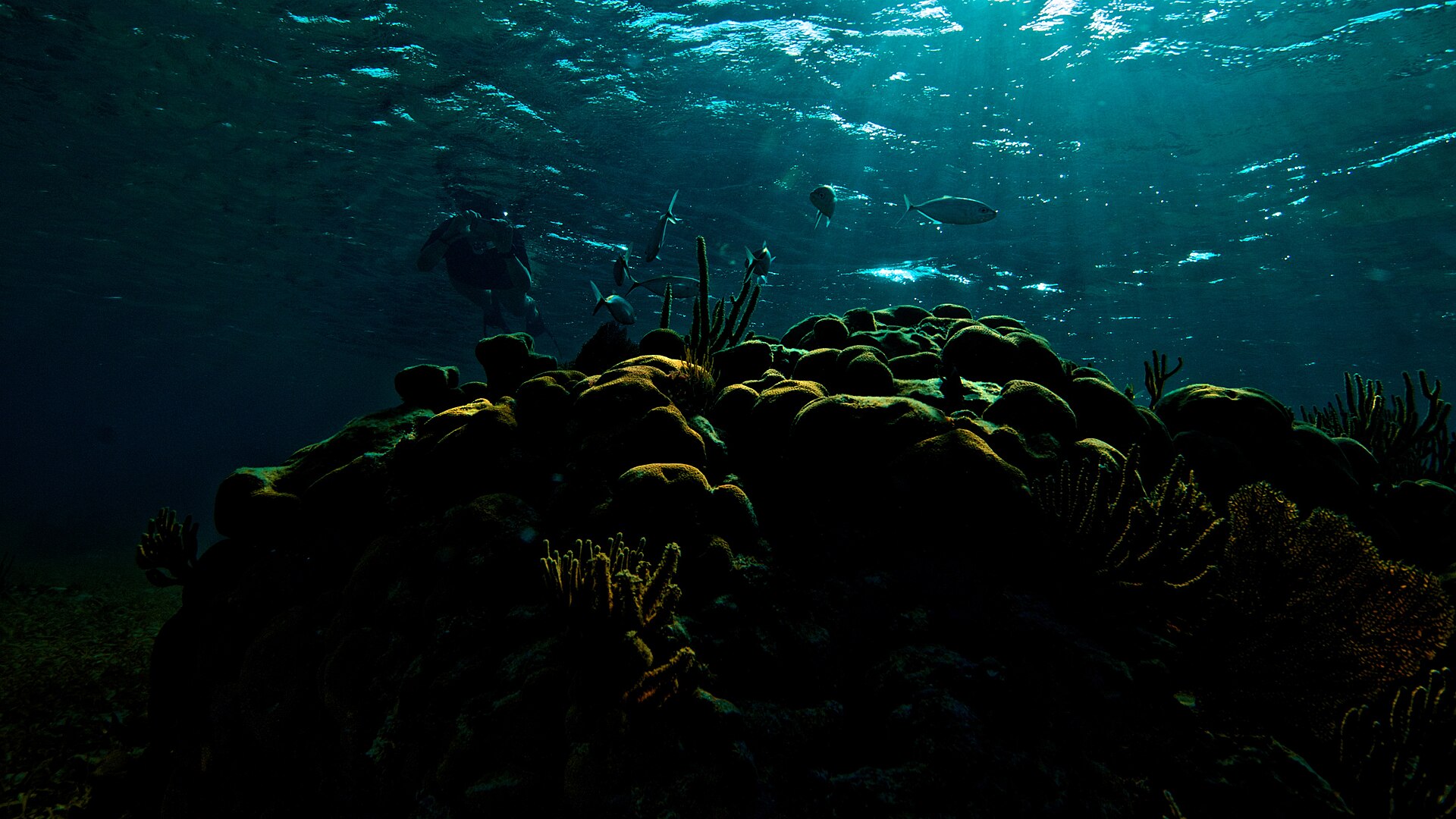
One thing to weigh before choosing: the reef around the hole is under more pressure than the hole itself. Belize banned offshore oil exploration across its entire maritime zone in 2018, which took the barrier reef off the World Heritage danger list after nine years, and a debt conversion signed in 2021 funds marine protection through 2040. The coral has not been spared by any of it, with 2024 the worst bleaching year on record for the Mesoamerican Reef and a stony-coral disease working through Belizean waters since 2019. None of that is visible from a dive boat on a good morning, and all of it argues for valuing the two reef dives as highly as the famous hole between them.
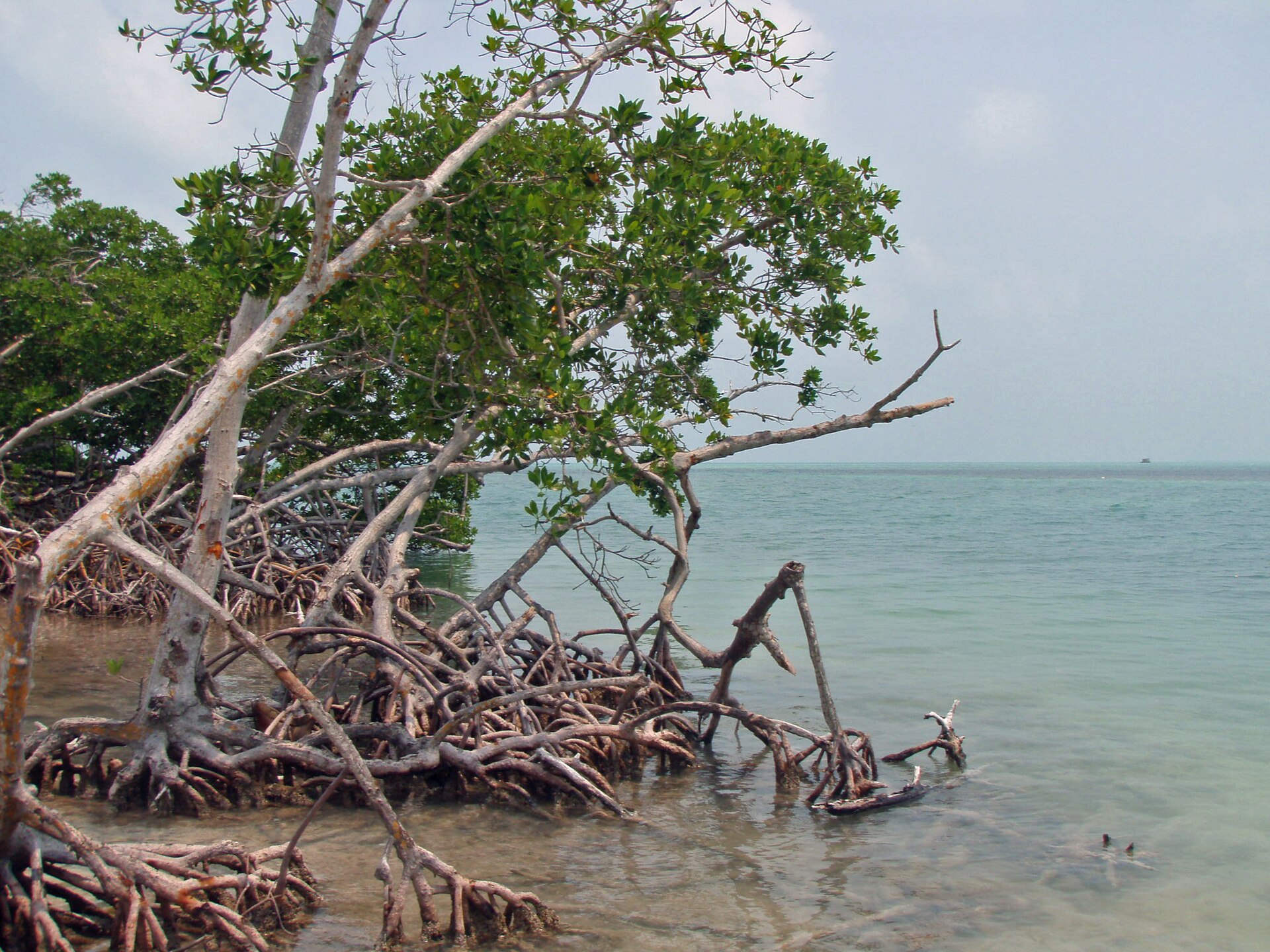
Season is the last lever, and it acts mostly on the crossing. December to April is the dry window, with the calmest sea, visibility often past 30 metres and water at 26 to 28 C; April to June rates nearly as well. Hurricane season runs June to November and peaks in August and September. Wet-season rain rarely spoils visibility offshore, but the surface gets rough and the two-hour run is what suffers. Day trips and flights both run on fixed days per operator and fill through the dry season, so allow several days' notice from December to April, more for a liveaboard berth.
One last thing to get right at the point of booking, because search results conflate the two constantly. The Blue Hole meant here is the one in Lighthouse Reef Atoll, seventy kilometres out to sea, reached by boat or by air. St Herman's Blue Hole National Park is an inland cenote in the Cayo District near Belmopan, about two hours by road from Belize City, and nothing at all to do with it.