The high altar of St Mary's Basilica is a pentaptych: a central shrine, two movable inner wings, two fixed outer ones, a predella below and a carved finial above. The figures were cut from linden trunks, the structure framed in oak and the backing panels in larch, roughly two hundred figures, the tallest about 2.7 metres. Veit Stoss, known in Poland as Wit Stwosz, came from Horb am Neckar for the commission and worked on it from 1477 to 1489.
In 1939 the whole thing was dismantled, crated and hidden in cellars as far off as Sandomierz. A German unit, Sonderkommando Paulsen, tracked the crates down and shipped them to Nuremberg Castle, and Nuremberg was then bombed to ruin above them. Polish prisoners passed word of the location to the resistance, it was recovered in 1946, and it went back up in the basilica in 1957, eighteen years after it left.
A pentaptych has two states. Closed, the outer panels show one cycle of scenes; open, the shrine and the inner wings show another. The wings are opened by hand, at a set time, every day, and this is the single most useful piece of timing in Krakow.
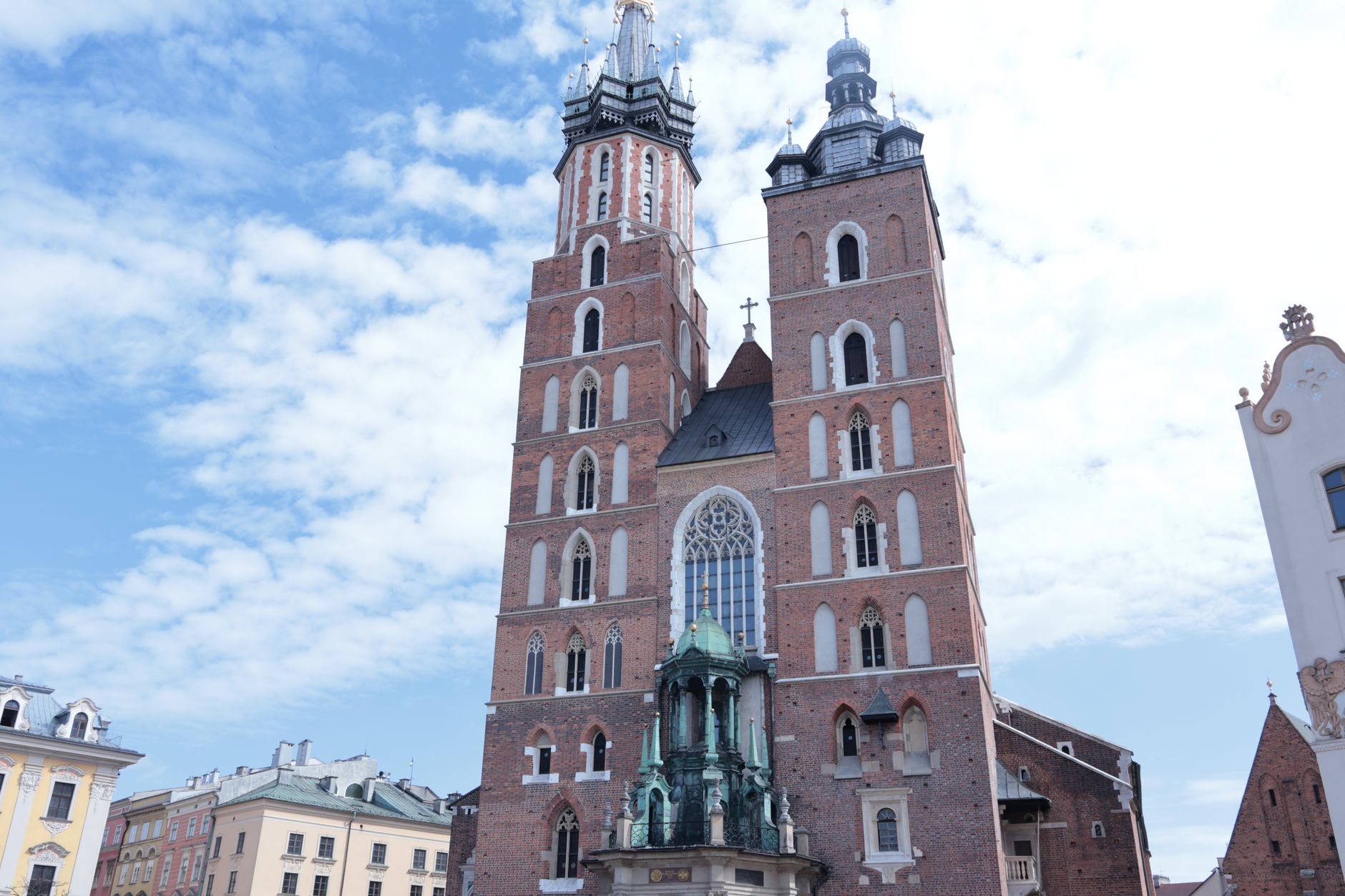
The basilica admits visitors from 11.30 Monday to Saturday and from 14.00 on Sundays and holidays. The altarpiece is opened at 11.50 Monday to Saturday, at 14.10 on Sundays and holidays, and closed again at 18.00. Arrive at 11.30 and you get twenty minutes of stained glass and star-vaulting before it opens. Arrive at three and you will never know it had been shut. Mass and church holidays override all of this, so confirm on mariacki.com the week you travel.
Two things catch people at the door. St Mary's has separate entrances: worshippers go free through the west door facing the square, while ticketed visitors use the side entrance on the right, where the ticket office is, and the queue at the wrong door is a daily fixture. Photography needs a separate paid permit that comes with a fluorescent sticker you are expected to wear visibly.
Organised groups come through in the late morning, and Saturday afternoon is the worst of the week. The tower is a third ticket again, a little over two hundred steps up a narrow stair, sold same day only at the visitor desk, in groups of no more than fifteen every half hour, with no under-eights, and it shuts from November to April.
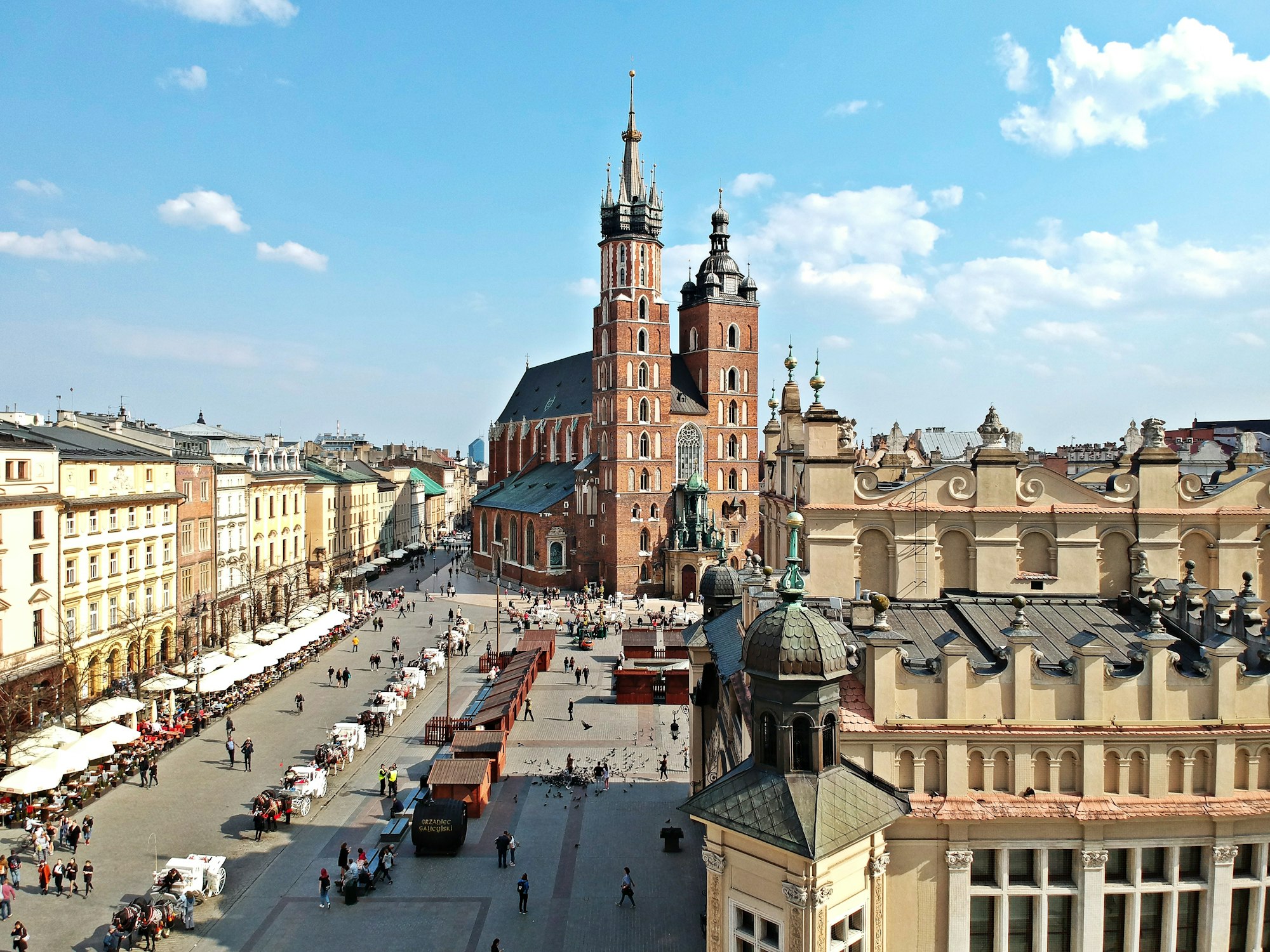
From the taller tower, a trumpeter plays the hejnal mariacki on the hour, every hour, around the clock, four times over, once towards each cardinal point. The call turns up in the city's pay records in 1392 and nobody knows who wrote it. Since the nineteenth century it has been played by serving members of the city fire brigade, and since 1927 the noon call has gone out live on Polskie Radio, which is why noon is the famous one.
It costs nothing, and most visitors hear it once by accident without registering that it repeats twenty-three more times that day. The melody stops mid-phrase, and the reason given is a trumpeter shot through the throat by a Tatar arrow during the Mongol siege of 1241. That story first appears in print in Eric P. Kelly's 1928 novel for American children, The Trumpeter of Krakow, credited to a tale a Krakow hostess named Aniela Pruszynska told him. The legend is younger than the broadcast that made the tune famous.
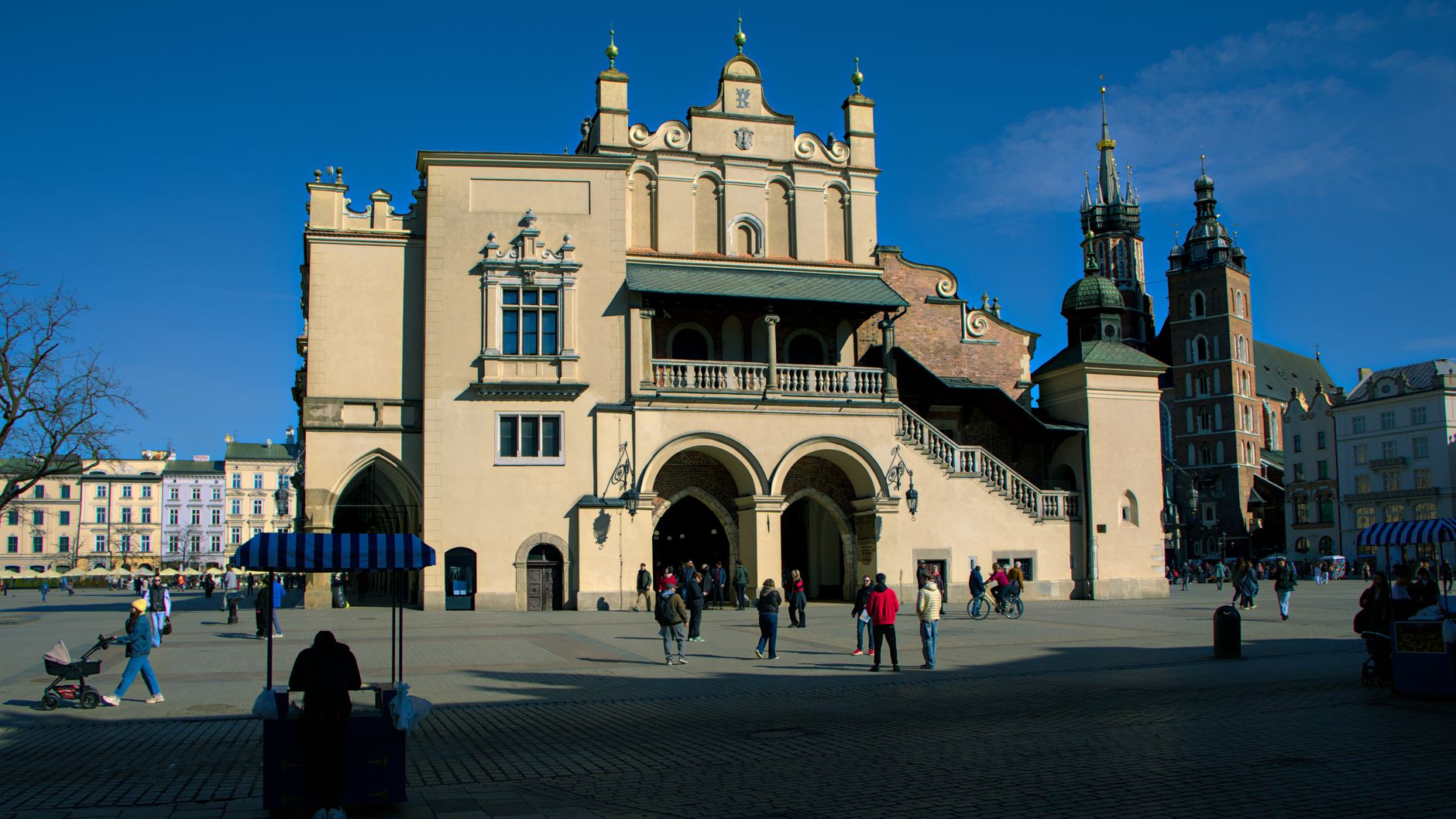
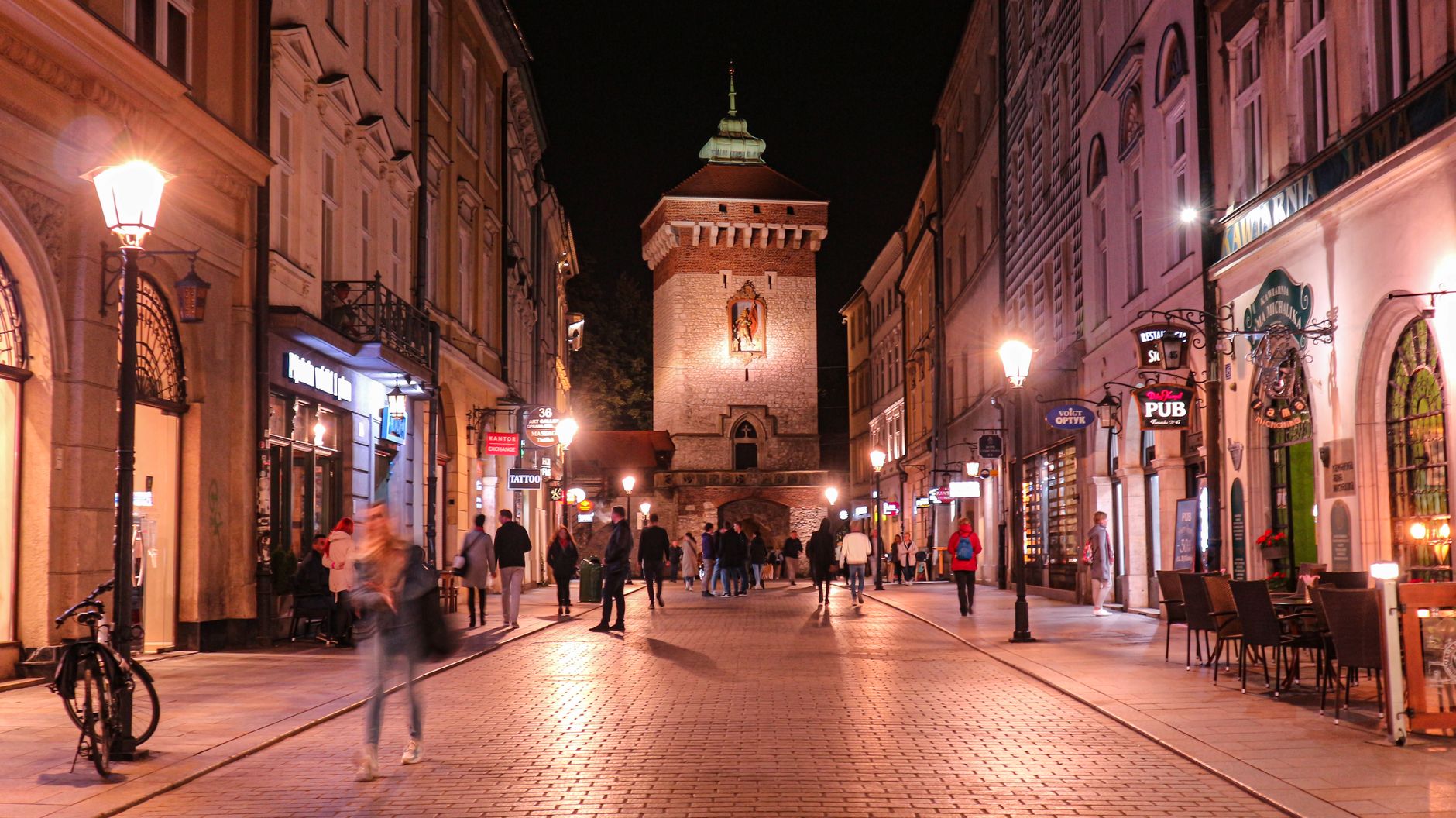
The square the tower plays over is a planning document. Duke Boleslaw V the Chaste refounded the ruined city on a fresh grid under Magdeburg law in 1257, and that grid, with the Rynek Glowny at its centre, is the street plan a visitor still walks.
All of it survived for administrative reasons. Krakow was the royal capital until 1596, when Sigismund III moved the court to Warsaw, and in 1939 the Germans made it the seat of the General Government, the administrative capital of occupied Poland, so for five years it worked as the occupation's office town. Warsaw rose in 1944 and was demolished in reprisal. Krakow did not rise, and in January 1945 the German garrison withdrew ahead of the 1st Ukrainian Front.
For forty years the credit went to Marshal Ivan Konev, whose flanking manoeuvre supposedly panicked the Germans out before they could fire demolition charges. Polish historians now largely treat that as a post-war construction and hold that there was no German plan to level the city. The Konev monument raised here in 1987 came down in 1991. UNESCO inscribed the result in 1978, in the first cohort of twelve sites ever listed, as three separate historic towns: the Old Town, Wawel Hill, and Kazimierz with Stradom.
Twelve years in the carving, eighteen years away from the church it was made for, and it is opened by hand at ten to twelve.
None of the big sites is one ticket. Beneath the square, the Rynek Underground is built on the medieval market levels, free on Tuesdays with tickets issued at the box office on the day and in limited numbers, with last admission well before closing and the second Monday of every month shut.
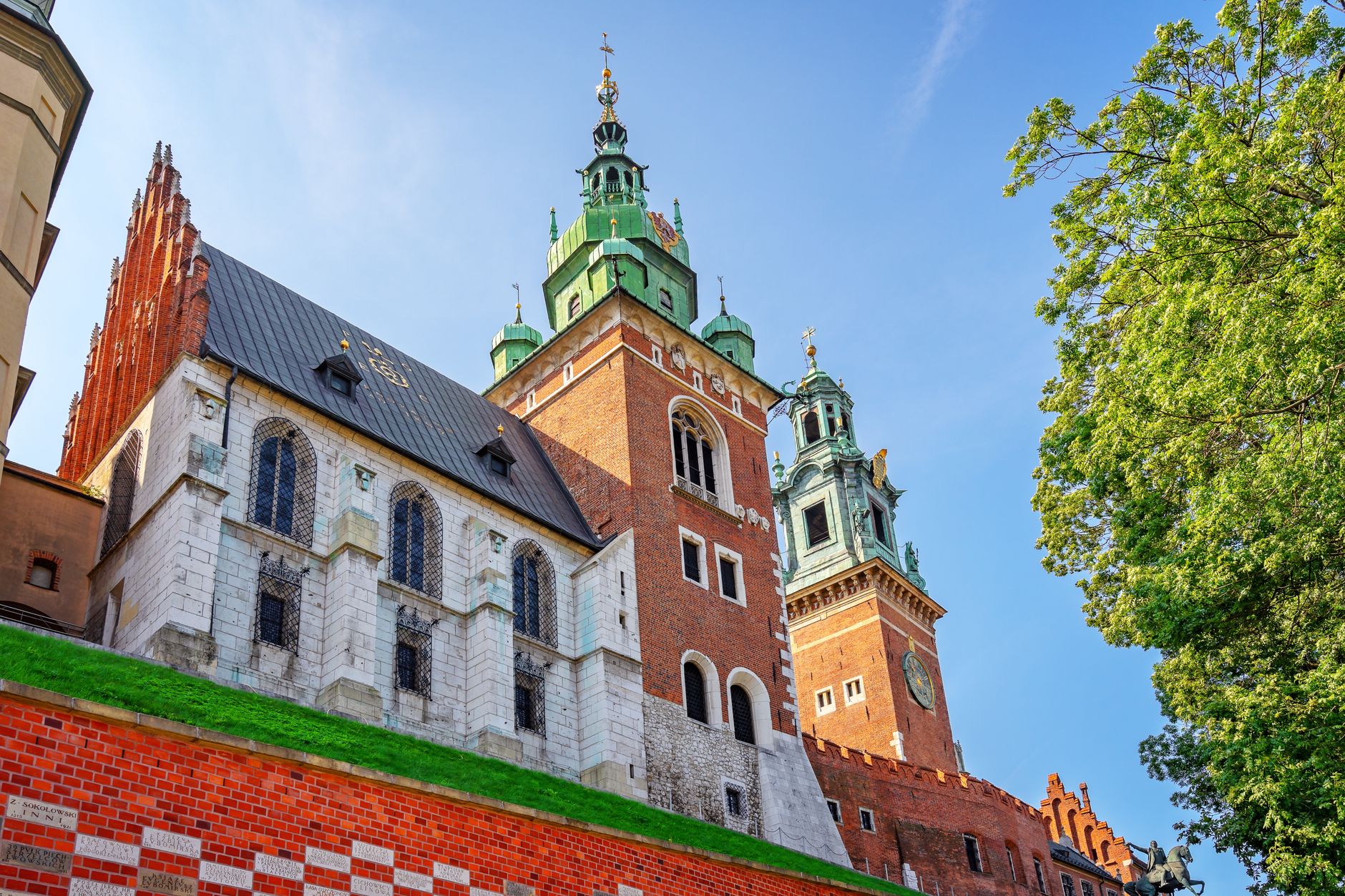
Wawel Hill is where that most reliably goes wrong. The castle exhibitions are timed entry, booked through bilety.wawel.krakow.pl, with slots released about a month ahead. The cathedral is a separate operation: tickets for it, the Royal Tombs, the Sigismund Bell and the Cathedral Museum are sold only at the small office opposite the cathedral door, and photography inside is banned.
Free castle passes exist, are collected in person at the ticket window, and run out early. The Dragon's Den runs seasonally, from late April to the end of October, and the hill itself is free to walk.
North of the Old Town, the MNK Czartoryski Museum on ul. Pijarska holds Leonardo's Lady with an Ermine. Entry is timed and free on Tuesdays, and the ticket admits you to other National Museum branches within three months, the Sukiennice gallery among them.
Kazimierz reads as a separate place because for four and a half centuries it was one, a royal town founded by Casimir III in 1335 and absorbed into Krakow only in the late eighteenth century. Jews were concentrated there from the close of the fifteenth century, and the synagogues and cemeteries are what remain.
The Remuh on ul. Szeroka is mid-sixteenth century and still in use, with a cemetery behind it of around seven hundred stones from the sixteenth to eighteenth centuries and a wall assembled from headstone fragments smashed during the war. Do not plan around published opening hours. They shift with the Jewish calendar and the buildings close for services and private events at short notice, so go in the morning and ask on the day.
The revival is also a nightlife revival, a party at ten on a Saturday night, and much of the Jewish-style trade on ul. Szeroka is themed.
One correction matters more than any of that. The Krakow Ghetto was never in Kazimierz. In March 1941 the German authorities sealed off part of Podgorze, on the south bank of the Vistula, and forced in a population usually put at fifteen to twenty thousand people, into a quarter that had housed perhaps three thousand. It was liquidated in March 1943. Cross the Kladka Ojca Bernatka footbridge, or take tram 3, 20, 24 or 50.
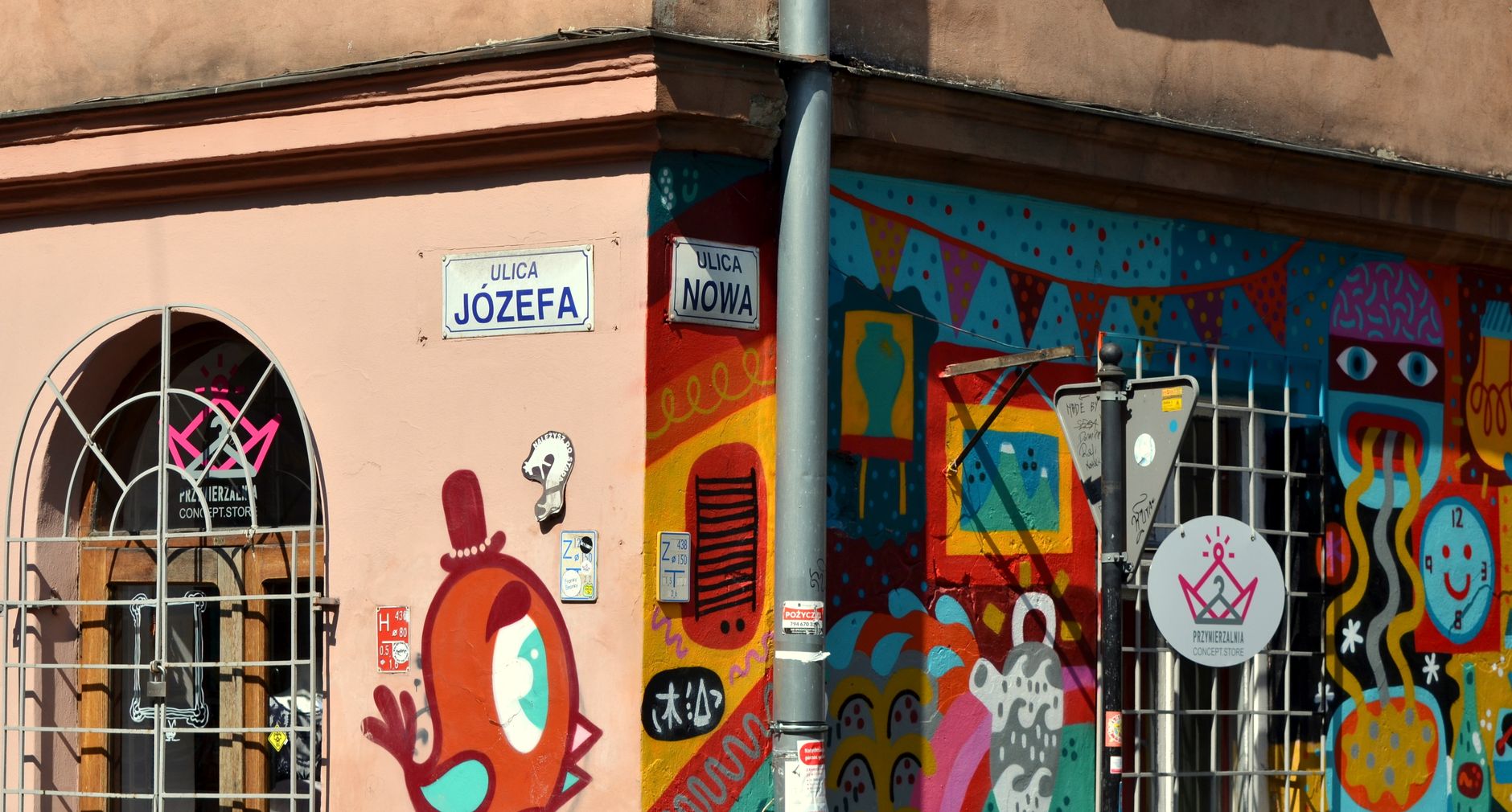
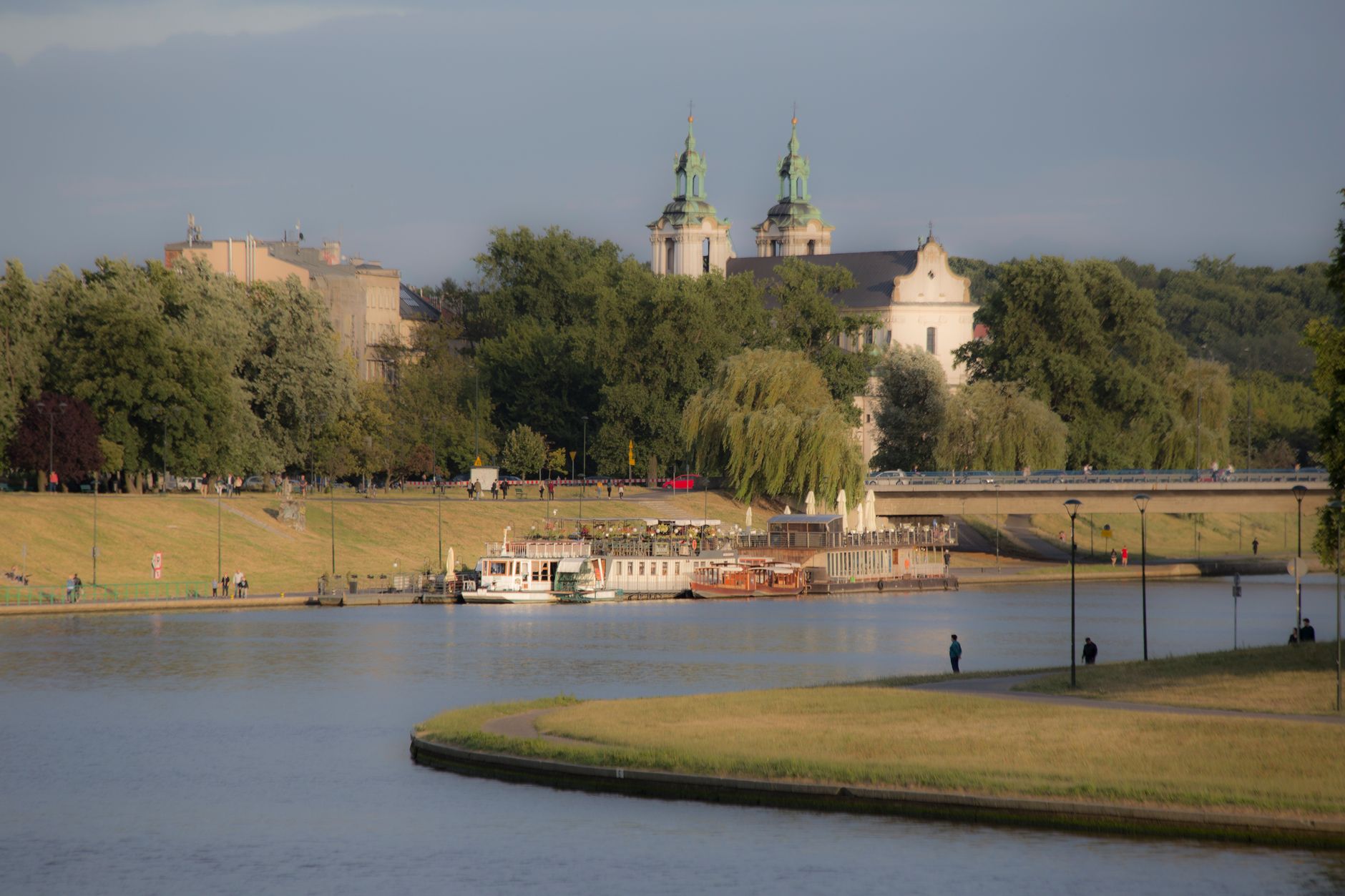
Podgorze has had none of that revival, which makes the strongest practical recommendation here an easy one: the ghetto sites are free, half an hour's walk from the Rynek, and almost empty.
Plac Bohaterow Getta, the square from which people were deported, carries a memorial of empty steel chairs set out across the open paving, installed when the square was rebuilt in 2005 and standing for the furniture left in the street. Two hundred metres south, on ul. Lwowska, some twelve metres of the ghetto wall survive, with rounded tops widely said to echo Jewish headstones, and signage minimal enough that people walk past all day.
On the corner of the square is the Eagle Pharmacy, Apteka pod Orlem, the premises of Tadeusz Pankiewicz, the only Pole permitted to keep working inside the ghetto. It is now a small Museum of Krakow branch with limited days, so check before crossing the river.
Oskar Schindler's Enamel Factory on ul. Lipowa is the other reason people cross, and it is not the museum they expect. The permanent exhibition is Krakow under Nazi Occupation 1939-1945, three floors and some forty-five rooms, and it reaches Schindler roughly two thirds of the way through, his office and its original map included. Visitors who arrive wanting the film leave disappointed.
Tickets are released online ninety days ahead, it is free on Mondays with no advance booking, and it closes on the first Tuesday of the month. Timed entry is enforced and missing a slot can mean being turned away. Last admission is ninety minutes before closing, which is also the minimum to allow, because the rooms are cramped and congest badly when a group arrives. Take tram 3, 20, 24 or 50 to Zablocie, about nine minutes, then walk.
The Auschwitz-Birkenau State Museum is at Oswiecim, about 60 km west of Krakow: roughly 1 hour 25 minutes by bus from the MDA station, or about 1 hour 40 by train. Entry to the grounds is free, but a personalised entry pass is compulsory, must be reserved in advance at visit.auschwitz.org, and must be carried with matching photo ID. No passes are issued at the gate, and individual passes are non-changeable and non-refundable. Free unguided passes are rationed and released only up to about seven days before a visit, or until the allocation is gone; most visitors take the paid guided tour with a museum educator, which covers both sites in about three and a half hours. Auschwitz I and Auschwitz II-Birkenau are 3.5 km apart, connected by a free shuttle roughly every 10 minutes from April to October and every 30 minutes from November to March; a visit that skips Birkenau has missed the larger part of the site. Bags are limited to 35 x 25 x 15 cm, and allow 30 minutes for the security check before your entry time. The museum does not recommend visits by children under 14, and requires due solemnity and appropriate dress. Book it as a full day, and re-read the rules first: they change.
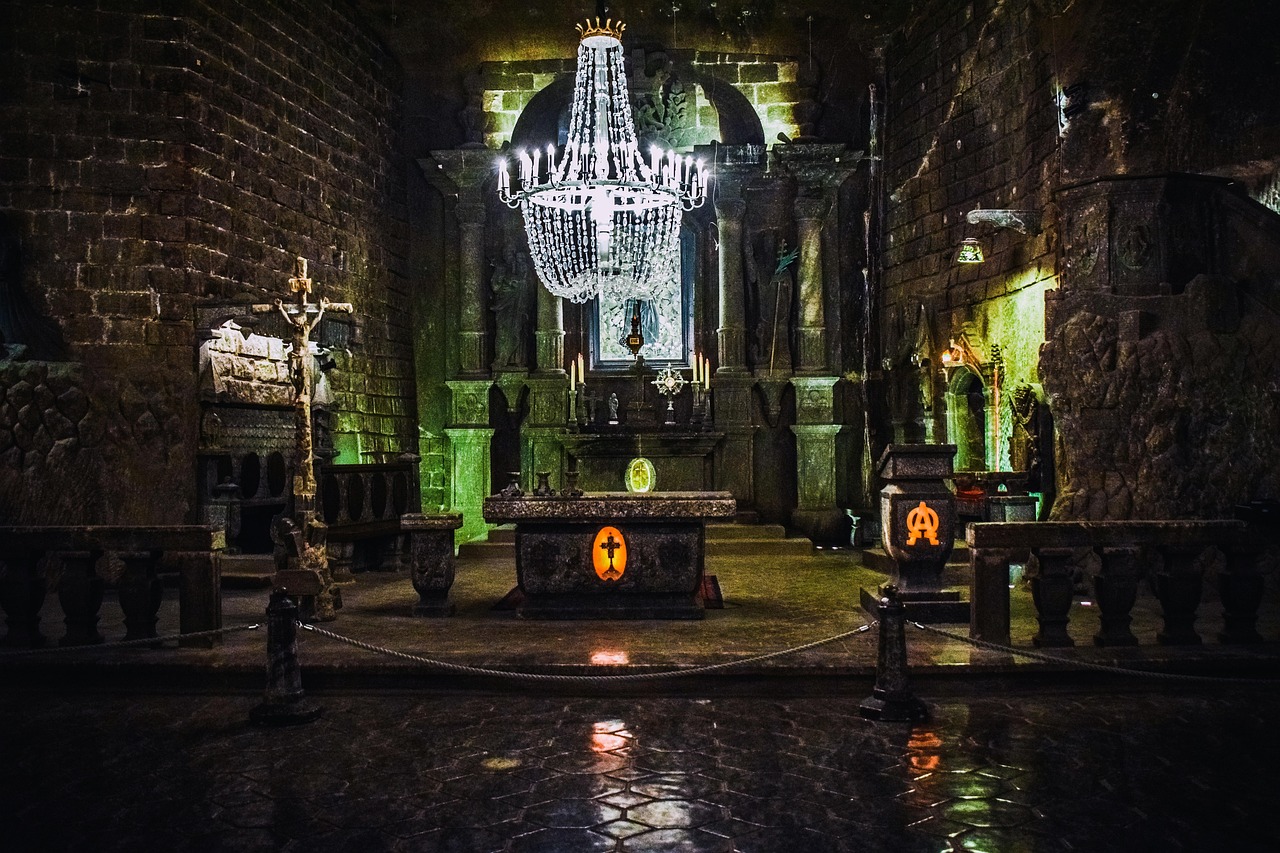
Another World Heritage site within reach has its own booking system: the royal salt mine at Wieliczka, about 14 kilometres southeast, on the list since the same 1978 cohort. Take the train from Krakow Glowny to Wieliczka Rynek Kopalnia, about twenty minutes, then a short walk, or bus 304. A coach excursion buys nothing the train does not.
The Tourist Route runs about three kilometres across three levels, down to roughly 135 metres, entered by the better part of eight hundred wooden steps. The descent is what tires people, and a lift brings you back up, which decides whether a visitor with bad knees goes at all. A guide is compulsory and included, the whole thing takes two and a half to three hours, and it holds seventeen to eighteen degrees down there, so take a layer even in August and shoes with grip.
Book at bilety.kopalnia.pl, the mine's own ticketing site, because resellers rank high in search and it is worth checking the domain before paying. Crowding has got markedly worse, arriving before opening does not guarantee the first slot, and the route ends in a large underground shopping area.
The Main Square restaurants are the one part of the food scene every first-hand account warns about. The obwarzanek krakowski, the plaited ring bread sold from the blue carts, has been an EU protected geographical indication since 2010, covering only the city and the Krakow and Wieliczka counties.
For zapiekanka, the windows are in the Okraglak, the round former ritual-slaughter rotunda in the middle of Plac Nowy: Endzior and Bar Pod Okraglakiem next door. Late at night, the blue Nysa van under Hala Targowa on ul. Grzegorzecka has been grilling kielbasa over wood since 1991. Pod Aniolami on ul. Grodzka does old Polish dishes over beechwood in Gothic cellars, and Bar Mleczny Gornik on ul. Czysta is a working milk bar with four tables. Carry cash at the carts, the van and the milk bars.
The Old Town at eight in the morning is close to empty and by half past ten it is not. Kazimierz and Podgorze before noon are quiet all week. Weekend nights are a different city: cheap flights have made the Old Town a stag and hen circuit, a working Krakow guide describes Friday nights as chaotic and small businesses shutting early to avoid them, and Ryanair keeps adding routes. Do not book a Rynek-facing room for a Friday or Saturday.
Shops cannot sell alcohol overnight, and the window widens on 1 September 2026, out to 22.00 to 06.00. Bars and restaurants are unaffected either way, so a late bottle means a bar. A national tourist tax has been proposed but is not law, so there is nothing to budget for. Hotel Copernicus on ul. Kanonicza puts you three minutes below Wawel, and PURO Krakow Kazimierz sits by the Podgorze footbridge.
Book in this order: the Auschwitz pass first, because the good morning slots go days ahead in summer and the free unguided ones are released only a week out; then Wieliczka; then the Wawel castle exhibitions, about a month ahead; then Schindler's Factory, ninety days out; then the room. The altarpiece needs no booking at all. Be inside St Mary's by 11.30, buy the ticket at the side door, and wait twenty minutes.