Dispatches About Get the App
Benjamin Pazdernik
Portugal  ·  38.72°N 9.14°W

Lisbon on Foot

Written by Daniel Foss  ·  20 June 2026

Four days in the tiled city with good shoes and no particular plan, taking the seven hills the only way that makes any sense of them, which is slowly and on foot.

Baixa Alfama Bairro Alto Belém

Lisbon was built on seven hills, tiled most of them, and paved the gaps with calçada portuguesa, the little limestone cobbles four hundred years of feet have polished to an ice rink. I came in June, in the heat, the week of Santo António, when Alfama hangs paper streamers across its lanes and grills sardines on the doorstep until two in the morning. The first day I fought the gradient, the Santa Justa lift, a funicular, before giving up and doing the only sensible thing, which is to walk and let the city set the pace. Four days on foot will ruin you for flat cities. It costs almost nothing, and the best of it happens between the places you meant to go.

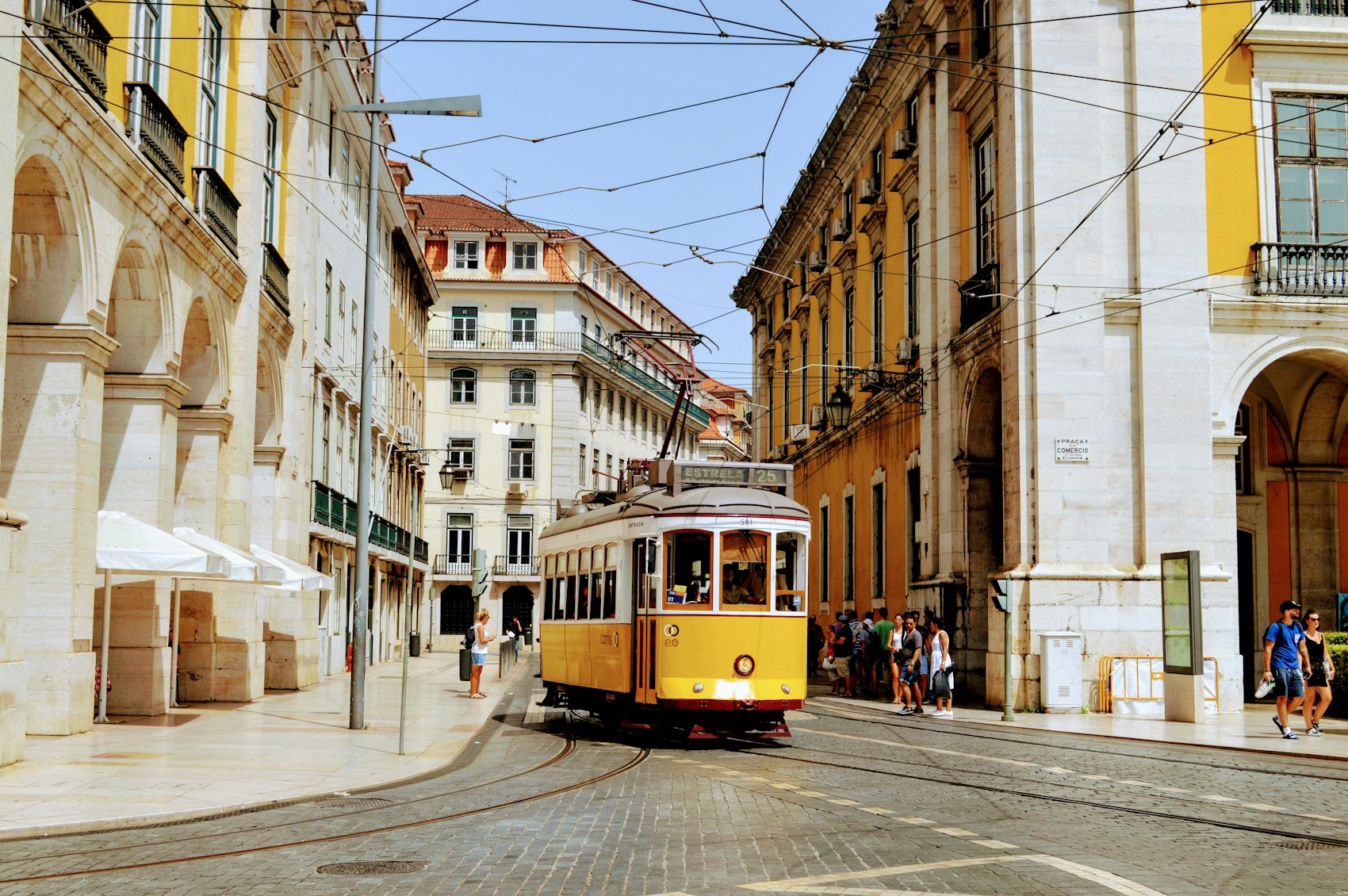
A yellow number 28 tram in the Baixa district of Lisbon
The 28 in the Baixa. Board it up at Martim Moniz or you will stand the whole wayPhotograph by Aayush Gupta

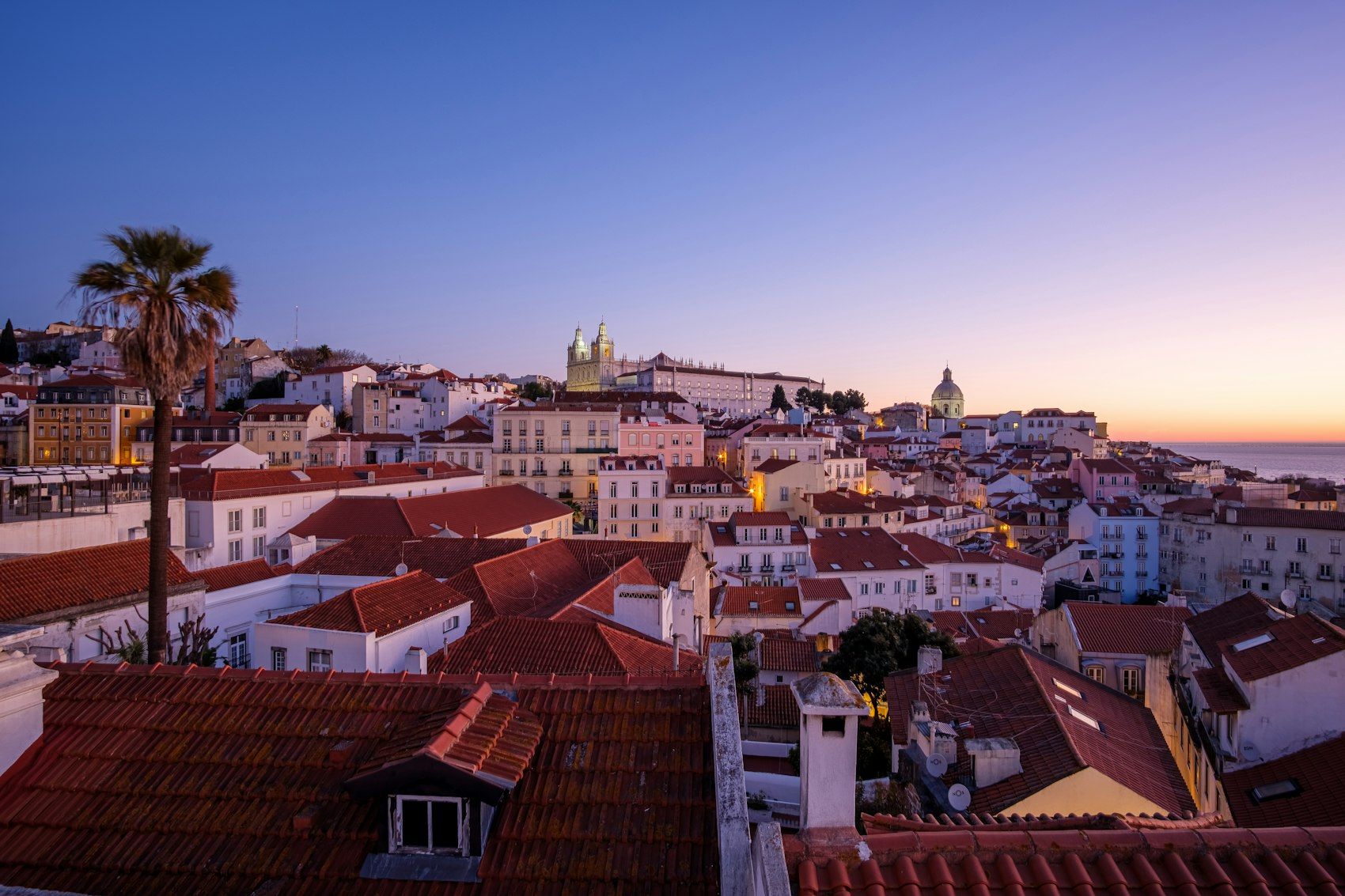
The only flat ground is the Baixa, the grid the Marquês de Pombal threw up after the 1755 earthquake levelled the old town, matching arches and chessboard streets running back from the river at Praça do Comércio. It does not last. Every street that leaves the water tilts within a block, and the payoff for the climb is a miradouro, a railed terrace with a view and usually a kiosk selling cold beer. I worked through the good ones: Santa Luzia, tiled and hung with bougainvillea, the old men slapping down cards; Portas do Sol next door, looking clean over the roofs of Alfama to the cruise ships; and Senhora do Monte up in Graça, highest of all, where half the city comes at dusk to watch the light go and somebody always has a guitar.

Above the Baixa the map gives up, and you should too. Alfama is the Moorish quarter the earthquake spared, too steep for cars and too crooked for sense, the washing strung overhead and a cat on every warm step. On a Tuesday or a Saturday the Feira da Ladra, the thieves' market, lays its junk along the railings by the white dome of the Pantheon: a dead man's medals, a single odd cup, a cassette of somebody's wedding. At night I followed a real voice into A Baiuca, a room the size of a kitchen where the neighbours take turns singing fado, you eat what you are given, and you clap when you are told.

The best of Lisbon costs nothing and happens on foot. You do not so much find it as wear it out, one hill at a time.

Chiado is where the city puts on a collar: the bronze Pessoa outside A Brasileira for the tourists to pose with, the old bookshops, the trams squealing past the statue of Camões. From there the Bica funicular hauls itself up a street so steep the houses look to be tripping downstairs. The thing to drink before any of it is a ginjinha, and the place is A Ginjinha by Rossio, a doorway that has poured nothing but sour-cherry liqueur since 1840, a euro forty a shot, com or sem, with the boozy cherry or without; I had mine com. After dark the noise climbs to Bairro Alto, where the bars are the size of front rooms and the party is out on the cobbles, or drops to Cais do Sodré and the pink length of Rua Nova do Carvalho, an old sailors' street now lined with bars, one of them, Pensão Amor, a former brothel that kept the wallpaper. Eat first: I queued at Cervejaria Ramiro for garlic prawns and a plate of percebes, the goose-barnacles that look like dinosaur toes, and finished, against all reason, with a steak sandwich.

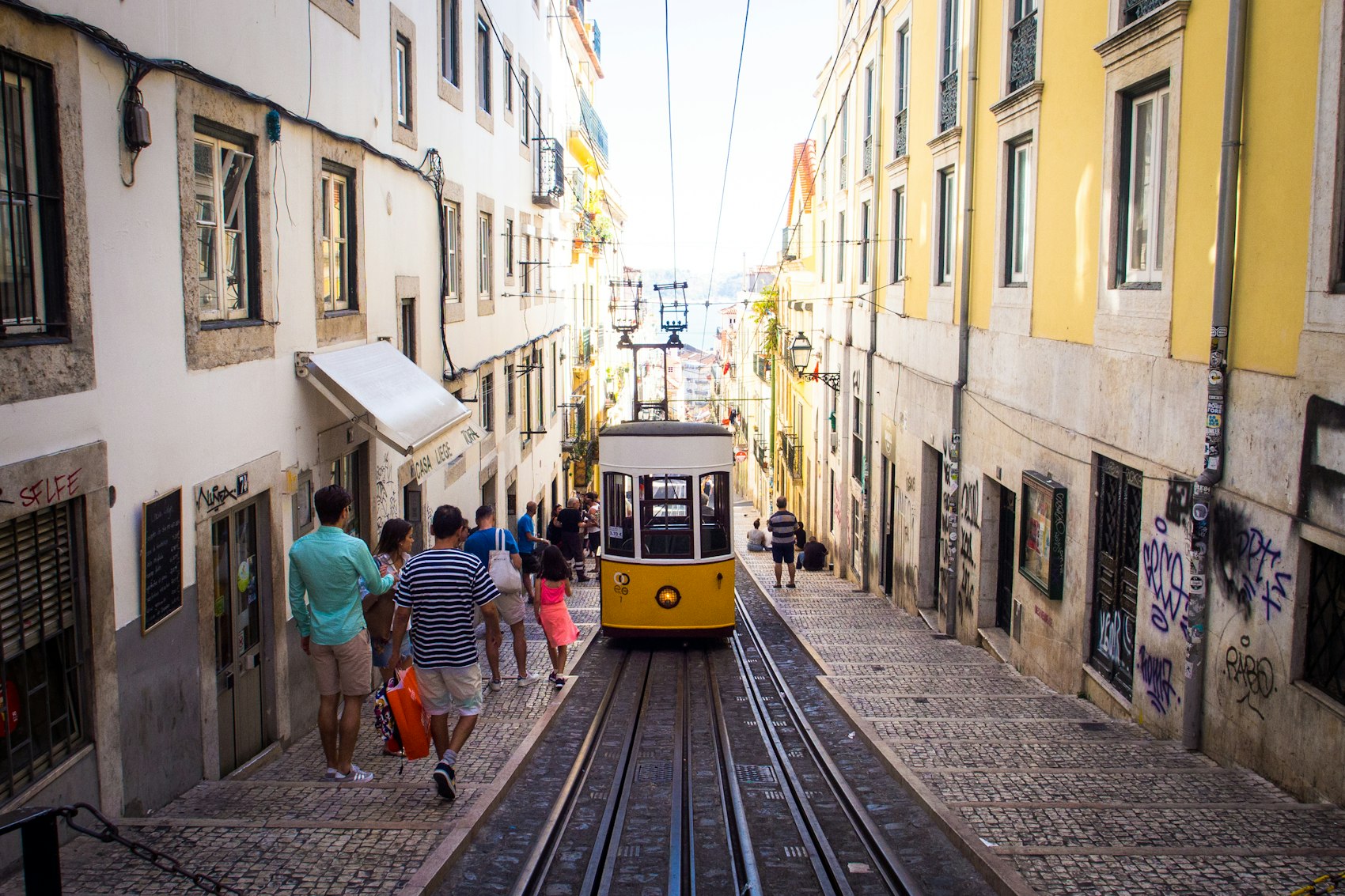
The yellow Bica funicular climbing a steep narrow street in Lisbon
The Bica, hauling itself up toward ChiadoClaudio Schwarz
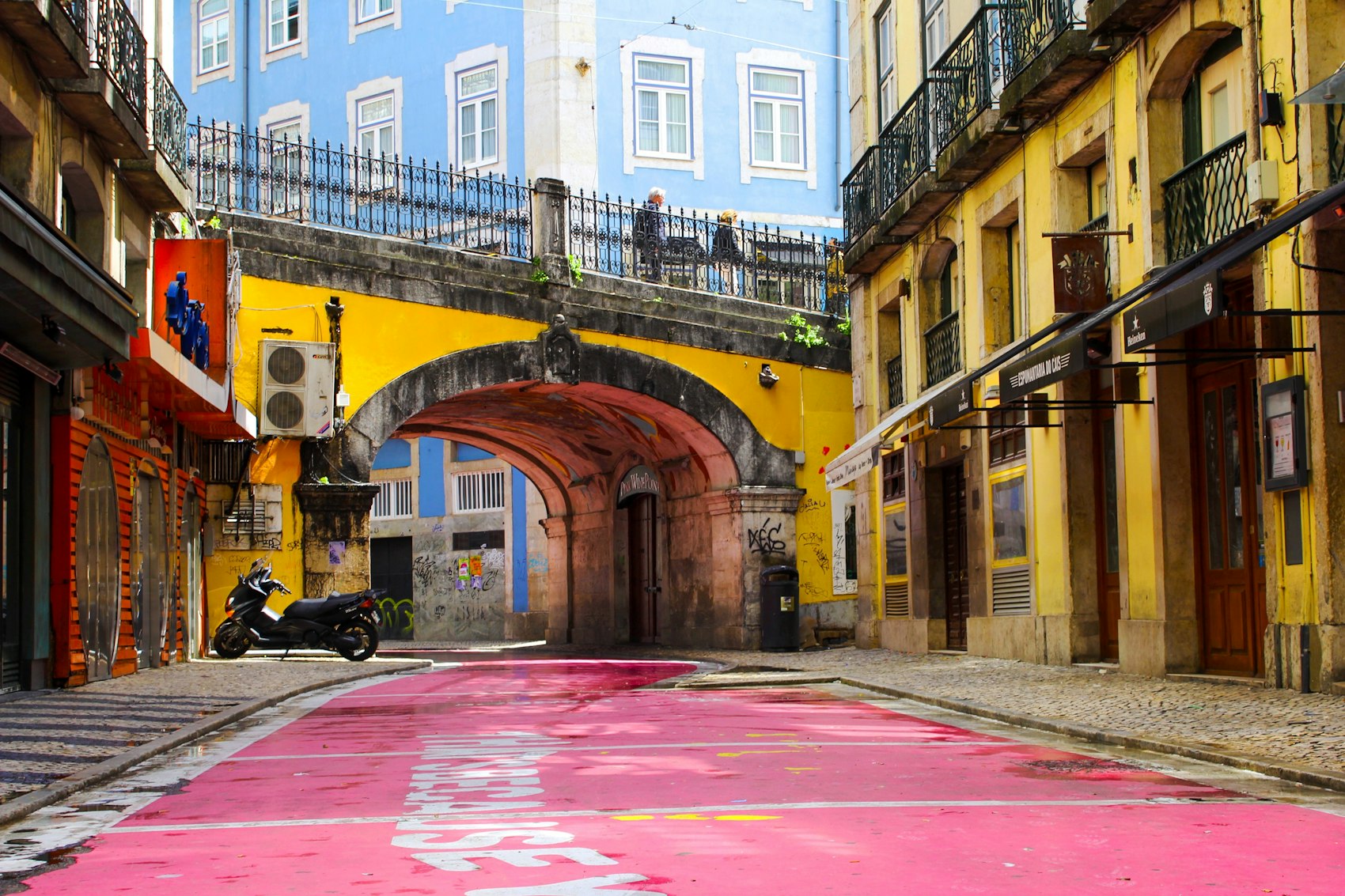
The pink-painted Rua Nova do Carvalho, the Pink Street of Cais do Sodre
Pink Street, Cais do Sodré, sleeping off the nightSara Darcaj

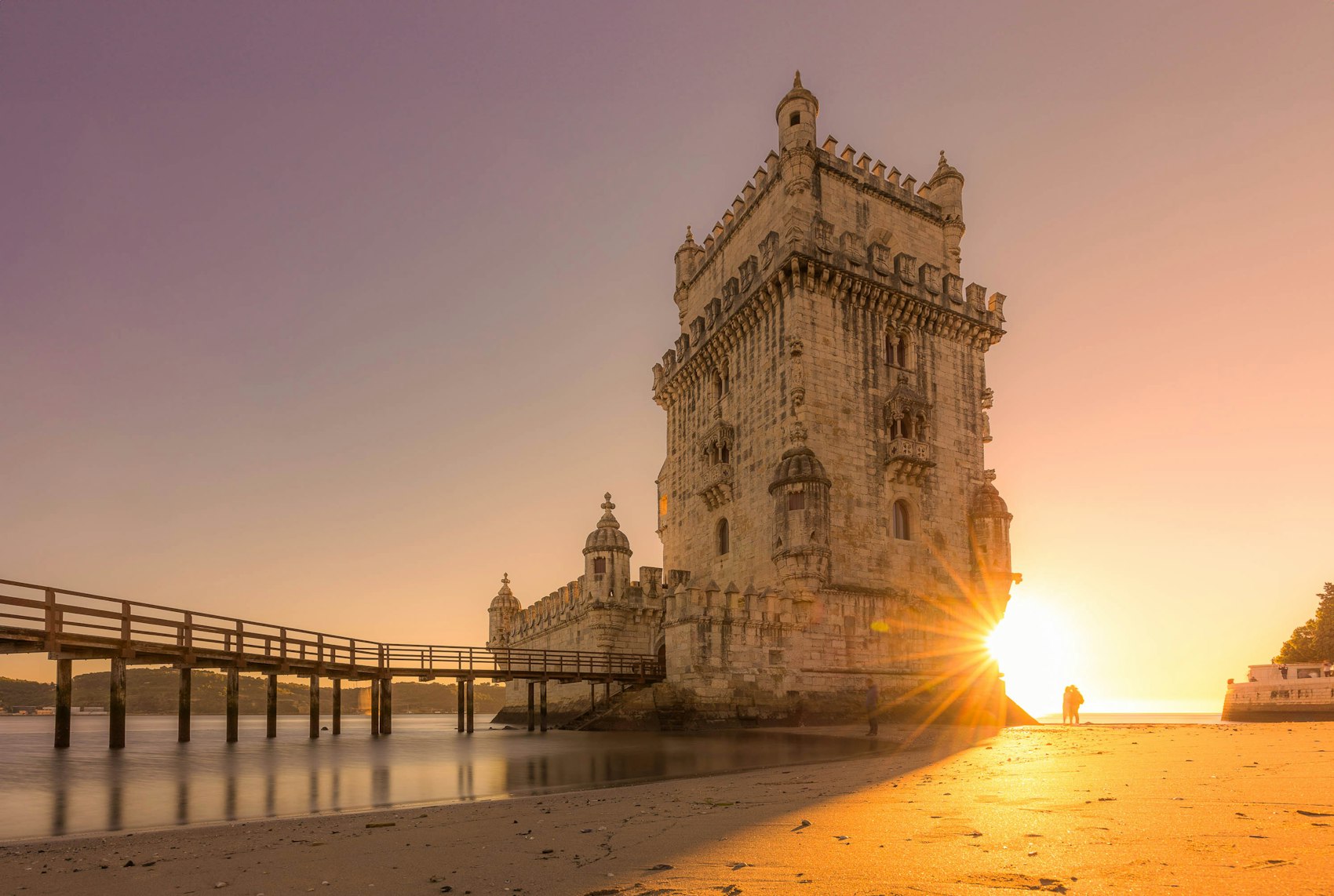
One morning belongs to the river, west to Belém on the 15 tram. This is the grand Lisbon, the one with history and money both: the Mosteiro dos Jerónimos, a wedding cake in carved stone with Vasco da Gama tucked inside, and the little tower out in the water where the caravels shoved off for the edge of the map. See them early, before the coaches. Then the queue that actually matters, at Pastéis de Belém, the shop that has guarded its recipe since 1837; you take a deli ticket and wait, and a warm tart arrives with a scorched top and a loose custard middle, cinnamon and icing sugar on the counter to wreck it properly. They are the best in the city, except for the ones at Manteigaria back in Chiado, where a bell rings every time a fresh tray lands. Have the argument yourself. I ate my way to no conclusion.

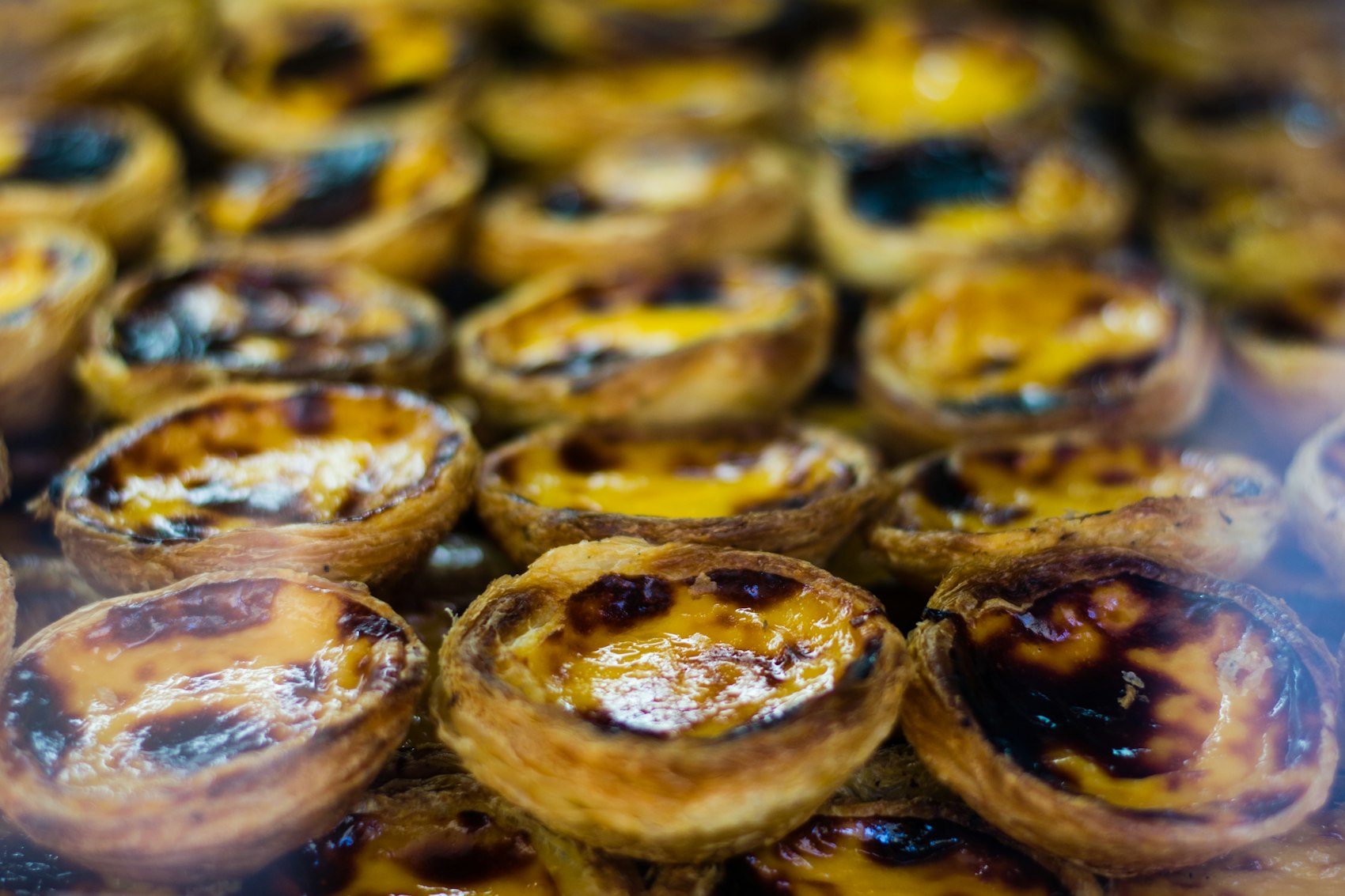
A tray of pastéis de nata with scorched tops, fresh from the oven
The only queue in this dispatch worth joiningDiogo Nunes
The Belém Tower standing in the water at sunset in Lisbon
The Torre de Belém, where the caravels leftEdoardo Bortoli

The last evening belongs to the water, and the trick is to leave it: from Cais do Sodré a battered orange ferry crosses to Cacilhas on the south bank in ten minutes, where the seafood is cheaper and the view comes back the other way, the whole tiled city stacked up its hills under the big red bridge the Americans built to look like San Francisco's. I ate grilled fish at Ponto Final, at a table set so close to the edge the river lapped the legs, and watched the light go gold and then bruised pink over all of it. Four days was enough to learn the shape of the hills and to stop fighting them. I came to walk Lisbon. I left a pair of shoes the worse for it, and sure that on foot is the only honest way to take the place.

Plan a similar trip

My itinerary

Fly into Lisbon (LIS); the red-line Metro reaches the centre in 20 minutes. Base in Alfama at the Memmo Alfama for the rooftop and the lanes, load a Lisboa Card for the trams and funiculars, and bring shoes you can ruin. Go May, June for the Santo António street parties, or September; skip high summer.

  1. Day 1

    The Baixa & the miradouros

    Walk up from Praça do Comércio, then climb. A cold beer at Santa Luzia, the Alfama view from Portas do Sol, sunset at Senhora do Monte in Graça.

    Travel

    Metro red line from the airport, then on foot

    Stay

    Memmo Alfama, in the old quarter

  2. Day 2

    Alfama & the 28

    Lose the map in the Moorish lanes. Board the 28 up at Martim Moniz for a seat, browse the Feira da Ladra, and end the night at a fado room.

    Travel

    Tram 28 and your feet, free with a Lisboa Card

    Feira da Ladra runs Tuesdays and Saturdays; book A Baiuca or Mesa de Frades for fado.

  3. Day 3

    Chiado, the Bica & a night out

    Coffee by the Pessoa statue at A Brasileira, the Bica funicular up the hill, a ginjinha at A Ginjinha by Rossio, then Bairro Alto or Pink Street.

    Travel

    On foot; the Bica and Glória funiculars save the steepest climbs

    Dinner first at Cervejaria Ramiro: garlic prawns, percebes, a steak sandwich to finish.

  4. Day 4

    Belém, and out

    The 15 tram west to the Jerónimos monastery and the tower, then the only queue worth it, for a pastel de Belém warm from the oven.

    Travel

    Tram 15 to Belém; Metro back to the airport

    Settle the nata debate: Pastéis de Belém (since 1837) against Manteigaria in Chiado.

← All dispatches
Keep exploring

More dispatches

Meridian Dispatch for iPhone

A travel journal that
writes itself.

Your best memories, journaled automatically, from the photos already on your phone. The app reads your photo library, finds the international trips you have taken, identifies the venues, writes the prose, and lays it out like a magazine spread. The first time you open it, the last several years of your travel are already there. Every trip after that goes in by itself.

  1. Mapped on a globe

    Your whole world, on one globe.

    Every country you've visited, lit on a private 3D globe. Spin it to find a trip and fall straight back into it. The globe is the table of contents for your journal.

    The app's private globe of visited countries.
  2. Detected automatically

    It finds your trips on its own.

    Your photos cluster by place and time, and each cluster becomes a venue: the museum you spent the morning in, the restaurant you lingered over, the streets you wandered after dinner. No tagging, no prompts, no logbook to keep up.

    The app's archive, every trip a dispatch.
  3. In warm prose

    Each place, written up.

    Every day opens on a hero photograph, and each place you stopped gets its own short entry beside your own photographs, no two days laid out the same. A record of where you've been, kept in real sentences. Edit a line, or regenerate any passage you want fresh.

    A written day in the app, with a place entry and a photo grid.
  4. Yours to keep

    Every trip, as a photobook.

    Download any journal as a clean photobook, send it to whoever was there, or have it printed as a hardback you keep on the shelf. What you read on your phone is exactly what lands on the page.

    The app exporting a trip as a photobook, with Share PDF and Save to Files.