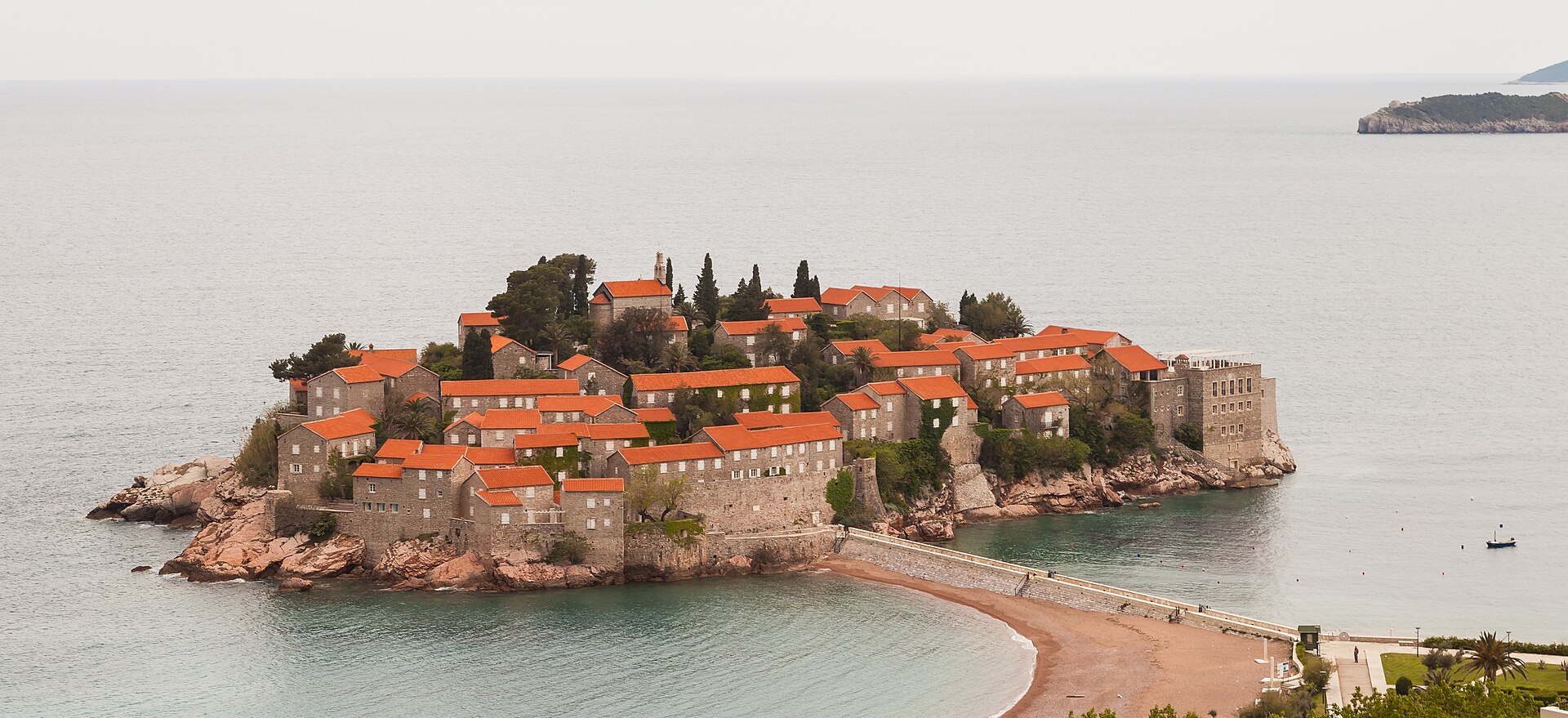
About fifty people walked out of Pržno one July morning, broke through the promenade gate and went down onto both royal beaches. It was 13 July 2026, the hotel's sixty-sixth anniversary. That day's island tours did not run. The lessee said the residents had blocked the entrance to the town-hotel; the residents said the lessee had closed the island.
The island they were trying to reach is small, about 13,000 square metres of rock tied to the shore by a narrow isthmus, six kilometres south of Budva. It began in the fifteenth century as a fortified village, twelve houses behind a wall, built by families of the Paštrovići clan with money taken from Ottoman ships. Over four hundred years the twelve became more than a hundred.
In 1955 the state emptied it. Residents were moved to the mainland and the whole village was converted into a single town-hotel, which opened in 1960 and spent the following decades collecting the guest list it is still known for.
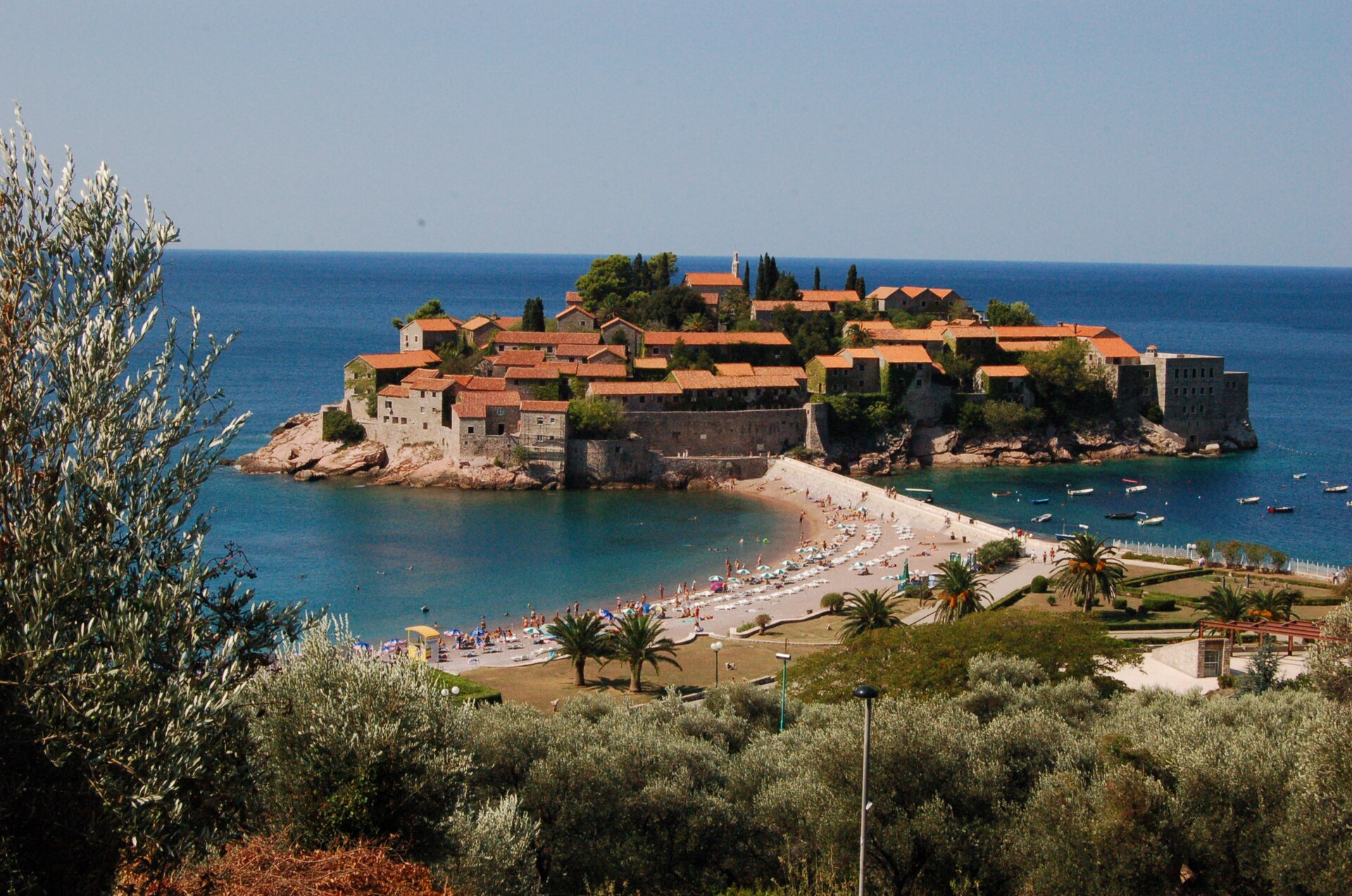
From that moment the island's relationship with the public inverted. The walls had been raised to keep raiders off a village; now they kept everyone off a photograph. A long lease to Aman, signed in 2007, finished the job. The causeway gained a checkpoint, the beaches either side of it acquired a status, and the most photographed object on the Montenegrin coast became one almost nobody could walk onto.
A settlement built to keep people out of a defended place became a business that kept people out of a photogenic one.
In 2021 residents breached the fence on the private beach, in a dispute about who could reach the sand and about who was being hired to work there. The resort closed. What followed was four years of arbitration, during which the island stood empty and lit, and the argument moved from the beach to the lawyers.
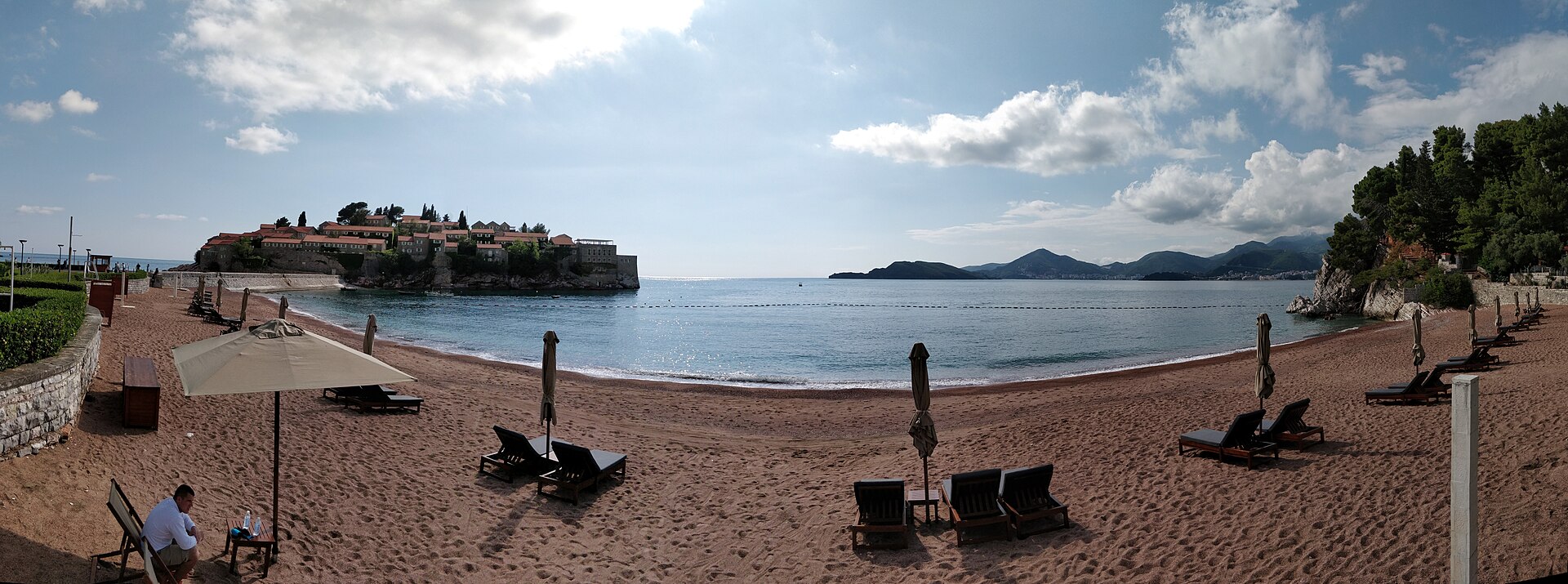
A settlement in spring 2026 ended the arbitration and reopened the doors in two phases. Villa Miločer, the Aman Spa, King's Beach and Queen's Beach came back on 22 May, with the villa operating year round. The island itself followed on 1 July, seasonally. The state said the deal brought it a tenth of annual profits and extended the lease.
The reopening also brought something that did not exist even when the resort was trading: guided tours of the island for visitors who are not staying. They run twice a day in season, take about ten adults, last around half an hour and are charged per person. They are not listed on Aman's website and have to be asked for at the reservations desk. A table at Arva or Piazza, the island's restaurants, is the other way across.
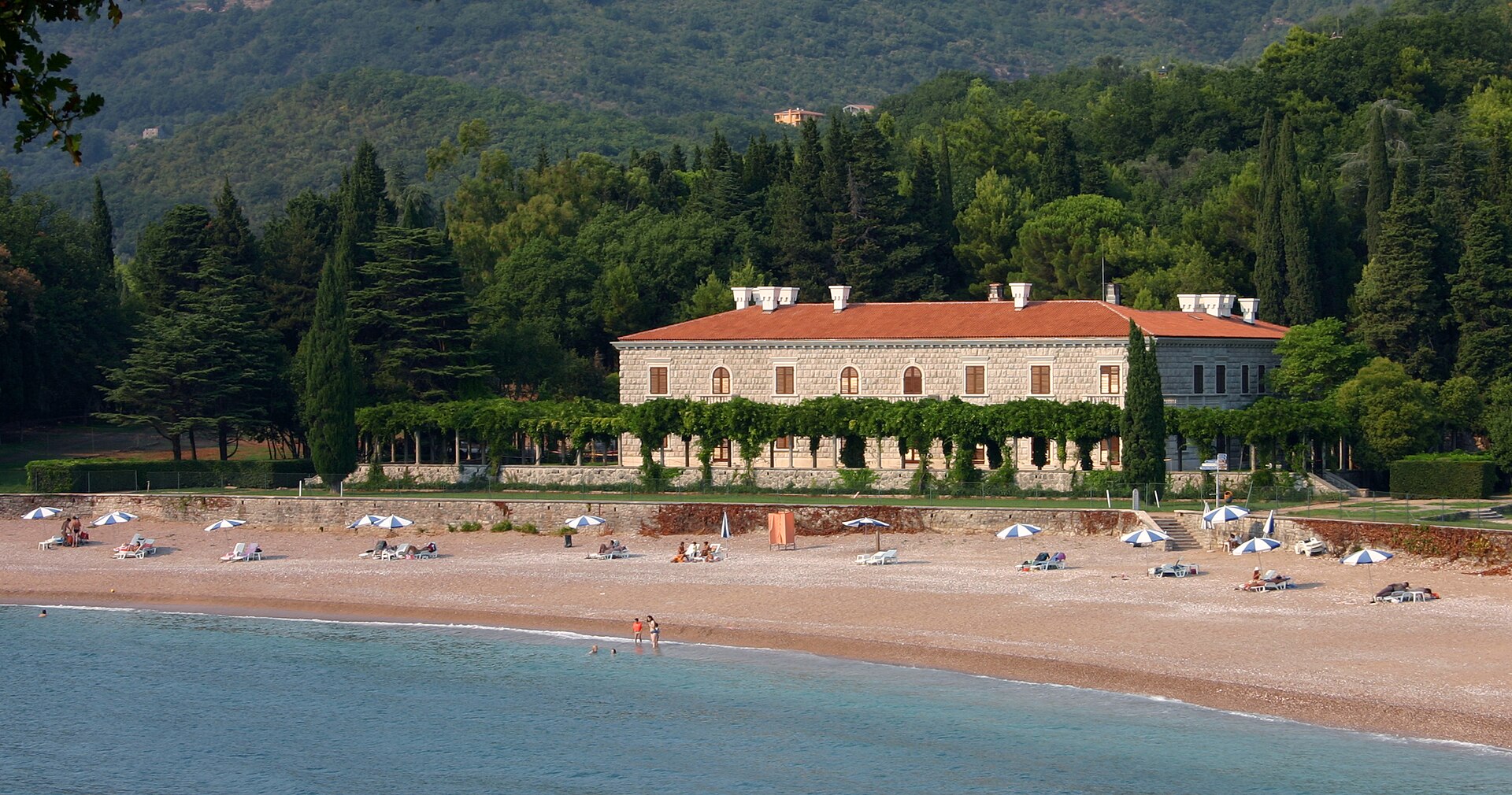
None of that settled the access question. On 23 May 2026, one day after Villa Miločer reopened, a barrier went back up on the walkway between Sveti Stefan and Miločer park, above Queen's Beach. The local community body says that ground had already been ordered open twice, by a municipal inspection in 2020 and by the Administrative Court in 2022, and it filed a criminal complaint in Kotor in early June.
On paper, Sveti Stefan Beach and King's Beach are now public and Queen's Beach is reserved for Aman guests. What that means at the gate is disputed. In late July residents of Sveti Stefan and Pržno told the daily Vijesti that they still could not reach the beaches, and that the complex was working from a list of who could pass.
The access facts here move week to week. Tour times, booking arrangements and the state of the beach gates have all shifted since the island reopened on 1 July 2026, and the gate above Queen's Beach has been broken by protesters more than once. Confirm the tour at the reservations desk before building a day around it, and expect to be asked who you are.
For most visitors the practical question is where to stand, because most people photograph this island rather than enter it. The obvious frame is from the coast road above it, at a signed pull-off with a railed platform on the highway between Budva and Petrovac. In season the pull-off between Budva and Petrovac is shoulder to shoulder by mid-morning.
The better view is higher and has a name. The small church of St Sava sits on the hill above the village, reached by a minor road climbing off the coast road, and it puts the island lower in the frame with open sea behind it. The terraces with the best of that view belong to restaurants, so the panorama costs the price of a meal. On light the accounts agree: the hillside works at sunset, when the low western sun falls across the island's face and the roofs.
The beach at the foot of the causeway is public and free, and it behaves as two different beaches. The northern half is largely given over to sunbeds and service. The southern half is where people who brought a towel sit. There is usually free space on the north side before nine in the morning.
The surface is pebble rather than sand, small and hot enough underfoot in August that water shoes are the right call. Parking is paid and spread across several lots: one behind the main beach, one above the road with a walk down, and one among the olives. Rates differ enough by lot and by season that no figure is worth printing. Carry cash, and expect stairs down from every lot, because the village on the hillside is steep.
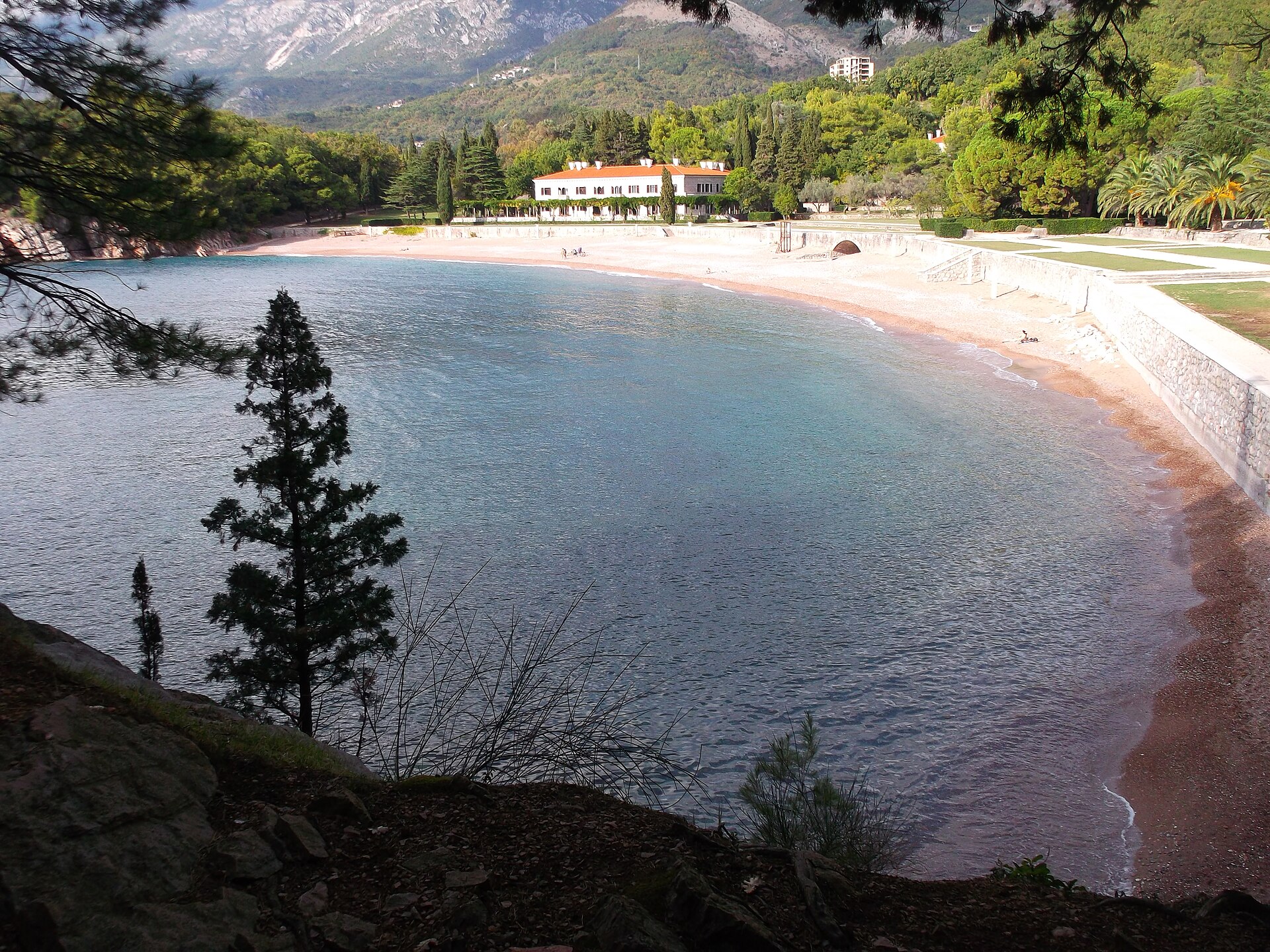
A pedestrian path runs north from the beach through Miločer park, mixed pine and cedar with old olives among them, past King's Beach in front of Villa Miločer, and on to Pržno, a working fishing village with restaurants along its waterfront. It is about two kilometres and it is shaded. It is also the ground the whole dispute is about, which makes walking it the most informative half hour available here. The gate sits on this stretch, so it may not be walkable end to end.
The lot by the isthmus is generally full by around nine, and parking at Pržno and walking in along that path avoids the problem entirely. The other thing worth doing is staying. A night in the village or at Pržno buys the causeway at sunrise, which almost nobody photographs, and the hillside after the day boats have gone. June and September are the months. In July and August the coaches are at the layby by eight, and the day's tour places are gone before the week starts.