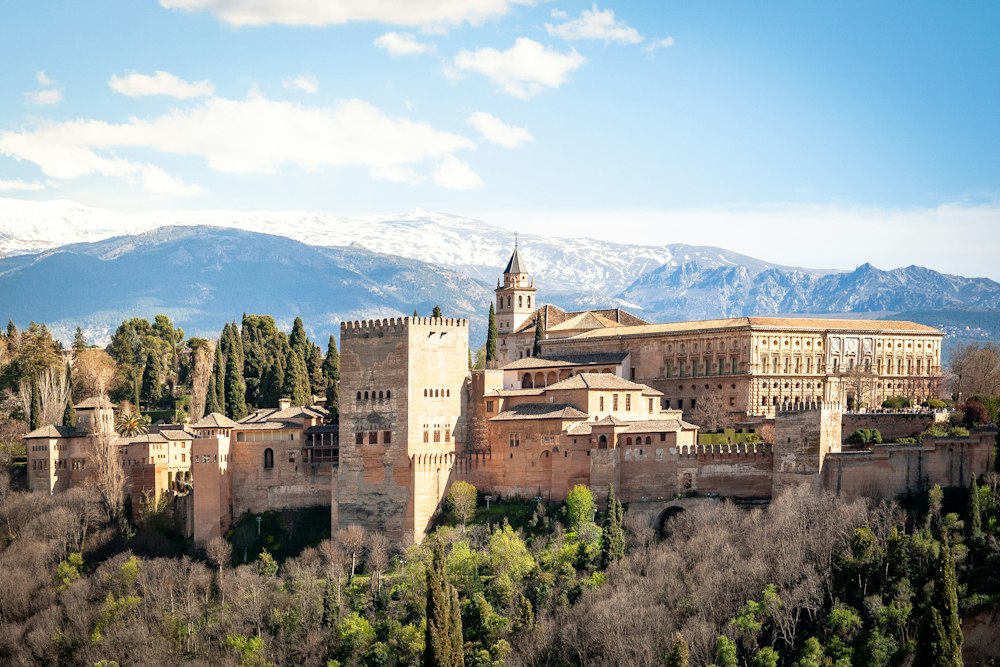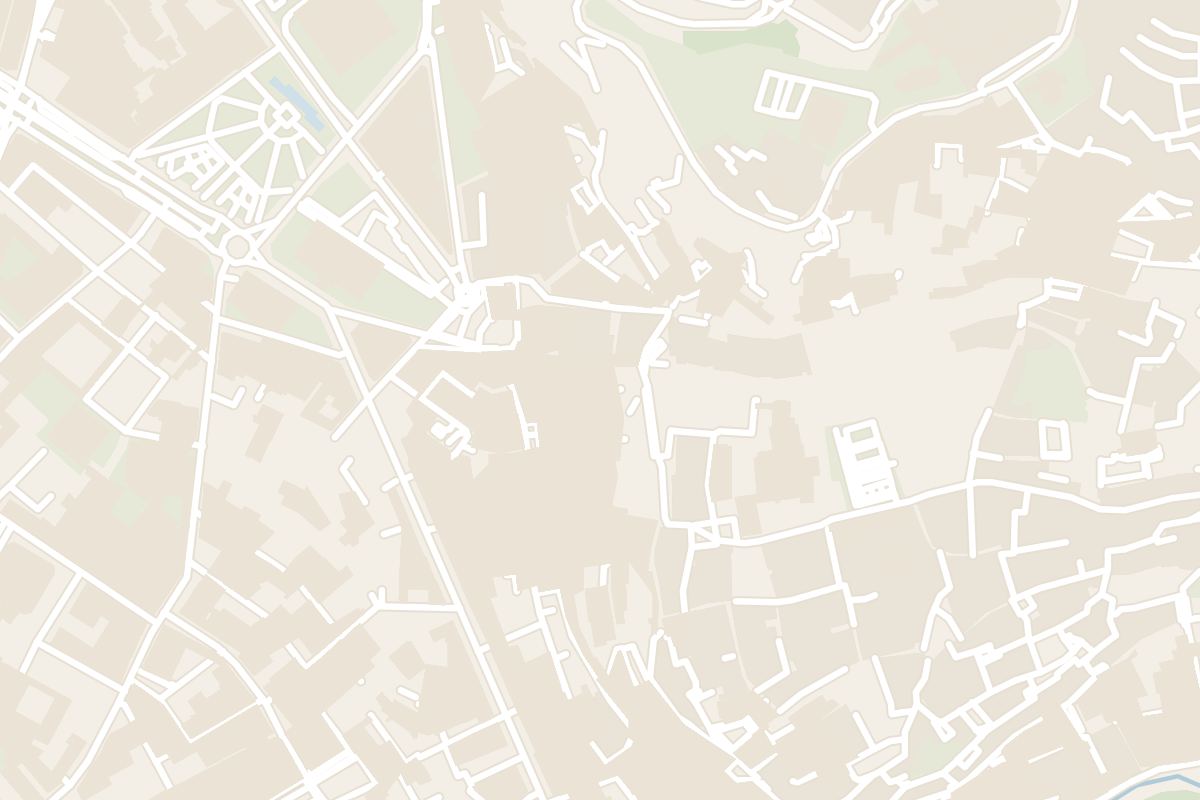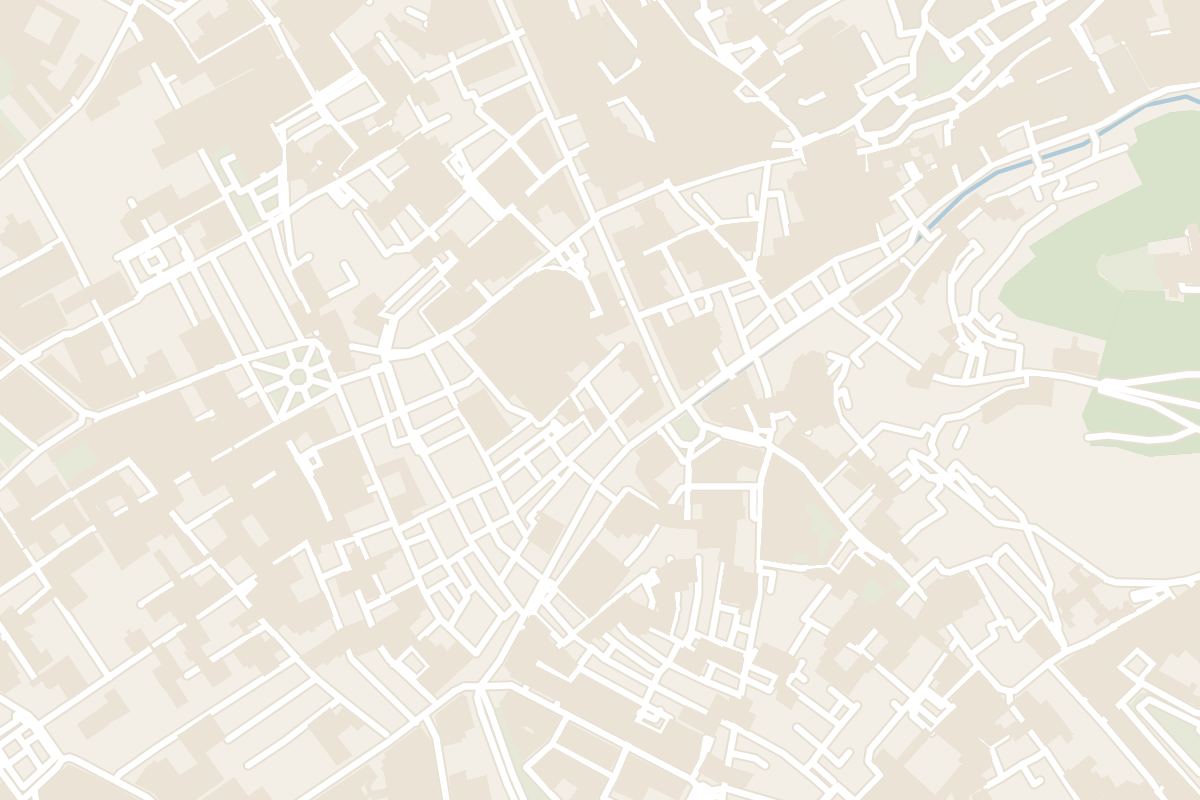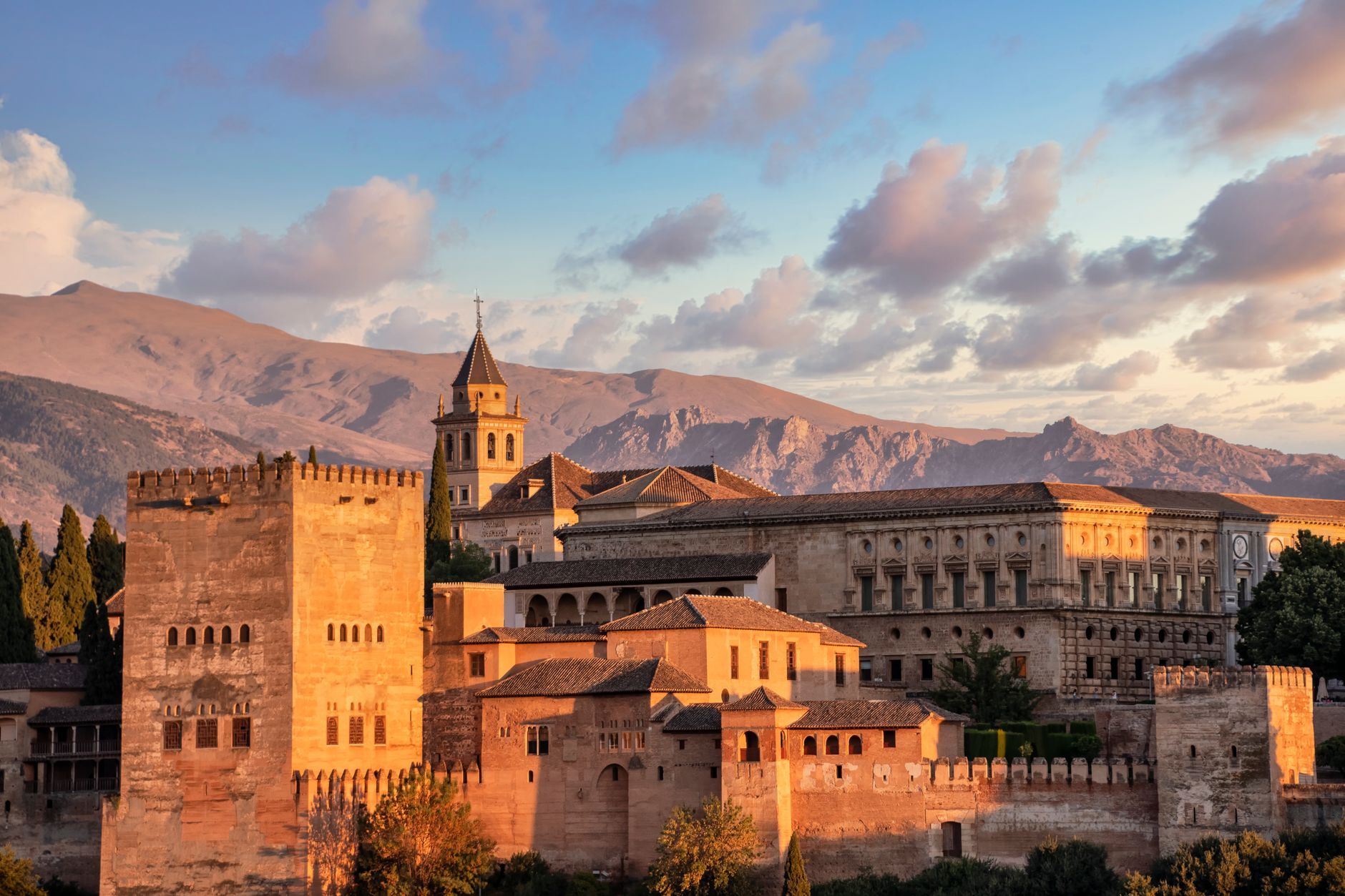
The Alhambra is a whole hilltop of palaces, thrown up in red clay walls above Granada by the last Muslim kings in Spain, and from the city below it looks like a fortress and almost nothing else. That is the trick of the place, and an old one. The Nasrids kept the outside plain and put everything they had on the inside, so that the doors give onto rooms of a richness the walls outside give no warning of at all. You cross a threshold in a bare passage and the world changes.
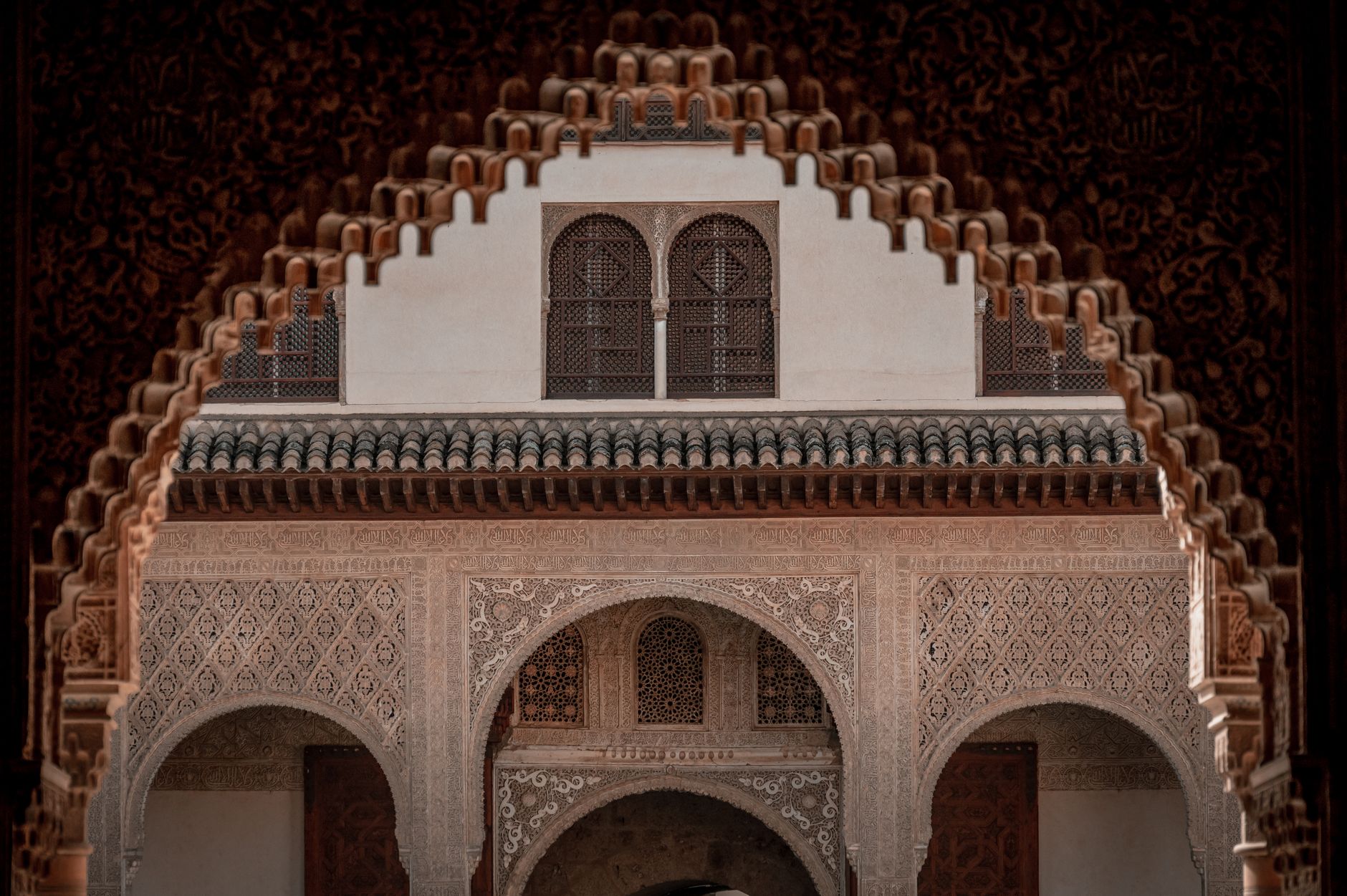
The heart of it is the Nasrid Palaces, and the state guards them jealously. Your ticket carries a printed half-hour slot for the entrance, and if you miss it you do not get in, whatever you paid, so you learn quickly to be at the gate early and to book weeks ahead, because the days sell out. Inside there is no clock, and the palaces reward a slow walk. The walls are carved so deep and so fine that the plaster looks as if it had grown there, arches dissolving into lace; the tilework, the zellij, is laid in cold points of blue and green up to shoulder height, the stucco taking over above.
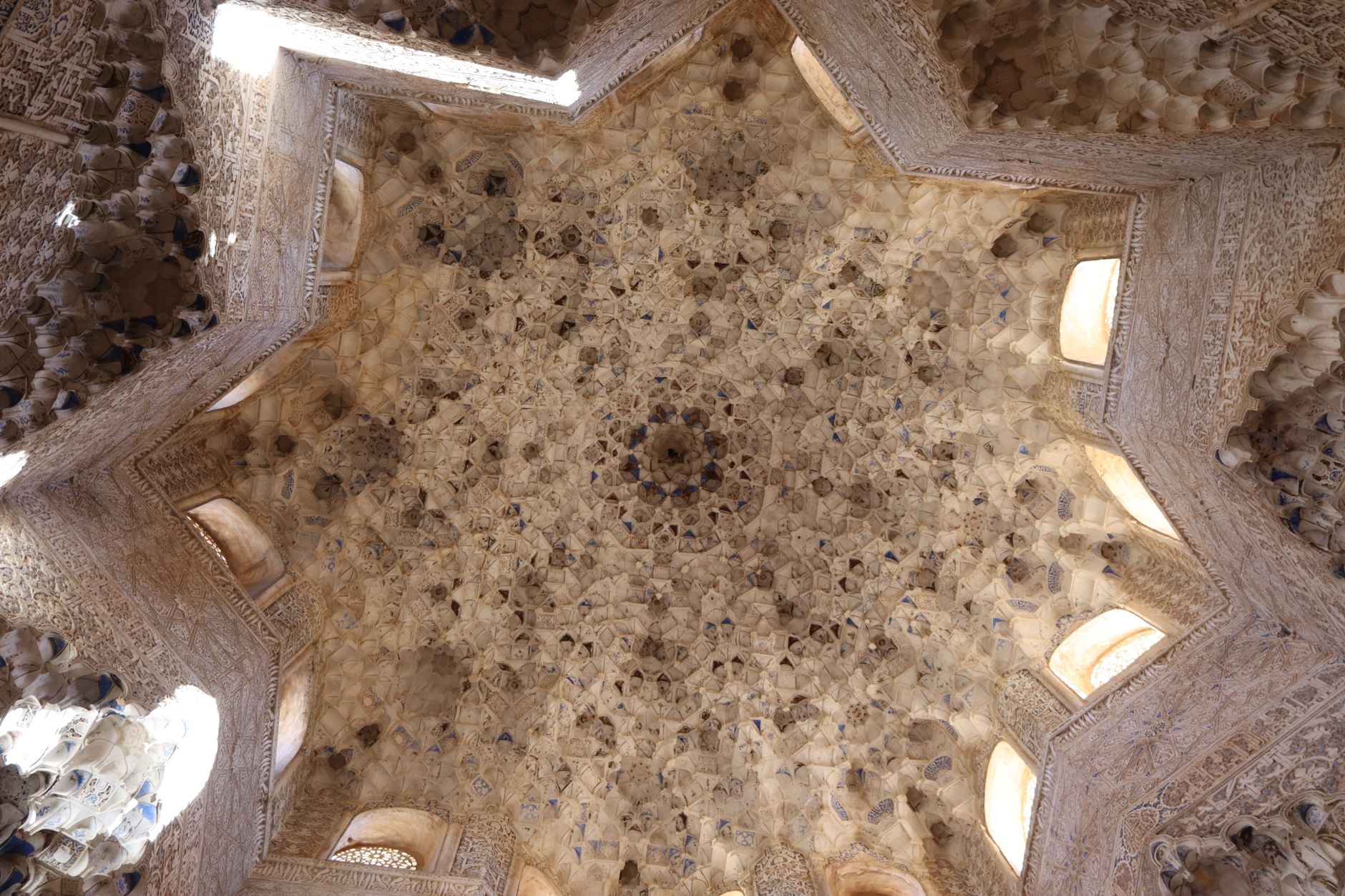
Look up and the ornament turns dizzying. The ceiling of the Hall of the Two Sisters is a muqarnas dome, a honeycomb of thousands of small plaster cells hung one below the next, and inside the little domes are smaller domes, and inside those, smaller ones again. A ring of windows at its base lets in a light that catches the edges so the whole thing glitters, and the visitors beneath it do the same thing, which is to stop talking, tip their heads back, and give up trying to follow it. It is meant to overwhelm, a plaster picture of infinity, and it does.
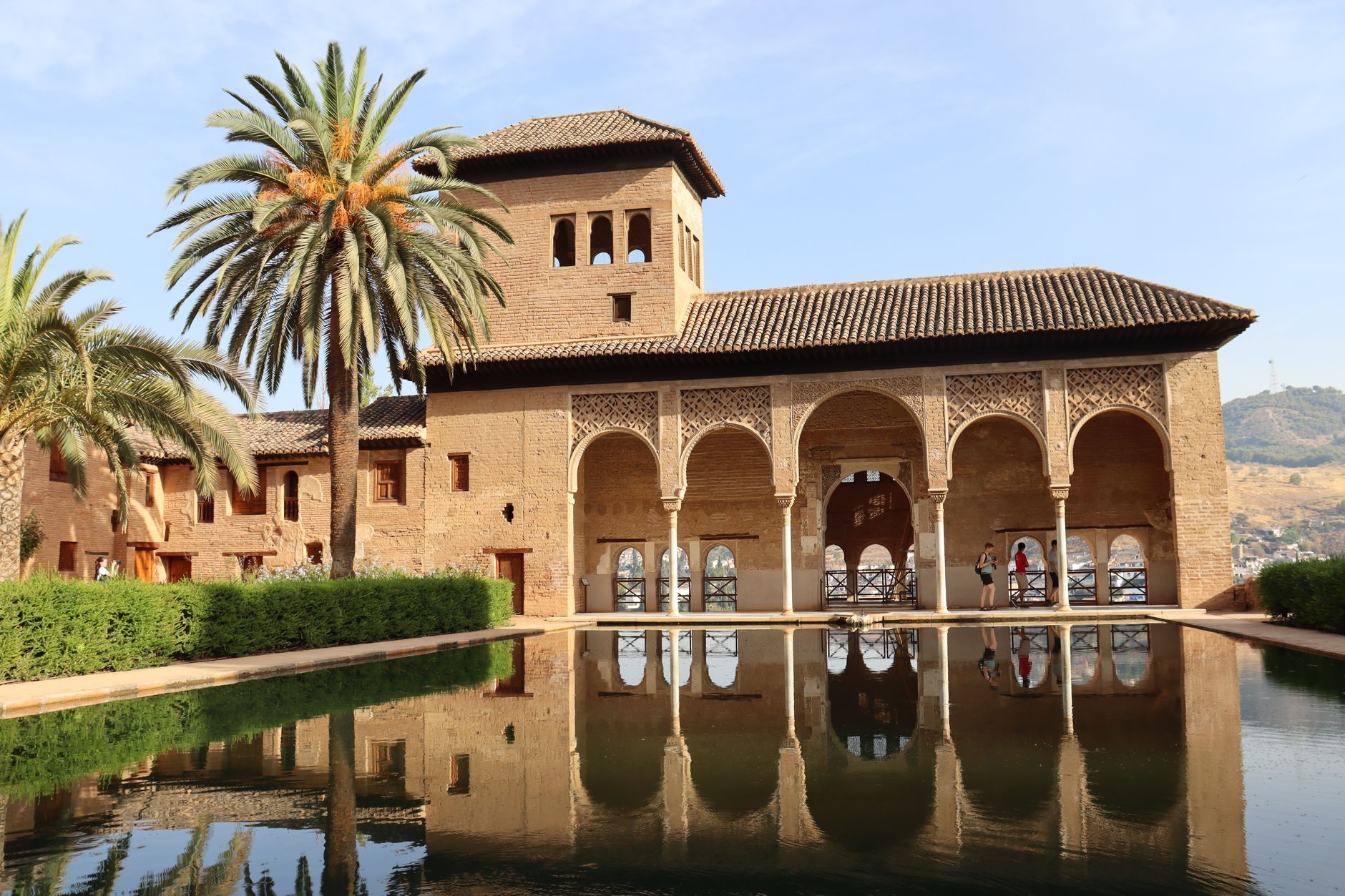
Then, after all that density, the courts open out and the material changes to water. The Court of the Myrtles is a single long pool held between two hedges, its surface fed so gently that it barely moves, and it takes the tower at its end and lays it down whole and upside down on the water, a second palace built of reflection. The corner of the court rewards a long pause. In a place that fills every wall to bursting, the emptiness of that still pool is the loudest thing in the building.
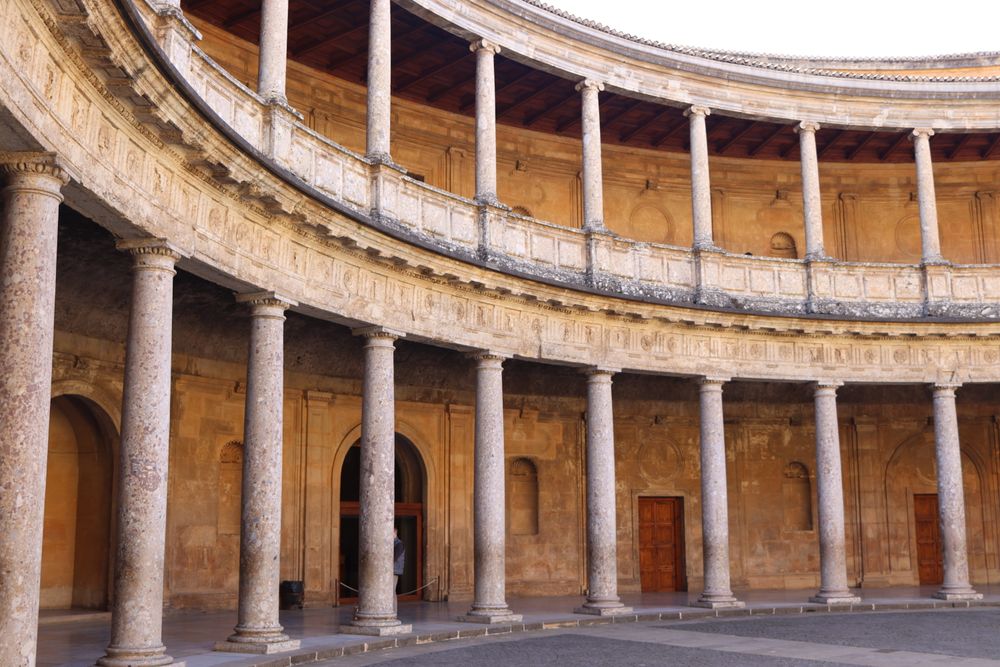
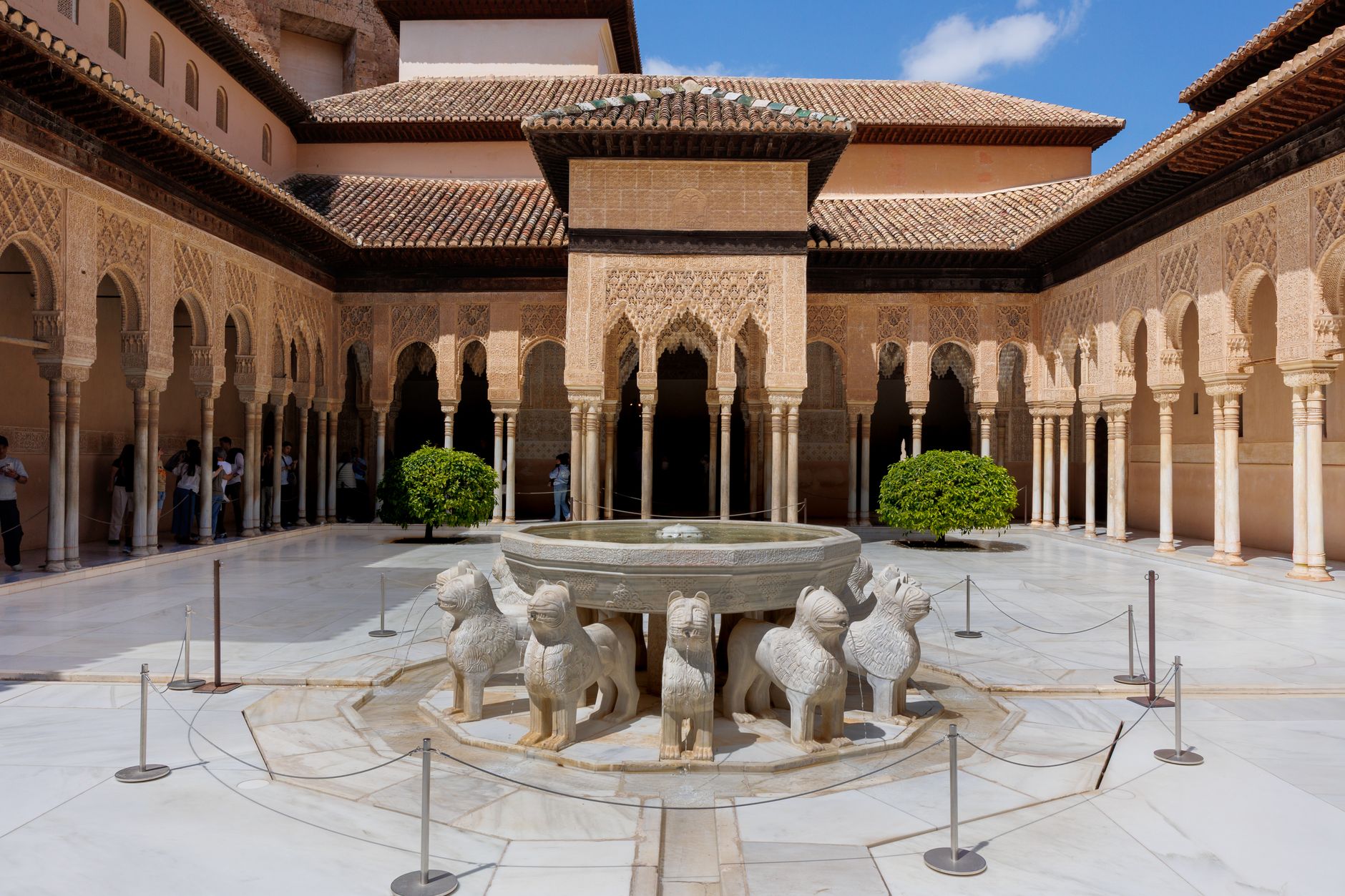
Beyond it lies the famous one, the Court of the Lions, a forest of a hundred and twenty-four slender marble columns around a fountain where twelve stone lions carry a basin on their backs. Four narrow channels run out from it to the corners of the court, the four rivers of paradise as the garden was meant to be read, water crossing the whole palace by gravity from the mountains. The lions are sometimes dry, boxed in for restoration, and even then the court is worth the trip for the columns alone, which stand so close and so thin they seem to shiver.
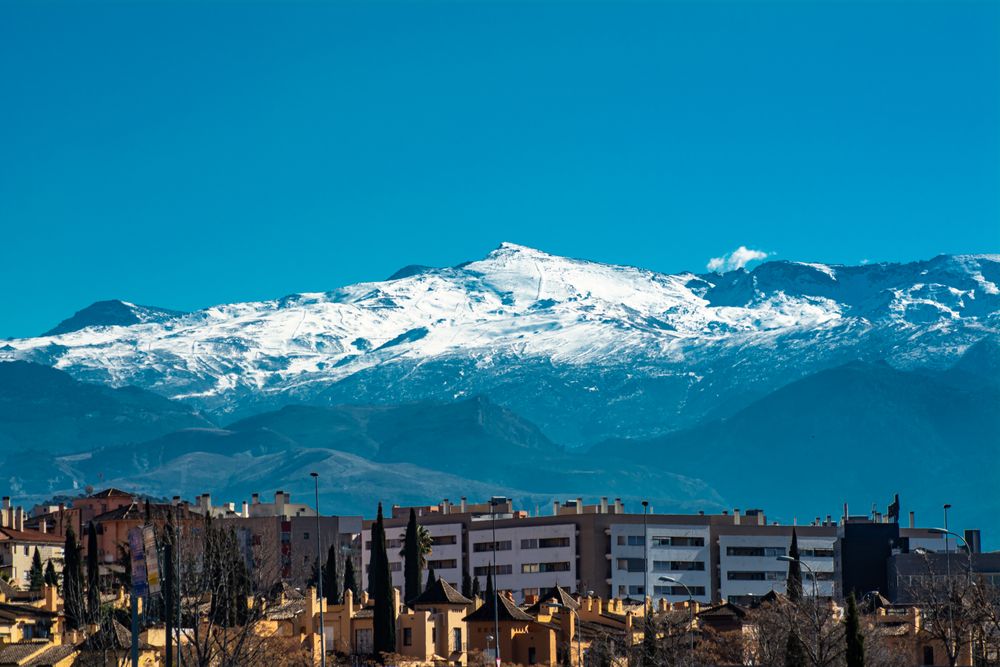
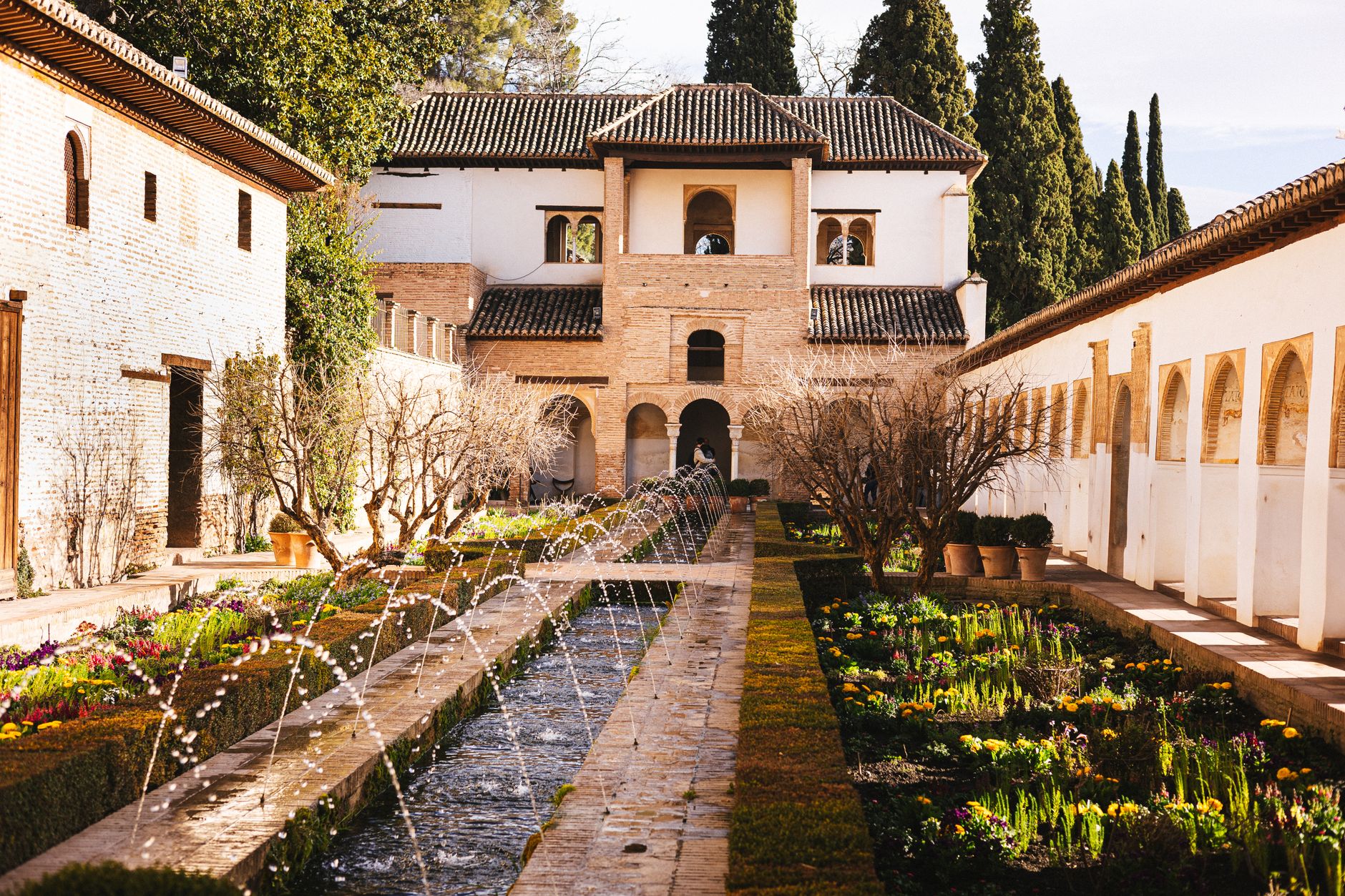
Above the palaces sit the gardens of the Generalife, the summer estate, where the making relaxes into hedges and roses and the same Sierra Nevada meltwater that plumbed the palace below is here let run purely for pleasure. Water runs down the stone banisters of a staircase there; a long narrow pond is crossed by arcs of jets that meet overhead. After the tension of the carved rooms it is a release, cool and green and loud with running water, the mountains that fed the whole palace standing white behind it.
The last thing to know is that the palace can be read as well as looked at. The walls are covered in Arabic, poems written for these exact rooms, so that the fountain in the Court of the Lions speaks in the first person and the ceilings are compared, in the plaster beneath them, to the turning spheres of heaven. And one short phrase recurs everywhere, carved perhaps three thousand times across the complex: there is no victor but God. Kings who knew they were the last of their line wrote their own smallness into every wall of the most beautiful thing they would ever build. Give the rooms the slow hours they ask for, and read them as carefully as you walk them.