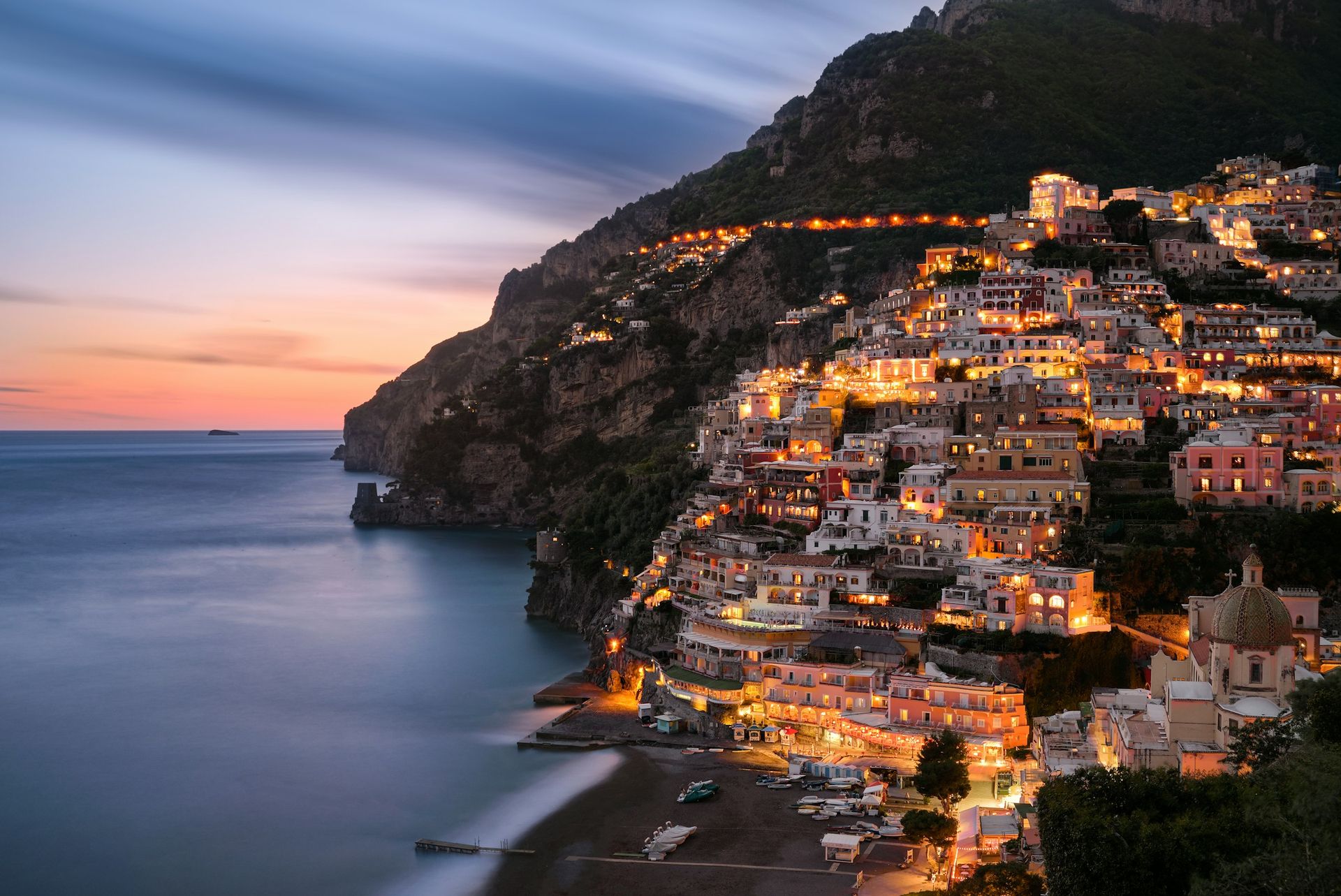
Every guide to the Amalfi Coast will tell you it is one of the most beautiful places on earth, and every guide is right, and every guide also buries the more interesting fact a paragraph down, if it troubles to mention it at all. This pretty ribbon of pastel towns was once a great power. Amalfi, the small place that gives the whole coast its name, was a republic that ran a good part of the medieval Mediterranean, and then the sea it had mastered came in one night and took most of it back. What you photograph now is the surviving top floor of something far larger and far stranger, and the way to feel that is to arrive as the world once did, which is to say by water.
The car belongs in Naples; the last stretch is better made from the deck of a ferry. This is less a lifestyle choice than it looks. For almost all of its history the coast had no road at all; the towns faced the sea because the sea was the only street they had, and the famous corniche that everyone now white-knuckles was cut into the cliff by Bourbon engineers and opened in 1853, which by local reckoning is the day before yesterday. Meet the coast from the water and it assembles itself the right way round, from below and from the front. Positano does not so much appear as pour into view, a landslide of houses in peach and ochre and faded coral, stacked so steeply they seem to hold one another up, the tiled dome of Santa Maria Assunta set at the foot of it like a full stop.
The first day is best given to doing very little. There are no cars in the heart of Positano because there is nowhere to put them; the only way through is on foot and almost entirely by stair, hundreds of them, threading between courtyards heavy with bougainvillea and lemon, past a cat asleep on a warm step and a grandmother lowering a basket on a rope to the grocer below. Everything walked down in the morning is earned back at dusk. In between: the beach before the umbrellas go up in their tidy ranks, a granita in the shade, and later, inevitably, a small glass of something stronger.
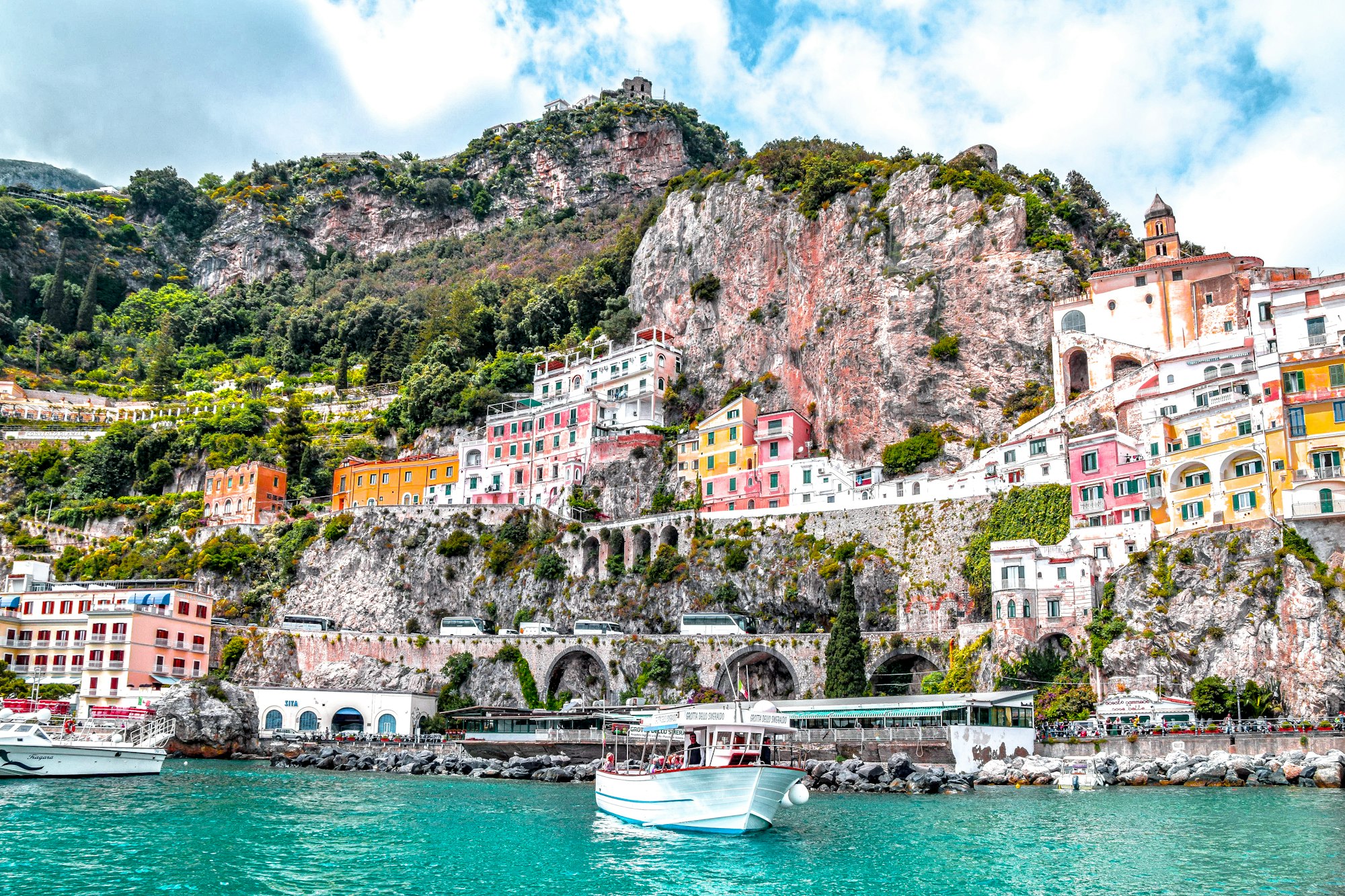
A short run east along the water brings you to Amalfi, and it is worth slowing down for what that name once carried. Around the year 1000 this single fold in the cliffs is thought to have held some seventy thousand people and one of the four maritime republics of Italy, the others being Venice, Genoa and Pisa, none of whom it had reason to fear. Amalfitan merchants kept warehouses in Byzantium and in the ports of the Arab world; the town's code of the sea, the Tavole Amalfitane, was copied and obeyed around the Mediterranean for something close to five hundred years. Fewer than five thousand people live here now, and the plainest thing the town still has to say about its past is its cathedral.
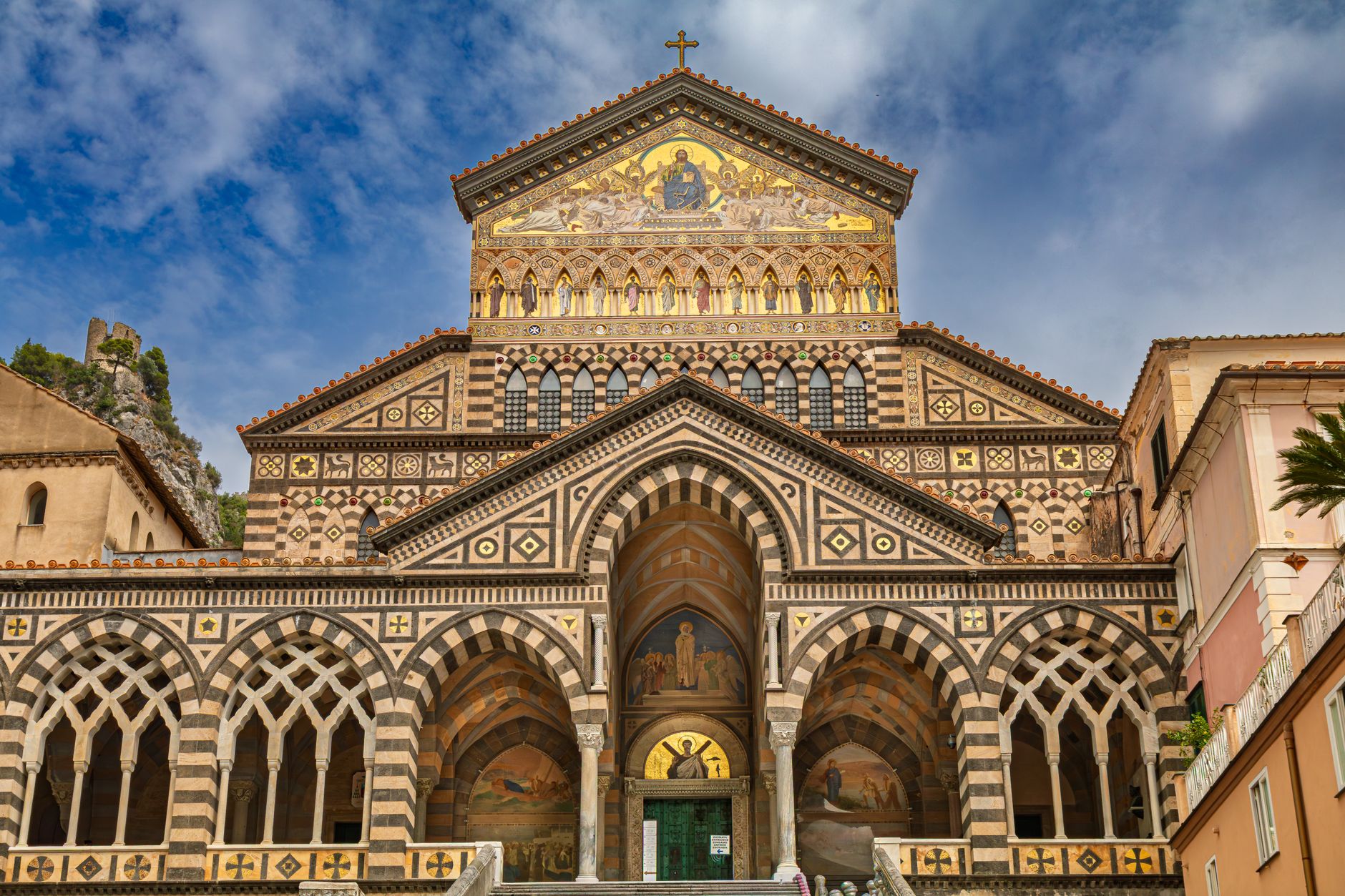
The Duomo di Sant'Andrea stands at the head of a long flight of steps, and its face is essentially an argument about where Amalfi's fortune came from: a dazzle of interlaced arches and geometric stripe, gold mosaic burning across the gable, Norman and Arab and Byzantine worked into a single wall by a town that traded with all three. The bronze doors at the foot of it were cast in Constantinople and shipped home a thousand years ago. Down by the harbour, half forgotten among the cafe tables, stands the other proof: the Arsenal, the stone-vaulted shed where the republic built its galleys and the only medieval shipyard still standing in the Italian south. Even the word for it, arsenale, they took from the Arabic. It once ran to two-and-twenty great piers. The sea has since taken twelve of them.
This was a superpower, and the sea that made it is the same sea that came in one night and carried most of it home.
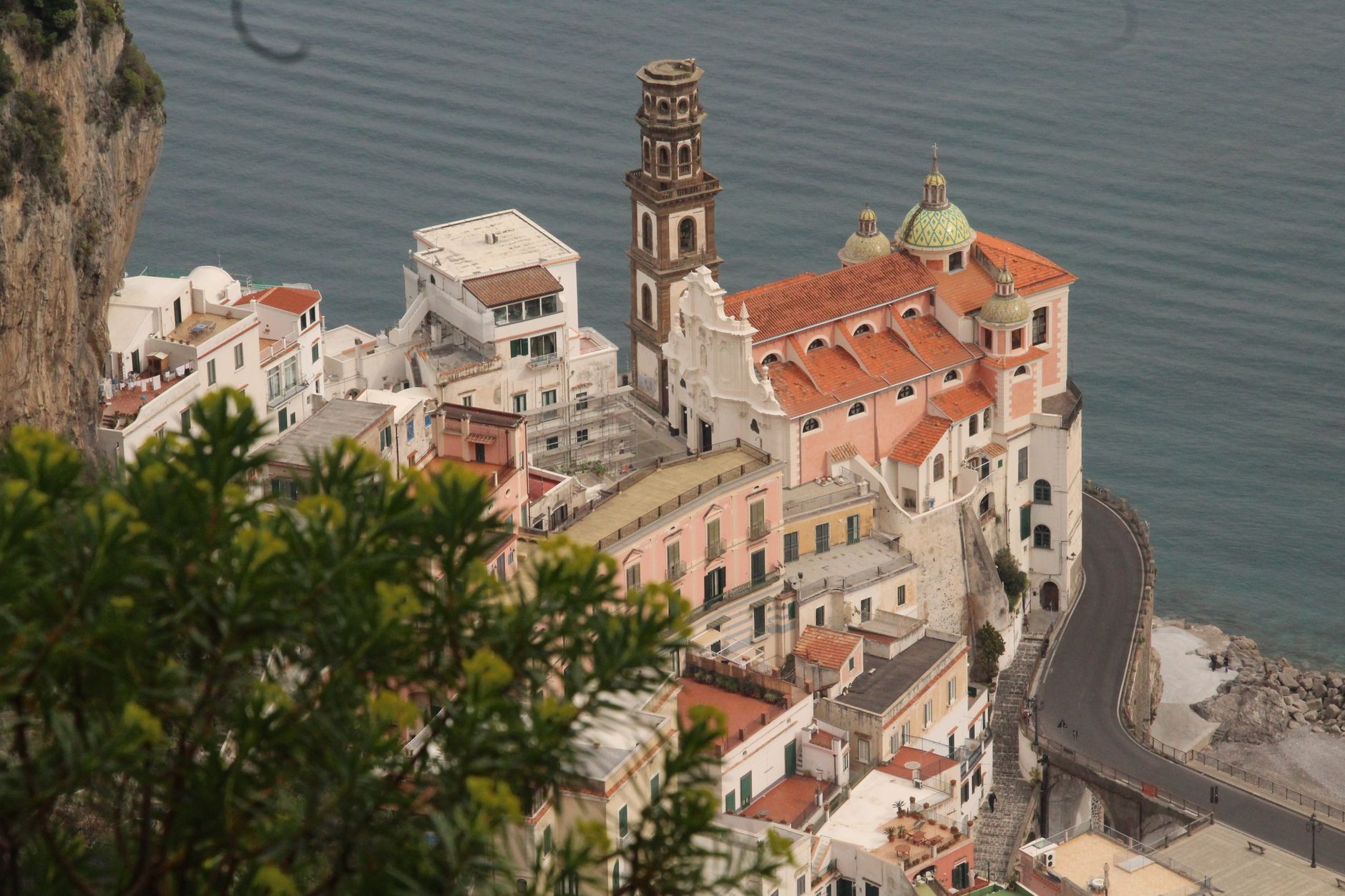
The night was in late November of 1343. A tremendous storm, which some now read as a tsunami, rose out of a quiet sea and broke Amalfi's harbour apart in a few hours. Petrarch was across the bay in Naples and wrote the next morning of water that had climbed onto the land and ships flung about like leaves, one of the few eyewitness accounts of the disaster that ended Amalfi as a power. Divers still lift worked stone from a few metres down off the modern beach, what may be the quay the poet watched go under. Ten minutes east on foot, around a headland, Atrani carries on with its evening as if none of it had happened: one small piazza open to the sea, one church, a beach, and the coast road passing overhead on stone arches, leaving the village to itself.
The other thing holding this coast together is stranger than any church, and you meet it the moment you climb above a town. The whole vertical face of the mountains has been carved into steps and pinned there, for a thousand years, by dry-stone walls laid without a drop of cement, some of them taller than a house. On the level ground behind each wall grow the lemons, the great knobbled Sfusato Amalfitano, trained overhead onto pergolas of chestnut poles so the fruit hangs down like so many lamps. It is beautiful, and it is not for show. Those walls are the only reason one of the most landslide-prone coasts in Italy has not simply slid into the sea. Take away the terraces and the lemon trees, and the mountain quite literally comes down.
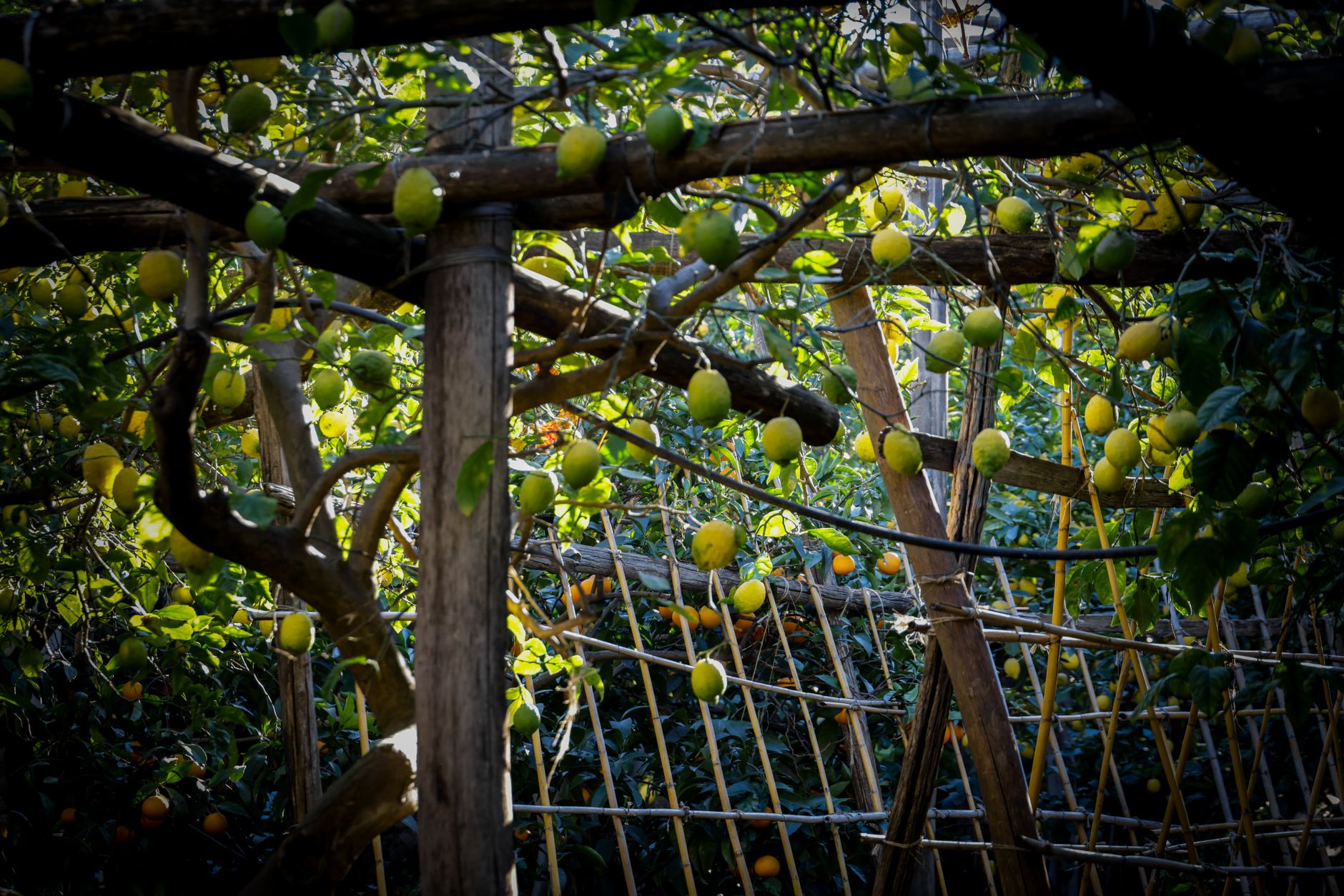
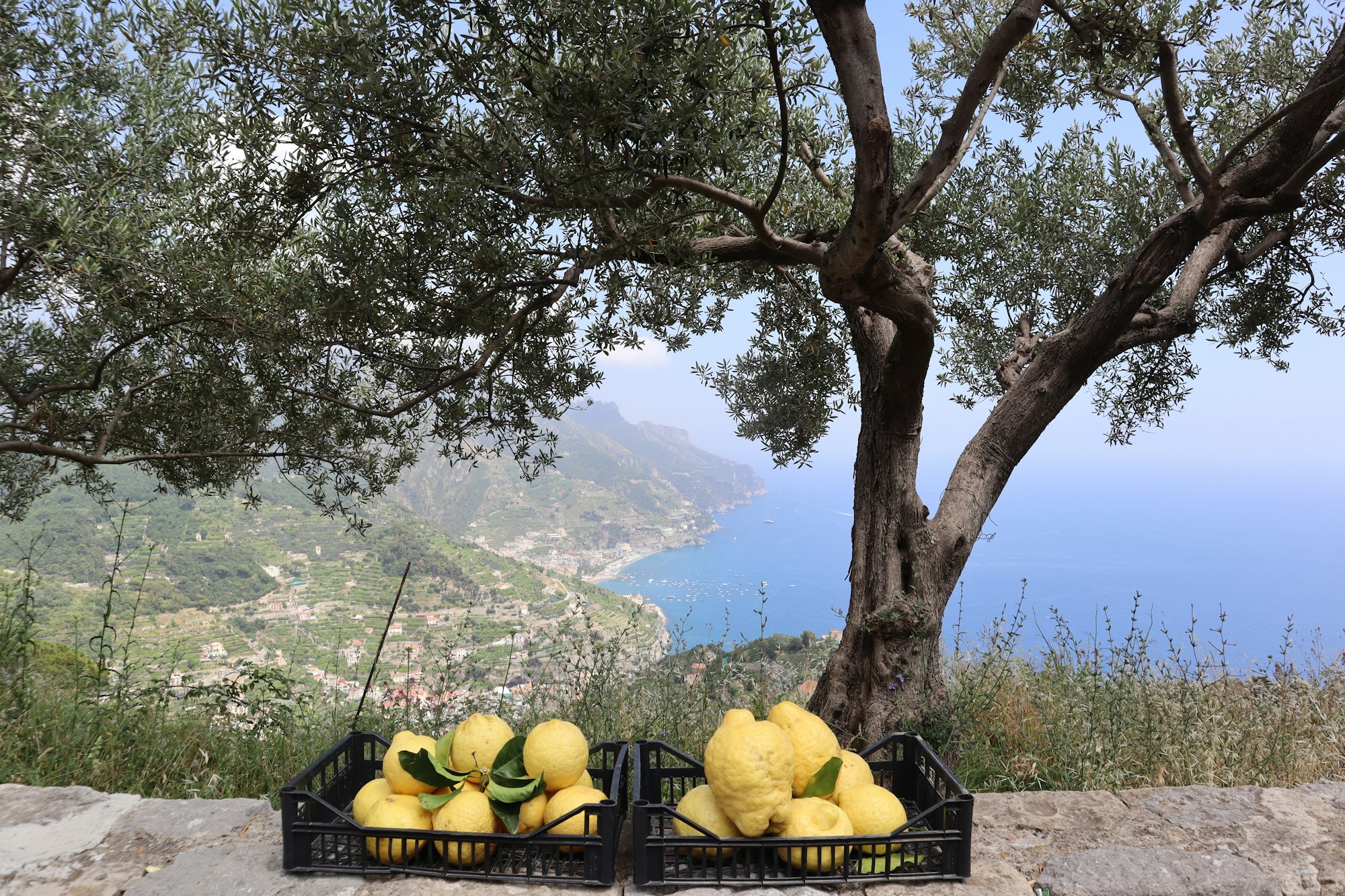
No machine can work ground this steep. Everything, the manure carried up and the crop carried down, still moves on the backs of men climbing staircases of a thousand steps and more with a basket of forty kilos on the shoulder, and there are fewer of those men every year. In 2025 the United Nations added these gardens to a register of the world's great farming landscapes, which is the kind of honour a thing tends to receive on its way out the door. One grower put it more plainly. Whole families used to live off the lemons; now it is hard, and the young ones do not want the work. The coast that the whole world photographs is being held up by an old craft that is quietly letting go.
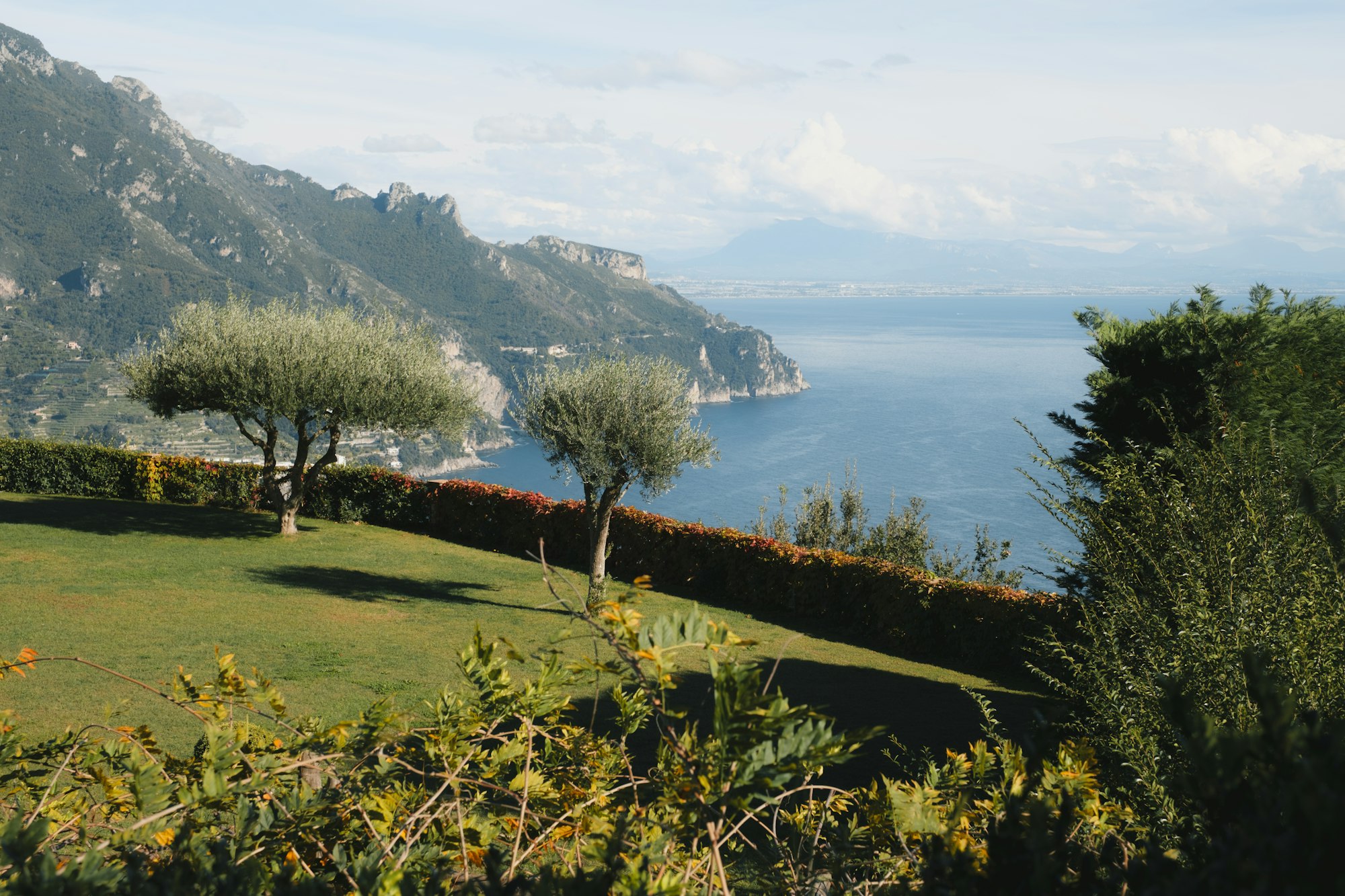
For cool air and for contrast, give a day to Ravello, which sits a thousand feet above the coast road on a saddle of rock and has spent centuries being the place people climb to in order to think. The gardens are the reason. At the Villa Rufolo, Wagner found the enchanted garden he had been trying to imagine for Parsifal and wrote in the visitor book that he had found it at last. D.H. Lawrence worked on Lady Chatterley up here; Gore Vidal kept a house on the very lip of the drop for the better part of thirty years. At the Villa Cimbrone the long walk ends at the Terrace of Infinity, a row of marble busts along a parapet and then, past them, nothing but sky and the sea a very long way down. On an ordinary afternoon the only sound is wind in the pines and a bell somewhere below, and it is more than enough.
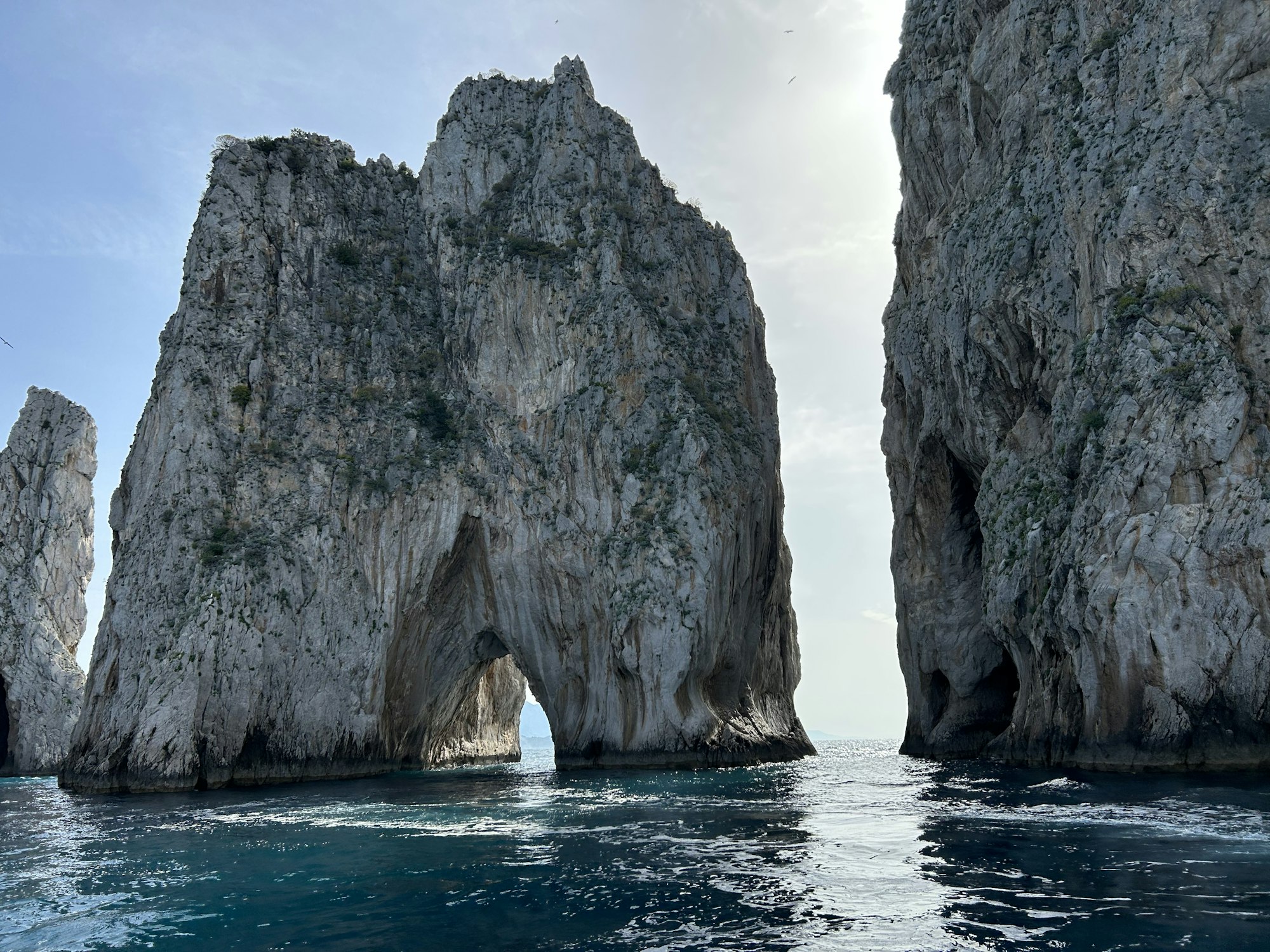
One day belongs to a boat, and the trick is not to fill it. Hire a small wooden gozzo with a skipper out of Amalfi and set off with no firmer plan than lunch. The coast that takes a week to walk turns secret from the water: caves the colour of a swimming pool, a waterfall dropping straight off the rock into the brine, coves with no road to them and therefore nobody in them. Anchor off nothing in particular, let the engine go quiet, and it is easy to feel that this is the same water that made the republic and then unmade it, older and far more patient than anything built along its edge.
The last evening asks for a long table and no agenda at all: the lemon-bright spaghetti, fish that was swimming that morning, a carafe of cold white cheaper than a coffee back home, and the light going the way it always goes here, peach to gold to a violet that pools in the folds of the cliffs. The lamps come on in the towns across the water one terrace at a time. Almost everyone comes to look at a pretty coast. What they have actually spent the week on is the roof of a drowned empire, and the lemons are holding it up.