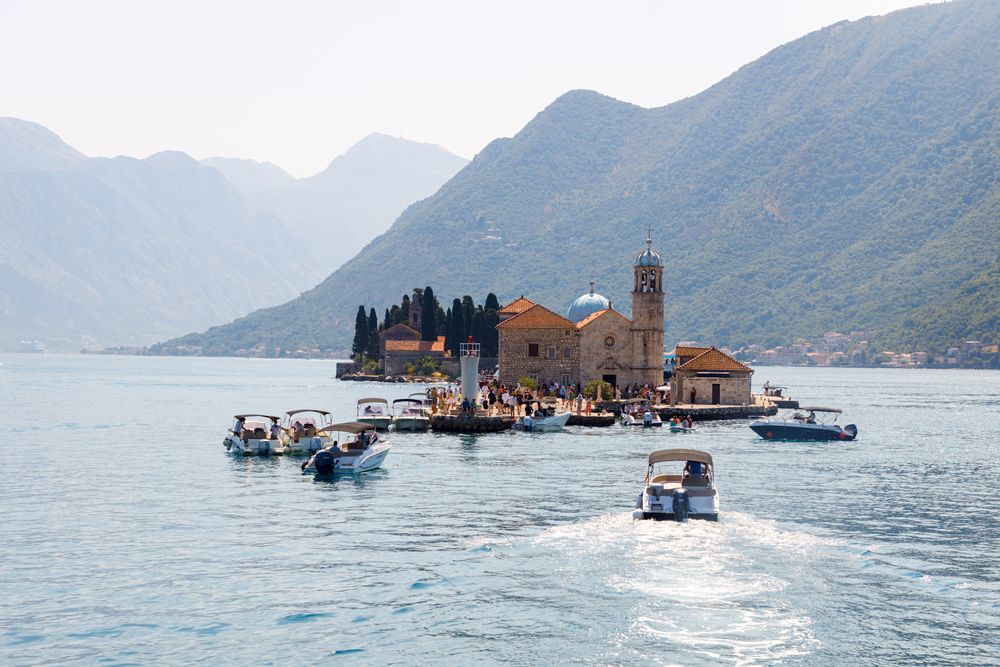
The boatmen at Perast work off the quay in front of the town, under a hand-lettered board, and they take no bookings. A skiff leaves when it has enough people in it, which in season is every few minutes, and the crossing to the island church of Our Lady of the Rocks runs five to ten minutes. Around 5 euros covers the return, paid at a desk on the waterfront or to the man at the tiller.
Almost everything else on this bay has an opening time attached to it, a ticket gate, or a bus timetable. The boat is the one arrangement on the Bay of Kotor that can be made on impulse.
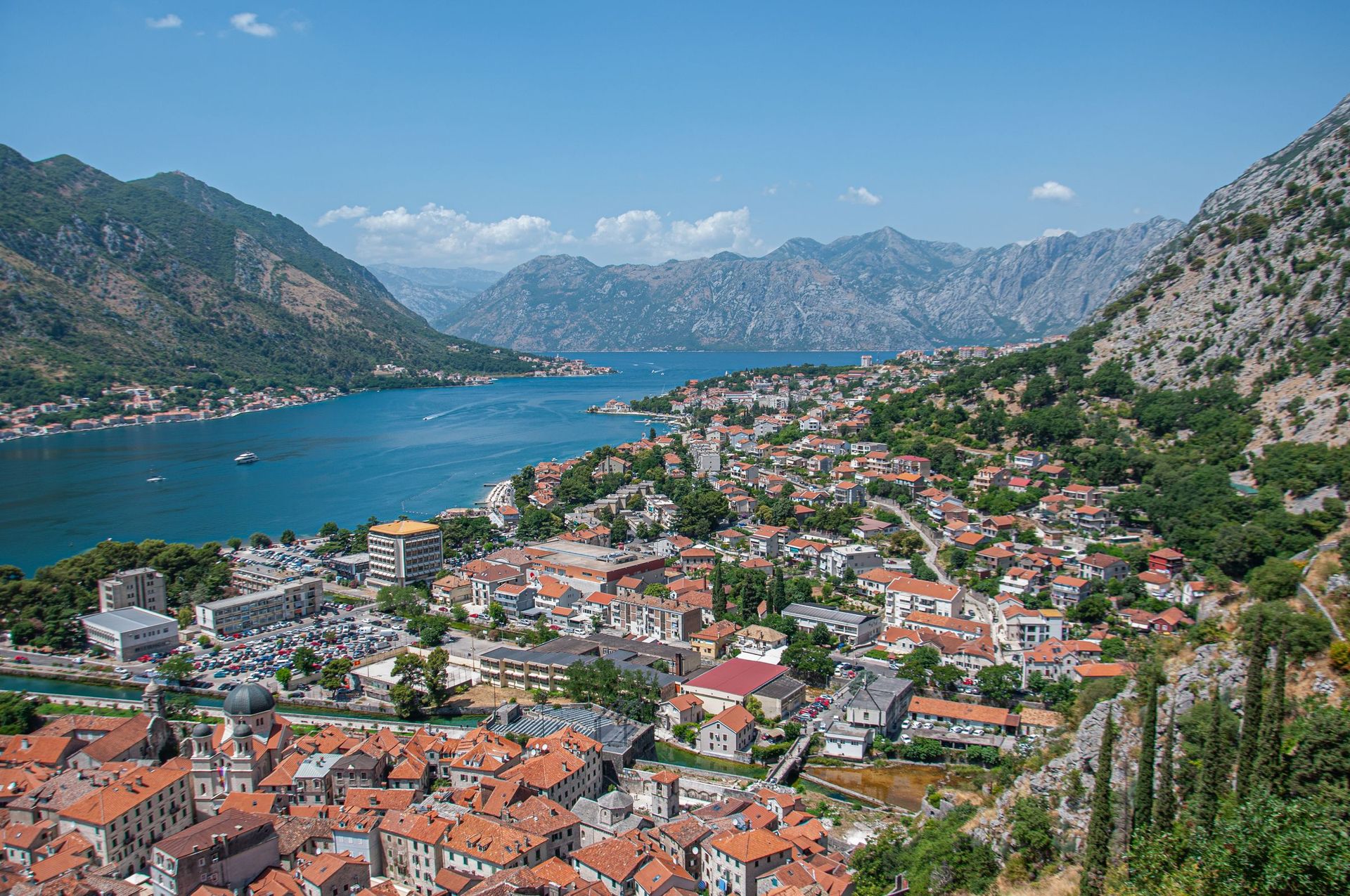
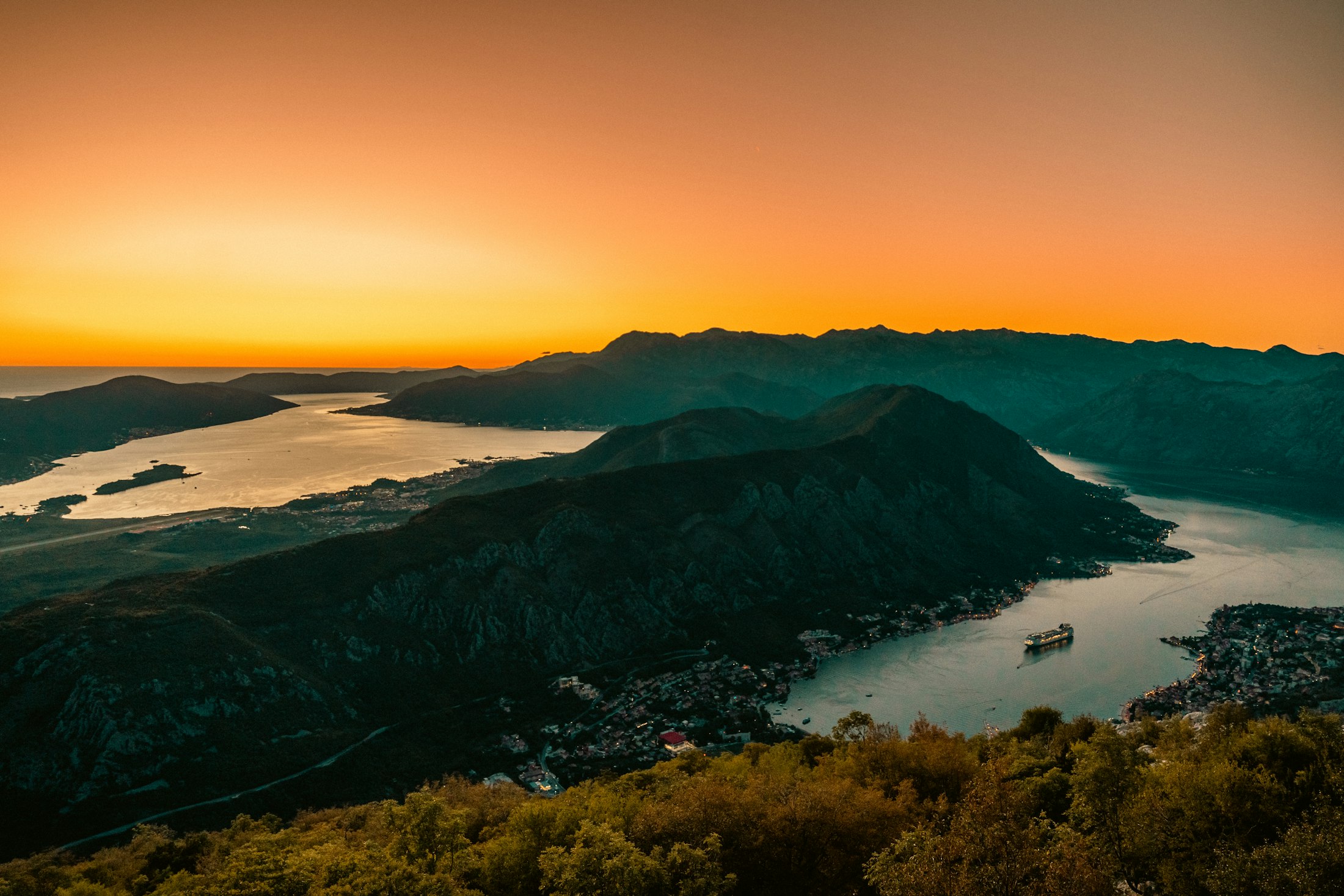
Boka, as Montenegrins call it, is a drowned river valley rather than a glacial one, which is why the water warms up enough to swim in and the slopes carry olives and figs. Visitors reach for Norway anyway, and the resemblance is fair: the mountains go into the water almost vertically along most of the shoreline.
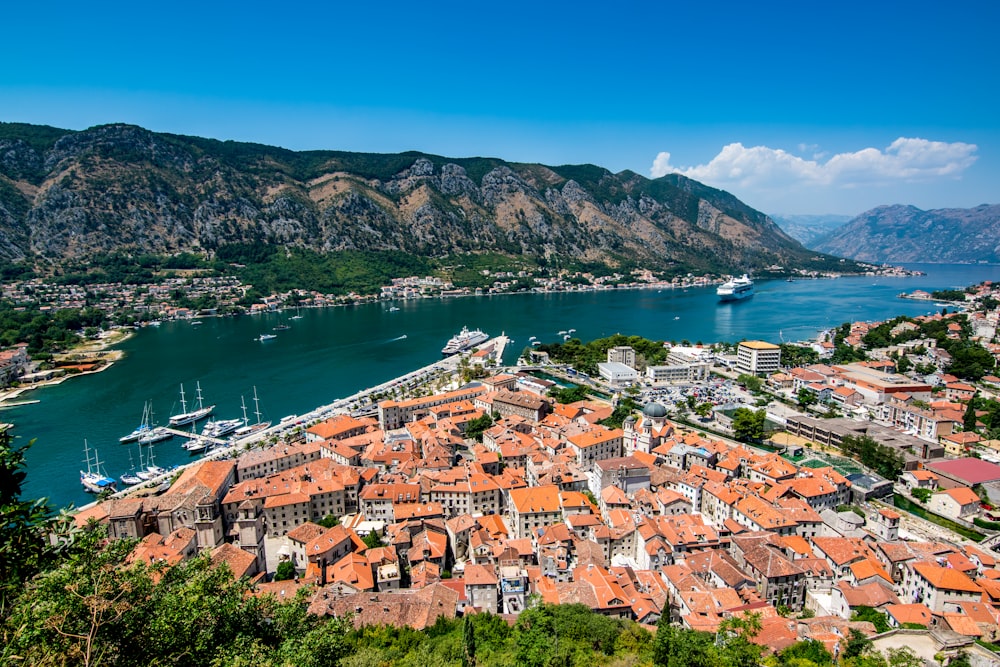
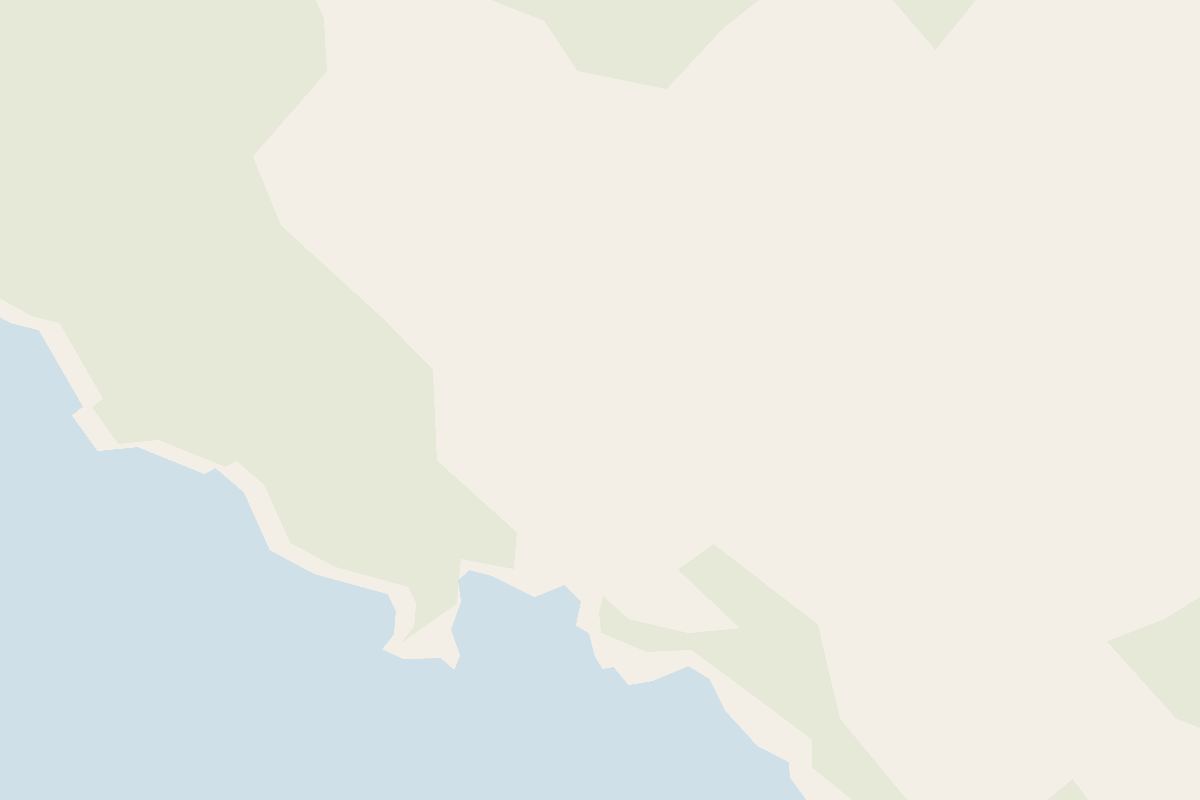
The layout is what matters for planning. The bay bends twice and pinches in the middle at the Verige strait, where the shores close to about 300 metres. A car ferry crosses there between Kamenari and Lepetane in ten minutes, cutting roughly 30 kilometres off a drive round the head of the water. Kotor sits at the very back, Perast about halfway along the northern arm, and half an hour of road separates them.
Arrival narrows to three airports and a border. Tivat is the near one, about 8 kilometres round the water from Kotor, twenty minutes by taxi and a little more on the coastal bus. Podgorica is the country's larger airport and sits roughly an hour and a half away by road.
Dubrovnik is the third and often the cheapest, about two hours including both border posts. In July and August the queue at the Debeli Brijeg crossing is the part of that drive nobody budgets for, and the Kamenari ferry cuts the last stretch of it. No railway reaches the bay at all, so the last leg is a road leg however the trip starts.
Between April and the end of October the Port of Kotor takes something in the order of 500 ships and several hundred thousand passengers, and the berth is a short walk along the waterfront from the main gate. That proximity is the whole story.
The old town is a few hectares of lanes inside a wall. When two large ships are alongside, the lanes work like the concourse of a railway station and the kitchens on the main square slow to a crawl. The ships sail in the late afternoon and the town is handed back. June and September buy the same weather with a fraction of the pressure, while July and August trap the heat against the cliff and fill the lanes by nine.
Do the climb first, and do it early. Kotor's fortifications do not stop at the town: they run up the mountain behind it in a long zigzag to the fortress of St John, San Giovanni on the Venetian charts, roughly 260 metres above the water. The step count is quoted as 1,350 almost everywhere, though counts differ by a few dozen depending on where the counter starts and whether the connecting ramps go in. Treat it as an hour up at an unhurried pace, and an hour and a half to two hours for the round trip.
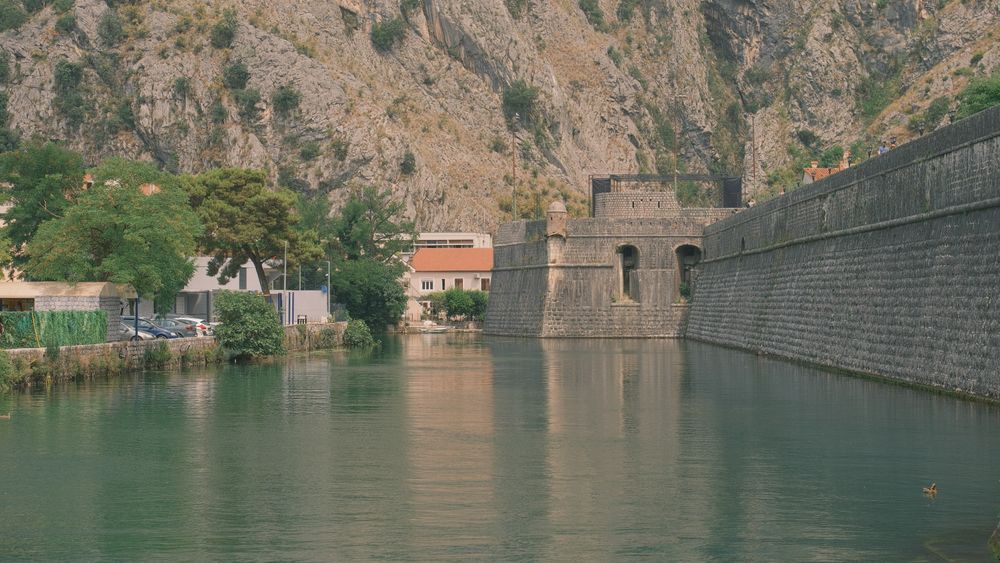
Two ticketed entrances stand inside the walls, one by the River Gate at the north end and one near Pjaca Škaljarska to the south. The gates open at seven in peak season and at eight either side of it, and a ticket is good for the whole day.
Shade is the problem. The staircase is open rock for most of its length, with the small church of Our Lady of Remedy about halfway up as the one dependable place to sit down. In July the climb is no harder than in May in any technical sense, it simply costs more, and a fair number of people stop at the halfway church and count that as the walk.
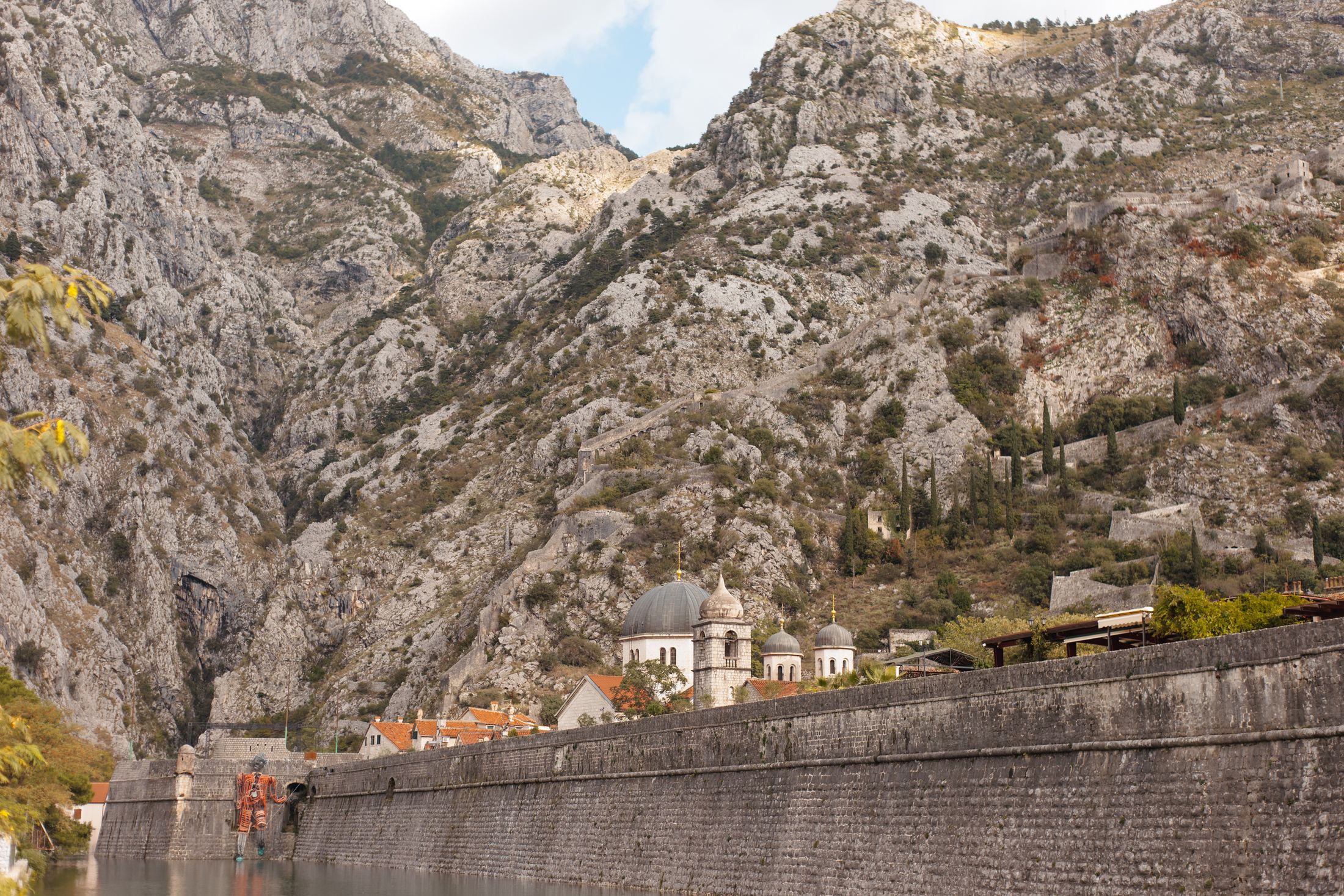
The vendors selling cold water in the shaded corners of the staircase are the clearest evidence of how many people set off without any.
There is a second way up, and it costs nothing. The Ladder of Kotor, waymarked as trail 759, leaves from behind the town and climbs in something like seventy switchbacks on the old caravan road towards Njeguši, past the abandoned hamlet of Špiljari with its roofless stone houses and the little chapel of St George.
Walkers have long used a gap in the fortress wall above Špiljari, universally called the hole in the wall, to drop onto the ticketed route. In high season a guard is posted there, so anyone counting on the shortcut should carry the price of a ticket anyway. The Ladder is longer, rougher underfoot and far quieter, and it is the walk to take for anyone who came to Montenegro to walk.
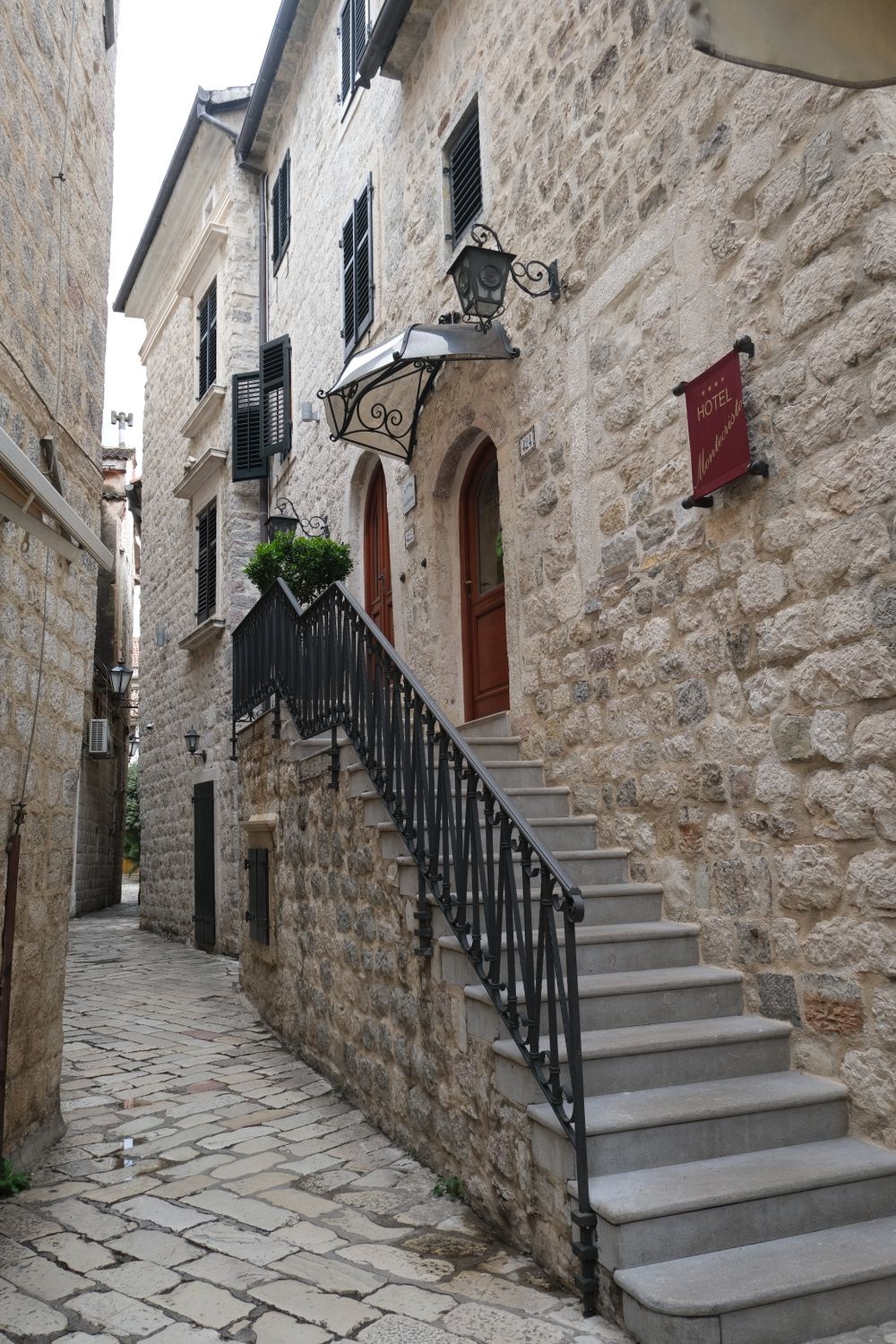
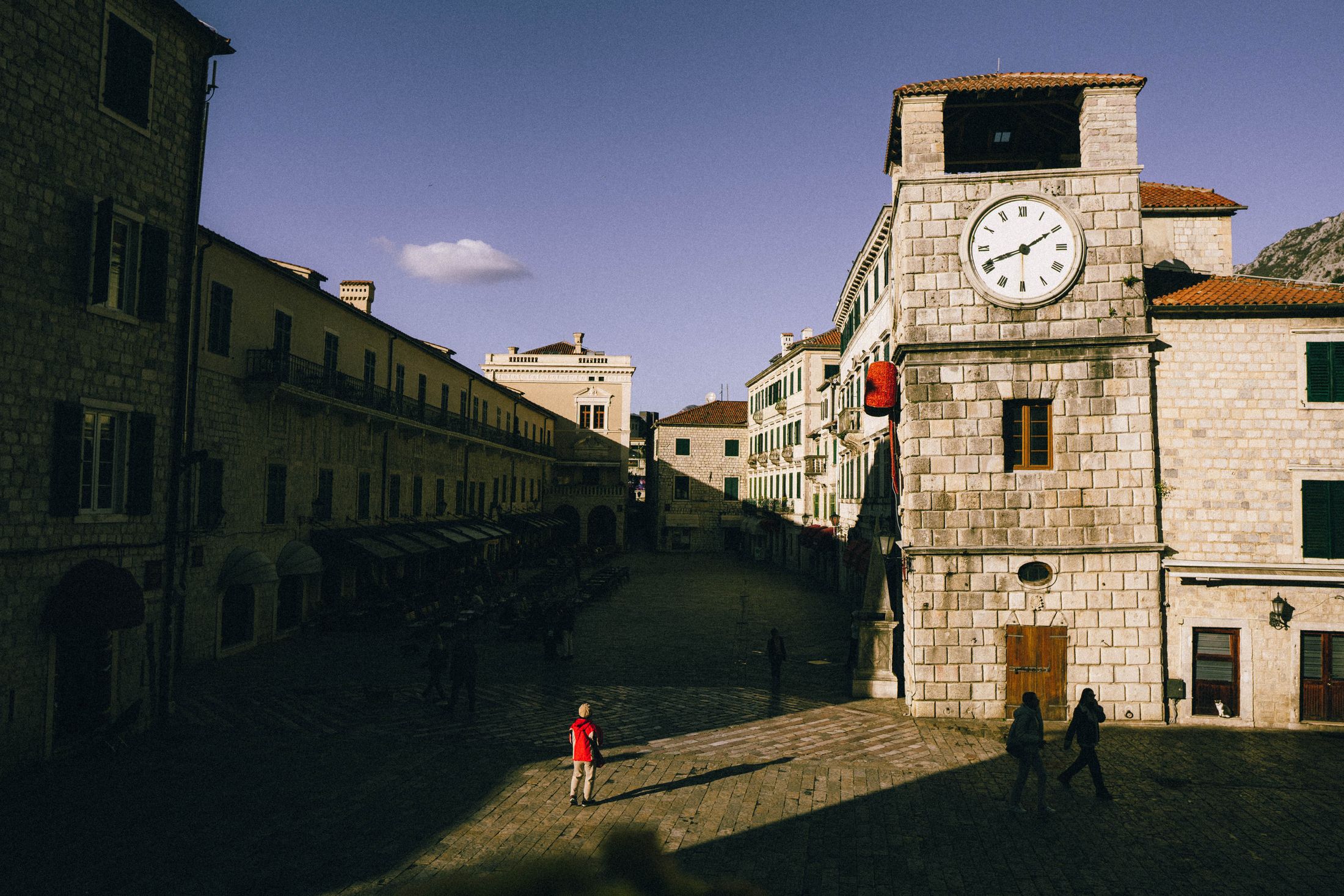
Inside the walls there is less to look at than the photographs promise and more to sit in. Kotor was Venetian for close to four centuries and the stone says so, from the winged lion over the gates to the marble worn to a shine in the lanes. The Cathedral of St Tryphon, consecrated in 1166, carries two mismatched bell towers, the legacy of the earthquake of 1667 and of the rebuilding that followed. A later earthquake, in 1979, put the town on the UNESCO list of World Heritage in Danger, where it stayed until 2003.
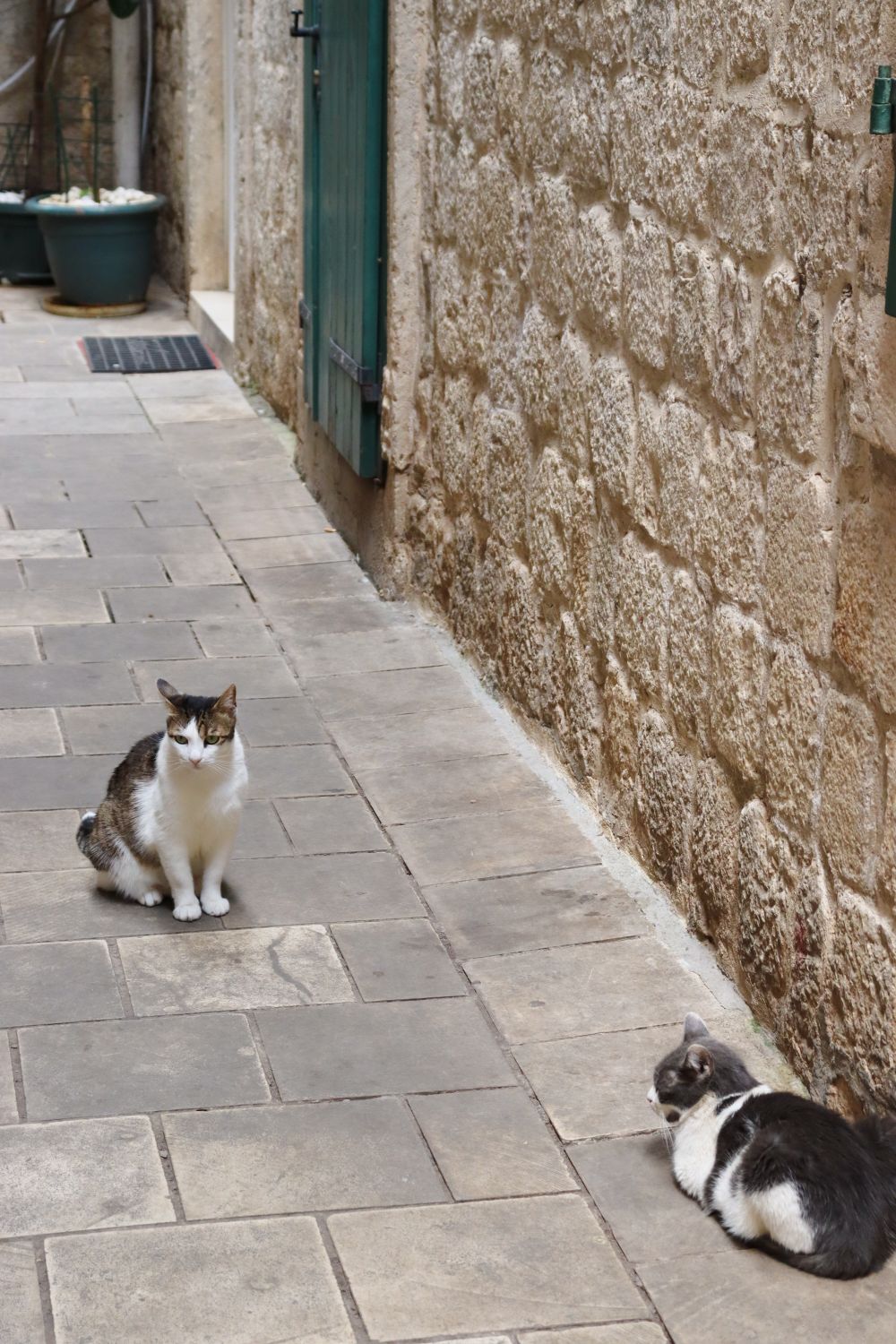
The cats came off the ships that carried them for the rats, stayed, and are fed by the town now. The Cats Museum, founded in 2013 by the Venetian collector Piero Pazzi, charges a euro at the door and puts it towards the strays.
Eating divides on the same clock as everything else. Konoba Scala Santa, trading since 1931 in a quiet corner of the old town, has the terrace most people picture and fills the moment the first tenders land, so aim for one o'clock or nine in the evening. Ladovina, outside the walls in Dobrota, is a kitchen and wine bar rather than a konoba, and it takes reservations, which in July it needs. Galion sits on the water below the walls with the old town in view across the inlet, and is where to go when dinner is the evening's plan.
Perast has no cars in it. The village is a single street of sea captains' palazzos below the main road, pedestrianised, with two small car parks at either end that fill early in July and August. The approach carries signs offering free parking, and a good many of them belong to boat operators who bundle the space with a tour, so a driver who wants neither should use the official lots or the roadside on the Kotor approach and walk in.
Without a car it is simpler. The Blue Line bus runs from Kotor roughly hourly, every two hours on Sundays and public holidays, and takes about 35 minutes. It can be picked up at the main station a few hundred metres south of the old town or at the Riva stop by the walls, and it sets down on the upper road at Perast, from where stone steps drop into the village.
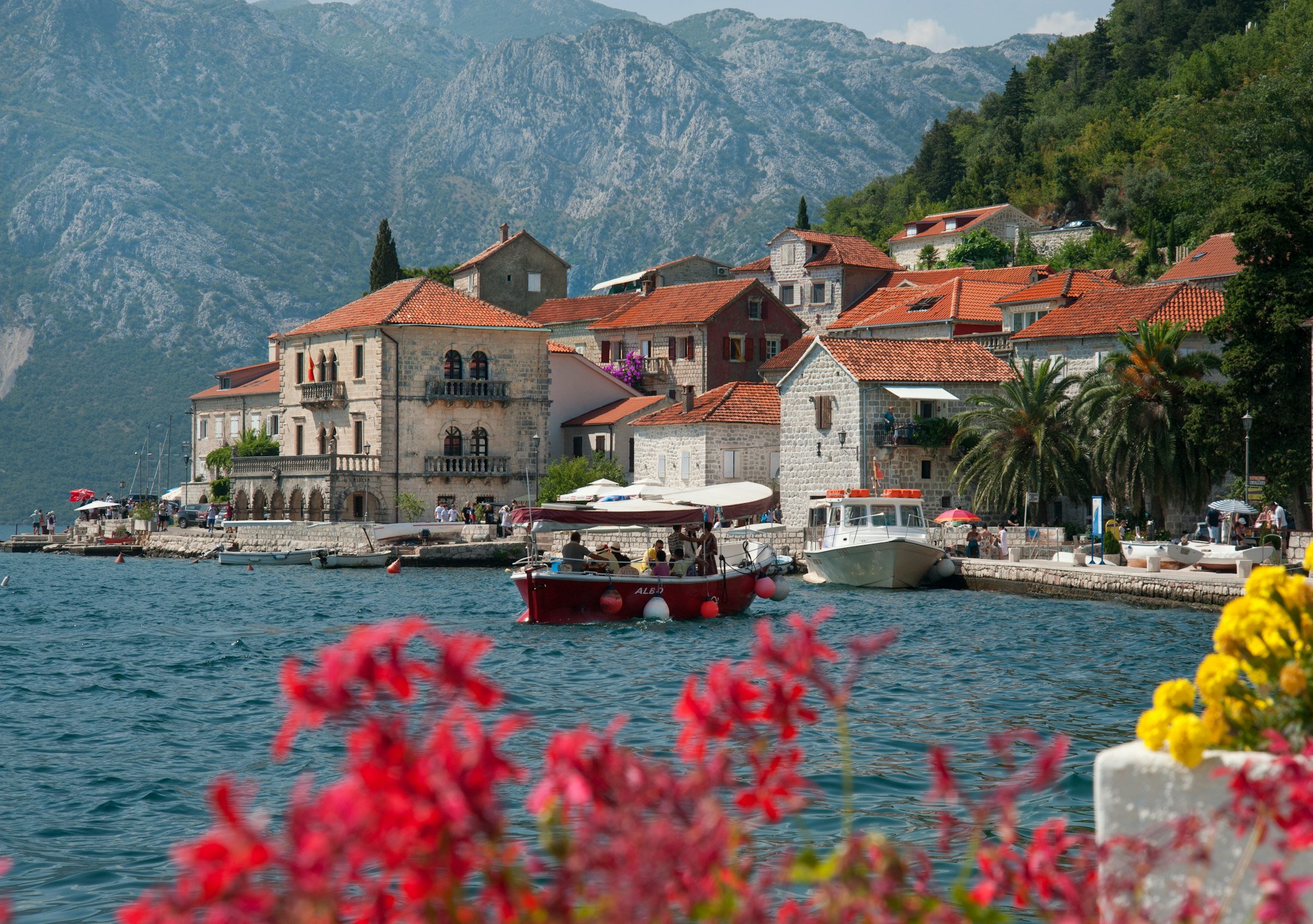
A euro gets a visitor up the bell tower of St Nicholas, 55 metres of it, for a view down the length of the bay that the waterfront cannot give. Two things catch people out: it opens around ten and shuts around four, so it is not an evening plan, and children under 15 are not allowed up at all.
The Perast Museum occupies the Bujović Palace on the waterfront, a baroque house of 1694 holding the town's maritime collection. Konoba Otok Bronza is at the far end of the village, past the point where the coach parties turn round, with tables set out over the water.
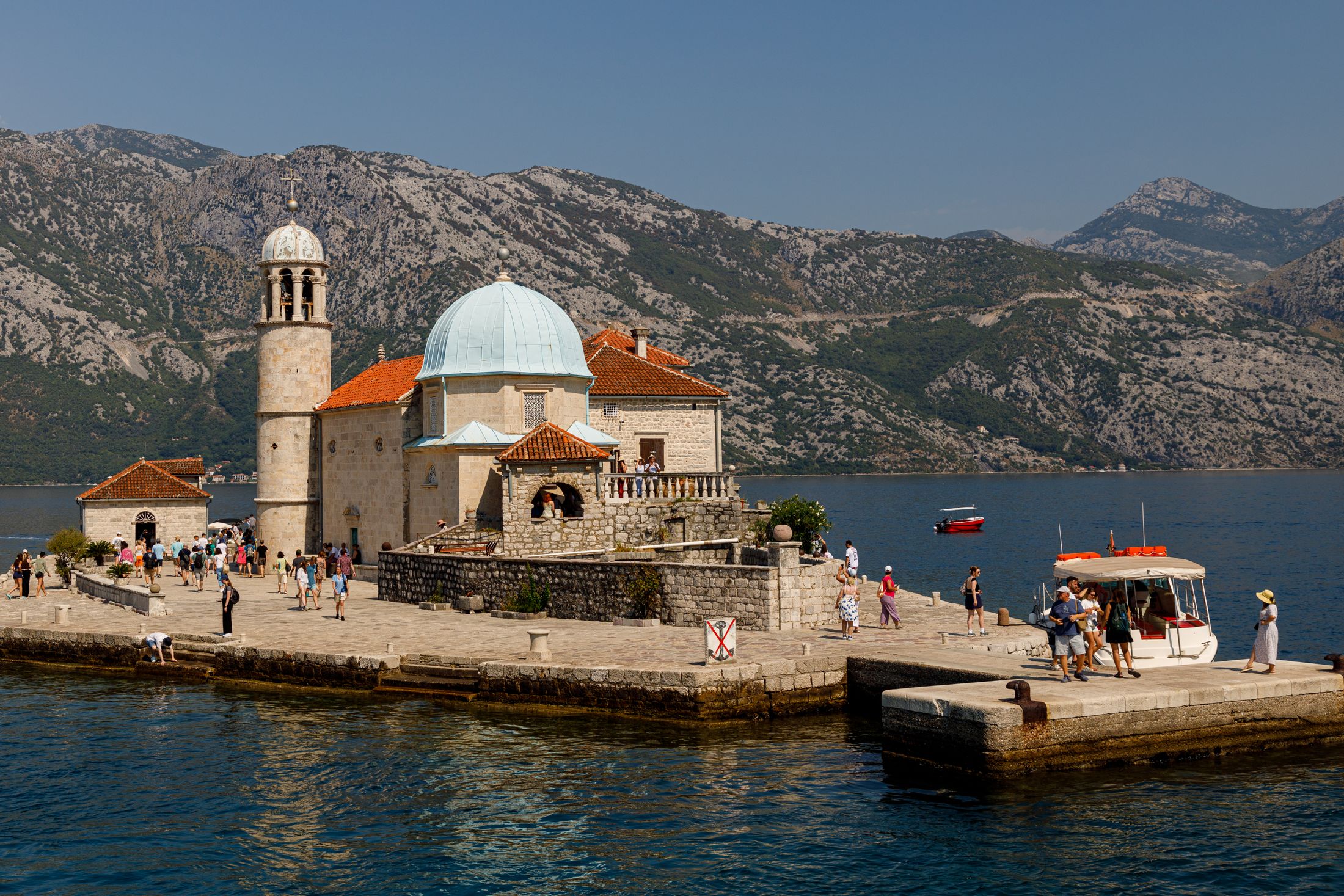
The island itself is man-made, which is the thing most visitors arrive without knowing. Perast's other island, St George, is natural and closed to the public, a Benedictine abbey under cypresses with a graveyard.
Our Lady of the Rocks was raised from the seabed around a rock where, as the town tells it, two brothers named Mortešić found an icon of the Virgin on 22 July 1452. Sailors dropped stones there on returning safely, old hulls were sunk alongside and filled, and in time there was enough of it to carry a church. Inside are more than sixty seventeenth-century paintings by the Perast painter Tripo Kokolja and a wall of silver votive plaques left by seamen. A small museum adjoins it, and both charge a couple of euros.
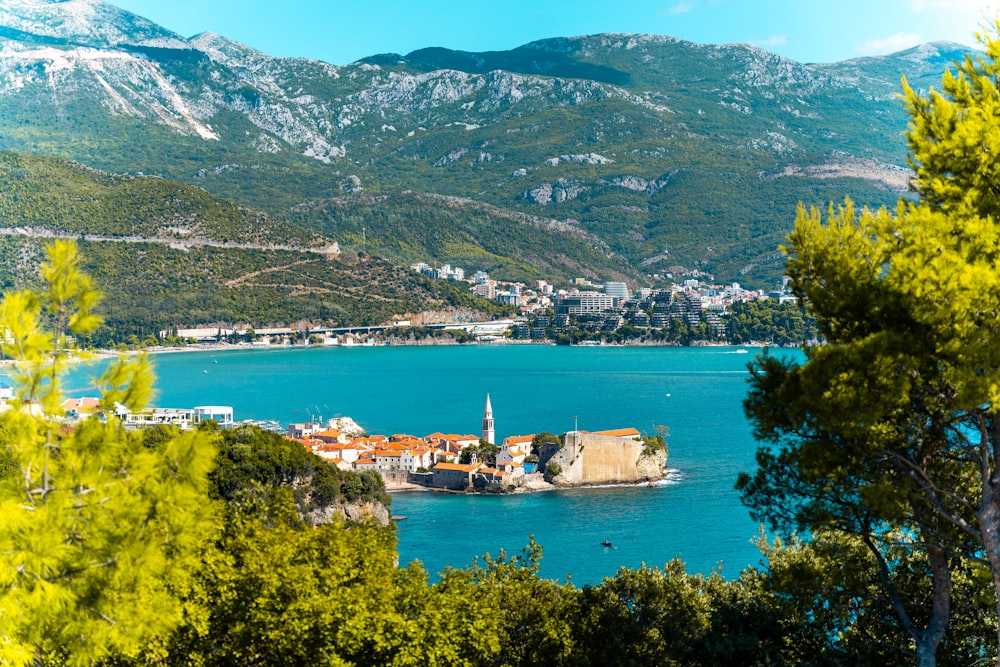
Nobody should come to the bay for a beach. Its shore is rock, shingle and concrete bathing platforms with ladders into deep clear water, which makes a fine hour and a poor day. For sand and sunbeds it is half an hour over the hill to Budva.
The water is worth getting onto. Small boats and kayaks go out by the hour from the Kotor waterfront and the Dobrota shore, and the standard bay tour runs down to the Blue Cave near the mouth and the abandoned submarine pens cut into the rock at Rose.
Where to sleep is a live decision too. A room inside Kotor's walls is atmospheric and loud, with bars running under a midnight curfew on music. Dobrota, along the shore to the north, is about 25 minutes on foot from the gate and has the modern hotels. Muo and Prčanj, on the western shore opposite, are quieter again and look straight across at the town.
One date on the bay is fixed. On the evening of 22 July the boats go out from Perast roped together in a line, circle Our Lady of the Rocks and tip another year's stones around it, a practice called Fašinada that went onto Montenegro's register of intangible cultural heritage in 2013. It lands in the hottest and busiest fortnight of the year, which is the trade for seeing it, and it is the one night the island is still added to. Stones have been going in since 1452.