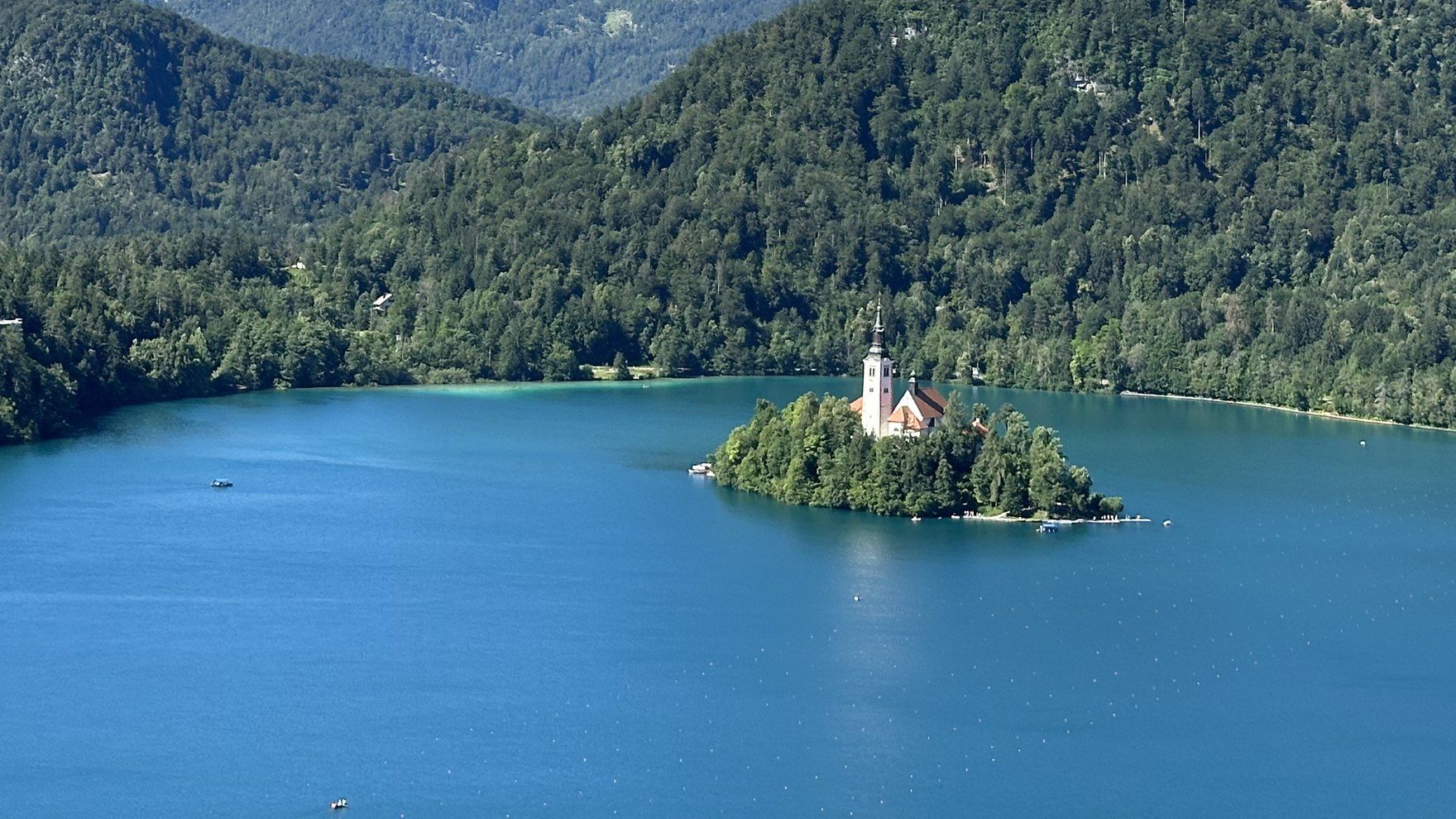
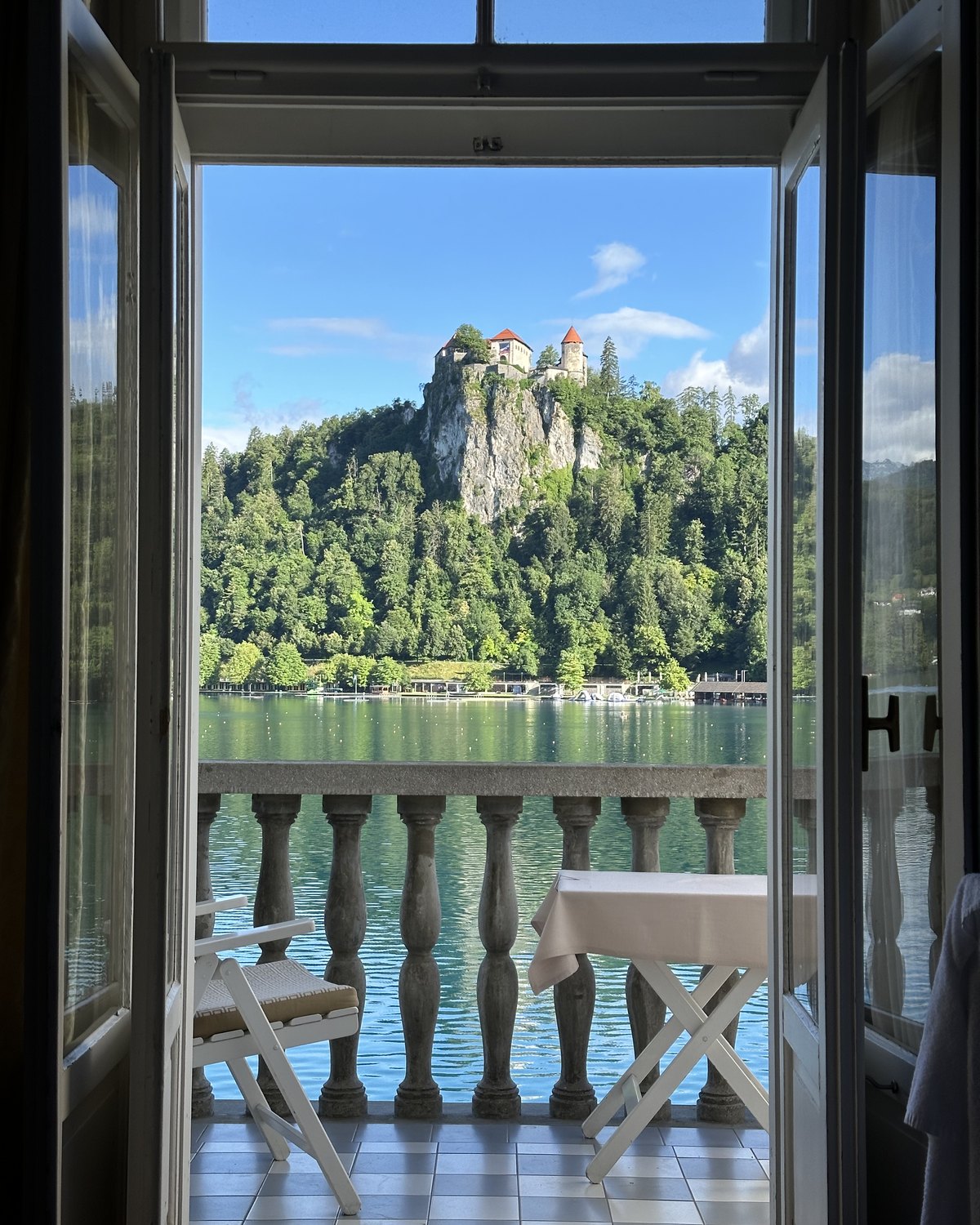
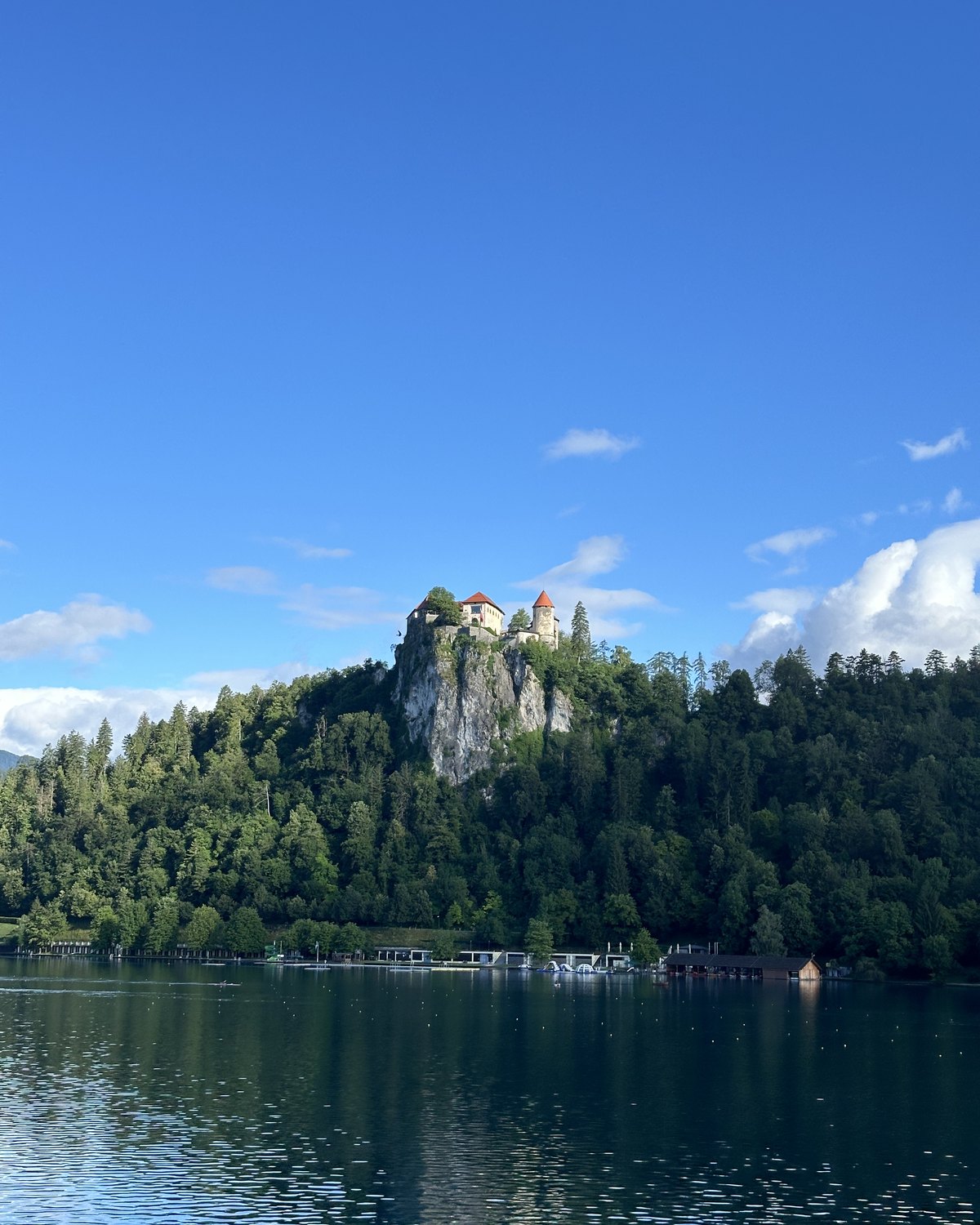
The room came with an ashtray, a real glass one out on the balcony table, as if that were still a normal thing to leave beside a chair. The old wooden swing doors opened straight onto the water: a narrow balcony, the small island out on the lake, and the castle on its cliff across it, the picture that sells Slovenia. The Grand Hotel Toplice puts the postcard outside your window and keeps the room behind it a few decades out of date.
That undecided quality is earned. Bled became fashionable in the 1850s, when a Swiss naturopath sold sun, air and lake water as a cure, and the Toplice, the oldest hotel on the lake, still stands over the warm spring those cures were drawn from. Imperial Austria took it up as a resort, then a Yugoslav king kept it as a summer seat, then Tito, who entertained his foreign guests in this hotel. Three states held Bled, and all three are gone. The formality you feel in the corridors is inherited, and worn a little thin, like a good coat kept a few decades too long.
The breakfast was enormous, set out under high ceilings in a room that stayed half empty even in July, while the lake outside filled with day-trippers by ten. The grandeur is real and a little faded at the same time, and the faded part is the better half of it. Nobody is pretending the carpet is new. Below the hotel, the same spring still fills a pool, kept at the cool temperature it comes out of the ground.
The circuit of the lake is the obvious thing to do, and worth the hour it takes. But the best hours here go on the balcony instead: the swing doors open, a chair at the rail, the lake going about its business below and the castle on its cliff across the way, nothing at all that needs doing.
The hotel was the trip.
Bled hands out two kinds of day, and both are worth having. A grey wet one turns the shore walk into something under the drip of the trees, the island smudged out across the water. A clear one is the postcard: the lake gone still and holding the mountains upside down, the light the place was built to sell.
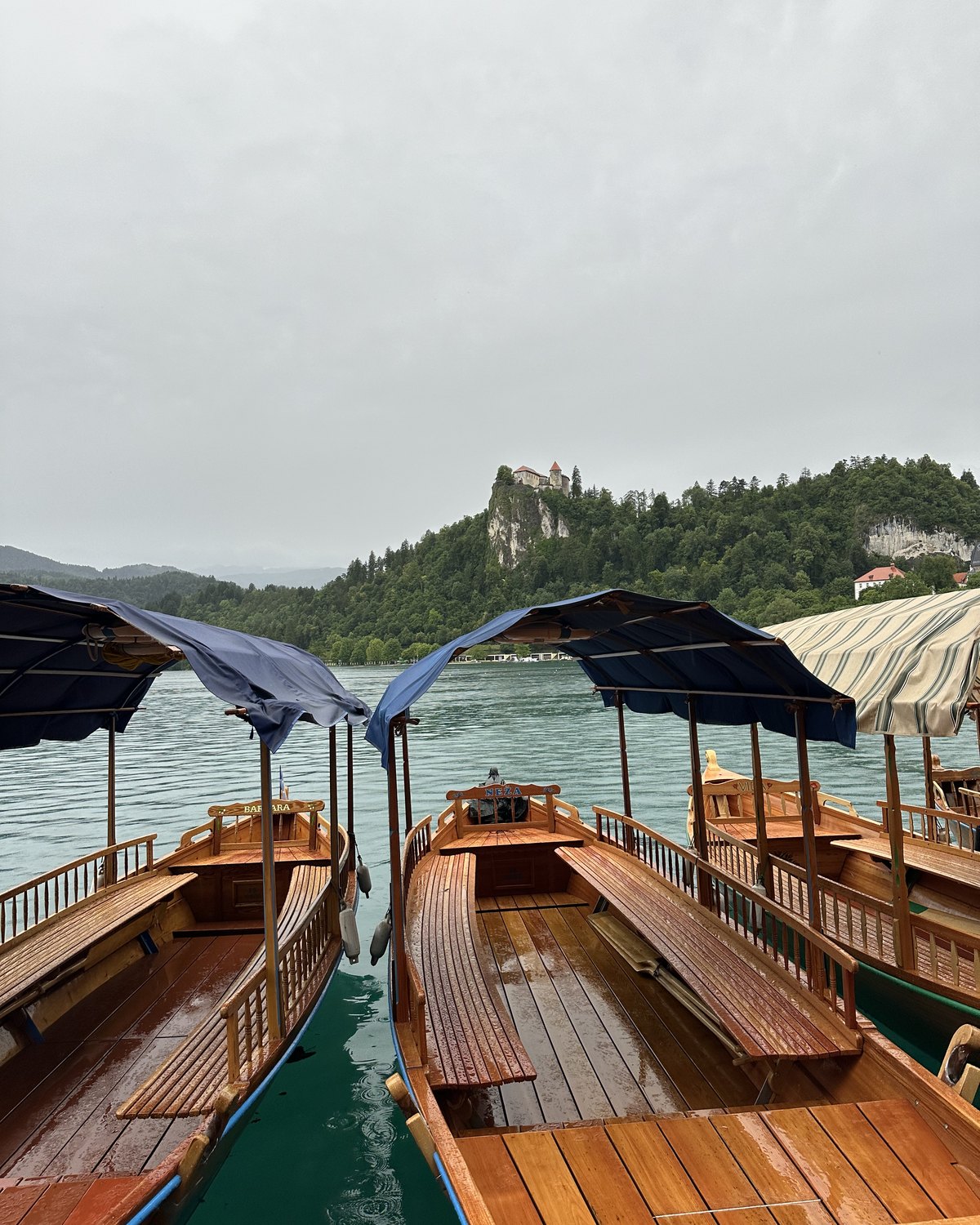
There is not much else to do here, and that is fine. The shore path runs about six kilometres, flat and mostly paved, an easy hour if you do not stop. The pletna boats wait at the water to row people out to the church on the island, ninety-nine steps and a bell you ring for a wish. The castle is a fifteen-minute climb up through the trees, holding its cliff a hundred and thirty metres above the far shore, first written down in 1011 and the oldest in the country by the record. The museum inside is modest, and not the reason to go up. The view down is: the whole lake laid out below, the island set in the middle of it.
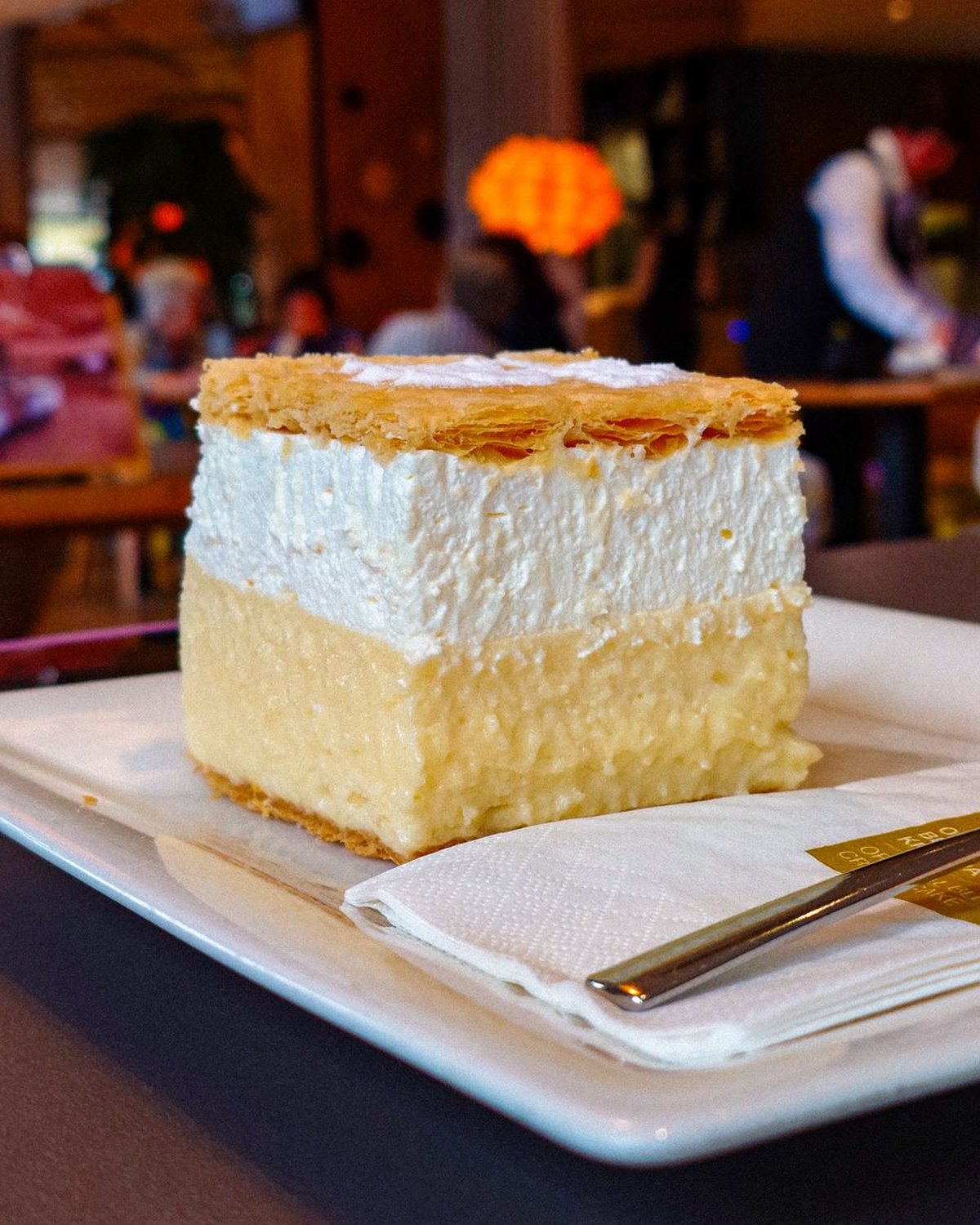
Coming from the north makes it simple. From Vienna it is about four hours: the motorway south, then down through the Karawanks Tunnel under the Austrian border, a toll of its own on top of the Slovenian vignette, and a last few kilometres off the highway at the Lesce exit. The lakeshore is closed to cars, so you leave yours in one of the paid lots and walk in. Bled needs only a few hours for the lake itself; the reason to sleep here rather than day-trip from Ljubljana is the early quiet before the coaches, and the Toplice, which is the grand way to do it. The town's own dessert, the kremšnita, a slab of custard and cream pressed between sheets of pastry, was standardized in a kitchen along the promenade at the Hotel Park in 1953, which still sells it as the original; locals will send you a few streets back from the water, to Slaščičarna Zima, for a flakier one.
The best way to leave, as to arrive, is early, before the day boats put out. Nobody at the Toplice is in a hurry to modernise it, and that is the reason to stay the night: a grand old hotel still wearing its last century, on a lake that has been the resort of three countries now gone.