The channel was the Zwin, an accident of weather. It ran about fifteen kilometres inland, and no river fed it that was big enough to scour it clean. The city dredged it, straightened it between its outports at Damme and Sluis, and from the 1360s ran works meant to make the tide scour it for nothing. The engineering lost. By about 1500 the channel was unusable, and when the Spanish Netherlands split off in 1584 what trade remained went to Antwerp. Zeebrugge, the outer port that finally answered the silt, was built in 1907, four centuries late, and the cruise ships tie up there now.
What the silt closed was a serious financial town. Bruges sat where Hanseatic trade met the Mediterranean routes, had Genoese merchants resident from 1277 and held at least 46,000 people by around 1350. The Van der Beurze family ran an inn called Ter Buerse, and their arms carried three purses, which is where the name is generally traced from. The trading happened outside it, on the Beursplein, where exchange rates were published regularly from 1370. When Bruges failed the word went to Antwerp, and out into French, Italian, Spanish and German as bourse, borsa, bolsa and Boerse.
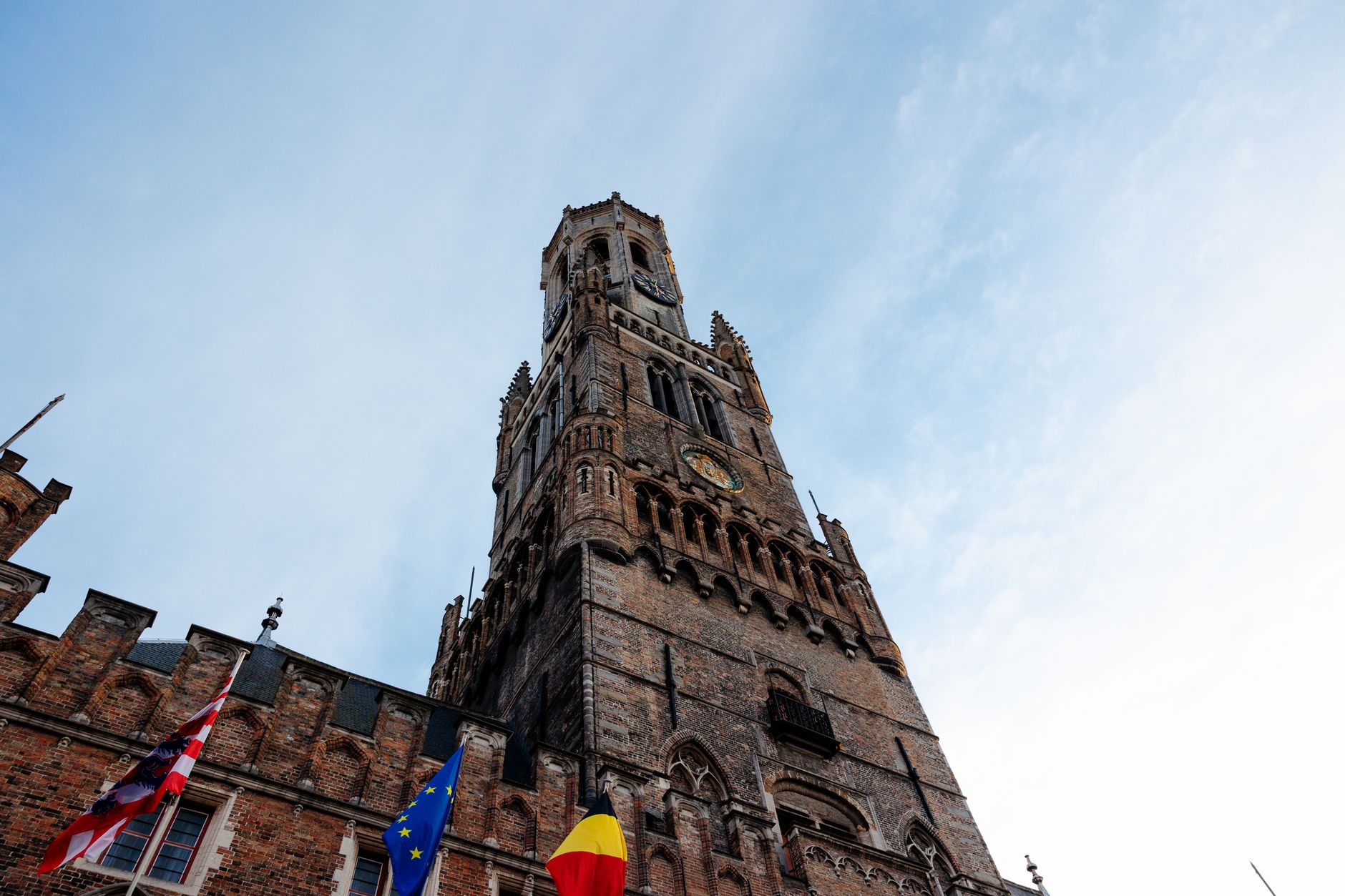
Belgian independence in 1830 found Bruges near the bottom of the new kingdom, and industry went round it. Then the Flanders crisis of 1845 to 1848: potato blight reached Belgium in July 1845 and destroyed roughly 95 per cent of the Flemish harvest; poor grain years and the collapse of hand-spun linen against mechanised mills came with it. Belgian excess mortality across 1846 to 1848 is put at 40,000 to 50,000 deaths. The accepted account of the intact city runs through that poverty. No capital existed to clear the medieval street plan and build a nineteenth-century commercial city on it, which is what money did to richer towns.
The emptiness was then sold back. Georges Rodenbach's Bruges-la-Morte, published in 1892, treats the place as fog-bound and half-drowned, and ran 35 photographs of Bruges through the text, which made it the first novel illustrated with photographs. It worked as advertising, which its author had not intended. Bruges was at that moment fighting for a commercial future through the port works at Zeebrugge and had no use for being marketed as a corpse. By 1909 it had a tourism society.
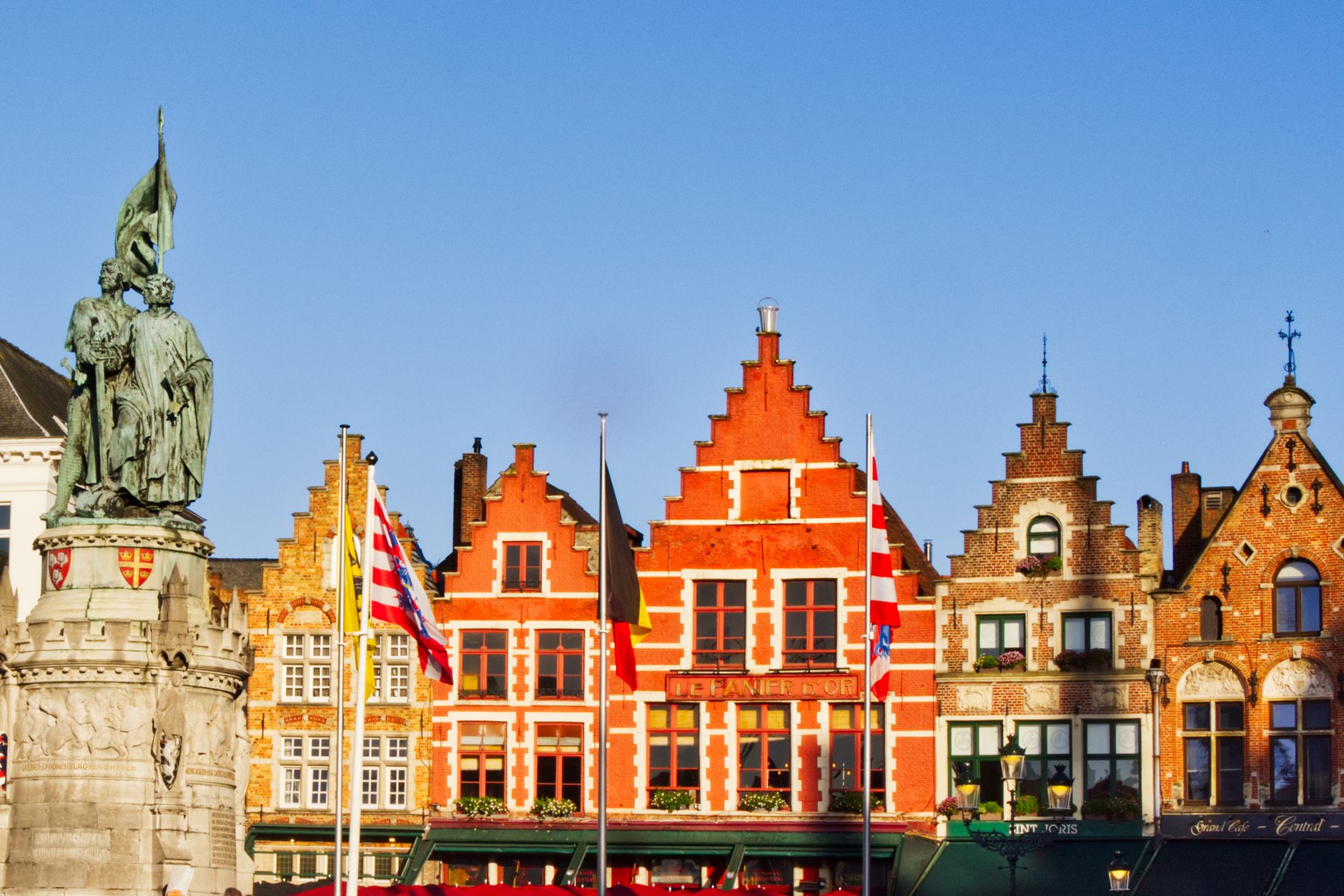
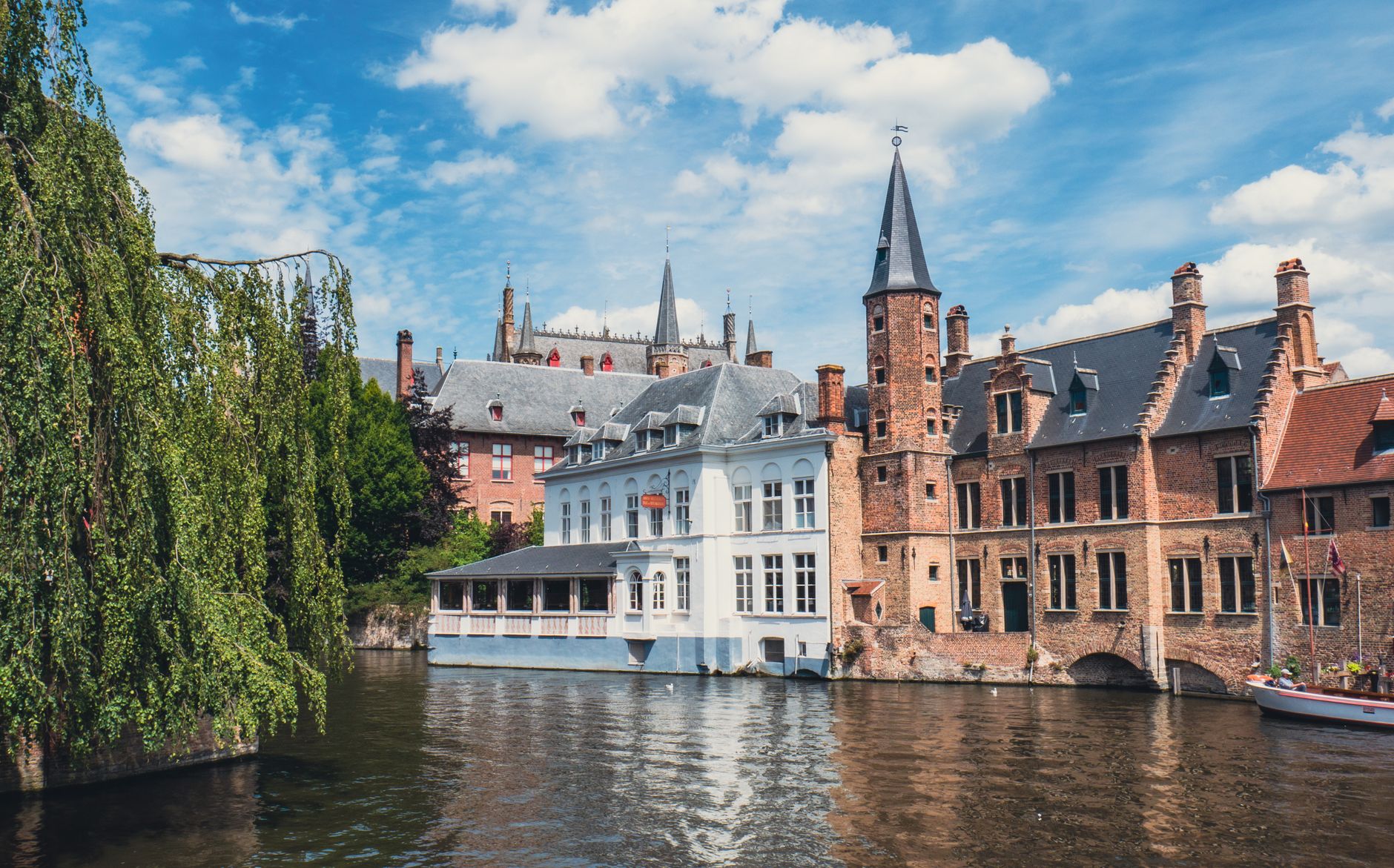
The present tense of that product: close to eight million day and overnight visitors in 2024, up about 13 per cent, a daily average of 27,000. Handle that total loosely, because the published figures run from nearer seven million to the 8.3 million Euronews reported for 2023. The figure with teeth in it is the split by wallet. Overnight guests are 14 per cent of visitors and 53 per cent of a tourism turnover that ran to about 542 million euro, which is why the city stopped marketing day trips. The museum-city line oversells the emptiness, too: 20,113 people were living inside the historic centre at the start of 2026, out of 119,991 in the city as a whole. What residents complain about is the retail: no clothes shops, no butchers, no bakers. Chocolate and beer.
The management of it is supply-side and mostly invisible. Cruise calls at Zeebrugge are capped at two ships a day, down from five in 2019. New hotels are banned in the historic centre, no new holiday-home permits are issued anywhere in the city, and coaches are kept out of the core altogether. The city has withdrawn its own advertising from Brussels Airport, which is a strange thing for a tourist board to do. Mayor Dirk De fauw puts it plainly: “We cannot and do not want to control access to the city, like Dubrovnik or Venice.” The headlines report all this as Bruges taxing day-trippers, and the day-tripper levies are not being charged yet. A per-head levy on cruise passengers, collected through the shipping lines, starts on 1 January 2027; a matching levy on coach day-trippers starts on 1 January 2028, held back a year while the coach parking is rebuilt. The overnight tourist tax is a separate instrument and it is already live, charged per person per night and added to the accommodation bill, and what happens on that same 2028 date is a rise, not an introduction. So a day visitor arriving before 1 January 2027 pays none of the new money, and anyone sleeping in the city is paying the overnight tax now.
The hours decide more than any ticket does. Belgian day-trippers arrive from about nine, cruise passengers from ten, and coach groups hold Burg and the lanes off it from roughly eleven until four. The shape people quote is in around ten, out by four. After four the centre drains, and by eight it has reverted: one traveller's account of the Markt and Burg after eight on a June evening has two waffle vendors and a few locals in it. The quiet comes with a calendar attached, because Sunday and Monday evenings are the emptiest of the week and Monday is when many Musea Brugge sites close, with plenty of shops and restaurants shut across both days. Before fixing a date, check what is berthed at Zeebrugge on cruisemapper.com. A 500-passenger call and a 3,000-passenger call are different cities.
Which is the argument for sleeping here. Overnight guests are the 14 per cent of visitors who provide 53 per cent of the turnover, and they are the ones placed to use either end of the day. Museums are the other refuge, and this is the reframing that turns a Bruges day around.
In Bruges the free things are congested and the paid interiors are calm, which reverses the usual advice on a heritage city.
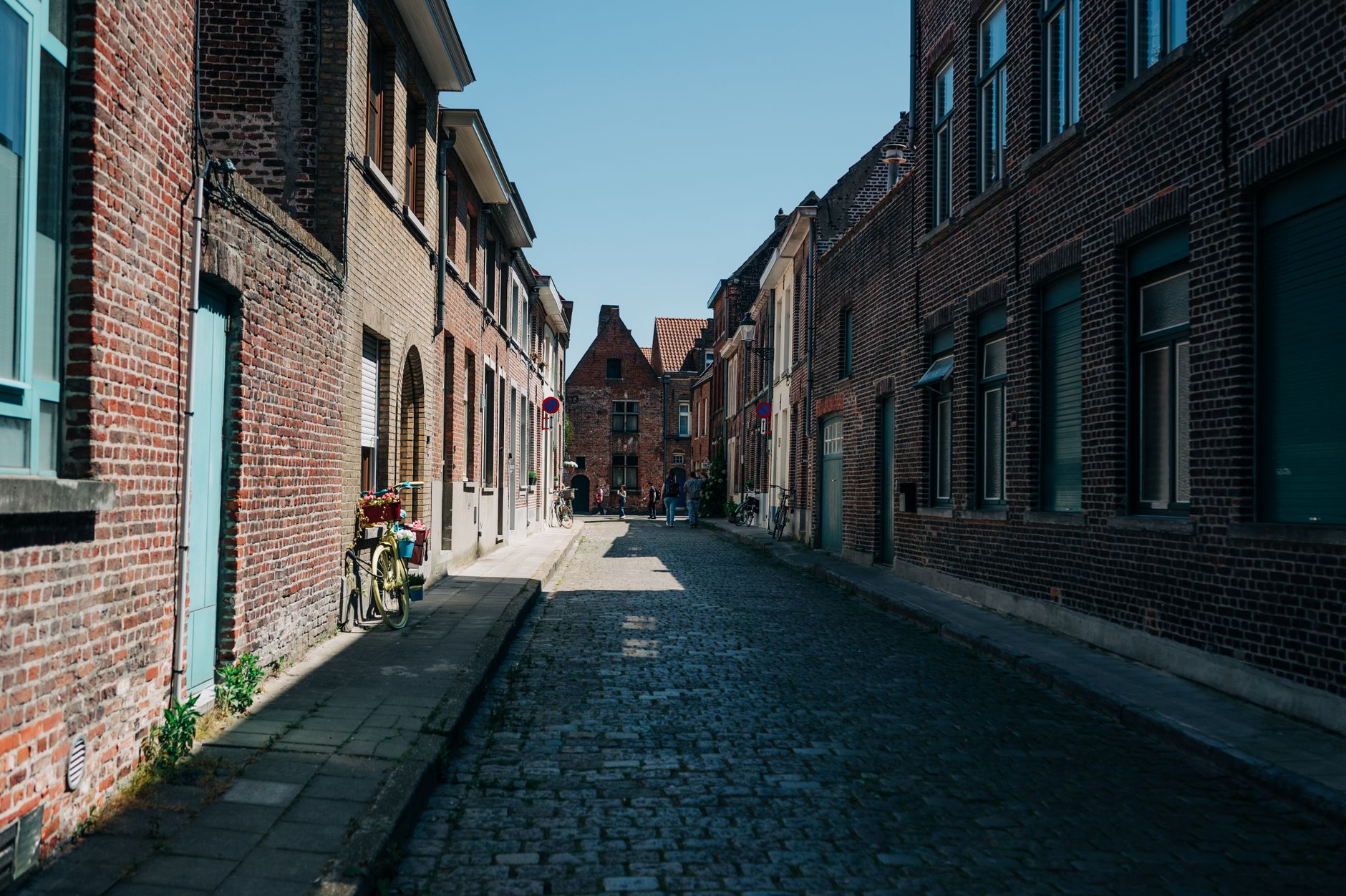
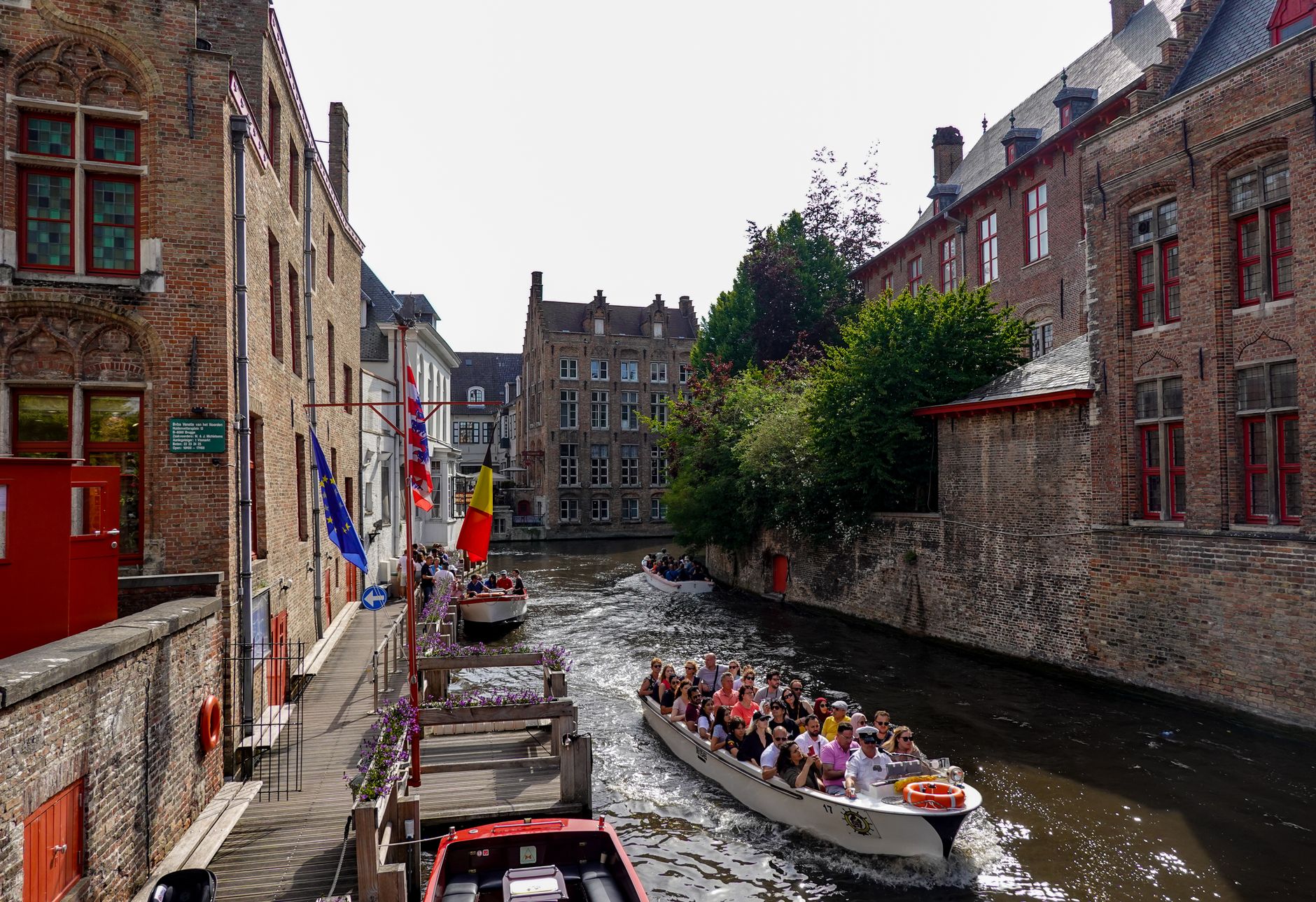
Start with the Belfry, which earns its ticket with conditions. It is 83 metres and 366 steps with no lift, and at the top is a 47-bell carillon, played live by the city carillonneur on Wednesday, Saturday and Sunday from eleven to noon, with hearing protection offered at the door. Musea Brugge sells timed slots and recommends them here: capacity per slot is limited and the good ones go in season. Book online, or be at the door as it opens. Hours are 9am to 8pm daily from 1 April to 2 November, and 10am to 6pm on weekdays with 9am to 8pm at weekends from 3 November to 31 March, last entry an hour before closing. The tower shuts in storms and extreme heat. Count the stairs across the visit too: 366 here plus 220 on the brewery tour is a great deal of climbing for one pair of legs.
The two art tickets are the best value in the city and the least crowded rooms in it. The Groeningemuseum runs six centuries of art from the southern Netherlands, anchored on the Flemish Primitives: Jan van Eyck's Virgin and Child with Canon Joris van der Paele, Rogier van der Weyden, Memling, the Bosch Last Judgement triptych, Bruegel the Elder. Museum Sint-Janshospitaal on Mariastraat is the stranger building: a twelfth-century hospital with its ward architecture intact, holding the second largest Memling collection in the world, four panels of which were painted for this building and have hung in it since the late fifteenth century. The Saint Ursula Shrine is in the hospital church next door, with a restored seventeenth-century apothecary. For three or more Musea Brugge sites, price the 72-hour Musea Brugge Card against singles.
Onze-Lieve-Vrouwekerk divides into a free half and a paid one. The nave costs nothing, under a brick tower of 115.5 metres. The ticketed museum behind the choir holds the tombs of Charles the Bold and Mary of Burgundy, the painted grave niches, and the Madonna and Child that Michelangelo sold to Bruges merchants in 1504. The combined ticket with the Gruuthusemuseum is cheaper than two singles. The Basilica of the Holy Blood on Burg is free to walk into and produces the most wasted visits in the city, on a technicality almost nobody reads first: the relic is presented for veneration daily from two to four in the afternoon, and on Friday mornings from 10.15 to 11. At any other hour the basilica and its ticketed treasury room are open and there is no relic to see. The building runs 10:00 to 17:15 daily, and the relic goes through the streets once a year in the Procession of the Holy Blood, on Ascension Day, next on Thursday 6 May 2027.
The canal boats are worth doing once, and they leave a visitor exactly one decision. The circuit is thirty minutes, fixed, and identical from all five jetties, at Huidenvettersplein 13, the Rozenhoedkaai, Wollestraat 32, Nieuwstraat 11 and Katelijnestraat 4: same route, same fare, and no online booking for individuals. You queue, you pay at the jetty, and the queue is the only variable. Boats leave full at around 40 people, so a visitor arriving for the 10:00 start can watch one fill and be aboard the next about twenty minutes later. High season runs roughly March to October, daily 10:00 to 18:00, with one jetty open by rotation in the quiet months. The boats are open to the sky, sailings stop in sustained heavy rain, and neither the boats nor the jetties are wheelchair accessible, since boarding is down a set of steps.
The horse-drawn carriages do not repay the money. They are sold by the carriage rather than by the head, 70 euro for thirty minutes and up to five passengers, on a fixed route from the west side of the Markt near Sint-Amandsstraat, and from Burg on Wednesday mornings when the market has the square. Eighty horses work the city's thirteen carriages on a rotation. The welfare regime, written in the mid-1990s with GAIA, the Belgian animal-rights organisation, is specific: an annual veterinary examination, with a vet free to inspect any horse at any time, a maximum of eight working hours a day, a fifteen-minute rest after every hour worked, a compulsory ten-minute stop with fresh water at the pump on Wijngaardplein by the Beguinage, feed with added electrolytes from 25 degrees, and no rides at all from 30 degrees in the shade. In November 2024 a carriage horse called Bella collapsed and died on the Genthof near Jan van Eyckplein while pulling a carriage, with a ruptured cardiac vein given as the likely cause and her owner, Dirk Stael, rejecting any link to workload. The rules the city publishes today are the ones written in the mid-1990s, unchanged since Bella died. Critics in the city, including a resident campaign that concedes the horses may well be looked after, report animals left standing in full sun between fares. Skip it and put the seventy euro into the museum card.
The Historium on the north side of the Markt is the flattest not-worth-it in the inventory, with two exemptions. Seven themed rooms recreate fifteenth-century Bruges around an invented love story, and a tower gives a good view over the square. Reviews split consistently between an approachable way into the period and an expensive one, thin on real history. The exemptions are rain and children. In dry weather with neither, the Groeningemuseum is ten minutes away and holds the genuine fifteenth century.
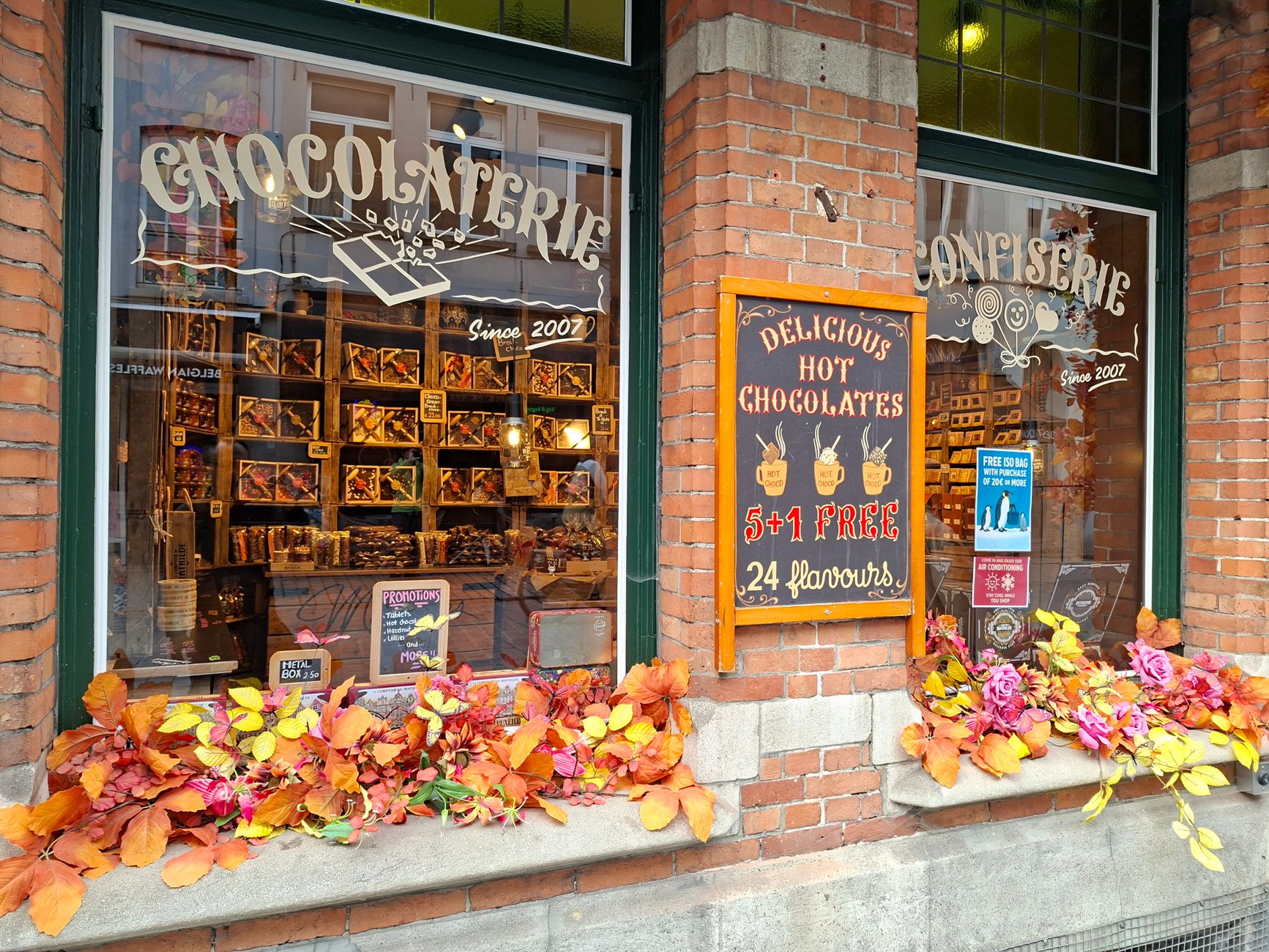
Chocolate and lace are where most visitors part with money, and one test covers both: is the thing made where it is sold. Most of the chocolate shopfronts between the Markt and the Beguinage are resellers, and many are franchise branches. The list that makes on the premises is short. The Chocolate Line on Simon Stevinplein is Dominique Persoone's, with the production kitchen visible from the shop floor; Dumon is made by Stefan and Marie-Anne Dumon and has more than one branch in the city, so check which door you are standing in. Lace makes an explicit claim on the label, and an item sold as handmade in Belgium at the price on its ticket cannot be both, so it is machine-made, imported, or both; Wollestraat and Balstraat sell the whole spectrum. The Kantcentrum at Balstraat 16, in a former lace school, runs bobbin-lace demonstrations every afternoon from two until five, which teaches the difference between bobbin, needle and machine work.
Brouwerij De Halve Maan on Walplein is the last working brewery in the historic centre, and the tours have to be booked. The classic runs 45 minutes in Dutch, French and English, caps at 25 people and ends with a beer; the XL runs 90 minutes with three beers, at weekends, in Dutch and English. Both include 220 steep steps, which makes it a poor choice for the same afternoon as the Belfry. It is the only place pouring Brugse Zot and Straffe Hendrik unfiltered. In 2016 the brewery laid a beer pipeline about three kilometres long from the old brewhouse to its bottling plant outside the centre, to stop tankers grinding across the cobbles, carrying something like 4,000 litres an hour.
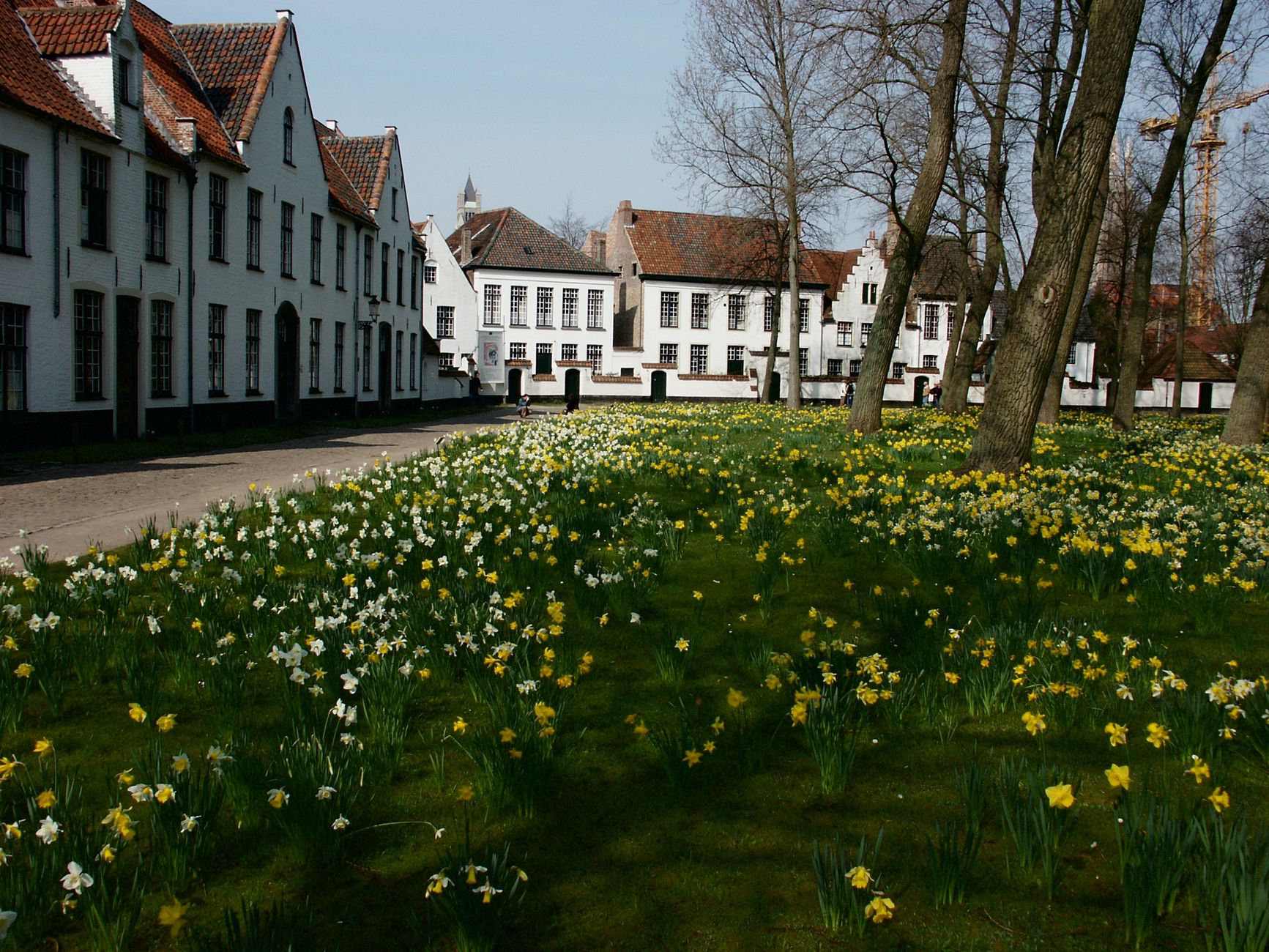
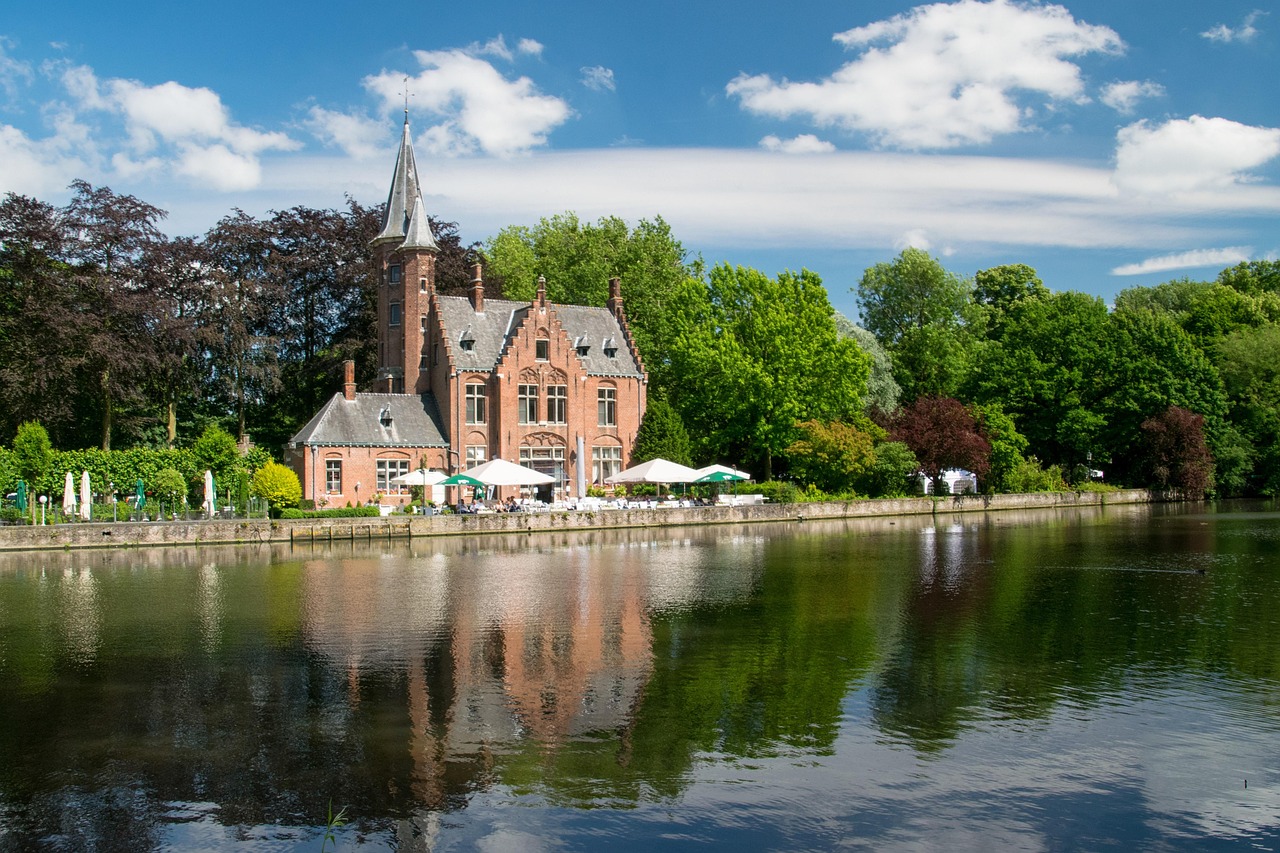
The free half of the city carries the rest of the argument. The Princely Beguinage Ten Wijngaerde was founded in 1245 and listed by UNESCO in 1998 with twelve other Flemish beguinages; there have been no beguines in it since 1927, the community inside is Benedictine, and the gates shut at dusk. North and east of the Markt the centre gives way quickly: Jan van Eyckplein, the Sint-Anna quarter, the ring-canal path, the Gentpoort and Kruispoort gates and the windmills on the eastern rampart.
Carry cash. Small cafés, market stalls and public toilets still expect it. Eat off the squares as well: the standing advice is to leave the Markt terraces for Langestraat or Ezelstraat, and the register worth ordering in is moules-frites, carbonnade flamande, which appears on Flemish menus as stoofvlees, and fries from a frietkot, not a restaurant kitchen. Chez Vincent, on Sint-Salvatorskerkhof opposite the cathedral, is a frituur and priced like one. Patisserie Schaeverbeke at Schaarstraat 2 bakes on the premises and shuts on Thursdays. 't Brugs Beertje at Kemelstraat 5 keeps around three hundred Belgian beers and catches day visitors out twice over, because it opens at four in the afternoon and closes altogether on Wednesdays.
The approach is simple and the parking is not. Trains reach Brugge station in about an hour from Brussels-Zuid/Midi, three an hour, hourly and direct from Brussels Airport, and in 25 minutes from Ghent. From the station the Markt is a signposted twenty-minute walk, or buses 1 and 2 every five minutes, on a ticket good for 60 minutes of travel. Do not drive into the centre. It is a 30 km/h zone and a bicycle zone throughout, with streets that go car-free at set hours. The underground car parks are Centrum-'t Zand, ten minutes from the Markt on foot, and Centrum-Station, twenty, with free Park and Ride sites on the edge of the city. Coaches are banned from the core: they park at Kanaaleiland and set down at Bargeplein, a twenty-minute walk out. In winter the city runs Winter Glow, published for 20 November 2026 to 14 February 2027 and worth checking against visitbruges.be before a trip is built around it, with markets on the Markt and Simon Stevinplein open daily from 10:00 to 22:00, to 23:00 on Friday and Saturday, and an ice rink at Koning Albert I Park by the Minnewater.
Which leaves an arithmetic the city has not resolved. The visitors it says it wants are the ones who sleep here, and the supply of beds is now fixed: no new hotels in the historic centre, no new holiday-home permits anywhere in Bruges. Occupancy and room rates are the only variables left inside that 53 per cent. The levies, meanwhile, arrive from both ends. Cruise passengers start paying in 2027, and then on a single date both the coach day-trippers the city stopped advertising for and the overnight guests it is trying to keep are charged more. That date is 1 January 2028.