Globe Countries Cities Dispatches About Get the App
Domenico Adornato
Hungary  ·  47.50°N 19.04°E

The city that runs on hot water

Written by Meridian Dispatch  ·  24 July 2026

The city sits on an aquifer that feeds more than a hundred thermal springs, and it has been building rooms around them since the Romans. The famous Art Nouveau bath is now a building site until 2028, which makes choosing the right water the whole planning problem.


Budapest is built along a fault at the seam of the Buda hills and the Pest plain, and deep water heated at pressure comes up through it at roughly 125 thermal springs, delivering on the order of 70 million litres a day. Beneath the streets runs the largest thermal water cave system in the world. Romans, Ottomans and Habsburg-era architects have all tapped that same aquifer, and each built a different kind of room around it.

The Romans were first. A military base went up at Aquincum in what is now Obuda somewhere between AD 41 and 54, and by the early second century the settlement had become the capital of the province of Pannonia Inferior. By the end of that century it held at least thirty thousand people, with central heating, public baths, a Mithraeum and two amphitheatres, one civil and one military. The site is open to visitors as an archaeological park.
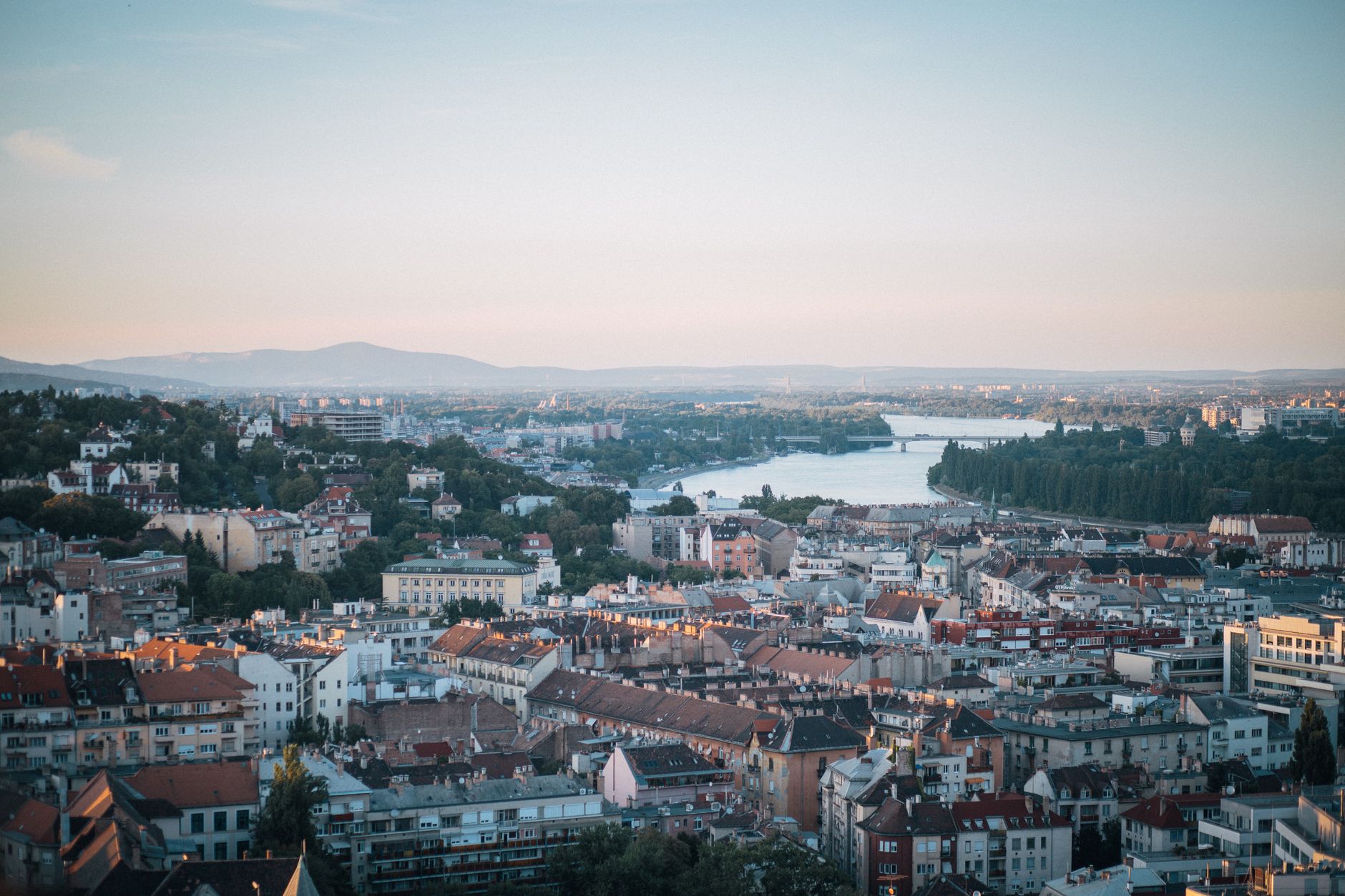
A high view over Budapest rooftops toward the Danube at dusk
Budapest from above at dusk, the Danube beyond the rooftops. The banks of the Danube, the Buda Castle Quarter and Andrassy Avenue were inscribed together as a UNESCO World Heritage Site in 1987.Bence Szemerey

The Ottomans left the buildings that still take bathers. Rudas was founded in 1571 to 1572 for Sokollu Mustafa Pasha, governor of Buda, and its octagonal pool under a domed roof is among the oldest working bathing rooms in the city. It now runs six therapy pools and one swimming pool, water ranging from about 10 to 42 degrees. It was never converted into a museum. Tickets are sold at a desk to whoever turns up, and the room is still in use for bathing.


One closure governs any 2026 trip. The Gellert Thermal Bath, the Zsolnay-tiled Art Nouveau one that appears on every list, closed on 1 October 2025 for a full renovation and is not expected to reopen until 2028. The hotel it sits inside has been shut since November 2021 and its own reconstruction is only expected to begin late in 2026. Between 1,500 and 1,800 people a day used to bathe there, and they have spread across the baths that stayed open.

Most of them went to Szechenyi, which absorbs crowds better than anything else because it is enormous. Construction began in May 1909 and the bath opened in June 1913, built by Gyozo Czigler working from designs by Eugene Schmitterer, and more than 200,000 bathers passed through in that first year. It covers 6,220 square metres and holds 18 pools, three outdoor and fifteen indoor, the outdoor water between 27 and 38 degrees. A second well found in 1938 draws from 1,256 metres down at 77 degrees. The chess players on their floating boards in the hot outdoor pool are a genuine fixture of the place.

One aquifer, three empires' worth of architecture, and the water has never been switched off.

Doors at Szechenyi open at 06:00, indoor pools close at 20:00 and the complex at 22:00. Tickets bought for before 09:00 cost less, which puts the cheapest entry and the emptiest water in the same slot. It is paid for with an alarm set before six and a walk across a cold deck in the dark for half the year. The first hour is close to solitary before the room fills. By mid-afternoon in season bathers are physically knocking into each other. Weekdays are materially calmer than weekends. The fast-track entrance is on the opposite side of the building facing City Park, and people who pay for it routinely queue at the wrong door.
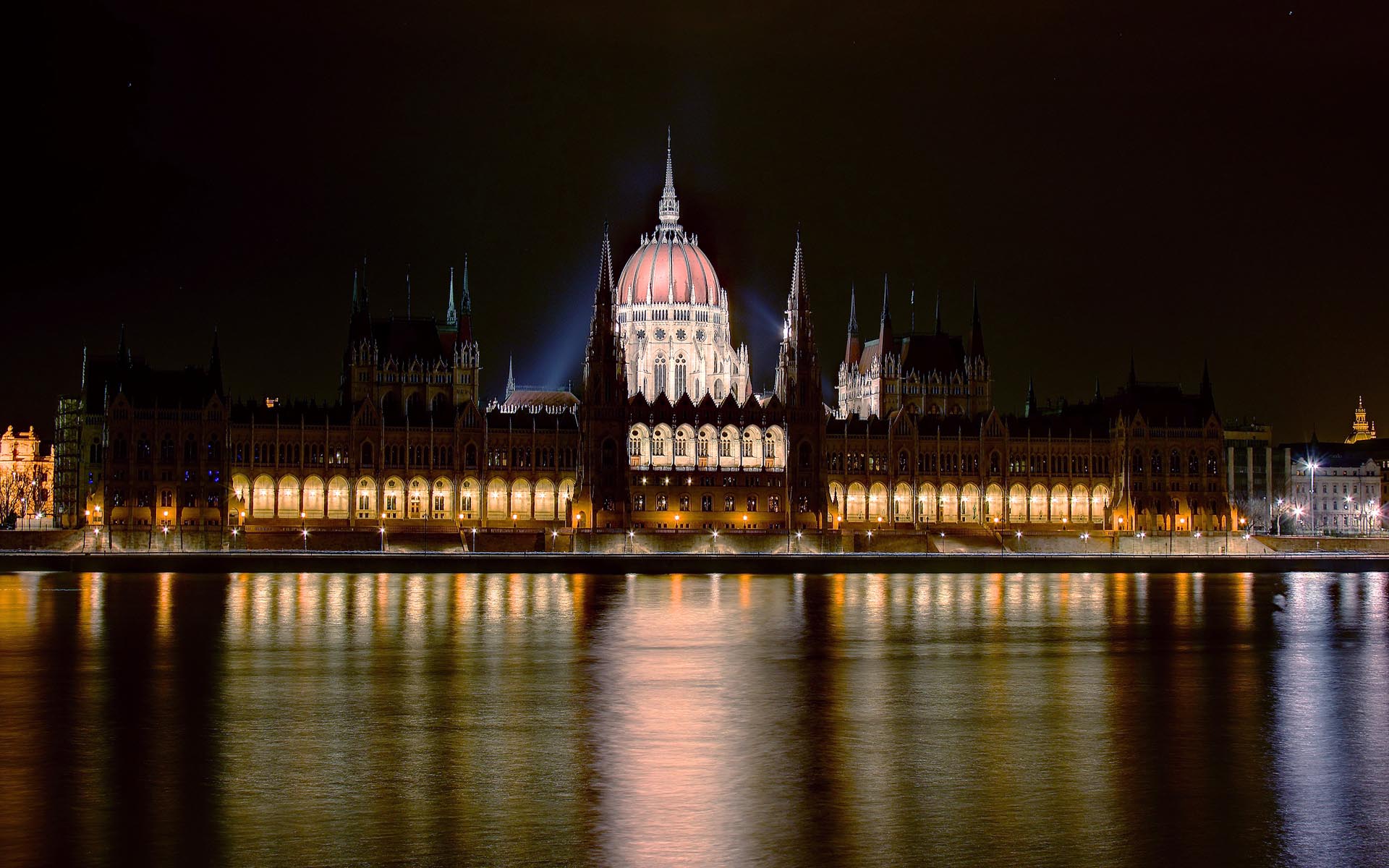
The Hungarian Parliament Building illuminated at night above the Danube
The Parliament from the water. Tours sell out weeks ahead, so book before arriving rather than on the day.HoremWeb

Bring more than expected. Towels are not supplied and one soaks through in the walk between pools, so pack two. Flip-flops have been an enforced requirement at Szechenyi since July 2024, and a swim cap is required for the lap pool. The wristband is ticket and locker key in one and works wet at the poolside, so nothing needs carrying. Lockers are included and hold a winter coat, boots and a backpack; the paid cabin upgrade is sold as fitting two and is tight for them. Showering before entering is expected and skipping it is noticed. Two things to plan around. The building is a maze and staff directions are unreliable, so orient to the outdoor pools first and navigate from there. And women have consistently reported staring and unwanted touching at Szechenyi; the smaller baths draw far fewer such reports.

Lukacs is the locals' bath, open 07:00 to 19:00 with ticket sales stopping an hour before close, three indoor and two outdoor thermal pools, and residents reading newspapers in the water. There is usually no queue at all. The trade is architectural: the tiling is vintage, the rooms look their age, and the scale is a fraction of Szechenyi's. Veli Bej, an immaculately restored Ottoman room, caps entry at eighty people and visits at three hours, sells tickets at the cash desk only with no online booking, and gives latecomers a number and a seat in the cafe. Its main octagonal pool runs 36 to 38 degrees with four smaller pools around it and no outdoor water at all. That cap can be reached, and there is no way to book around it, so the opening hour is the one to aim for.


Rudas needs one extra check that catches out more trip planners than anything else in the city: it has traditionally run single-sex days for the old Turkish bath, with mixed access only on part of Friday and at weekends, and the schedule changes. The official site must be read before booking. Night bathing runs Friday and Saturday only, from 22:00 to 03:00, mixed, over-14s, with sauna, massage and the restaurant all closed. It is a pool session only. The rooftop tub with the Danube view is the reason most people come and it is small, more crowded hot tub than serene terrace, and often bookable only in advance.
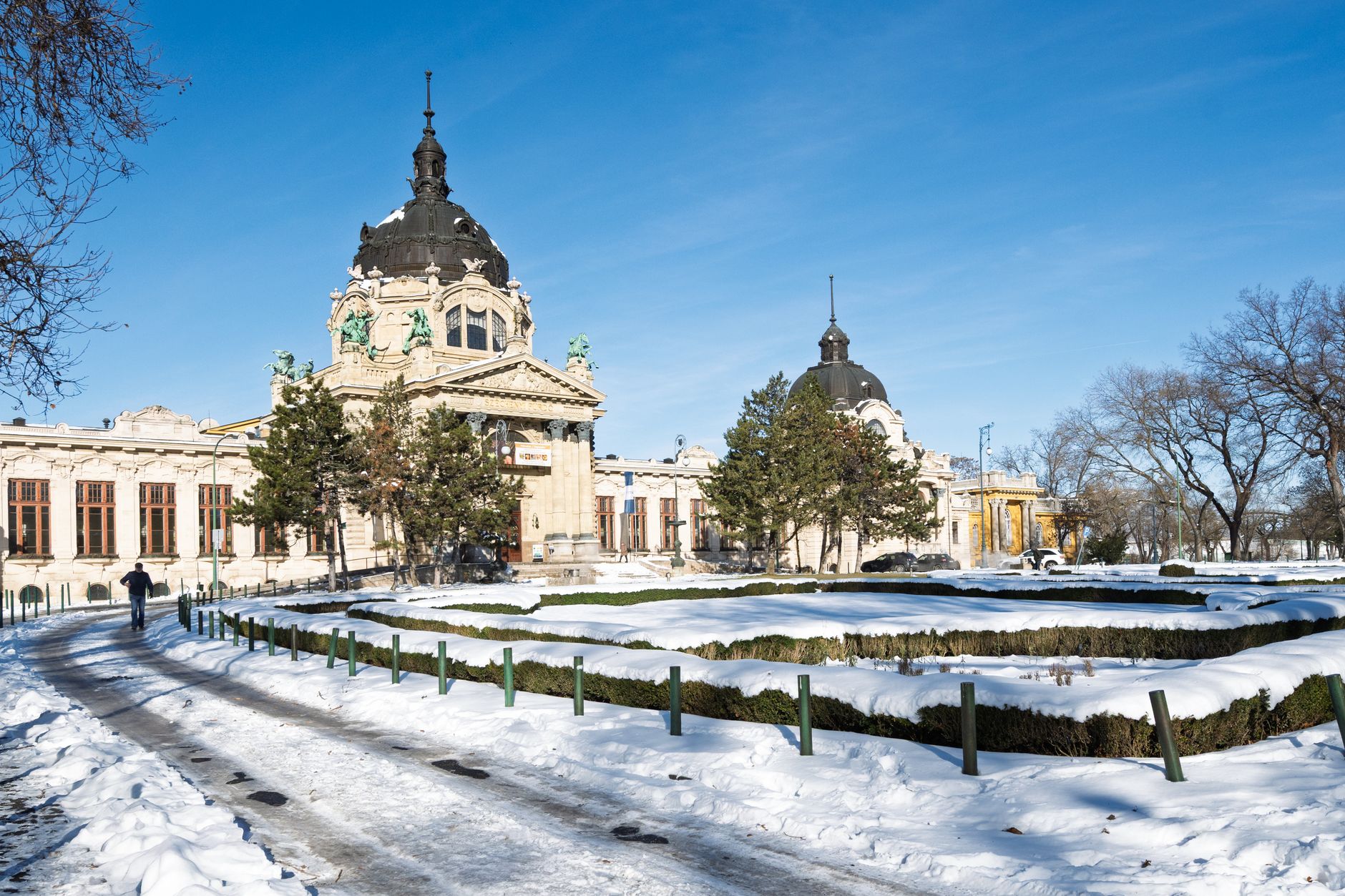
The snow-covered Szechenyi bath building and its clipped gardens under a clear winter sky
Szechenyi under snow. Winter is the better-regarded soak, outdoor water up to 38 degrees with cold air on the face.Marcelo Gonzalez
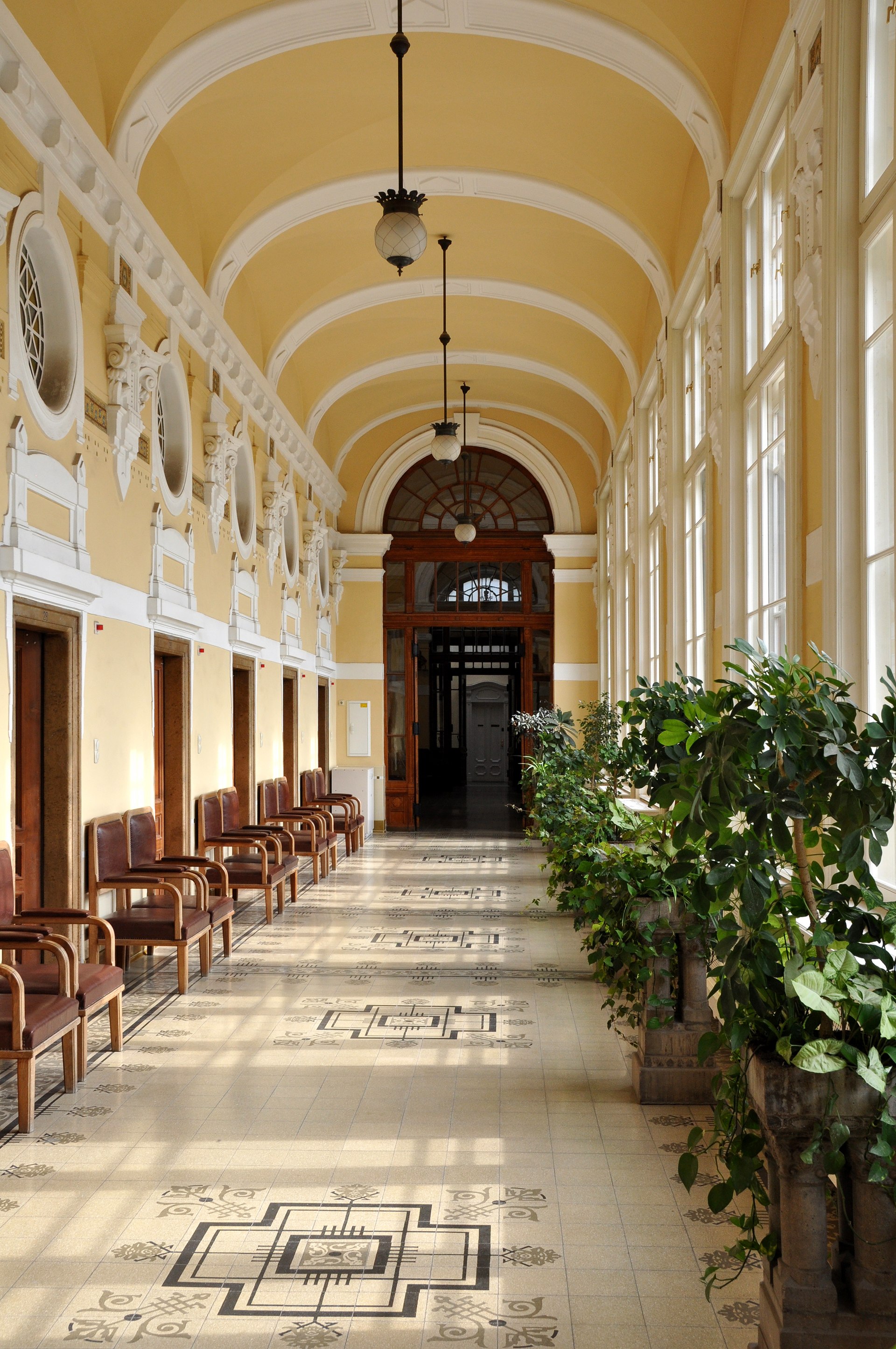
A long corridor inside the main building of the Szechenyi bath, with wooden chairs, potted plants and patterned floor tiling
Inside the main building at Szechenyi. The outdoor pools carry the photographs, the indoor rooms carry the architecture.Marc Ryckaert (MJJR)

Winter is the better soak. Outdoor water at 38 degrees with cold air on the face is what the city is for, and the walk out from the changing room in February is the price of it. Cold weather does not guarantee an empty pool, and Szechenyi can still be busy on a freezing January morning. Late spring and early autumn buy long light and mild air instead. Whichever season is chosen, go inside as well. The outdoor pools carry the photographs. The indoor rooms carry the architecture, and skipping them misses most of the building. Skip the on-site massages, which are brisk and basic, and put the money toward a second bath.
Plan a similar trip

A four-day bathing plan

Fly into Budapest Ferenc Liszt International, sixteen kilometres southeast of the centre. Base in Pest, in District V near the Basilica or District VII for the ruin bars, and stay put: the city is walkable and the trams close the gaps. Tickets for the baths are timed and sold by the day, so book Rudas ahead and buy the pre-09:00 slot at Szechenyi; note that the 100E airport bus needs its own dedicated ticket and standard travelcards are not valid on it. Season: deep winter for steam in cold air and thin crowds, late spring or early autumn for long light. July and August are hot and busy.

  1. Day 1

    Pest, and the river after dark

    St Stephen's Basilica first, since it closes at 17:45, then Andrassy Avenue on foot and the Danube bank at dusk to the Chain Bridge and the Shoes on the Danube memorial. Ruin bars in District VII afterwards.

    Travel

    Bus 100E from the airport direct to Deak Ferenc ter, 25 to 30 minutes, on a dedicated airport ticket. Bus 200E to the metro is the cheaper route on ordinary tickets. Base at the Aria Hotel Budapest beside the Basilica, or Parisi Udvar in District V.

    Book any Parliament tour weeks ahead; they sell out.

  2. Day 2

    Szechenyi at opening

    In the water by 06:00 for roughly an hour of quiet, outdoor pools first, before the layout gets confusing, then the indoor rooms for the architecture. Heroes' Square and the Varosliget are next door when you dry off.

    Around

    Metro Line 1 up Andrassy Avenue to Szechenyi furdo, a handful of stops from Deak Ferenc ter on a line that is 4.4 km and eleven minutes end to end. The fast-track door faces City Park, on the far side from the main entrance.

    Two towels, flip-flops and a swim cap for the lap pool. None are supplied.

  3. Day 3

    Castle Hill, then Ottoman water

    Matthias Church and the Fisherman's Bastion terrace in the morning, down to the Buda embankment, and Rudas in the afternoon for the octagonal pool under its dome. Check the single-sex schedule before you leave the hotel.

    Around

    Siklo funicular from Clark Adam ter to the top in under five minutes, or walk it in ten to fifteen. Descending on foot to the Chain Bridge takes about the same. Hotel Clark at Clark Adam ter puts both at the door.

    Buda Castle museums close on Mondays.

  4. Day 4

    Roman Obuda, then the locals' bath

    The Aquincum archaeological park in Obuda for the Roman provincial capital and its own baths, a deliberately quiet counterpoint. Finish at Lukacs or Veli Bej rather than back at Szechenyi.

    Onward

    HEV suburban railway from Batthyany ter to Aquincum. Lukacs opens 07:00 to 19:00 with sales closing an hour early; Veli Bej admits eighty people for three hours, cash desk only, so arrive on the hour it opens.

    Corinthia Budapest in District VII has its own restored Art Deco thermal spa if you want a fifth soak without leaving the building.

← All dispatches
Keep exploring

More dispatches

Meridian Dispatch for iPhone

A travel journal that
writes itself.

Your best memories, journaled automatically, from the photos already on your phone. The app reads your photo library, finds the international trips you have taken, identifies the venues, writes the prose, and lays it out like a magazine spread. The first time you open it, the last several years of your travel are already there. Every trip after that goes in by itself.

  1. Mapped on a globe

    Your whole world, on one globe.

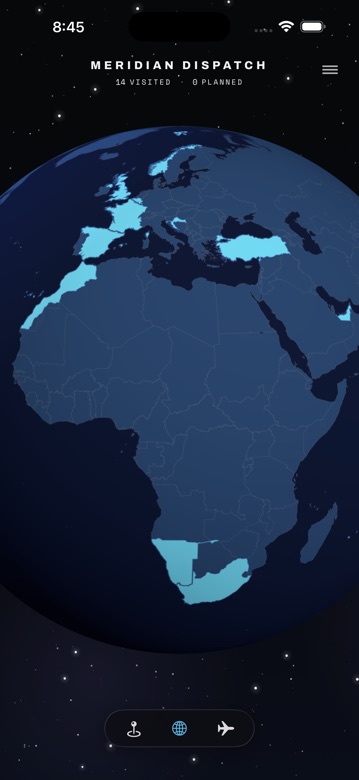
    Every country you've visited, lit on a private 3D globe. Spin it to find a trip and fall straight back into it. The globe is the table of contents for your journal.

    The app's private globe of visited countries.
  2. Detected automatically

    It finds your trips on its own.

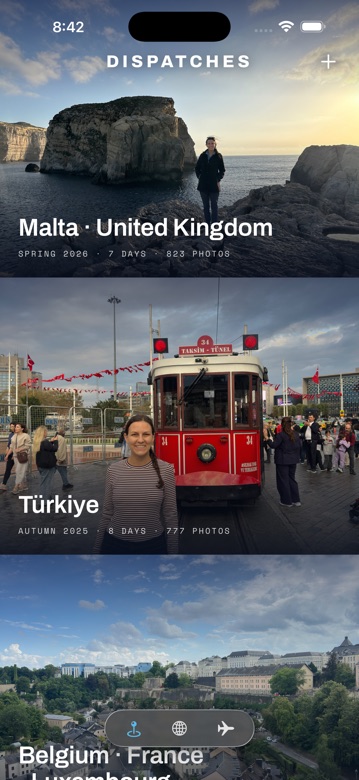
    Your photos cluster by place and time, and each cluster becomes a venue: the museum you spent the morning in, the restaurant you lingered over, the streets you wandered after dinner. No tagging, no prompts, no logbook to keep up.

    The app's archive, every trip a dispatch.
  3. In warm prose

    Each place, written up.

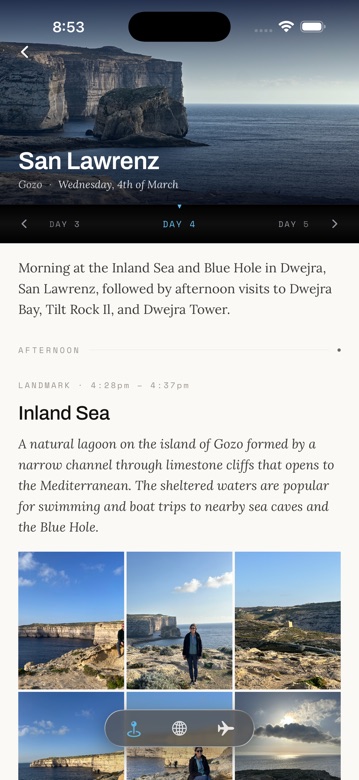
    Every day opens on a hero photograph, and each place you stopped gets its own short entry beside your own photographs, no two days laid out the same. A record of where you've been, kept in real sentences. Edit a line, or regenerate any passage you want fresh.

    A written day in the app, with a place entry and a photo grid.
  4. Yours to keep

    Every trip, as a photobook.

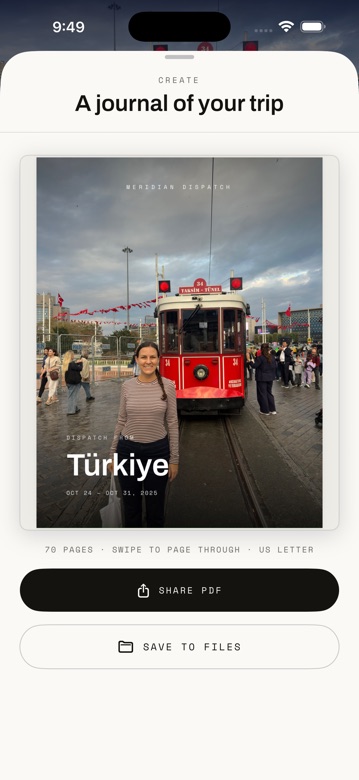
    Download any journal as a clean photobook, send it to whoever was there, or have it printed as a hardback you keep on the shelf. What you read on your phone is exactly what lands on the page.

    The app exporting a trip as a photobook, with Share PDF and Save to Files.