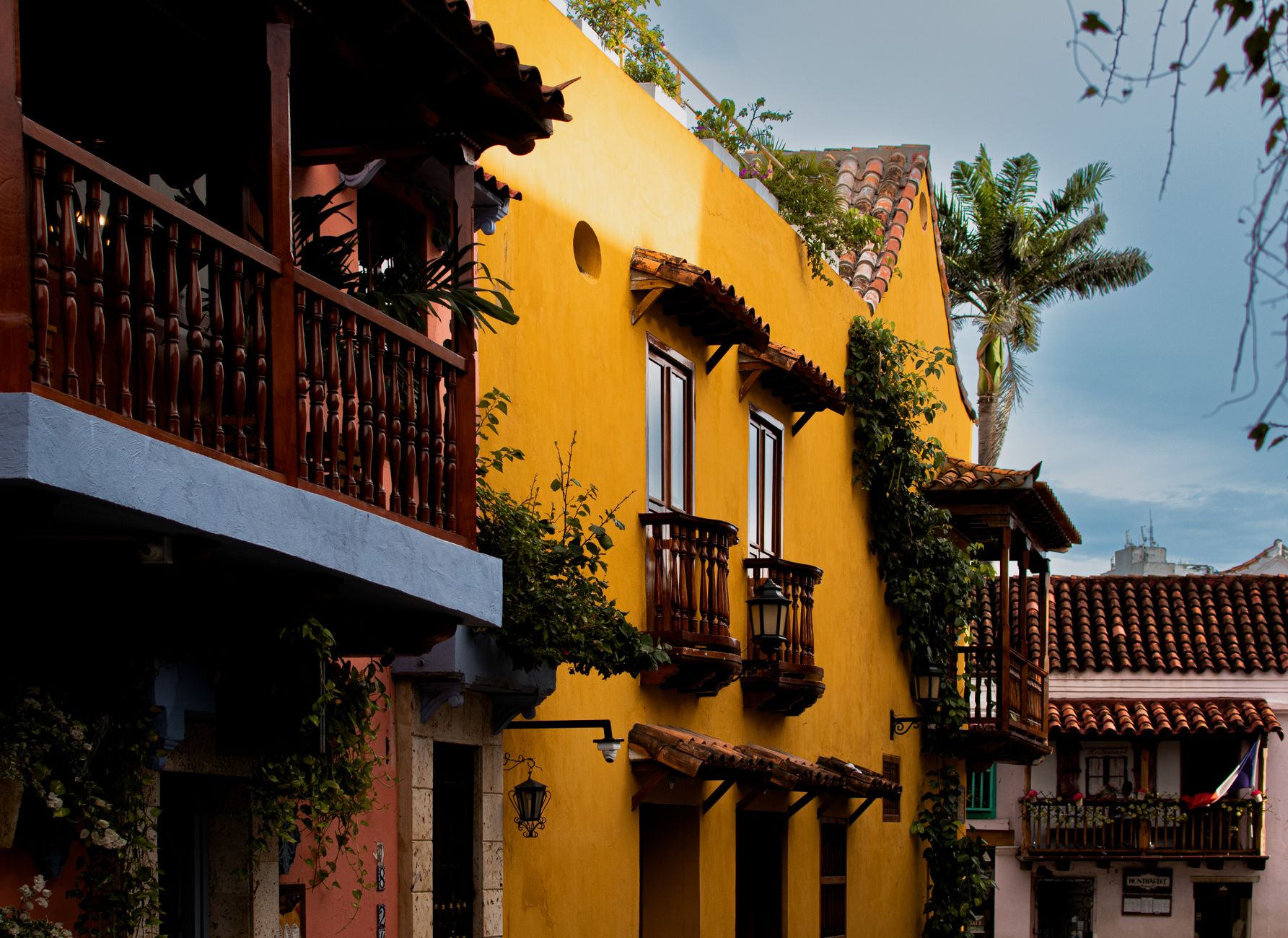
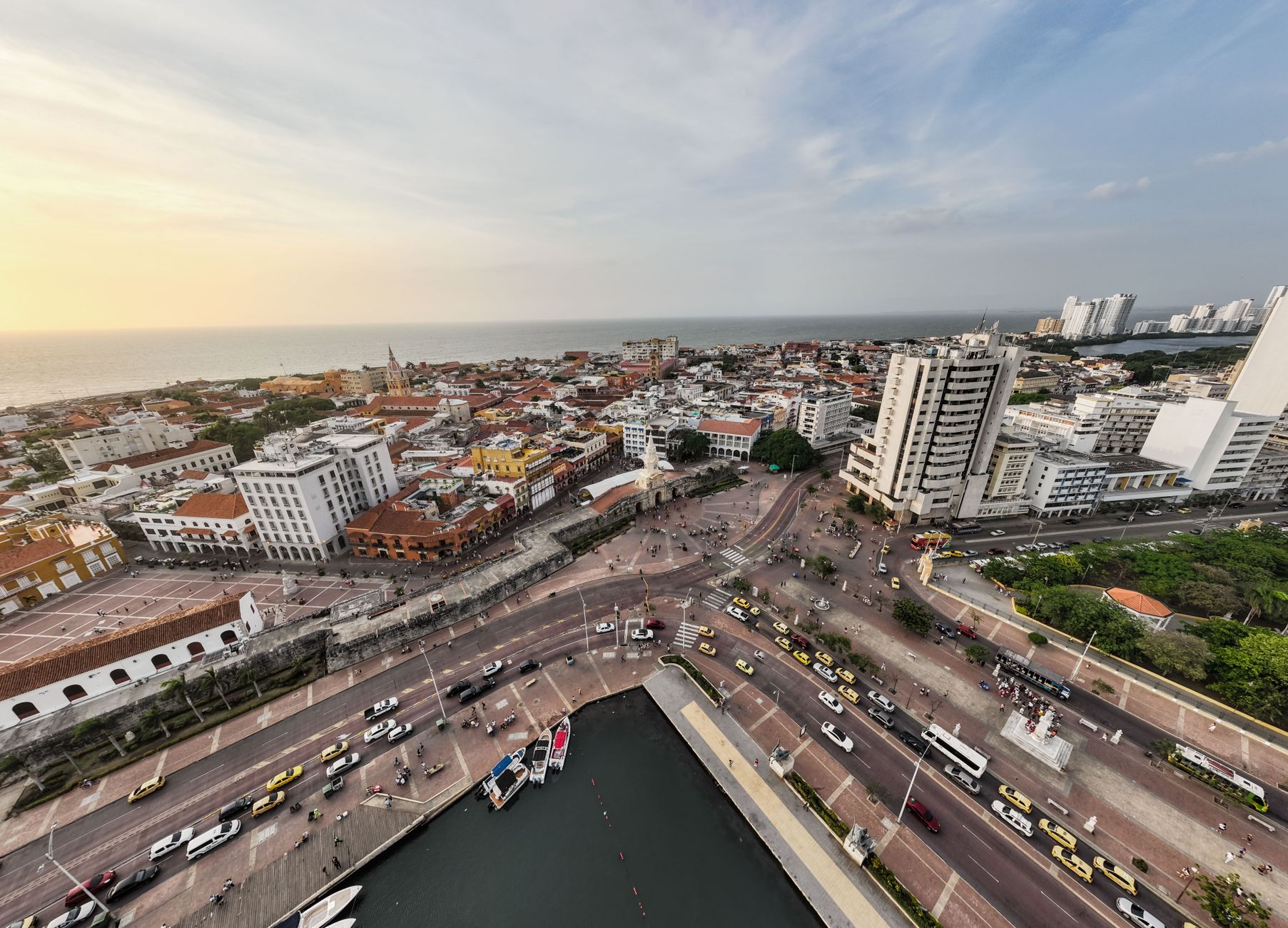
The walled city is the reason to come, and the cruise schedule decides who shares it. Before ten the streets of Centro and San Diego are close to empty, the palenqueras are setting up with their fruit bowls, and the balconied lanes photograph without a soul in them. Then the cruise passengers land, up to seven thousand on a heavy port day, and from mid-morning to about four they concentrate in the photogenic plazas while the heat climbs past what walking tolerates. The city comes back in the evening: sunset from the western walls or a rooftop, dinner inside the old town, then the music in Getsemaní. Plaza Santo Domingo is the peak of the people-watching and, fairly, the peak of the hustle. The Centro stays lively and policed until well past midnight; San Diego goes quiet earlier, and late at night a short taxi ride beats a walk.
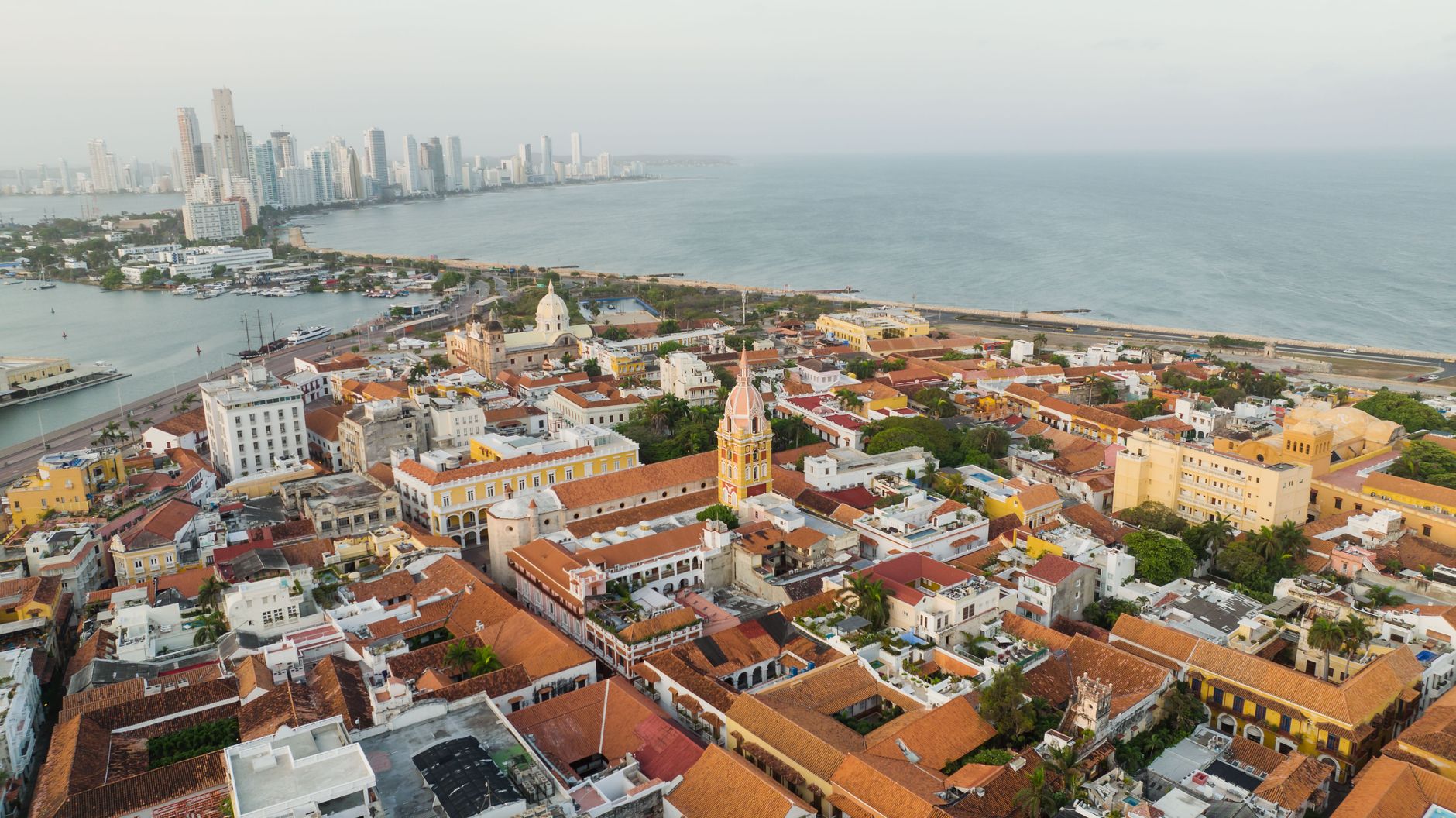
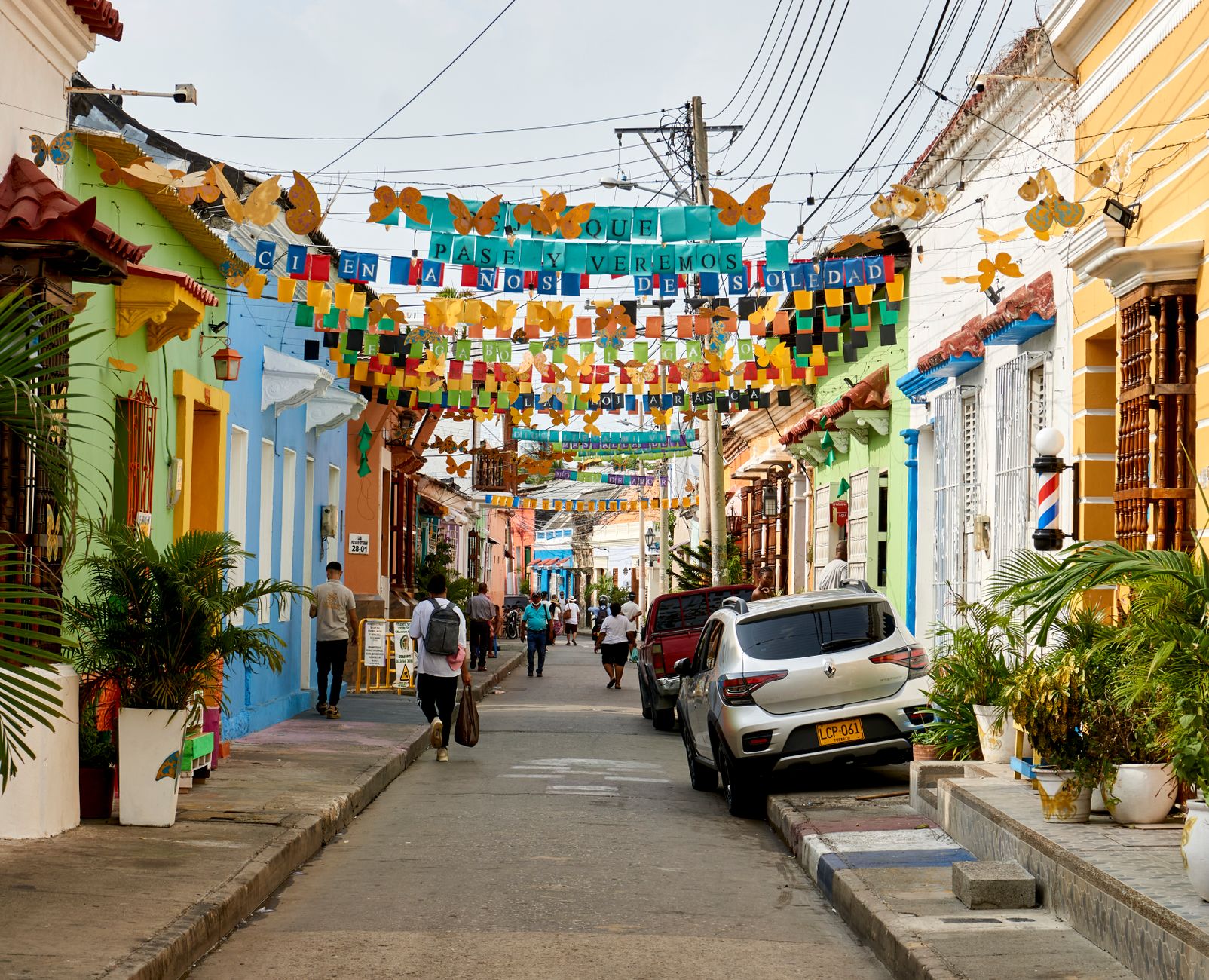
Where to sleep sorts into three honest options, with one caveat the booking sites will not volunteer. The walled city itself, Centro and quieter San Diego, puts a visitor inside the ramparts at the highest price. Getsemaní, the old working quarter just outside, has the value, the street art and the nightlife, and that last item is the caveat: music carries from Plaza de la Trinidad and the party hostels around it into the early hours, so book two streets back from the plaza if sleep matters. The quarter still reads safe at night, with populated streets and a police post near the plaza. Bocagrande, the tower district on the peninsula, is the modern beach-hotel option, and its beach is the letdown of the three: grey sand, turbid water and relentless vendors. Treat it as a pool and a taxi ride from the history, not a beach holiday.
San Felipe de Barajas, the fortress on its hill just outside the walls, is the city's one unmissable set piece, and it is a morning. The gates open early; the slot between eight and half past nine is the coolest, emptiest and best lit, and from about half past four the golden hour does the same job at the other end of the day. Midday is the worst of everything at once, heat, flat light and tour groups, and the pale stone radiates like an oven. There is almost no shade, so buy water at the entrance, and either hire one of the on-site guides or read up beforehand, because the signage is thin. A normal visit runs an hour to ninety minutes; doing the tunnels and gun batteries properly takes two to three. Two smaller notes from people who know the place: the tunnels never connected to the walled city, whatever the boatmen say, since they were built to be mined and blown under an attacker's feet; and the free-entry Sunday at the end of the month applies only to Colombian residents, and is the single most crowded day to come.
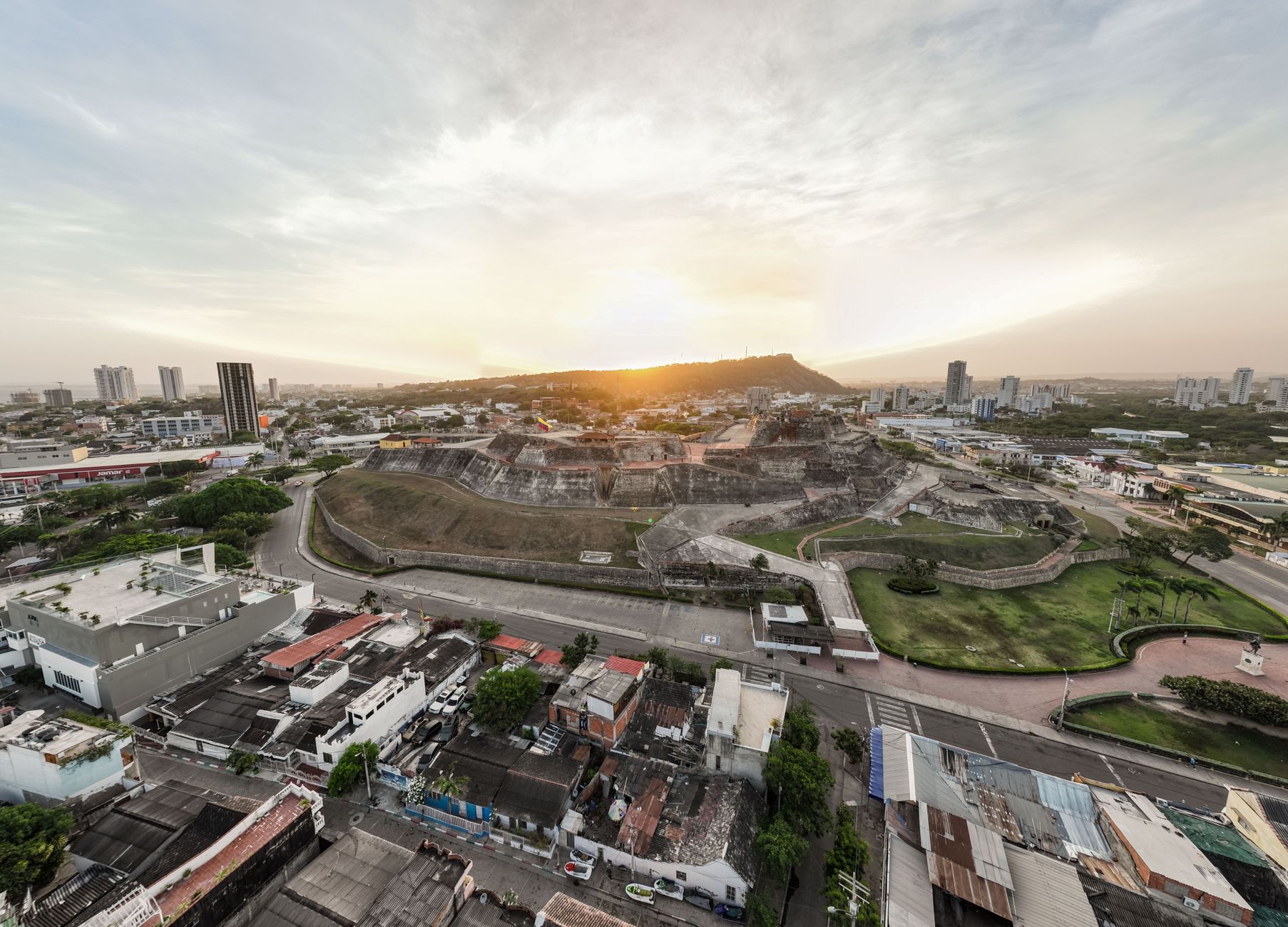
The fort earns its visit on what happened there in 1741. A British fleet of well over a hundred ships arrived carrying somewhere between 25,000 and 30,000 men, sailors included, to take the assembly port of Spain's silver fleets, and London was so certain of the outcome that victory medals were struck in advance. Behind the walls were three or four thousand defenders under Blas de Lezo, an admiral who had already given a leg, an eye and the use of an arm to earlier wars. The night assault on San Felipe failed, the siege collapsed into fever, and after sixty-seven days the British withdrew, having buried the better part of ten thousand men, most of them killed by mosquitoes rather than Spanish guns. The medals survive in museum drawers as a monument to a defeat, and the walls they were minted against are the ones visitors walk at sunset.
The medals were minted before the battle. The battle was a defeat, so the medals survive as a monument to it.
The hustle is real, concentrated, and manageable once its geography is understood. It peaks around the Torre del Reloj and the cruise dock: the opener is always something free, a sample, a bracelet, a massage touch, an improvised rap, and the free thing always converts into a demand, sometimes with friends arriving to back it. The escalation worth knowing about in 2026 is the candy-tray vendors, whose trays of gum and sweets carry drugs underneath and whose transactions summon fake or corrupt police to search and shake down the buyer; recent first-hand reporting describes the shakedown following travellers as far as the airport. The answer to all of it is the same flat, cheerful no. Taxis have no meters anywhere in the city, so agree the fare before getting in or use an app, and at the airport skip the touts entirely: fare kiosks at arrivals print a ticket at the official zone rate, which the first taxi in line must honour. Pay drivers with small notes, announced as you hand them over, because the note-swap and the counterfeit-change trick both live in that front seat. And with the palenqueras, the fruit sellers in the costume the city puts on its posters, the photograph and the fruit are two separate purchases, both agreed before the fruit is cut or the pose is struck.
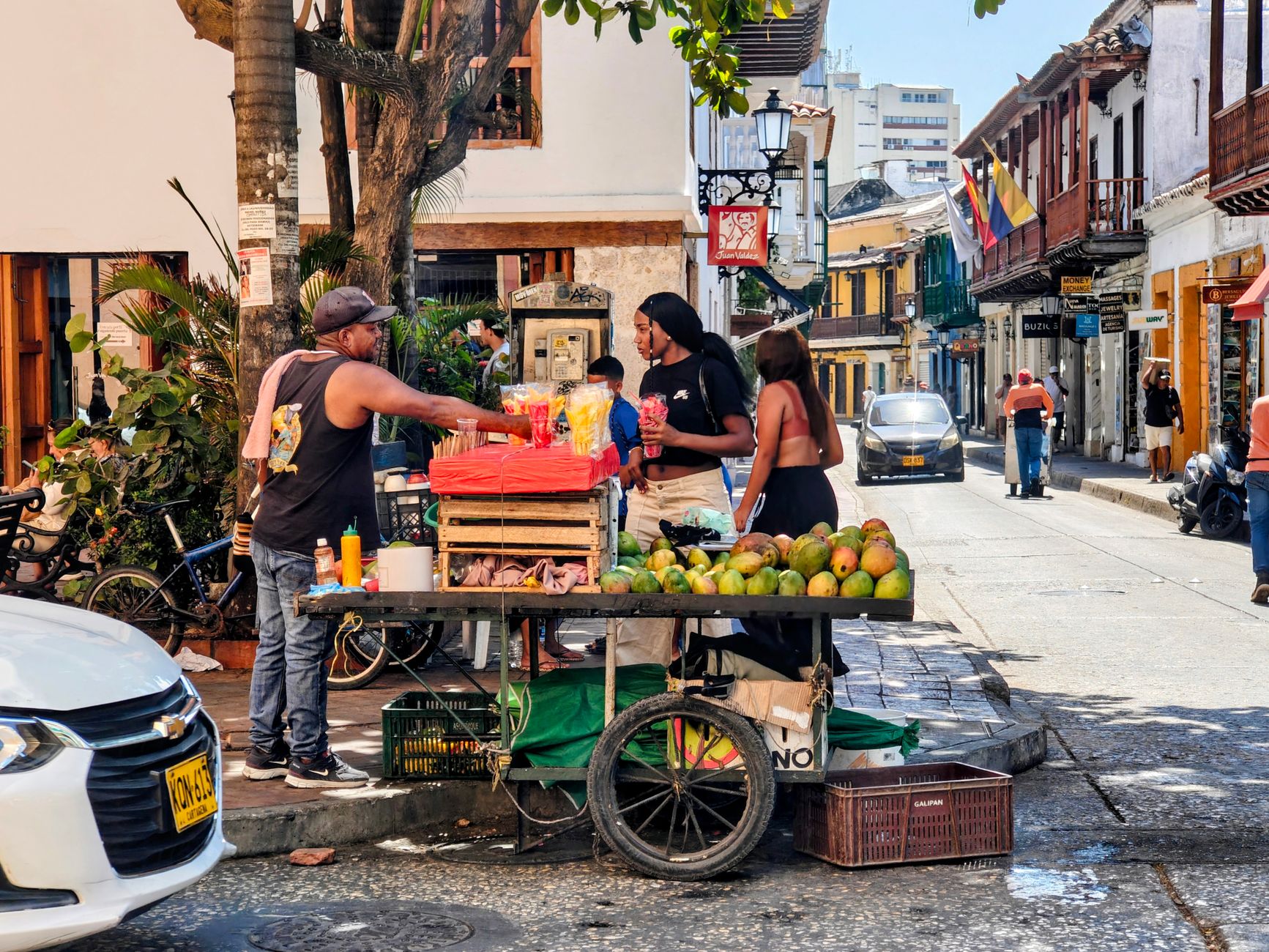
The palenqueras carry the city's second history on their heads. Cartagena was one of only two ports licensed to land enslaved Africans in Spanish America, and the women working the walled city in costume mostly come from San Basilio de Palenque, the town inland founded by escaped slaves that secured recognition of its freedom by royal decree in 1691, a century before Colombia's independence, and which is routinely called the first free town in the Americas. The city no longer buries that history under the fortress romance: the church of San Pedro Claver, named for the priest who met the slave ships at the dock for forty years, holds his remains under its altar, and the square outside it is where the palenqueras are easiest to find in the early morning.
The islands are where the most money is wasted, and the pattern is predictable. The cheap speedboat run to Playa Blanca is the documented disappointment: peak-day counts run to some two thousand visitors and over a thousand vendors on one beach, the massages start uninvited and bill afterwards, and the fish lunches arrive with startling arithmetic. The beach transforms after about three in the afternoon when the boats leave, which is an argument for staying the night there, not for the day trip. The Rosario Islands reward exactly what the cheap trips lack: a hotel-run or small-group boat instead of the packed public dock, where waits of an hour and more are reported, and a named beach club with the inclusions in writing, because the base fee typically covers the boat, a lounger and lunch while everything else, snorkels, drinks, even parts of the grounds, bills separately. The low-commitment fix that recurs in recent accounts is Tierra Bomba, ten minutes off the city by boat, with day-pass beach clubs like Blue Apple and pick of the loungers for anyone landing before half past ten. Buy any of it from the hotel or the operator directly, never from a street seller with a laminated photo.
The food is best approached from the street inward. The arepa de huevo, the fried cornmeal pocket with an egg cracked inside, is the coastal masterpiece, and its geography matters: Los Fritos de Dora on Plaza de San Diego, the fried-snack institution reckoned about sixty years old, the stands at Parque Fernández Madrid and Plaza de la Trinidad, and the rule that it must be eaten hot, within a couple of minutes of the oil. The fried-to-order rule doubles as the hygiene rule, because the risk in this heat is the ceviche sitting out and the pre-cut fruit, not the fryer. At the table end, La Cevichería, the small seafood room Anthony Bourdain made famous, still earns its queue by resident accounts, takes no reservations, and is quietest in the late afternoon; Buena Vida Marisquería is the equal-quality, better-value alternative locals point to. Celele in Getsemaní, cooking the Caribbean coast's own larder, entered the World's 50 Best list in 2025 and needs booking well ahead.
The US State Department holds Colombia at Level 3, Reconsider Travel, for crime and the risk of civil unrest, and issued a nationwide demonstration alert around the presidential inauguration in August 2026. Cartagena's tourist core sits outside the regions those warnings single out, and the city's visitor areas are heavily policed, but check your own government's current advice when booking and again before flying.
The season calendar is blunt. December to April is the dry window and January to the middle of March its driest core, which is also when the light is best on the walls. The regret months in travellers' accounts are September and October, when the humidity sits near saturation and one or two hours of hard rain can flood the old town's streets ankle-deep before the sun returns and steams them dry. The heat itself never leaves, which is why the clock matters more than the calendar here. Book December to March if the dates can move, and book the room two streets off Plaza de la Trinidad whichever month it is.