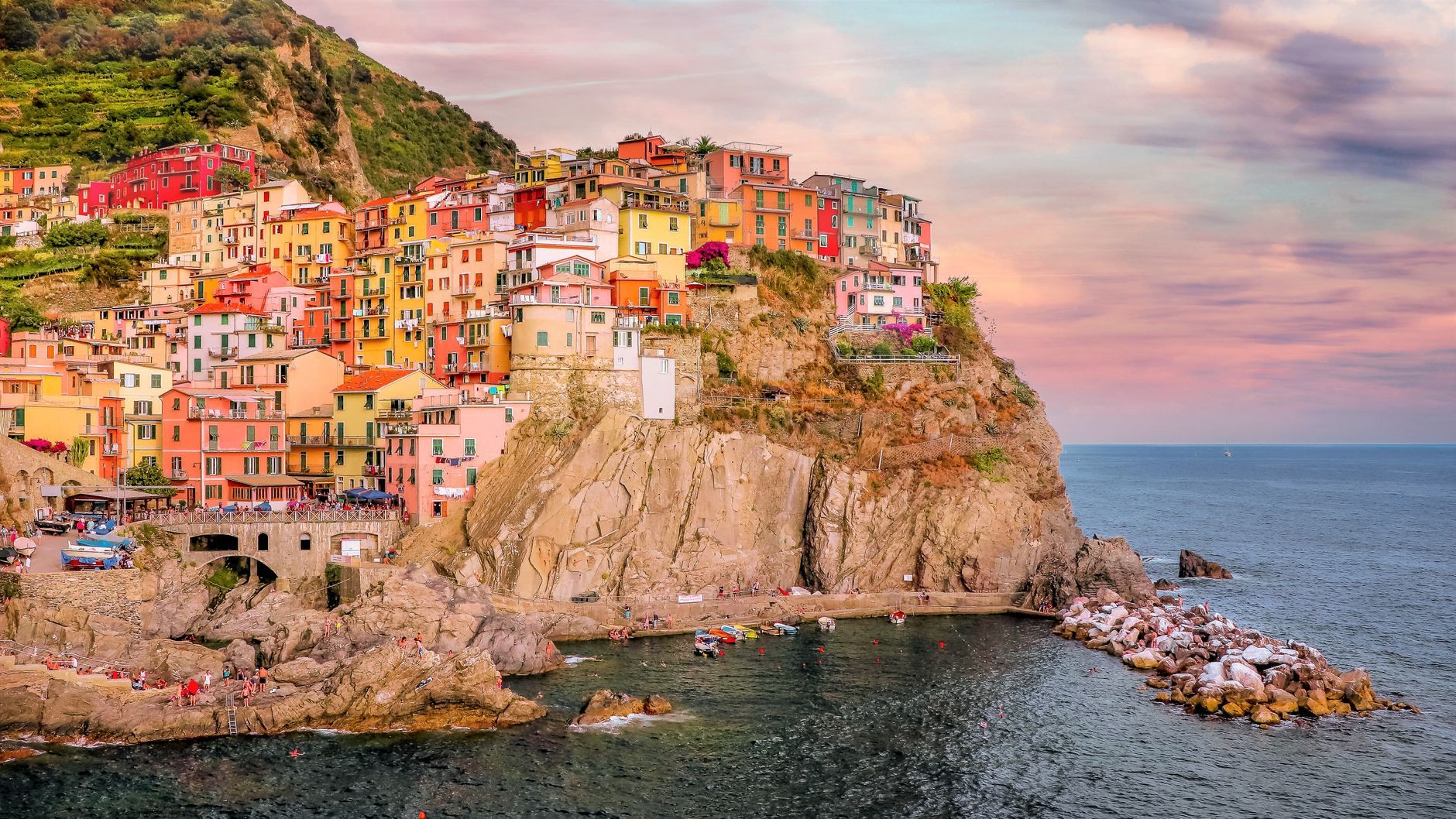
The most astonishing thing in the Cinque Terre is the thing almost nobody photographs. The five villages get the attention, five knots of coloured houses jammed into a stretch of Ligurian coast so steep that until the railway came there was barely a way between them but by boat or by mule. Look above the roofs, though. The whole hillside is cut into terraces, thousands of them, propped up by dry-stone walls that the national park reckons run to some six thousand seven hundred kilometres if you laid them end to end, every stone lifted and set by hand over the better part of a thousand years. On ledges no machine could ever reach, people still make wine up there.
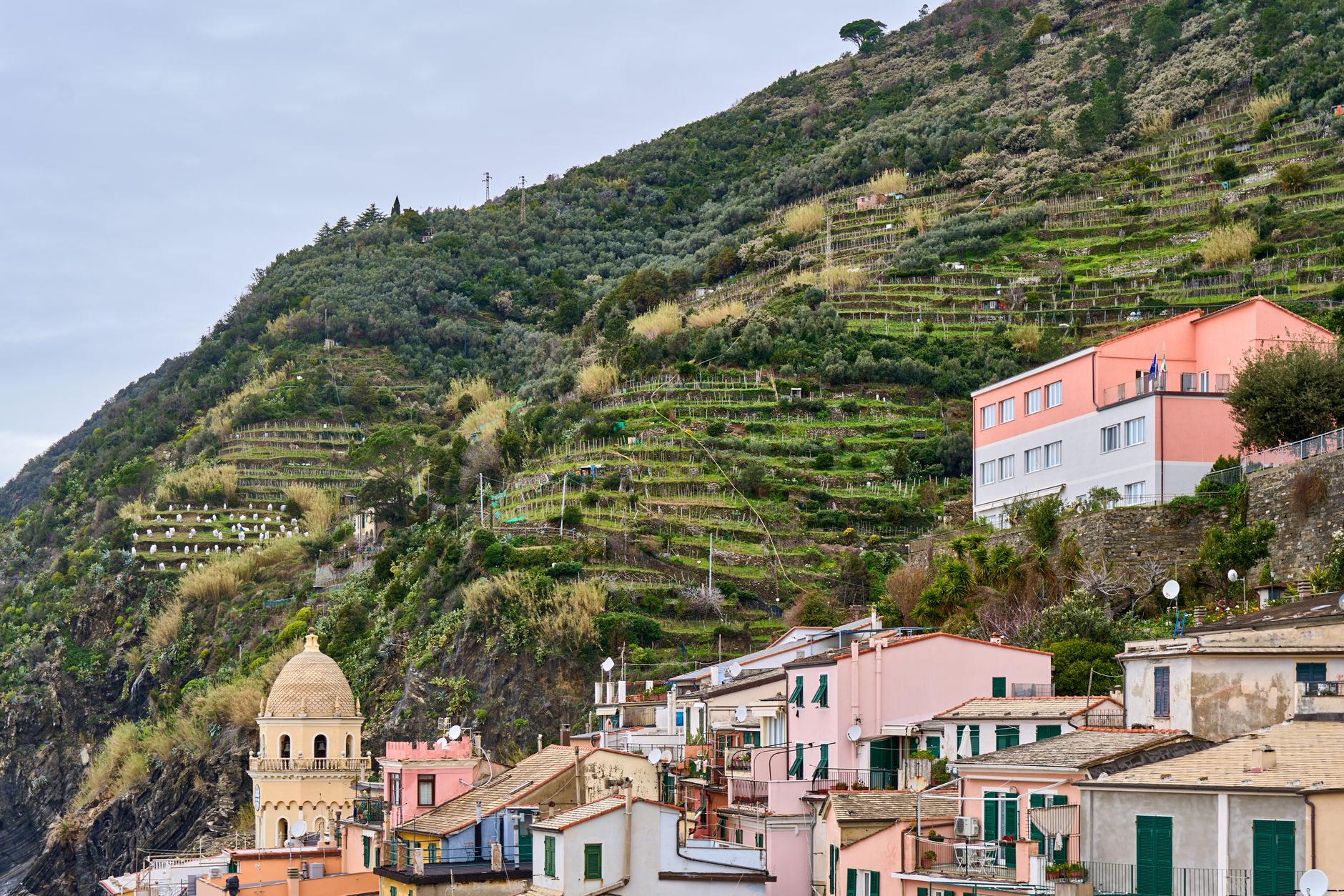
What they make is worth the effort of tending it. The everyday bottle is a thin, salt-edged white, Cinque Terre DOC; the rare one is sciacchetra, an amber dessert wine pressed from grapes left to dry on racks for weeks. A grower like Heydi Bonanini at Possa, on the terraces above Riomaggiore, ages his in terracotta and will walk you through the vines if you write ahead. They call this heroic viticulture, and for once the phrase is earned: there is no tractor on a cliff, only a person with a basket on a ledge above the sea.
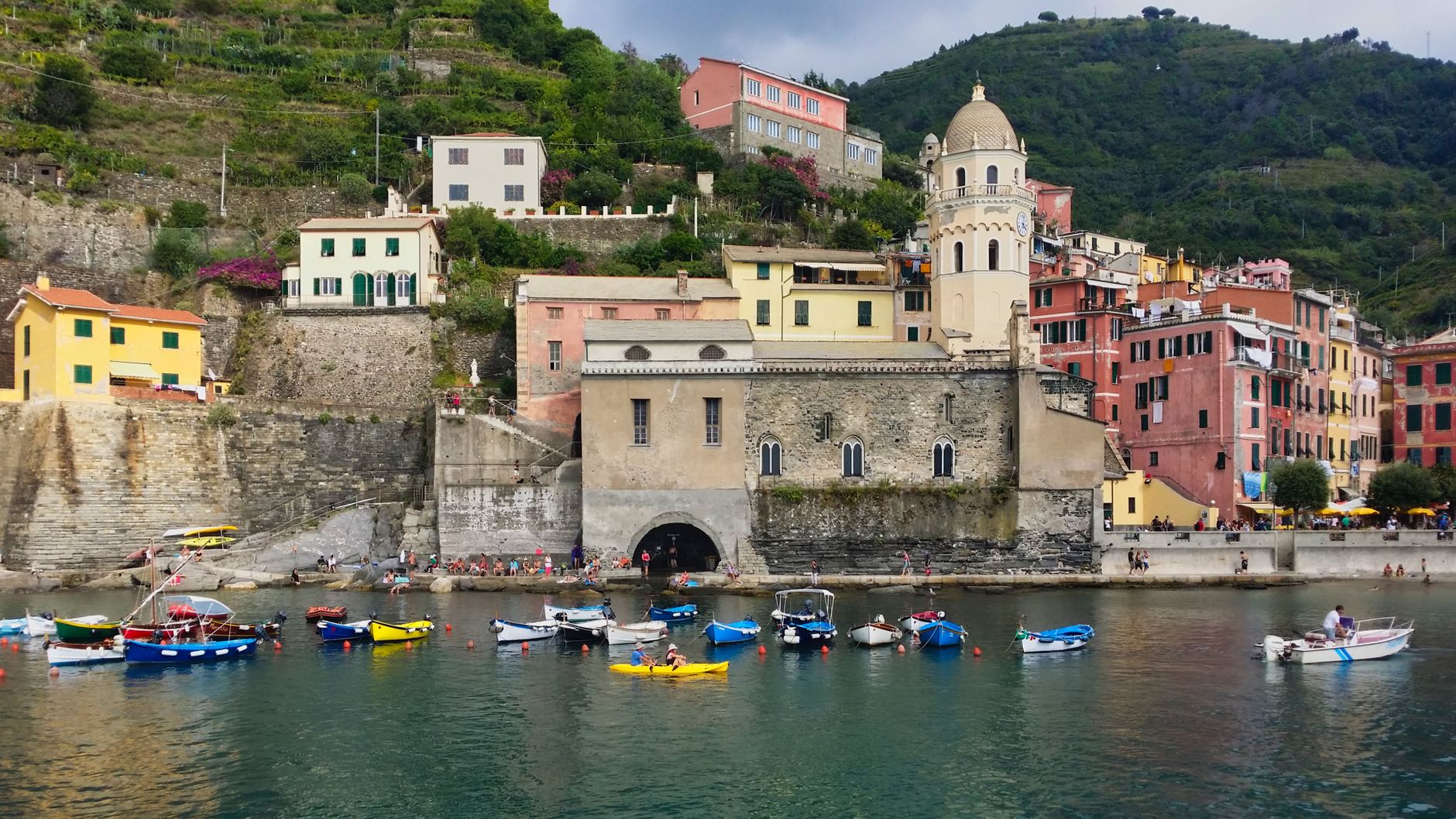
The villages are almost an afterthought of the terracing, five harbours at the foot of the vineyards where the boats could shelter. North to south they run Monterosso, Vernazza, Corniglia, Manarola and Riomaggiore, each painted from the same box of colours. Monterosso has the only real sand. Vernazza has the prettiest face, a natural harbour ringed by tall houses with the fishing boats pulled up in the middle, and a line of restaurants on the water, Il Gabbiano among them, serving the anchovies the coast is known for, the alici that turn up salted, fried and marinated on every menu here.
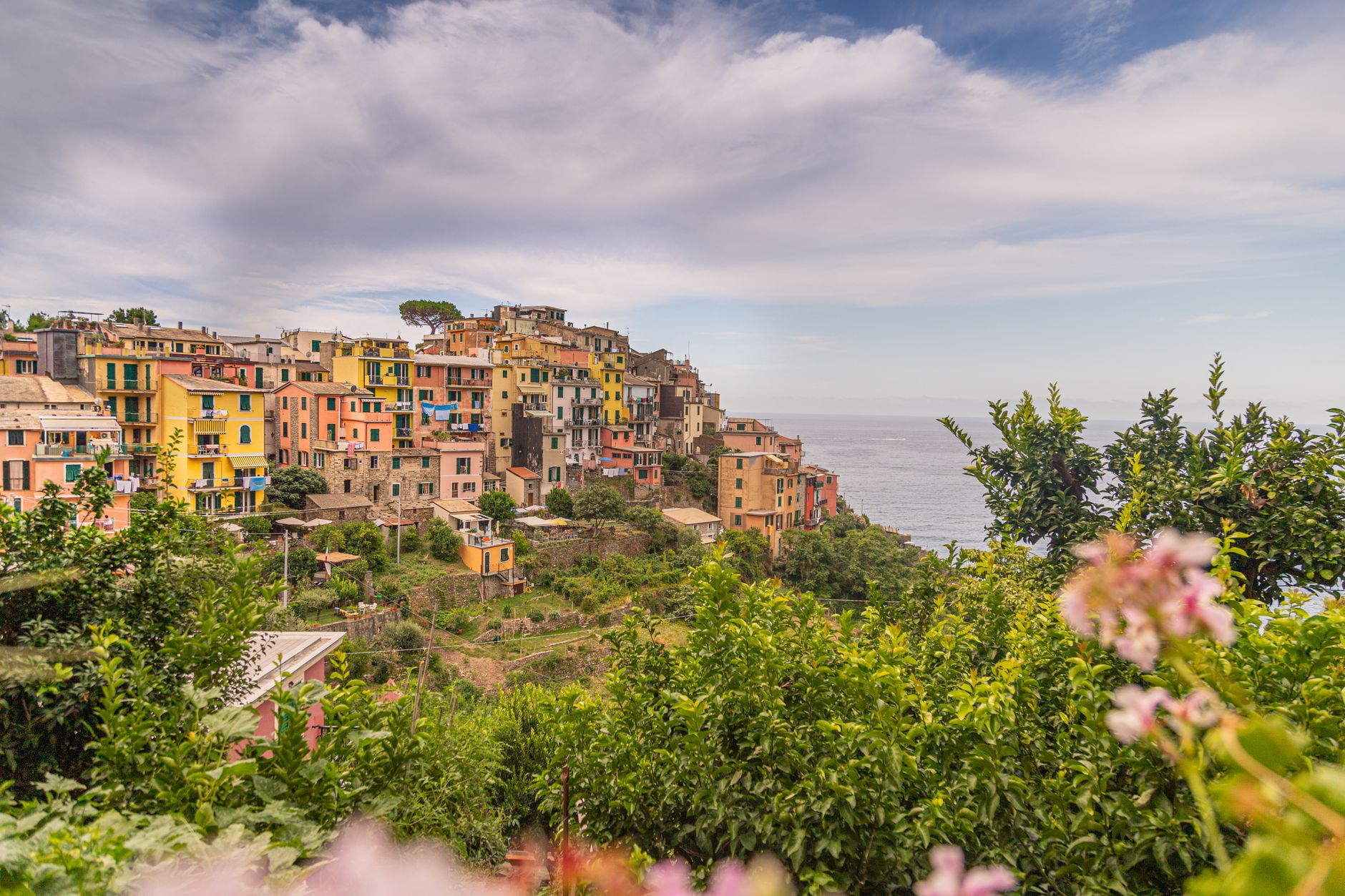
Corniglia is the odd one, and the best. It is the only village that does not touch the sea, set instead on a headland a hundred metres up, and its station sits at the bottom, so the price of arriving is a staircase, the Lardarina, close to four hundred brick steps zig-zagging up in the heat, or a shuttle bus when your legs have gone. The reward at the top is the quietest of the five, a single lane of peeling shutters and lemon pots, and, at Alberto's, a gelato made with basil grown in the maker's own garden, eaten looking back down the coast at the villages you have walked between.
For all the walls and steps, the thing that actually links the five is the railway, and it is a small marvel of stubbornness. To connect the villages the engineers drove the line straight through the headlands, fifty-one tunnels along the length of the coast, so the ride is mostly darkness broken by two or three seconds of blinding sea. You plunge into the rock, burst out over a turquoise cove with a village stacked above it, and are back in the dark before you have taken it in. The hops are tiny, two to four minutes between villages, and in season the Cinque Terre Express runs every quarter of an hour. A single Cinque Terre Card covers the trains and the trail fees together.
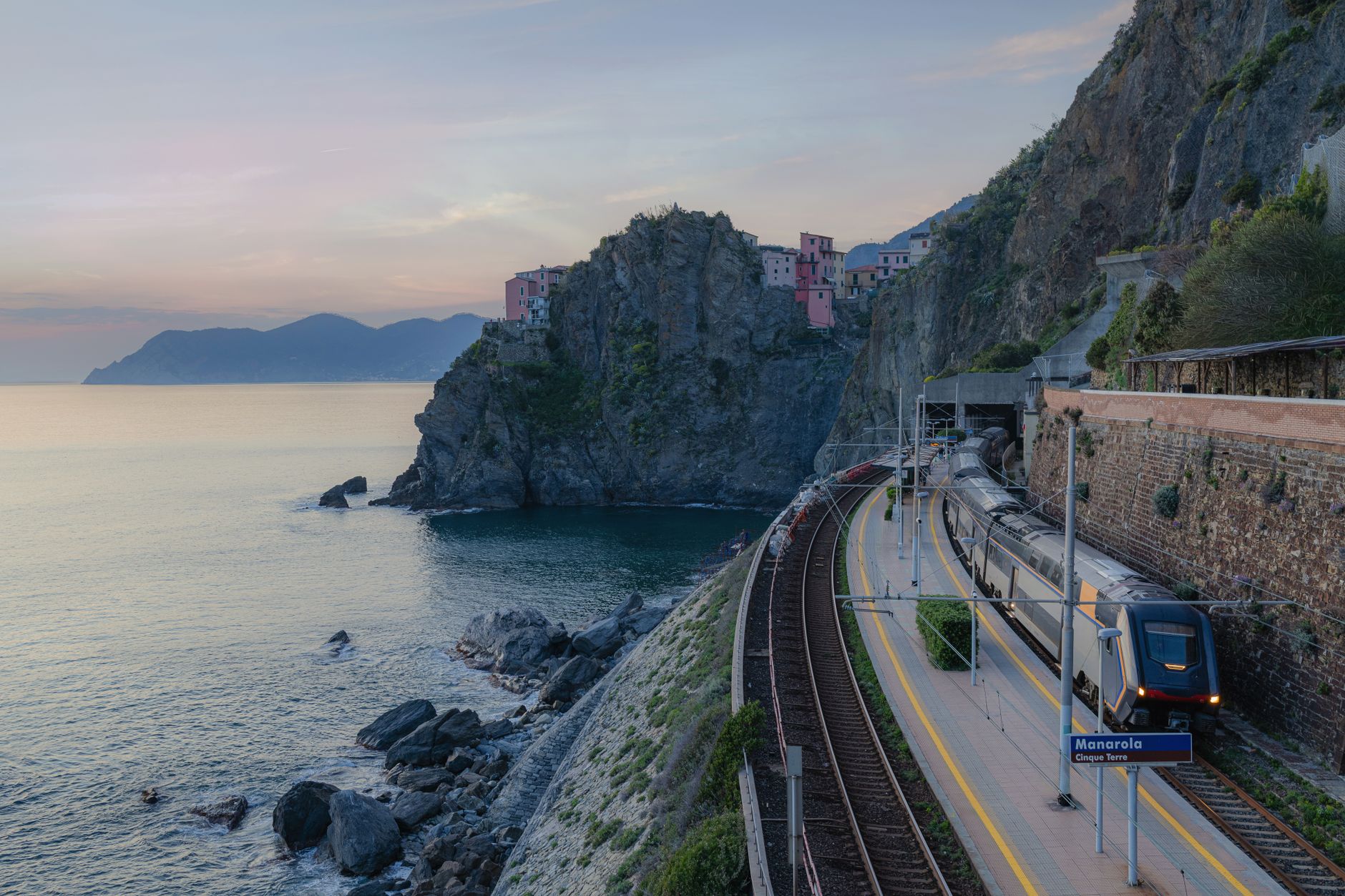
On foot it asks more of you. The old coastal path, the Sentiero Azzurro or Blue Trail, threads the villages along the cliff, and it does not so much level out as climb, sit flat a moment to fool you, then drop until your legs complain, on hand-cut steps no two of which are the same height. The famous southern stretch, the Via dell'Amore between Riomaggiore and Manarola, was shut by a rockfall for something like twelve years and reopened only in 2024, on timed tickets and in careful numbers. Other sections close for months when the hillside slides, which it does, so you check what is open the morning you set out and let the train carry the legs the mountain has shut.
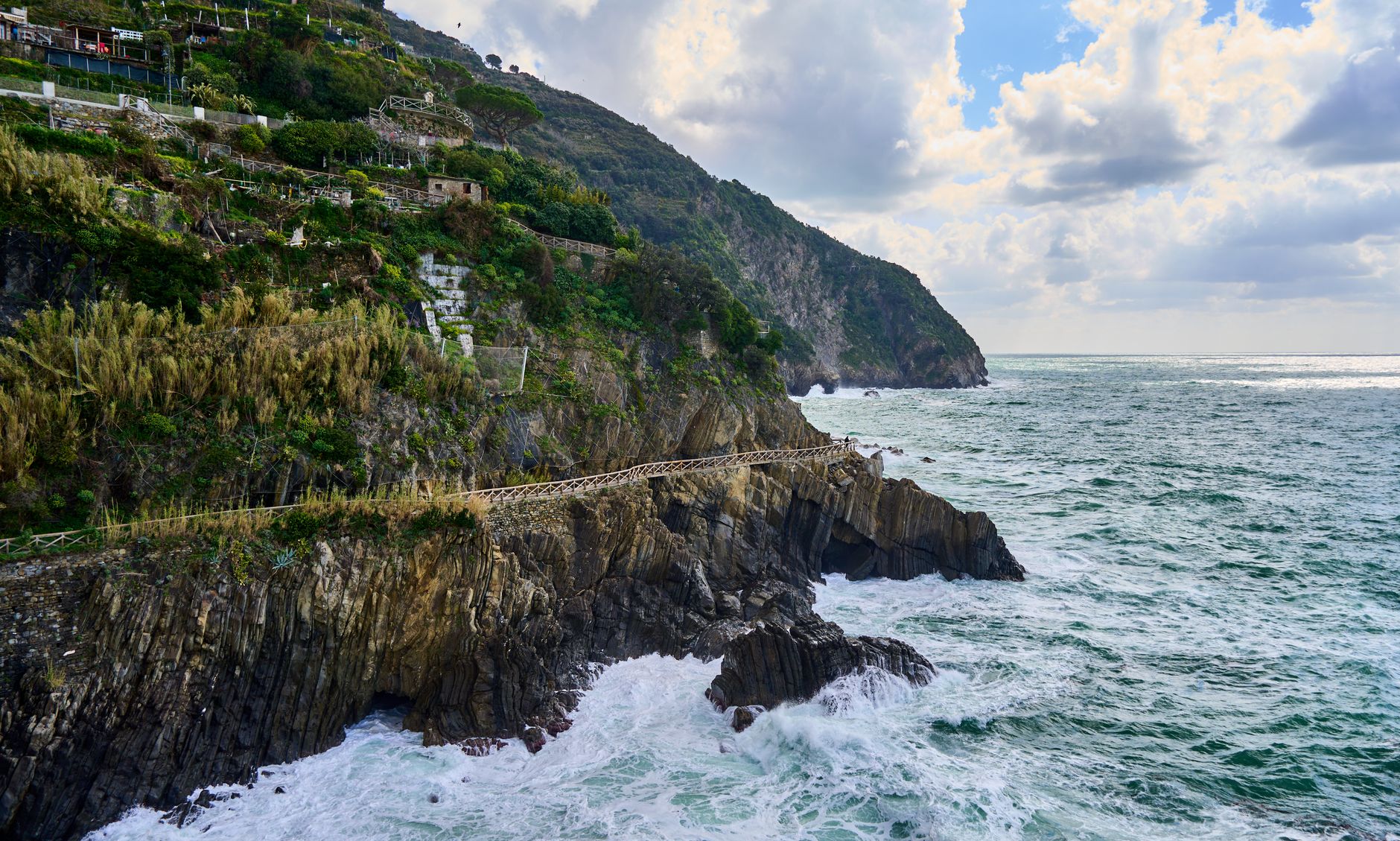
Give it two or three nights rather than the single day most people spend, because the train and the trail between them make a proper walking week, and the wine is better drunk where it is grown. Manarola is the one everyone points a camera at, and at dusk, from the paved path out past its little cemetery, it earns the attention, the coloured houses stacked over the water. But the view that stays with you is the one looking down from the terraces: a thousand years of hand-set wall holding a whole coast up out of the sea, so that five villages, a railway and a wine could exist on a cliff that never wanted any of them.