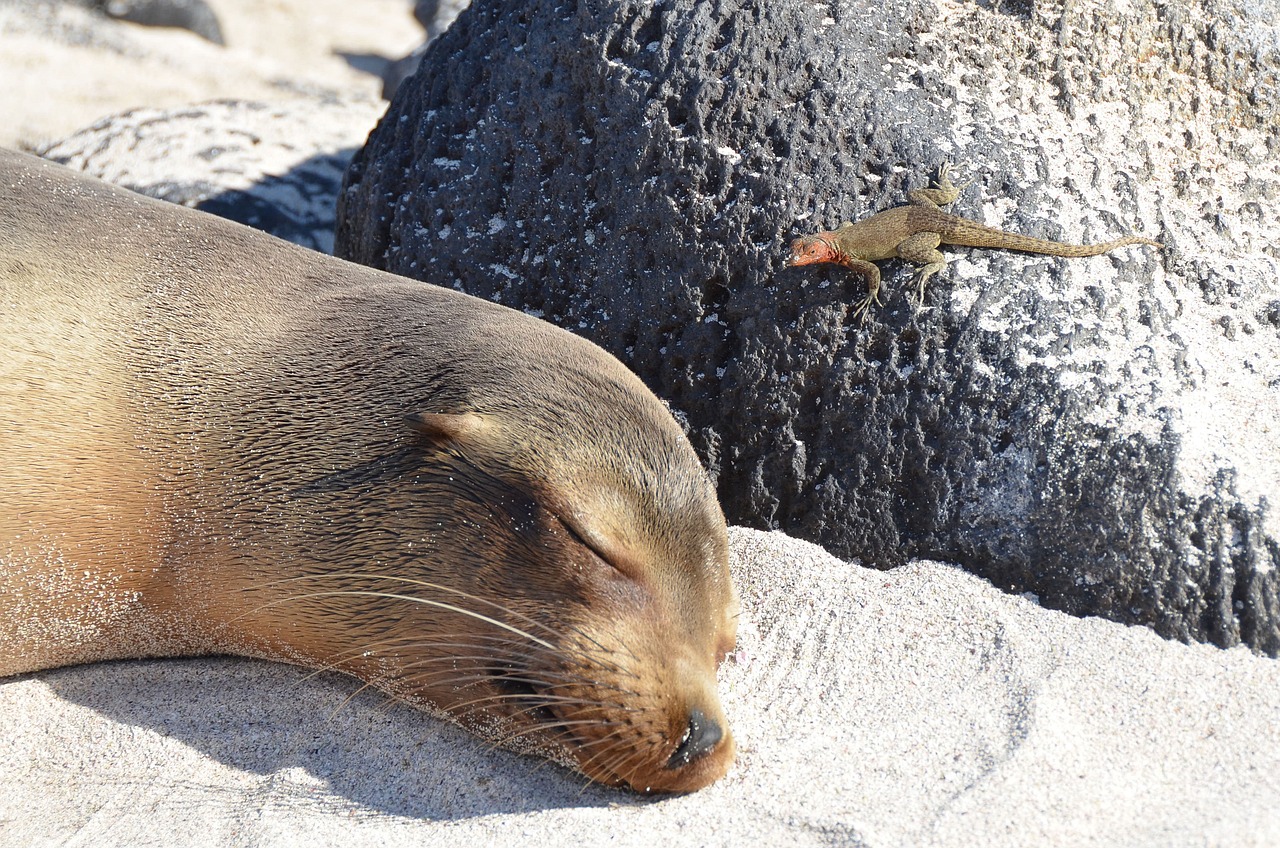
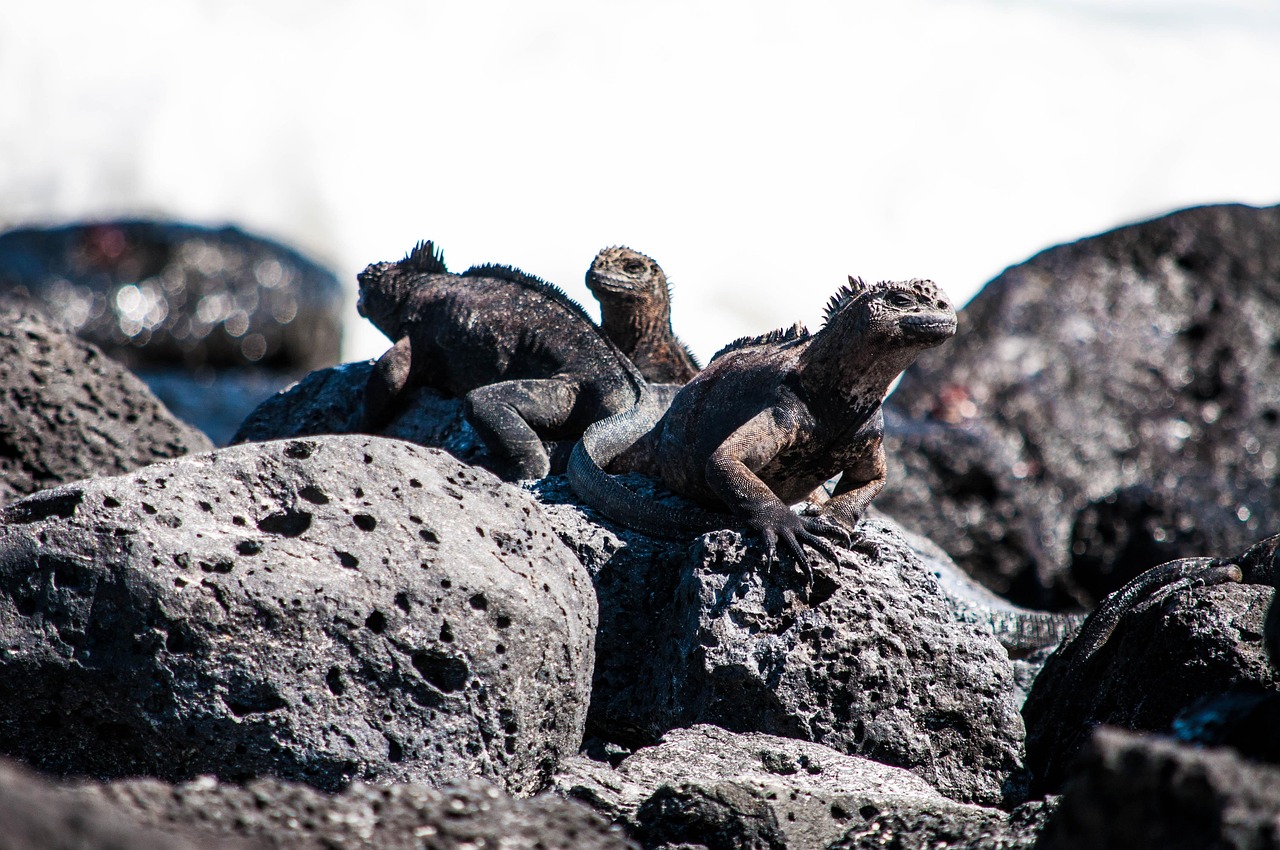
Sea lions sprawl across the jetty at Puerto Baquerizo Moreno, and people walk around them. Nobody shoos them off. Marine iguanas sneeze salt onto the trail at ankle height and do not move aside. Blue-footed boobies nest on and beside the marked paths that visitors are required to stay on. The central rule of the Galapagos National Park is written to match: visitors must stay at least two metres from wildlife, the park directorate specifies, even if they approach you. That last clause concedes in advance that only one party to the encounter has any idea the arrangement exists, which leaves the distance entirely the visitor's job.
The cause is isolation. The islands rose from the seabed empty, stayed alone for millions of years, and were colonised only by whatever could raft, swim or blow across nine hundred kilometres of open Pacific. Almost nothing that arrived was a large land predator. With no predator there was no selective pressure, and with no pressure the flight response simply never appeared. Biologists call it tameness evolved in the absence of substantial predators, a hallmark of remote oceanic islands generally rather than a Galapagos peculiarity. That matters most to anyone standing over a sleeping sea lion with a phone out. The animal has no mechanism for the question, so it will not withdraw when it has had enough, and the two-metre rule stands in for an instinct it never grew.
Which is why the apparatus around a visit is heavier than the scenery suggests it needs to be. A certified naturalist guide is mandatory at every protected visitor site, and independent walking is not an option at most of them. Flash photography is banned outright. Since August 2024 the national park entrance fee for a foreign adult has been $200, doubled from the figure that had stood for over two decades, and it is collected in US dollars in cash on arrival, alongside a separate INGALA transit control card bought before departure from the mainland. Little of that money buys access to anything. It pays for wardens, guide certification and the biosecurity checks that keep the islands' isolation approximately intact.
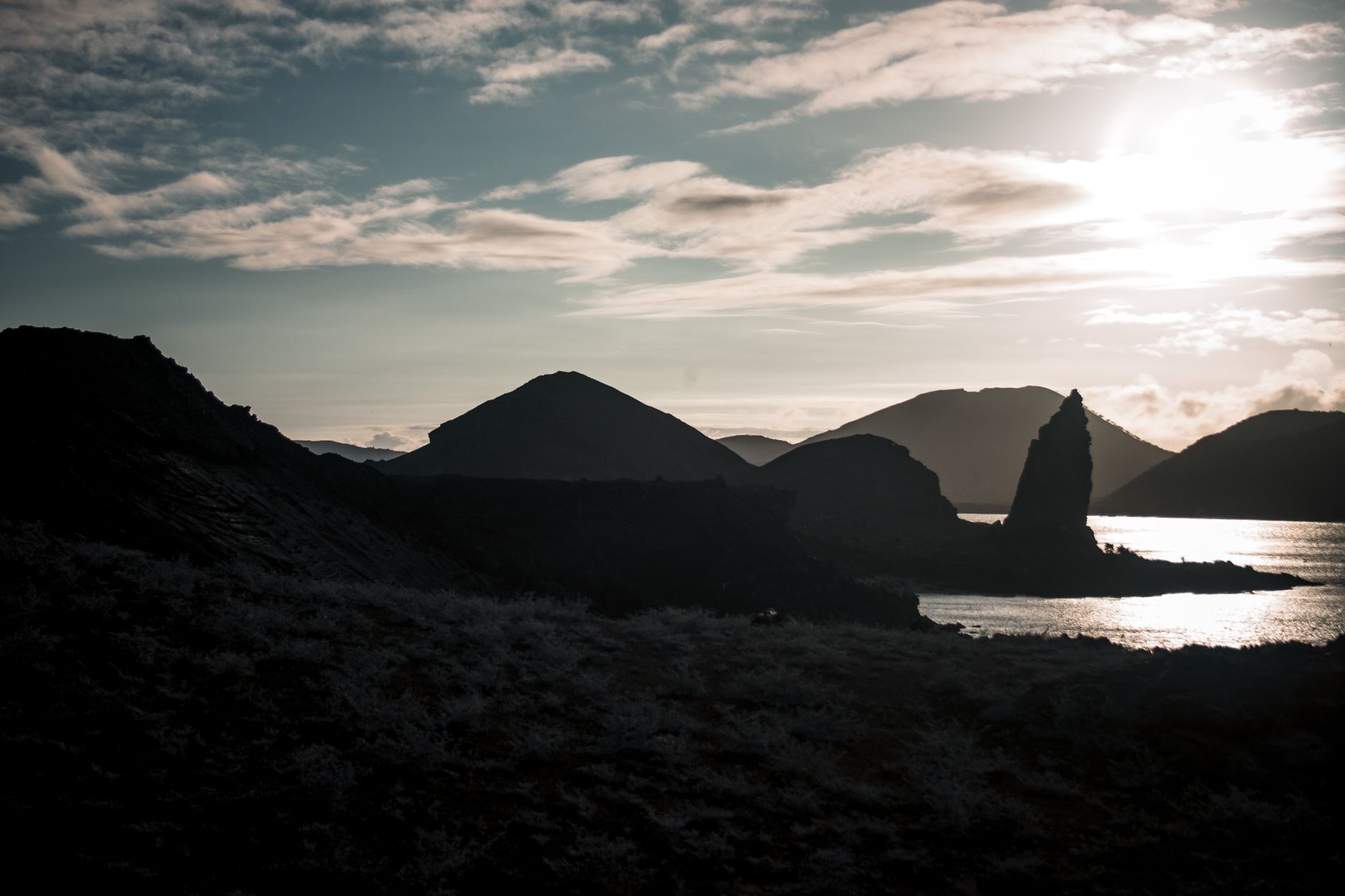
The archipelago is a conveyor belt, and it helps to understand it that way before arriving. A fixed plume of hot mantle sits beneath the eastern Pacific while the Nazca plate grinds east-southeast above it, so each island is built by volcanism, carried off the heat source, and then slowly eroded back into the sea. The result is one place caught at every stage of its own life simultaneously. Fernandina, in the west, is roughly fifty thousand years old and still building. San Cristobal, in the east, is a little over three million. Isabela, the largest island by far and around three quarters of the total land area, is six separate volcanoes fused above the waterline, the tallest of them Volcan Wolf at 1,707 metres. Every divergence in the wildlife, every finch beak and tortoise shell shape, happened in the gaps that this geology opened between one island and the next.
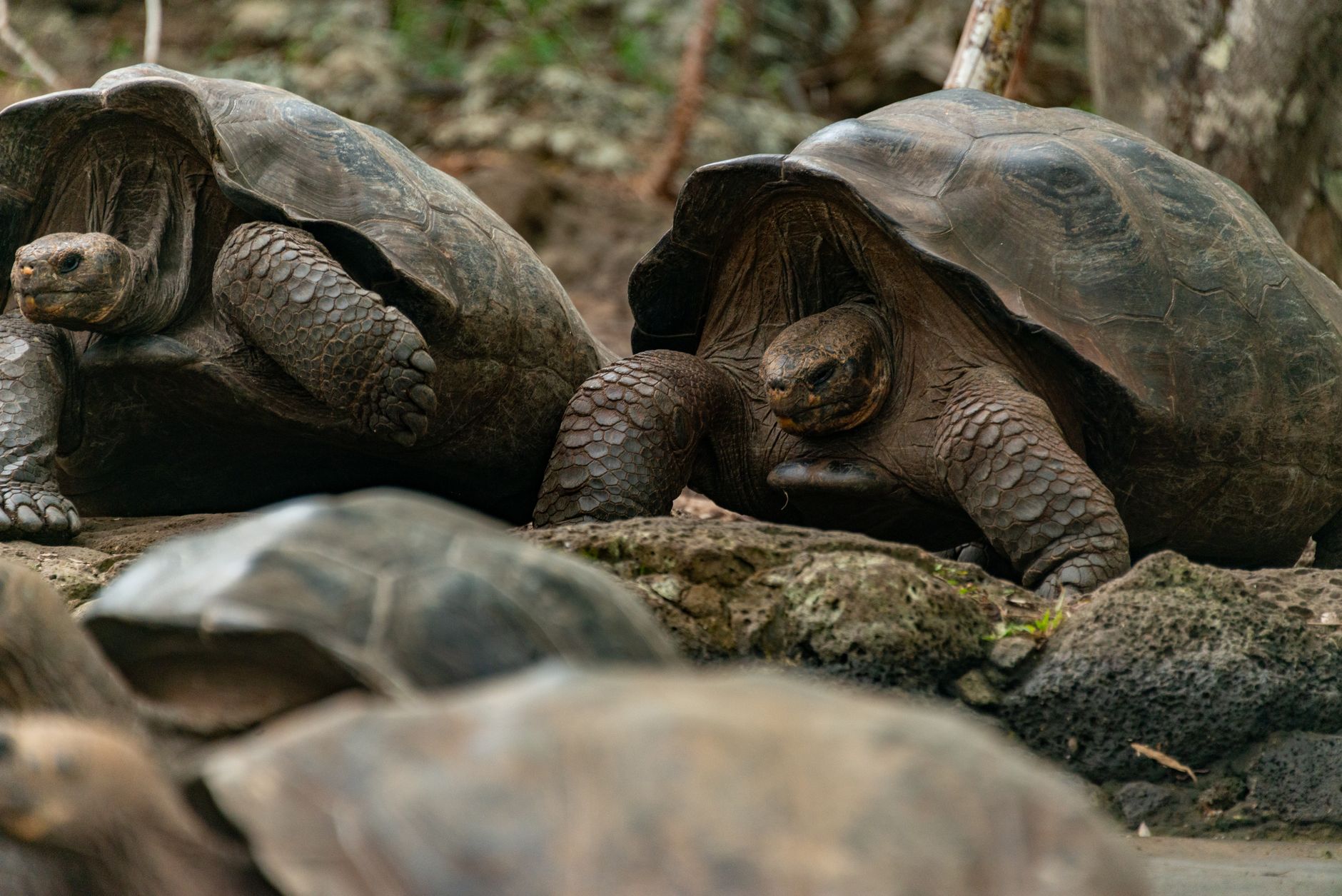
The islands also carry a long record of what happens when the fearlessness meets people who are hungry. Giant tortoises could be stacked alive in a ship's hold for months without food or water, which made the slowest animal in the archipelago the most portable protein in the Pacific, and whalers, sealers and pirates took them by the thousand. Populations collapsed. Floreana's tortoises were assumed extinct by the 1830s, though a more recent theory holds that some were not killed at all but offloaded on Isabela to free hold space for whale oil, which would make the extinction record itself a piece of shipping logistics. The symbol of the whole business is Lonesome George, found on Pinta Island on 1 November 1971 by a Hungarian malacologist who had gone there looking for snails. George was the last known Pinta Island tortoise. He died on 24 June 2012 at an estimated 101 or 102 years old, was taxidermied in New York, and did not come home until 17 February 2017. He now stands in a climate-controlled room at the Fausto Llerena Breeding Center on Santa Cruz, a short walk from the Charles Darwin Research Station in Puerto Ayora.
The fearlessness is not a welcome. It is an absence, and absences are easy to fill.
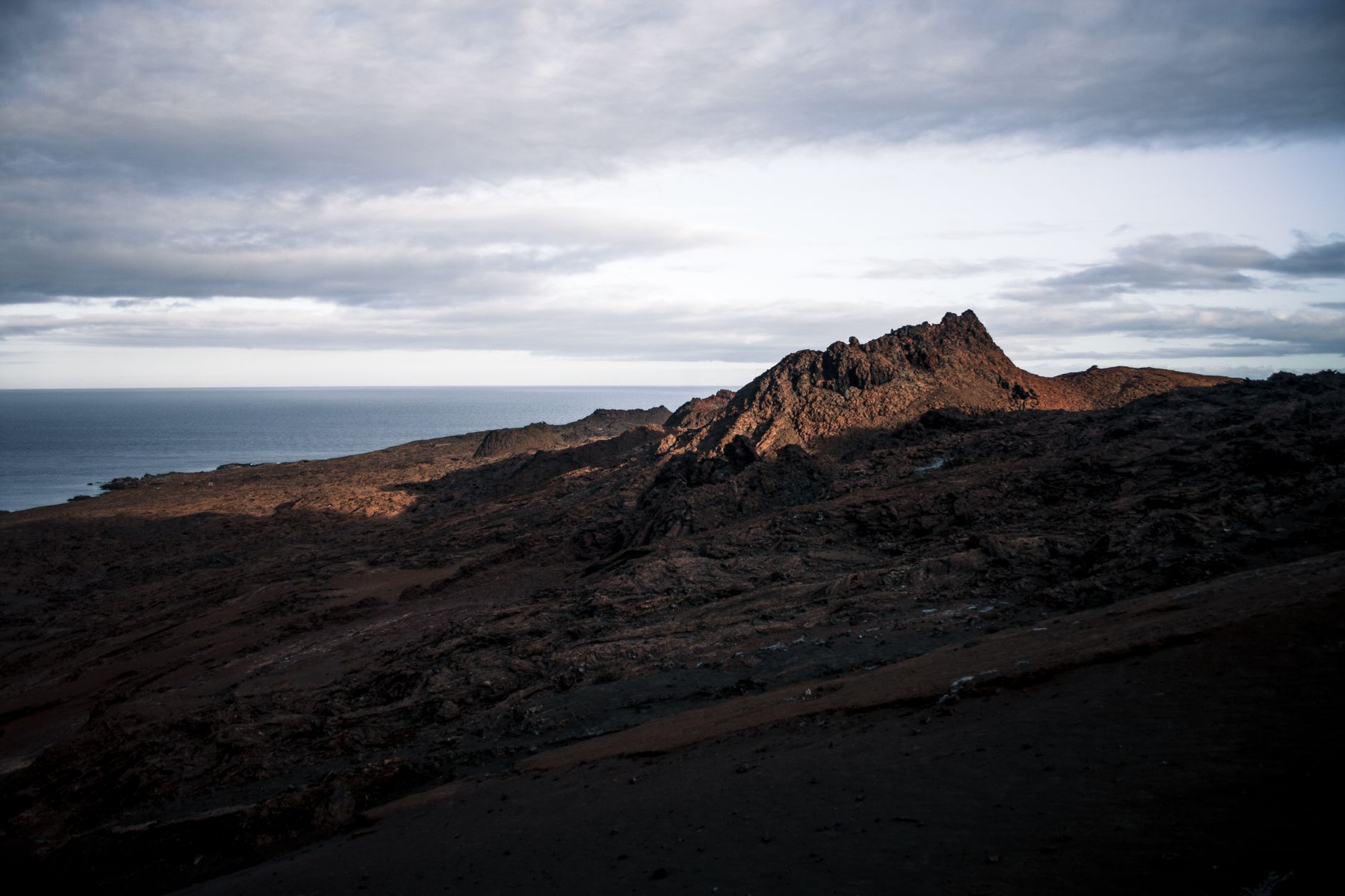
Anyone arriving with a jungle in mind should recalibrate now. The inhabited Galapagos is low, dry, cactus-studded scrub, brown for much of the year, with almost no shade on any of the three main settled islands. The spectacle sits at the waterline and below it, in the two metres of water off Concha de Perla on Isabela or in the channels at Las Tintoreras, not in the panorama. Sierra Negra is the usual test of this. The difficulty is in the distance, around sixteen kilometres with a few hundred metres of ascent, reached by a forty-five minute road transfer from Puerto Villamil, and it delivers the largest caldera in the Galapagos at 7.2 by 9.3 kilometres. It also fogs in constantly, and the caldera goes to cloud or rain more often than not, which leaves a long descent through mud and no view to show for the alarm clock. The lava field out at Volcan Chico holds up in any weather, and it is the better reason to book the day. Wildlife on that trail is close to nothing, worth knowing before it is booked as a wildlife day.
The friction is mostly logistical and mostly predictable. Nothing flies into the Galapagos internationally, so every trip routes through Quito or Guayaquil and then a domestic hop to Baltra or San Cristobal, with a transit card desk and biological baggage screening on the mainland that add an hour on top of ordinary check-in. Baltra airport is not on Santa Cruz, a fact that quietly wrecks people's transfer maths: the chain is a shuttle bus to the Itabaca Channel, a five-minute barcaza across it, then thirty-five to forty minutes by taxi to Puerto Ayora, roughly ninety minutes door to door once the fee queues are counted. Cash rules the islands. Cards are widely refused, ATMs are few, withdrawal caps are low and Isabela's single machine can run dry, so both park payments and a working float should land with the traveller. The inter-island boats are small high-speed craft rather than ferries, two to two and a half hours on open water, choppy enough that motion sickness medication is standard advice and morning departures are noticeably calmer than afternoon ones. There is no direct crossing between Isabela and San Cristobal in either direction. Every route between them goes back through Santa Cruz, which adds a leg and often a night to any plan that assumed otherwise.
Two more things worth deciding before booking. First, timing: December to May brings warmer, calmer, clearer water and the easiest snorkelling, while June to November drops the sea into the low sixties Fahrenheit under the Humboldt current and trades visibility for nutrient-rich water, penguins, whales and the best diving of the year. Neither window is a bad one, and a wetsuit earns its space in both. Second, pace. The common error is spreading the trip too thin, and it leaves too little time on each island. Three islands in a week is the practical floor and four is a scramble. The marquee day tours, Los Tuneles above all, sell out days ahead in high season, so the decide-on-arrival approach fails at exactly the best sites, while so much of the trip is prepaid and non-refundable that a single bad stomach can cost three days outright. Build one unbooked day into the middle of the plan, to absorb a cancelled crossing, a fogged-out volcano or a morning written off by the boats.