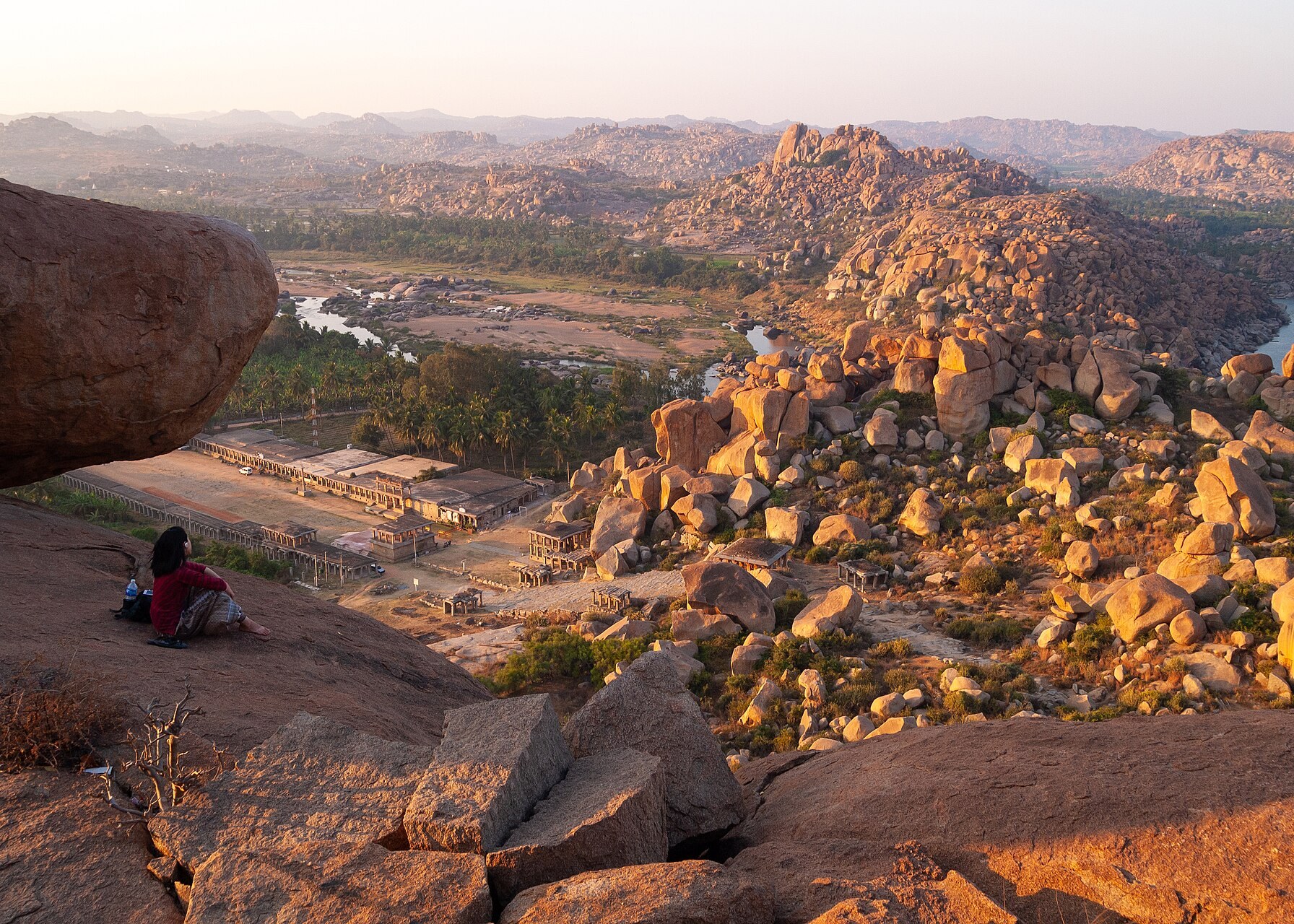
A Portuguese horse-trader named Domingo Paes came here around 1520 and reached for the only comparison large enough. Rome, he wrote. He was standing in Vijayanagara, the capital of a South Indian empire, a city some reckon held half a million people and traded in diamonds by the street. Forty-five years later an alliance of neighbouring sultanates broke its army in a single battle, and over the months that followed the city was looted, emptied and given back to the forest. What is left is called Hampi, and it lies scattered across one of the stranger landscapes in India: a valley of granite boulders, rounded, stacked, balanced one on another, among the oldest exposed rock on earth.
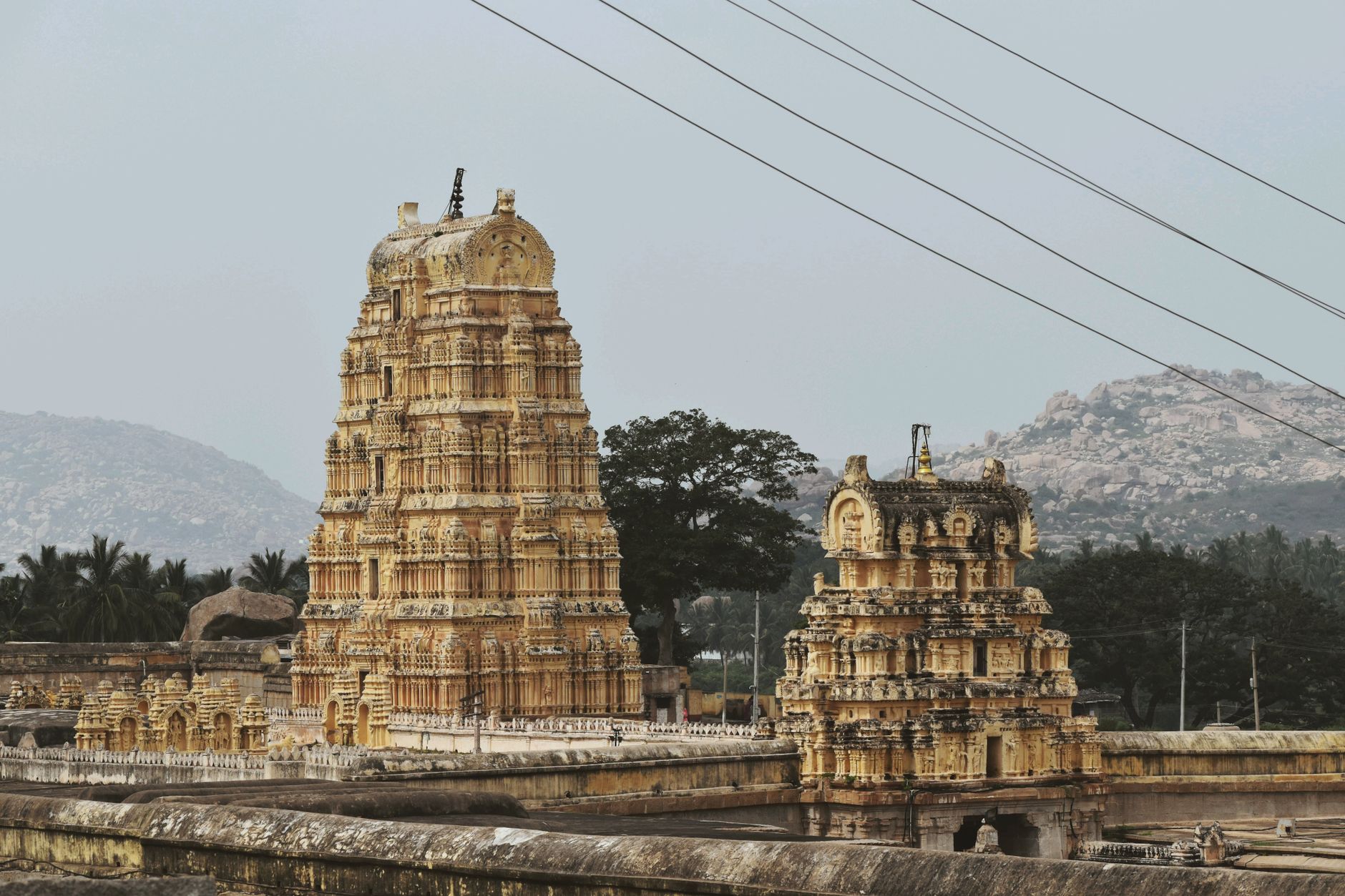
Not all of it died. At the western end of the old bazaar the Virupaksha temple never once closed, and it is still a working temple to Shiva, its gate-tower rising nine tiers over the street and its inner rooms loud with bells before the light is up. There is a small marvel inside that most visitors walk straight past: a pinhole in one wall throws the whole tower, upside down, onto the shadowed plaster behind it, an image held in the dark for five centuries. A temple elephant named Lakshmi lives in the first courtyard and is walked down to the Tungabhadra each morning to be bathed, which is reason enough to set an early alarm and be at the river before the heat comes.
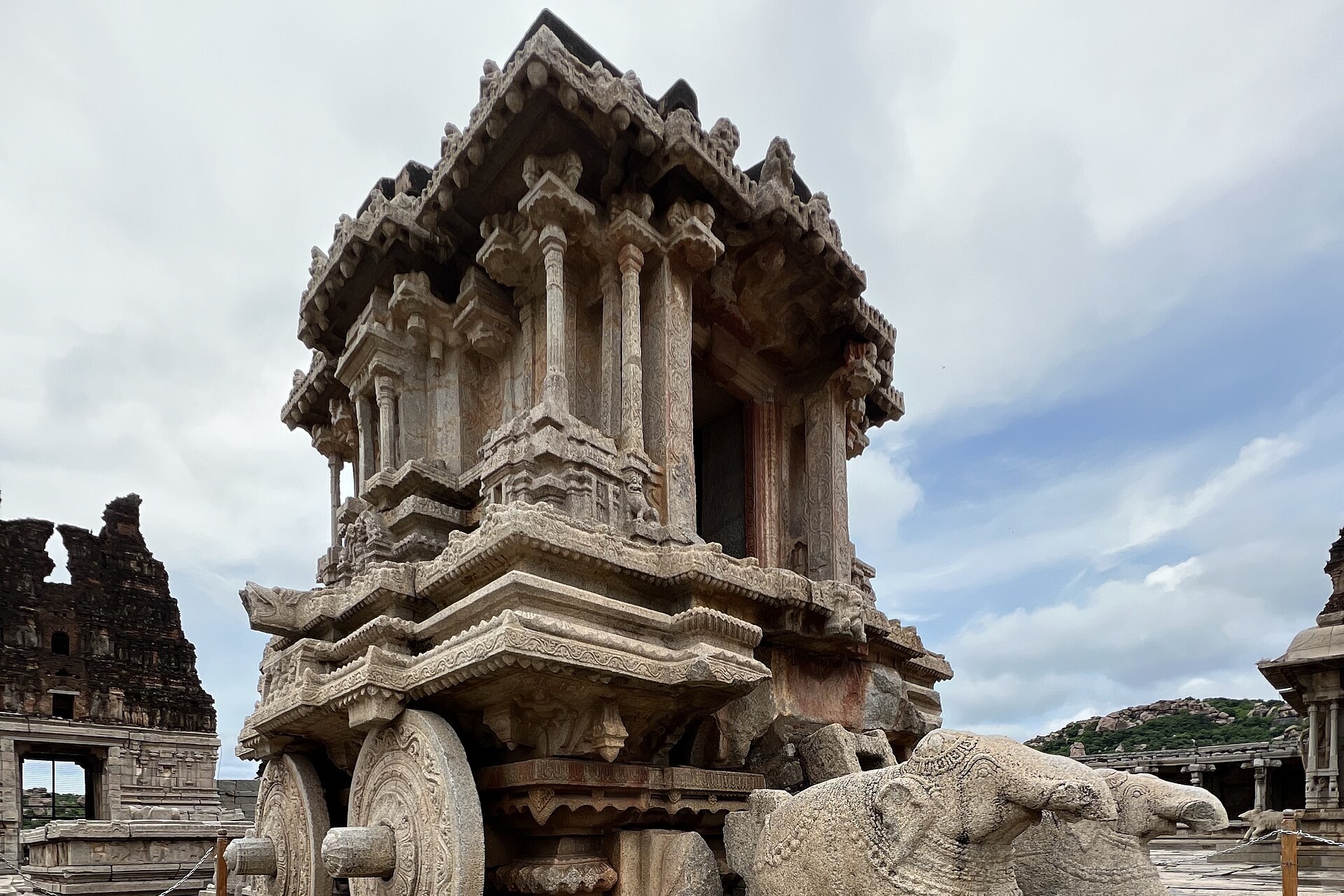
The most photographed thing in Hampi is a chariot that cannot move. In the Vittala temple, a couple of kilometres along a path above the river, stands a shrine cut to look like a temple car, its stone wheels once able to turn until the authorities set them fast to save the stone. It is printed on the back of the fifty-rupee note, which means half of India carries a picture of it without ever having stood before it. The hall beside it has slender pillars that ring with musical notes when they are struck, though no one is allowed to strike them now, for the same reason the wheels no longer turn.
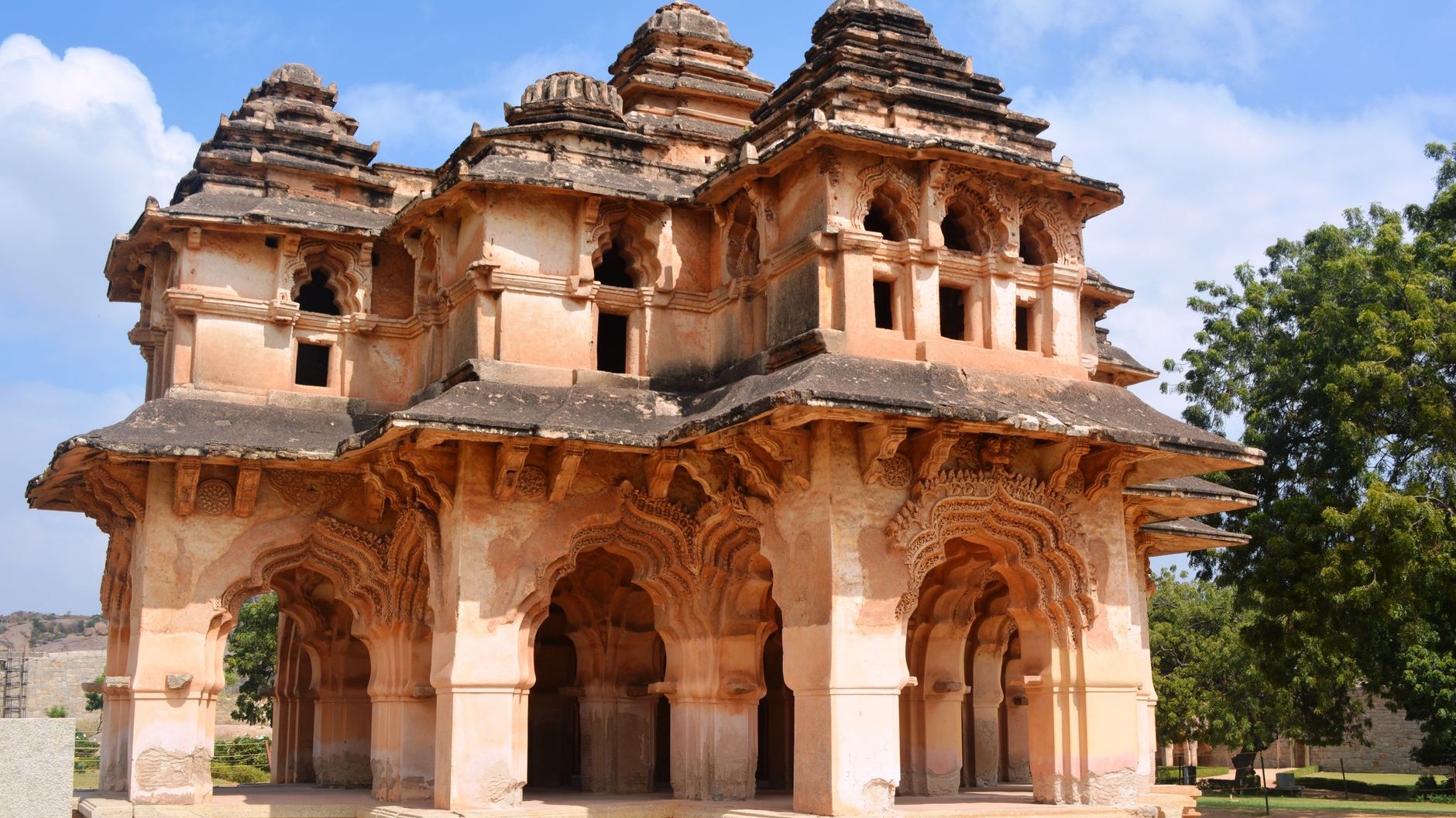
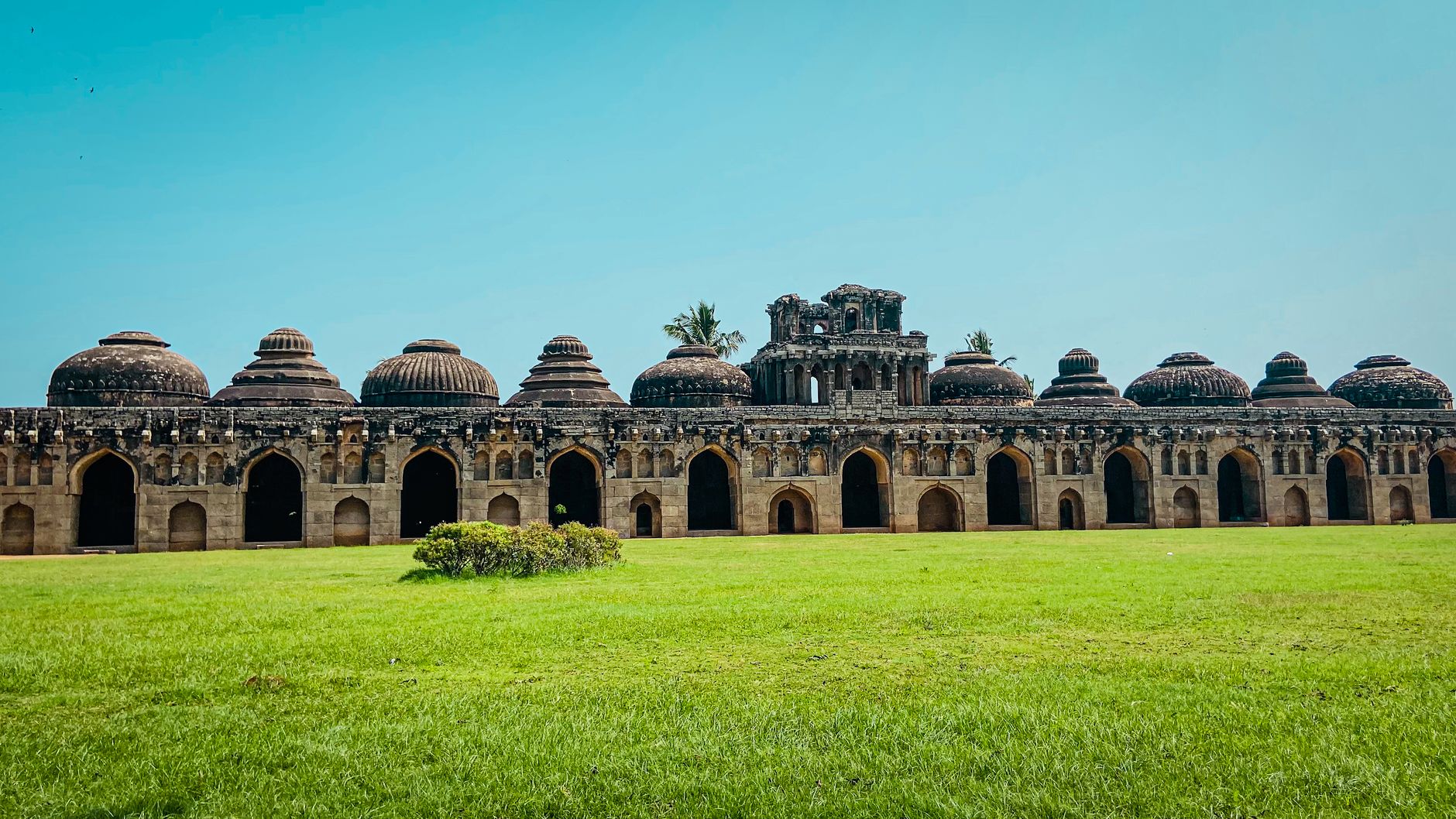
The temples are only half of the city. A ride away across the boulders lies the royal quarter, and its architecture is quieter and cleaner, arches and domes borrowed from the Muslim courts to the north. The Lotus Mahal is a pavilion of petal-shaped arches in the women's enclosure, and beside it stands a long row of eleven domed chambers built to stable the royal war elephants. Between the set-pieces the ground is all boulders, and shepherds still move their goats through the ruins as though they were any other rocks.
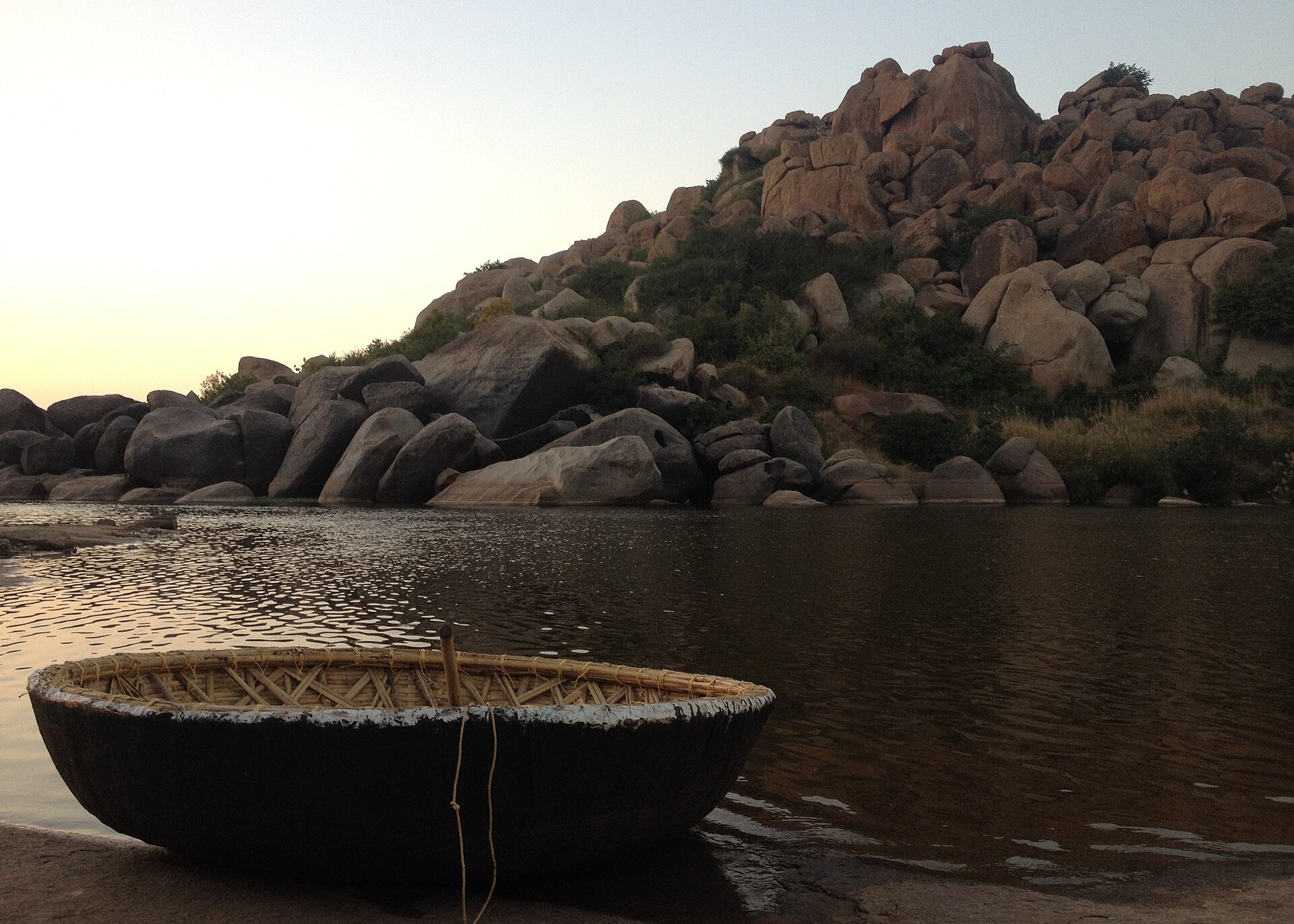
The Tungabhadra splits Hampi in two, and the crossing is by coracle, a round basket boat the boatman spins for the fun of it halfway over. The far bank was for years a travellers' encampment of paddy-field guesthouses and rooftop cafes, until it emerged that the whole settlement had been built without permission inside the protected zone, and in 2020 the bulldozers came and took most of it down. What is left over there now is quieter and more agricultural: the older village of Anegundi, and the hill that local belief holds to be the birthplace of the monkey god Hanuman, up more than five hundred steps.
A pinhole in the temple wall has thrown the great tower upside down onto the dark for five hundred years.
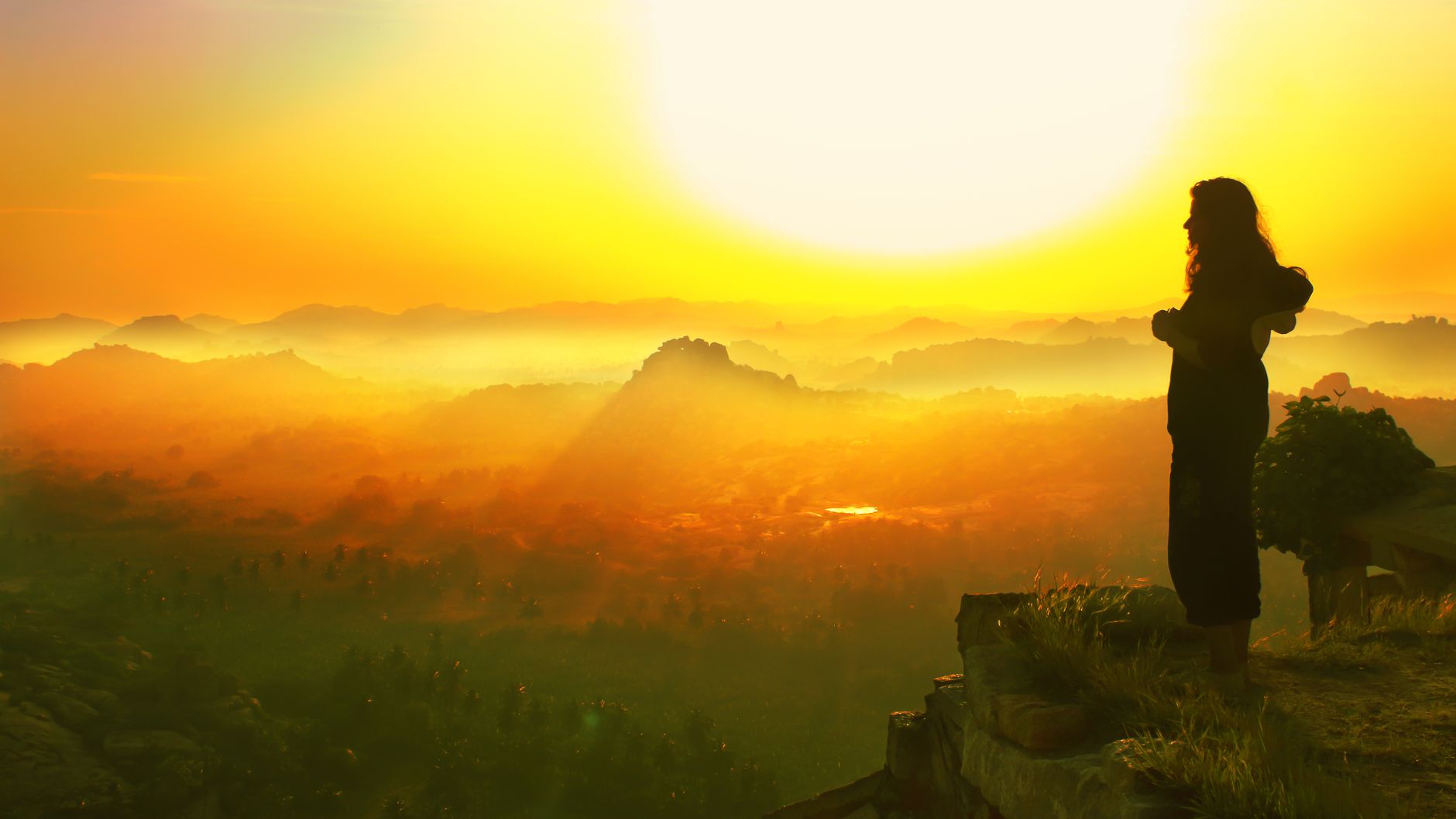
Everyone here climbs a hill for the light, mostly the same hill at the same hour. Matanga, the highest of them, is the one to climb instead, in the dark before dawn: the rock-cut steps have to be felt for by torchlight, and the path is easy to lose before the sky begins to grey. The reward is the valley almost empty as it comes up out of the shadow, the temple towers catching the sun a few minutes before the river does. Hemakuta, the easier hill above Virupaksha, does the same at sundown and is shoulder to shoulder by then.
The season is October to February, when the days are warm rather than punishing, and three or four days is about right: one for the sacred centre on foot, one for the royal quarter by scooter or auto-rickshaw, and one to cross the river. The nearest railway is at Hosapete, half an hour away, with overnight trains from Bangalore and Goa. Hampi has no bank machines, so cash matters, and so do early starts, because by noon the granite gives back everything the sun has been putting into it.