Iguacu announces itself a long time before the forest lets it be seen. The trail on the Brazilian side is a paved mile through a wall of green, butterflies lifting off the path in loose hordes, and for the first stretch the falls are only a rumour, a low pressure felt in the chest before the ear. The viewpoints come one after another, each better than the last, the way a good argument builds. Then the trees give out, the ground drops away, and the whole thing arrives at once: a green gorge with a river coming off the edge of it in a hundred places. Counting the falls is a lost cause from the first look.
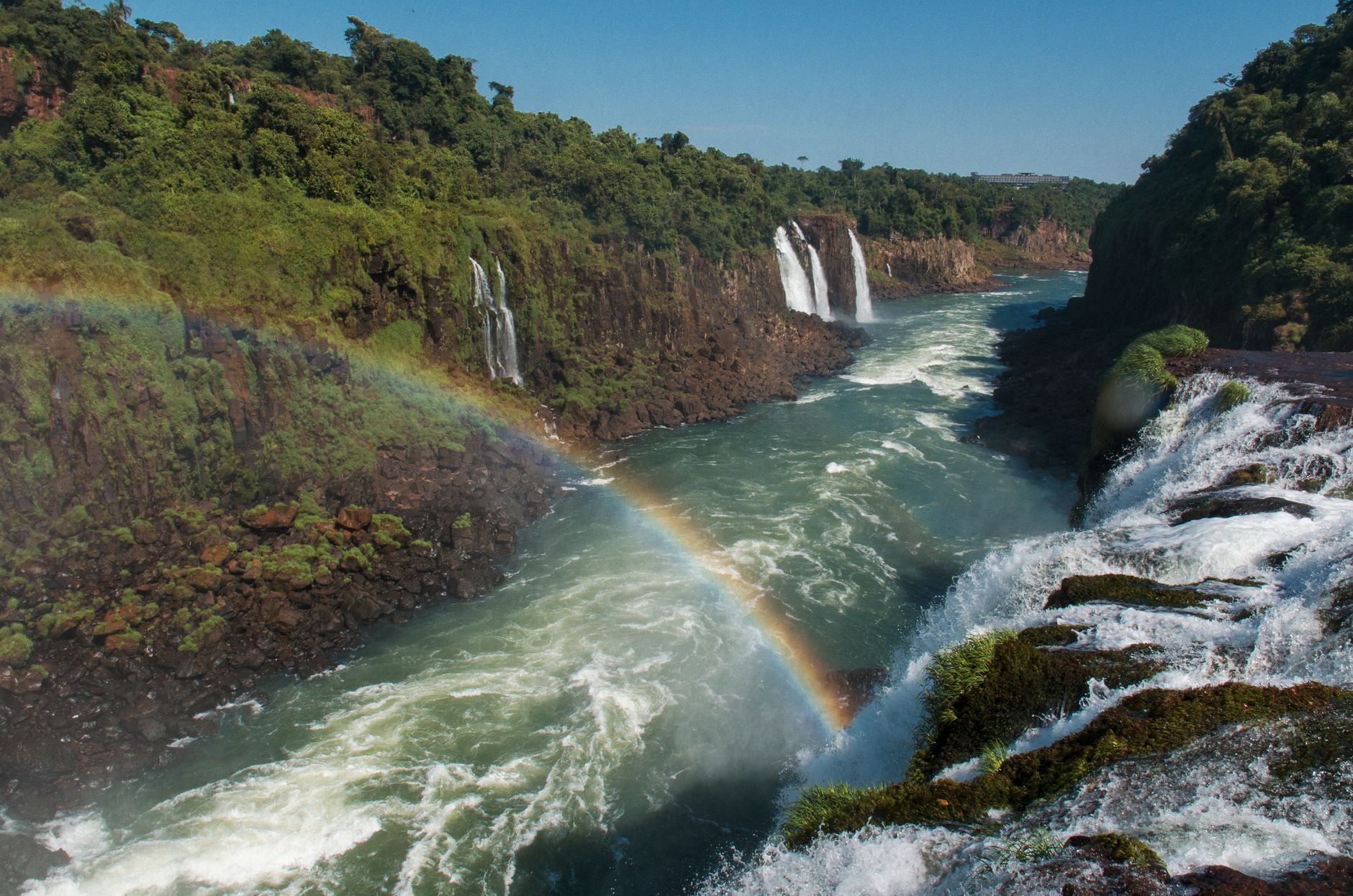
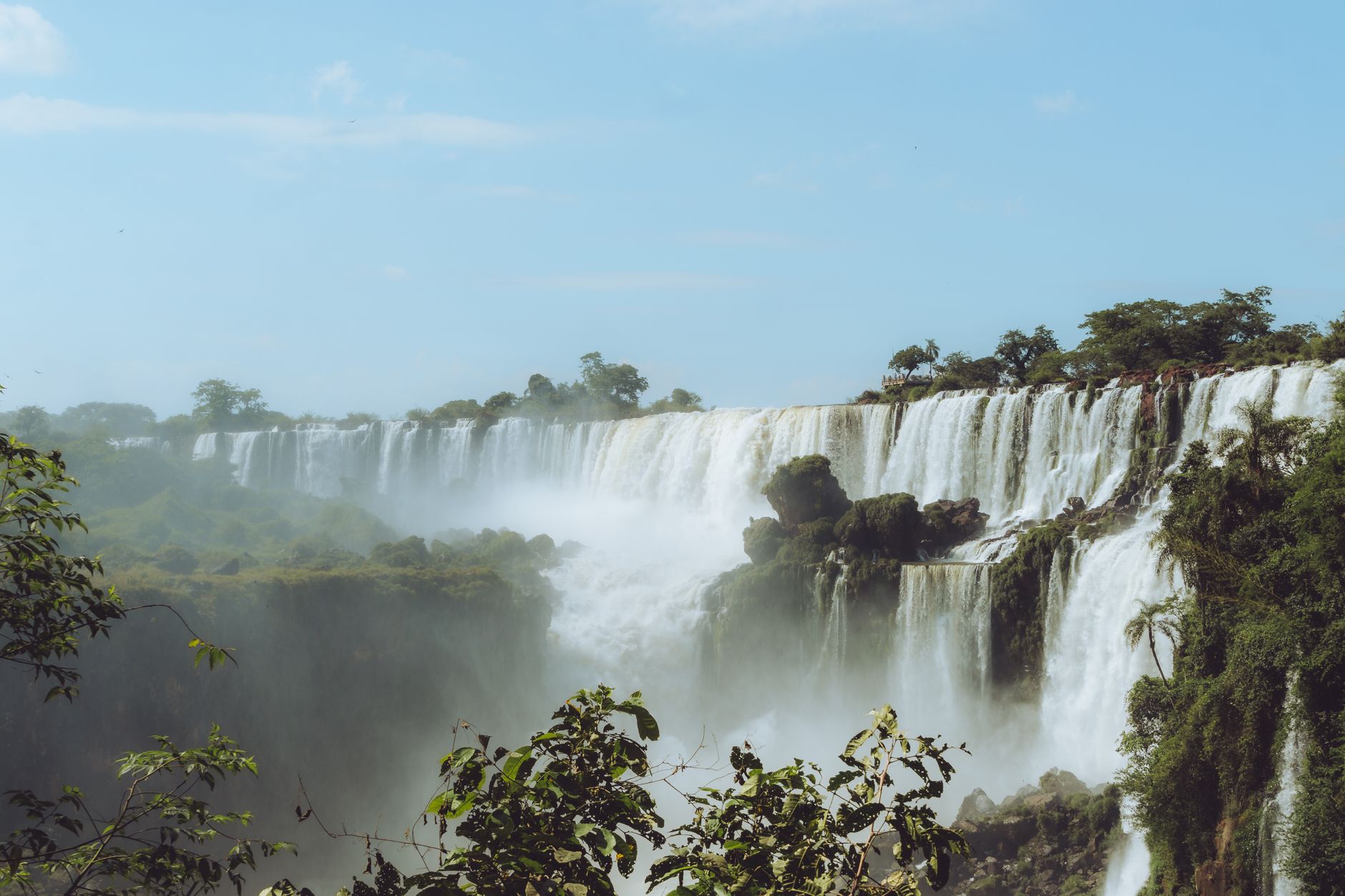
There are around two hundred and seventy-five separate falls here, strung along nearly three kilometres of cliff. The tallest drops about eighty metres, half again the height of Niagara, and the whole run is more than twice as wide. Eleanor Roosevelt is said to have looked at it in 1944 and murmured only, "Poor Niagara," and whether or not she ever did, the line survives because anyone standing on this rim thinks something like it. Brazil keeps the wide view. Argentina, across the water, gets you out on top of the individual cataracts on far longer walkways; this side lets you stand back and take the whole of it in.
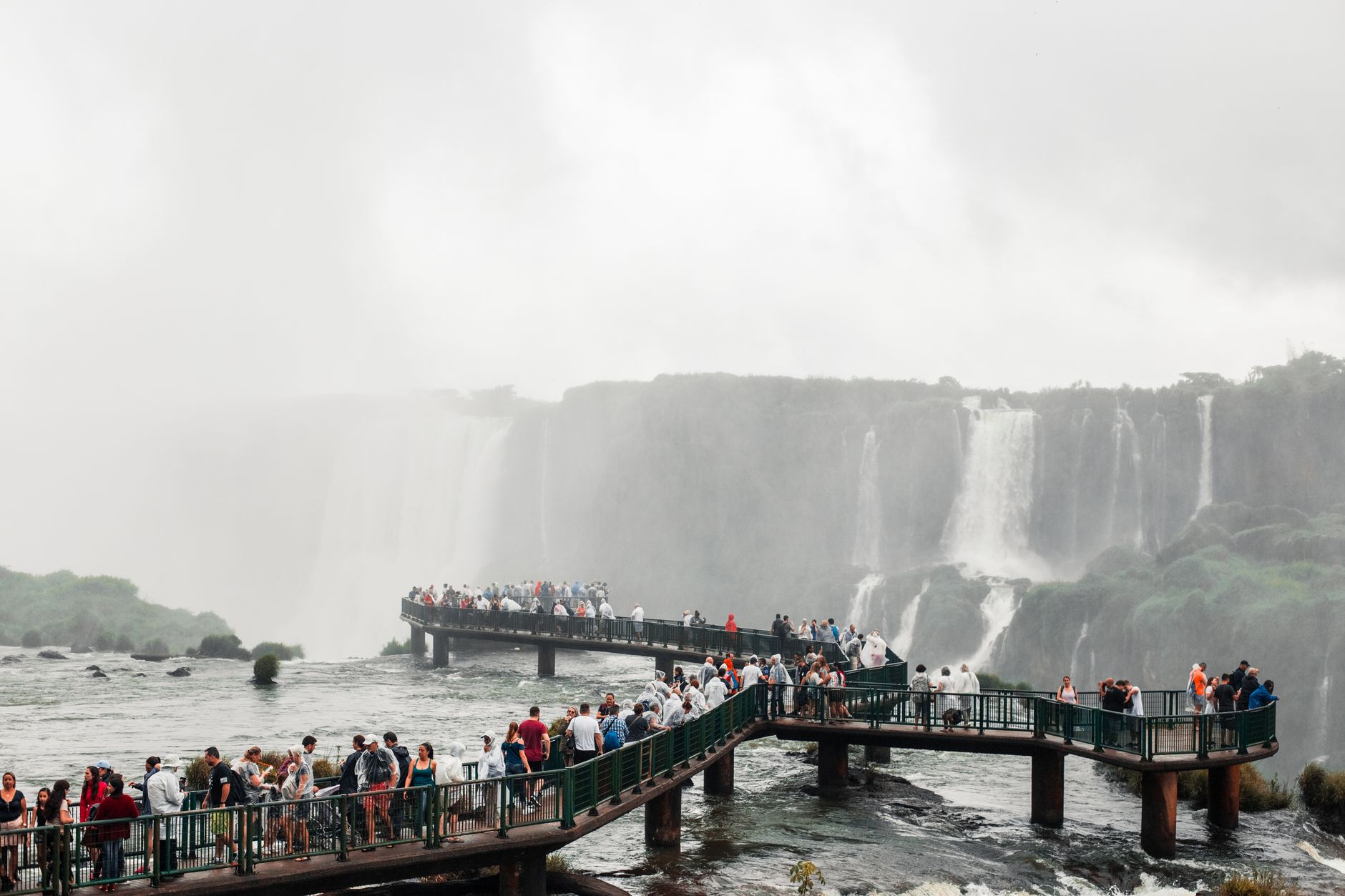
Everything on the trail bends toward one place. The Garganta do Diabo, the Devil's Throat, is a horseshoe where fourteen falls empty into the same slot, and the walk ends on a steel catwalk that runs straight out over the foot of it. Bring nothing that cannot get wet, and mean it: a minute onto that catwalk soaks a visitor to the skin, denim and all, the mist driving up off the water as hard as the water comes down, the whole structure shuddering, phones useless behind fogged lenses. Photographing it is close to pointless. The thing to do is stand there and let it hit you.
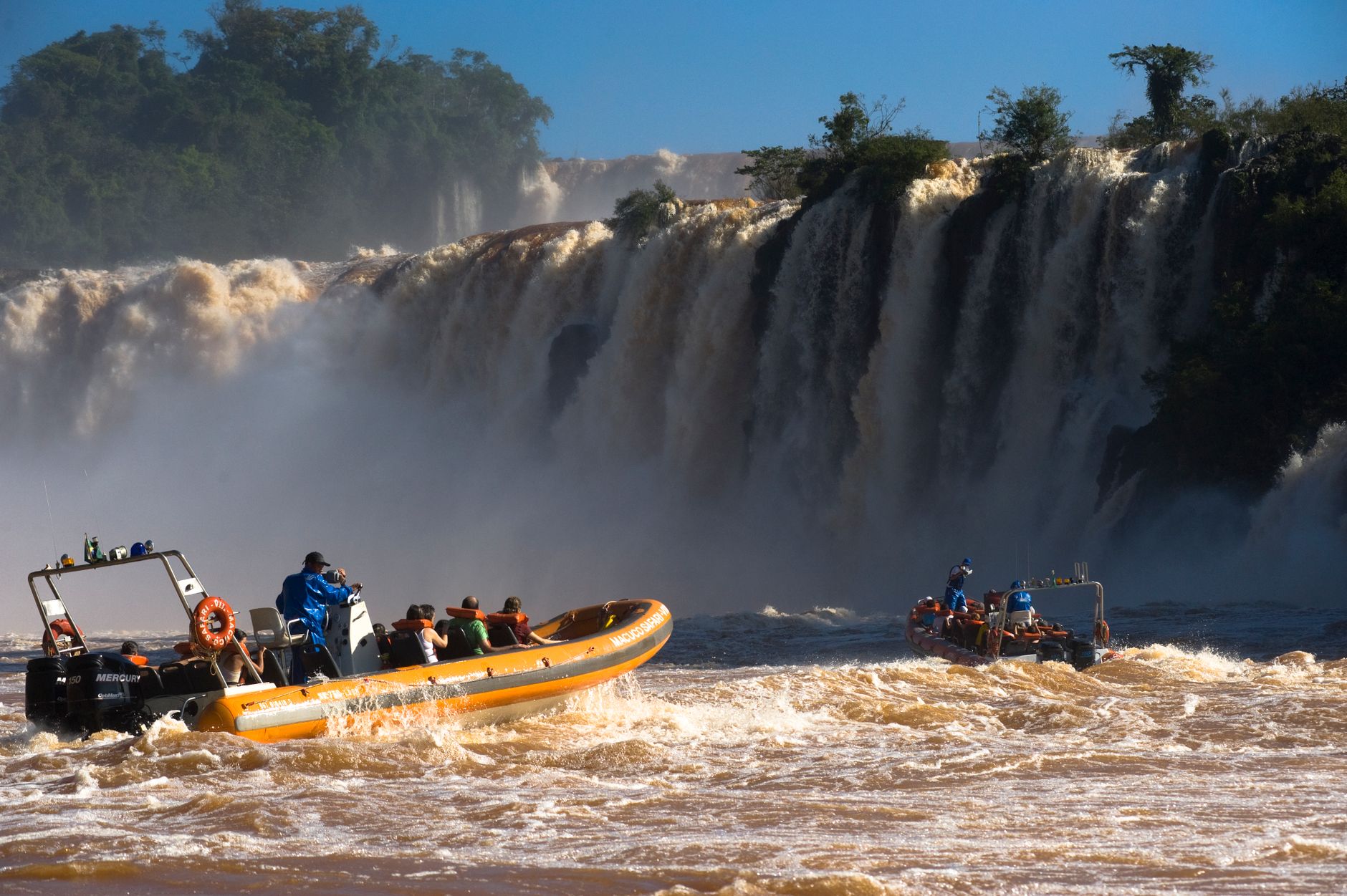
If the catwalk is not enough, and it rarely is, there is the boat. The Macuco Safari runs a couple of kilometres down through the forest and out onto the river below the falls, and the pilot has one question, put over his shoulder with the grin already on his face: how wet do you want to be. The answer barely matters, because he is going under a cataract regardless. The boat guns up the rapids, tipping the hull hard on the turns, and then drives straight into the base of a fall, and for a few seconds there is no gorge and no sky and no falls, only white and a great deal of shouting. Loose sunglasses do not survive it. It is the best thirty seconds on the Brazilian side.
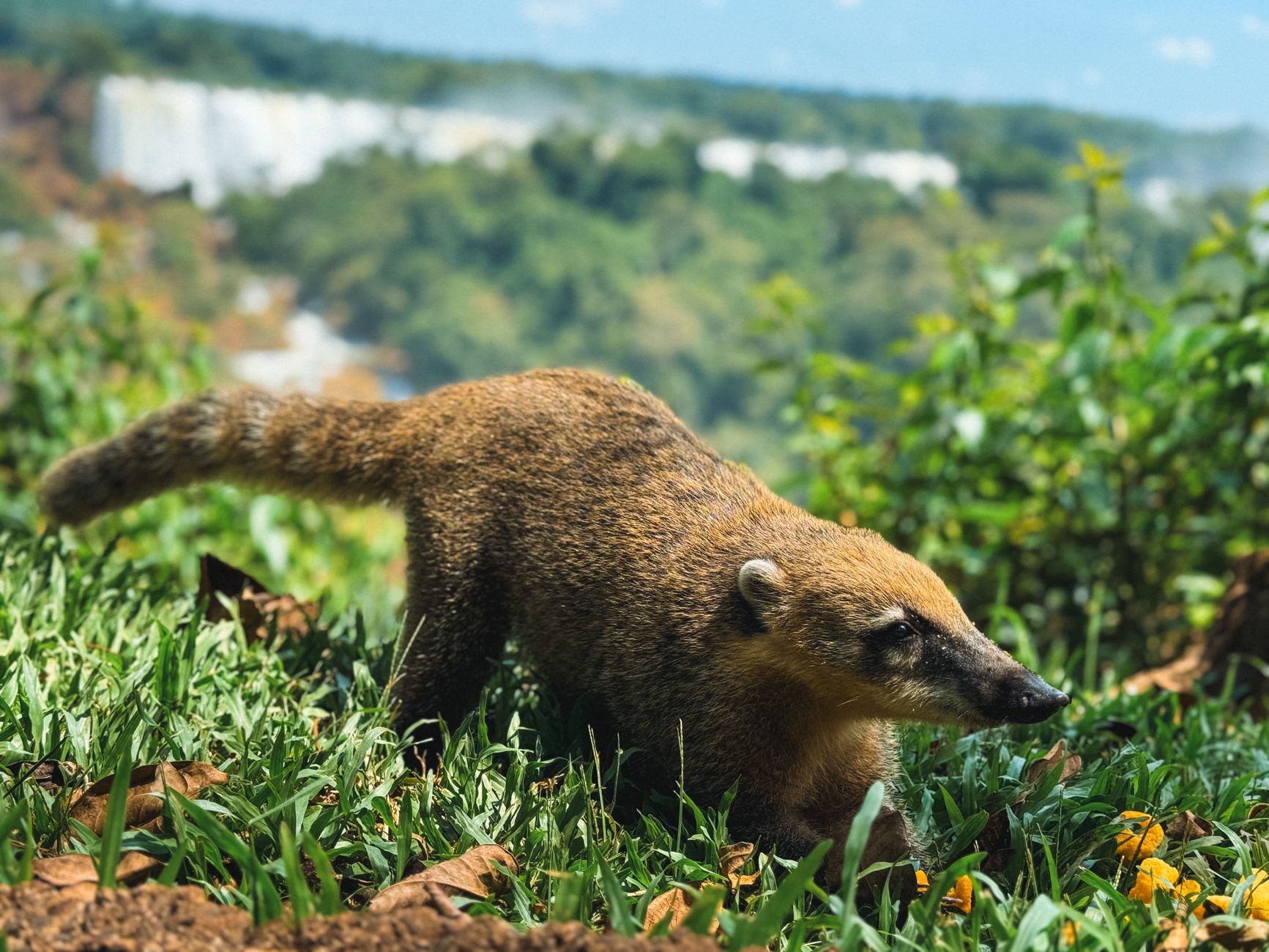
The forest around the falls is protected, and it is busy. Coatis, long-nosed and shameless, patrol the trails and the cafe tables for anything a visitor sets down, and the park has hung up signs with photographs of what their teeth do to a hand; the advice, if one takes your bag, is to let it have the bag. The better company is overhead. Great dusky swifts nest on the wet rock behind the curtains of water, and toward five o'clock they come home in their hundreds, flying straight through the falling river to reach the nests, small dark birds cutting in and out of the wall of water as though it were a door left open.
You can see the Brazilian side in a morning, but it repays a longer day. Be on the first shuttle out of the visitor centre, around eight, before the coaches: the catwalk is nearly empty then, and the low sun is behind you, standing rainbows in the spray. Come in April if you can, when the summer rains still have the river near full and the crowds have thinned. And if you want the thing almost no one gets, there is a single hotel inside the park, and its guests have the falls to themselves for the hour before the gates open and the hour after they shut, which is the only way to stand at the Devil's Throat and hear nothing but the water.
The rim is the place to end. By last light it empties, and the swifts make their homecoming through the falling water, hundreds of them dropping out of the sky and into the river, until the birds are no longer separable from the spray.