The man coming up the path carried more than his own weight. Two baskets of broken sulphur swung off a pole laid across one shoulder, the yellow of it catching in the headlamps, and he took the inside of the switchback at a steady trot while the walkers stood aside to let him through. It is somewhere after three in the morning on that trail, two thousand metres up, and he has already been down into the crater once that night.
Kawah Ijen is a volcano at the far eastern end of Java, and the walk to it starts at Paltuding, a ranger post you reach in the dark from the town of Banyuwangi. Some people arrive with no sleep behind them at all, straight off the night crossing from Bali on the ferry between Gilimanuk and Ketapang. The trail climbs about three kilometres of loose grit to a rim at 2,769 metres, and then it does the strange thing that pulls people here from the other side of the world. It drops off the inside of the mountain, three hundred metres down a staircase of boulders, into the crater itself.
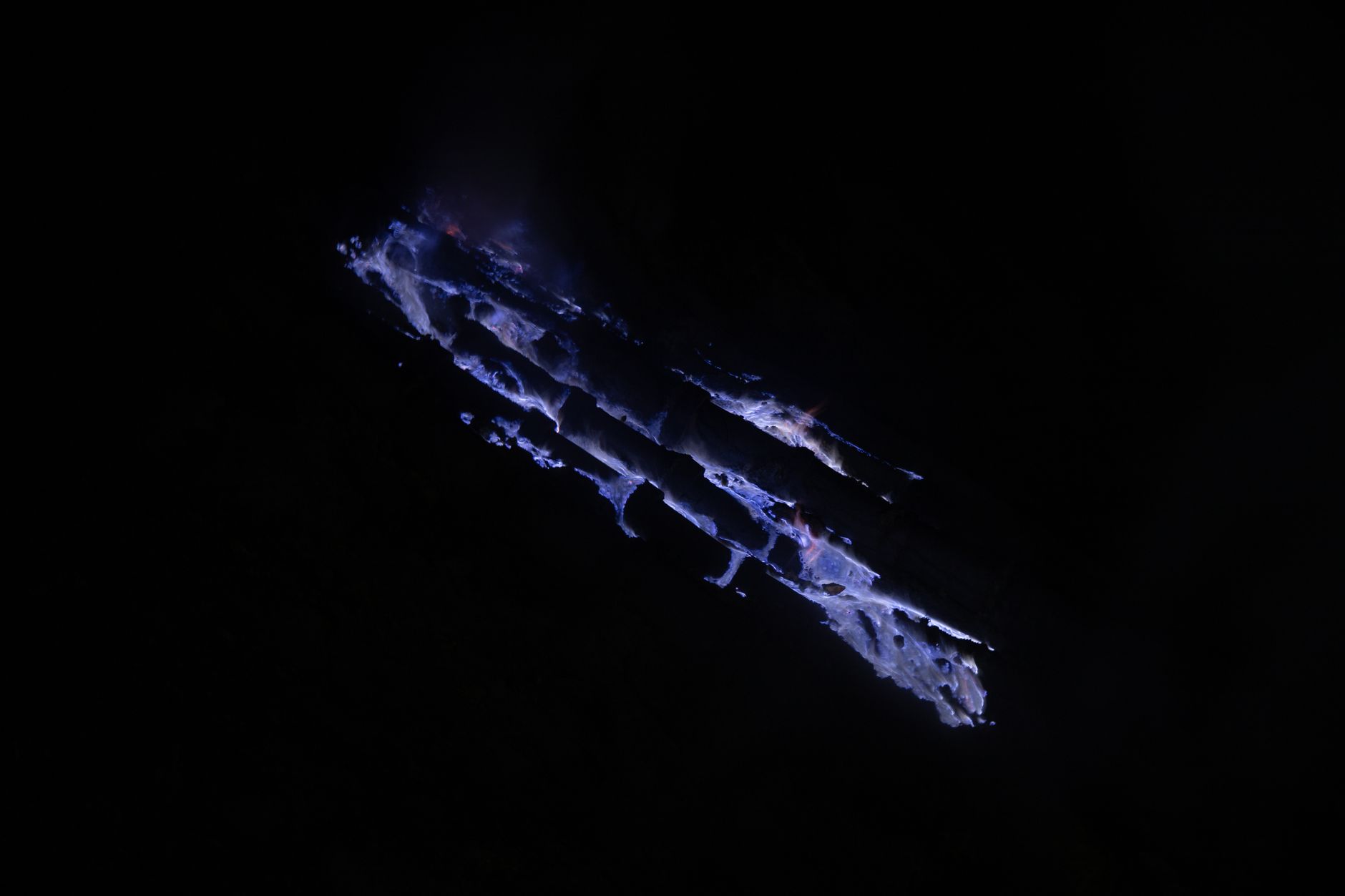
People come for the fire, and the fire is real, though it is not lava and there is nothing red about it. Sulphuric gas escapes the vents at the crater floor at around six hundred degrees, meets the air, and burns a hard electric blue, and where it cools it runs a short way downhill as blue flame before it goes out. It exists only in the dark. Photographs stretch it with long exposures into a river of light. In the flesh it is smaller, it comes and goes with the gas, and on some nights it barely shows at all. The queue along the crater wall to reach the vents can run the better part of an hour. It is worth the climb, but it is no river.
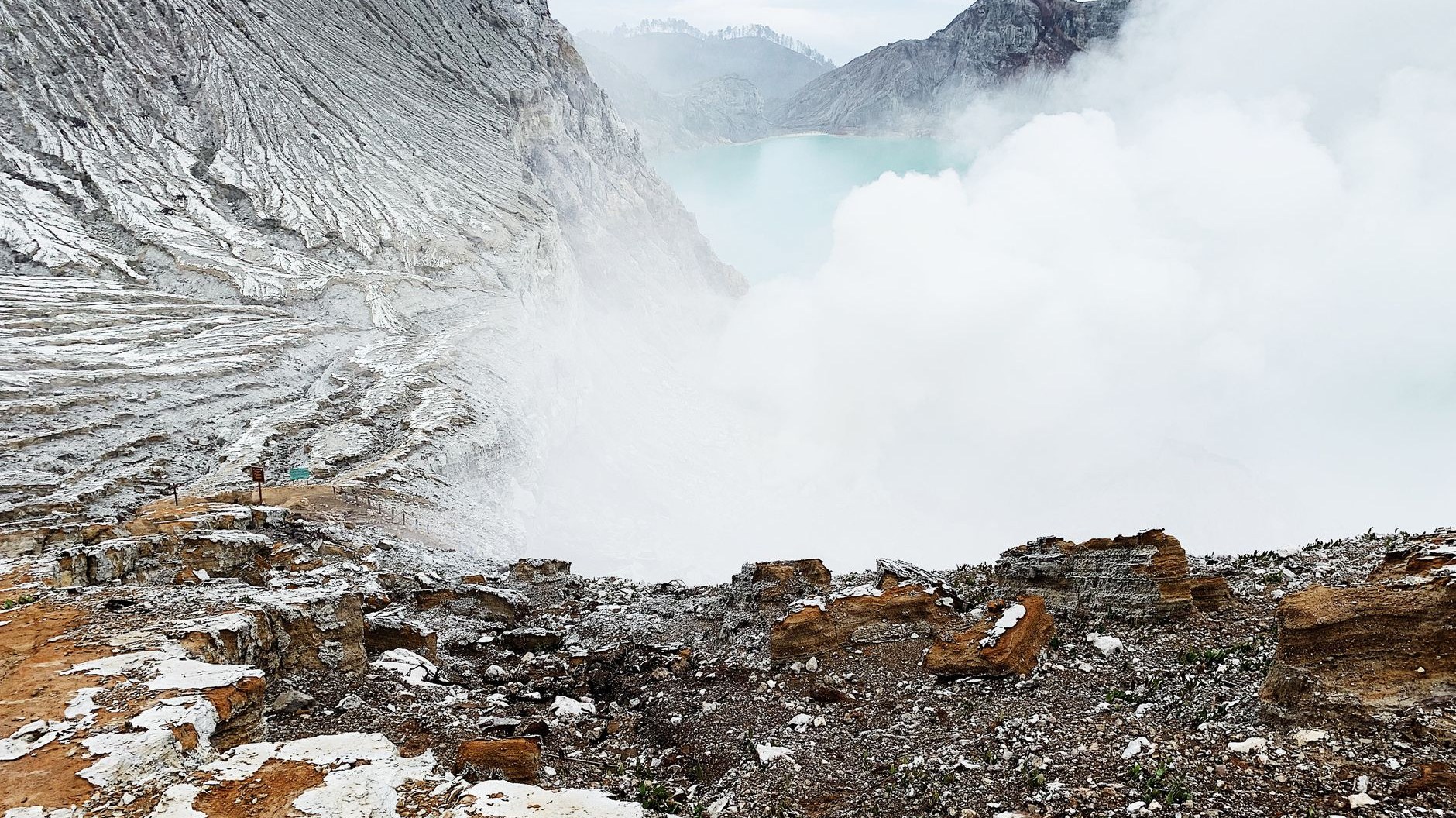
What there is instead of red is the gas. It rolls off the vents in white banks and swings on the wind, and when it comes over you the world shrinks to holding your breath and finding the edge of the cloud. Everyone wears a rented mask that looks its age, and even inside one your eyes stream and your throat closes. You learn to read the wind the way the miners do, moving when it lifts and turning your back when it drops. The smell of it stays in clothing for days, worked so deep into the seams that it outlasts the crossing home.
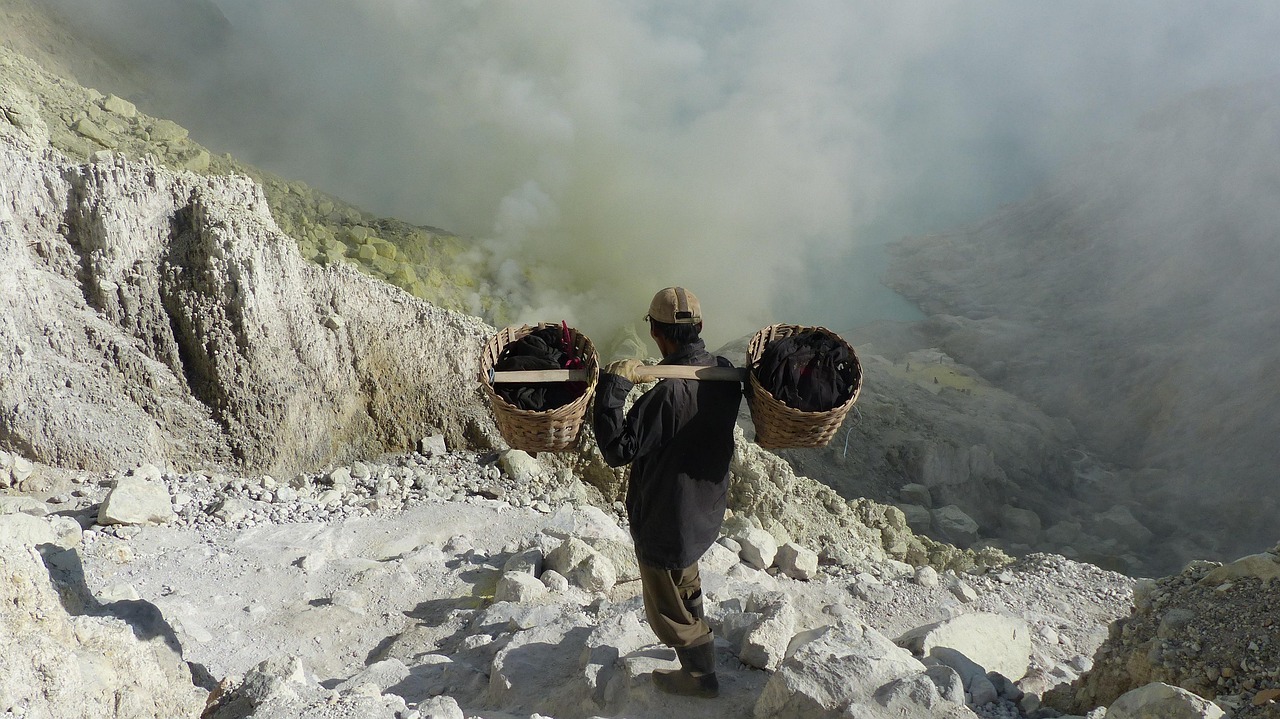
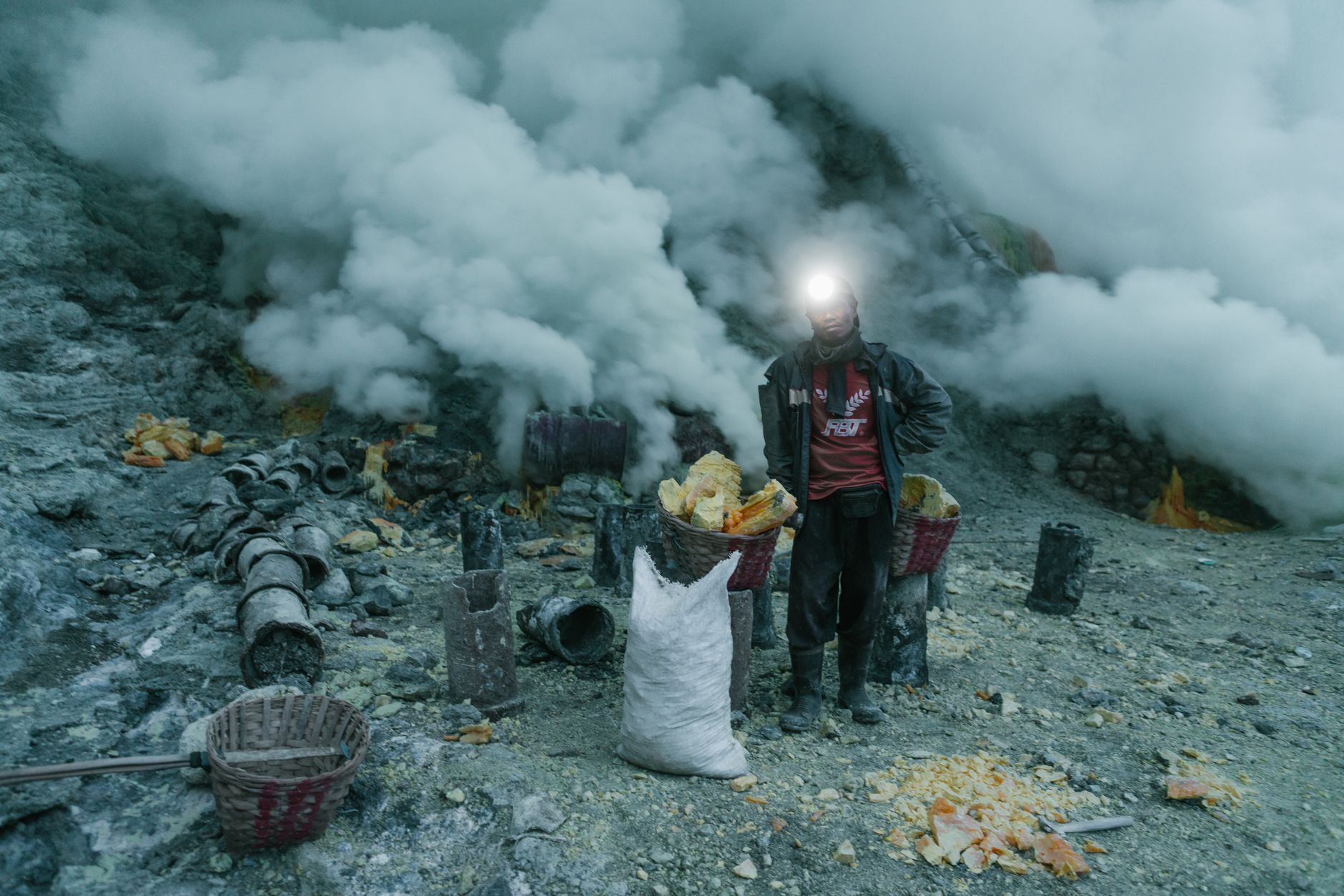
The men who work the crater breathe that gas for a living. A company runs pipes over a fumarole where the gas condenses and pours out molten and dark red, then cools to the bright yellow slabs that lie everywhere underfoot. The miners break it loose with iron bars, load their baskets, and carry it back up the same three hundred metres you climbed down, then out to a weighing station near the rim. A full load runs seventy to ninety kilos, often more than the man beneath it, and pays somewhere around five or six dollars. Most work in cut-down rubber boots with a scarf over the mouth and a clove cigarette going, one to three trips before the first tourists are up. On the way down some carry a lighter second cargo: small turtles and flowers cast from bright sulphur, sold for a few notes to anyone who stops.
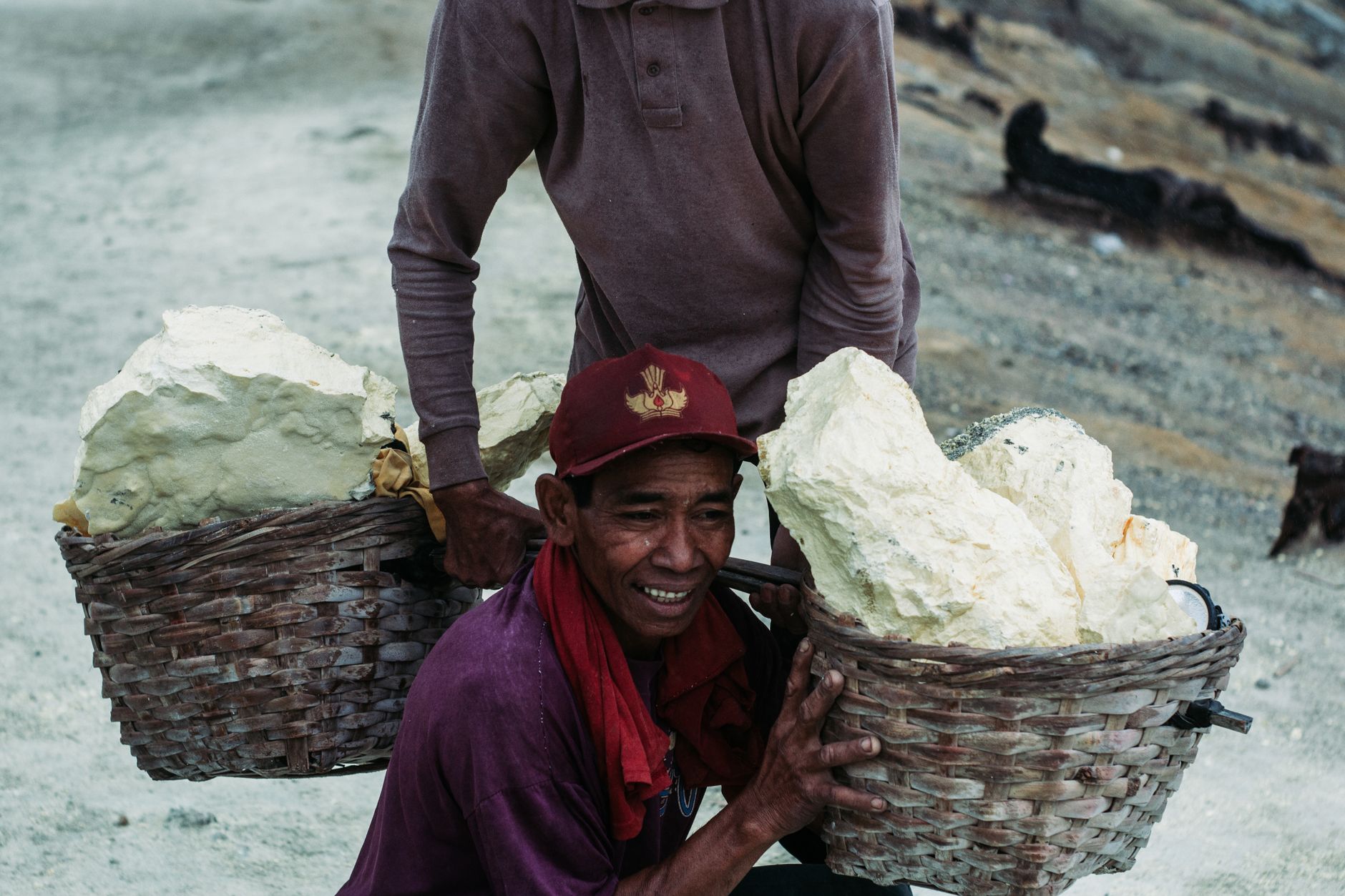
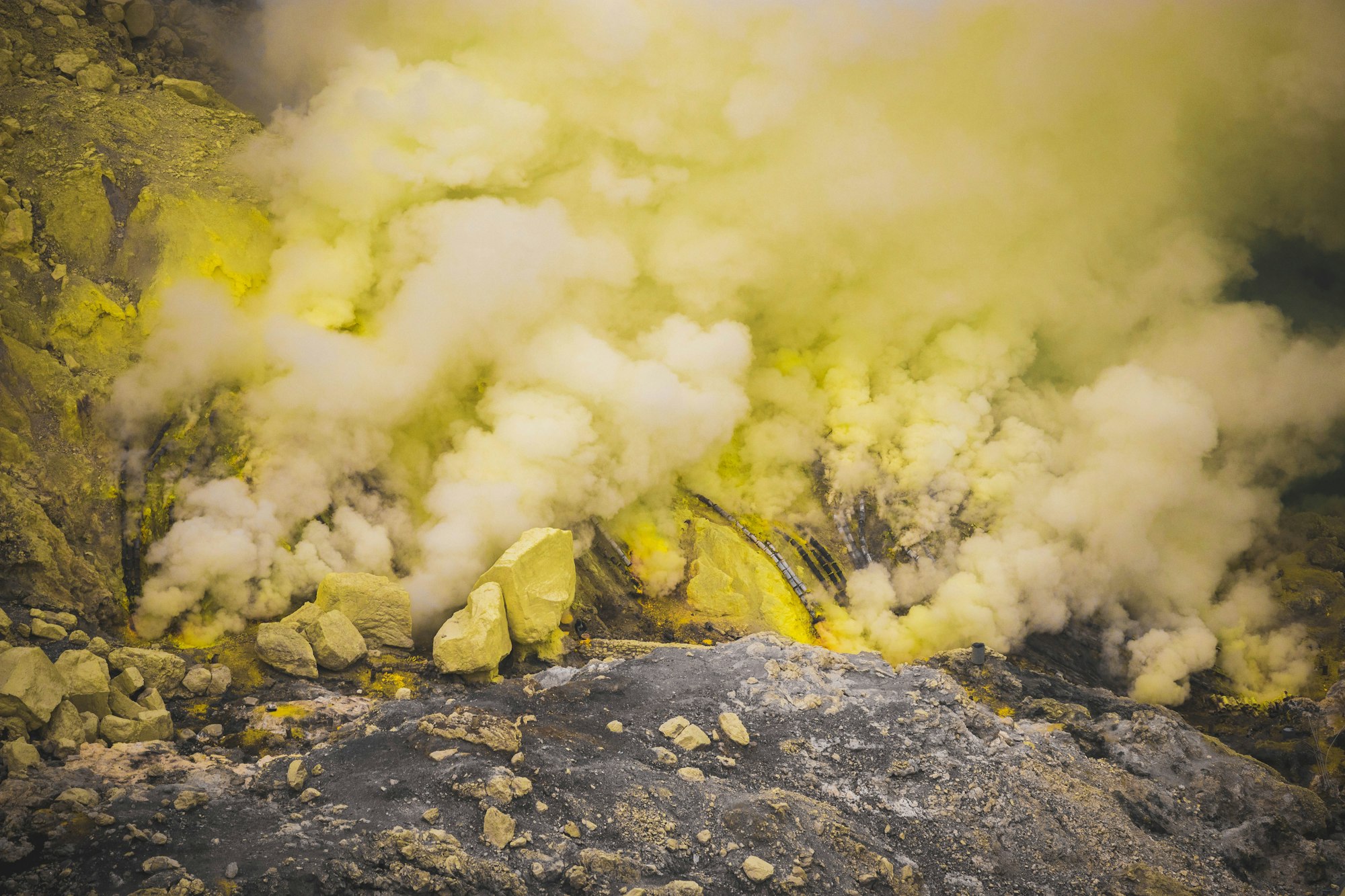
You climb all night for a fire that only burns in the dark, and pass men carrying more than their own weight for the price of your coffee.
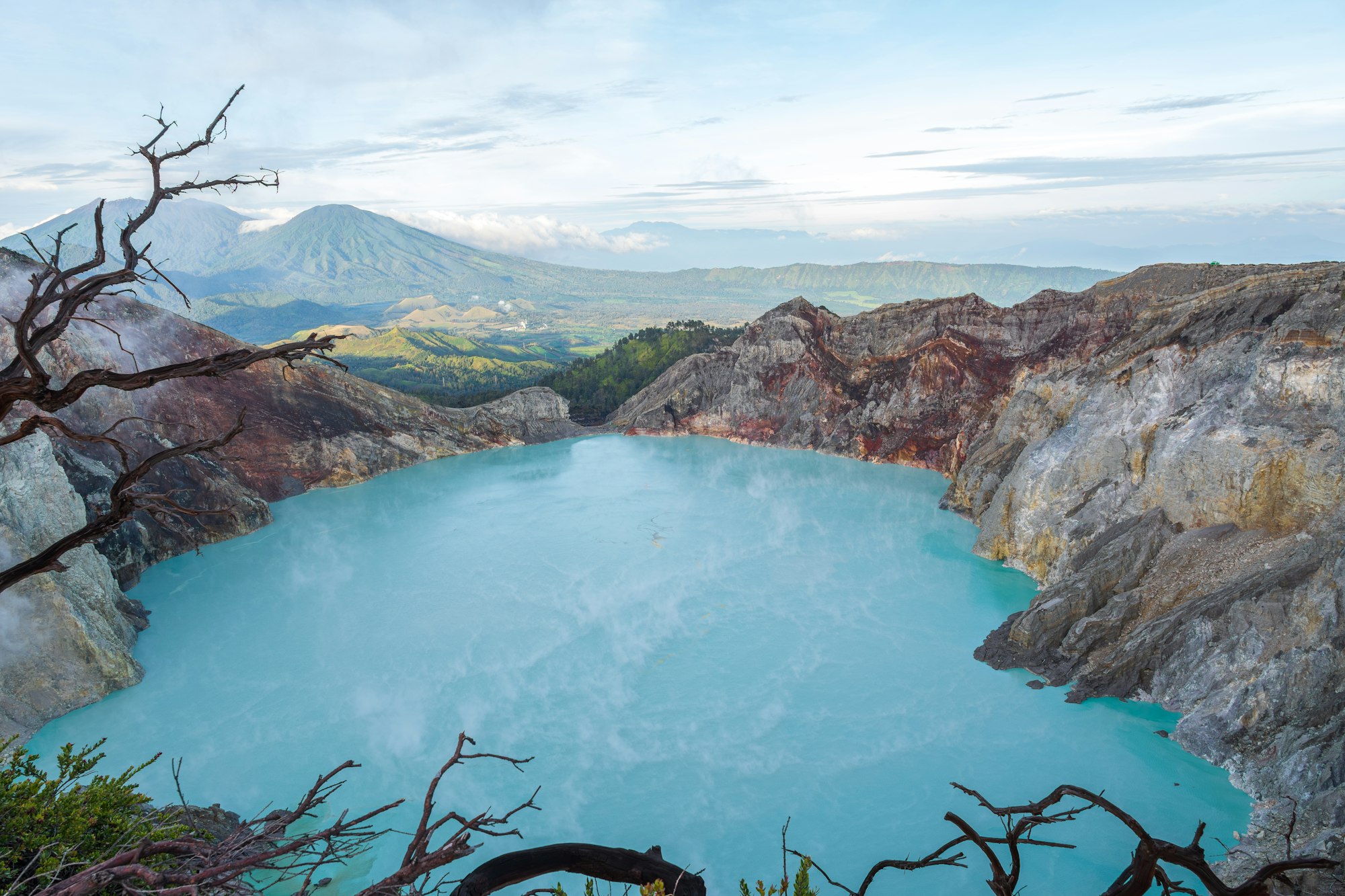
You do not linger down there. You see the fire, and then you climb back toward the rim to be out of the crater before the light comes, because the light is the other reason to have made the walk. As the sky greys the black pit begins to fill in, and what was a void becomes a lake, some seven hundred metres across, a flat pale turquoise held in walls of yellow and grey. It is the largest strongly acidic crater lake on earth, and the water at its edges is sour enough to eat through metal; people have died getting too near it for a photograph. From the rim the caldera opens out grey and enormous, the cone of Raung standing off to the west, and the low sun catches the steam and throws it back.
A word on the practical, because the mountain does not always cooperate. Ijen closes without much warning when the gas runs high or the pipes need repair; the blue-fire floor was shut for stretches earlier this year and reopened at the end of February, and it takes the first Friday of most months off. Go in the dry season, roughly April to October, book the permit ahead, and carry warm layers, because 2,769 metres is cold before dawn even on the equator. Take a guide for the descent. And keep something back for the walk out, because you climb that crater wall twice, and the second time the sun is up and the men with the baskets are still passing you, going the other way.