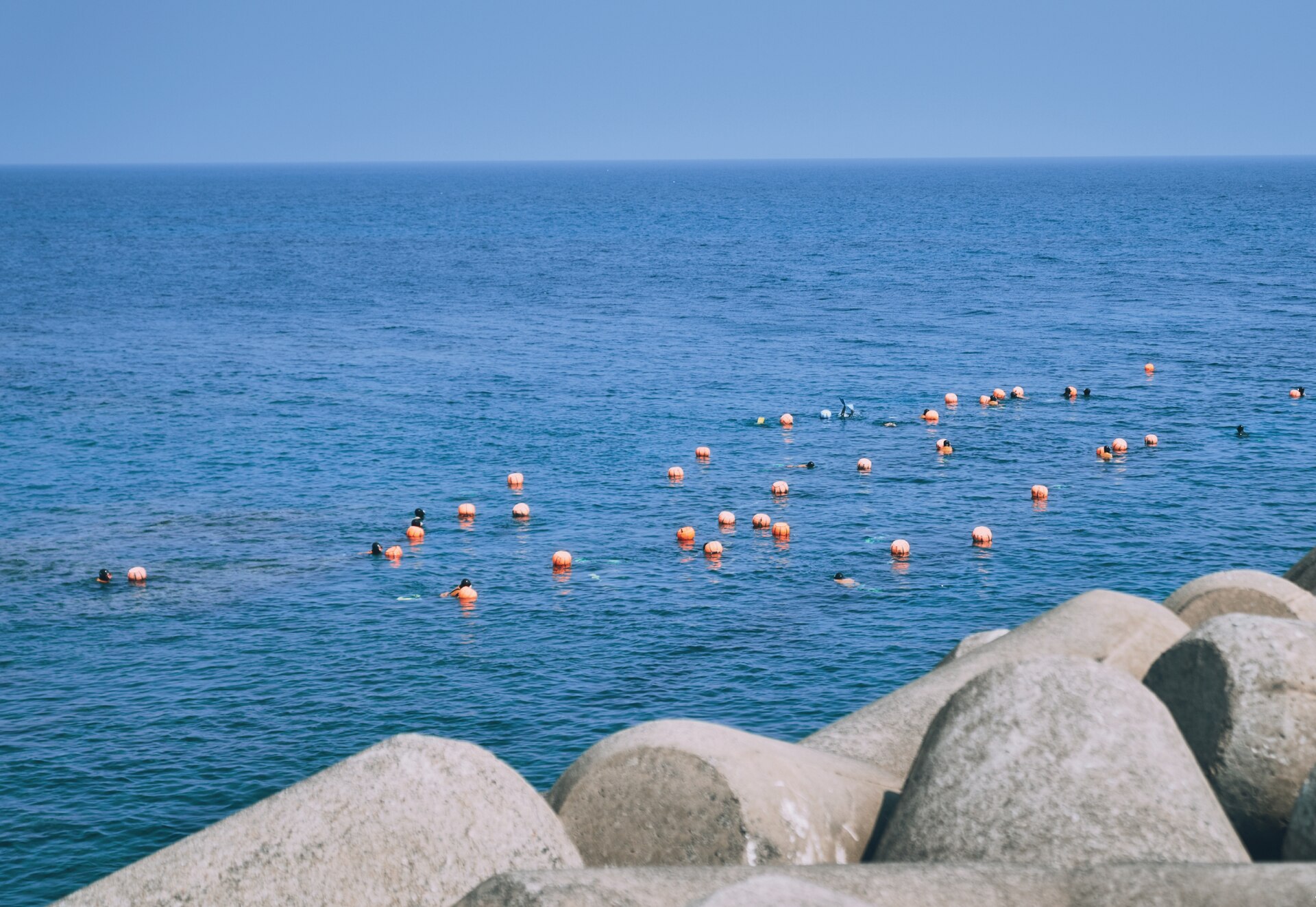
A haenyeo works on one breath at a time. She drops under ten metres, stays down between thirty seconds and a minute, cuts a conch or an abalone off the rock, and comes back up. Then she does it again, for four to five hours in the water, at least three days a week. On the surface she rests against a tewak, a hard orange float with a mangsari net bag slung beneath it for the catch, which is why counting divers from a beach means counting floats. Coming up she empties her lungs in a sharp rising whistle, the sumbisori, a breathing technique rather than a song. Divers are graded hagun, junggun and sanggun, lower, middle and upper, and the grade decides who works which ground, the sanggun taking the deep water and training everyone below. It is a workplace hierarchy with money attached.
Decades of that leave a record in the body, and it has now been measured twice. A study of 527 working divers, with fieldwork run between March and May 2021, sorted their decompression-sickness symptoms into classes and set the rest of the occupational load alongside: chronic headache in about 11.4 per cent, hearing impairment concentrated among the longest-serving, otitis media, gastric complaints, musculoskeletal pain. Over-the-counter headache and dizziness medication is habitual in the cohort. Then, in July 2026, Samsung Medical Center and the Haenyeo Health Research Center at Jeju National University Hospital compared 8,868 divers against 26,604 controls and published the result in Rhinology. Acute sinusitis ran 37 per cent higher, allergic rhinitis 30 per cent, pharyngeal disease 31 per cent. The sharpest finding was that rhinitis risk was 55 per cent higher among divers under fifty, which is to say among the ones with the most working years left.
The headcount tells the other half of it. Around 14,000 divers worked the island in 1970. By 2015 the roll was down to 4,005, and the provincial census of 31 December 2025 counted 2,371, of whom 2,350 were women. That is 252 fewer than the 2,623 recorded twelve months earlier, a fall of 9.6 per cent in a single year. Of those, 1,077 are aged seventy to seventy-nine and 423 are eighty or over, so 63 per cent of the workforce is past seventy, which is why researchers who work with them say plainly that this is the last generation. Published earnings figures differ by a factor of several and none come from the co-operatives or the province. What is exact is what the province pays out. A living-stability programme funded from lottery revenue, budgeted at about 8.7 billion won, covers the out-of-pocket cost of outpatient treatment for diving illness and pays certificated working divers a monthly allowance, 100,000 won at seventy to seventy-nine and 200,000 won at eighty and over. That is 1,500 divers drawing it, and the province paying the medical bills those two studies describe.
The mechanism holding the job together is the village fishing co-operative, the eochongye, which holds the rights to the inshore ground: a diver reaches the sea through membership and sells her conch, abalone and sea urchin through it. A good winter day and a day in late May can differ by a factor of four or five in kilos landed, and plenty of divers farm through the off-season. That same collective structure produced the largest women's protest movement of the colonial period: around 230 demonstrations from December 1931 into January 1932 against Japanese control of their association and of the price paid for their catch, converging on 12 January on the market at Sehwa, thousands of divers carrying hoes and abalone knives. Recognition arrived late. UNESCO listed the culture of Jeju haenyeo as intangible heritage in 2016, and in November 2023 the FAO designated the Jeju Haenyeo Fisheries System a Globally Important Agricultural Heritage System, the listing that names it as a fishery. Intake now runs through the Hansupul Haenyeo School at Hallim, opened in 2007, and through the co-operatives and the museum, no longer down the family line.
Visitors meet the work in two separate settings, and the difference matters before booking. The scheduled one sits below Seongsan Ilchulbong, at the Umutgae cove on the seaward side, where a real crew dives to a timetable and runs the seafood stall beside it. Start times circulate in trip reports, but the official listing publishes none and says the schedule moves with the season and the sea, so ask at the gate and expect nothing. The other setting is the east-coast villages, Hado-ri, Jongdal and Sehwa of the 1932 march, where some of the most active remaining crews still work. They go by the tide, not the clock: broadly 09:30 to 11:30 through the March to October season, with no schedule to consult. The signs from the road are the bulteok, the low round basalt windbreaks where divers change and warm up, gear drying beside parked scooters, and orange floats offshore. Do not block a slipway a diver is climbing, and do not photograph faces at close range. The reference stop, in either case, is the Haenyeo Museum at Hado-ri in Gujwa-eup, admission around 1,100 won.
The divers at the Seongsan cove are a working crew doing a scheduled demonstration. When the sea or the catch says otherwise, they sing instead of diving.
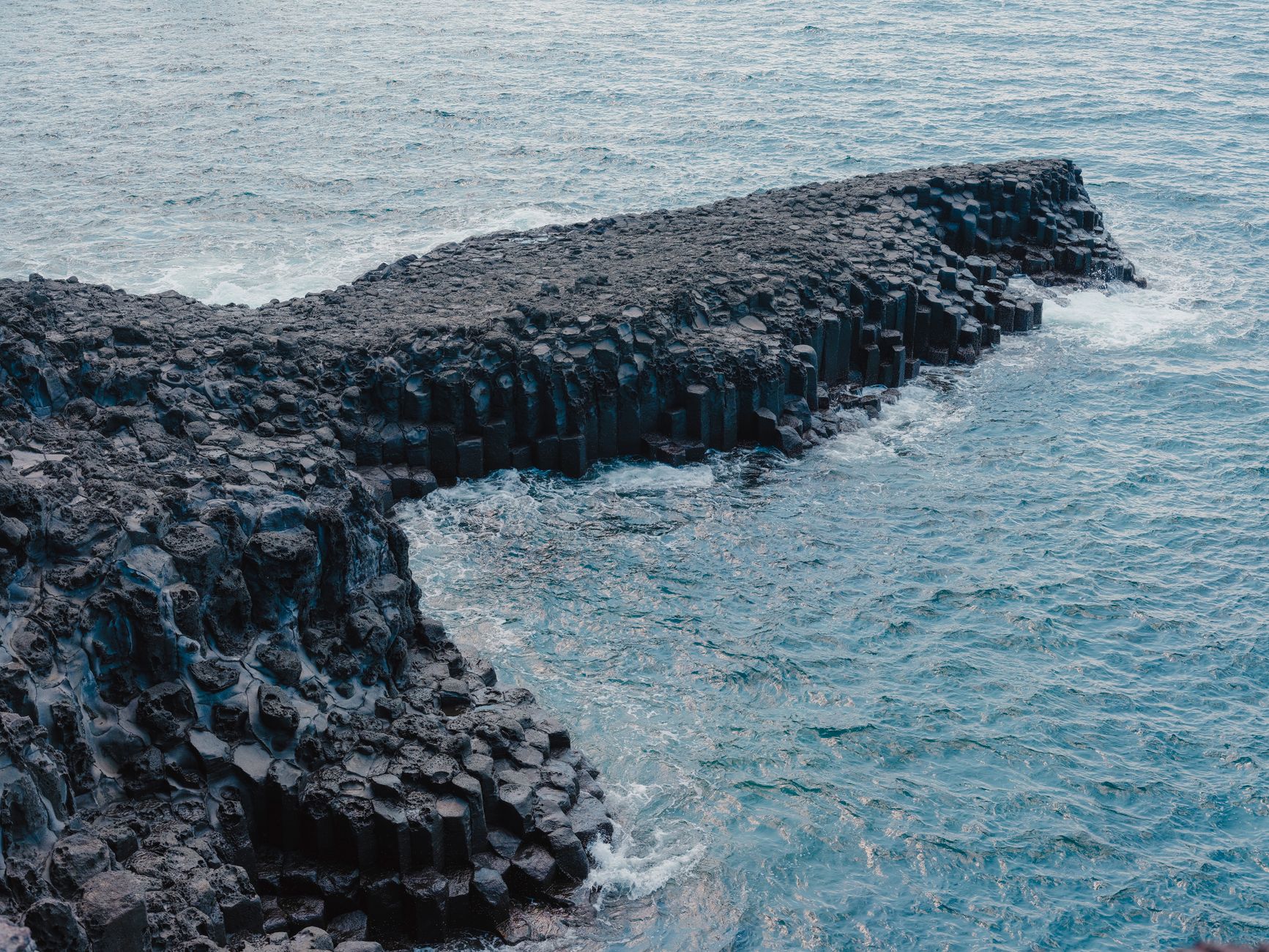
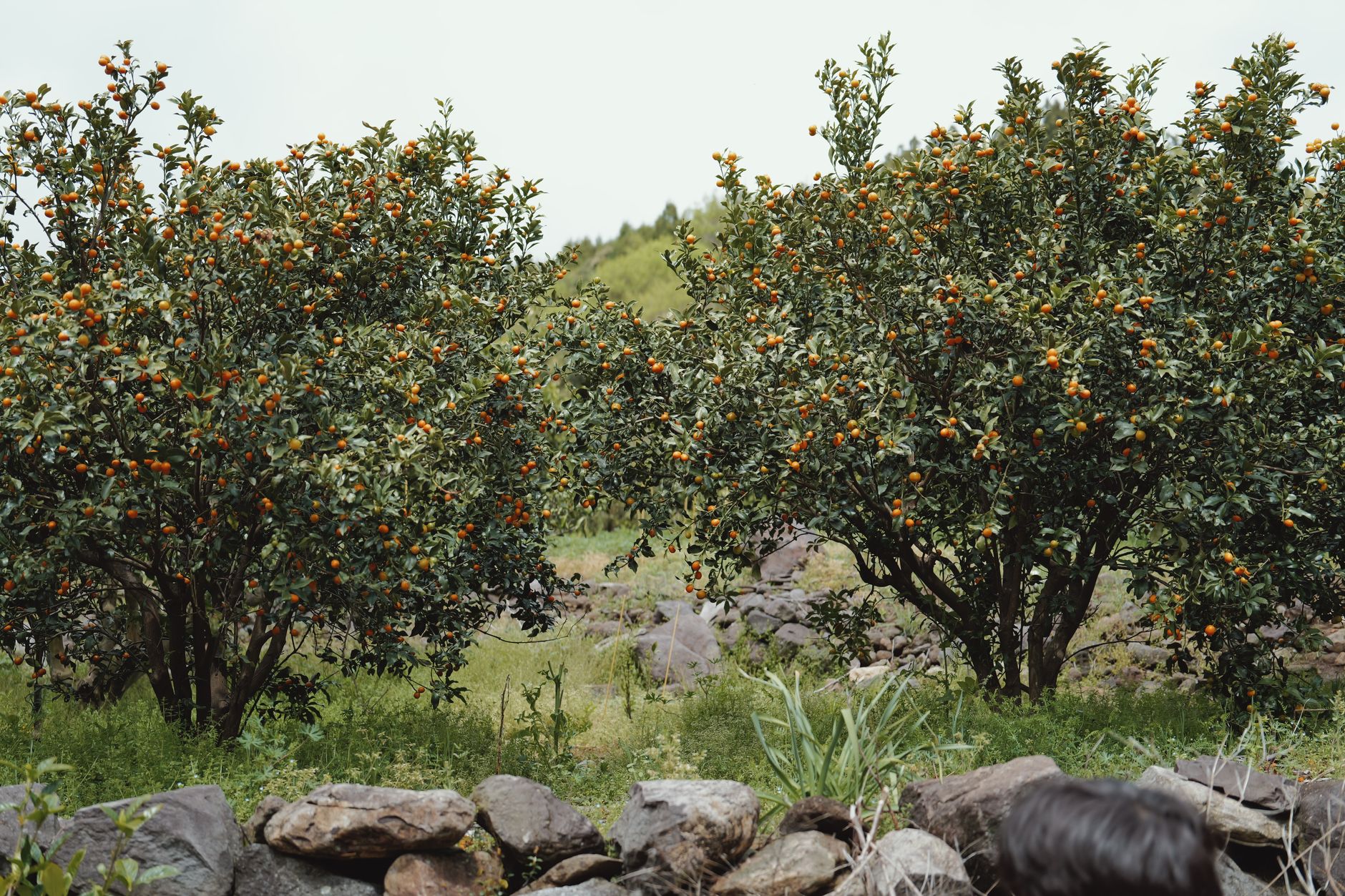
Everything else on the island follows from the rock. Jeju is a shield volcano lying about 130 km off the southern tip of the peninsula, built of basalt from the tideline up to the 1,947 m summit of Hallasan, the tallest mountain in South Korea, with something like 360 oreum, parasitic cones, scattered across its flanks, though counts run as high as 450 depending on what qualifies. Basalt drains. Rain sinks into porous rock and will not stand in a paddy field, which ruled out the crop that fed the rest of Korea and left tangerines, barley and rape. Clearing a field produced stone, and the stone went into the dry-laid black walls that still divide almost every plot. Protein had to come out of the sea. UNESCO inscribed Jeju Volcanic Island and Lava Tubes in 2007, the country's first and still only natural World Heritage site, in three components: the Hallasan Natural Reserve, the Geomunoreum lava tube system and the Seongsan Ilchulbong tuff cone.
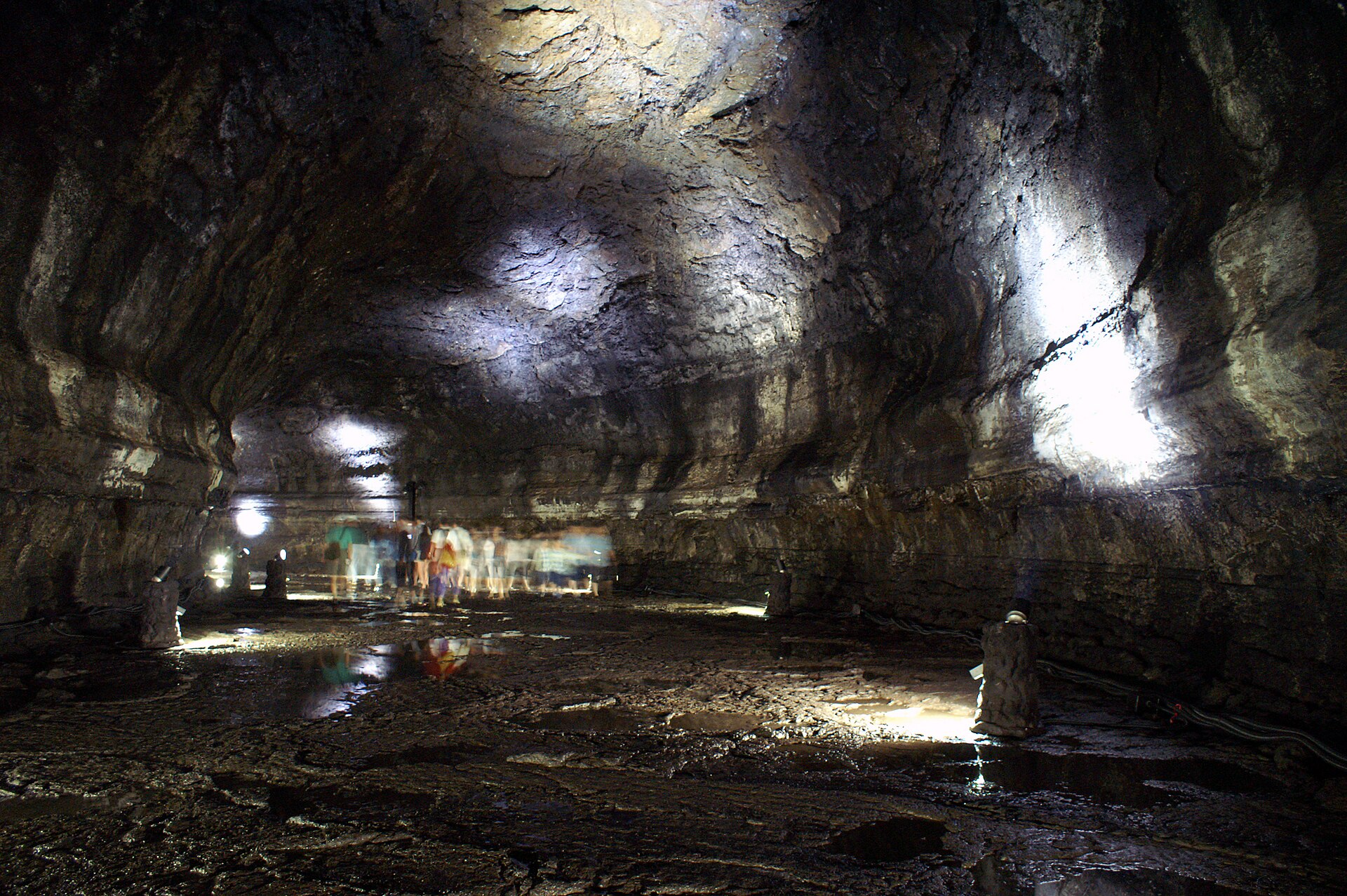
The lava that built the island also drained out of it, leaving the Geomunoreum tube system, of which only Manjanggul is open to the public. Read anything written between 2024 and mid-2026 and it will say the cave is shut. It was, after a rockfall in late 2023, and the reopening date slipped twice before it finally reopened on 30 May 2026. Published figures for the tube's full length disagree, and only a kilometre is open in any case, walked out and back, about an hour. At the turnaround stands a lava column of about 7.6 m, described as the largest known anywhere. The interior sits at 10 to 12°C all year, which in August is a drop of twenty degrees from the car park, and the stone stairs at the entrance are steep and permanently wet, so bring a long-sleeved layer and shoes with grip. Adult admission is 4,000 won and parking is free. The 2026 refit installed lower-intensity LED lighting to hold back the algae the old lamps encouraged.
Hallasan has four main trails and only two of them reach the crater rim. Seongpanak climbs from the east, about 19.2 km there and back, long and gradual. Gwaneumsa climbs from the north, roughly 8.7 km one way, steeper, harder and the one with the views, though a notice dated 19 June 2026 placed its summit section under access control, so check that before building a day around it. Yeongsil and Eorimok stop at the Witse Oreum plateau around 1,700 m. A blanket booking ran from January 2021 until 3 May 2025, when the province narrowed it to the summit sections alone, Jindallaebat to Baengnokdam on Seongpanak and Samgakbong to Baengnokdam on Gwaneumsa. Lower sections and plateau trails need none. Reserve free at visithalla.jeju.go.kr, which has an English version, or on 064-713-9953, and note that no-shows are penalised, three months for a first offence and a year for a second. The places are rationed, currently 1,000 a day on Seongpanak and 500 on Gwaneumsa, released a month at a time, and summer and autumn dates go quickly once the window opens. Rangers turn hikers back at the gate whatever the distance already climbed, and the start windows and cut-offs they enforce are seasonal, shifting by roughly two hours between summer and winter, so take the current table from visithalla and plan the day backwards.
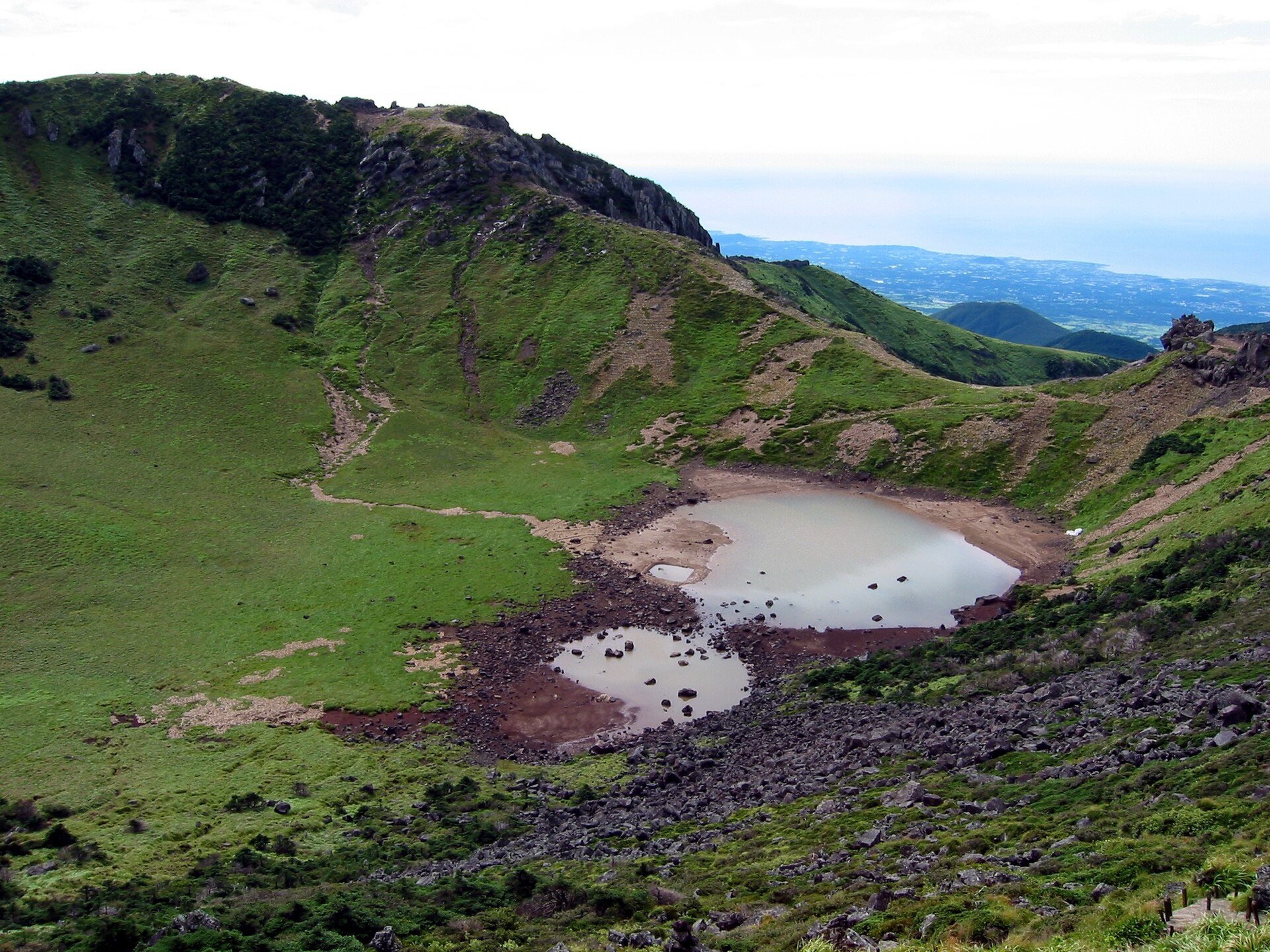
Budget eight to ten hours for the round trip either way. One fit pair took nine hours forty-five up Gwaneumsa and down Seongpanak, two hours forty-five of that on the final descent, the leg nobody allows for and a knee problem more than a lung problem. There is no water and no food above the shelters beyond limited snacks at Jindallaebat, everything carried up comes down again, wrappers included, and 1.5 to 2 litres each is the minimum. Snow lies from November to March, when the windows shorten at both ends, and the summit closes outright for heavy rain, high wind or snow whatever a booking says. What waits at the top is Baengnokdam, a crater about 550 m across that is called a lake and often is not one, drawn down in a dry spell to a couple of shallow brown pools on a green floor, the north coast and its oreum far below.
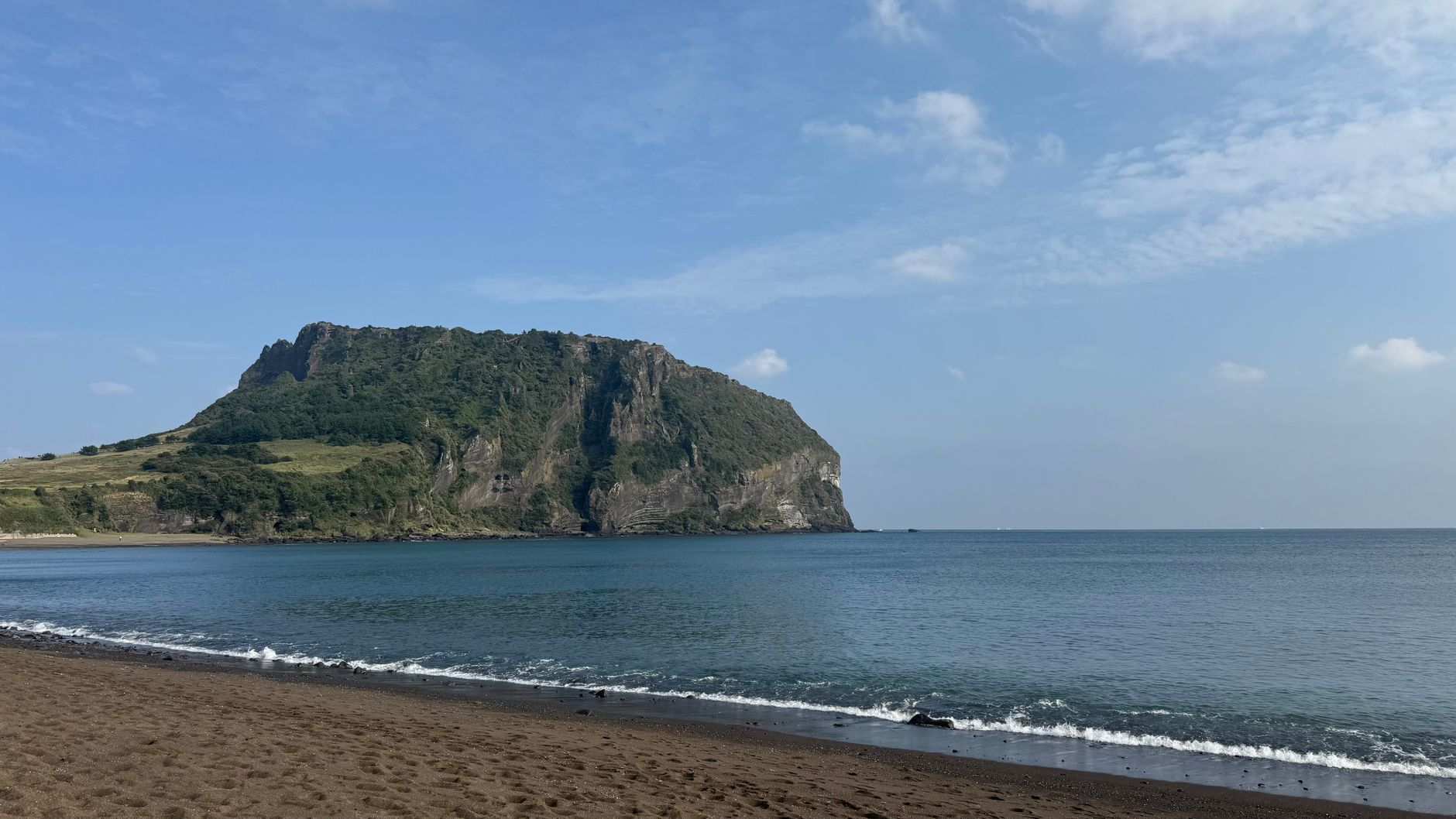
Seongsan Ilchulbong, the third listed component, is the one that fits inside an hour. The tuff cone stands about 182 m, thrown up by a shallow-marine eruption, once an island and now tied to Jeju by a sand isthmus, its bowl ringed by a crown of rock peaks. The climb is stairs from bottom to top, twenty minutes if pushed and forty at a normal pace, with separate up and down routes. Adult admission is 5,000 won, youth and child 2,500. Ilchulbong means sunrise peak, and sunrise is when the staircase is at its worst. Late afternoon is the calm slot. The gate time for a sunrise morning moves with the season, so confirm it on +82-64-783-0959 the day before.
Jeju International is the island's only airport, and Seoul Gimpo to Jeju was the busiest air route in the world across 2025 on 14.4 million seats, second in OAG's July 2026 table, 243 nautical miles in about seventy minutes. International arrivals now have a second way in. Jeju Air restored a direct Incheon to Jeju service on 12 May 2026, a decade after the route was dropped for losses, twice weekly on a trial extended in June to run to 24 October 2026. Sparing them the cross-Seoul transfer was the stated reason for it, but it is low frequency and not yet permanent, so confirm rather than assume. Everyone else goes through Gimpo. Headline fares understate the cost either way, because the domestic fuel surcharge resets monthly against the ticket-issue date: it jumped more than fourfold in May 2026 to a record 34,100 won each way, so price the current band. A rental car is the practical default. The island is 73 km east to west and 31 north to south, its sights strung around the coast with an empty interior between them, and foreign drivers need an International Driving Permit. Google Maps does not give driving directions in South Korea, so use Naver Map or Kakao Map and enter destinations by telephone number, which is what Korean navigation expects. The buses are the unusual part, because they genuinely work: trunk routes down each coast, an airport limousine to Seogwipo and Jungmun, all on a T-money card. The cost is time, since a coast-to-coast leg that drives in an hour takes well over two by bus. Coastal seafood stalls and market vendors prefer cash, and a stall is where to eat mulhoe, the cold raw-fish soup that is the divers' own summer food. Canola flowers late March into April, hydrangeas in June, and typhoons arrive in August and September.
All four have moved within the last two years. The direct Incheon to Jeju flight returned on 12 May 2026 after a decade, but it is a twice-weekly trial approved only to 24 October 2026, so check it before assuming you can skip Gimpo. Manjanggul reopened on 30 May 2026, so confirm it is open for your dates rather than trusting older guidance. Hallasan's summit reservations, start windows and cut-offs changed on 3 May 2025 and most write-ups predate that, so take the current table from visithalla.jeju.go.kr and check whether the Gwaneumsa summit section is still under June 2026's access control. The haenyeo demonstration at Seongsan has no published schedule and is cancelled in poor sea conditions.