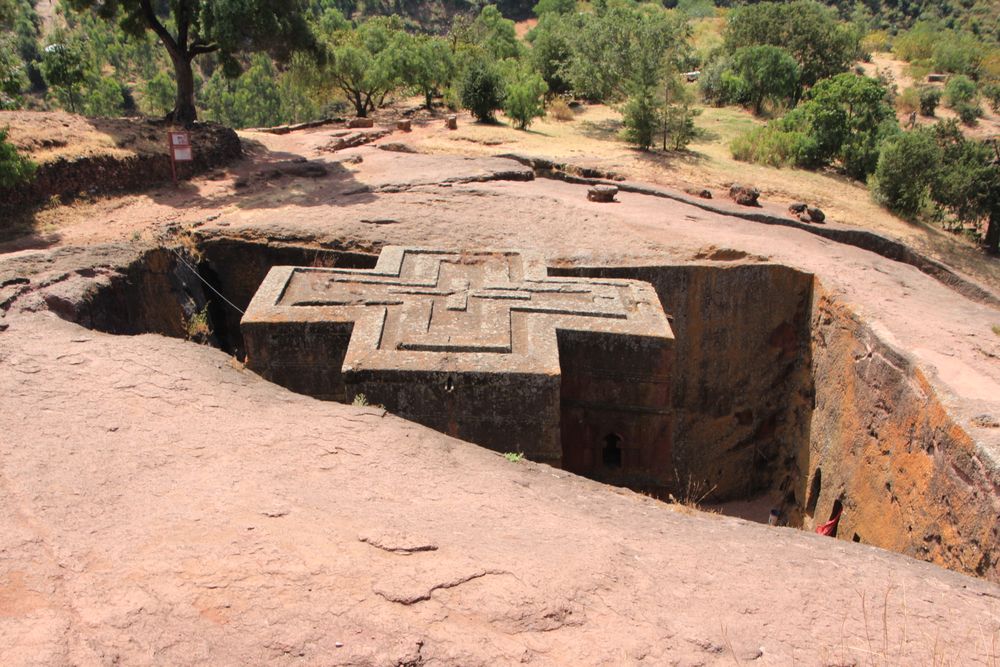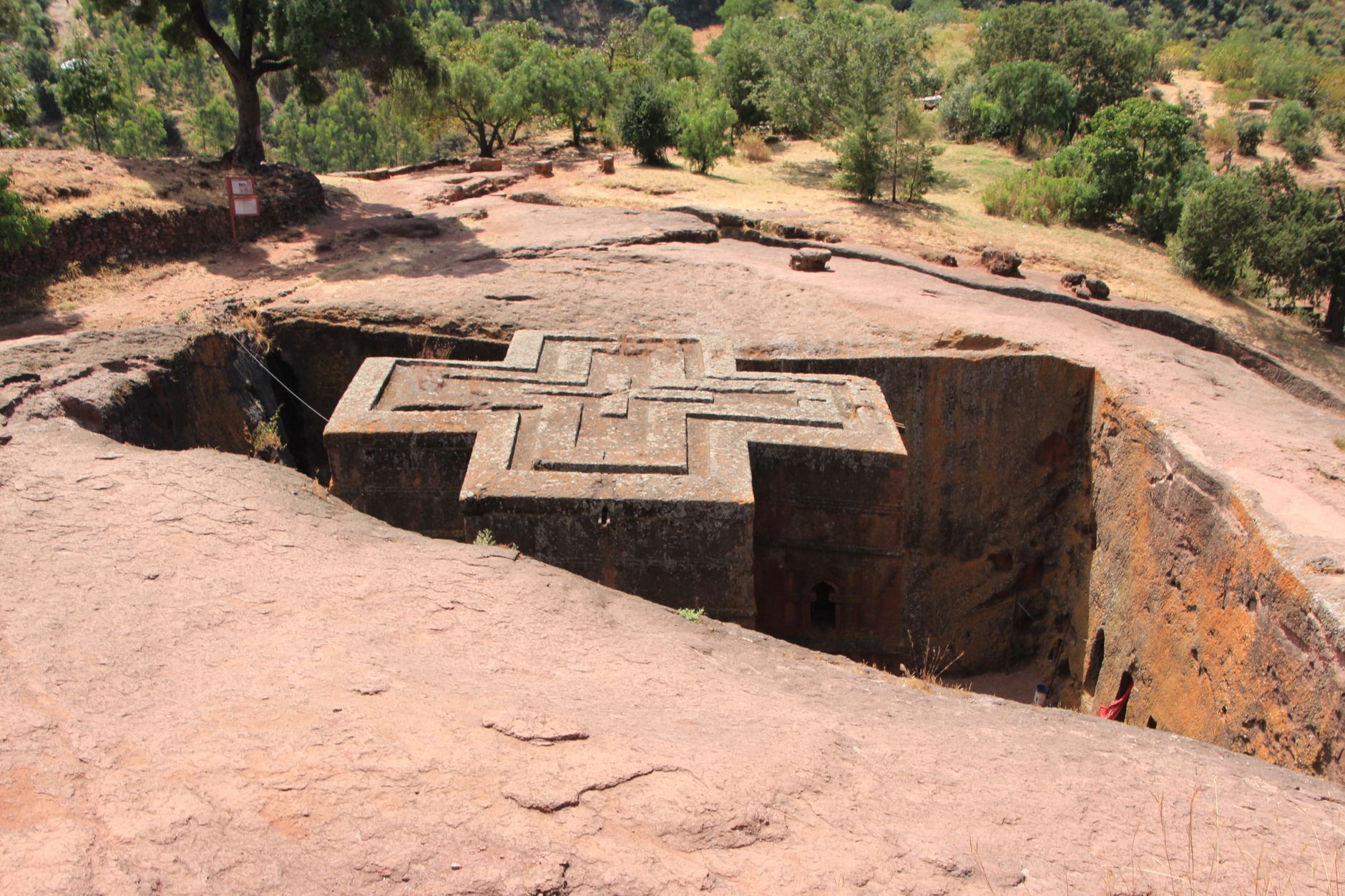
In the Ethiopian highlands, in a town once called Roha, eleven churches were carved not up from the ground but down into it. Around the year 1200, masons working under King Lalibela cut into the soft red volcanic rock and quarried away everything that was not a church, leaving whole buildings standing free in deep pits, their roofs at ground level and their doorways three storeys below. The most famous, Bete Giyorgis, is a cross forty feet tall in its own square well, reached by a trench that curls down through the stone. Eight hundred years on they are not ruins and not a museum. Priests still hold the offices inside them, and pilgrims in white shawls still fill the trenches.
It is one of the most extraordinary places on earth, and as this is written it is one you should not travel to. Lalibela sits in Ethiopia's Amhara region, which the United States rates Level 4, do not travel, and which the United Kingdom advises against all travel to, on account of the armed conflict that has run through the region since the northern war of 2020 to 2022. Lalibela itself changed hands during that fighting. So treat what follows as a portrait of a place worth knowing and a plan for a someday, not an itinerary for next month. Anyone weighing a trip should check the live government advisories first, and believe them.
As of this writing the US State Department rates the Amhara region Level 4, "Do Not Travel", and the UK Foreign Office advises against all travel there. Advisories change; check the live US and UK guidance, and your insurance, before booking anything.
The idea behind the churches is as striking as the stone. When the spread of Islam cut Ethiopian Christians off from Jerusalem, King Lalibela set out to build a new one at home. The site has its own River Jordan, a channel dividing the two clusters of churches, and its own ground named for Calvary and Bethlehem. The churches are linked by a warren of tunnels and trenches, one of them a long unlit passage walked in darkness to stand for the road through hell. It was a pilgrimage made for people who could no longer make the older one, and it has been a pilgrimage ever since.
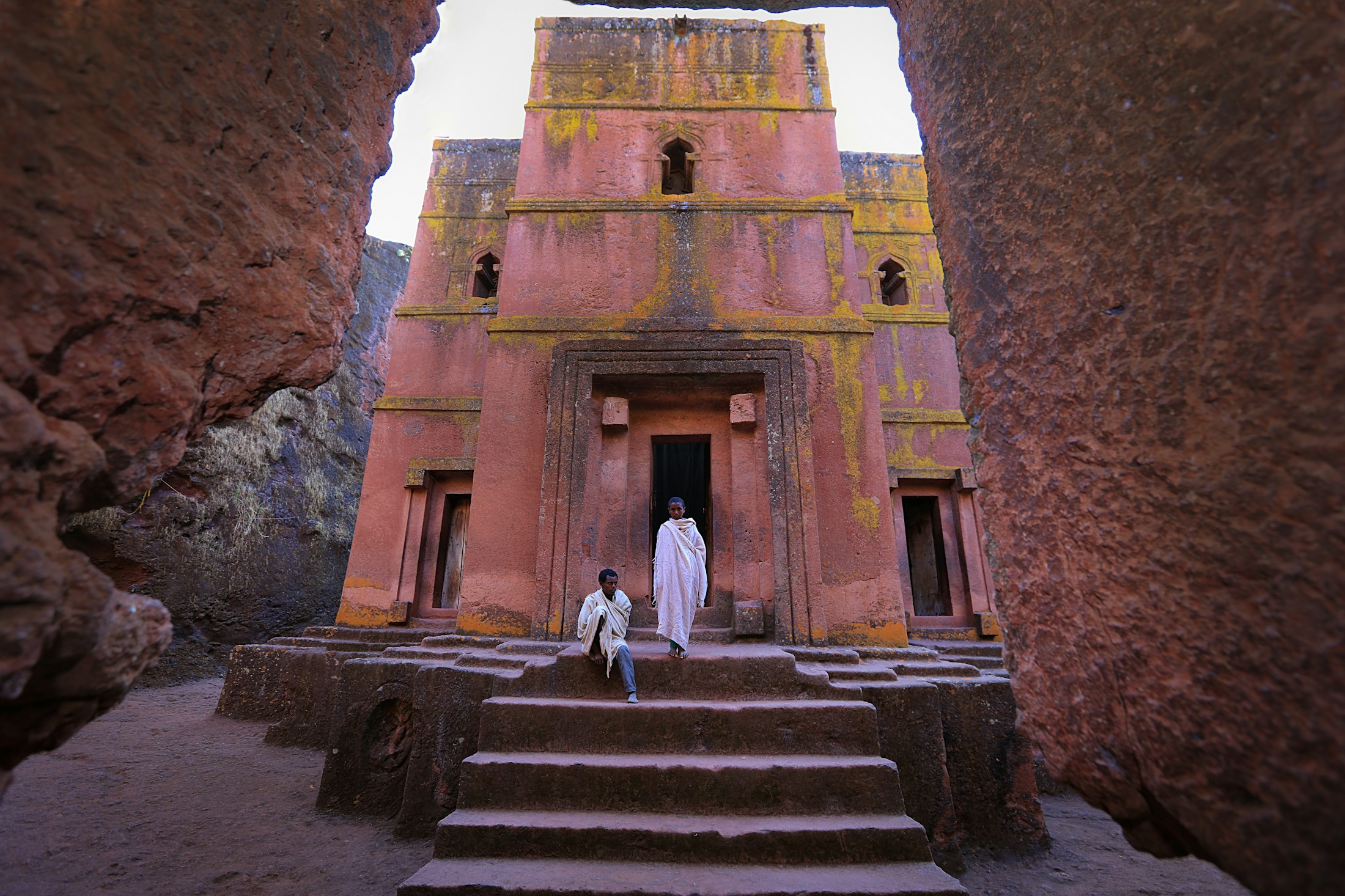
The eleven divide into a northern group and a southern group, with Bete Giyorgis standing apart in its own pit. Bete Medhane Alem, in the north, is reckoned the largest rock-hewn church in the world, a hall of columns the size of a small cathedral cut from a single piece of ground. Bete Maryam beside it is the most worn and atmospheric, its walls carved with reliefs and smoothed by centuries of hands. Bete Amanuel, across in the south, is the finest cut of all. One ticket covers them for several days, which is about right: the churches can be walked in a day, but the point is to slow down.
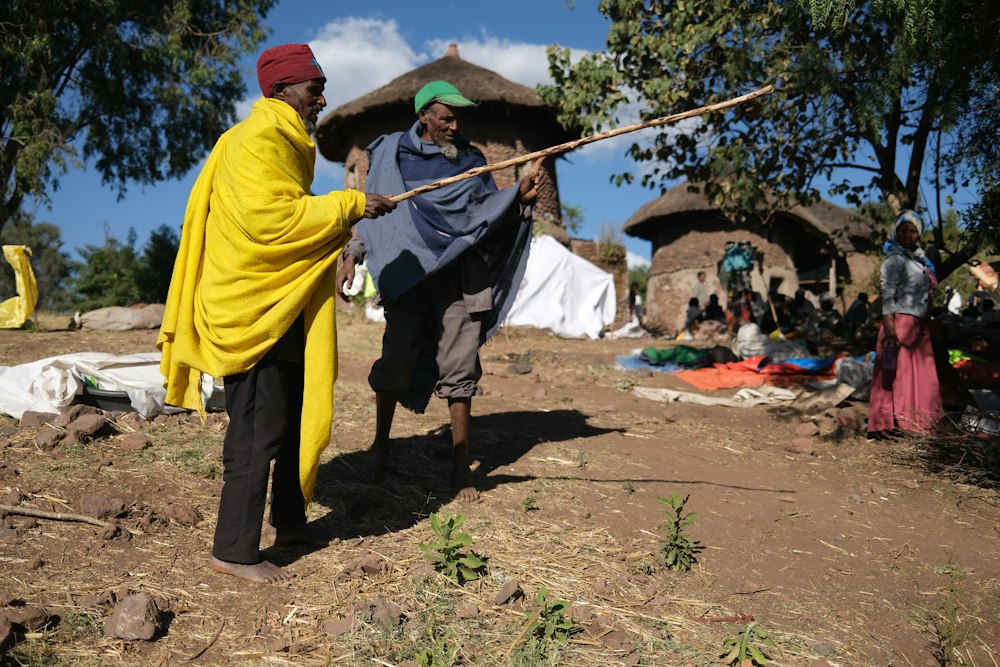
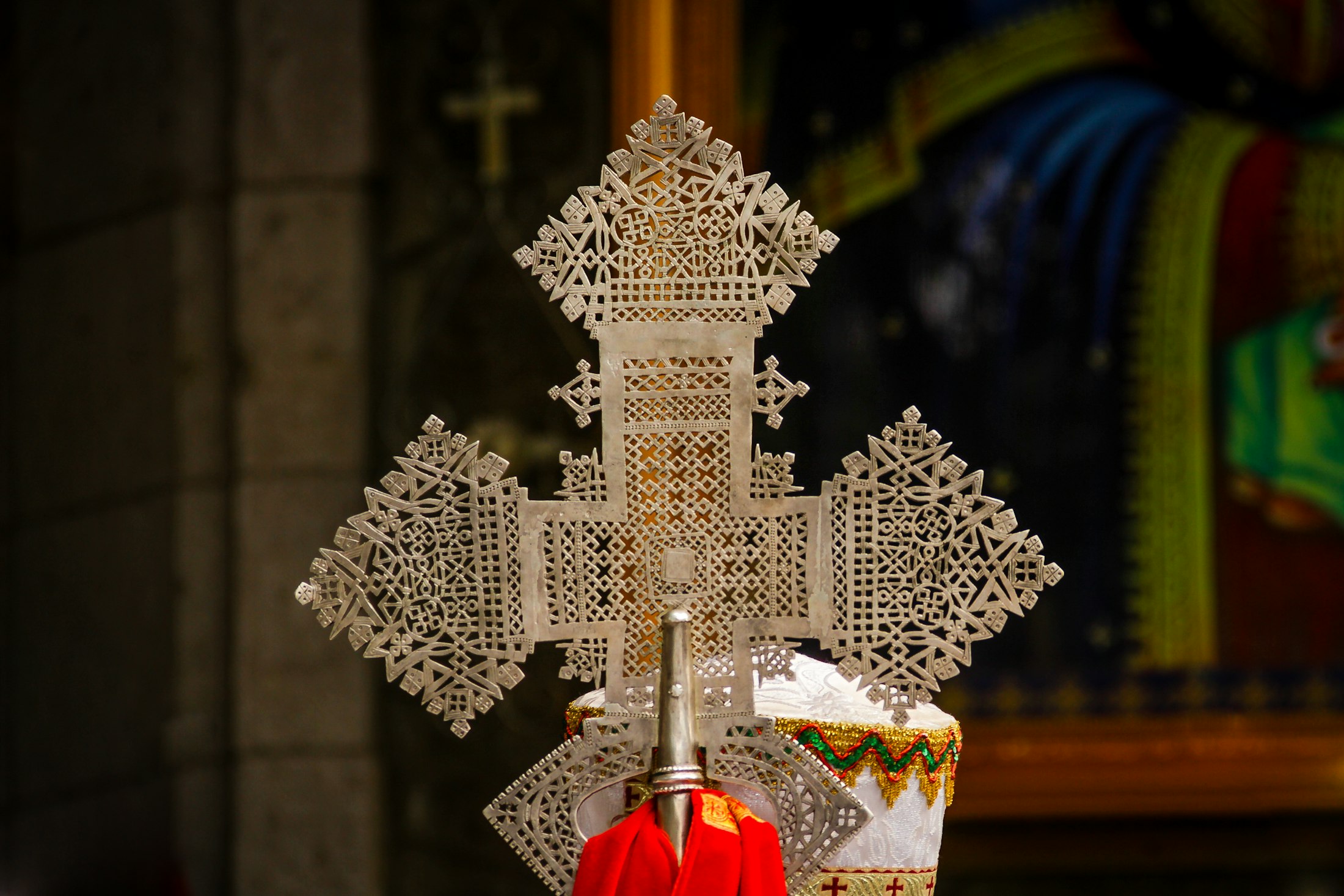
What sets Lalibela apart from any other ancient site is that none of it has stopped. The interiors are dark and thick with incense, lit by narrow windows and candle flame. Priests bring out processional crosses of worked silver and gold and goatskin manuscripts older than most cathedrals in Europe. Worshippers in white cotton pray against the rock, or read scripture in groups on the carpets, or stand for hours in the trenches. Shoes come off at the door of every church, all eleven, so a pair of socks is worth more here than a guidebook. It is a working place of worship first and a monument second, and a visitor is a guest in it.
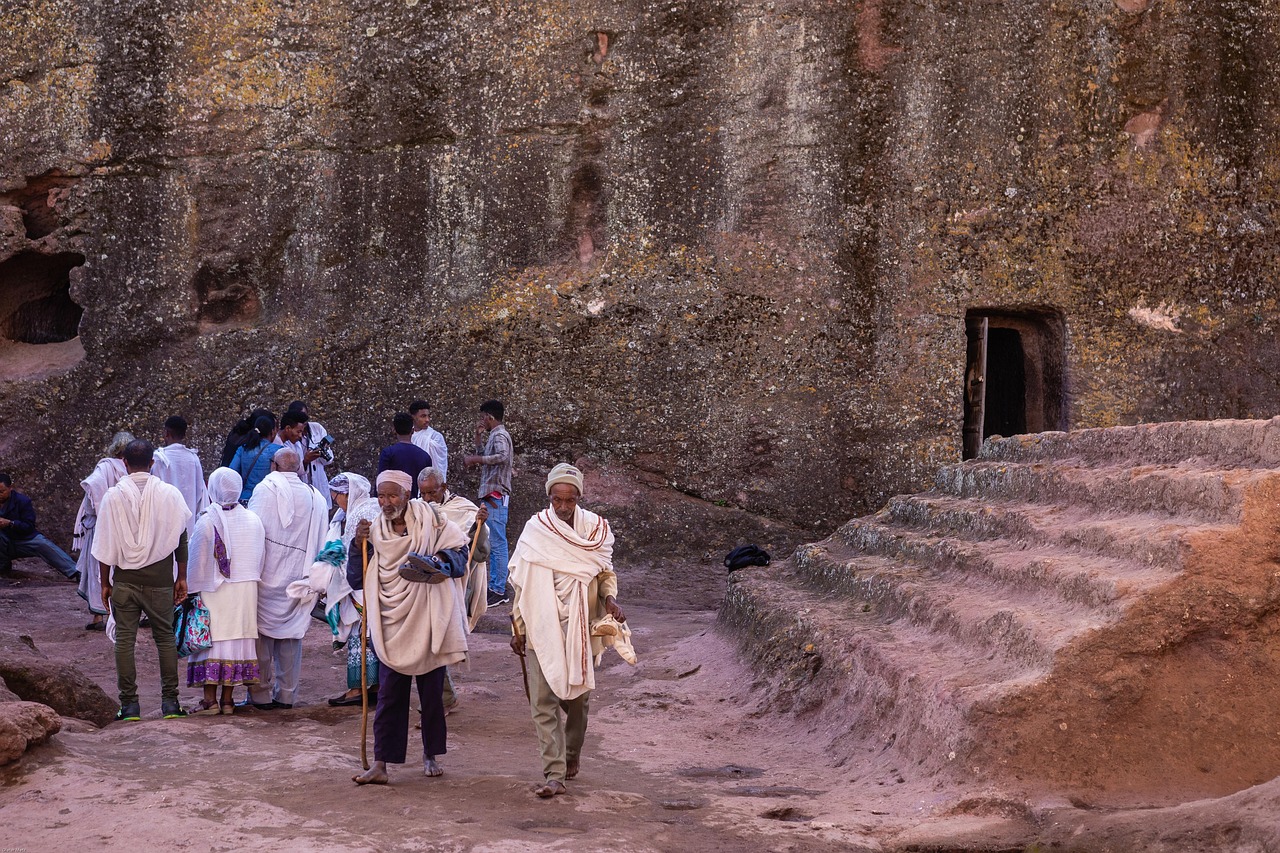
Two things temper the picture on the ground. The first is that five of the churches now stand under large protective canopies, steel and fabric roofs raised around 2008 with UNESCO and European money to stop the rain dissolving the rock. They work, and the stone genuinely was crumbling, but they are ugly, and they flatten the drama of what they shelter. Only Bete Giyorgis, guarded by its own deep pit, still looks the way the photographs promise. The second is the hustle: an official guide is worth hiring and costs little, but unofficial ones, self-appointed helpers and the friendly coffee invitation that ends in a demand for money are all part of the scene.
The churches were cut to outlast empires, and they have outlasted several. They will outlast this hard chapter too.
The two days to aim for, when the country allows it again, are Genna, Ethiopian Orthodox Christmas on the 7th of January, and Timkat, the Epiphany, on the 19th. Lalibela is one of the great places in Ethiopia to witness them, when tens of thousands of pilgrims fill the town, clergy chant on the ledges above the churches and a replica of the Ark is carried out to the blessing of the water. It is overwhelming in both senses, extraordinary to see and impossible for quiet, with every bed booked months ahead.
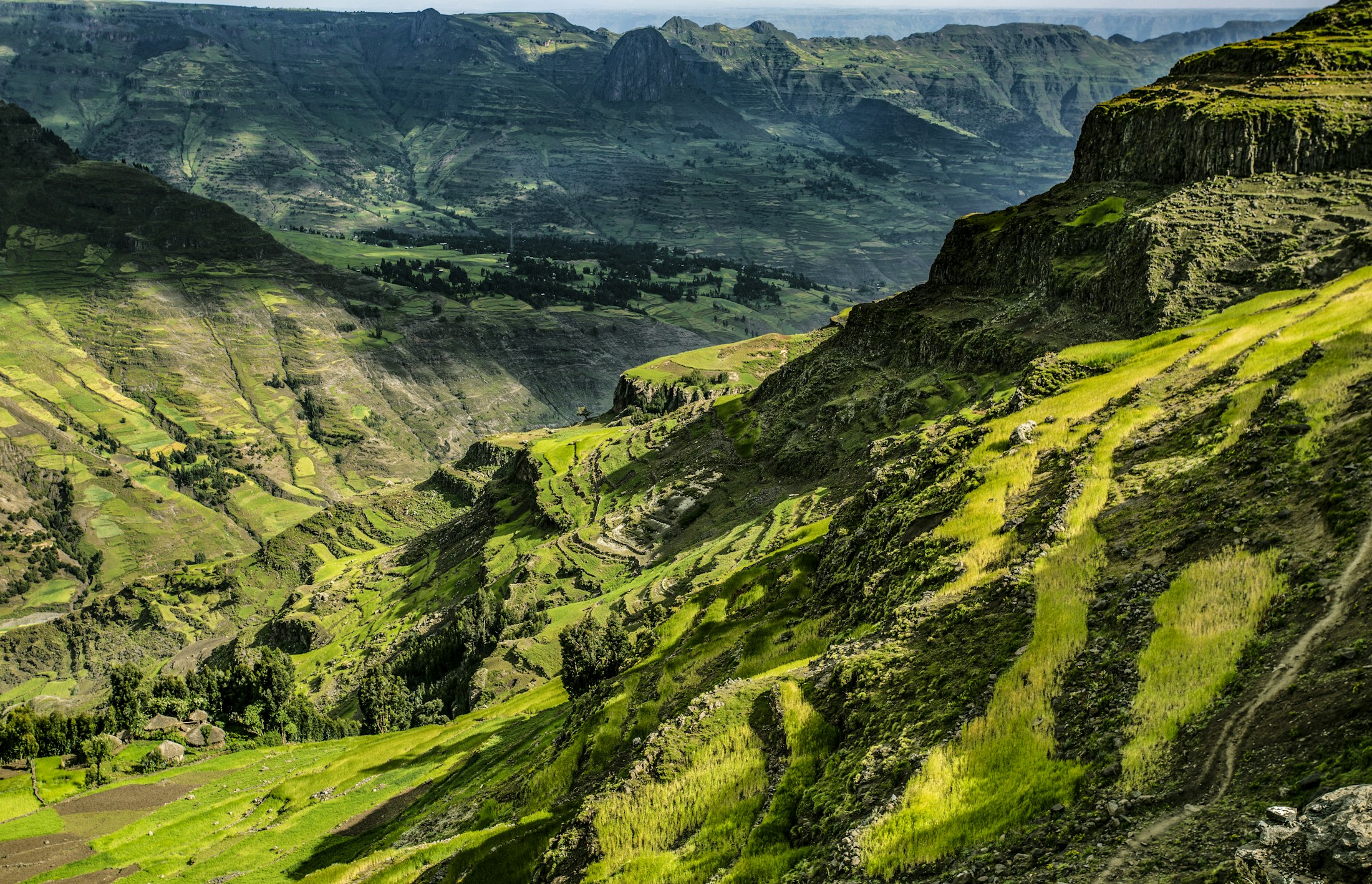
Reaching Lalibela, when the region is open, means flying: international into Addis Ababa, then a short Ethiopian Airlines hop north to the town's small airport, an hour in a turboprop over the mountains. The overland route is a punishing two-day drive and, for now, not a safe one. The town sits at around 2,500 metres, high enough to feel it on the steps and in the trenches, and its lodges are simple. Two days covers the churches; the highlands around them deserve more time when the situation allows.
So this is a place to file away rather than book. The churches have already outlasted the empires that rose and fell around them, and they have kept their services going through worse chapters than this one. When the advisories change, and in time they will, Lalibela will still be there, and worth the journey. Until then it is a place to read about, and to keep on the list.