The case reached the Greek Supreme Court because a film crew wanted a silhouette. For Your Eyes Only needed a villain's lair, and Agia Triada, the Holy Trinity monastery, stands alone on a tower with nothing around it but air. The court ruled that the monks' property was the interior only: the exteriors and the surrounding landscape belonged to the local government. The monks lost, and then refused to concede. They shut themselves inside for the duration of the shoot, hung their washing from the windows, draped the principal monastery in plastic bunting and flags, and rolled oil drums onto the flat ground so the production could not land helicopters. The producers answered with back lighting, matte paintings, a set at Pinewood and a replica monastery built on an empty rock nearby.
The pillars themselves are sandstone and conglomerate, laid down as stone, sand and mud carried by streams into a delta. Around sixty million years ago earth movements pushed that seabed up into a high plateau, vertical faults split it, and weathering did the rest, leaving freestanding towers standing clear of the Thessalian plain. Precise heights are oddly hard to come by. Guides and brochures reach for 300 or 400 metres; the recorded figure is a floor, more than twenty metres, and the one firm datum is Rousanou, whose summit sits at 484 metres above sea level with Kalabaka town below it at around 240. Read the numbers as approximate and plan on the climbs instead.
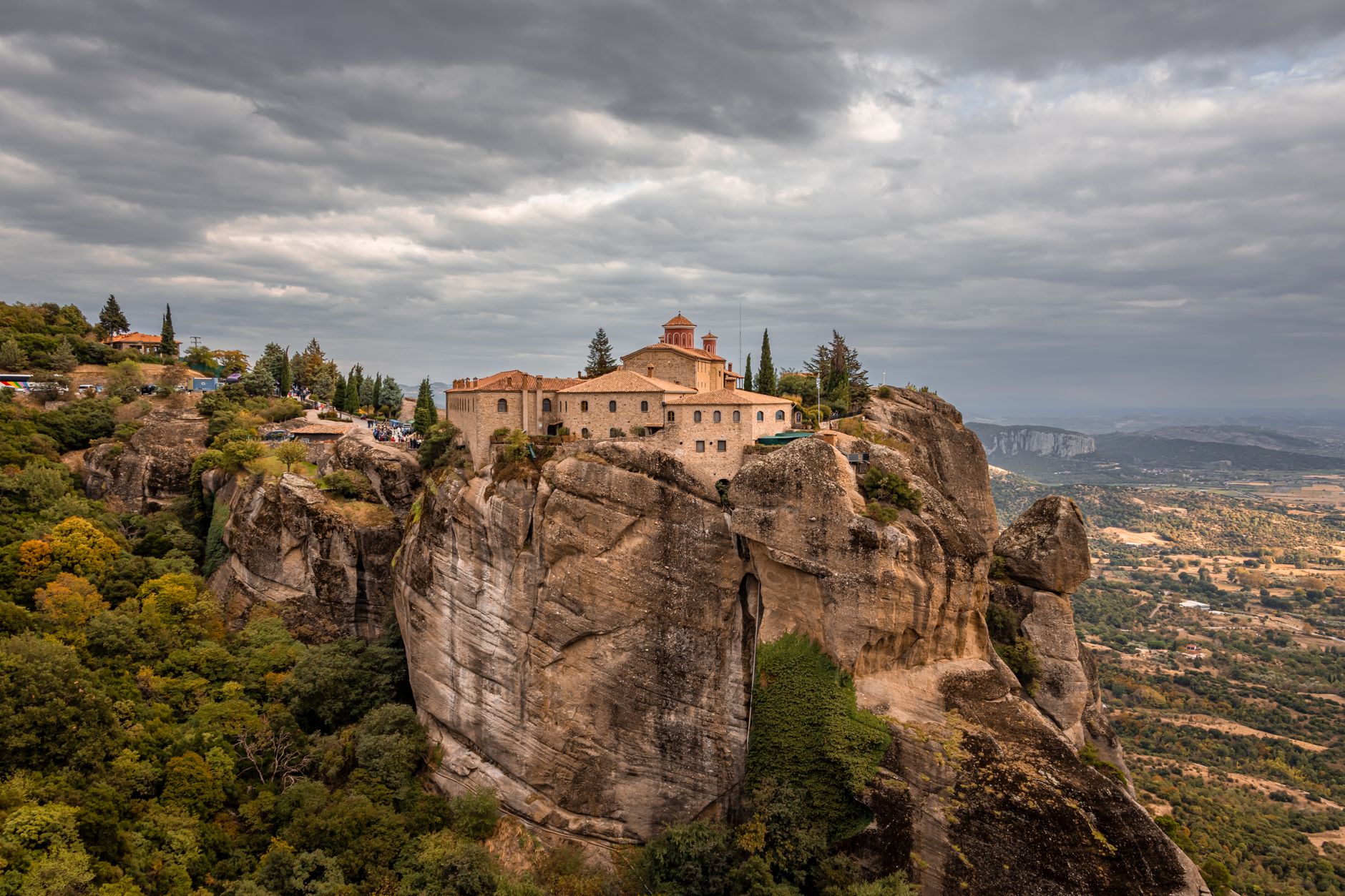
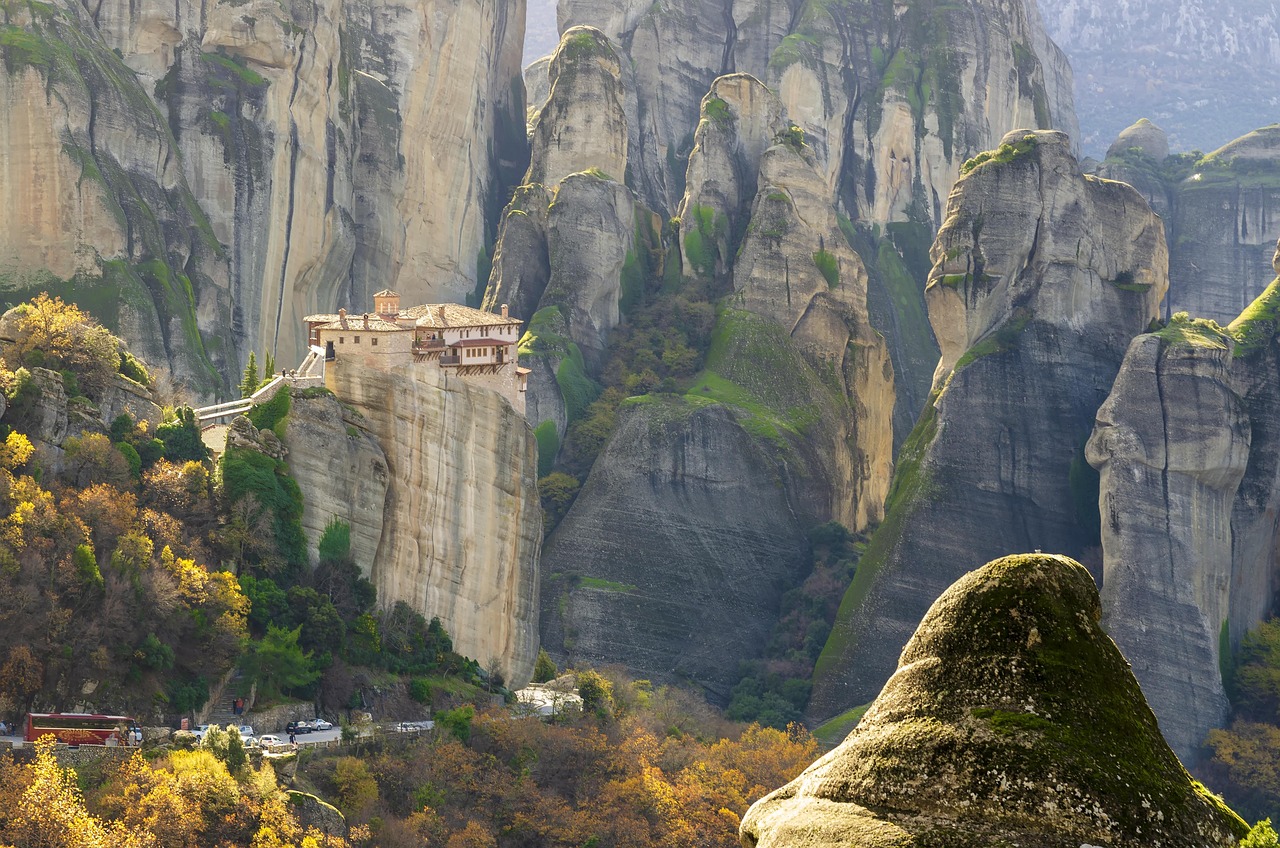
Hermits were living in the caves and fissures of the rock by the 800s. The monasteries proper came much later. Athanasios, a monk out of Mount Athos, arrived on the great rock around 1340, but the Monastery of the Transfiguration that he founded, the Great Meteoron, dates to roughly 1356 to 1372. Varlaam was rebuilt in 1517, Holy Trinity raised in 1475 to 1476, St Stephen begun in the fourteenth century with a new katholikon in 1798. By the sixteenth century twenty-four monasteries stood on the towers. Six are open to visitors now, though how many remain living monastic communities is genuinely contested: some counts say four, and every traveller account describes Rousanou as a working convent of nuns. UNESCO inscribed the site in 1988.
For most of that history there were no steps. Access was by long jointed ladders that could be hauled up behind you, and by nets and baskets winched by hand, carrying flour, timber, bishops and nervous pilgrims alike. The most repeated line in the whole Meteora canon is the answer a monk is supposed to have given when asked how often the rope was replaced: when the Lord let it break. It is usually credited to the travel writer Patrick Leigh Fermor, who was in northern Greece in the 1950s, though it circulates in half a dozen wordings and nobody ever cites the page. The steps visitors climb today were cut in the 1920s, a century-old convenience laid over six centuries of deliberate unreachability.
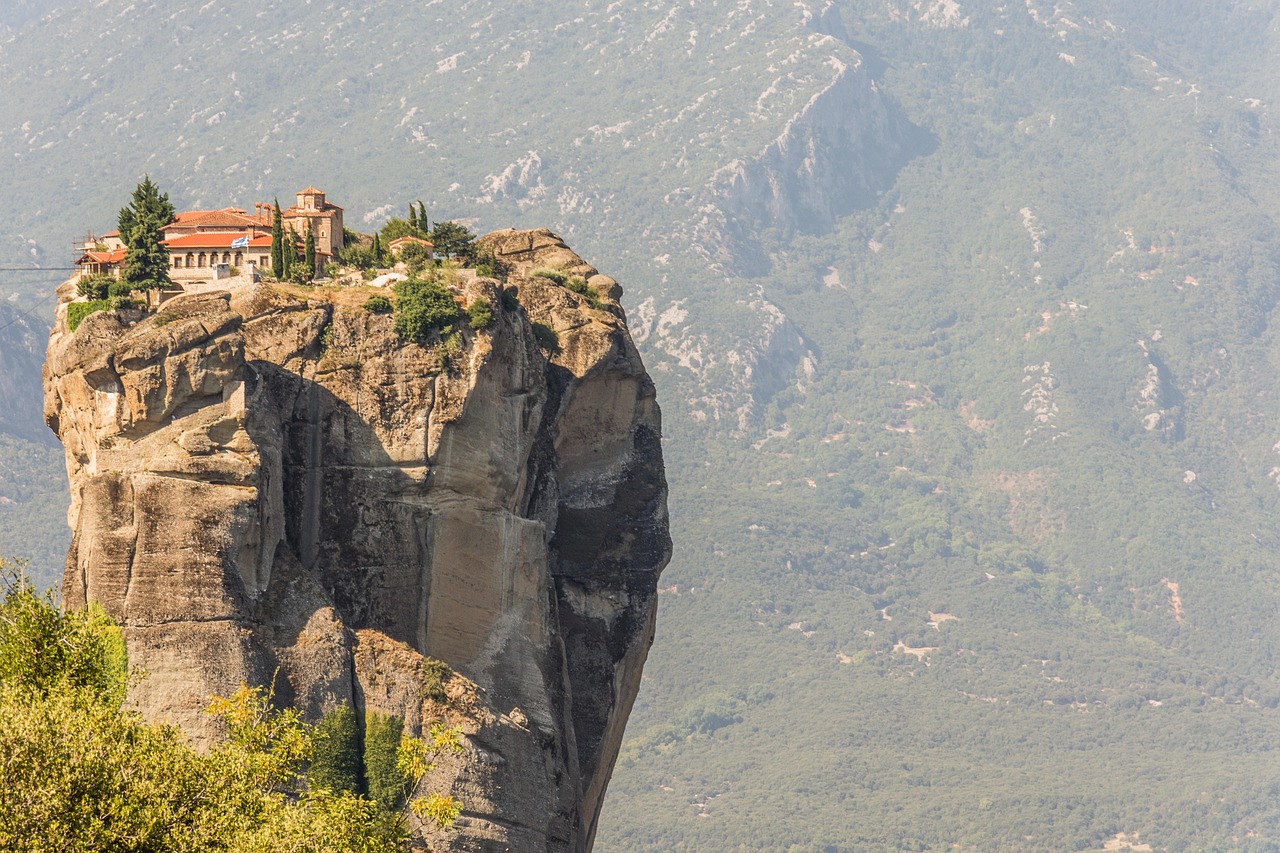
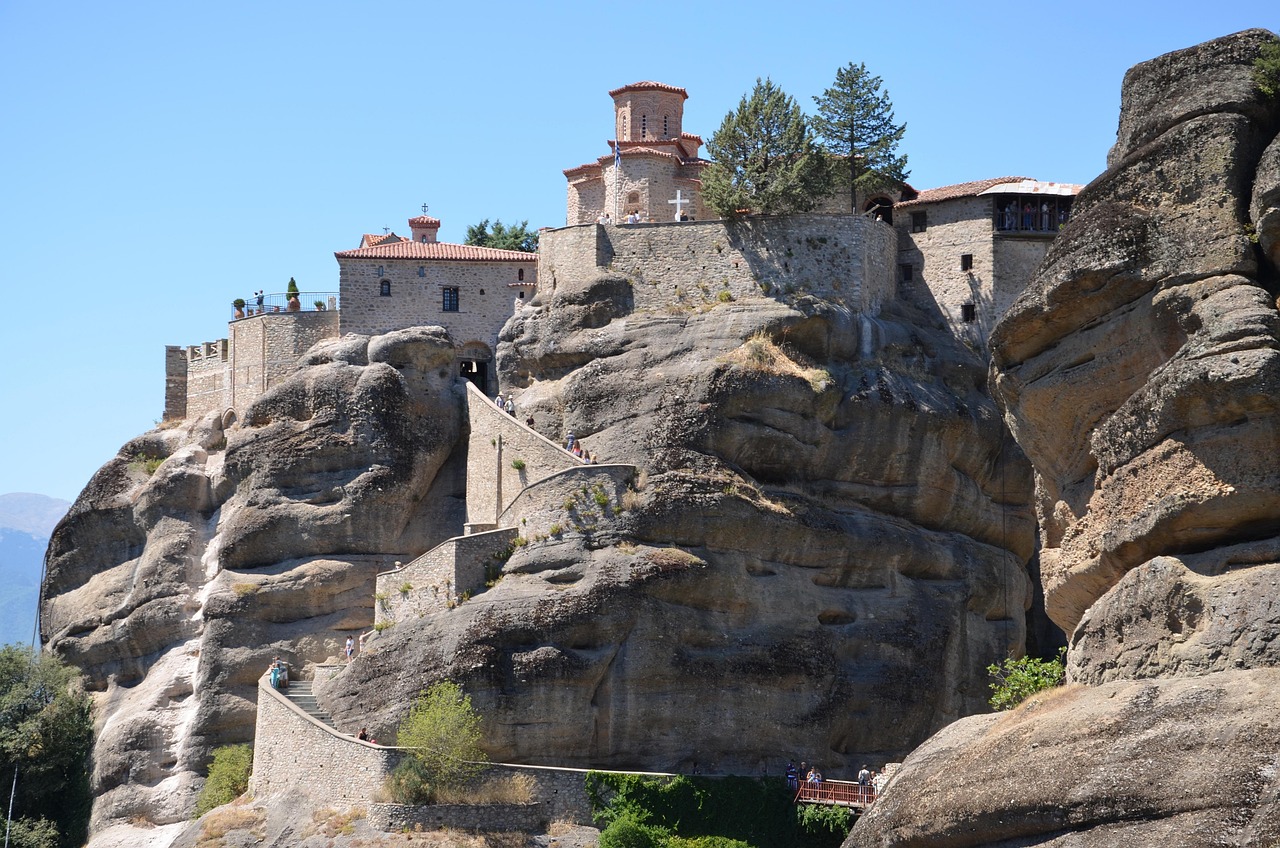
Treat the climbs as the real itinerary. Counts differ between accounts, so plan on ranges rather than figures. Great Meteoron is the hardest, upwards of 300 steps from the car park, and it has squat toilets at the top while Varlaam has modern ones. Varlaam is the next hardest, and published counts for it range from about 140 to nearly 200. Holy Trinity is roughly 130 to 145 carved steps and feels the most exposed. Rousanou is reached across a bridge with low railings after something in the region of 165 to 215 steps depending on where you park. Agios Nikolaos Anapafsas is a ten to fifteen minute steep scramble onto cramped stacked levels. Agios Stefanos alone has no stairs at all, just a short bridge, which makes it the right and only realistic choice for anyone with limited mobility, though the site is still difficult in a wheelchair.
Six monasteries, six different rest days, and the calendar defeats more visits here than the stairs do.
Published tables contradict each other, and that disagreement is the useful warning. One widely reported pattern has Great Meteoron closed Tuesday, Rousanou Wednesday, Holy Trinity Thursday, Varlaam Friday and St Stephen Monday, with winter adding a second closed day at some houses. Do not build a trip on any blog's table, this one included. Verify the current-season hours by phone or at the door, and give the rocks more than one day, so that a shut gate costs an afternoon and not the whole visit. It is also the strongest argument against the Athens day trip, which can run from a 07:45 pickup to a return after 21:00 with more than half of those fourteen hours spent in a bus.
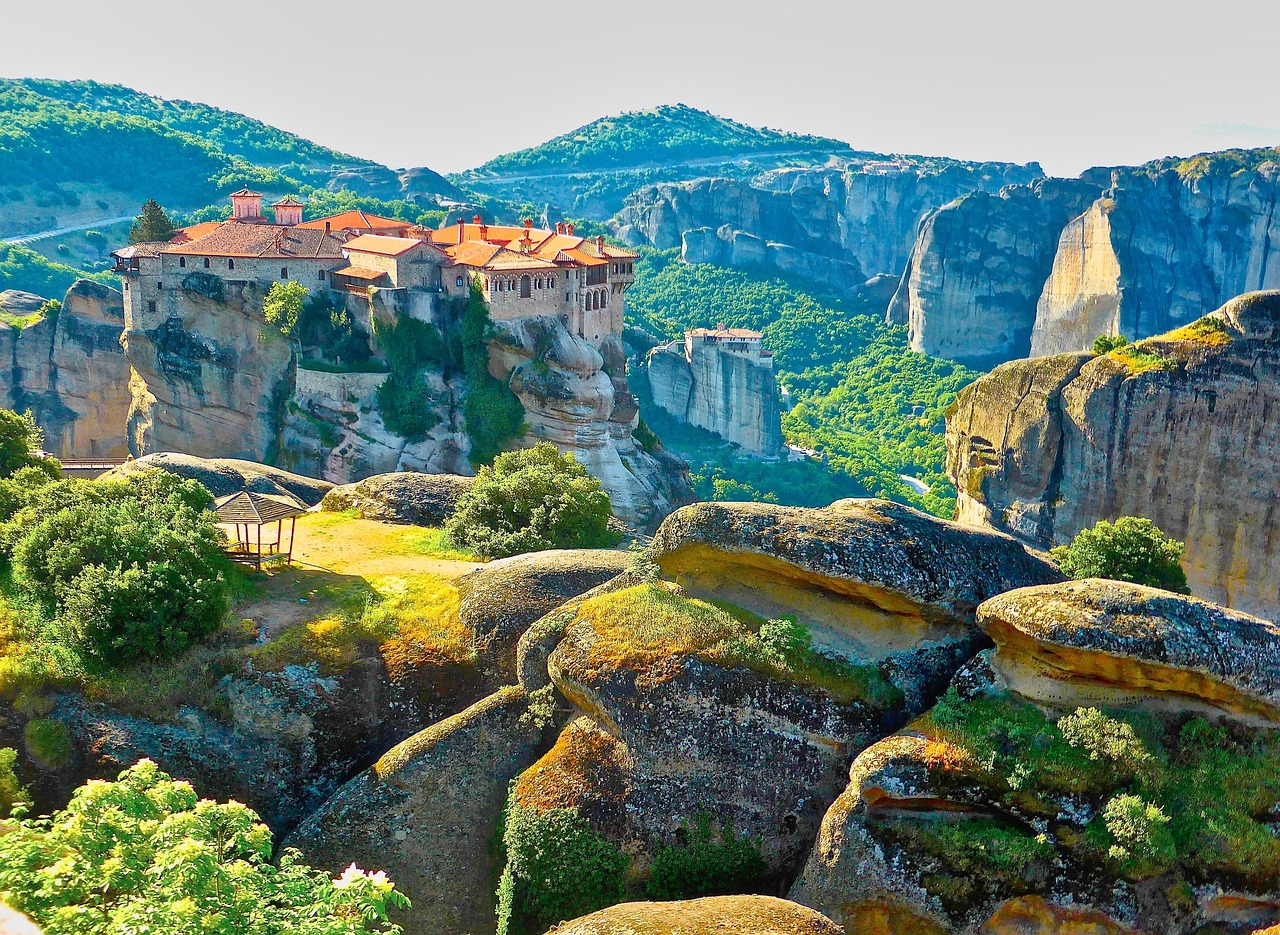
Crowd pressure varies more by monastery than by hour, which cuts against the usual advice about early starts. Agios Nikolaos Anapafsas and Holy Trinity sit awkwardly in coach itineraries and stay quiet at almost any time. Agios Stefanos thins after about 11:00 as the groups move on. Great Meteoron and Varlaam empty out around 12:15 to 12:30 while their tour parties break for lunch, which makes the middle of the day one of the better windows at the two busiest houses. The trade is heat: midday on an exposed staircase in July is punishing, and there is no shade on the climb. The interiors are the pinch point in any case. The katholikon at Rousanou becomes a genuine crush, and interior photography is banned and actively policed.
Light is the other constraint, and it is unreliable. Cloud rolls in fast over Thessaly and ruins visits outright. Groups have abandoned photo stops because there was nothing to see, and sunset tours have sat under a lid of grey that lifted only once everyone had gone. Build slack into the plan instead of staking the trip on one booked sunset slot. When it does work, the panoramic pull-off beside the main marked observation deck is the better position, and the colour holds for roughly an hour after the sun has gone. Getting a place there costs about an hour of standing around in the wind alongside several coachloads of other people. The sunrise alternative is far emptier, a ridge about twenty minutes on foot from its parking area, reached around 06:00, where the valley floor lights while the towers stay dark. Few visitors do both mornings and both evenings, and the ones who try tend to sleep through the second sunrise. The lookouts are unfenced rock over long drops, and the paths are slick after rain, so grippy shoes matter more here than they look like they should.
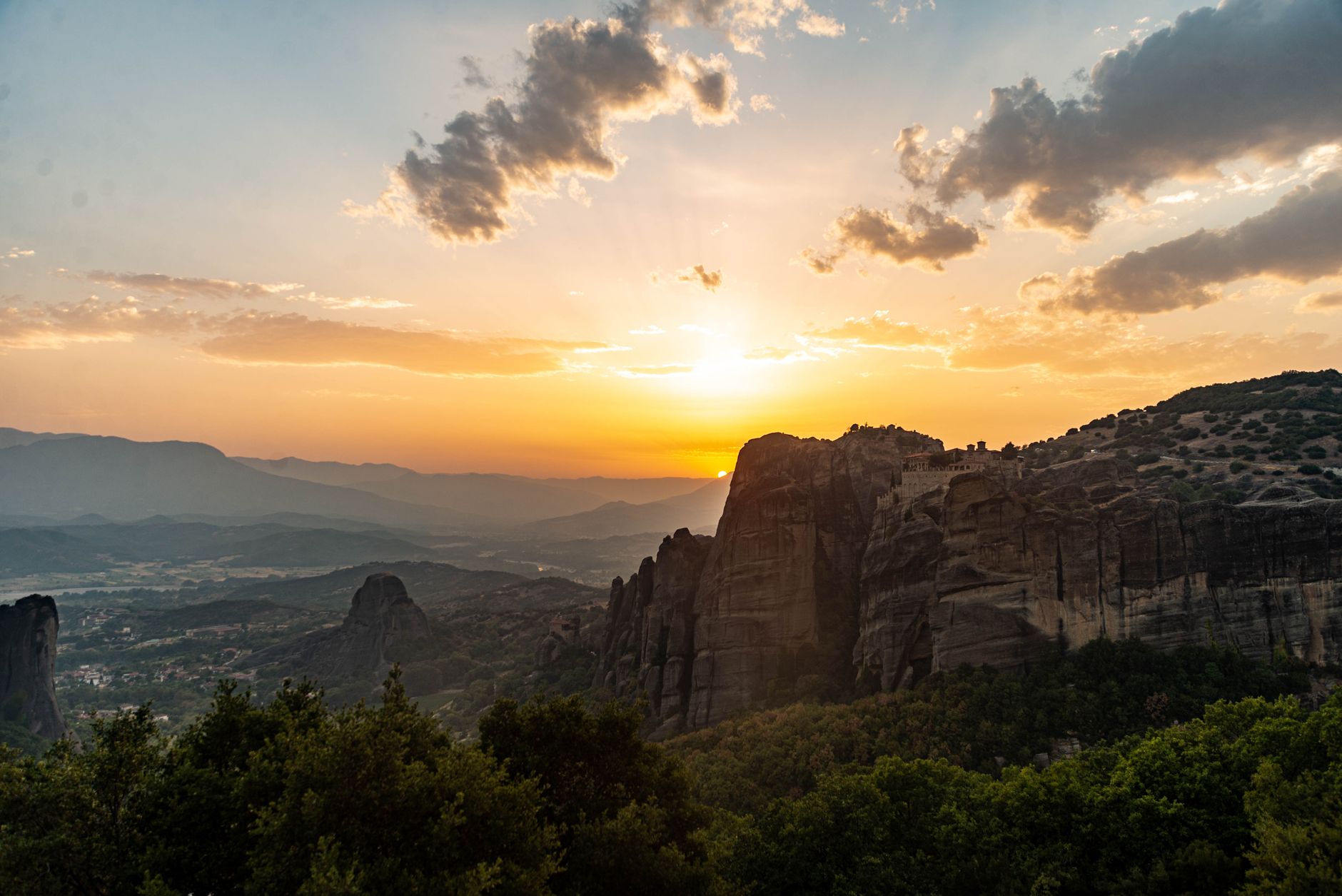
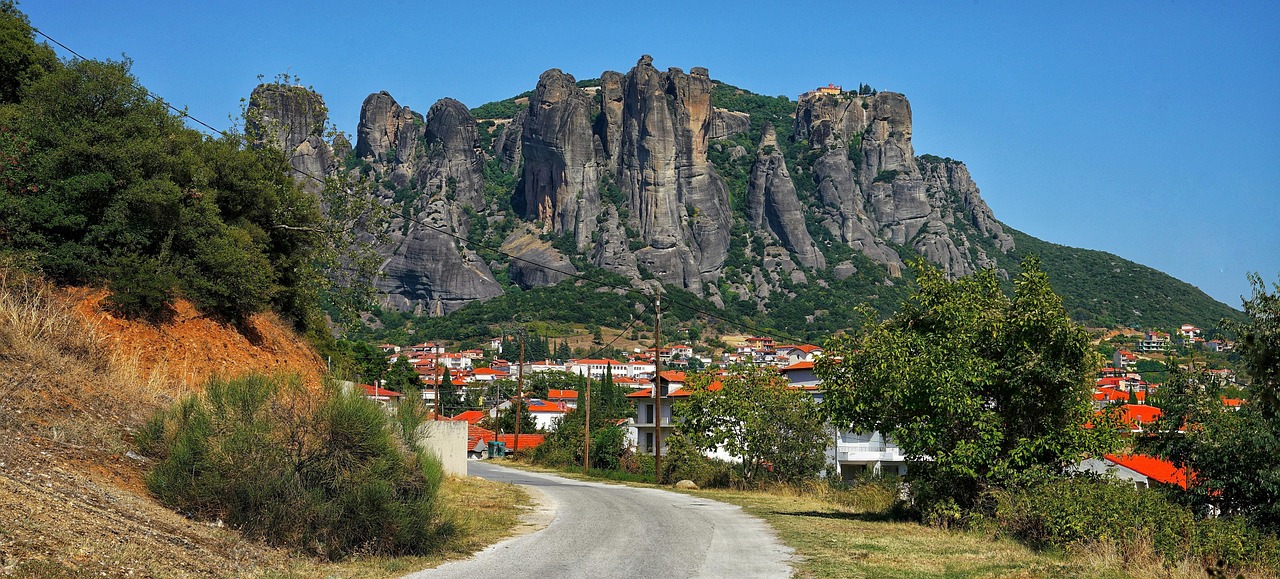
The house rules are simple and firmly enforced. Knees and shoulders covered, men included, and no shorts. Wrap skirts are lent at the doors but supply runs out when a coach arrives, and Varlaam charges for its wrap, so bring a cover-up instead of gambling on the loaners. There is no combined pass. Each monastery takes a small entry fee at its own door, cash only. On where to sleep, the split is clean. Kalabaka is the transport hub, with the station, the coach terminal, the restaurants and roughly a fifteen minute drive to the Great Meteoron car park. Kastraki, five minutes away and directly beneath the pinnacles, parks more easily and puts the dawn light on the balcony, at the cost of somewhere to eat after nine. Drivers and photographers take Kastraki. Anyone arriving on public transport is better off in Kalabaka.
One more thing sits inside the same landscape and gets skipped. Four kilometres from Kalabaka, the Theopetra Cave has an occupation record running back well beyond the monasteries, and inside it excavators found a stone wall built roughly 23,000 years ago, partly closing the entrance against the cold. It is among the oldest known built structures anywhere. The cave has a history of closing for conservation and stabilisation work, sometimes for long stretches, so it is not a reliable stop. Shelter on this plain is a much older problem than the monks were solving.