A fjord keeps its secret from the road, every time. From the lookouts where the coaches idle it is a postcard, blue and tidy and safely far below. Down on the water the same view turns enormous and intimate at once: a wall of stone climbing past the point where the neck gives up, a waterfall heard long before it is found, the engine cut until the loudest thing left is meltwater finding the sea. Norway's western fjords were opened by ice, and they are best met by boat. Leave the car in Bergen and go looking for them the way they were meant to be found, from below.
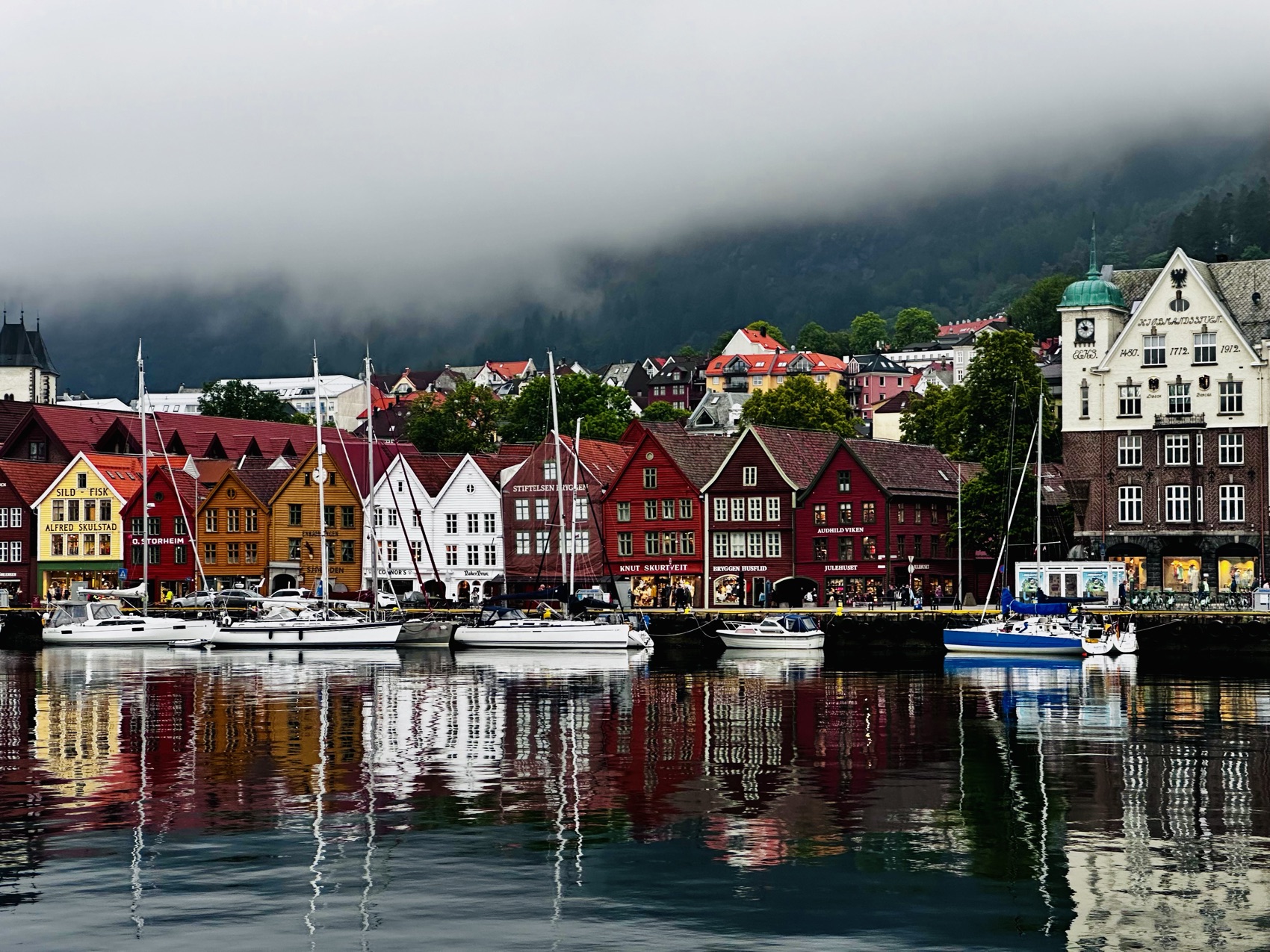
Bergen makes no apology for its rain, and there is no point waiting for one. Seven hills pin the city to the coast; the old Hanseatic warehouses at Bryggen lean together in crooked ranks of ochre and oxblood; the fish market trades on under a steady drizzle as if the sun were a rumour from somewhere else. It is worth a day: the funicular up Fløyen for the long view over the islands, the morning's catch for lunch, and a waterproof no one should be too proud to pack. Then the sensible thing is to leave by sea.
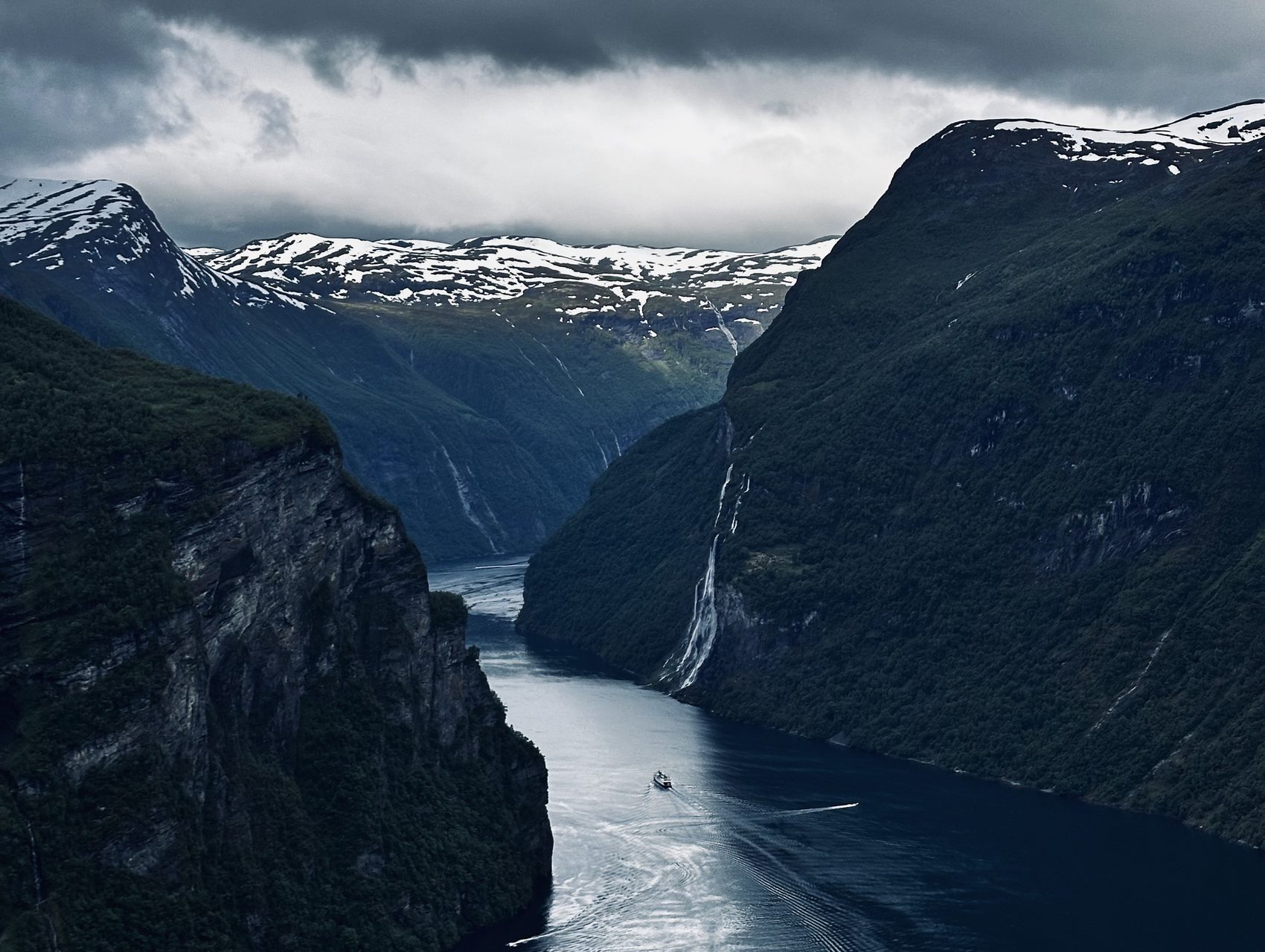
The route runs inland off the coast along the Sognefjord, the longest and deepest in the country, then turns up its thinnest branch, the Nærøyfjord, which is the one to hold out for. Barely five hundred metres wide where it pinches tightest, its walls going up a sheer kilometre on either side, it is so narrow the ferry seems to thread itself through the eye of the mountains. The slow boat leaves from Gudvangen, and the deck is the place to be whatever the sky is doing. On the ledges above, farms that look unreachable cling to the green, abandoned now, their hayfields gone to scrub; goats work the lower slopes; waterfalls arrive without announcement and vanish behind the next buttress. Nobody on deck says much. There is a particular silence that lifts off cold stone and deep water, and an hour of it does more than any roadside viewpoint.
A fjord is only a valley the sea was invited into. A few days spent small beneath it is a thing to come home grateful for.
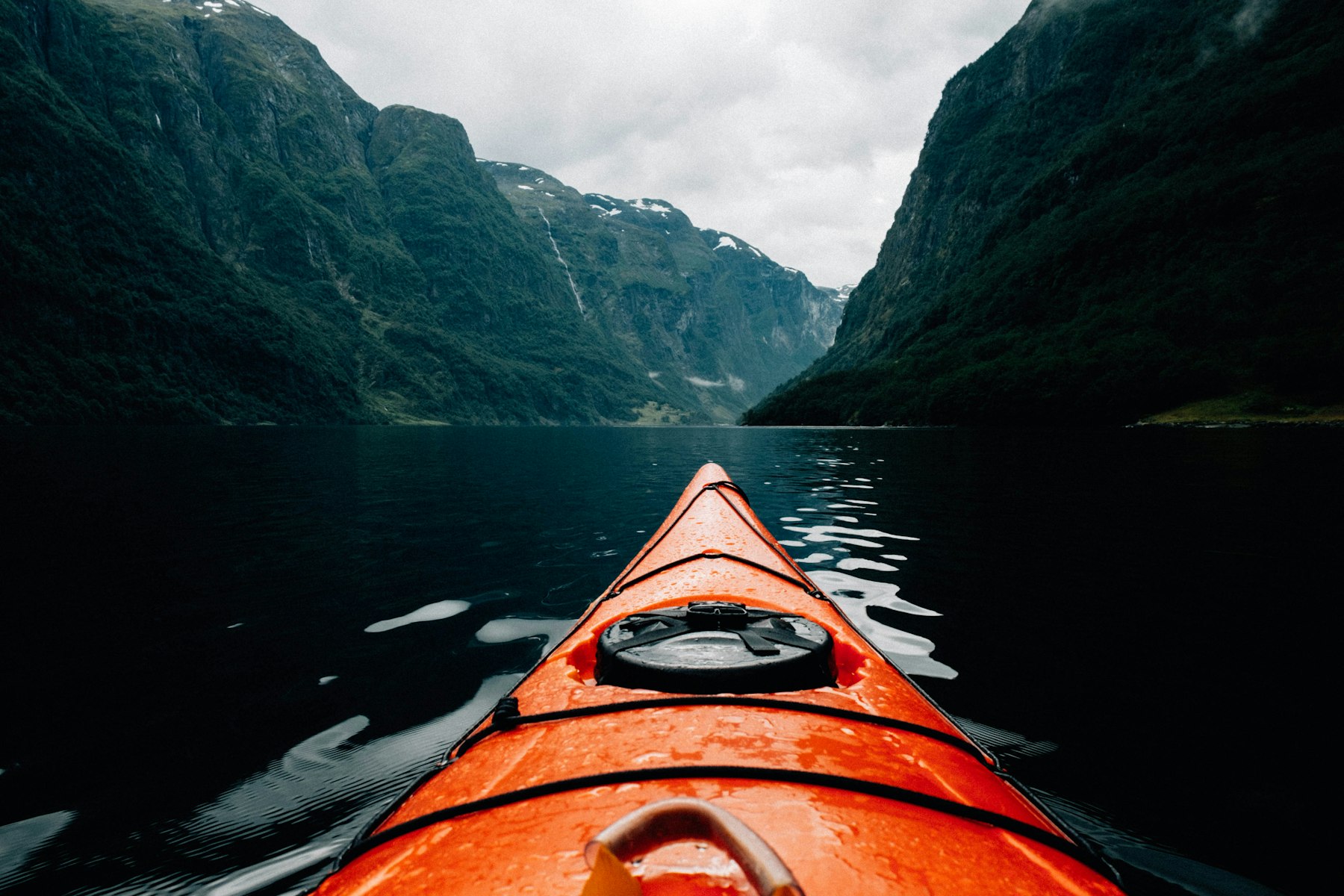
The kayak changes everything. From a hull barely hip-wide, a hand's breadth above the surface, the cliffs go from large to impossible, and the water lies so black and so still it hands them straight back as a reflection. Put in early on the Aurlandsfjord, before the day boats churn it, and keep a paddle's length off the rock. Other kayakers ahead shrink to bright specks against the grey, and the scale of the place finally settles.
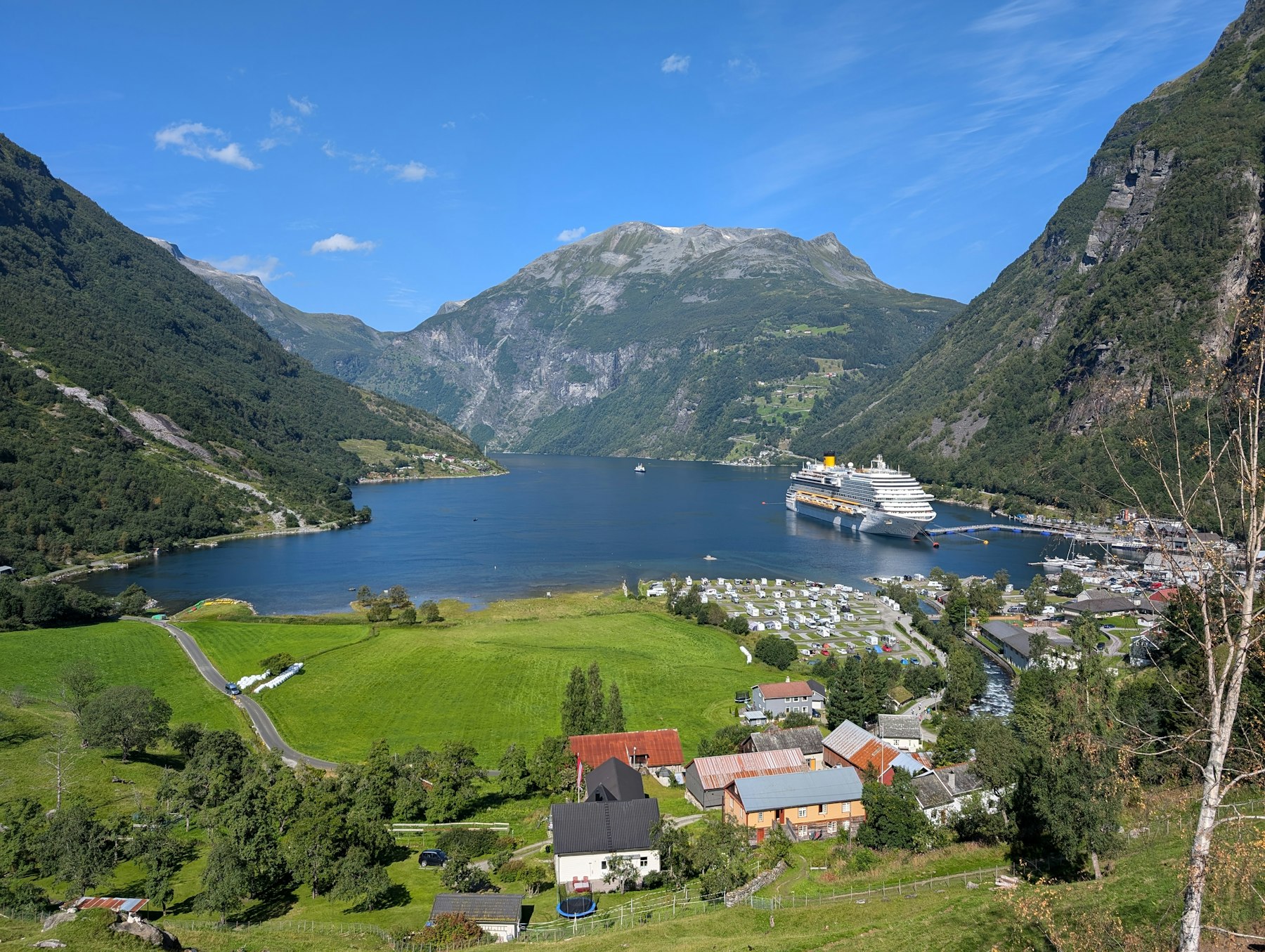
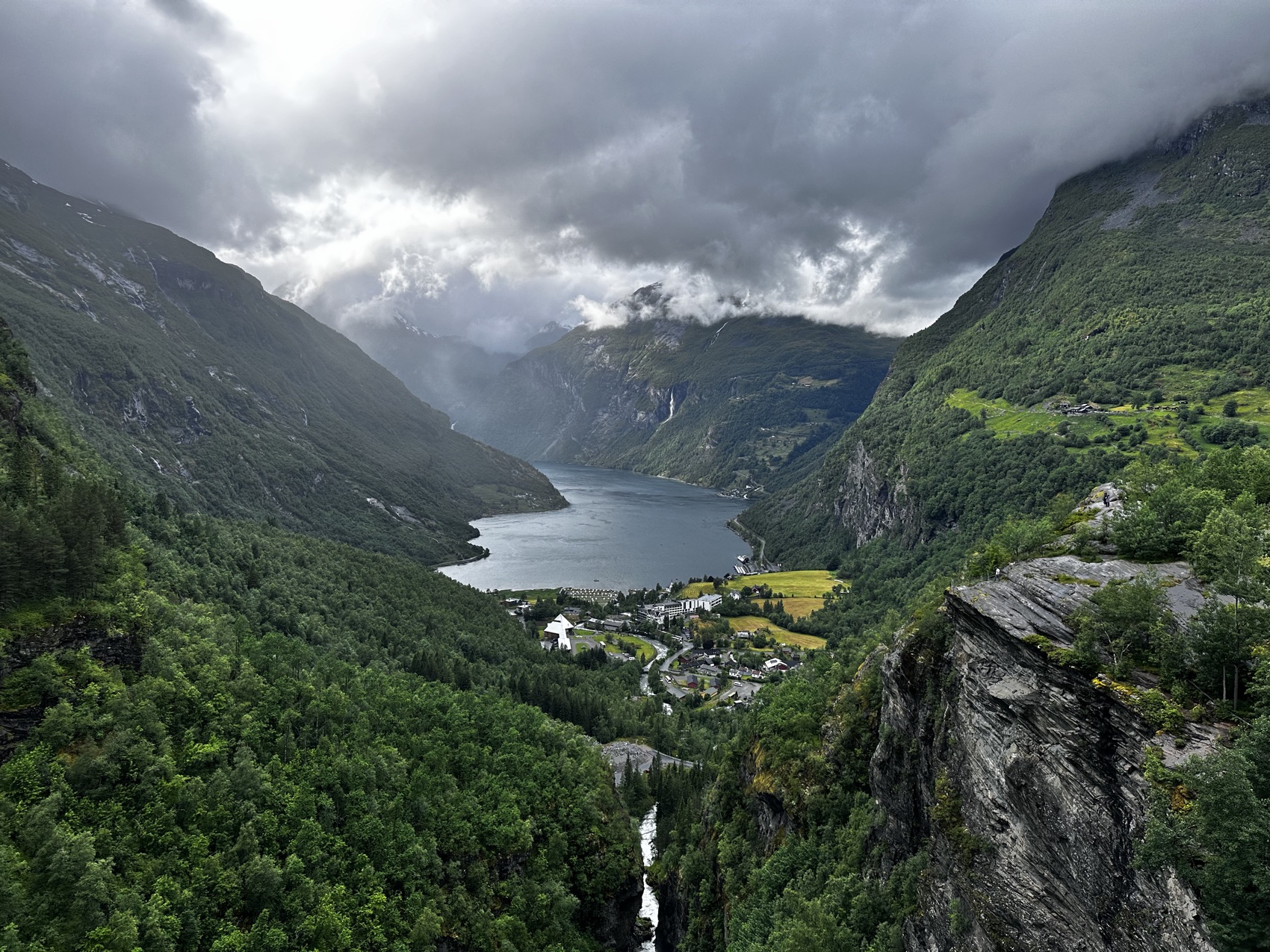
North then, to the Geirangerfjord, the one every brochure frames from above, and it has to be earned. The Seven Sisters drop in a thin white row down the far wall; across from them the old farm at Skageflå still holds its shelf, reached once by ladders the family hauled up behind them when the tax man was due. In July the fjord is loud with boats. The first ferry of the morning runs its length before that begins, and the crowds thin to nothing, leaving the water, the falls, and the cloud working out where to settle for the day.
A spare day belongs on a working boat. The coastal ferries still run the length of Norway carrying mail and freight and islanders alongside the cabin passengers, calling at small lit quays long after dark. It is a plainer kind of passage than the tourist cruisers, and a truer one: the fjords not as a view arranged for visitors but as a road people have always simply used. It ends at Ålesund, its art-nouveau streets rebuilt in stone after a fire took the timber town in a single night, and the salt is back in everything.
Save the final night for the water's edge. In a northern summer the light barely bothers to leave; it thins to a long held gold and simply waits, and the fjord keeps the whole sky on its surface until well past midnight. Sit out as long as the cold allows. Five nights is enough to learn the shape of this coast, and to be certain it is only the beginning of it. The fjords are a thing you come to look at, and leave having been, for a while, down inside them.