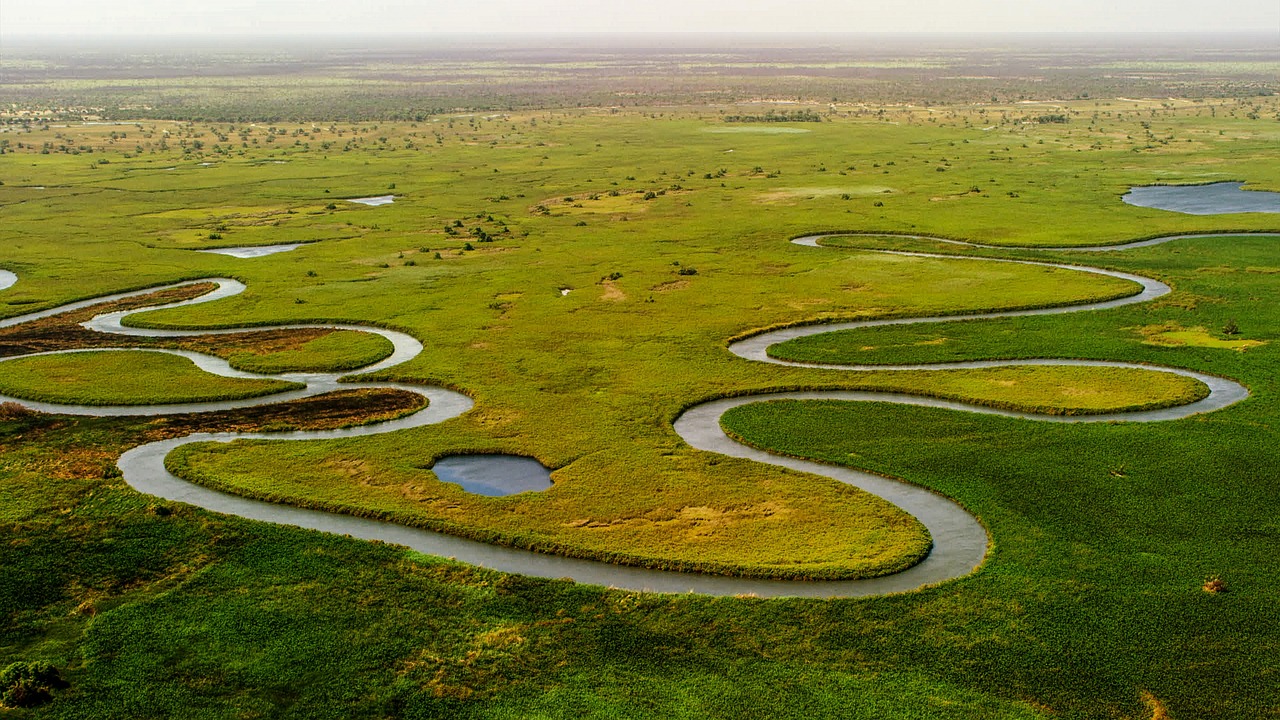
The Okavango is a river that gives up before the coast. It rises in the highlands of Angola, runs some 1,200 kilometres south, and then, instead of finding an ocean, spreads out across a shallow trough in the Kalahari and stops. Almost all of the water it carries, between ninety-six and ninety-eight per cent, is lost to evaporation and thirst before it can go anywhere. Geographers call a system like this endorheic: inland, sealed off, with no exit. It is one of the largest inland deltas on earth, and in 2014 it became the thousandth site on the UNESCO World Heritage list.
The strange part is the timing. The flood does not arrive with the rains. Water that falls on the Angolan highlands takes months to work its way down the channels, so the delta fills at the height of the southern winter, roughly June to August, long after the last storm and 1,200 kilometres from where it fell. The effect is a reversal of everything the land around it is doing. As the surrounding Kalahari bakes and browns, the delta swells, at its peak to as much as three times its permanent size, and the animals of a drying country converge on the one place that is turning green.
What holds the water in place is a fault line. The trough sits on three of them, the Gumare, the Kunyere and the Thamalakane, a southwestern outrider of the great East African Rift, and they trap the river where it would otherwise drain away. The land between them is astonishingly flat, varying by less than two metres across the whole delta, so the water does not run so much as feel its way, spilling sideways along the faintest gradients into a fan of channels, lagoons and reed-choked islands that shifts a little every year.
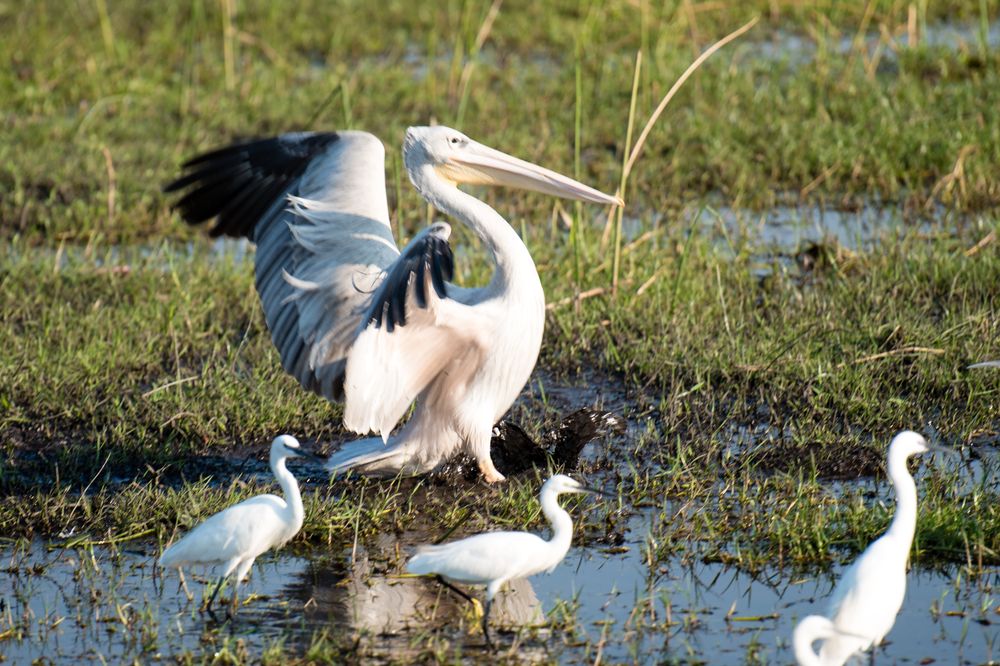
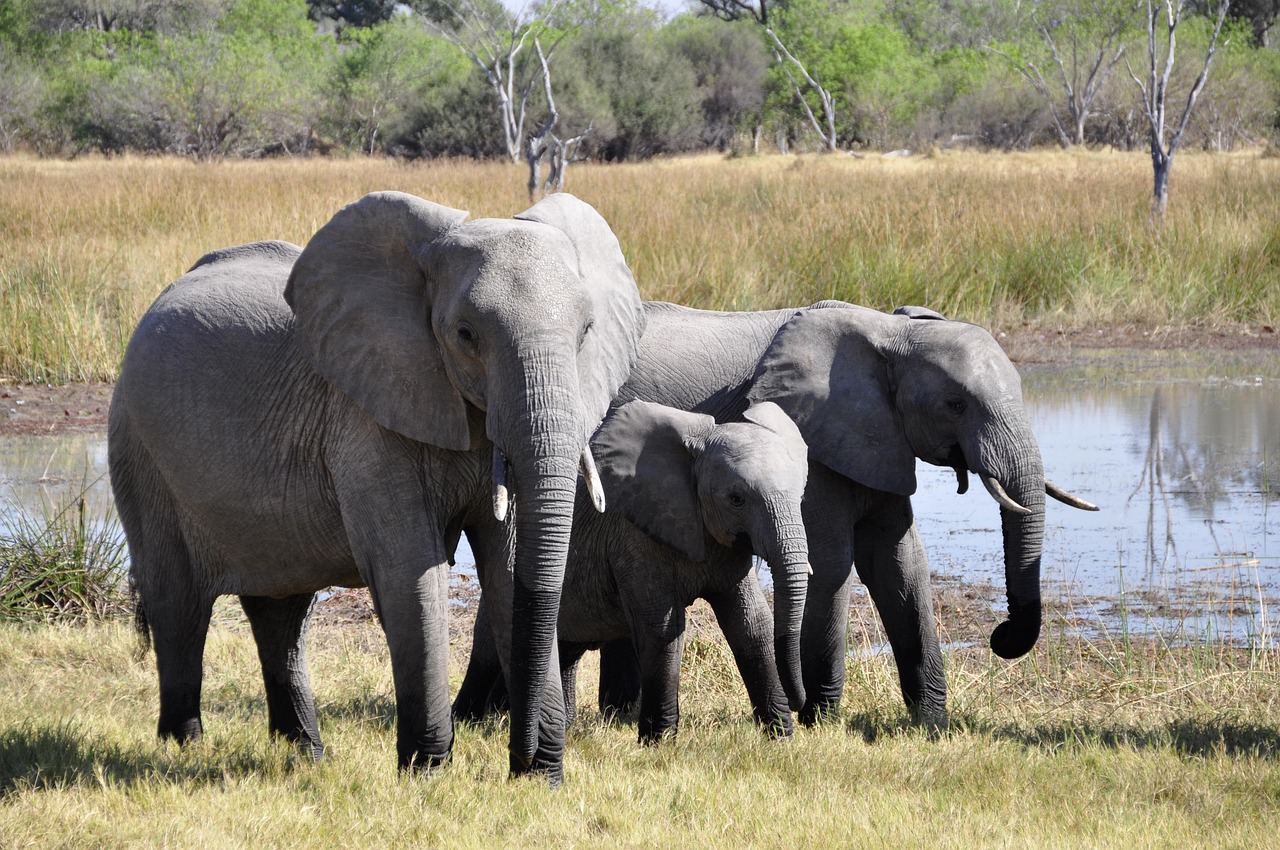
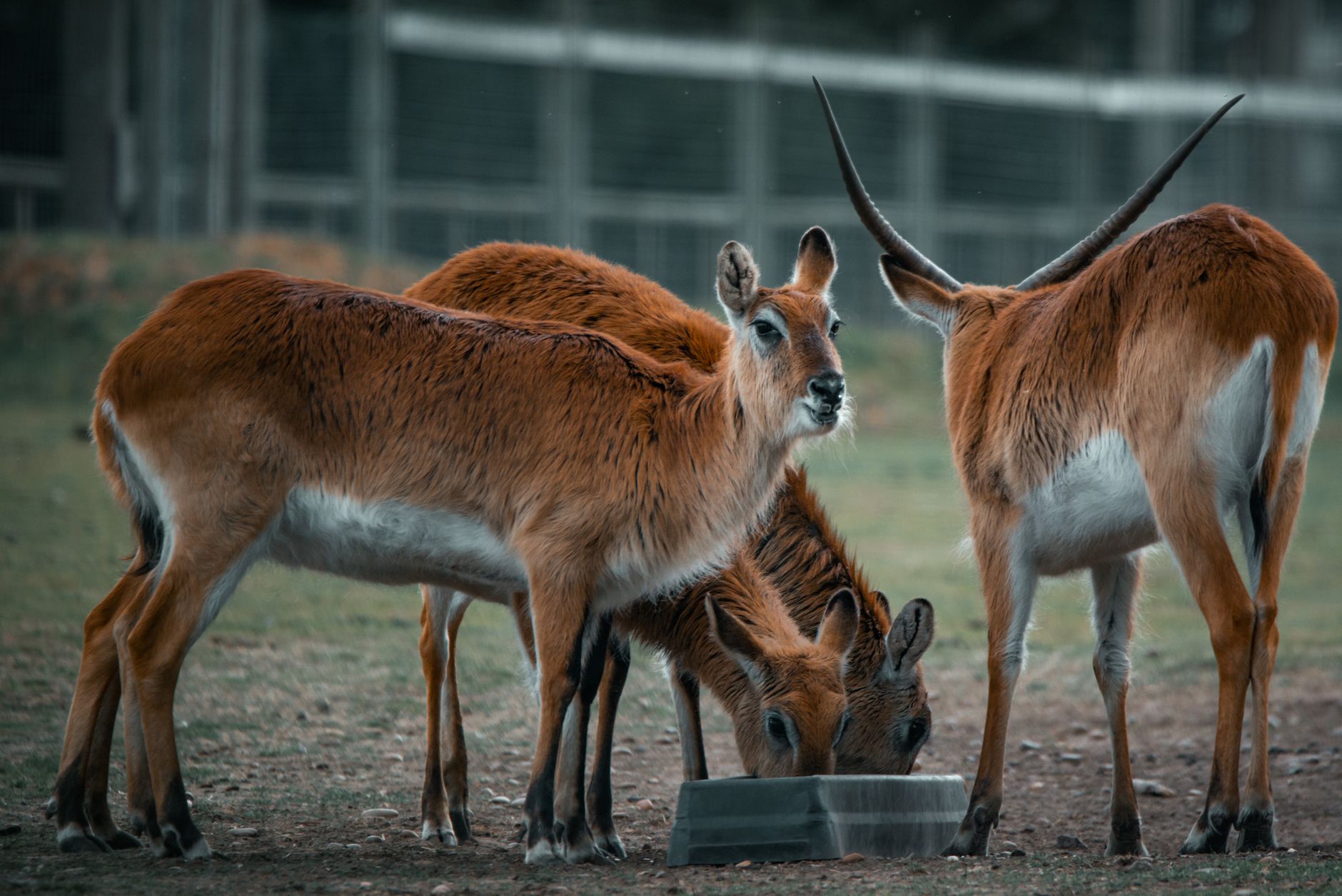
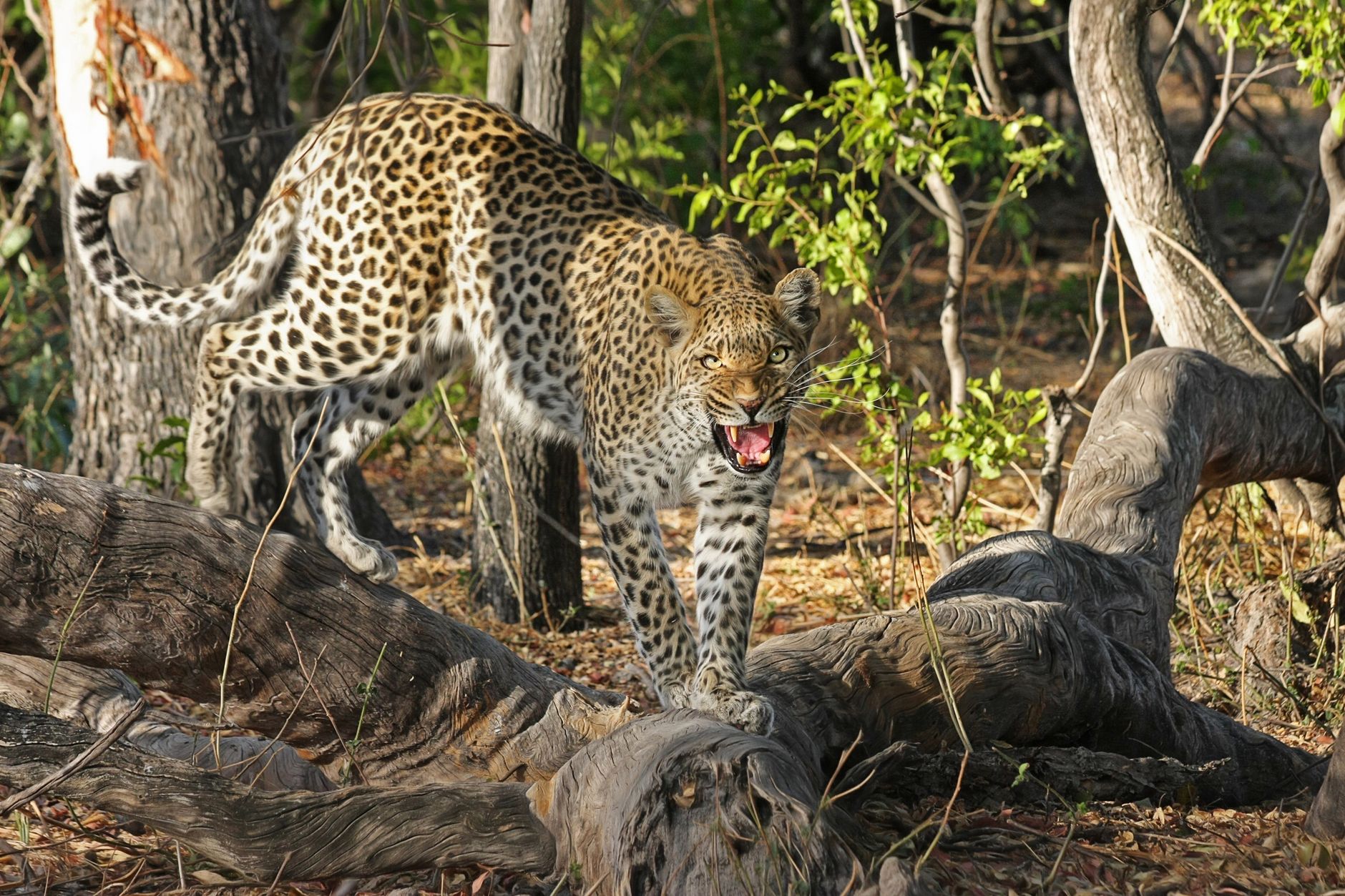
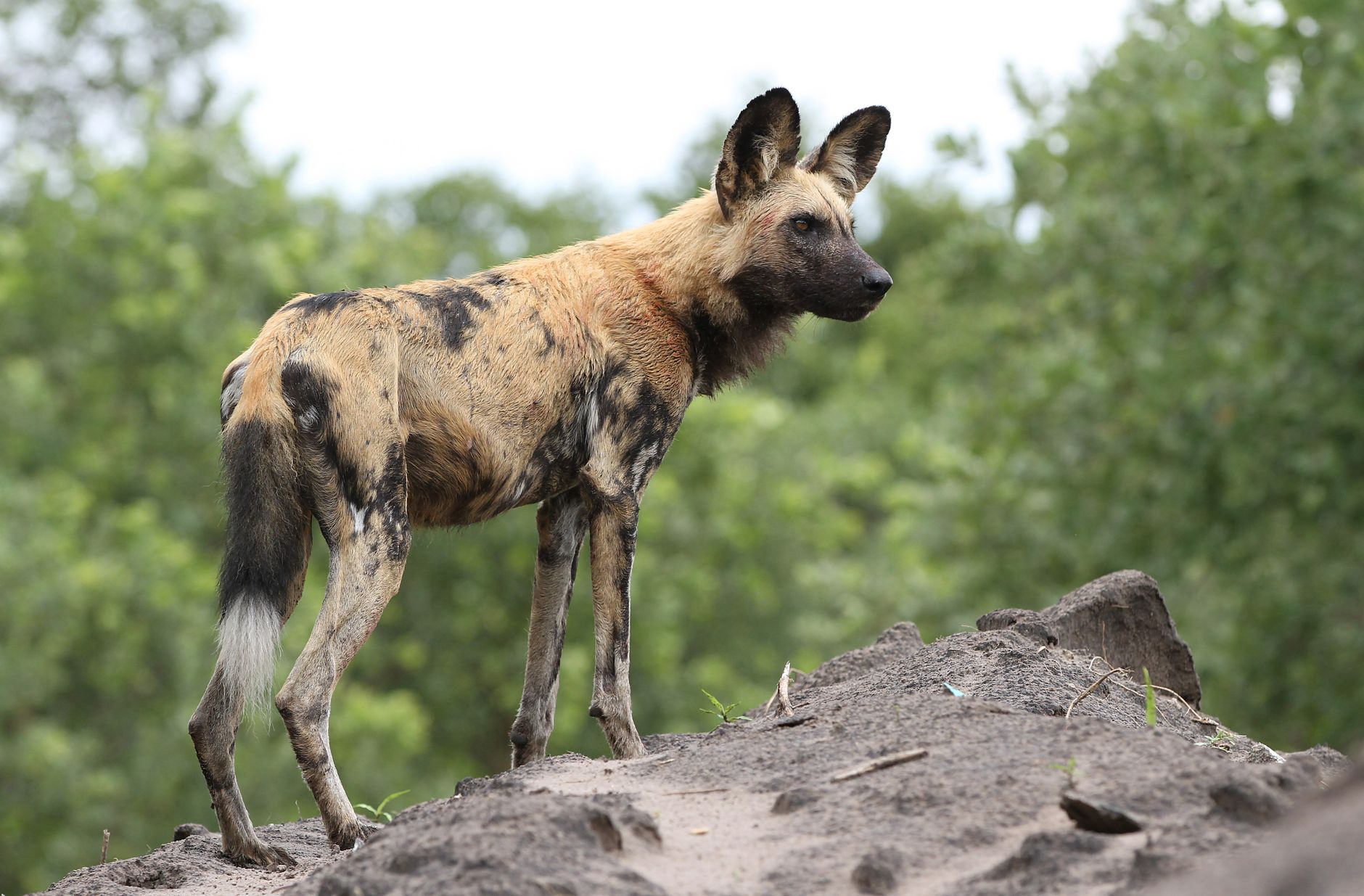
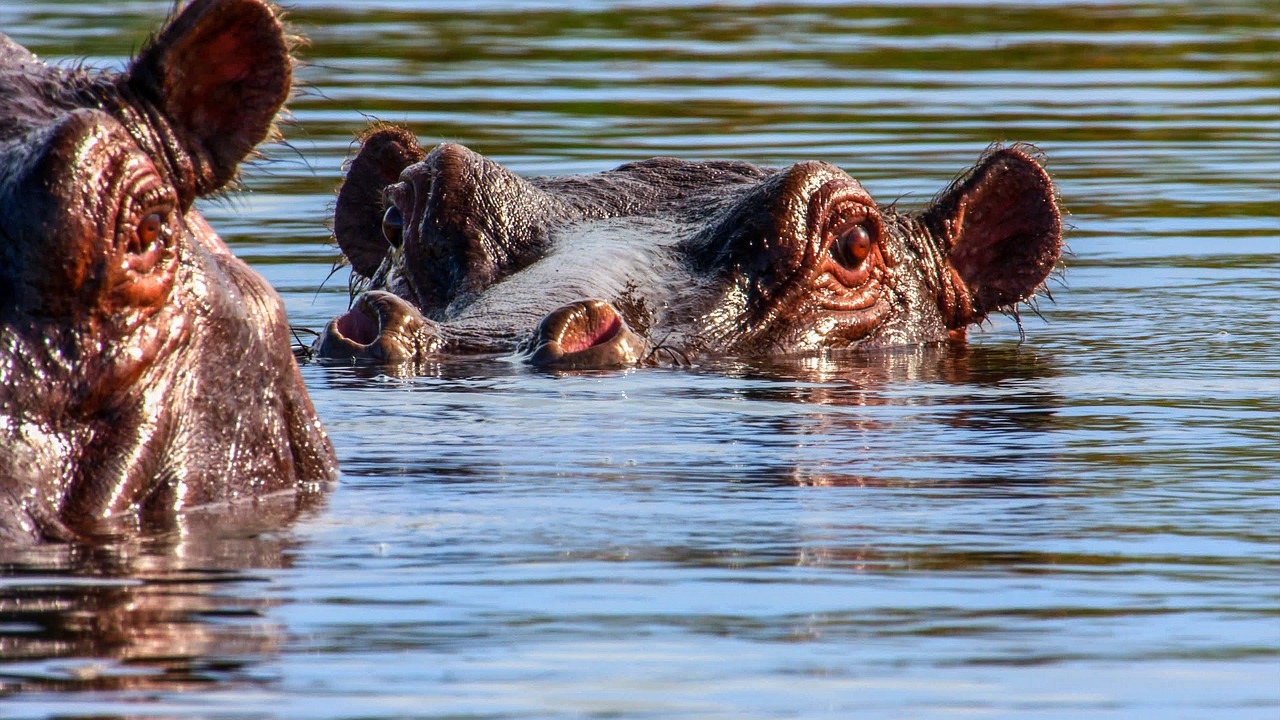
That is why so much comes here to drink. Botswana holds the largest elephant population in Africa, around 130,000 of them, and in the dry months many drift toward the delta. Lions work the islands; leopards keep to the tree line; and the Okavango carries one of the densest populations anywhere of the African wild dog, the painted wolf, an endangered animal that has run out of most of the rest of its range. Hippos and crocodiles hold the deeper channels. The red lechwe, an antelope built for this country with splayed hooves and a water-repellent coat, breaks into a rocking half-swimming run when it is pushed off the shallows. The one formally protected reserve in the whole delta is Moremi, proclaimed in 1963 and named for Chief Moremi III. It was set up on the initiative of his widow, known as Mrs Moremi, and is often described as the first game reserve in Africa established by local residents rather than by a colonial administration.
The delta has been worked and travelled for centuries, and the boat that carries visitors through it is not a colonial import. It was the BaYei who brought the mokoro, the dugout canoe, into these channels. It is poled from the stern by a boatman standing upright with a long pole called the ngashi, while passengers sit low, at the level of the water and the reeds. Traditionally a mokoro was cut whole from a single sausage tree or ebony, one tree spent on one canoe, though most are fibreglass now, moulded to spare the hardwoods. The cheapest way onto the water runs through the Okavango Kopano Mokoro Community Trust near Maun, which puts local polers to work; the wider delta is carved into private and community concessions, each leased to a camp or a village.
Most visitors reach the deep camps not by road but by air, in a light aircraft off a strip in Maun. The flight is the first event of any trip: a shift from dust to water in twenty minutes, the pilot sometimes banking low to clear game off a sand airstrip before landing on it. From there the mokoro takes over, and it moves in near silence, the only sounds the drip off the ngashi and the reed frogs, which now and then hop aboard and ride along. On the islands the guiding is done on foot. At night the delta is loud in a way the day is not: hippos grunting close to the tents, and at first light the falling cry of the fish eagle. The hippo is the real hazard here, not the crocodile or the cat; across Africa it injures and kills more people than any other large animal, and camps route their walks and their canoes to keep well clear of the pods.
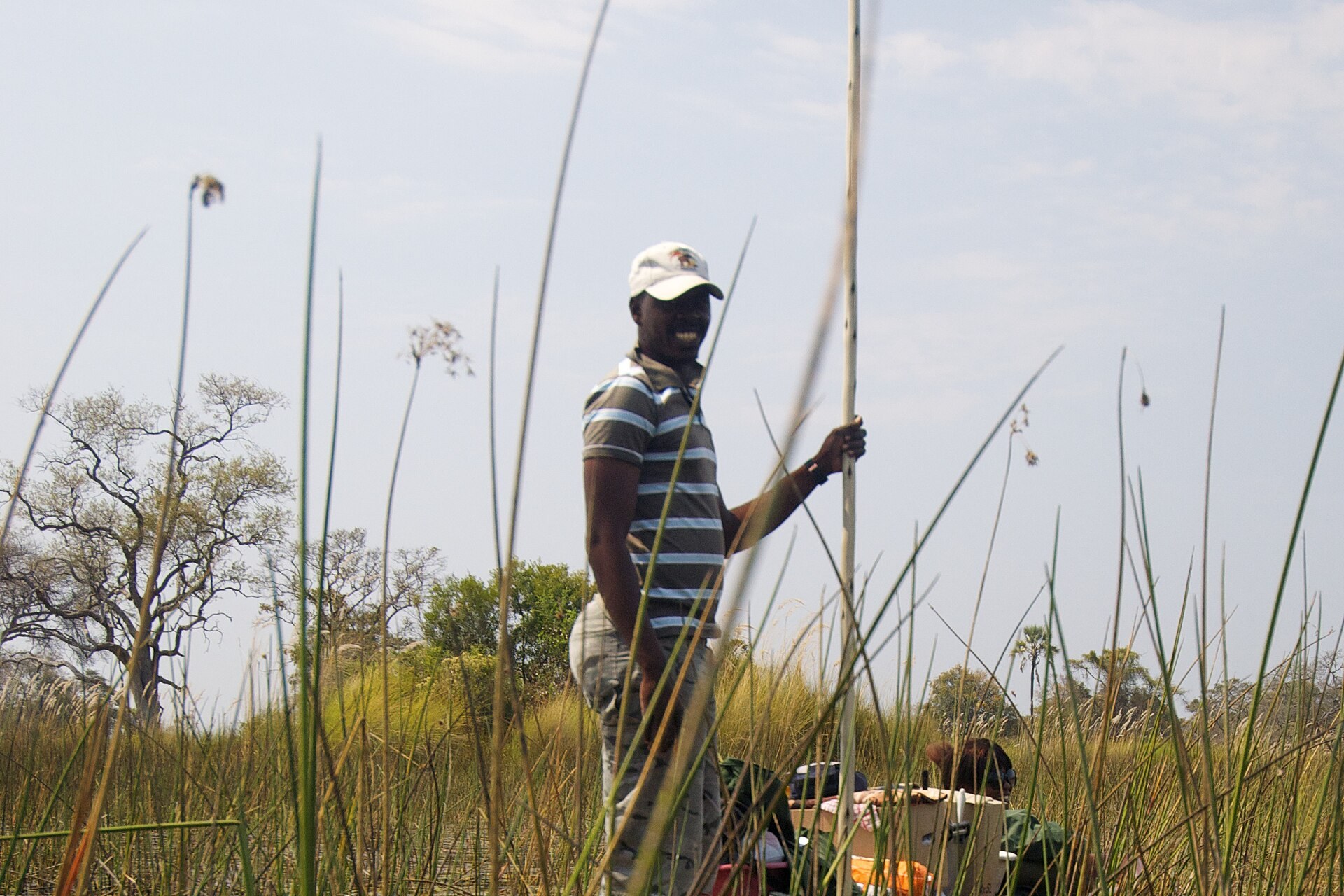
The water arrives in the dry season, months late and a thousand kilometres from the rain that made it.
There is an honest split to understand before booking, because the two Okavangos on offer are not the same trip. A budget mokoro expedition out of Maun buys atmosphere: the silence, the water at eye level, the company of the polers, and a few nights camped on an island. What it does not reliably buy is big game. Expect crocodiles, birds, the sound of hippos in the dark, and not much more. The dense predator sightings, the lions and leopards and wild dogs at close range, come from the premium fly-in camps out on the private concessions, and they cost from around 450 US dollars a night to several thousand. This is by design. Botswana runs its tourism on a deliberate high-value, low-impact model, keeping prices high precisely to keep numbers down, so that the wildest concessions stay empty of everyone but the few who can pay for them.
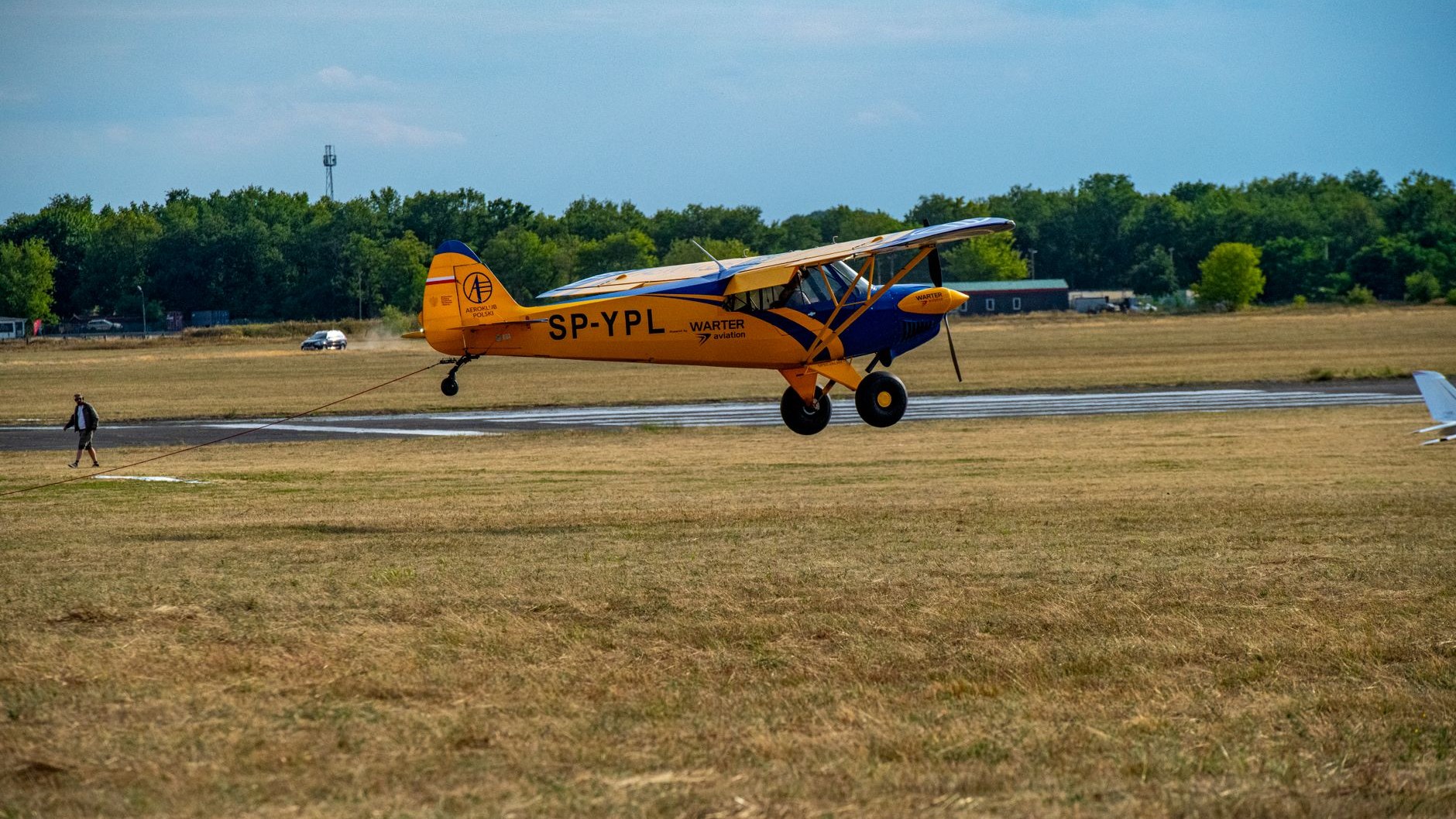
Everything begins in Maun, the dusty town on the southern edge of the delta and its only real gateway. Flights come in from Johannesburg, Cape Town and Gaborone, and in peak season the little airport becomes one of the busiest in Africa by aircraft movements, a constant shuttle of six- and twelve-seaters ferrying guests out to the strips. The season to aim for is the dry one, May to October, with the flood at its fullest from June to August. That is the best water for a mokoro and the best concentration of animals, but also the coldest, and the early mornings on the water can be genuinely cold. The green season, November to April, is cheaper and lush, the best time for birds, but the big game thins out as the land greens and the animals disperse. Nearly everyone goes guided; three nights is a common trip, and around six lets a visitor combine a water camp with a drier land camp and see both halves of the place.
The pull of the Okavango is not scenery in the ordinary sense. It is a mechanism, a river bending the seasons backward, pouring itself out across the desert at exactly the wrong time of year and calling the wildlife of half a continent in to meet it.