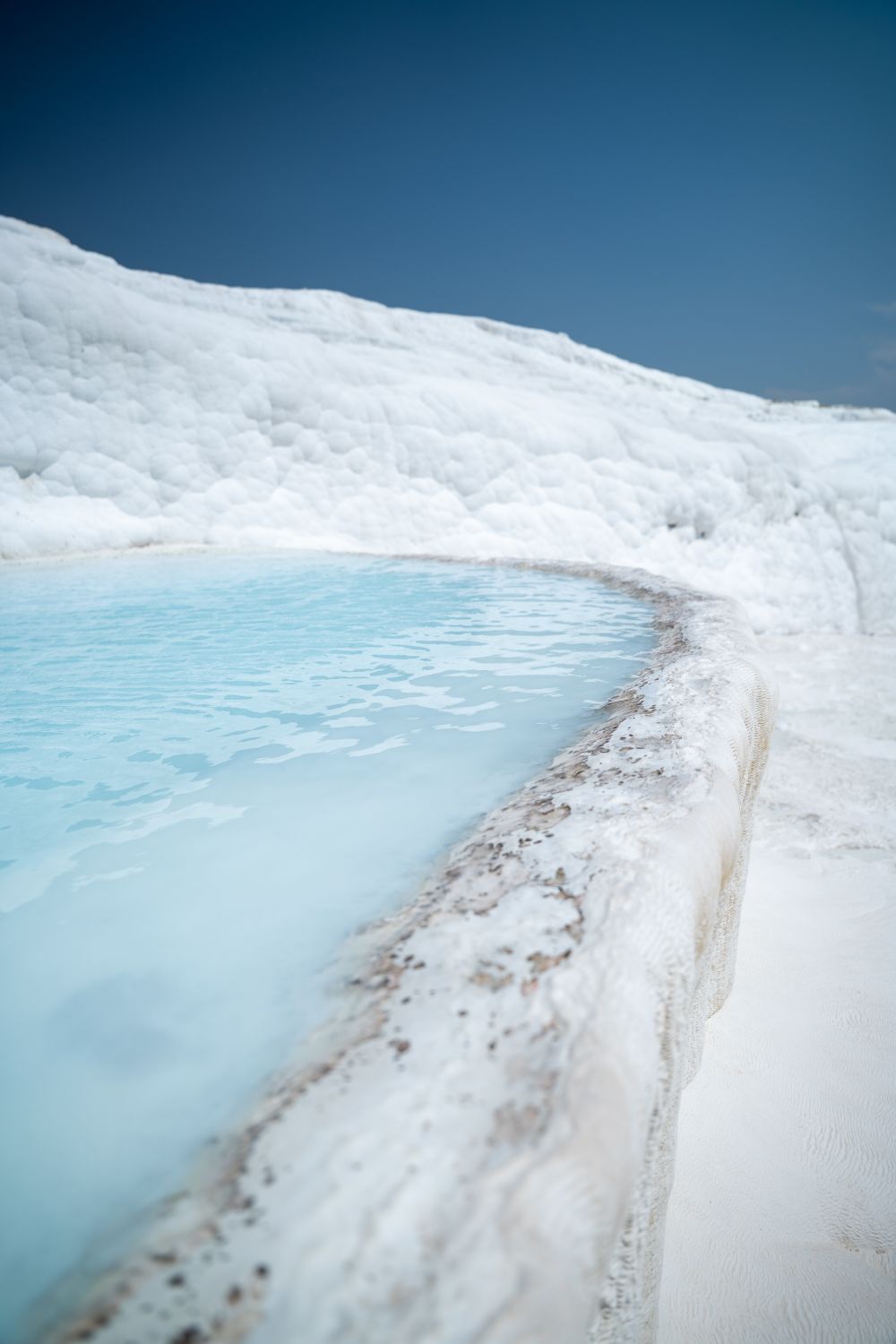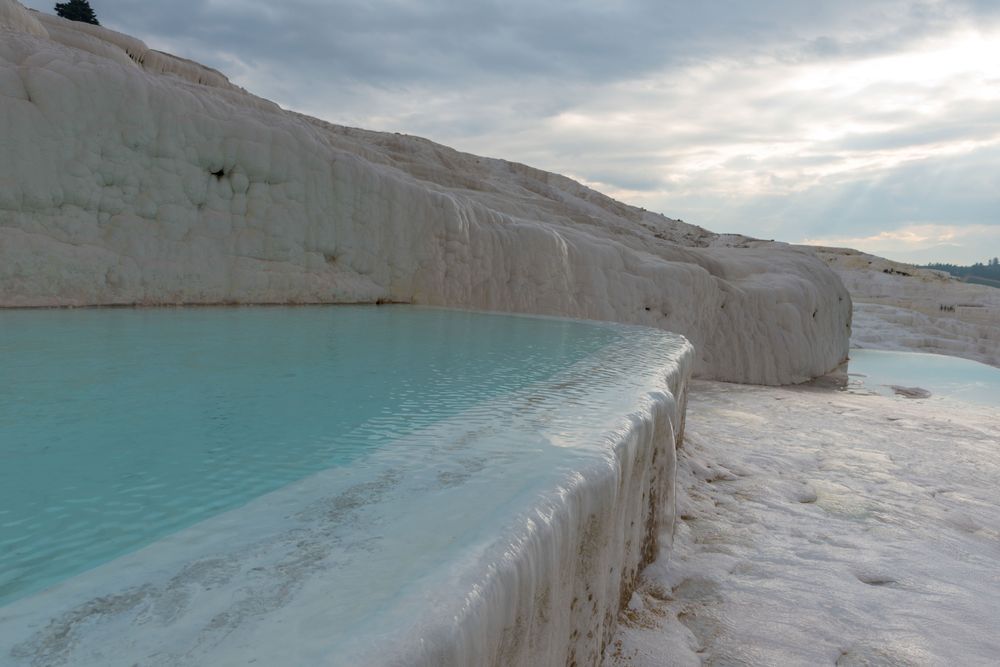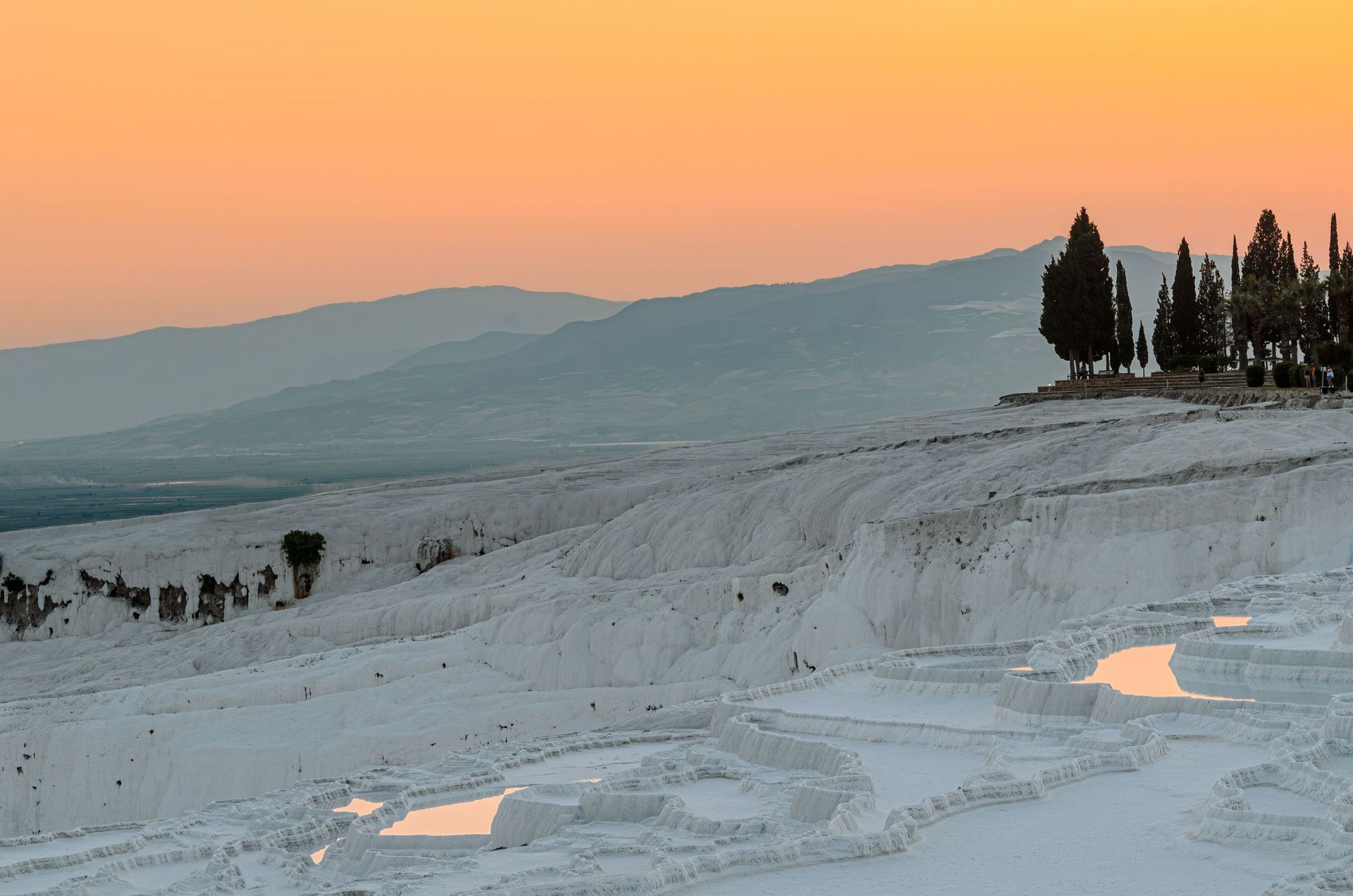
From the main road it reads as snow, a white slope stopped halfway down a green Anatolian hill, and it takes a second look to understand that nothing up there is cold. Pamukkale means cotton castle, and the name is the only soft thing about it. The white is stone. A whole hillside of stone, poured in shelves and scalloped basins and shallow pools of water so blue it looks tipped in from a tin. UNESCO listed the hill and the ruined city on top of it as one World Heritage Site in 1988, one entry for the two of them.
The stone is travertine, and the hill is still making it. Hot springs rise through the rock saturated with dissolved calcium, and as the water spills into the open air it sheds its carbon dioxide, so the calcite comes out of solution and hardens over the lip of each pool, a fraction of a millimetre at a time. Everything you stand on up here was once moving water. Left alone, the terraces grow a little wider and a little deeper every decade.
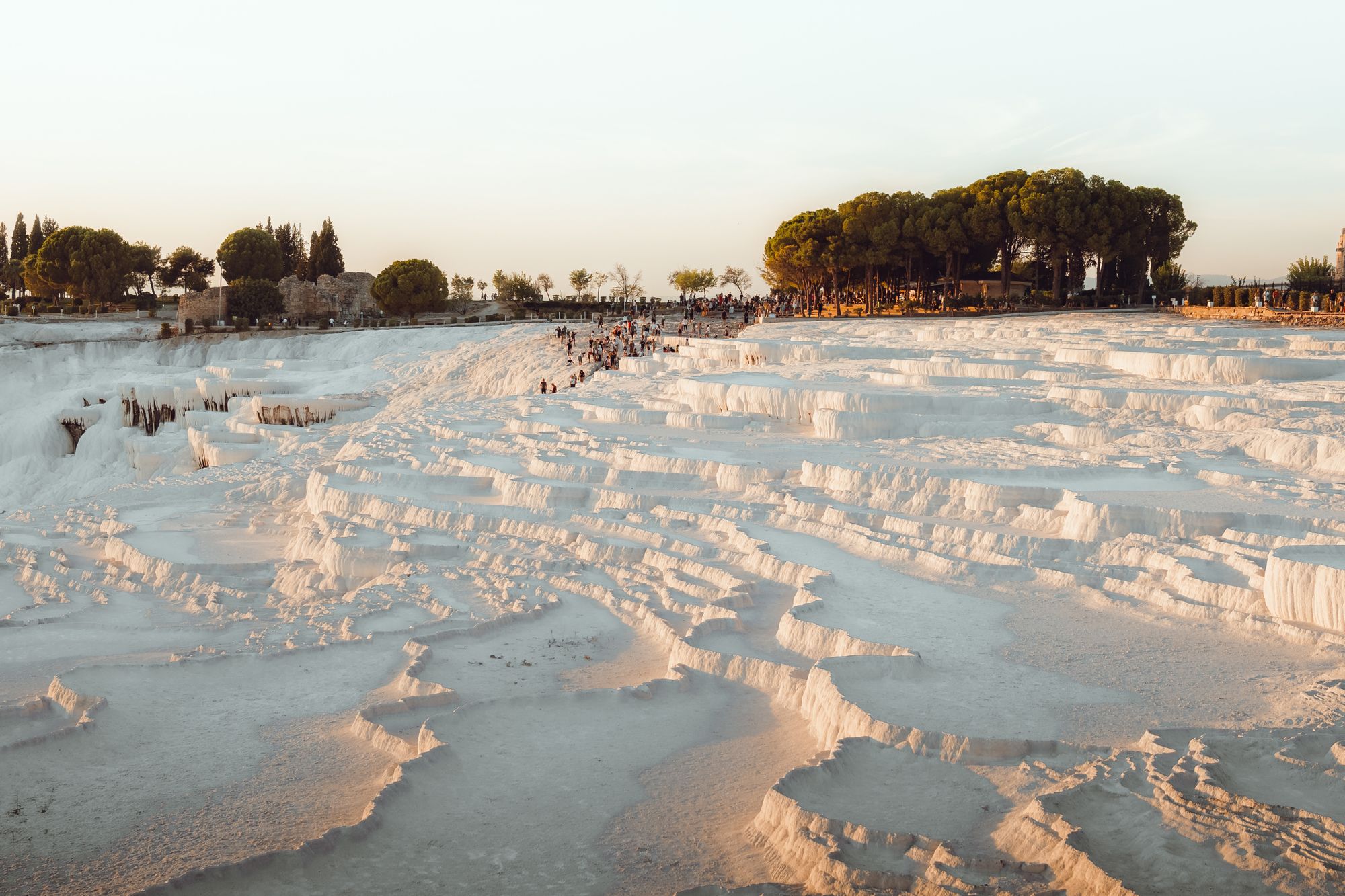
You go up barefoot. Shoes come off at the bottom, partly out of respect and mostly because grit and hard soles wear the surface away, so the whole climb is made on warm, faintly ridged stone with the spring water running over it ankle deep. Bring a bag to carry your shoes. It is a strange sensation, half beach and half cathedral. The route is roped to a single channel that lets the rest of the hill keep growing, and the crowd thins the higher you get.
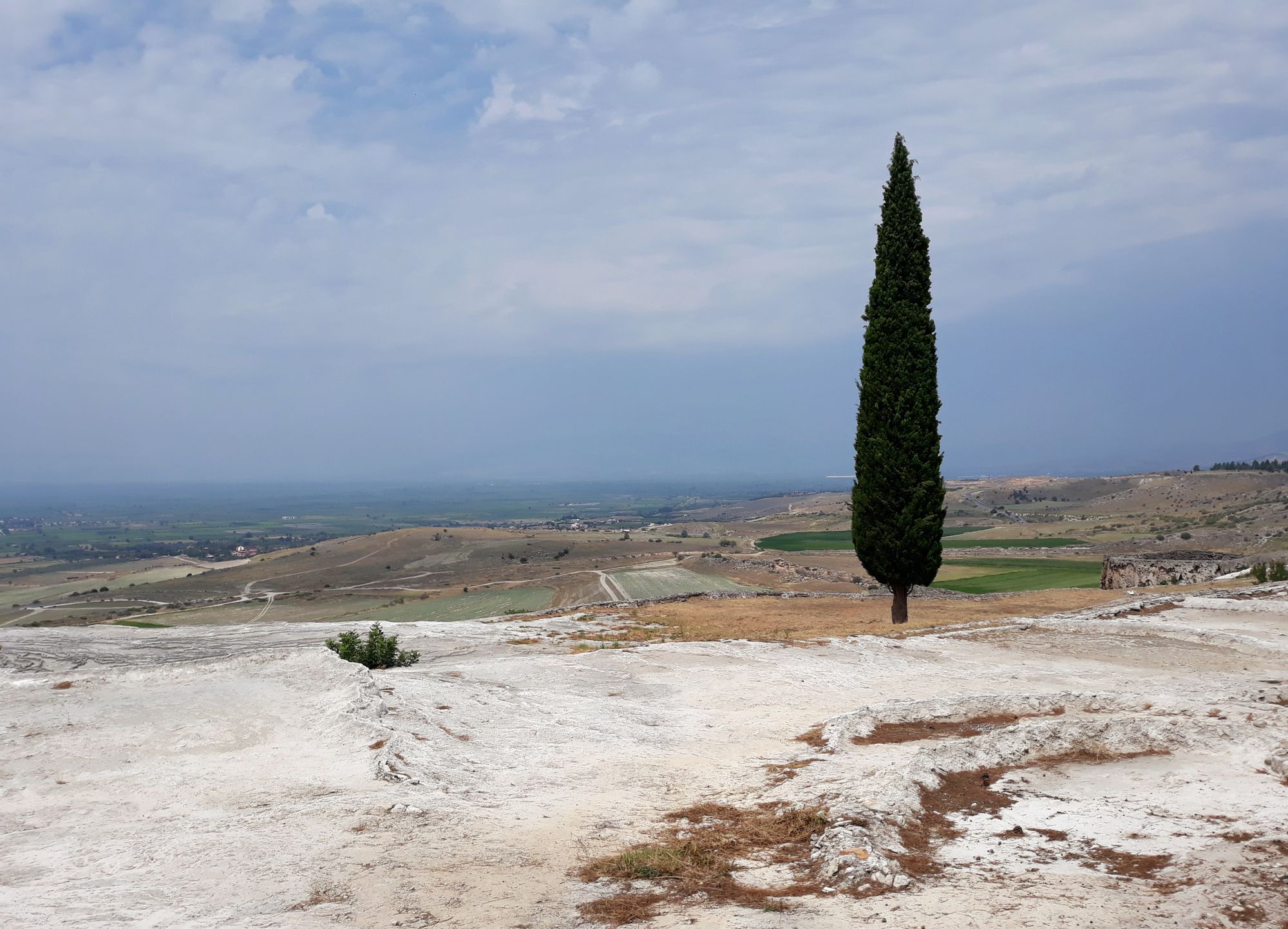
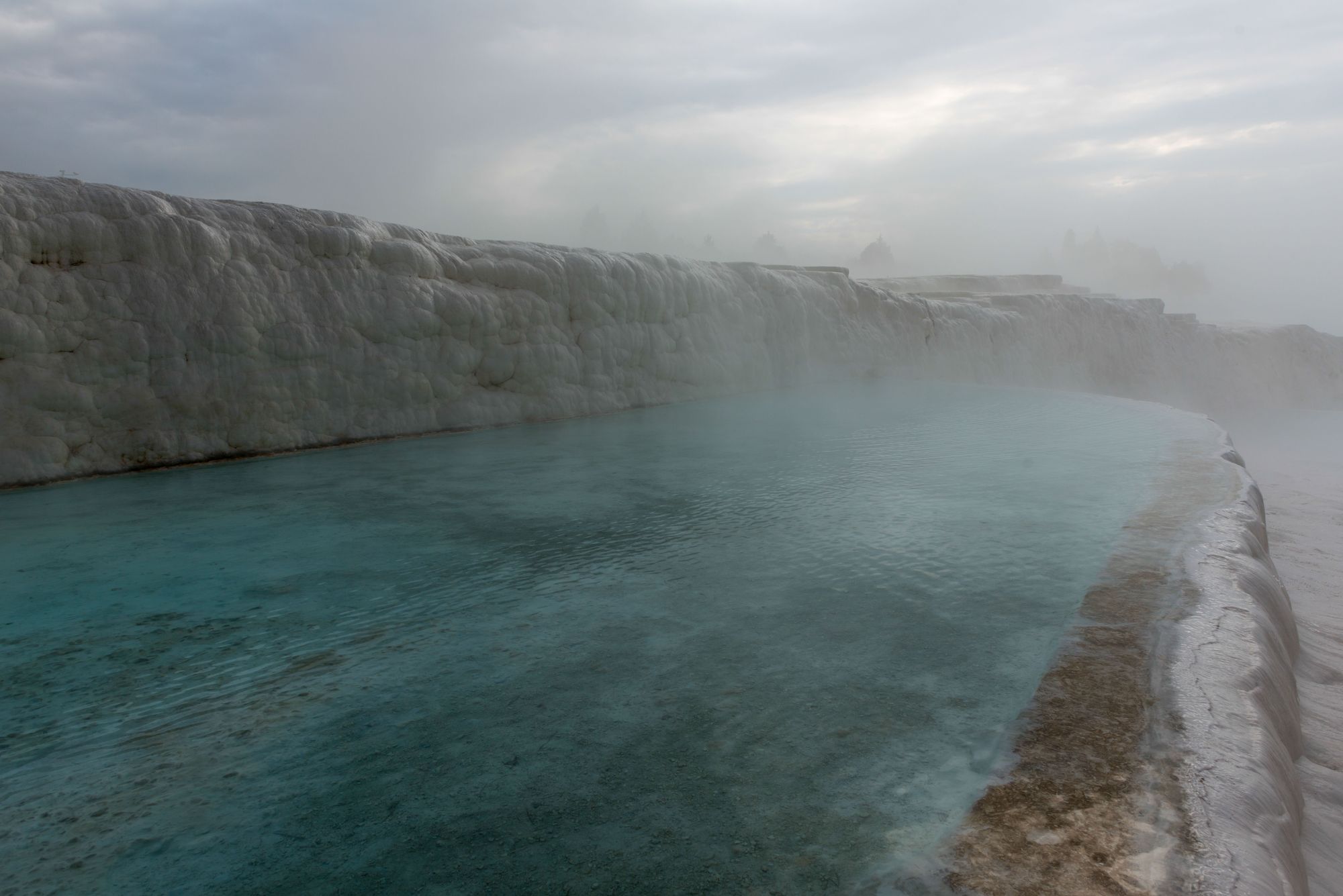
The water is the point, and it is warm. The springs surface at about 35 degrees, hotter at some vents, and stay warm all the way down the slope. Be clear about what the terraces offer, though: the water on the walking route runs ankle to knee deep, wading rather than swimming, and the deeper scalloped basins are roped off so the stone can keep growing. The full soak the Romans prescribed two thousand years ago waits at the top of the hill, and the whole valley falls away below while you climb toward it.
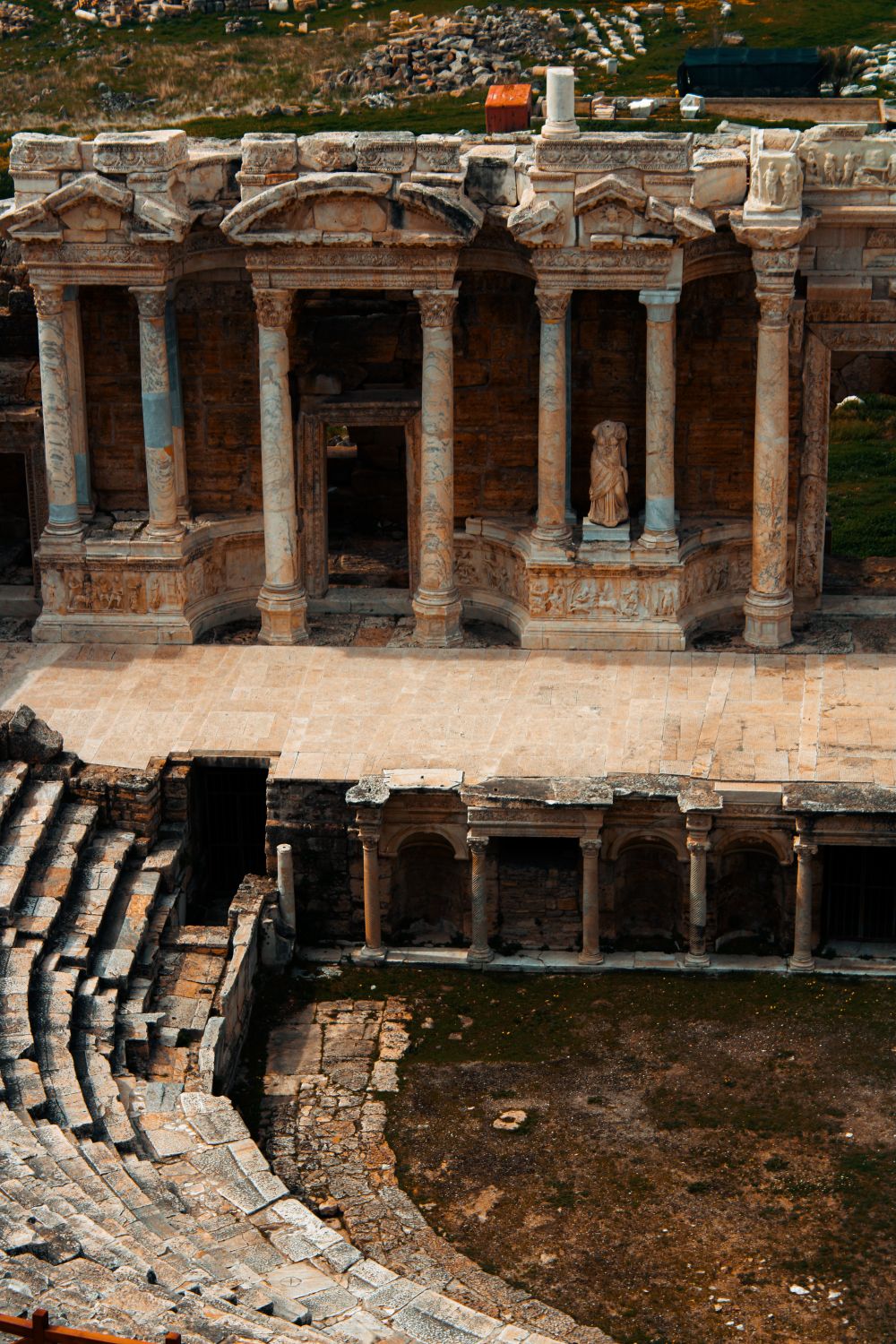
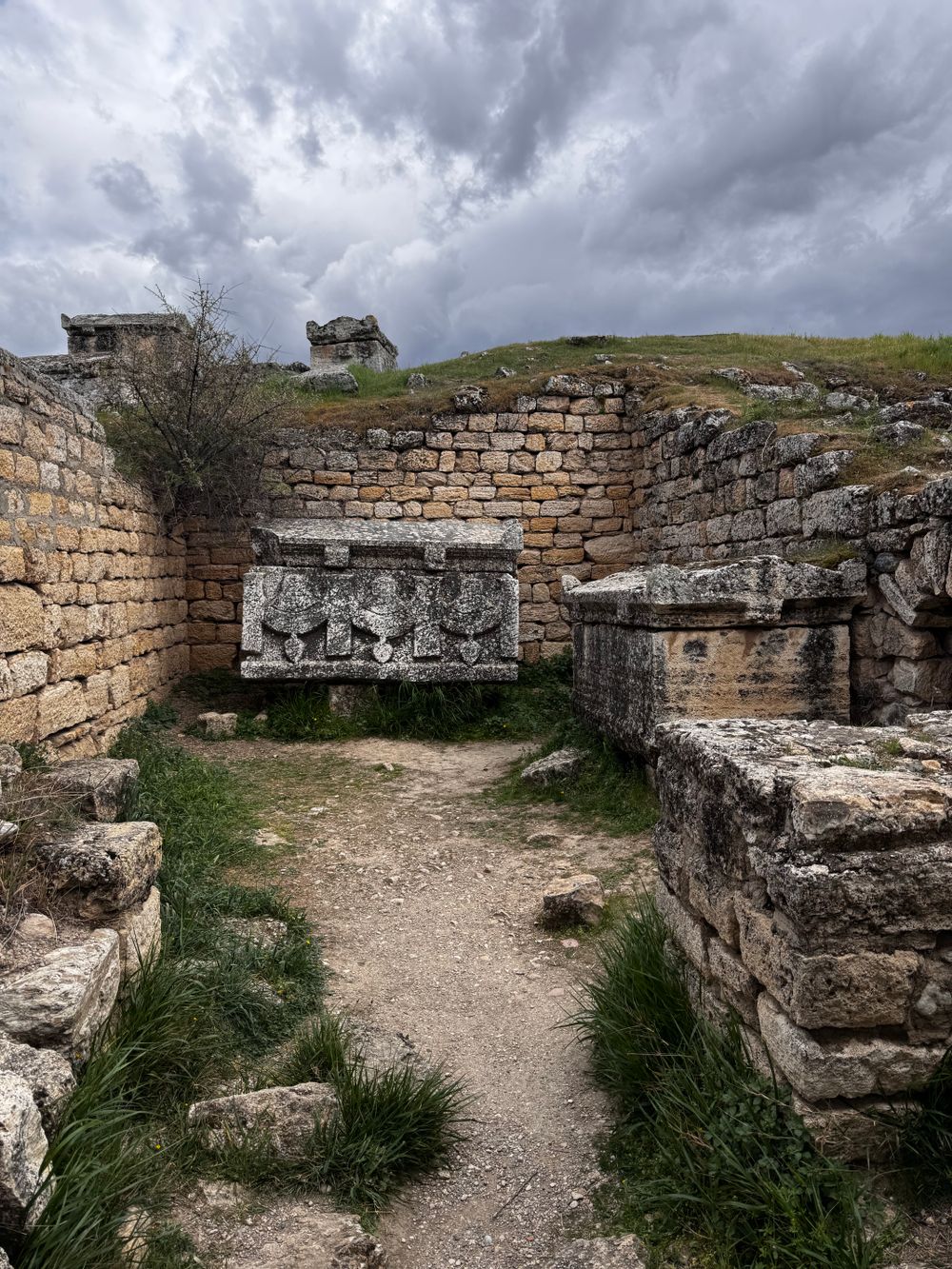
Because there is a city on top. Climb to the summit and the terraces give way to Hierapolis, the spa city the kings of Pergamon founded around these springs in the second century BC and Rome then ran for five hundred years, and it is enormous. Colonnaded streets, a bath complex the size of a basilica, and a theatre cut into the hillside with its stage still standing. People came to take the waters, and a great many who did not get better stayed on for good, ranked up the slope in one of the largest ancient cemeteries in Turkey.
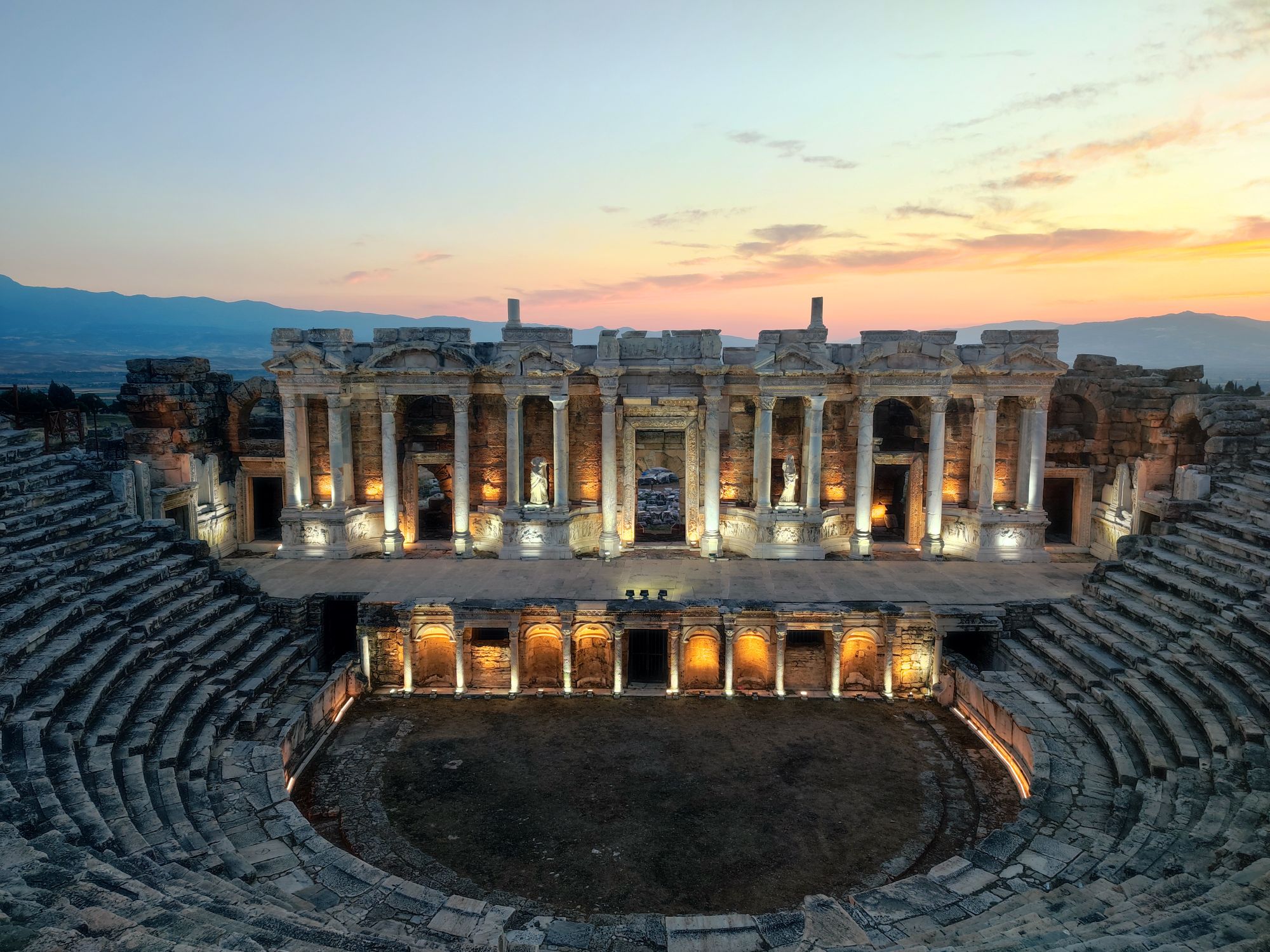
The strangest swim is near the centre, in what everyone calls the antique pool, a warm spring-fed bath scattered with fallen marble columns that an earthquake tipped in centuries ago. You get in and float over them, fluted Roman stone on the bottom, small bubbles rising past your legs from the vents below. It should feel like a theme park and somehow never does. The pool reopened in May 2026 after sixteen months of restoration work and a new visitor building at its edge, and it charges its own ticket on top of the site entry.
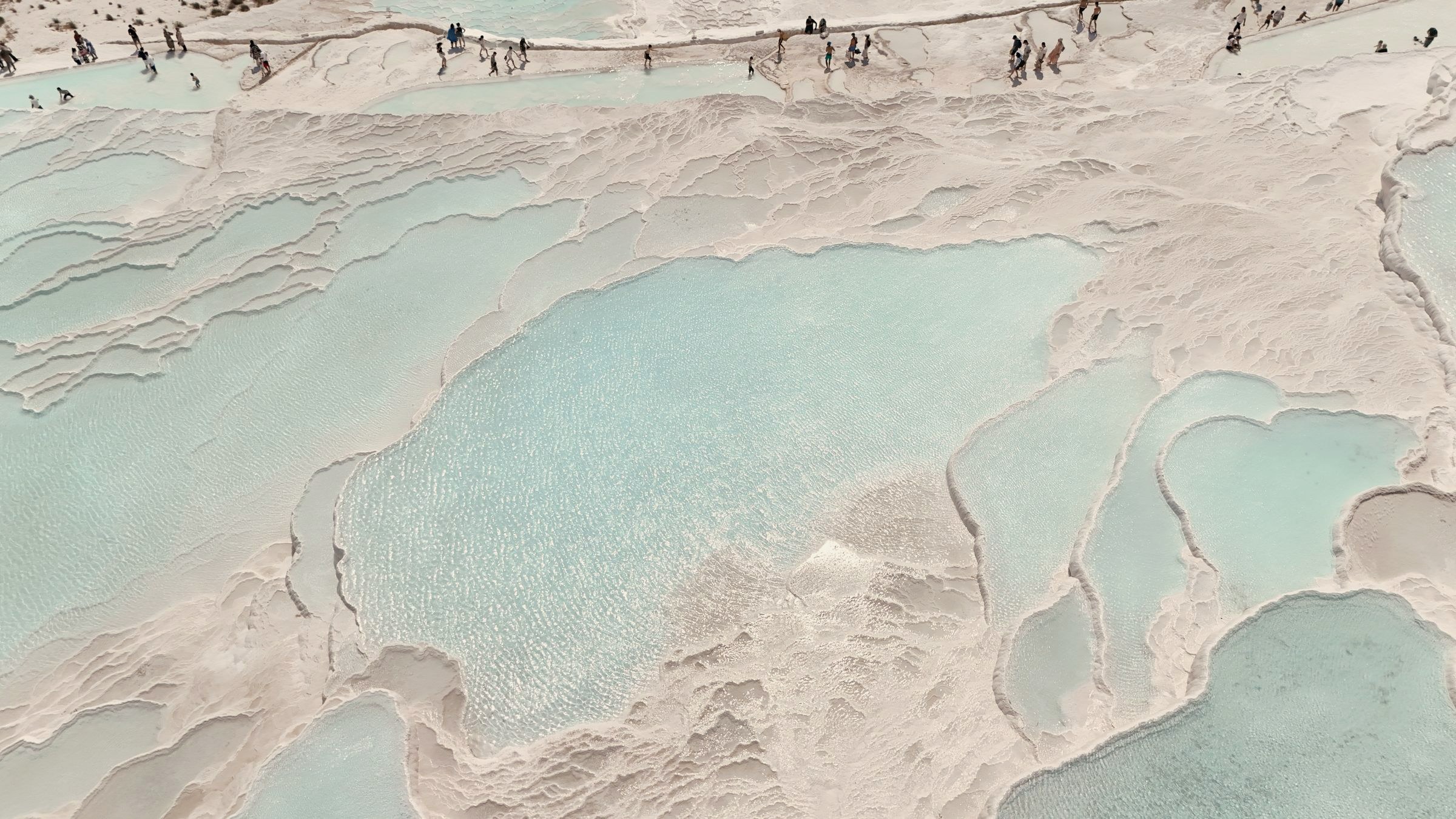
Everything you stand on up here was once moving water.
The practical shape of a visit is simple. The base is Denizli, about twenty minutes away by the dolmuş that leaves from beneath its bus terminal, with trains from İzmir and short flights from Istanbul to Denizli Çardak. One ticket covers the terraces and Hierapolis together; three gates serve the site, and the south entrance by the village opens earliest, well before the tour groups arrive from the coast around late morning. Come at the start of the day or the end of it, because midday on the bare stone is white glare, full car parks and no shade. The site closes in the evening, earlier in winter, so take the last hours rather than counting on the dark. Spring and autumn are the kind seasons: warm water, bearable stone, room to stand still.