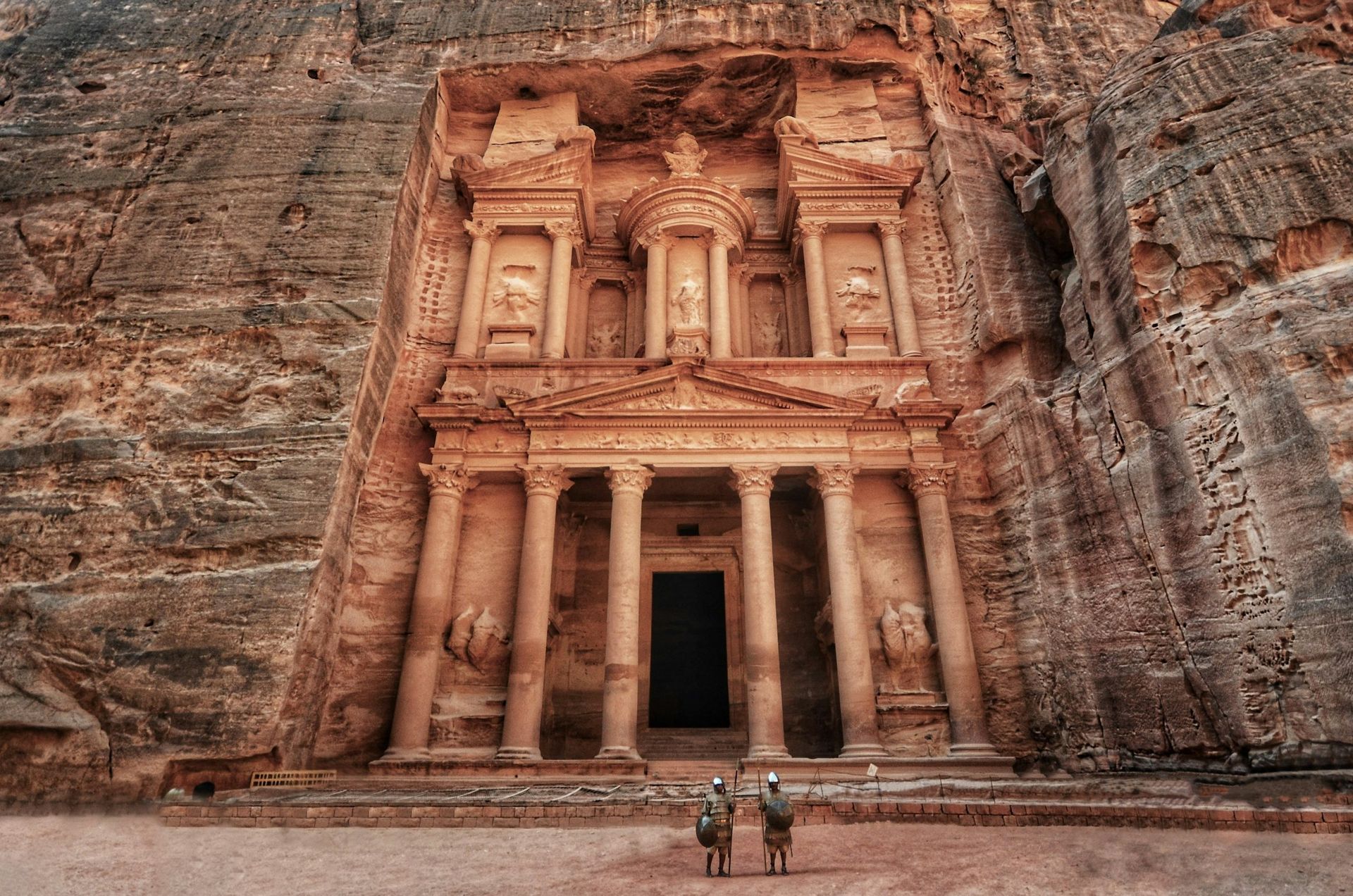
The single most useful thing to know before visiting Petra is that the Treasury is not the destination. It is the doorway. The photograph everyone has seen, the tall carved facade glowing at the end of a slot canyon, sits near the entrance to a city that ran for kilometres up the valleys beyond it. Visitors who budget half a day see the famous picture and turn around. Petra rewards two full days, and the people who give it that come away describing a different place from the ones who did not.
The city was the capital of the Nabataeans, a trading people who grew rich on the caravan routes carrying incense and spices across Arabia, and who cut their temples and tombs directly into the soft red sandstone. Petra was effectively lost to the outside world for centuries until the Swiss explorer Johann Ludwig Burckhardt talked his way in disguise into the valley in 1812. What he found, and what remains, is less a single monument than an entire urban landscape carved from rock.
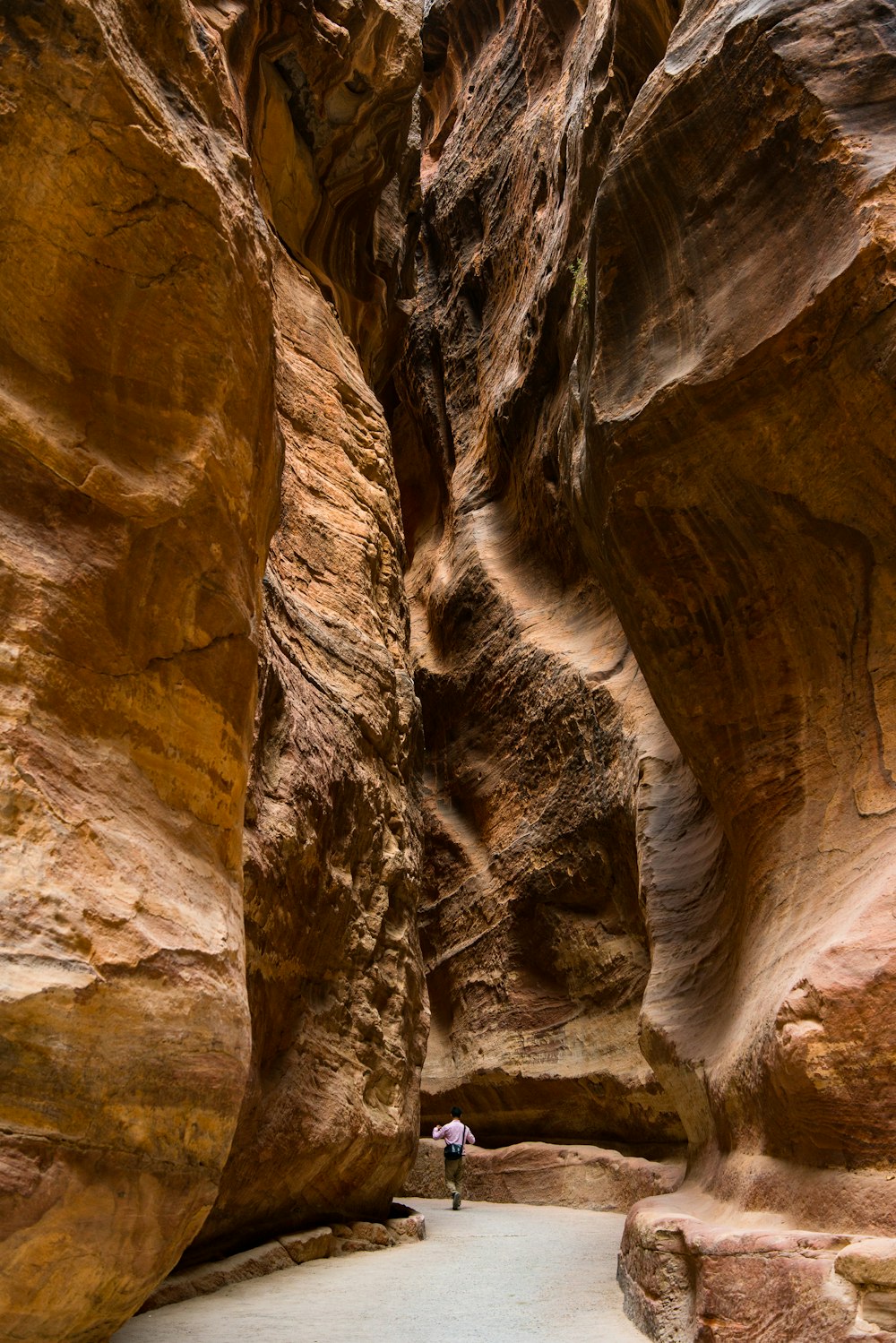
The way in sets the tone. The Siq is a natural fissure in the sandstone, a little over a kilometre long, its walls rising in places more than a hundred metres while the path narrows to a few metres across. It is not a built corridor but a geological one, widened and paved by the Nabataeans, who ran a water channel along its side. The walk down is slow and enclosed and deliberately anticlimactic, until the rock ahead splits open on a sliver of the Treasury lit in the gap. That reveal is the reason to arrive at opening: at six or seven in the morning the Siq is quiet, and the facade catches the early sun.
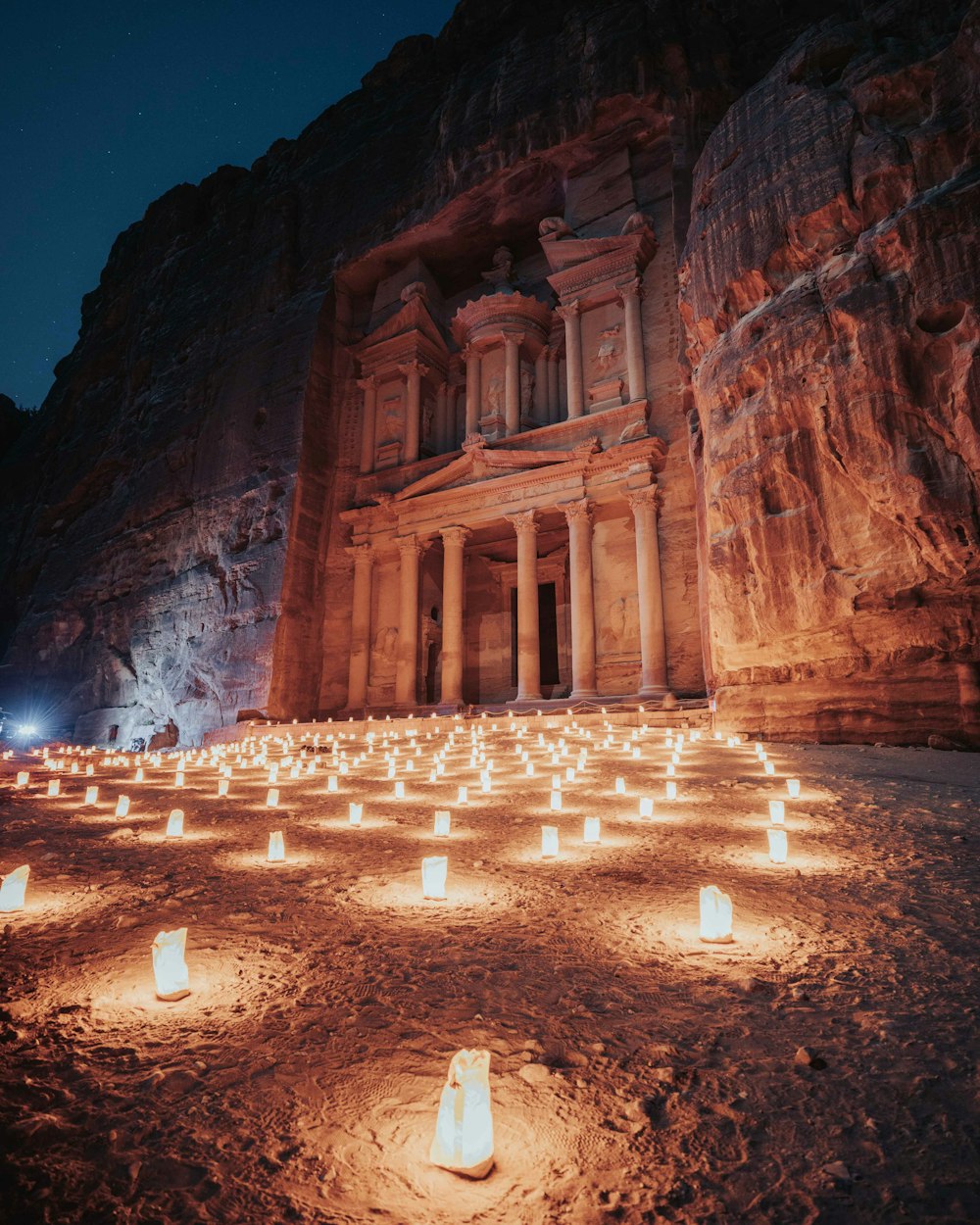
The Treasury itself, Al-Khazneh, is worth being clear about. It never held treasure and was never a treasury. It is a monumental tomb, most likely built for the Nabataean king Aretas IV in the first century, its forty-metre facade carved top down into the cliff. The name comes from a much later Bedouin belief that a pharaoh had hidden gold in the stone urn at its summit, which is why the urn is pocked with old bullet marks from people trying to break it open. The interior is a bare chamber. The genius is entirely on the outside, and the crowd gathered in front of it by mid-morning is a reliable sign to keep moving.
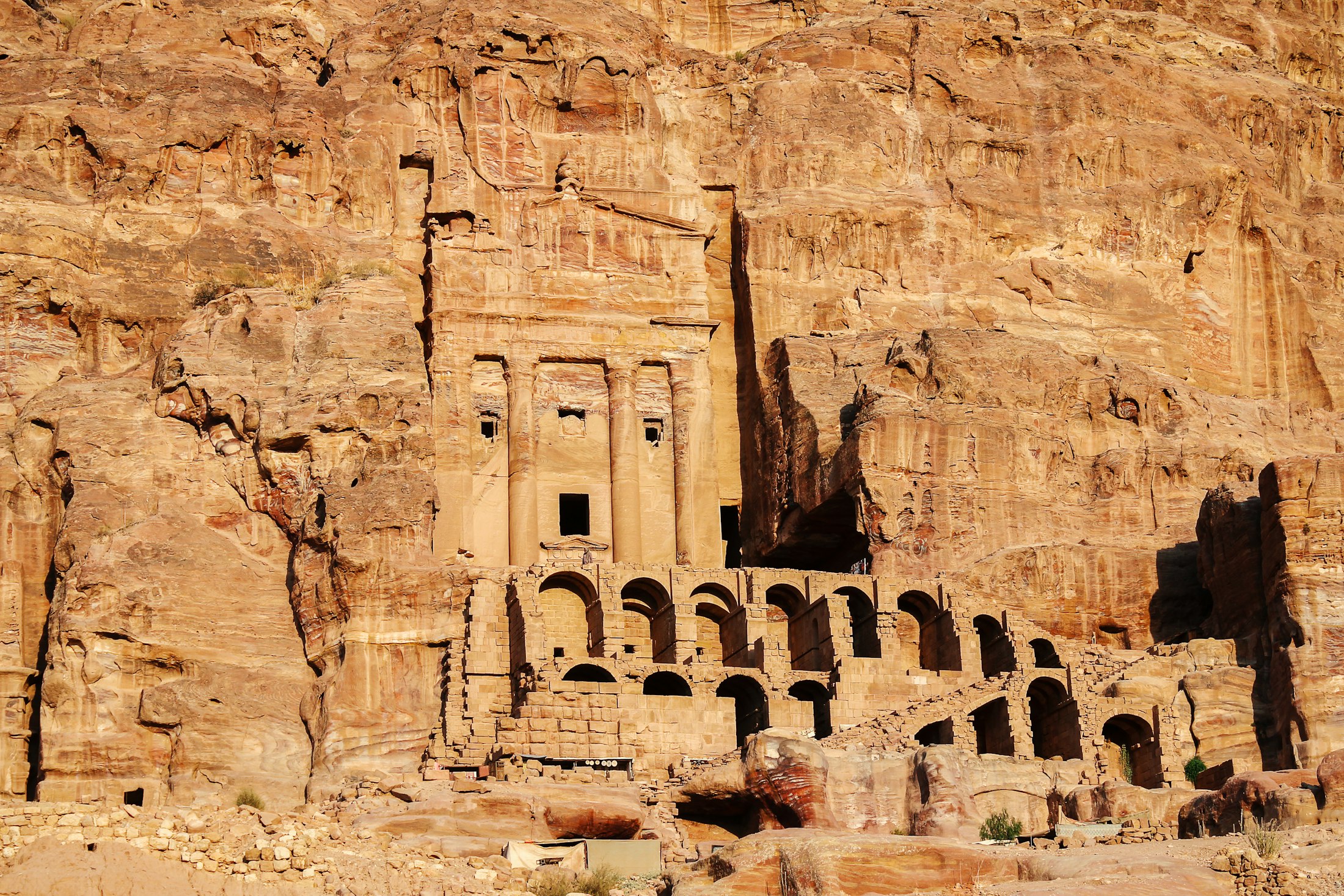
Beyond the Treasury the canyon opens out, and this is where Petra becomes a city rather than a photograph. The Street of Facades is lined with tomb fronts. A Roman-style theatre, cut into the hillside rather than built up from it, seated several thousand. A colonnaded street marks the old civic centre, with the remains of temples and a Byzantine church with mosaic floors off to the sides. Along the eastern cliff, the Royal Tombs, the Urn, Silk, Corinthian and Palace tombs, run in a great weathered row, their sandstone streaked in bands of red, orange and violet that shift through the day.
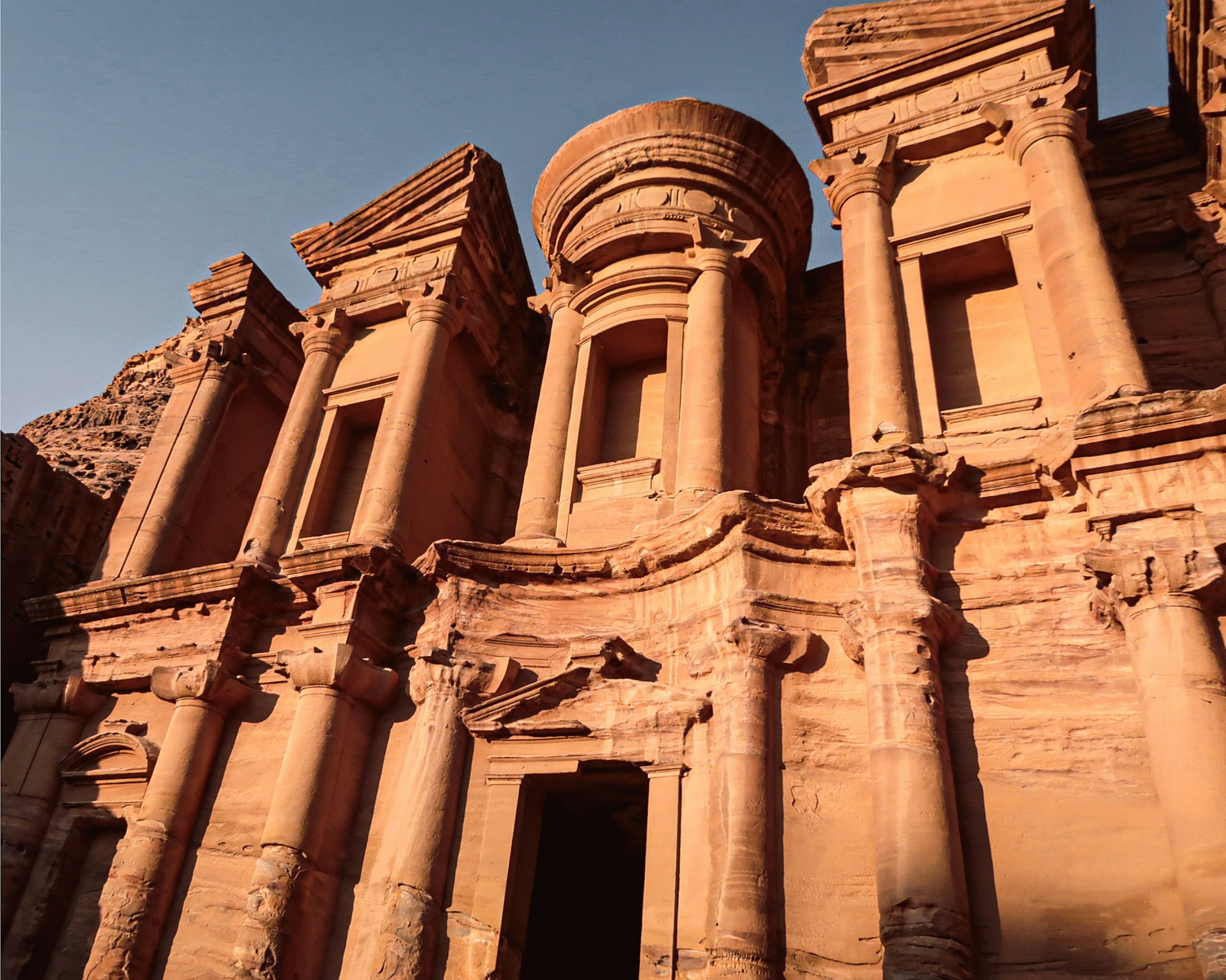
The climb most day-trippers skip is the one most worth making. The Monastery, Ad-Deir, sits high above the far end of the valley, reached by a rock-cut staircase of roughly 800 steps that takes the better part of an hour. It is another tomb-temple facade, and it is larger than the Treasury, close to fifty metres wide, standing on an open plateau rather than wedged in a gorge. Far fewer people make the effort, so the space in front of it stays calm, and a short scramble higher reaches viewpoints over the desert of Wadi Araba falling away to the west. The staircase is hard work in heat; going up in the later afternoon, when the west-facing facade is lit and the day-trippers have gone, is the reward for staying overnight.
The facade with a pharaoh's gold in the legend is a tomb with an empty room. The building worth the climb is the one almost nobody climbs to.
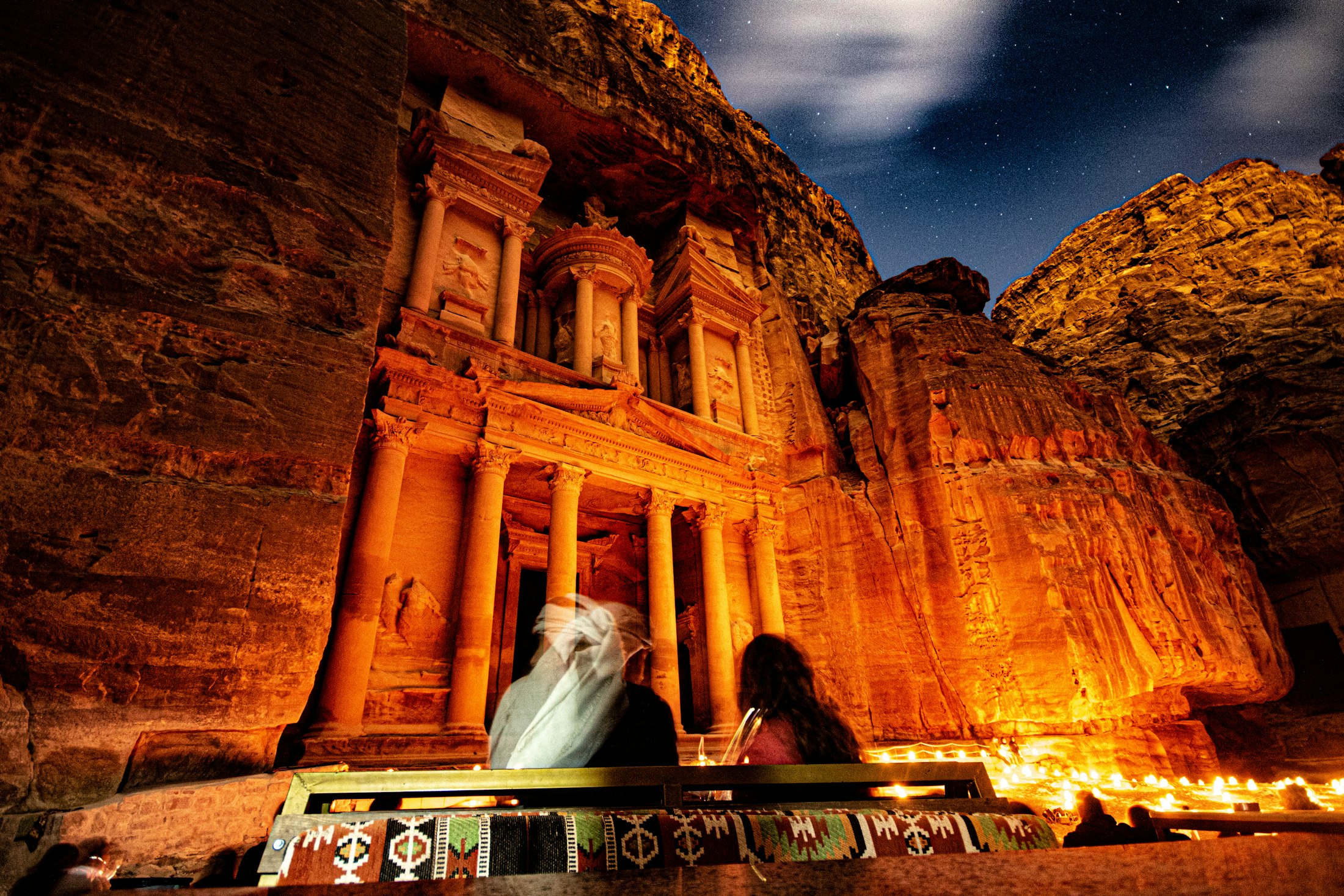
Two practical decisions shape a visit. The first is the ticket. The Jordan Pass, bought online before you fly, bundles the Petra entry with dozens of other sites and, crucially, waives the tourist visa fee as long as you stay at least three nights in the country, which for most itineraries makes it pay for itself. The second is Petra by Night, held on Monday, Wednesday and Thursday evenings, when the Siq and the Treasury are lit with candles. Opinion on it splits hard. Some find it genuinely atmospheric; others a crowded, over-hyped sit-down that the phone cameras ruin. If it appeals, treat it as an extra rather than your first sight of the Treasury, which should always be by daylight.
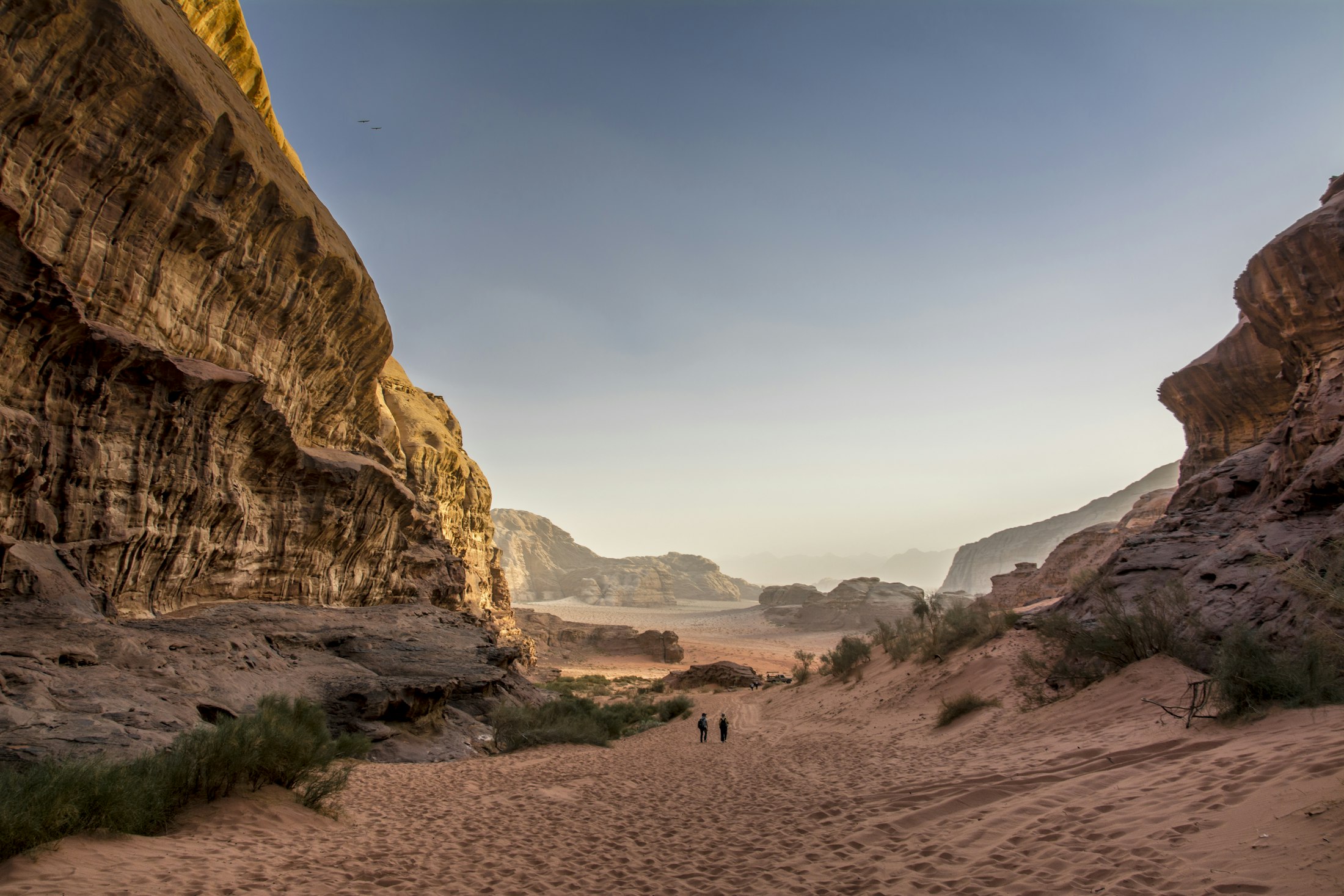
One request that comes up again and again from recent visitors: do not ride the animals. The horses, donkeys and camels touted along the trails, and the carriages through the Siq, have a long-documented record of overwork and mistreatment, and the climbs are well within a reasonably fit walker's ability. Wear real shoes, carry more water than you think you need, and plan around the heat rather than through it. The base for all of this is Wadi Musa, the town at the gate, where the hotels range from backpacker to comfortable. With a spare day, Wadi Rum's desert is two hours south and the Dead Sea about three hours west, which is why Petra so often sits in the middle of a longer Jordan loop rather than as a stop on its own.