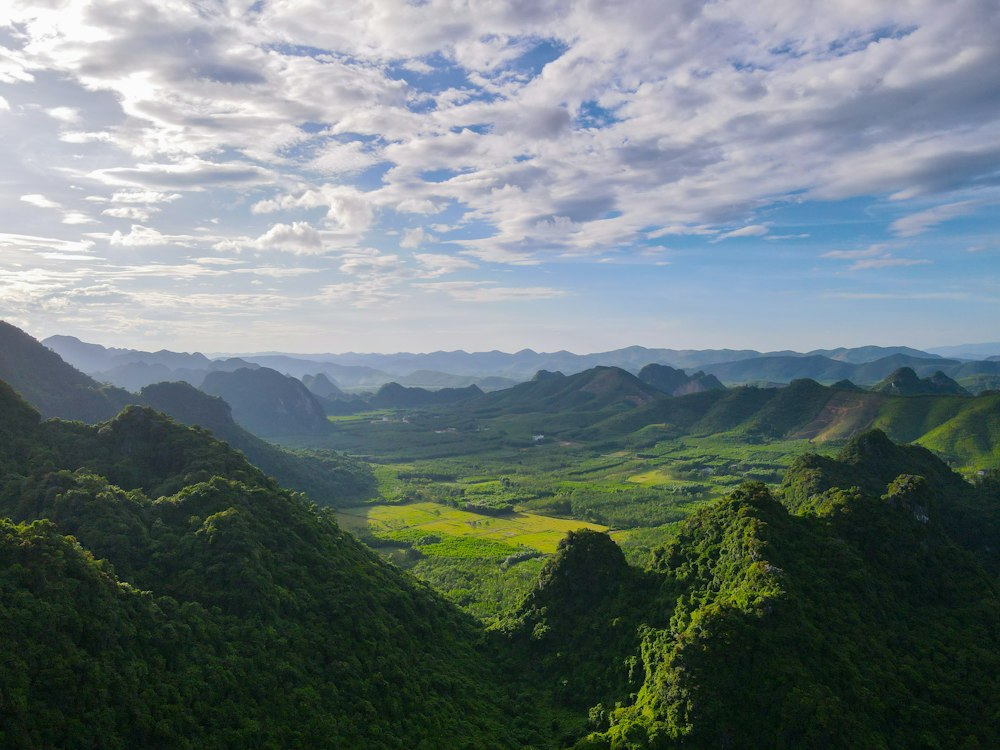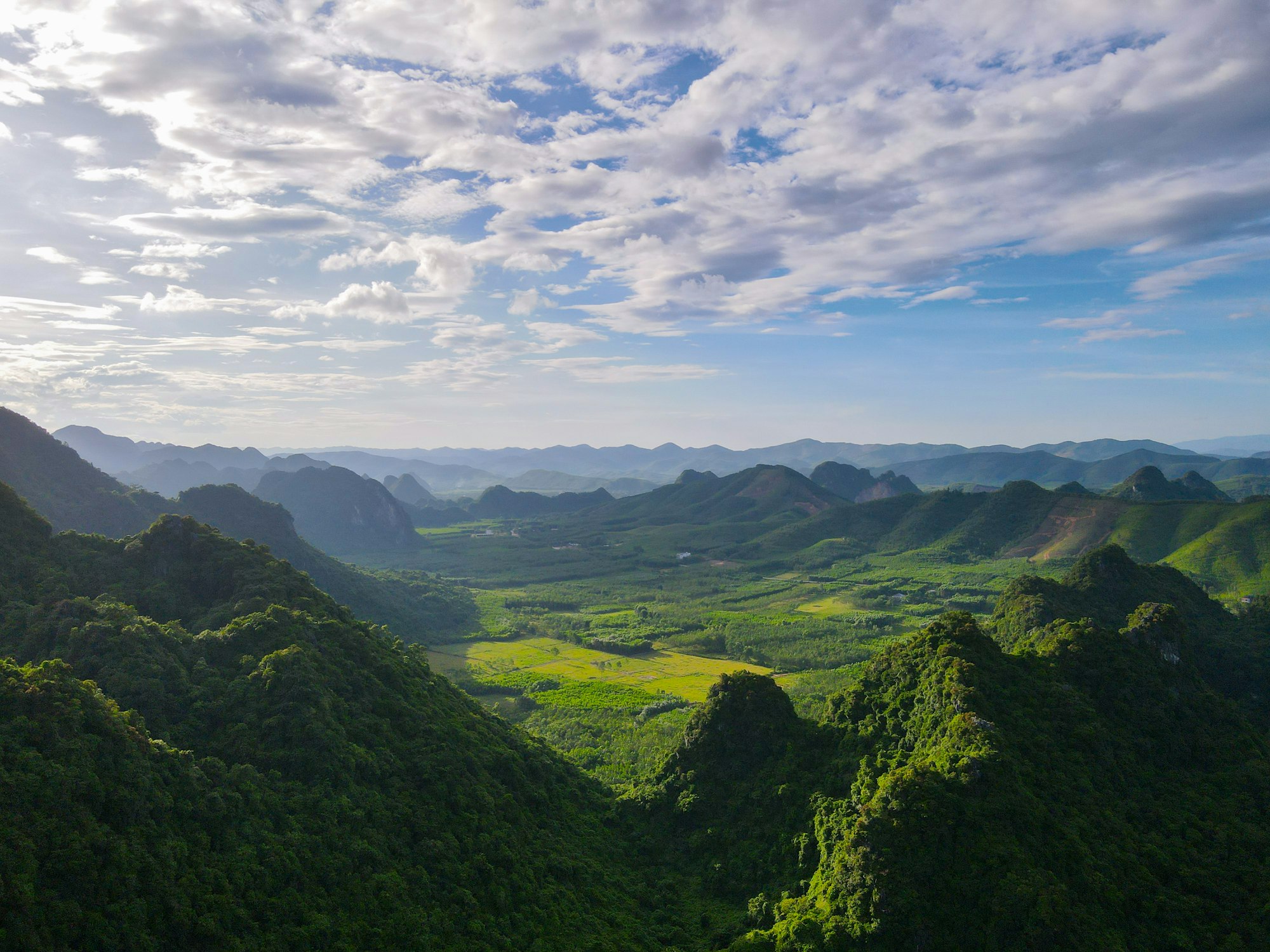
The largest cave passage on earth runs under the forest of Quang Binh province, in central Vietnam. Hang Son Doong is cited at up to two hundred metres high, a hundred and fifty wide and some nine kilometres long, dimensions so far past ordinary experience that the descriptions reach for a forty-storey building, a city block, a parked 747 to make the number mean anything. What sets the region apart, though, is not the single record. It is the range. More than two hundred and twenty kilometres of cave and underground river have been surveyed here, graded like climbs on a wall from a grotto a child can reach by boat to an expedition that costs three thousand dollars and books out a year in advance.
The stone is old. Phong Nha-Ke Bang National Park, listed by UNESCO in 2003 and extended in 2015, sits on the oldest large karst landscape in Asia, limestone laid down roughly four hundred million years ago and dissolved into a honeycomb ever since by rain and river. Water finds the faults, widens them, drops through to the next level and moves on, and over that span it has hollowed out a whole underworld beneath the jungle. The names above ground are worth learning before arrival, because the caves come as a menu and each rung asks a different thing of the traveller.
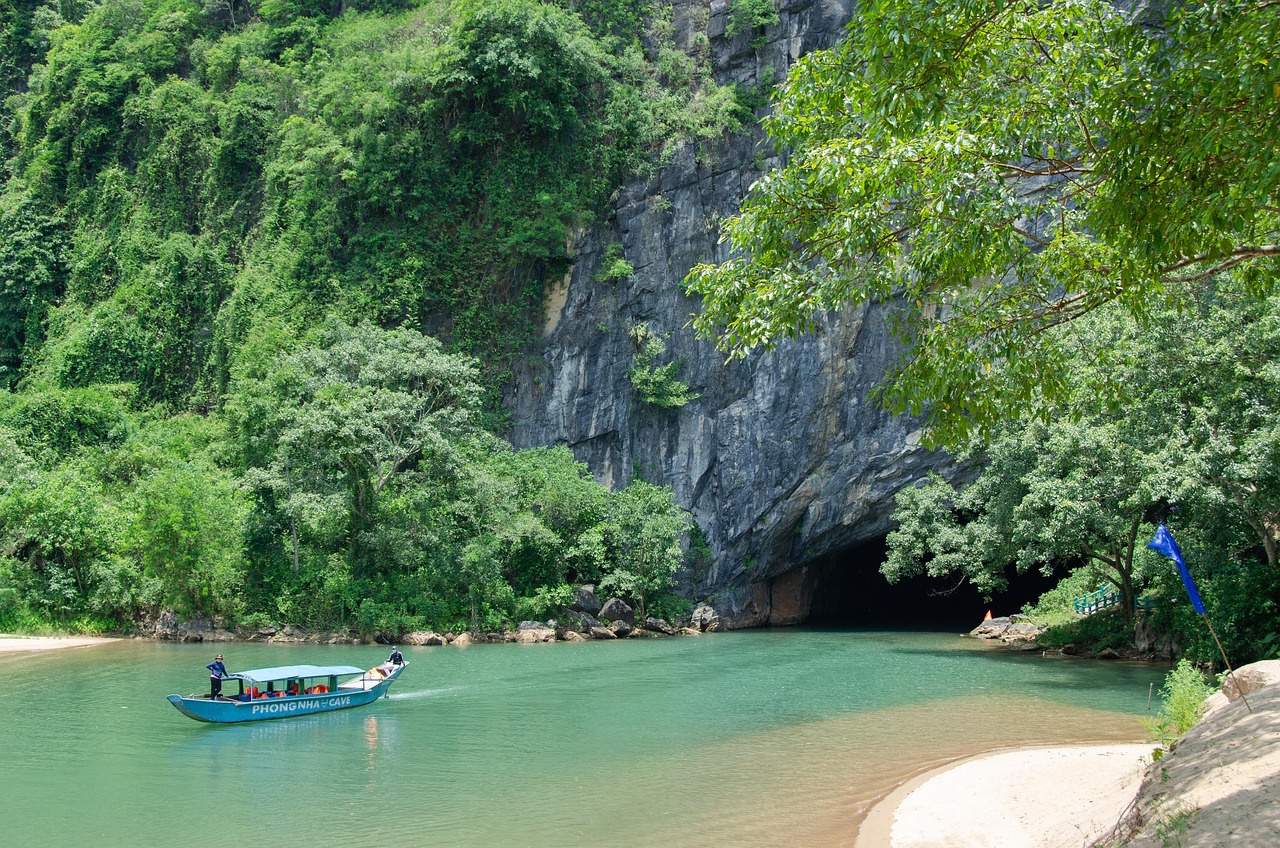
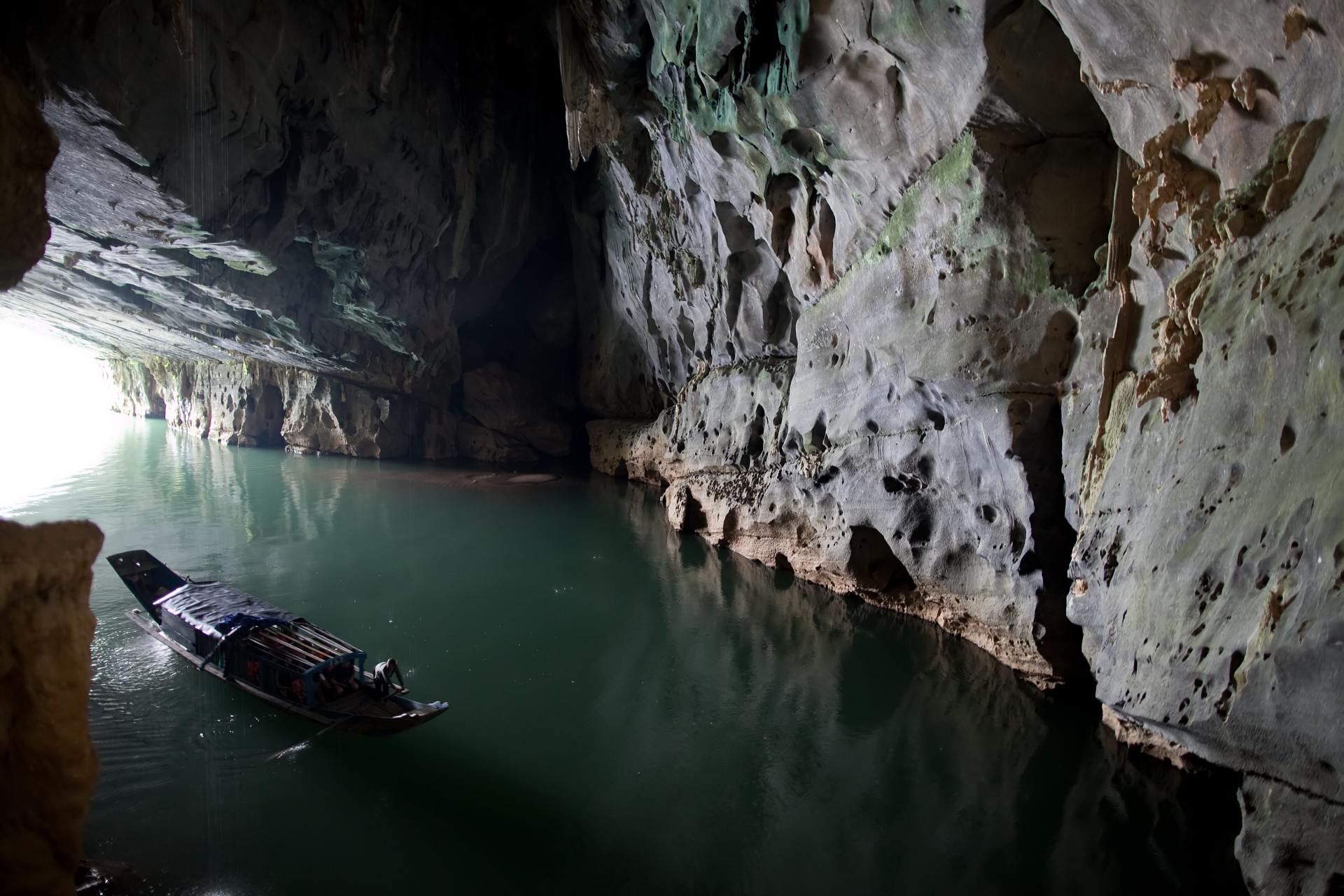
Start at the bottom rung, which is also where the story started. Phong Nha Cave is the original, the one that gave the district its name, and the easiest of the lot. Wooden boats run up the Son river from the jetty at Son Trach, the base village most travellers still call Phong Nha, and at the cave mouth the boatman cuts the engine and lets the current draw the boat in under the cliff. Inside, the river continues through a series of lit caverns, sandbanks and dripping formations. The whole trip costs around seven dollars, and it asks nothing of anyone beyond sitting still in a boat.
One rung up is Paradise Cave, Thien Duong in Vietnamese, and the register changes completely. At roughly thirty-one kilometres it is the longest dry cave in Asia, though only the first kilometre is open, carried on a timber boardwalk that descends into a chamber the scale of a cathedral, stalactites hanging in curtains and columns fatter than tree trunks catching the electric light. Entry runs about ten dollars and it is self-guided, which puts it within reach of almost anyone who can manage a flight of stairs. Because it sits high in the hills, it also stays open later into the flood season than the caves down at river level.
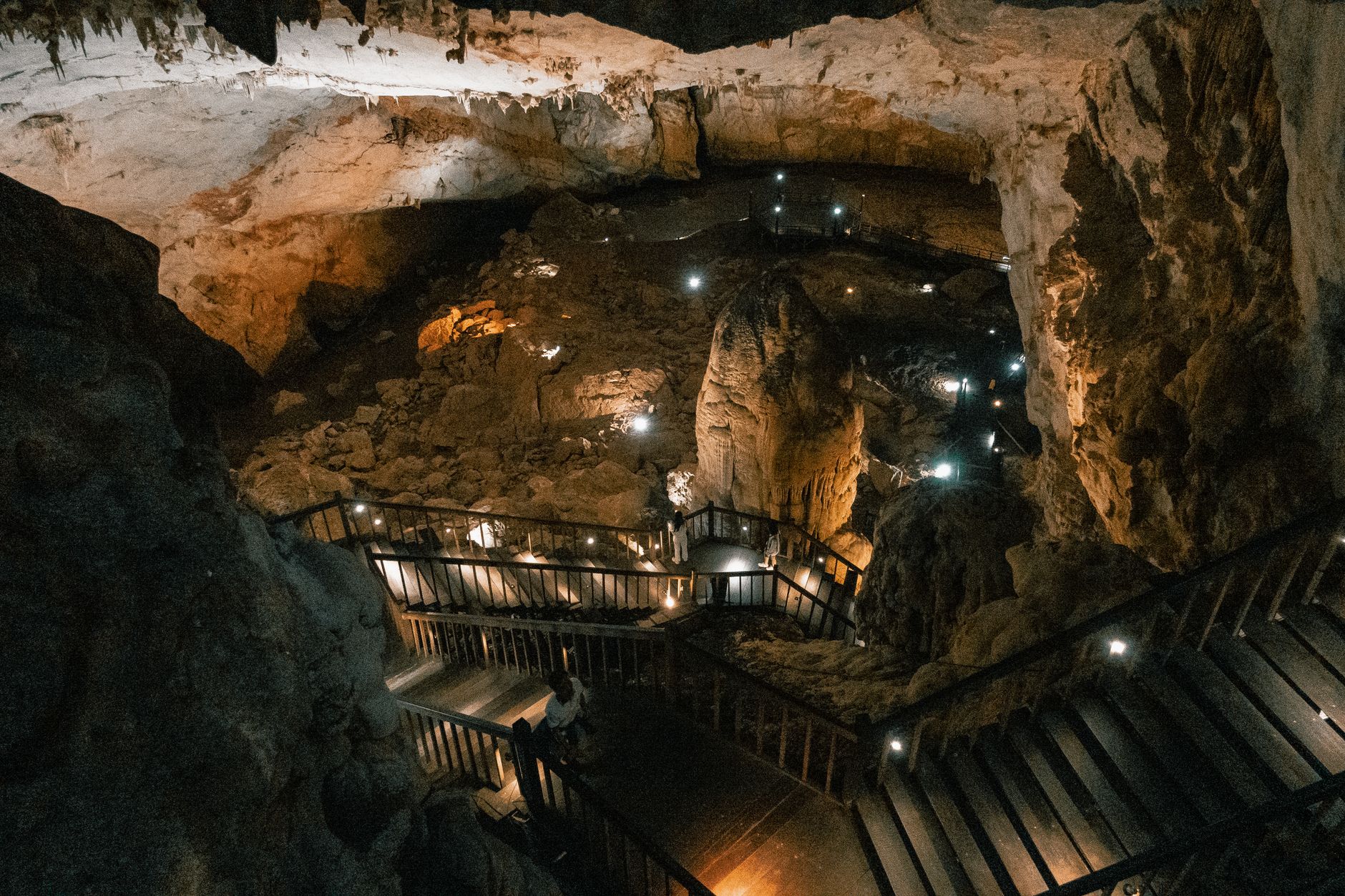
A word of honesty about the third name every tout in Son Trach pushes. Dark Cave, Hang Toi, is sold as caving and is really an adventure park: a zipline across the river, a wallow in a mud bath deep inside a passage, a kayak back. It is good fun and worth a wet afternoon in the heat, but it is barely a cave, and anyone choosing it over Paradise or Phong Nha on the assumption that all three are equivalent will feel short-changed.
Few places sell the sublime on a sliding scale. Phong Nha does: pick the rung that matches the nerve and the budget.
The ladder tilts steeply upward at Hang En. This is the third largest cave in the world, and reaching it is a two-day, one-night trek rather than a stroll: down through the forest, wading the Rao Thuong stream a dozen times, past the stilt houses of Ban Doong village, to a camp pitched on a sand beach inside the cave itself, beside an underground river, under a roof where thousands of swiftlets wheel and call. The birds give the cave its name, since en is the word for swallow. A place on the trek costs around three hundred and thirty dollars, in groups of roughly a dozen, and for most fit travellers it is the realistic version of the epic that Son Doong only promises.
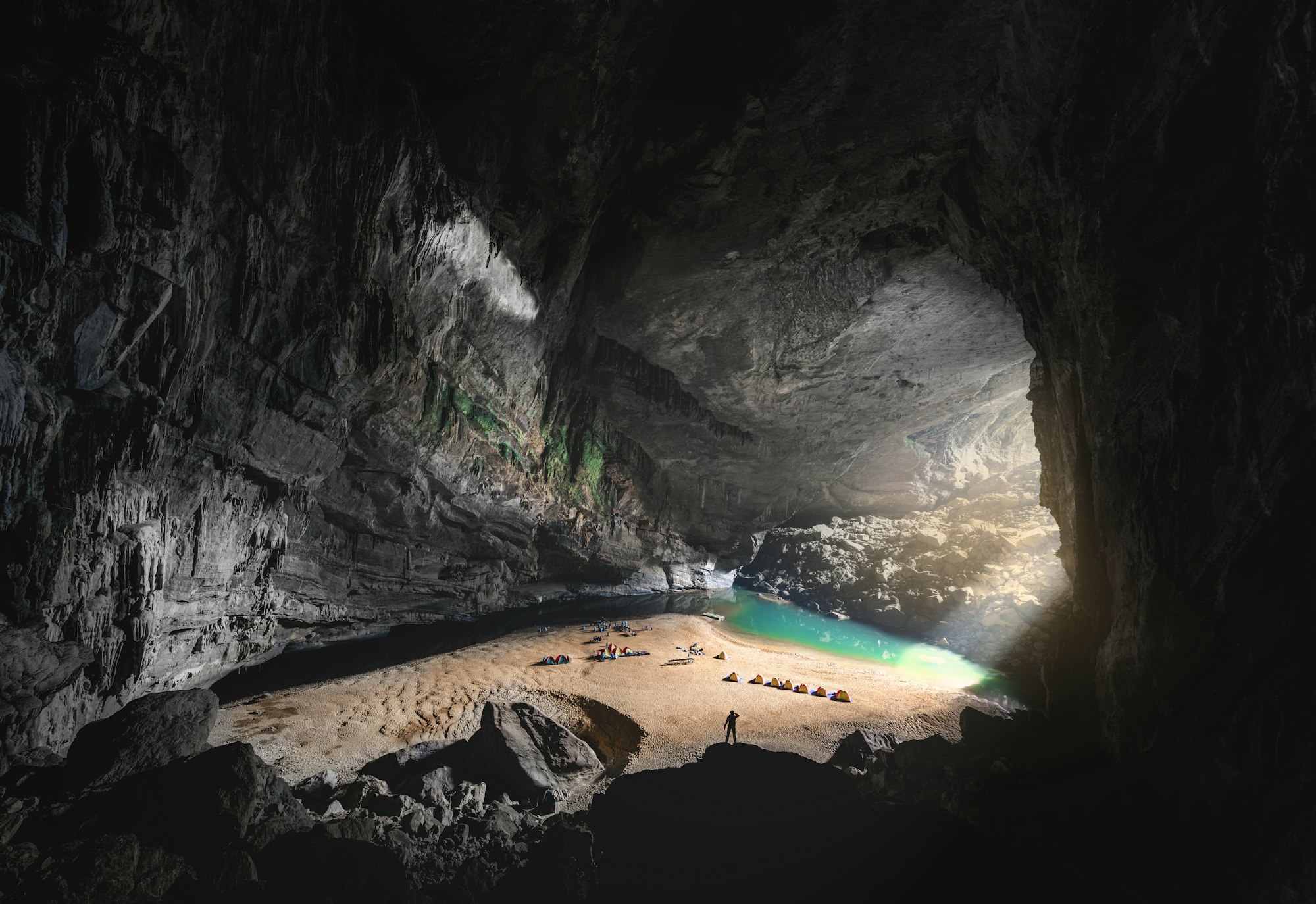
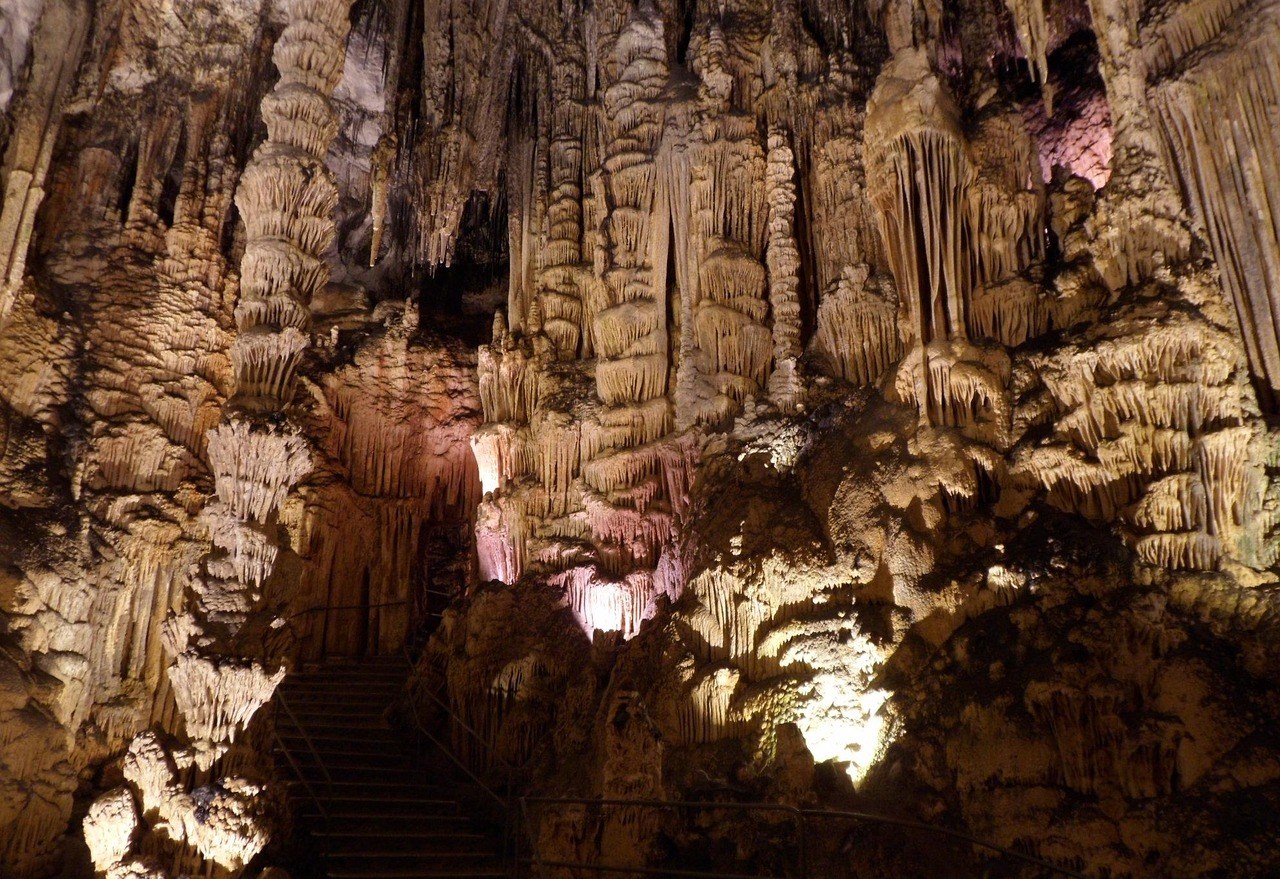
At the top of the ladder is Son Doong, and for almost everyone it stays out of reach, which is worth stating plainly rather than dangling. One company, Oxalis Adventure, holds the sole licence to run it. Roughly a thousand people a year go in, in groups of ten shepherded by around thirty porters, guides and cooks, on a six-day expedition that costs about three thousand dollars and is booked as much as a year ahead. The cave was found in 1990 by a local man, Ho Khanh, who lost the entrance again, rediscovered it in 2008 and led a British survey team in the following year; it opened to visitors in 2013. Two places where the roof has collapsed, called dolines, let daylight fall two hundred metres down and feed a genuine jungle inside the cave, its trees topping forty metres, which the surveyors named the Garden of Edam. Between June and August, clouds form under the ceiling. Read it as an ambition to file away, not a plan to make.
The forest above all this was a battlefield, and it explains a rule that governs every wild cave in the park. Phong Nha lies on the old Ho Chi Minh Trail, and between 1964 and 1973 American aircraft dropped more than two million tons of ordnance across the region. Some of it never went off and still lies in the ground away from the marked paths. That is the flat reason the wild caves are guided-only and stepping off-trail is treated not as bad manners but as a real hazard. The guides know which ground is walked and which is not, and their route is not a suggestion.
Above ground, the base is Son Trach, a low-key string of homestays and cafes along the Son river, and it repays a slow day or two of its own. The Bong Lai valley, a short ride out, is rice fields and karst best covered by bicycle or motorbike, with farm kitchens as the waypoints: the deadpan-named Pub With Cold Beer, where a chicken is killed and grilled to order, and The Duck Stop, where the ducks come to greet visitors. The Nuoc Mooc eco-trail, further along, is a boardwalk to turquoise spring pools cold enough to swim in through the worst of the afternoon heat.
Getting there is simpler than the remoteness suggests. The gateway is Dong Hoi, about forty-five kilometres away, with both an airport and a stop on the Reunification Express, the night train that runs the length of the country from Hanoi and Hue; green-and-yellow buses cover the last stretch to Phong Nha. The dry season, February to August, is the window to aim for. The flood season, September through November and sometimes into December, shuts the lower caves and can cut the roads, and the expedition caves, Son Doong and Hang En among them, run only from about January or February to August. Two days will cover the easy rungs of the ladder; the treks want more, and the biggest of them wants a year of patience first.