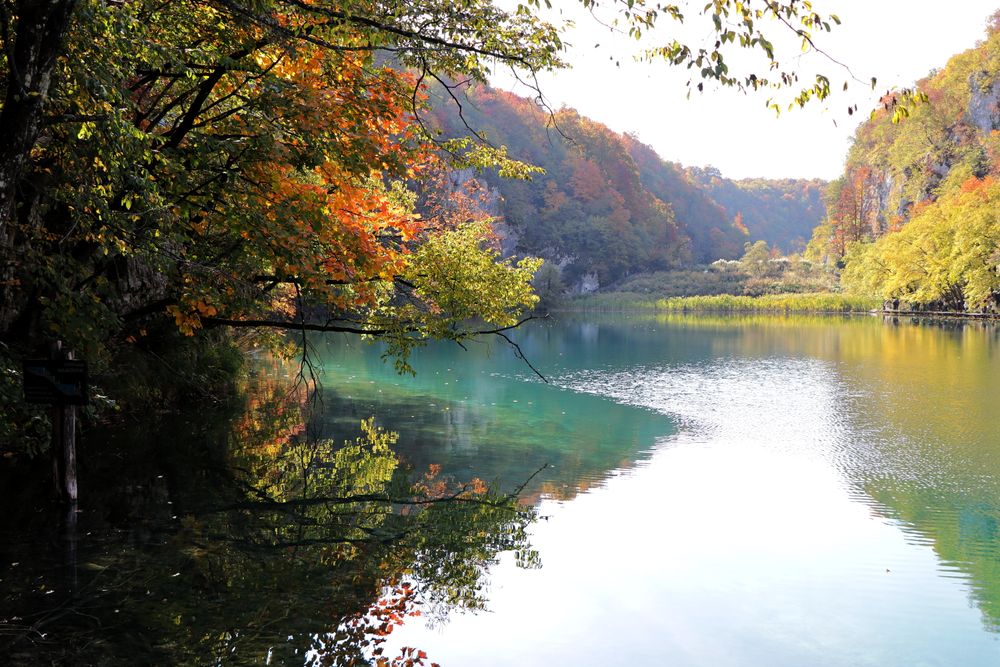
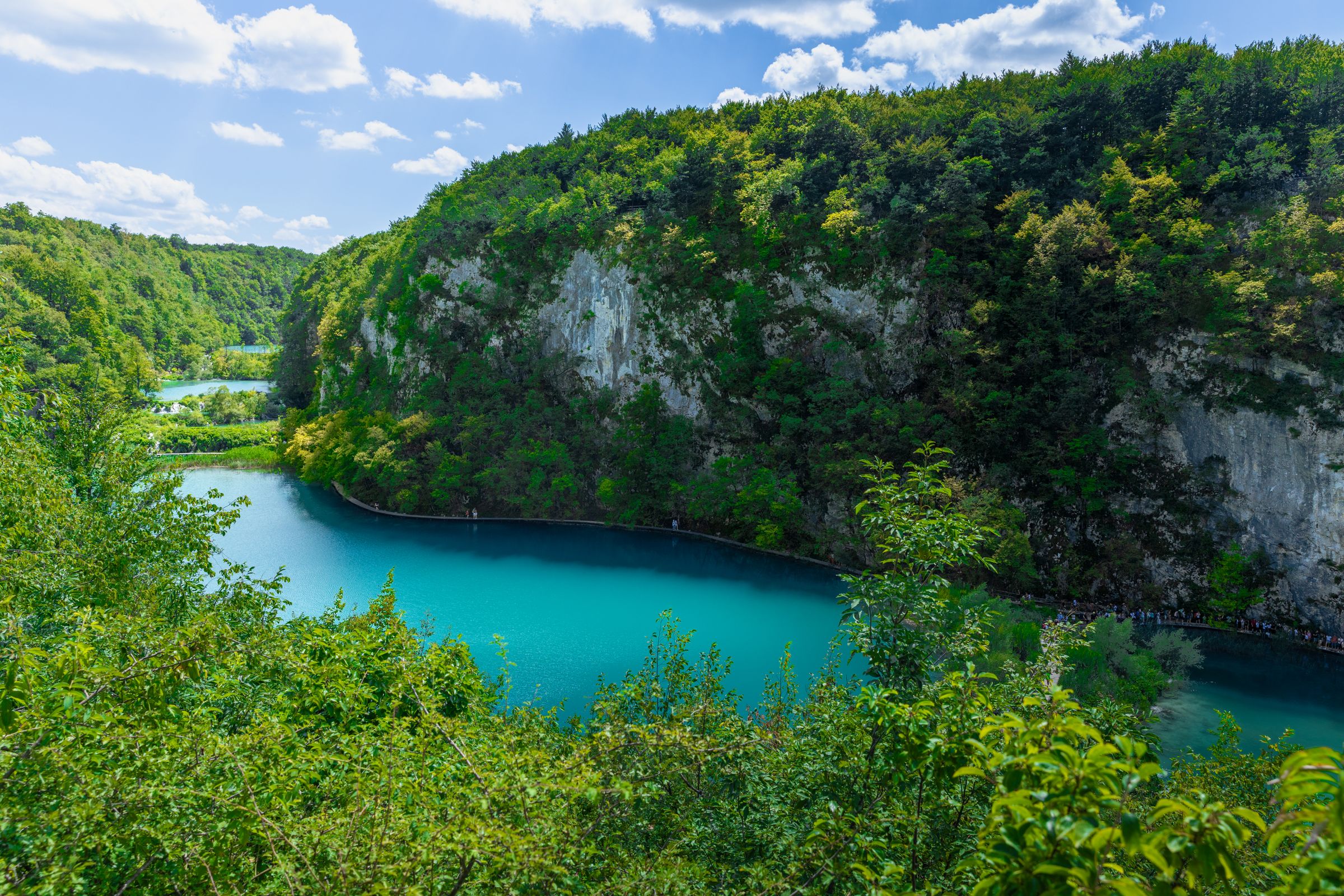
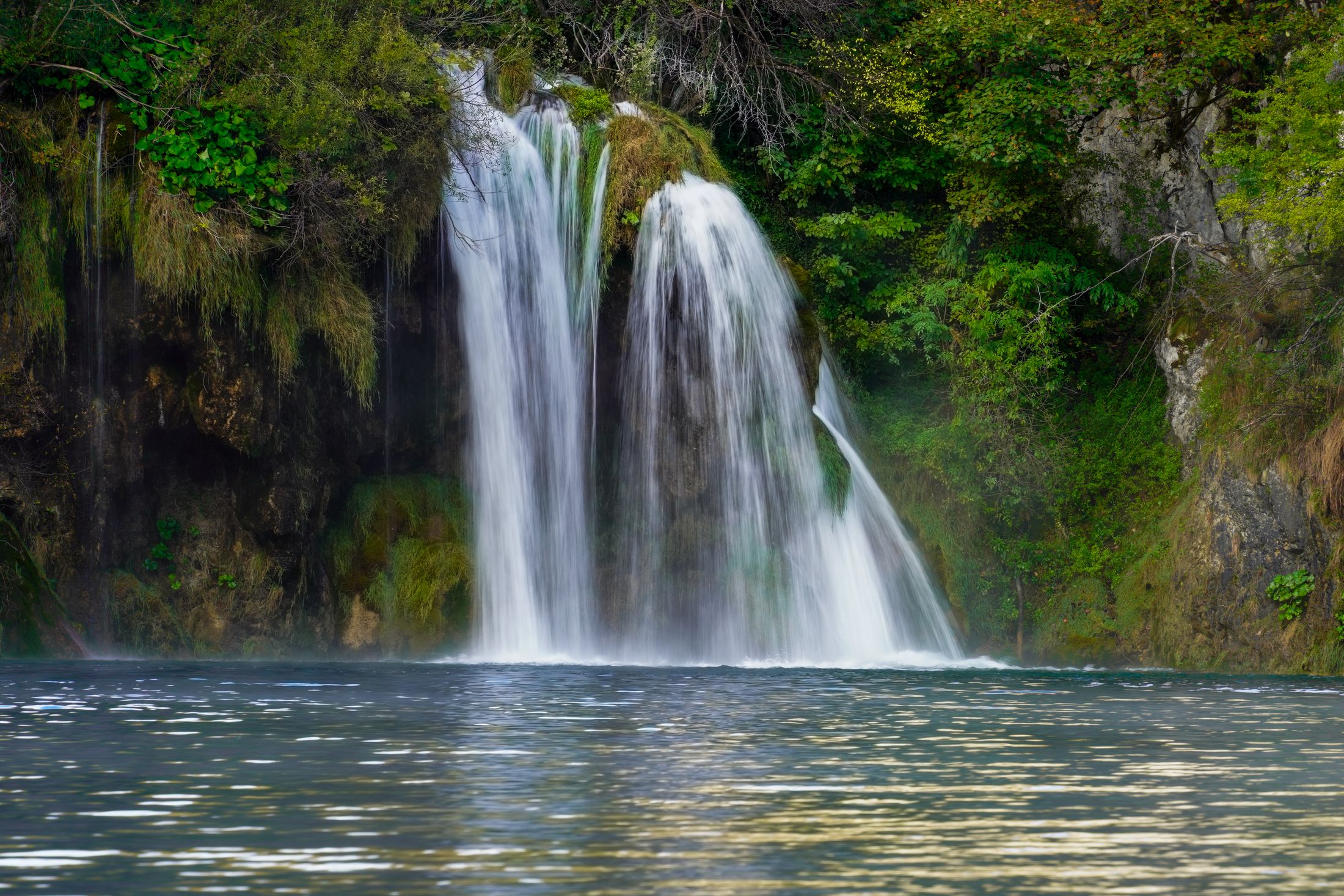
You come to Plitvice for the colour, and the colour is the first thing that stops making sense. The water is turquoise, then jade, then a pale mineral green, and it is so clear that a fish hangs over its own shadow three metres down as if suspended in nothing. Sixteen lakes lie on a staircase in the forest, and every one of them is spilling into the one below it, so that wherever you stand there is the sound of falling water and the whole place is quietly, endlessly pouring downhill.
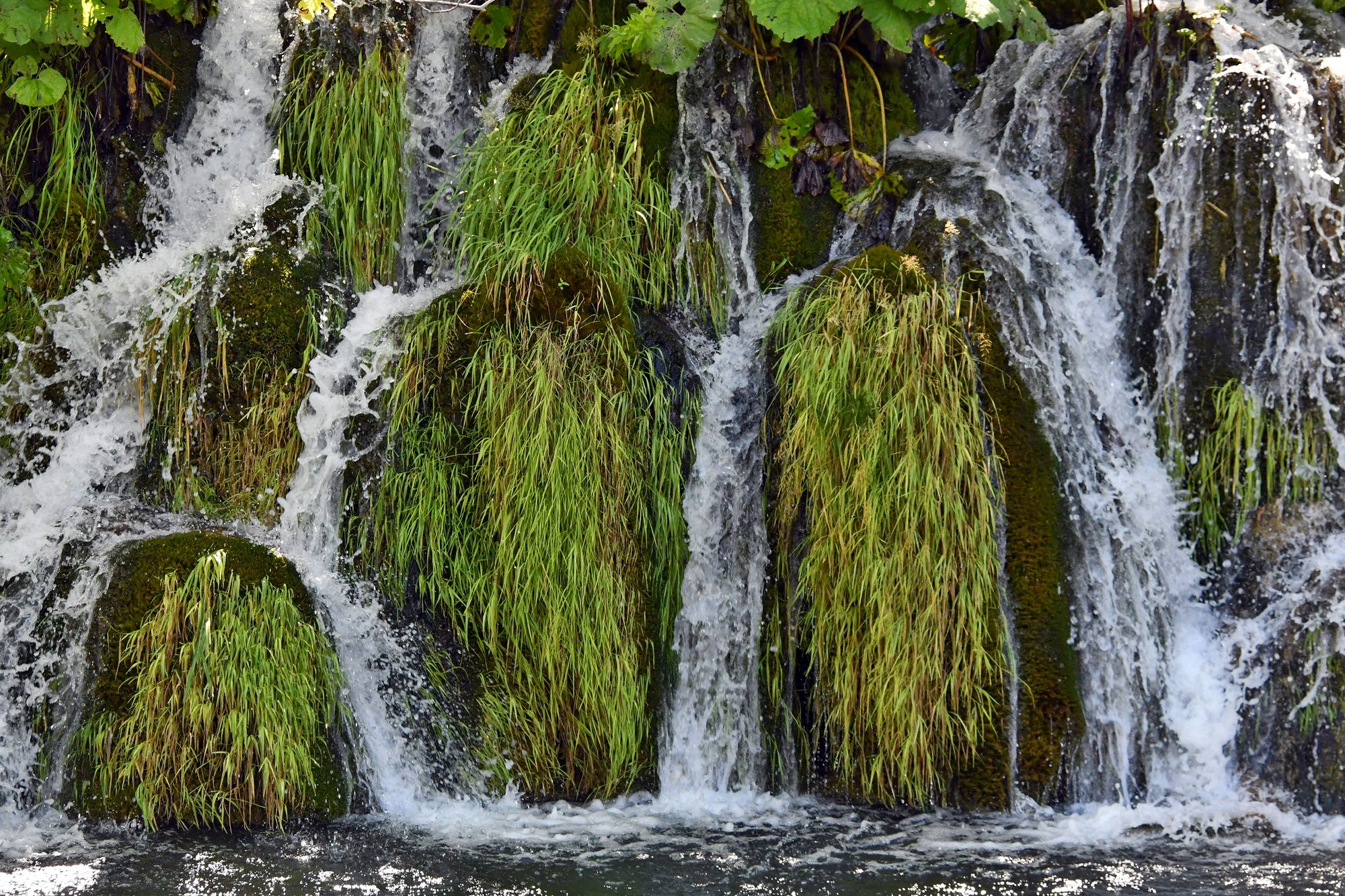
What makes it stranger is that the barriers doing the spilling are alive. The rock here is travertine, a soft chalky stone the water lays down itself: minerals and moss and bacteria catch on a fallen branch or a lip of rock, harden, and grow, a centimetre or so a year, until a ridge becomes a wall and a wall becomes a waterfall. The lakes are not sitting in some old valley. They are held up by dams the river is still building, and the map of this place a thousand years from now will not be the one you are walking.
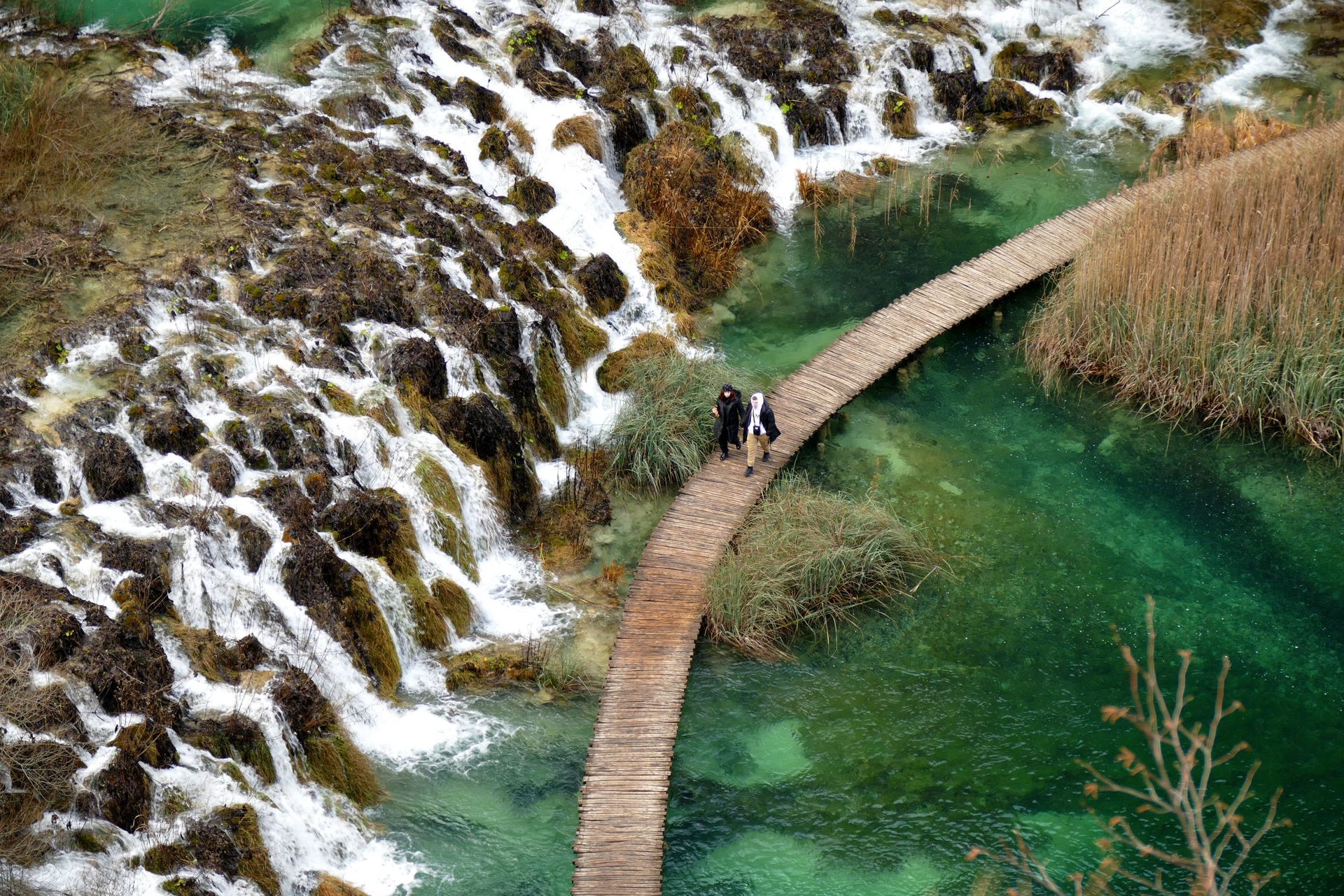
There is no railing between you and it for most of the way, and no need. Wooden boardwalks run just above the surface, sometimes with an inch of clear water washing over the planks, and they carry you straight across the lakes and along the foot of the falls, close enough to feel the spray. You walk on the water, more or less. In high summer the paths fill and you shuffle along them; come early in the day, or in the shoulder months, and you can have a whole turquoise basin almost to yourself.
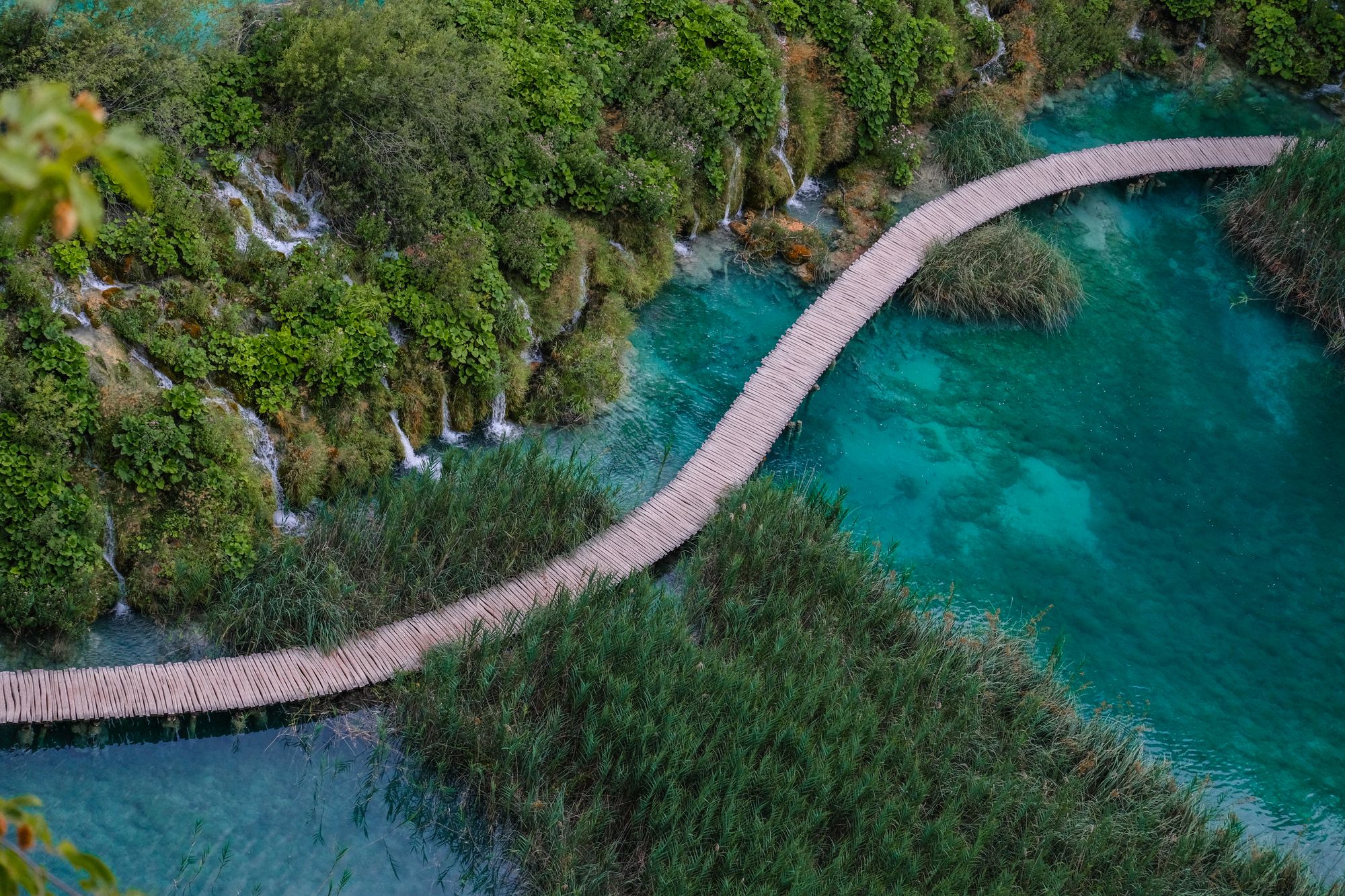
The clarity is the thing that keeps drawing the eye down. The water is so clear that clarity stops being a feature and starts being unnerving: shoals of fish over pale stone, sunken logs gone the colour of bone, the boardwalk doubling in its own reflection underfoot. Nothing here is stocked and nothing is fed. It is simply very clean water doing what clean water does when there is enough light and nothing to stir it.
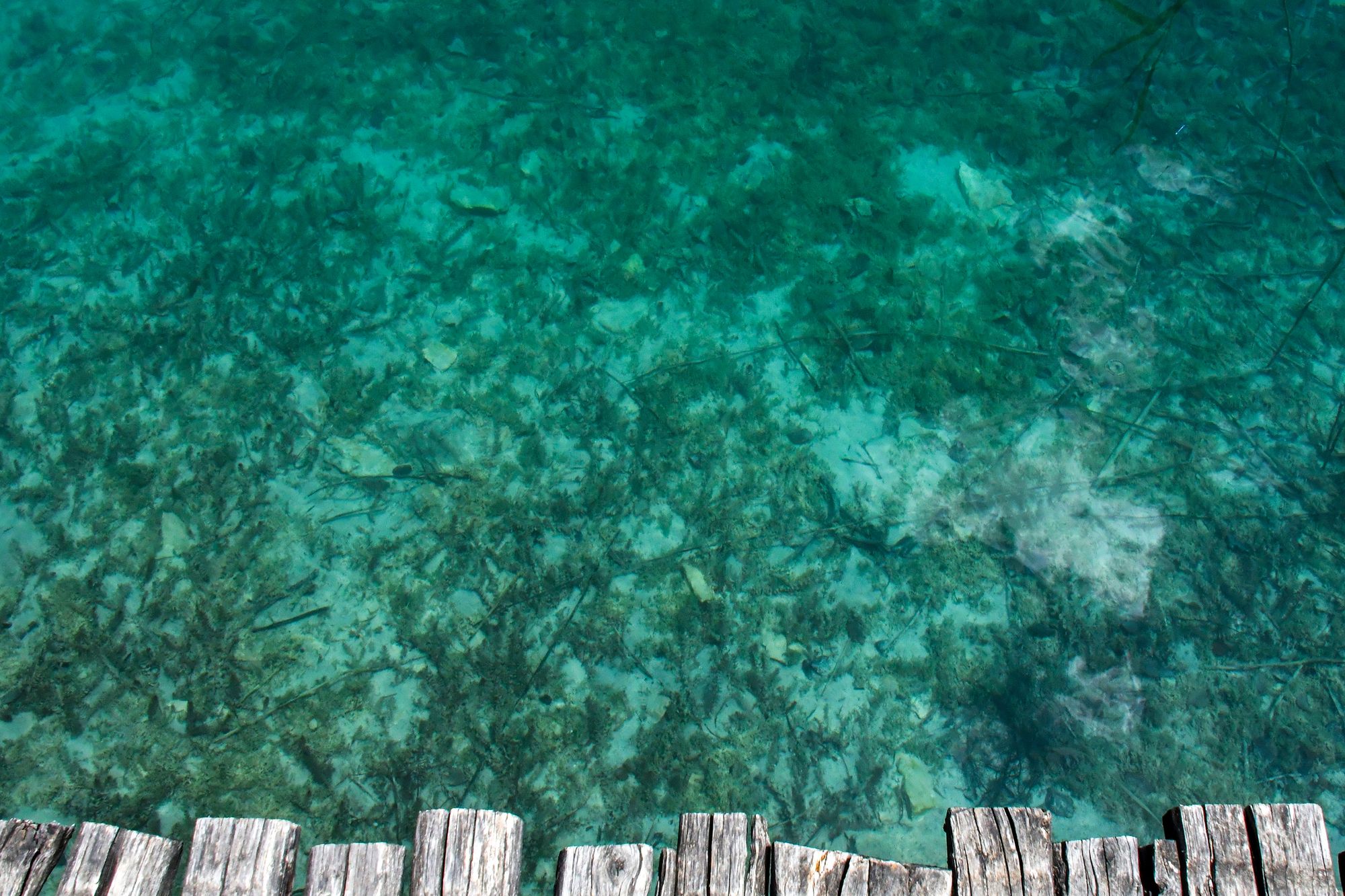
The lakes are held up by dams the river is still building.
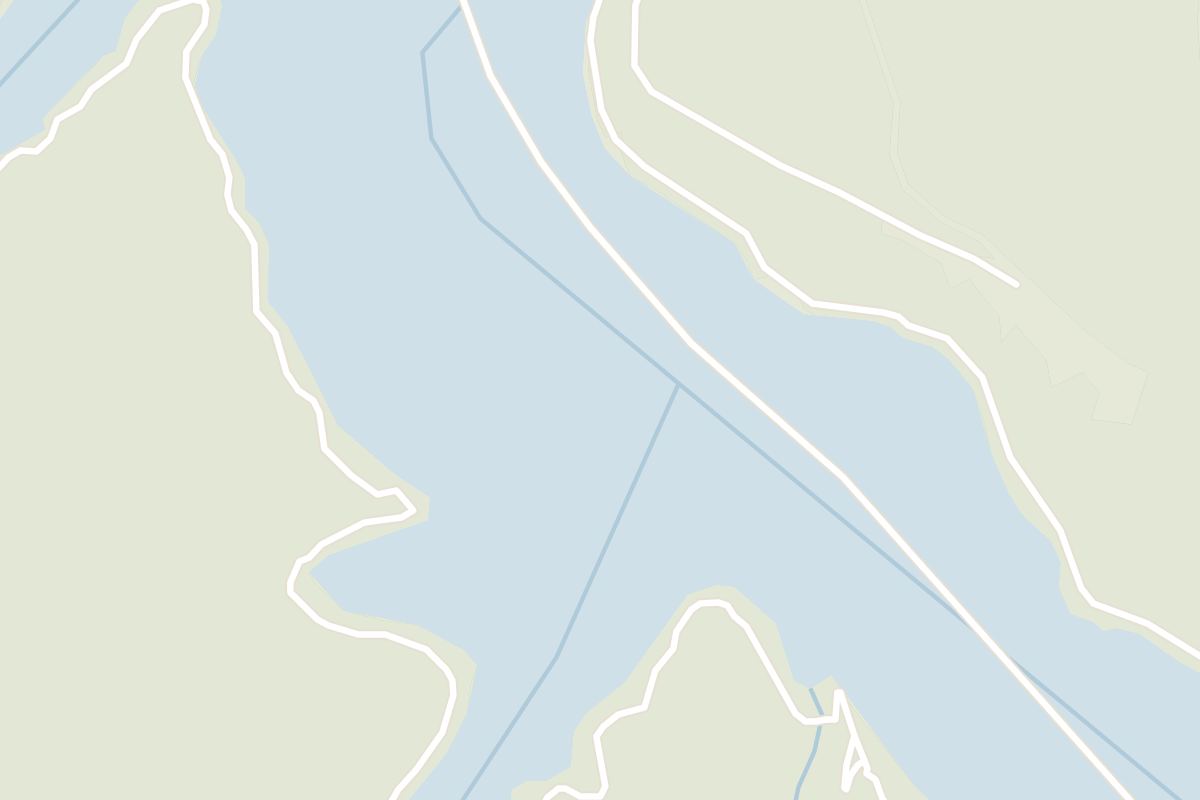
The staircase ends in a limestone canyon, and there the biggest of the falls comes off the rim in a single drop of seventy-eight metres. Veliki Slap, the Great Waterfall, the tallest in Croatia. It is a different scale from everything above it, loud where the upper lakes are quiet, and the path takes you right to the pool at its foot, where the air is nothing but mist. From there a shuttle boat crosses Kozjak, the largest of the lakes, and you ride back over water you had spent all day walking across.
A full day is the right amount, and it pays to start at the top before the coaches arrive. Wear something that can take a soaking, because the spray finds everyone. Swimming is not allowed, and that ban is a fair part of the reason the water still looks like this. Above all, leave time to stand still. Plitvice does not reward hurrying past it: it rewards a plank above a green so clear it looks lit from below, and a place that is, very slowly and entirely unaided, still building itself.