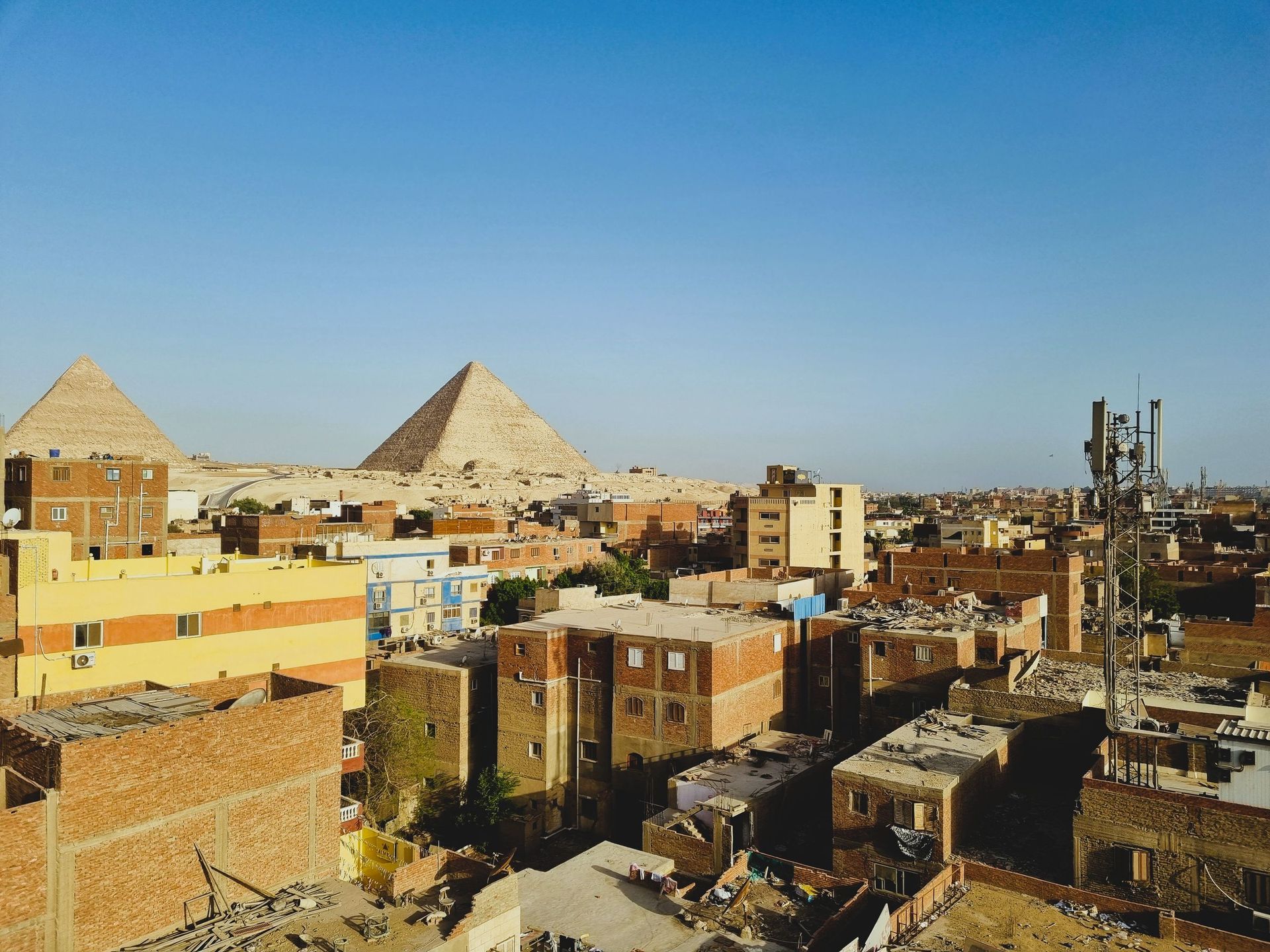
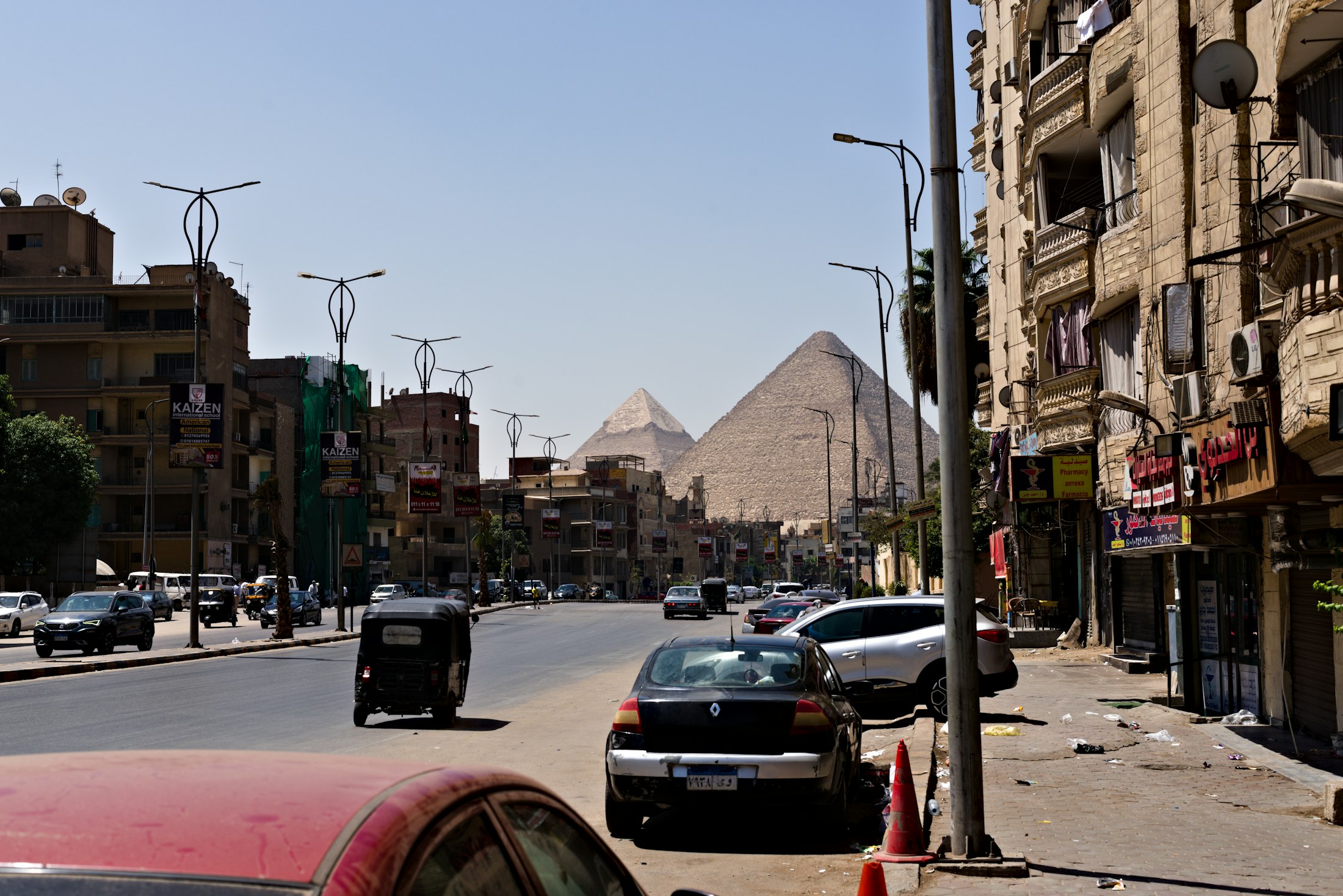
Everyone knows what the pyramids look like, and almost everyone is wrong about where they are. The popular image sets them alone in an ocean of sand, waiting at the far side of a crossing. The reality is a drive out through the suburbs of Giza, past traffic and apartment blocks and a fried-chicken franchise, and then the greatest structures of the ancient world rising at the end of an ordinary street, over the satellite dishes, a short walk from a bus stop. The famous desert edge in every photograph has, on the other side of the frame, a chain-link fence and a city pressed against it.
None of which makes them any smaller. The Great Pyramid is four and a half thousand years old, the only one of the Seven Wonders of the ancient world still standing, built of more than two million blocks, and for nearly four thousand years the tallest thing human beings had ever made. Photographs flatten it into a neat triangle and can do nothing with the size. Up at the base the blocks come up past head height, one after another after another, and the monument stops being something to look at and becomes a mountain someone built on purpose, with the visitor for an ant at the foot of it.
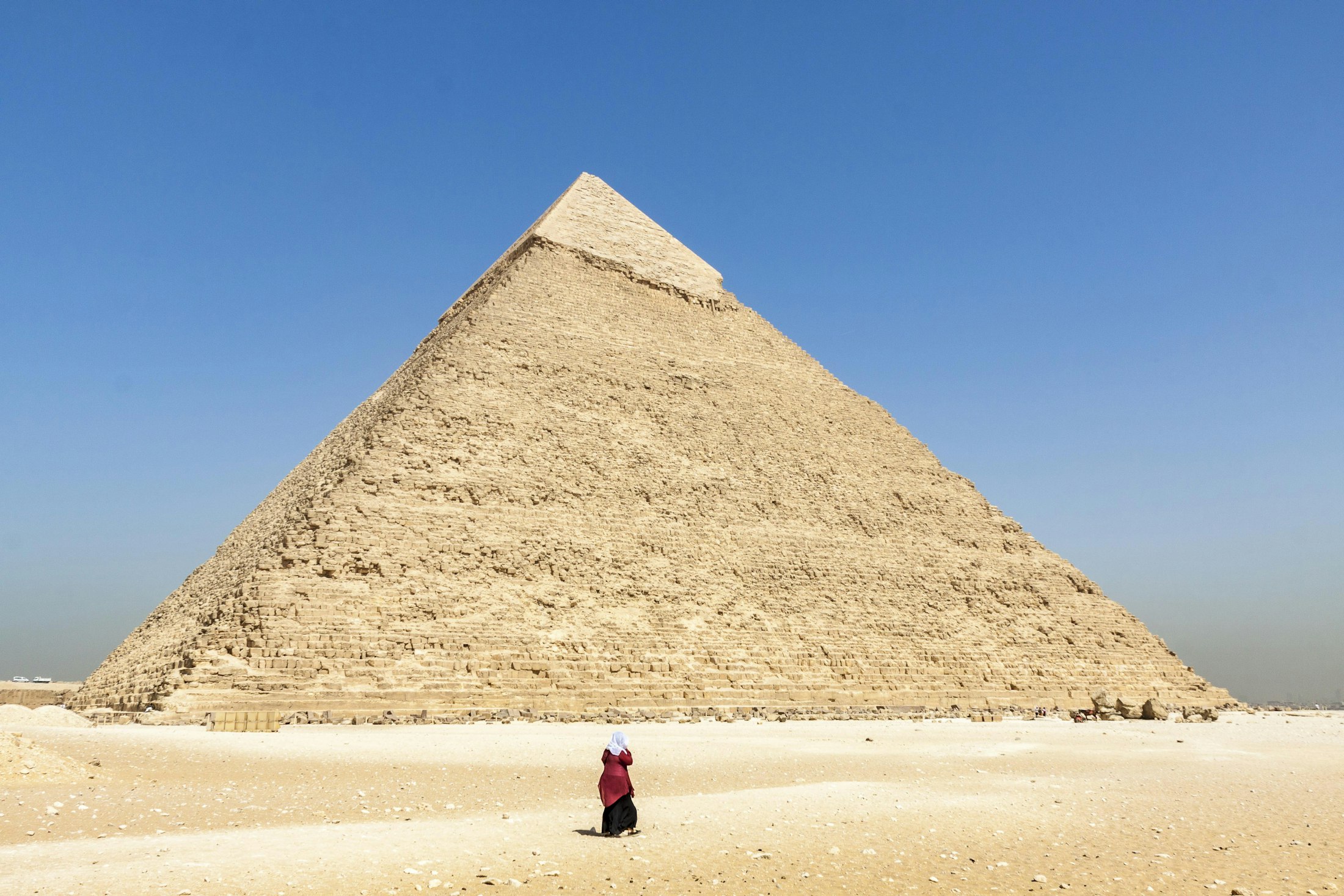
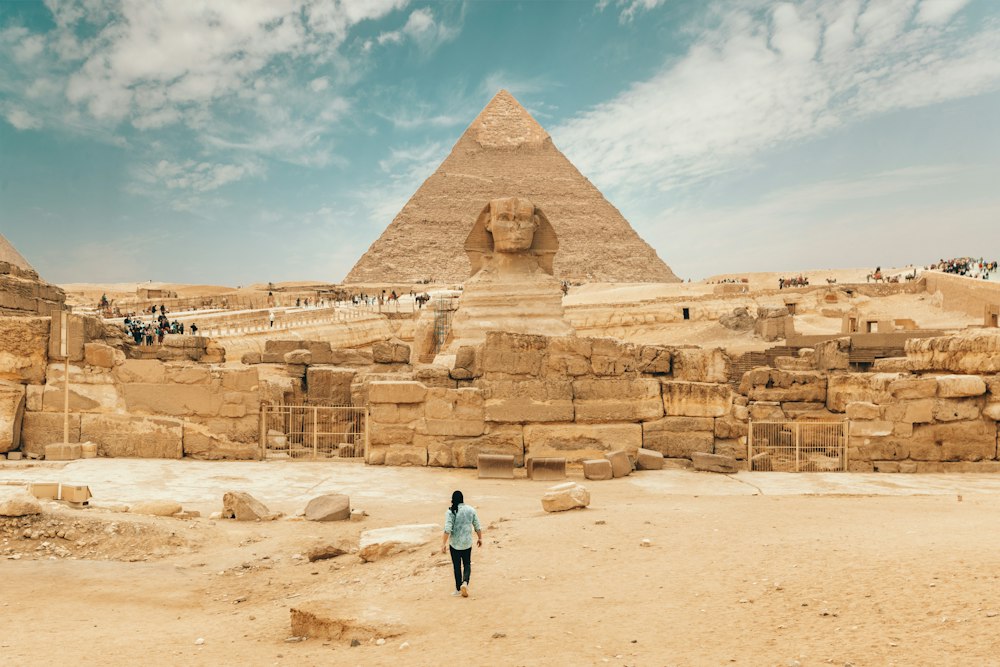
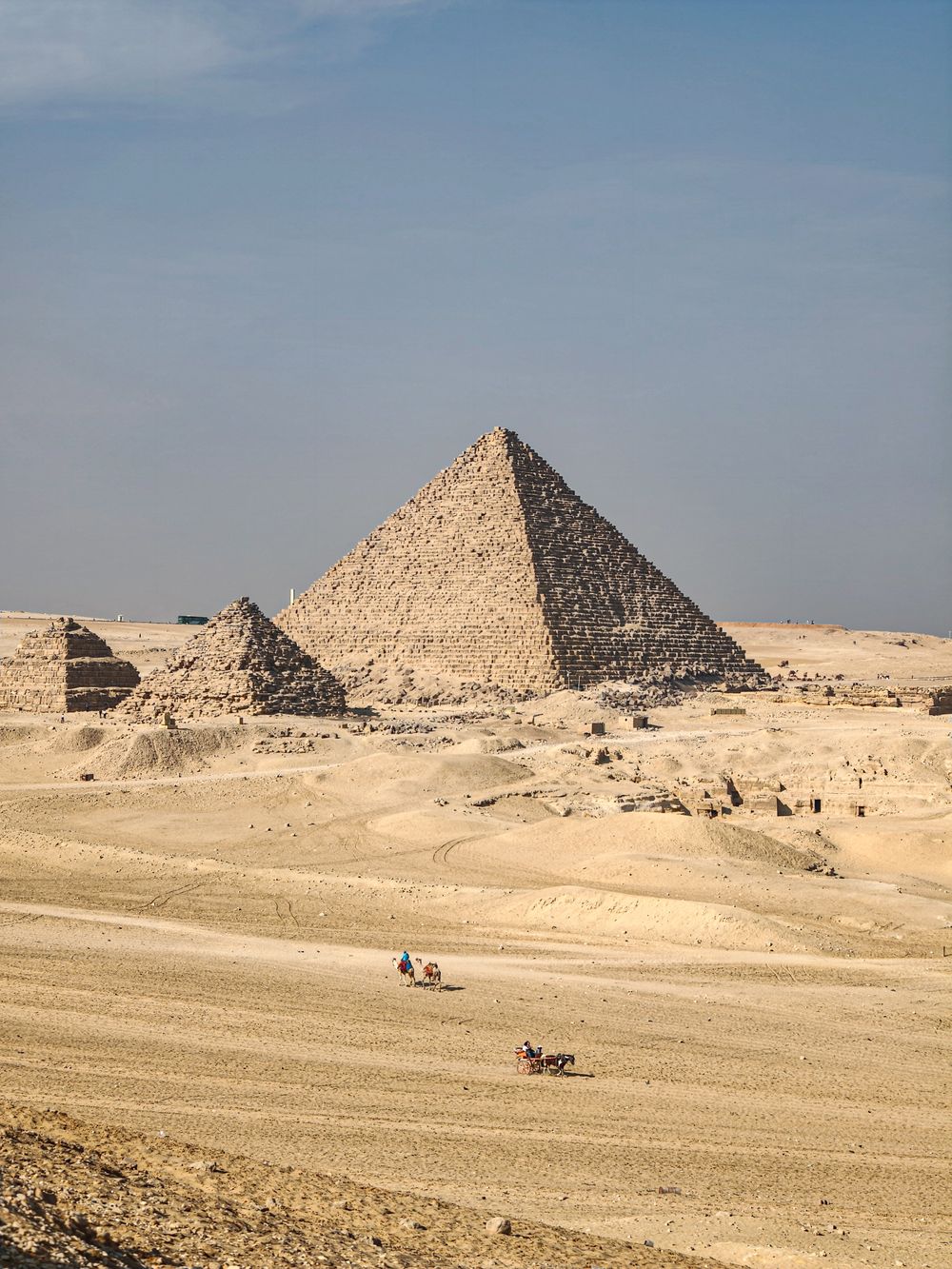
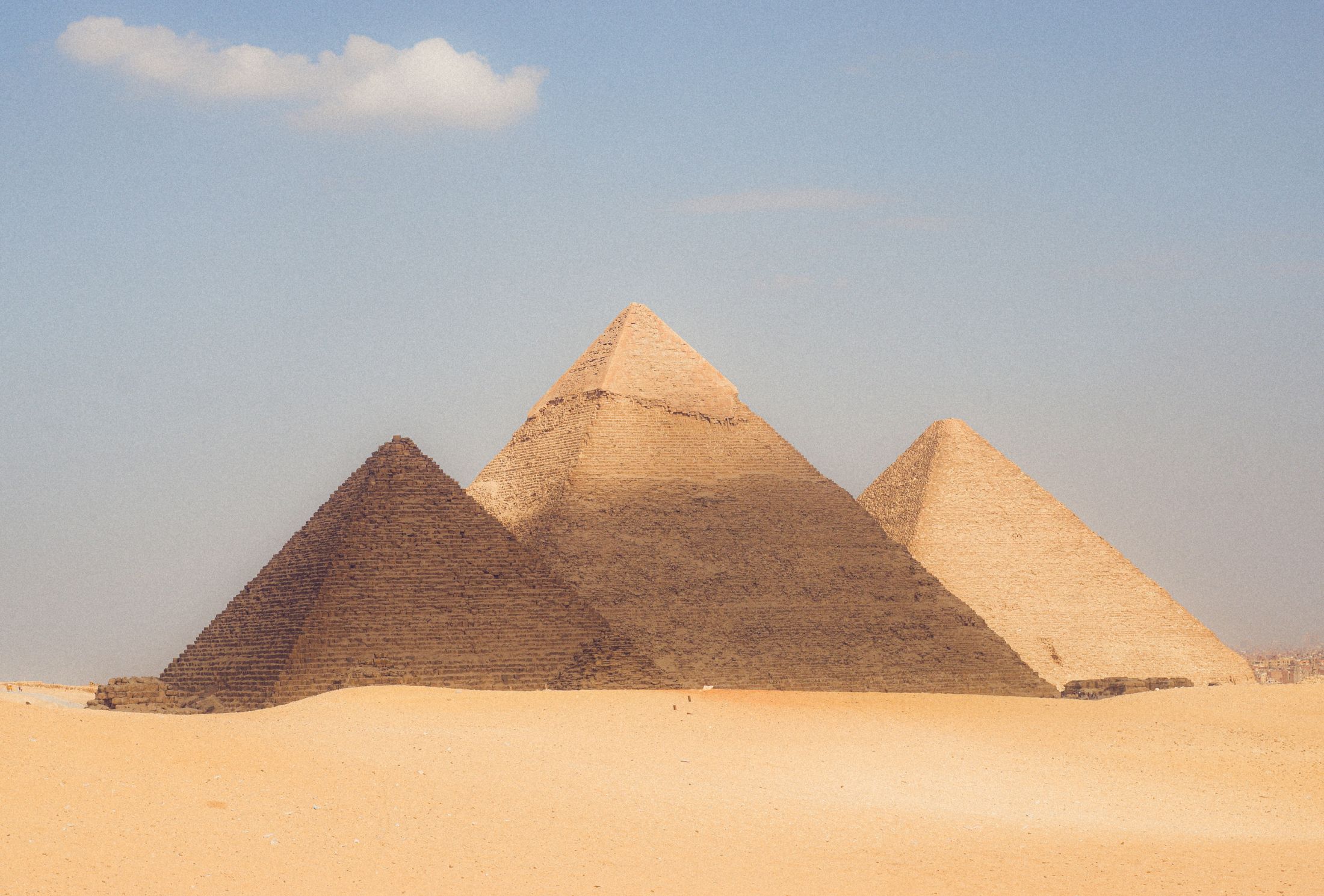
There are three of them on the plateau, raised for three pharaohs of the Old Kingdom: Khufu’s, the Great one; Khafre’s, a little smaller but built higher up the slope and still wearing a cap of the smooth white casing that once sheathed them all; and Menkaure’s, the runt of the family. Out past the fence, far enough onto the sand, the three line up and the empty-desert photograph is there to be taken after all. It is real. It is just not the whole truth.
The visit itself is a contact sport. From the gate on there are men with camels and horses and a hundred ways to part a visitor from their money, the classic being the free ride that turns out not to be free once the rider is up and would like to come down. Tickets are worth buying only at the official gate. As of last year the plateau works differently: private cars are kept out, and electric shuttles run between the pyramids and the Sphinx, a small mercy. Opening time, at seven, comes before the heat and the crowds and the worst of the sellers. Going inside the Great Pyramid means one of only a hundred and fifty tickets sold a day, for a cramped climb and little else at the top of it.
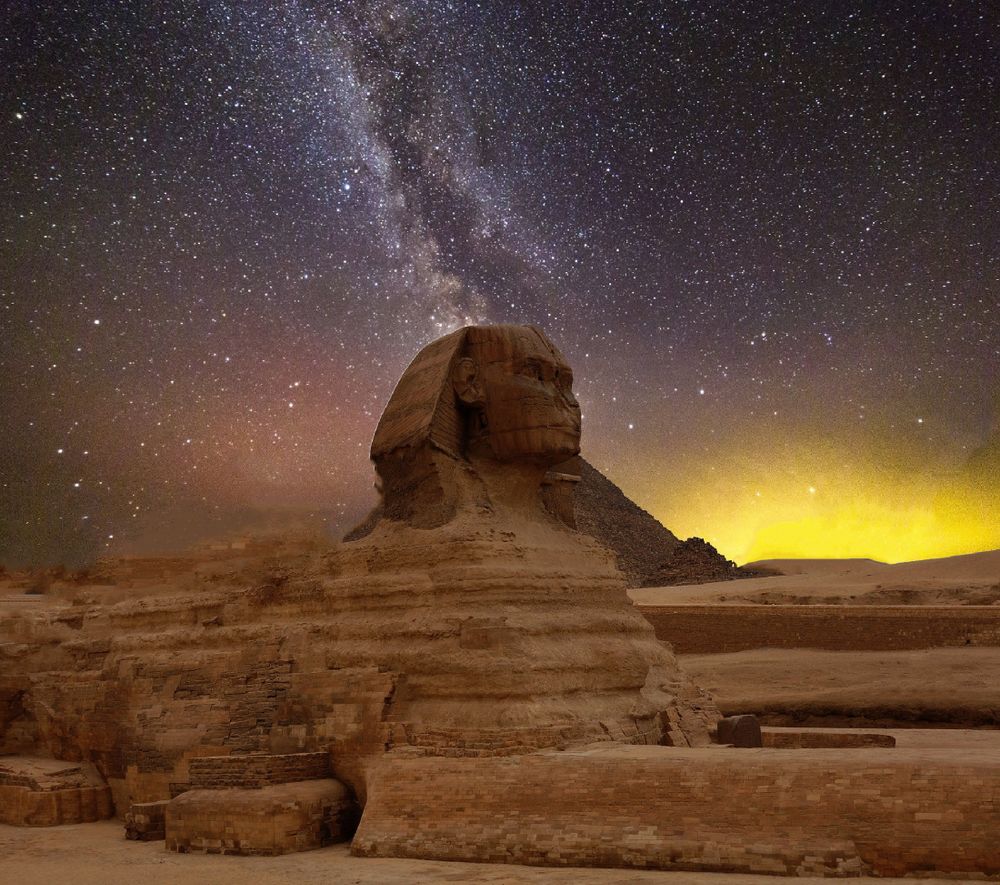
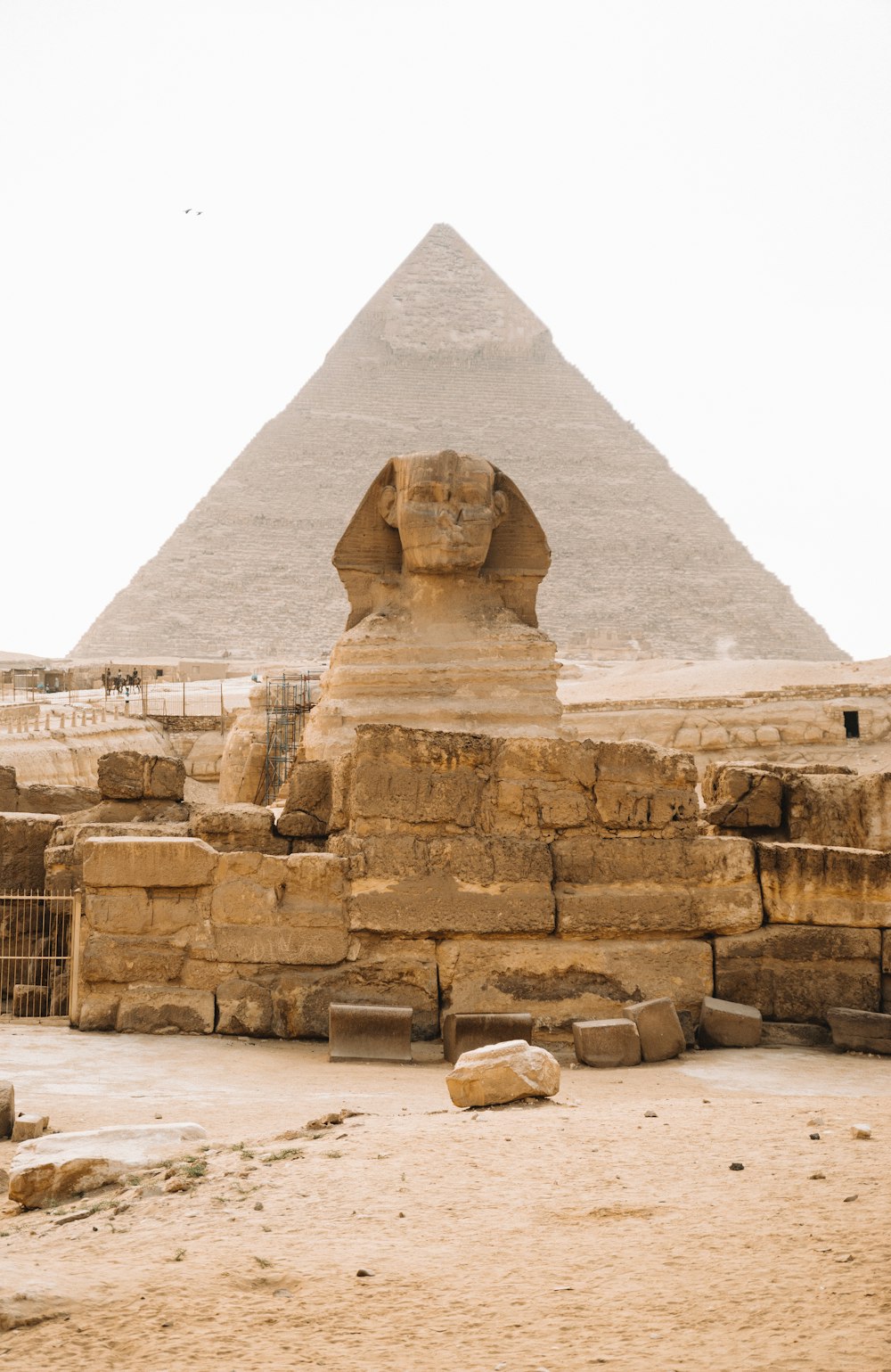
The Sphinx sits below the pyramids, smaller than the pictures suggest, its nose long gone and its face worn soft by four and a half thousand years of wind. Body of a lion, head of a king, an expression that has outlasted empires. It faces east into the sunrise, and these days more or less straight at a Pizza Hut. Both things are true at once, and holding them together in one frame is a large part of the visit.
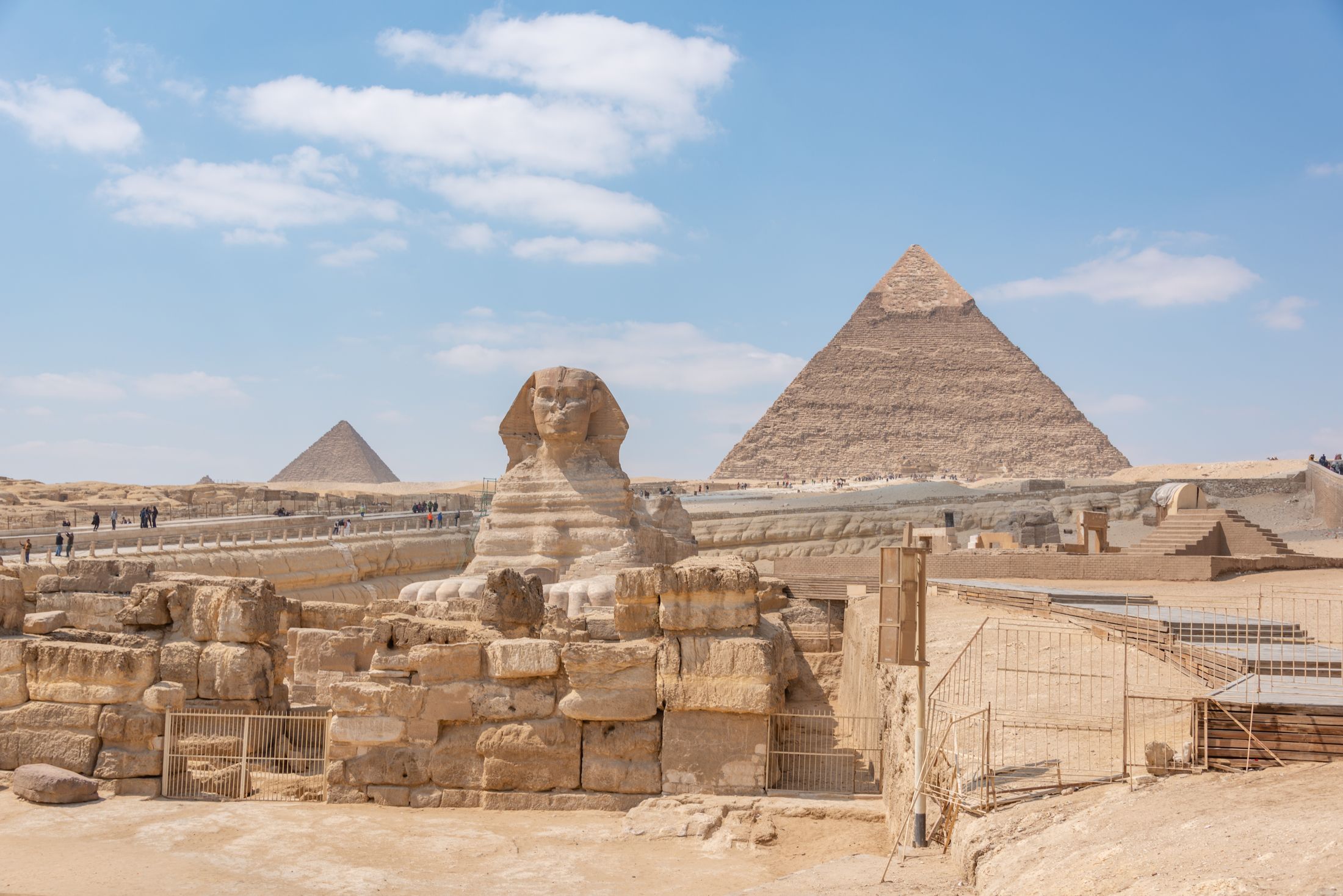
It stares east into the sunrise, and, these days, more or less straight at a Pizza Hut.
The city does not shrink the pyramids. If anything it makes them stranger: a Wonder of the ancient world hemmed in by traffic and phone masts and families who have grown up with it at the end of their street, still standing, still the largest thing for miles, entirely unbothered. Come at dawn, or stay for the sound-and-light show after dark, take the hustle in stride, and walk right up to the base for the full measure of the scale. The pyramids never needed the desert. They have outlasted everything else, including the idea that they were ever alone.