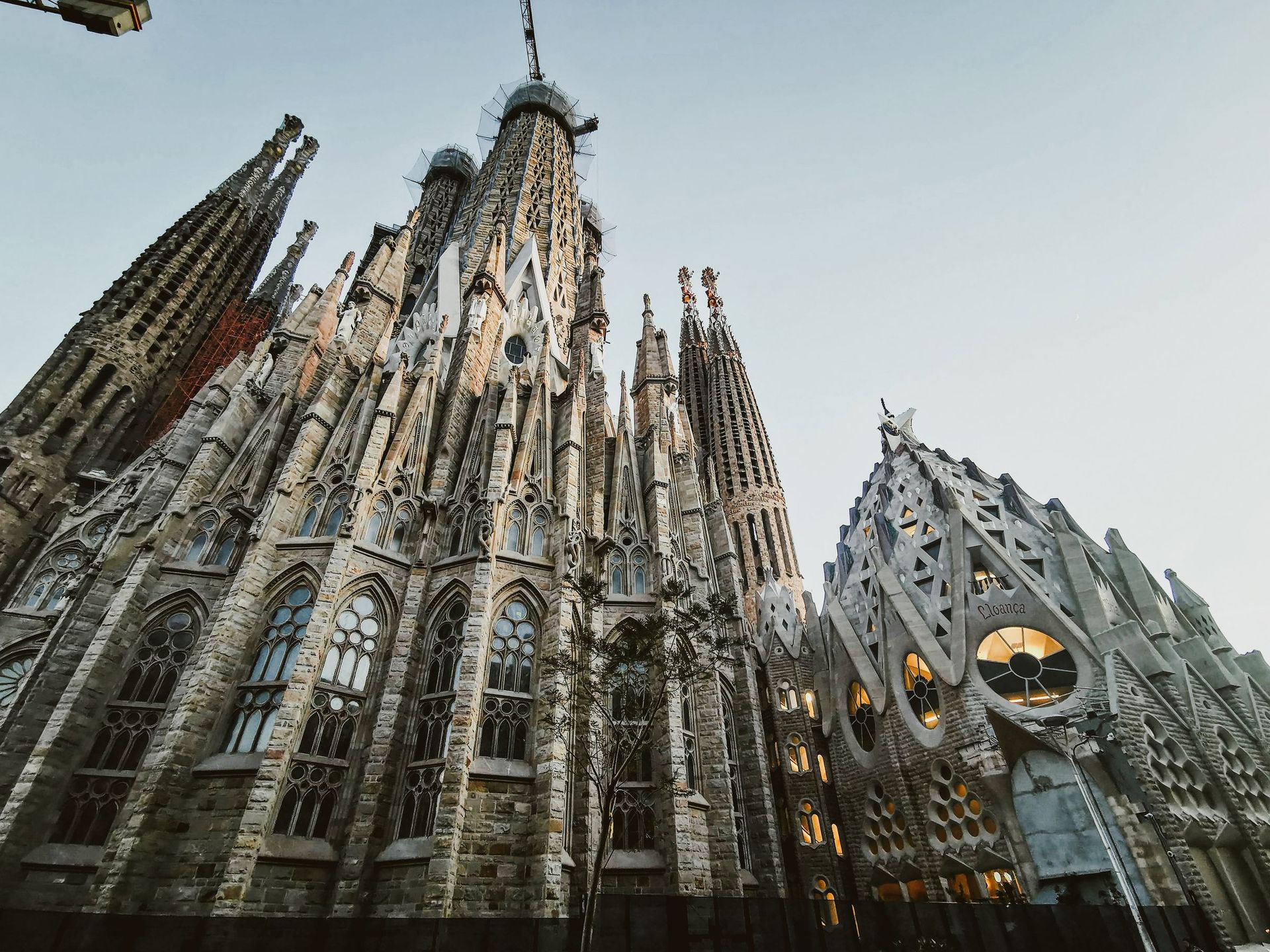
Most famous buildings ask to be admired and are only endured, the fame arriving ahead of them and crowding out the thing itself. Gaudí's basilica is the rare one that keeps the promise on the ticket. The approach gives no warning of it: a queue on Carrer de Mallorca past the souvenir men and the school groups, a steward at a low side door, and then the city simply stops. Inside, the light has a temperature, and everyone does the same thing, which is look up, because the ceiling is not a ceiling.
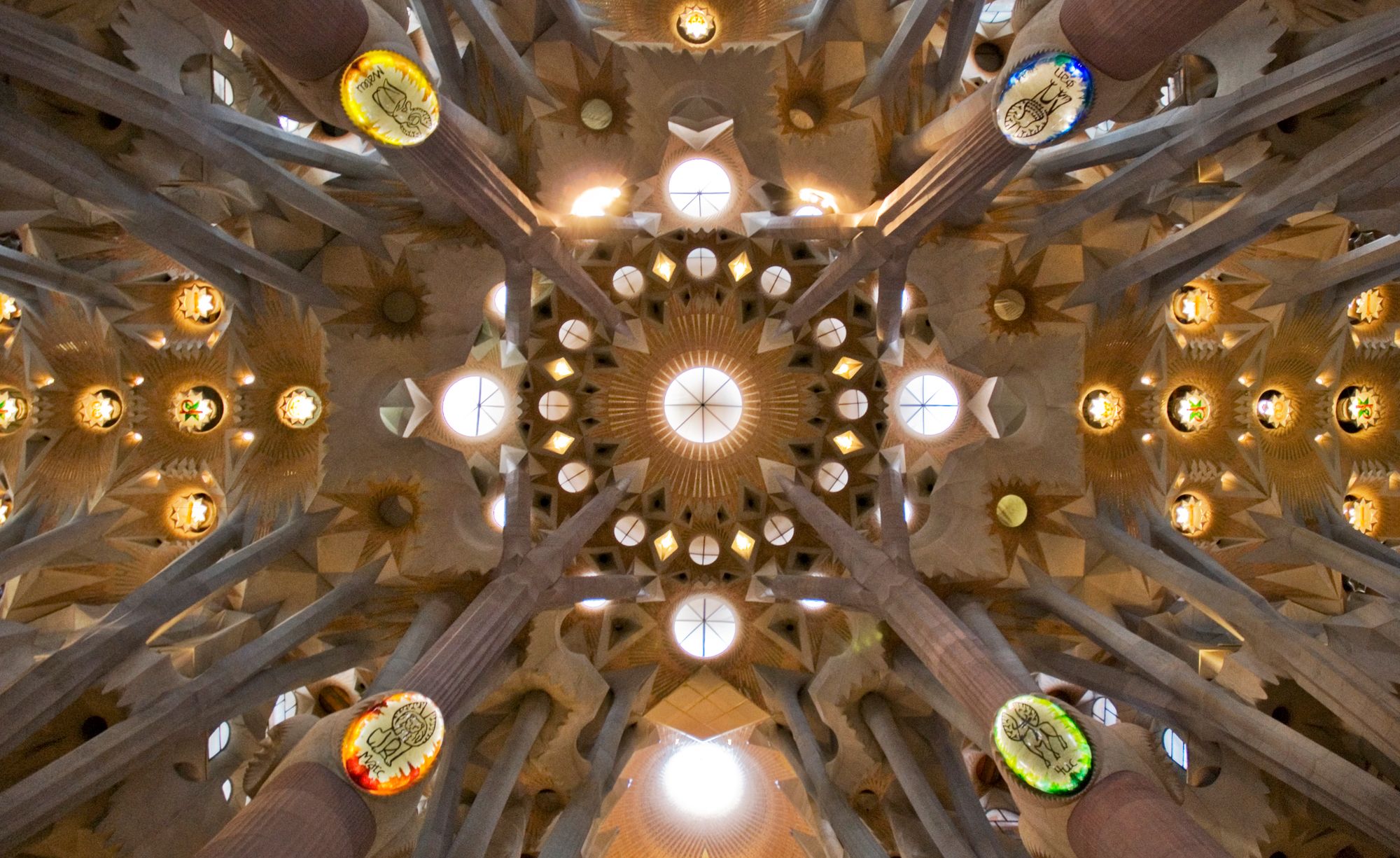
It is a forest, and not in the brochure sense. The columns rise from the floor like trunks and divide as they climb, a knot where a capital should be, then two limbs, then four, until the stone overhead breaks into a canopy pierced all over to let the day through. Gaudí watched a eucalyptus grow outside his studio and built the nave from it. The logic runs all the way down: the trunks nearest the centre are the dark, hard stones, porphyry and basalt, because they carry the most. He graded the whole forest by load.
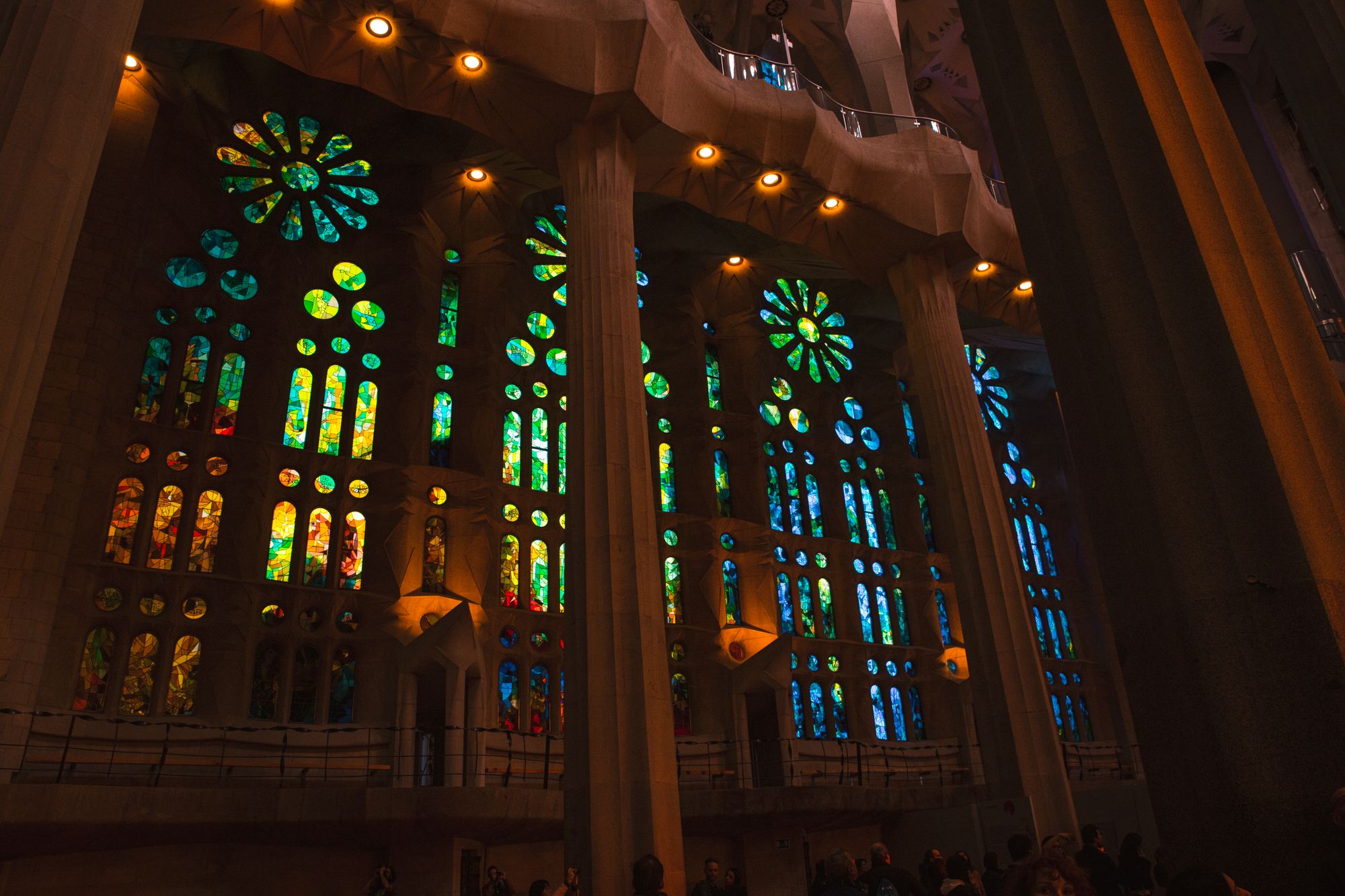
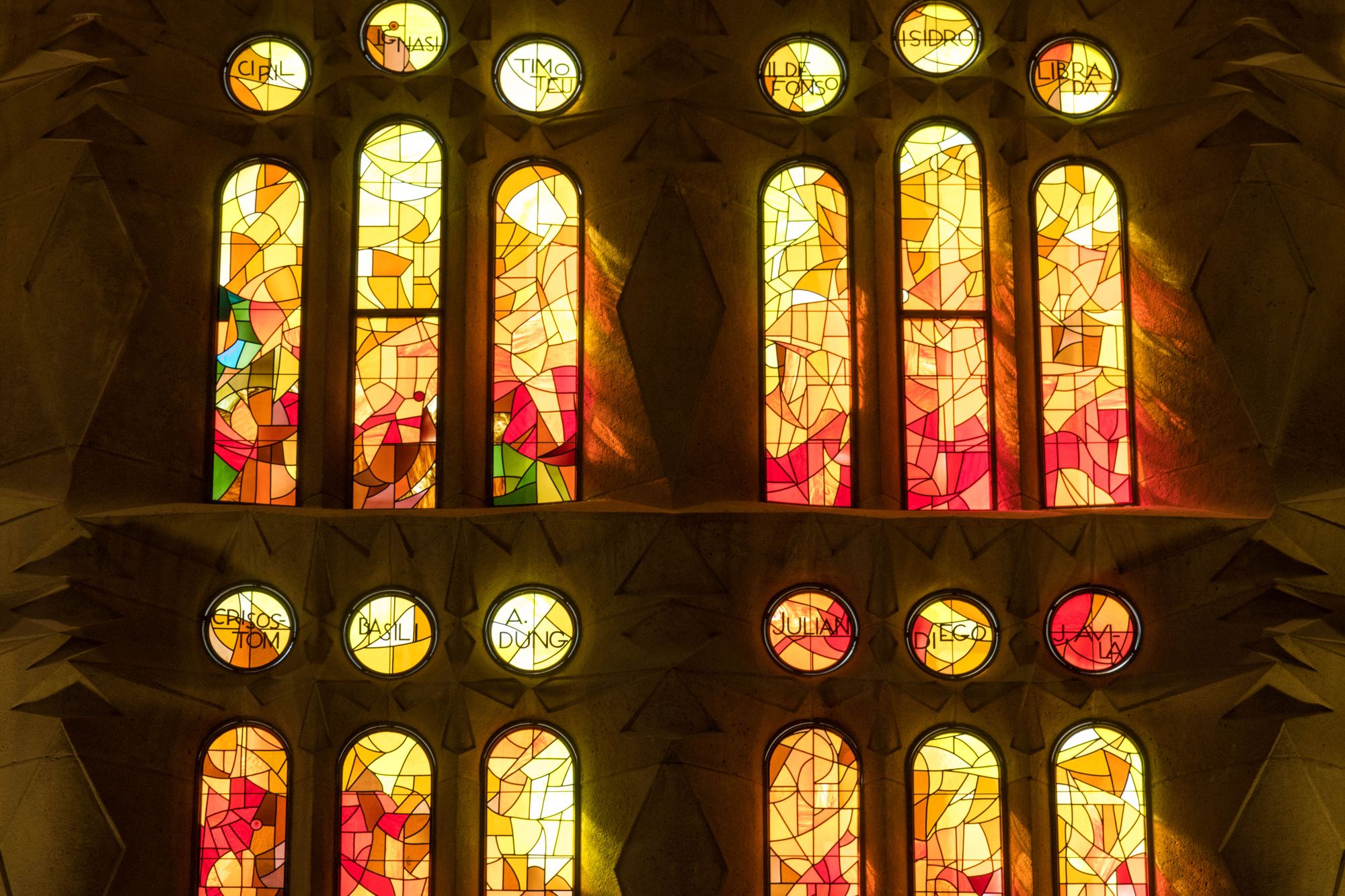
The colour arrives sideways, off the glass. Joan Vila-Grau spent more than twenty years grading those windows, cool blues and greens on the east for the morning, warm reds and golds on the west for the evening, a single deciding hand as legible in them as in a good textile. At the right hour the room does not so much hold the windows as stand inside the colour they throw, across the floor and the columns and the arms of whoever is there to catch it.
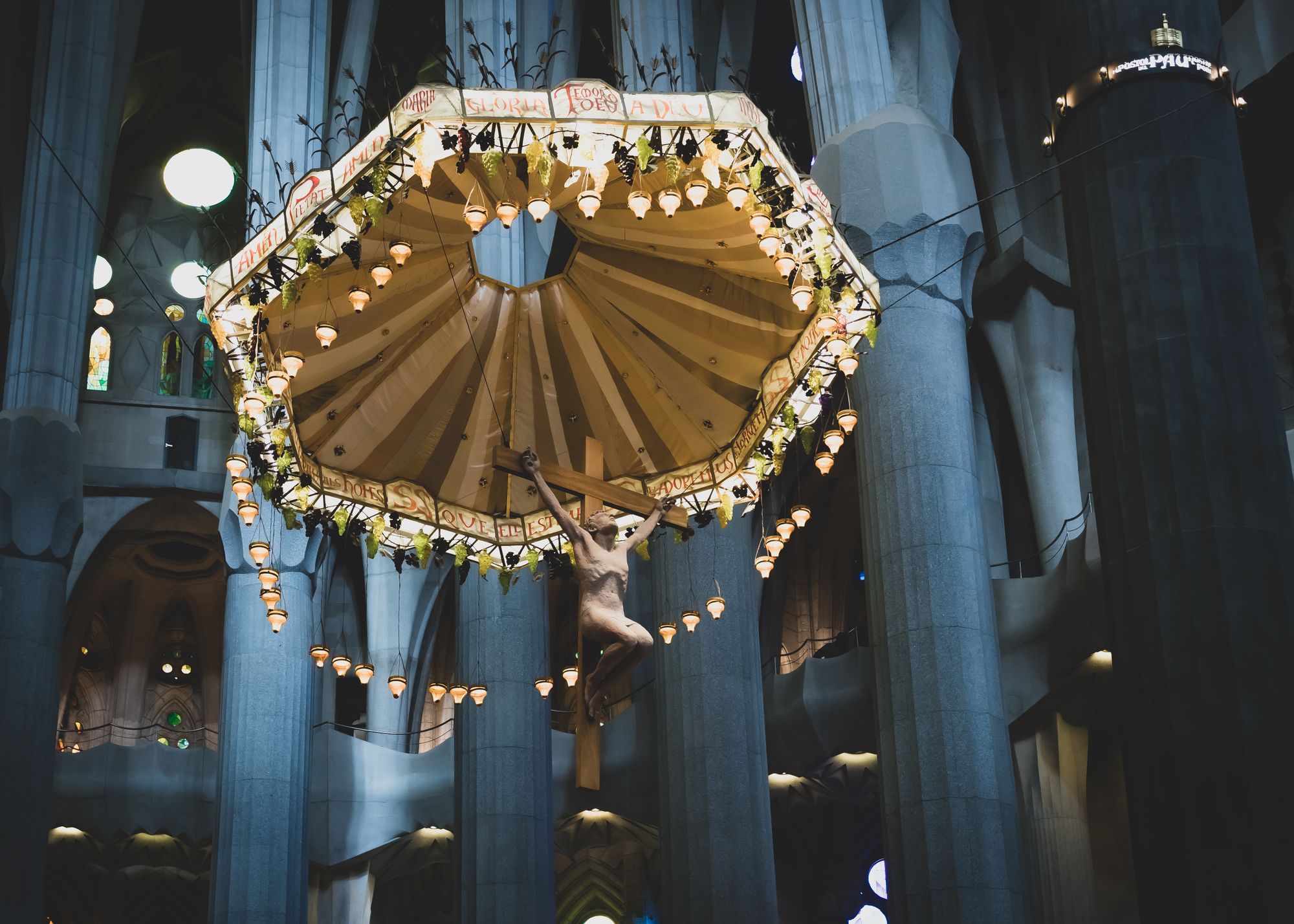
It almost never got here. They began in 1882, and for most of a century "the Sagrada Família" was shorthand for a thing that could not be finished, a building permanently wrapped in cranes. Then this year the cranes did their last big lift. In February they set a seventeen-metre cross on the central tower and the silhouette closed for the first time, a hundred and seventy-two metres of it, the tallest church on earth. Gaudí stopped it deliberately a few metres below the hill of Montjuïc, because he did not think anything a person made should stand higher than what God made. In June a Pope came to bless it and a hundred and twenty thousand people filled the streets around it, almost a hundred years to the day after Gaudí was knocked down by a tram and died, taken at first for a beggar by how he was dressed. He is still here, downstairs in the crypt, under a plain slab, the one finished man in an unfinished building.
The building is meant to be read by the light rather than by the clock of a schedule. At opening the nave runs blue and green and cold, off the eastern glass; in the last hours of the afternoon the same room turns amber and red off the west. It is one room built to be two, and the hour, not the floor plan, decides which one a visitor gets. Even the first hour of the day is set aside as a quiet one, as if the design assumed the building would be met slowly or not properly met at all.
Whether it was worth the waiting is not really in question; what the building costs now is. The word to hold loosely is whole. The grand front Gaudí meant as the entrance, the Glory façade, is still a hoarding and a crane, and to build the stair he drew, the city would have to take a run of apartment blocks across the street, some thirty buildings and three thousand people, and put them out of their homes. No one has yet agreed to it. So the most beautiful interior in Barcelona is also a building still arguing with its own neighbourhood, and the modest side door visitors are waved through exists because the real one would cost a thousand front rooms. The forest is finished. It is the street the forest stands in that is not.
At dusk the ordinary city resumes, scaffold and men selling water. Up on the new tower the cross has come on, lit, floating over the rooftops, the highest thing in Barcelona by a margin its maker measured on purpose and stopped just short of the hill of Montjuïc. Inside, the stone was being carved before anyone now alive was born; outside, the street the building needs has not been settled. The forest keeps the promise on the ticket. It has simply not finished with the city yet.