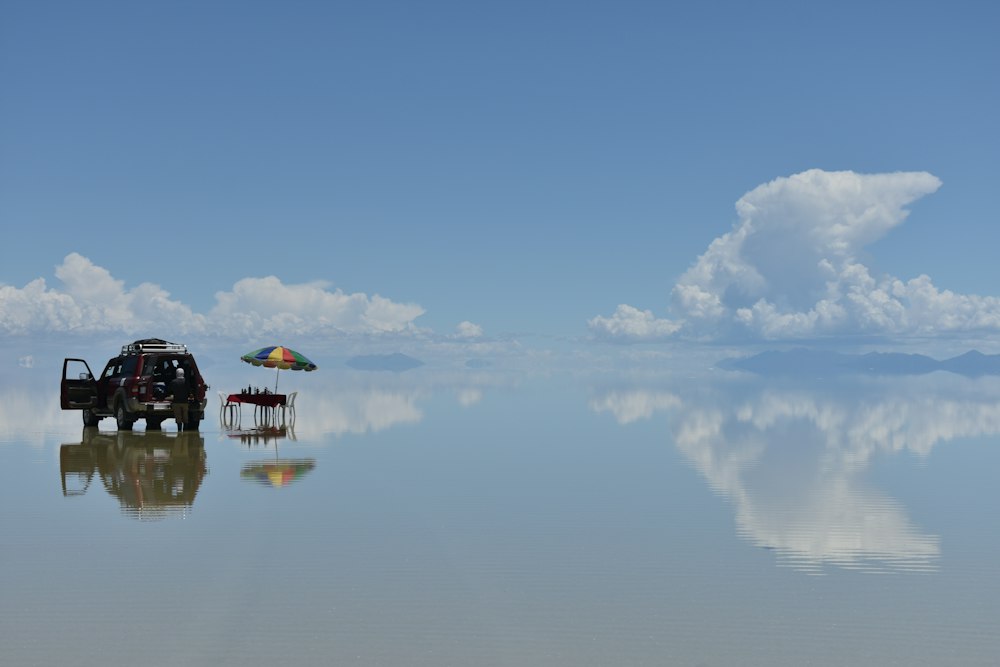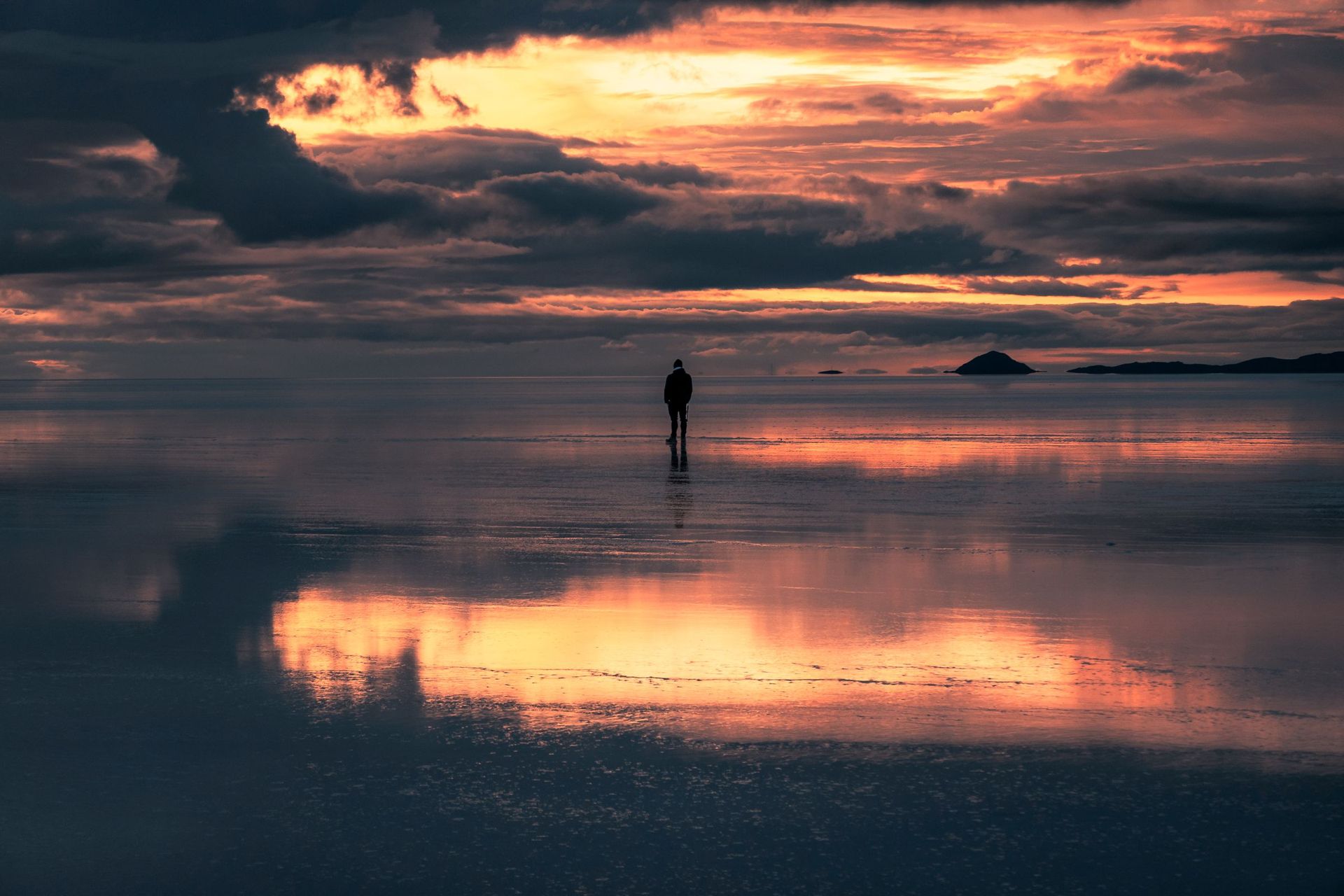
You have seen the photograph. One figure alone on a sheet of water, the sky doubled perfectly beneath them, the same clouds above and below and no line where the ground begins. It is the image that sells Bolivia to the world, and the reasonable suspicion is that it takes a wide lens and a lucky thirty seconds. It does not. Walk out onto the flooded flat before sunrise, and within a hundred metres the horizon is gone, the clouds overhead and underfoot both, and the thin film of water stops being water and becomes a mirror the size of a country. People a little way off look as though they are hanging in the air. It is among the most disorienting beautiful things on earth, and it is, technically, a puddle on a salt flat.
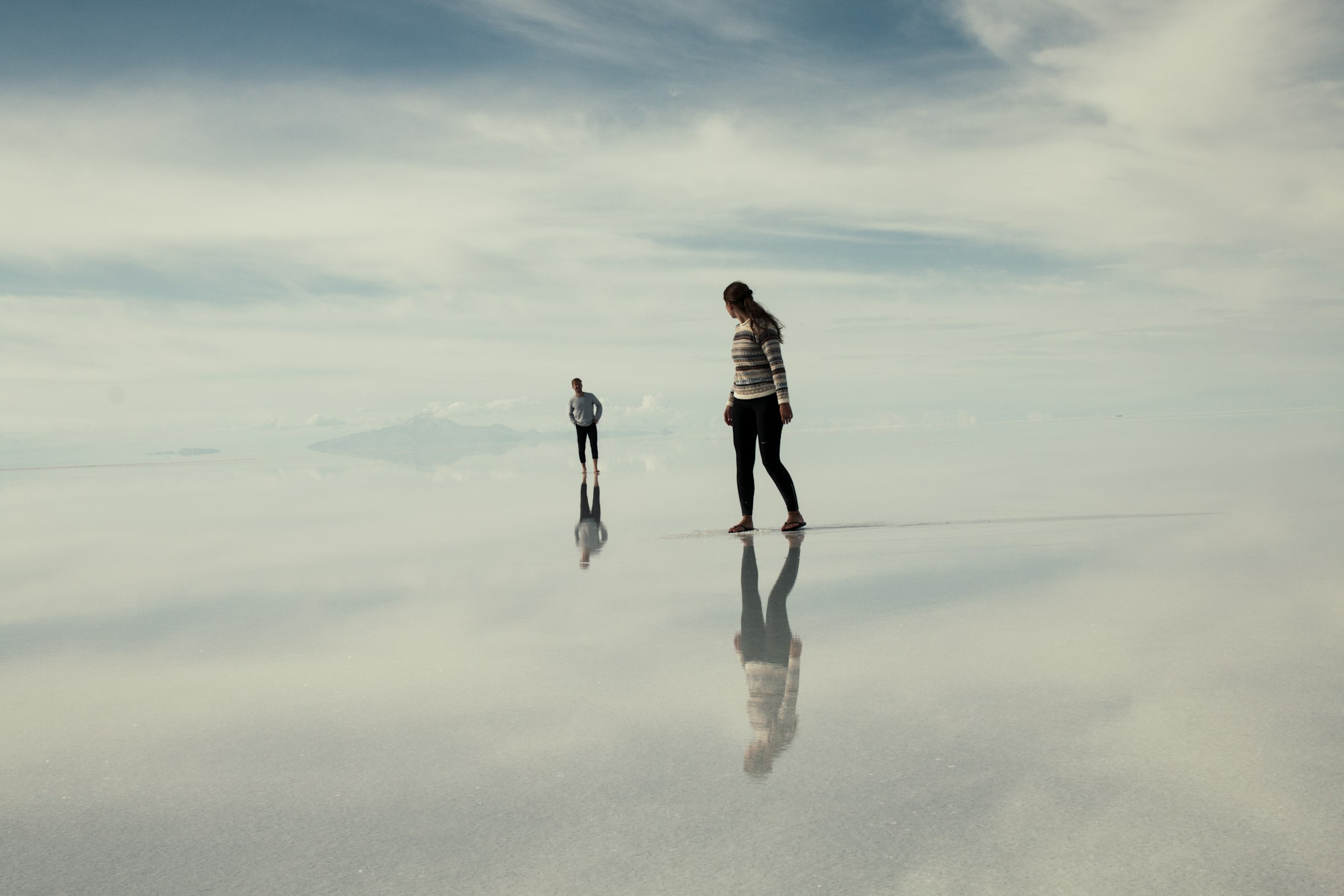
The Salar de Uyuni is the largest salt flat on the planet, ten and a half thousand square kilometres of it, the ghost of a prehistoric lake that dried and left a crust of salt metres thick. It is so vast and so level, less than a metre of height across its whole width, that satellites use it to calibrate their instruments. For most of the year it is a blinding white plain, hard as a road, cracked into a honeycomb of hexagons that runs to the horizon. Then, from about December, the rain comes and lays a few centimetres of water over everything like a sheet of glass. That is the mirror, and its window is narrow: the wet months, a still morning, the half hour after dawn before the wind gets up and stirs the glass back into water. Come at the wrong time, or on a windy day, and the famous reflection simply is not there. Most people who leave let down came for that one photograph and could not forgive the sky for the weather.
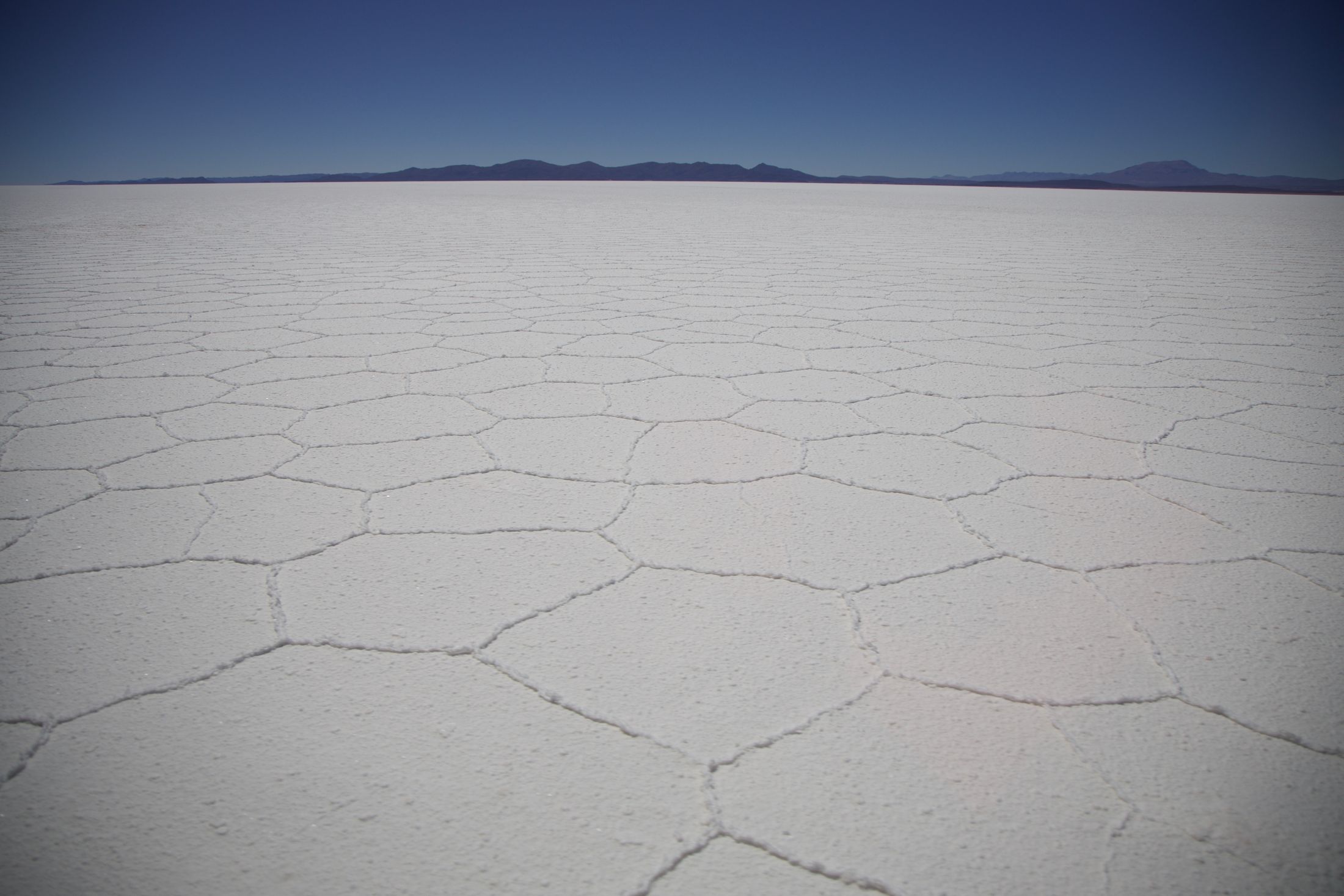
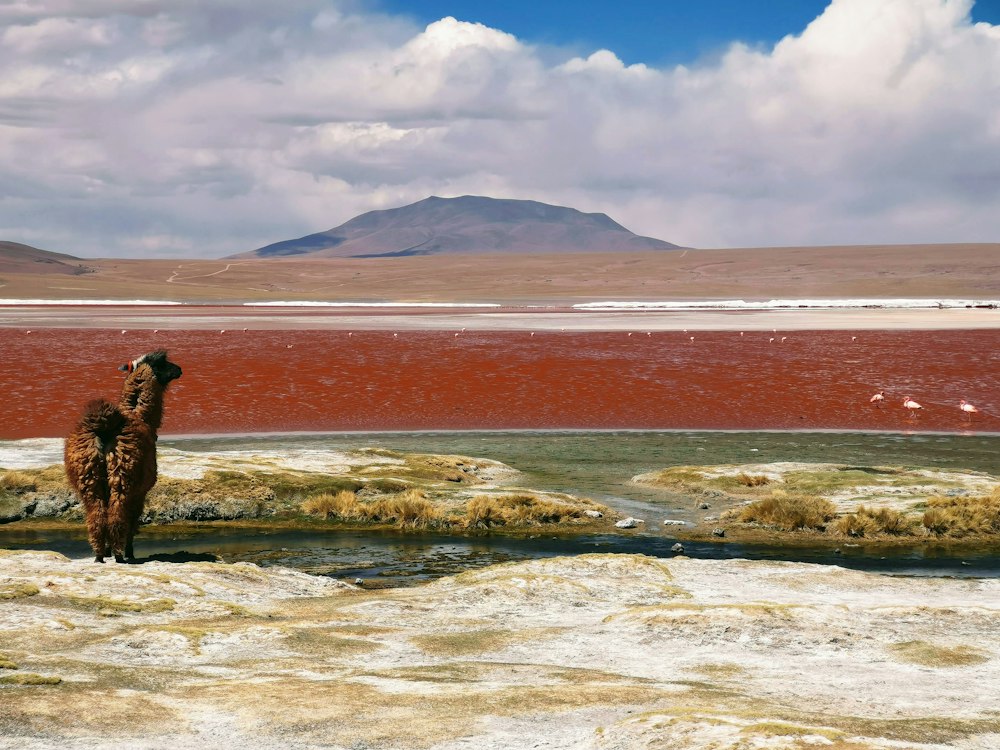
The flat is not something to fly to the middle of the altiplano for, stand on for half an hour, and leave, either. For most travellers it is the last act of something much larger: a three-day crossing by four-wheel drive between Uyuni and the Chilean border at San Pedro de Atacama, most of it above four thousand metres, through country that looks like nowhere else on earth. Those days run through lagoons stained rust-red and jade-green by their minerals, flamingos feeding in water that sits below freezing, the geysers of Sol de Mañana boiling at first light, a hot spring to lower into with your breath smoking, and a bare desert Dalí could have signed. The salt flat is the finale, and arriving that way, after three days of thin air and hard colour, its plain white comes almost as a relief.
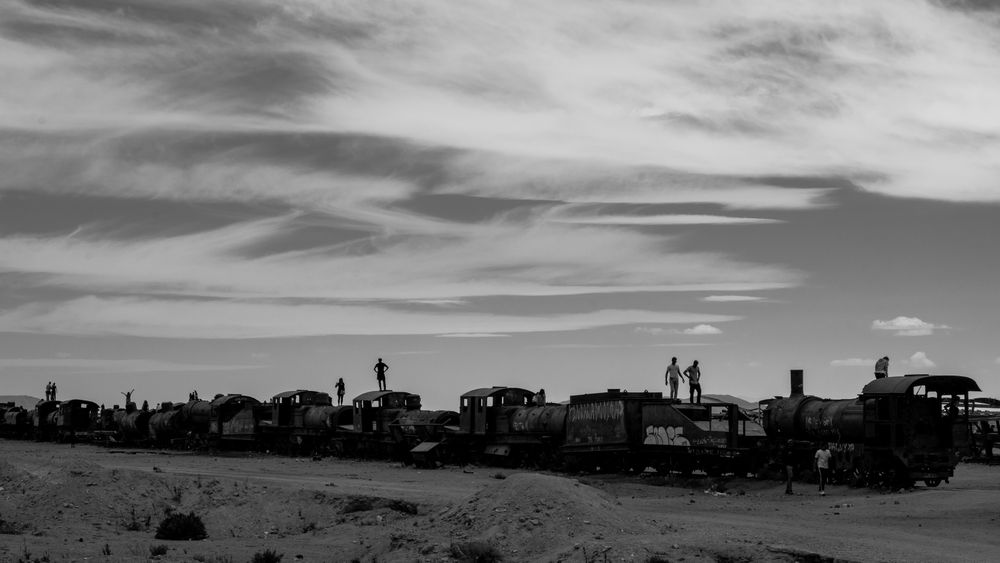
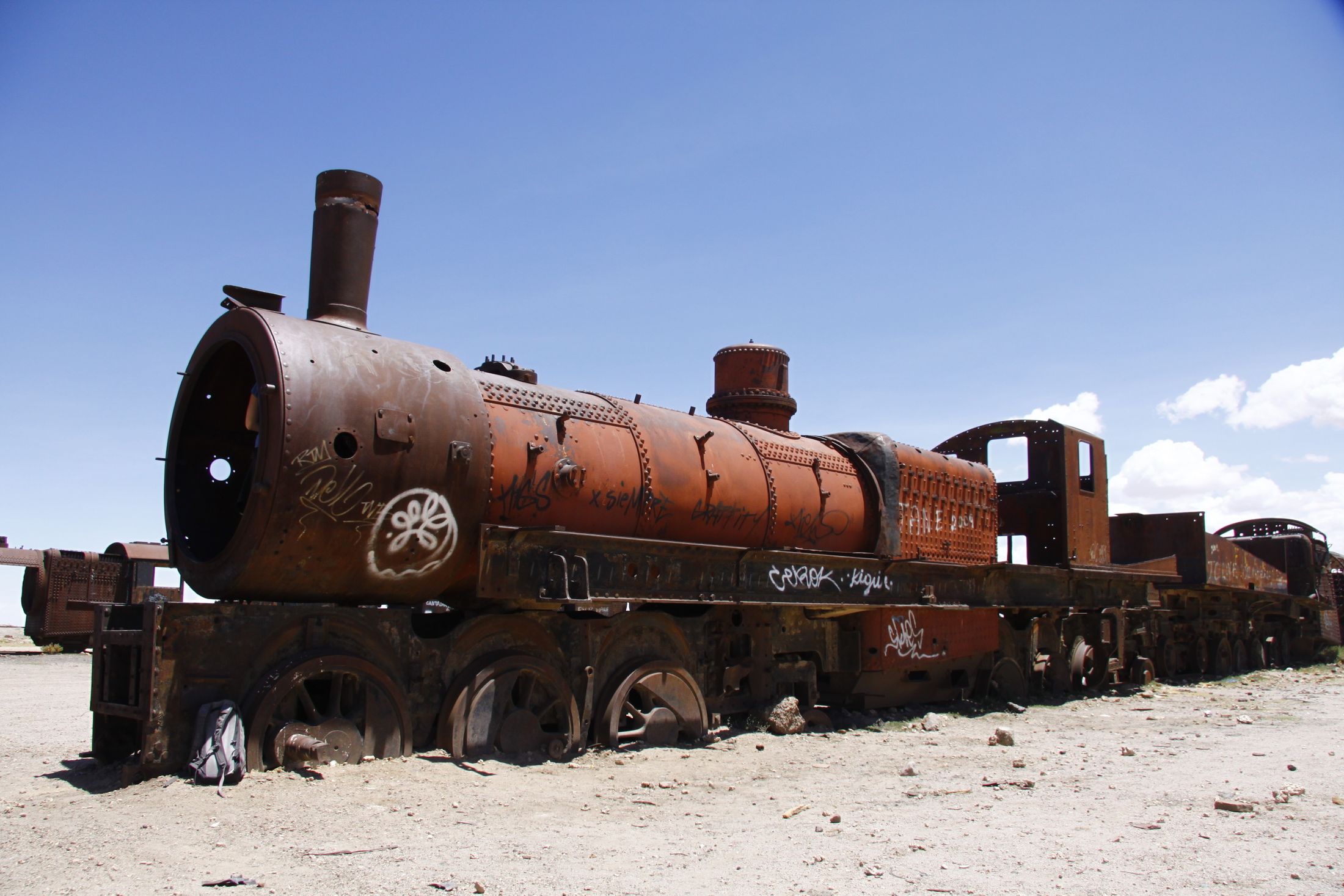
It all begins in Uyuni, and Uyuni is not the reward. The town sits at nearly three thousand seven hundred metres, cold and dust-blown and built around a single industry, every second doorway selling the same tour as the last. There is no charm being withheld, no old quarter, no nightlife, not much reason to be there beyond the one that brings everyone. Most people arrive short of breath, give the altitude a day, sleep badly, and leave. Nobody falls for Uyuni. On the way out the jeeps pull up at a cemetery of steam locomotives left to rust in the desert since the mines they served gave out, and climbing on them in the cold is about the best the town itself has to offer.
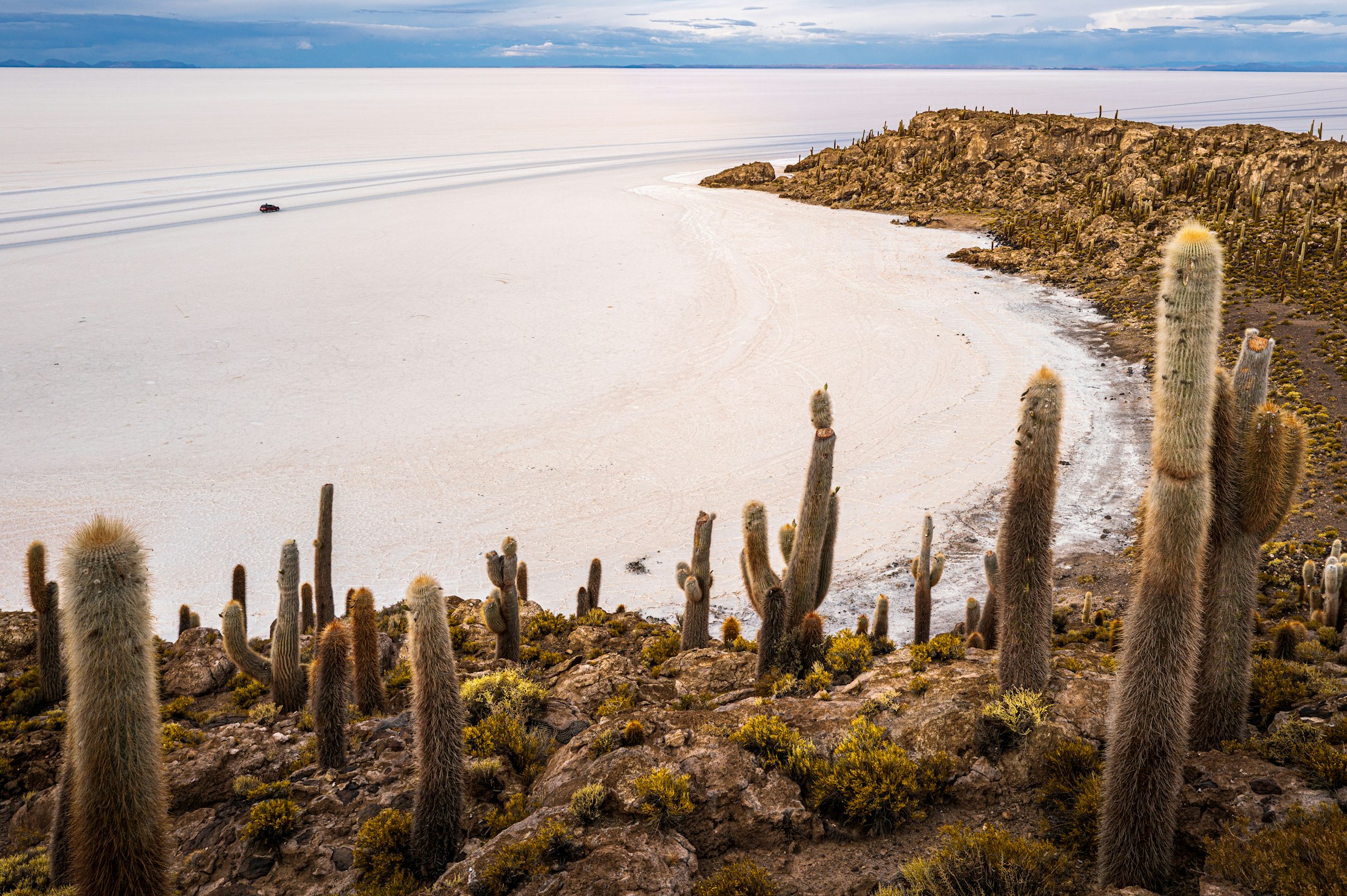
There is another version of this place, and it is the opposite one. In the dry months the drivers make straight across the hard crust to Incahuasi, an island of fossil coral in the dead centre of the white, furred with giant cacti that have stood here for centuries, some of them ten metres tall. From the top, by every account, there is nothing in any direction but salt to the curve of the earth. The water that doubles the sky also drowns the tracks out to the island, so the two faces of the Salar do not overlap: the mirror or the cacti, one or the other, and the choice is made before booking. Neither is the wrong one. The case for the dry season, for the cacti and the honeycomb, lands hardest on a windy morning when the mirror never comes.
The sky is above you and the sky is below you, and you cannot tell which way is up.
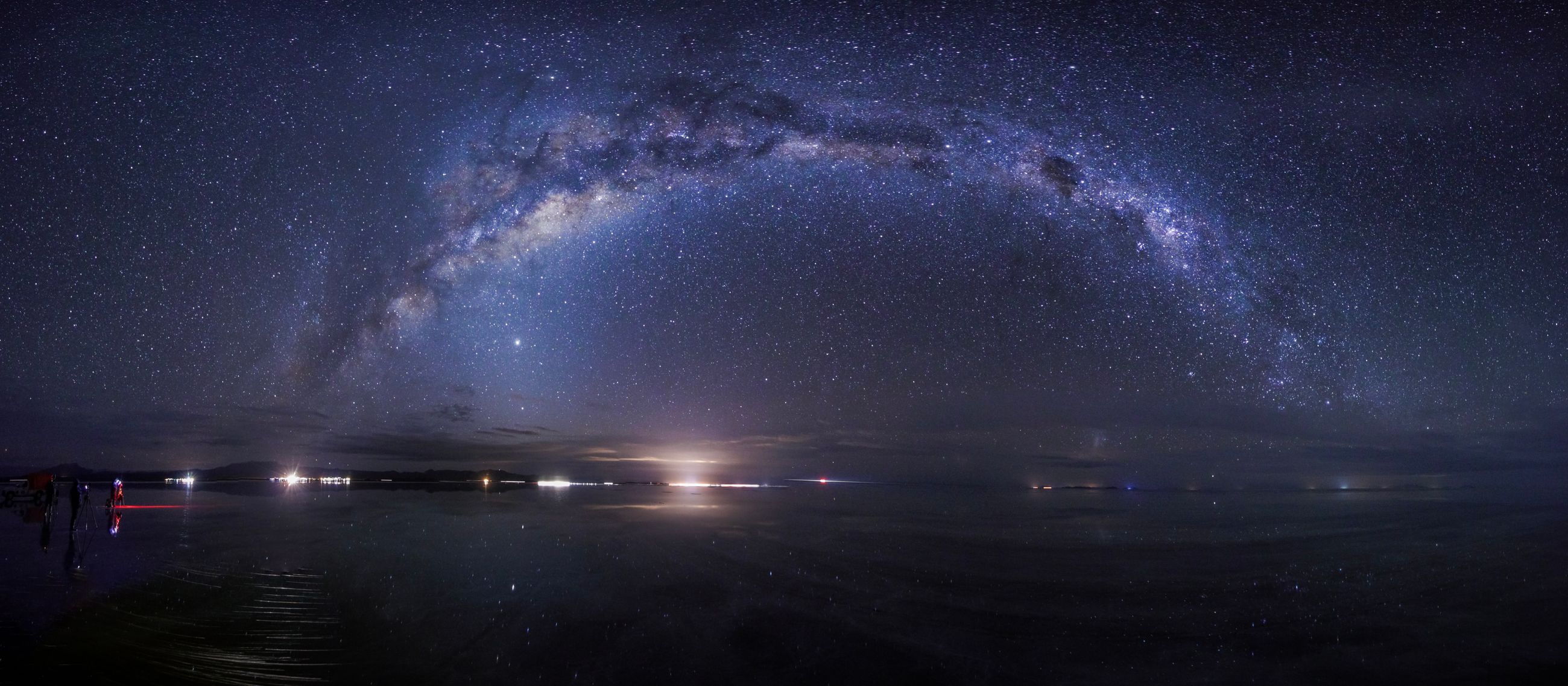
The water does more than double the clouds. On a still night, once the wind falls away and the flat lies dead calm, the Milky Way comes out over it and under it at the same time, and to stand there is to stand in the middle of the galaxy with no up and no down at all. There are darker skies on earth. There is nowhere else that hands them over twice, once overhead and once beneath your boots.
So does it live up to the photograph? The photograph undersells it and oversells it at once. It undersells the scale, the silence, the clean cold strangeness of standing where the ground has become the sky. It oversells the certainty, because that flawless reflection is thirty minutes of luck inside a narrow season, not a thing you can book. Come for the crossing and the altiplano, treat a perfect mirror as a gift rather than a guarantee, and you will not leave short-changed. Go out at sunrise, when the water is stillest. Bring sunglasses, because the dry flat is genuinely blinding, and shoes you do not love, because the salt eats them. Take the altitude seriously, and reserve your bed in Uyuni before you come. Then walk out far enough that you can no longer hear the jeeps, stand still in the place where the sky is the ground, and let yourself lose which way is up. That half hour is the whole reason to come, and it is enough.