The dragon's blood tree will not give up its age. Dracaena cinnabari is a monocot, and the unusual secondary growth that thickens its trunk lays down no reliable annual rings, so the stands on the Dixam plateau cannot be dated the way an oak wood can. The decline, though, has been measured. The IUCN lists the species as Vulnerable, and habitat modelling projects a 45 percent reduction in its suitable range by 2080 as the island dries.
Yemen is under the most severe travel advice its major partners issue. The US State Department lists Yemen at Level 4, Do Not Travel, and states that the US government has no ability to provide emergency services to citizens there. The UK Foreign, Commonwealth and Development Office advises against all travel to Yemen. Australia's Smartraveller and Global Affairs Canada carry equivalent do-not-travel and avoid-all-travel advice. Those advisories are country-wide and they do not carve out Socotra.
The practical consequences are real even though the mainland war never reached the island. Standard travel insurance is voided by a do-not-travel designation, so any visitor needs a specialist policy arranged in advance, and there is no consular help of any kind on the island. The politics are also unsettled: the Southern Transitional Council controls most of the main island, the UAE completed its military withdrawal by mid-January 2026 under Saudi pressure, and the airport is now held by Saudi or Saudi-backed forces. Travellers who go consistently report a place with almost no crime, including women travelling alone. The exposure on Socotra is logistical, medical and political. Read this piece as a portrait of a place worth understanding, and treat any trip as a decision to take with your own government's current advice in hand.
Socotra lies about 232 kilometres east of the Horn of Africa and about 380 kilometres south of the Arabian Peninsula, which puts it far nearer Somalia than the country that governs it. It sits on the Somali plate, between the Gulf of Aden and the Arabian Sea, and geologically it belongs to Africa: a continental fragment of Gondwana that detached during the Miocene, in the rifting that opened the Gulf of Aden. Isolation did the rest. Across 3,796 square kilometres, 132 kilometres end to end and 50 at its widest, roughly 835 vascular plant species grow, and 37 percent of them exist only on this island. Around 90 percent of the reptiles and 95 percent of the land snails are endemic, along with six endemic birds. Behind Hadibo the Hajhir granite rises to Mashanig at 1,503 metres, high enough to comb moisture out of the monsoon and keep the interior green while the coast stays arid. UNESCO inscribed the archipelago as a World Heritage Site in 2008.
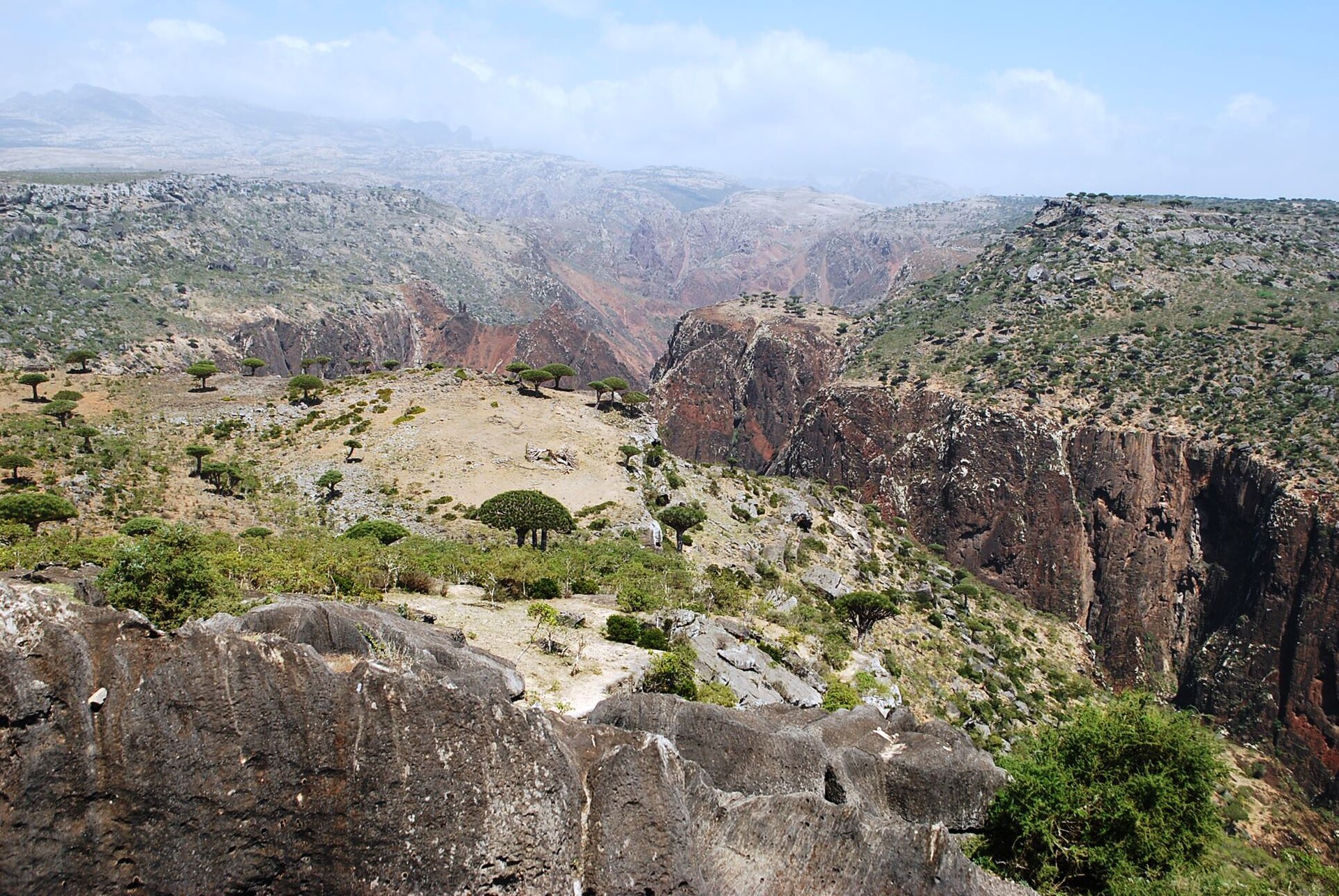
None of this was a secret. The Periplus of the Erythraean Sea, written in the first century, records the island as Dioskouridou and places it on the incense and spice routes. What the ancient world wanted from it was the resin. Dragon's blood, the deep red sap the tree bleeds when cut, served Greek, Roman and Arab practitioners as a remedy for wounds, fever and diarrhoea, and much later turned up in the varnish of eighteenth-century Italian violin makers and in the tempering of steel. The Scottish botanist Isaac Bayley Balfour graded it into three qualities in 1883, which is what a commodity looks like when it has been traded long enough to need a standard. In 1507 a Portuguese fleet under Tristao da Cunha took the port of Suq to guard the route to India and gave the island up again by 1511, defeated by food and water rather than by anyone on it. The lost-world framing arrived much later, and the island spent most of its recorded history as a working stop on a trade route.
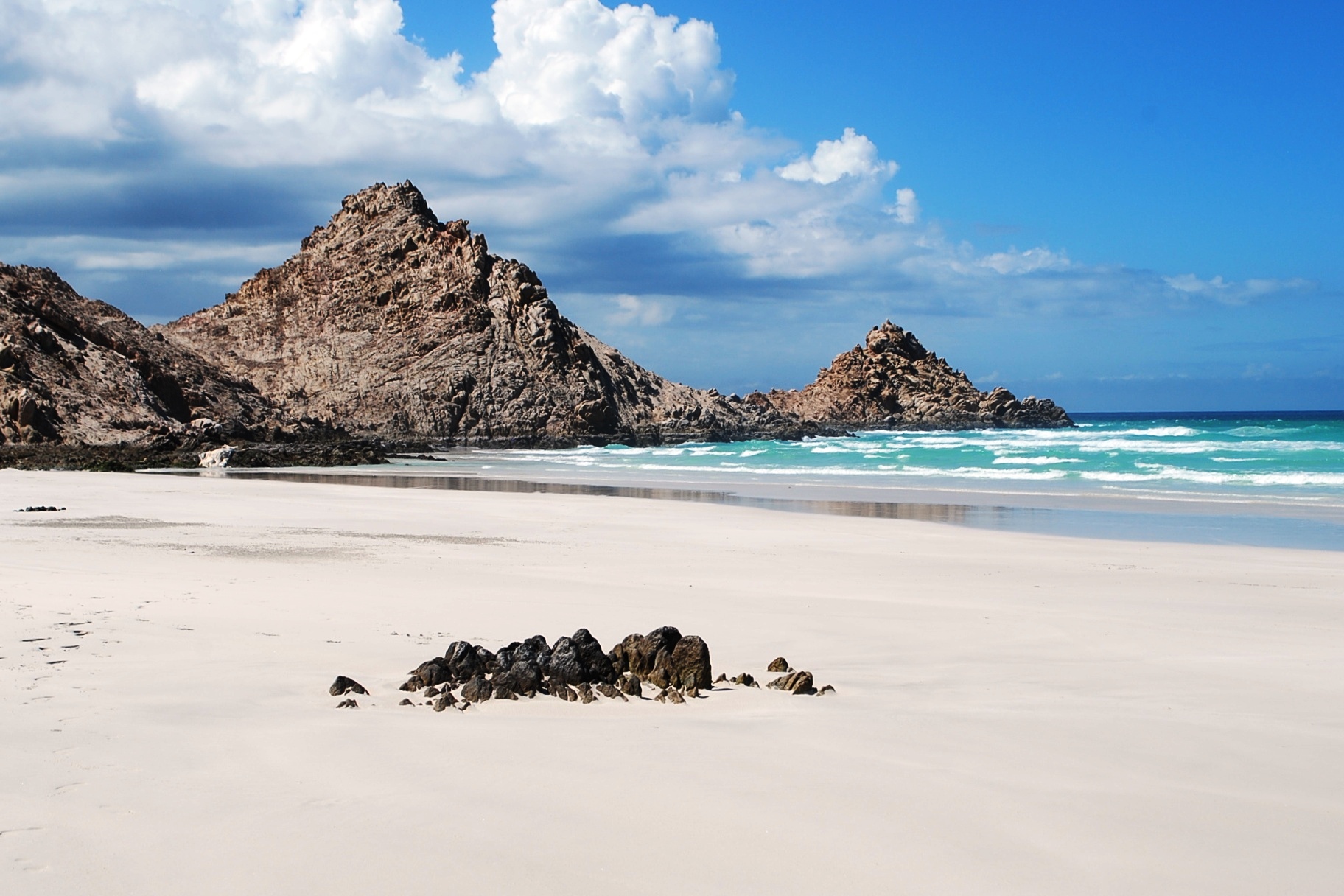
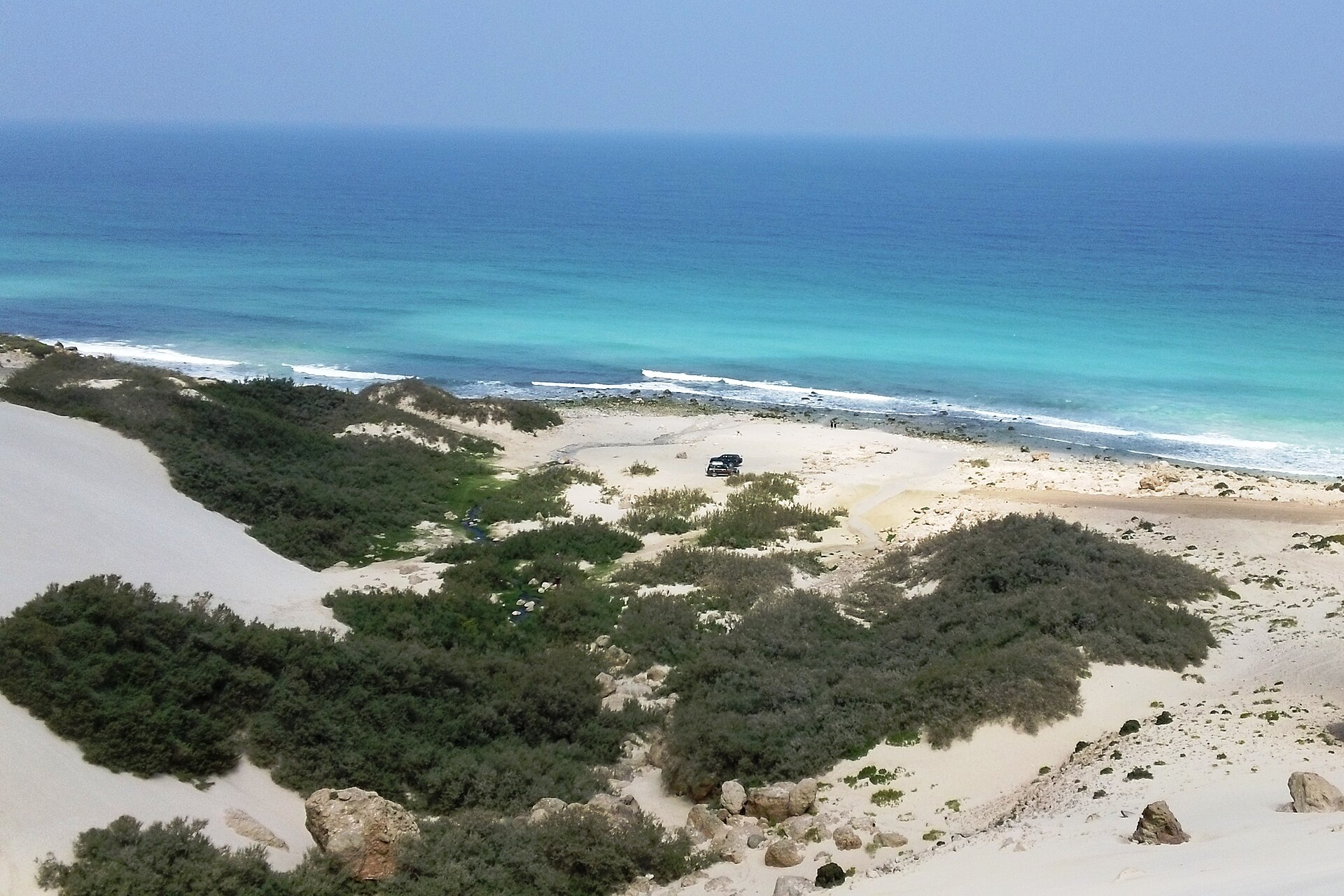
There is no independent travel to Socotra. Flights cannot be bought on airline websites, and a registered local operator books the seat, sponsors the Yemeni visa and supplies the 4x4, driver, guide and camping kit. The route changed in January 2026, and this matters more than any other planning detail, because guides written in 2024 and 2025 all point at Abu Dhabi. That service was suspended. Access now runs on a direct Jeddah to Socotra flight operated by Yemenia on an A320, roughly twice a week. With one or two flights a week, the flight schedule sets the trip length rather than the traveller: eight days is the standard block and shortening it is not on offer. Seats sell out long before beds do, weather delays are normal, and both ends of a connecting itinerary need slack built into them. The island itself then runs on cash and runs offline. There are no working ATMs and international cards function nowhere. Every dollar for the week arrives in a pocket, and the notes must be post-2013, crisp and uncreased, because worn bills get refused. A modest float beyond the tour price covers tips and souvenirs. Signal effectively stops outside Hadibo; some camps catch something, most catch nothing, and a SIM bought at the departure airport only softens the edges. Charging happens from the vehicle's cigarette lighter between camps, which makes a multi-port car charger and a pair of power banks the difference between a working camera and a dead one on day four. Meals are simple and repetitive: rice, pasta, vegetables, malawah flatbread, dates, eggs, grilled fish and octopus, occasionally salta. Coffee is scarce and tea is the default. Anyone with a narrow palate should bring their own snacks, because nothing on the island fills that gap.
The flight schedule fixes the trip at an eight-day block, six of them on the ground. There is no ticket or pass to buy in advance: entry is a sponsored permit paid in cash on arrival, and there are no ATMs anywhere on the island, so the week's money has to come in with the traveller. Accommodation is a moving tented camp, with the Summerland Hotel in Hadibo the usual bookend the night before or after the flight. Distances look small and are not. The plateau tracks are 4x4 only, and the climb from Hadibo to the Dixam rim runs between ninety minutes and two and a half hours of switchbacks.
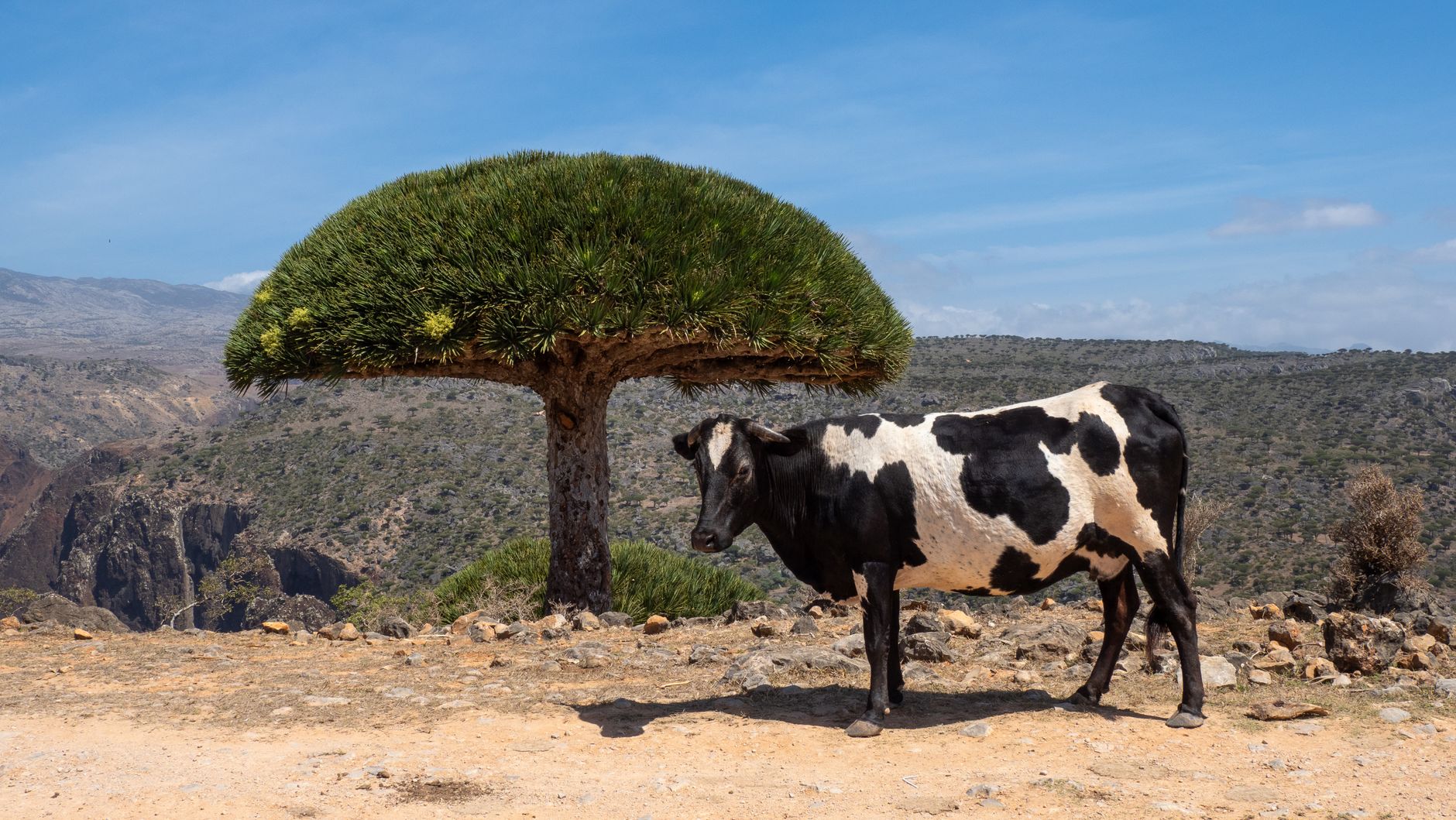
The canopy is machinery. It grows outward and upward into a dense inverted umbrella spanning up to about twelve metres on a tree some nine metres tall, and it works as a condenser, combing moisture out of the monsoon fog and funnelling it down the trunk to a root zone its own shade keeps cool. Goats are the problem the design does not solve. Overgrazing, with livestock stripping flowers, fruit and seedlings, means the forests are barely regenerating, and young trees now survive mainly on ledges the herds cannot reach. Desertification does the rest. Community conservation has planted saplings against this, with around 600 established as of 2022, which is a serious effort and a small number set beside a canopy nobody can date and a habitat projected to shrink by nearly half within a lifetime.
A forest that cannot say how old it is, and cannot make its replacement.
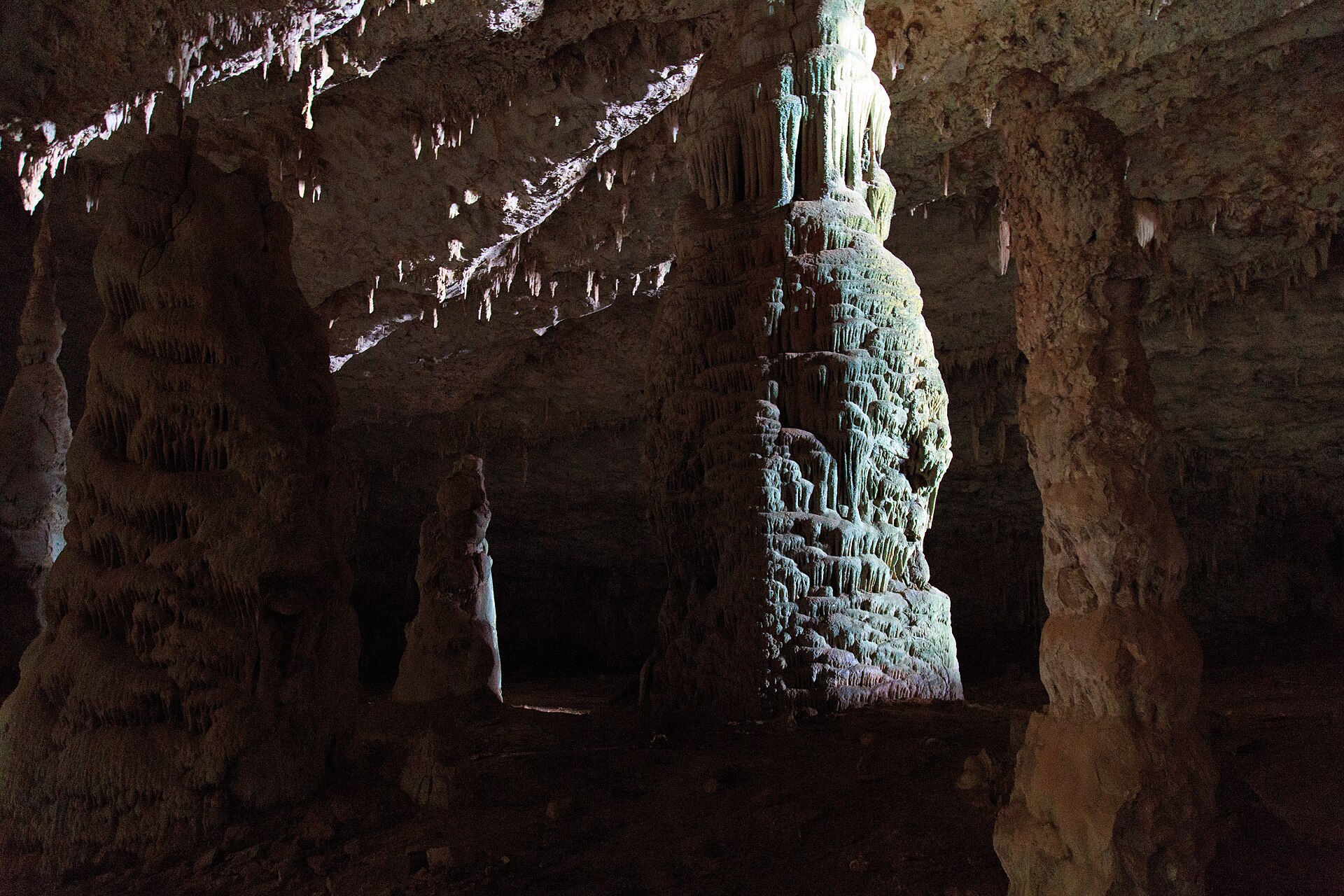
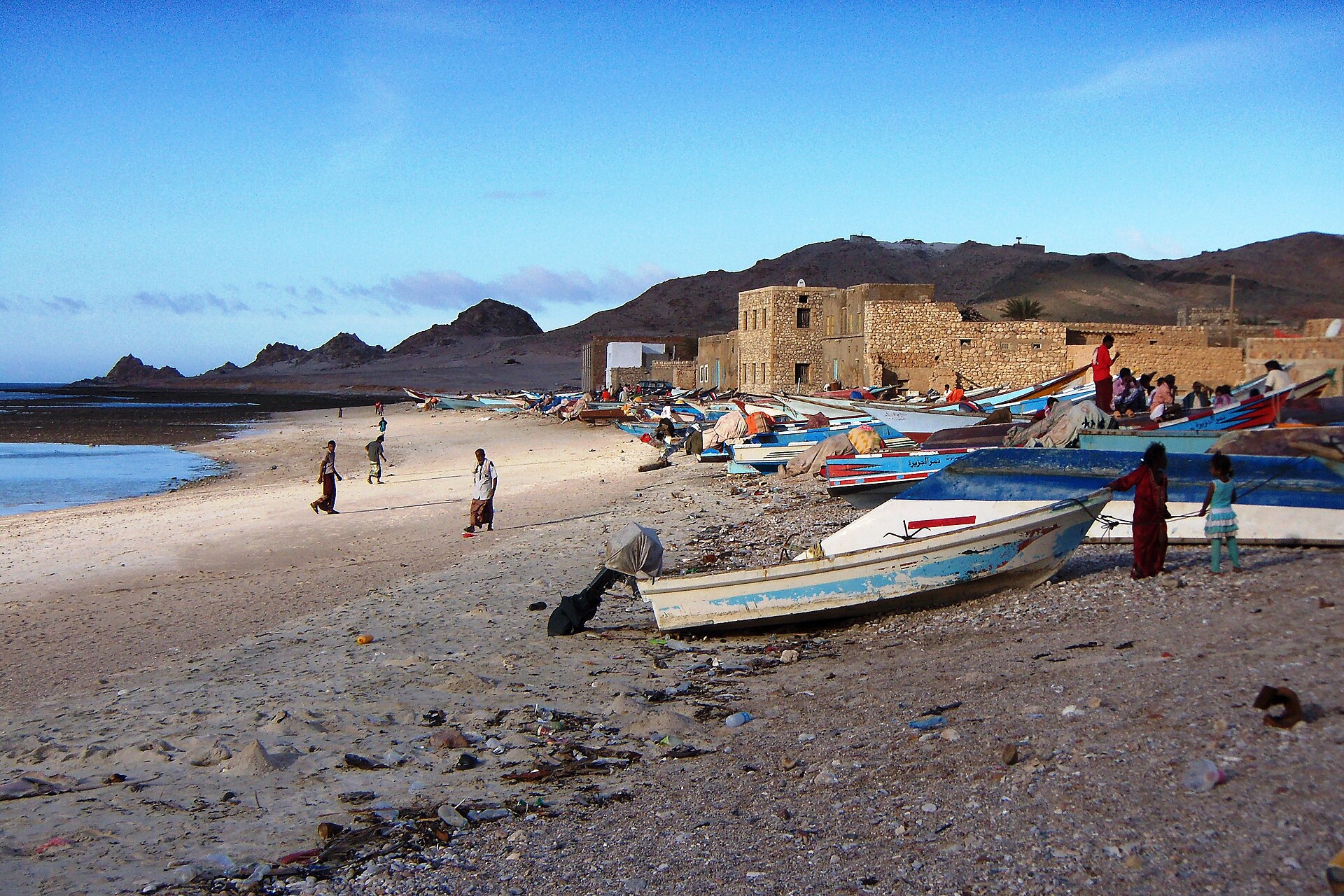
Camping is the accommodation for the whole circuit, and standards swing hard between sites. Arher has relatively new showers, toilets and fresh water; Homhil has unlit squat toilets and no shower at all. The Dihamri stone huts are the most comfortable roof on the circuit and carry electricity, though plenty of groups skip them on cost. The night most travellers name as the best of the week is Firmihin, camped inside the largest surviving stand of dragon's blood trees, a limestone plateau of roughly 5.3 square kilometres, under a Milky Way that no light pollution touches. Reaching it takes about three hours of genuinely rough road up to 1,200 metres. Most of the effort on Socotra goes into the driving; the walks themselves are short. The Homhil pool is a twenty minute descent. The Arher dune climb takes about half an hour. The Hoq cave approach is steep and fully exposed, and a fit walker covers it in around twenty five minutes, which argues for an early start.
The visitable window runs October to April, with mid-November to March the strongest stretch and daytime temperatures around 20 to 28 degrees. March is when the bottle trees flower pink. June to August is out entirely: the Khareef monsoon brings sustained wind that stops the boats, closes the Shuab crossing and regularly grounds flights, and the interior mountains take up to 800 millimetres of rain in a year, so this is not merely a windy nuisance. Days start early. Midday on the open approaches at Hoq and Homhil is punishing, so 4 a.m. starts are standard and the week is short on sleep. What the island asks for is stamina and a tolerance for improvisation; technical fitness barely comes into it. Modest clothing is expected in Hadibo and the villages, a robe-style cover-up solves the constant switch between swimming and meals, photographs of people require asking first, and waste handling on the island is poor enough that visitors who care should plan to carry their own rubbish out.
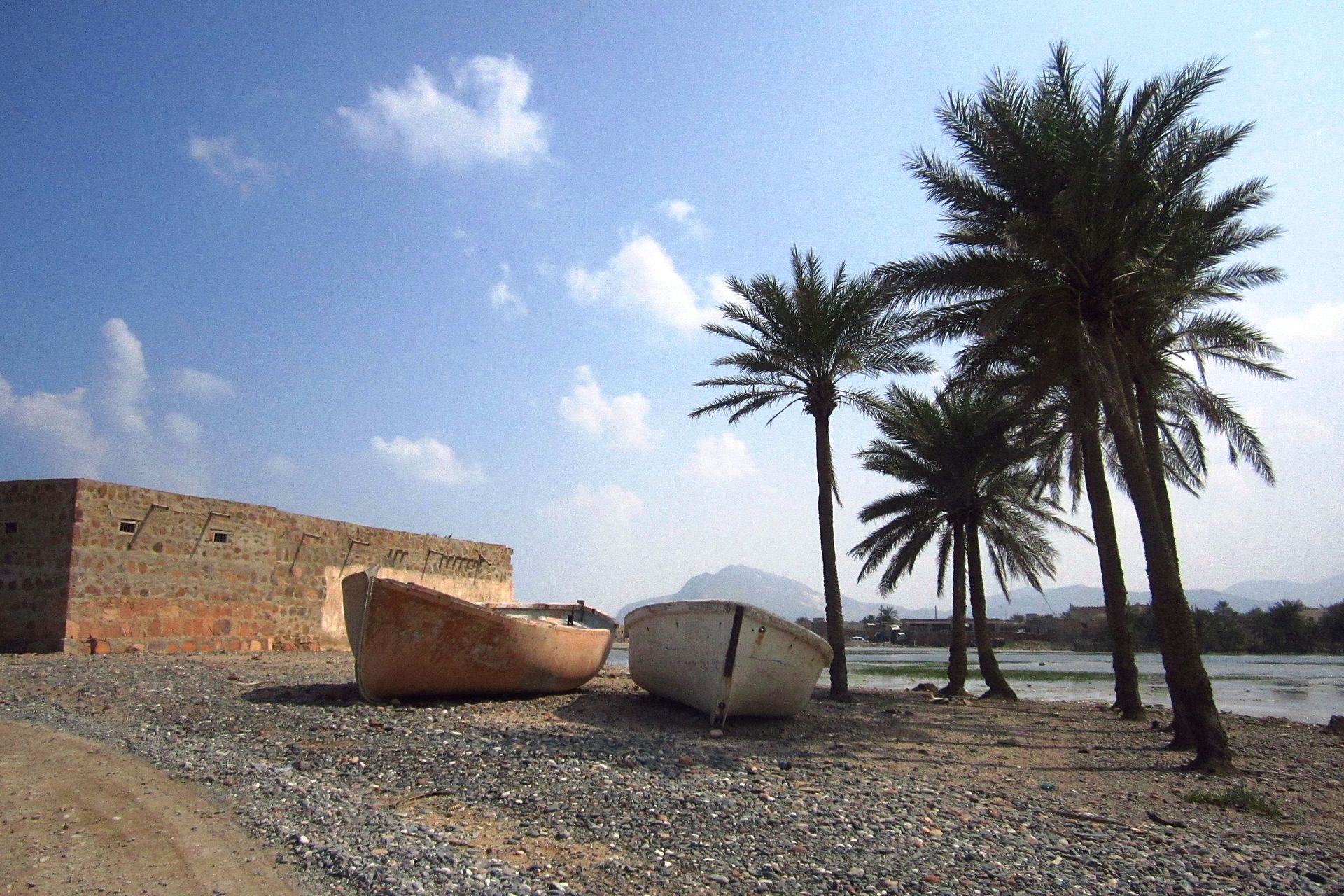
Roughly 3,000 visitors reach Socotra in a year, and at any one moment the number on the island runs to somewhere around 200. That scarcity follows from two flights a week and a set of advisories that most people, correctly, will not override. One consequence is that the island is not being loved to death by tourism. What happens to the dragon's blood forests will instead be settled by goats, rainfall and the roughly 60,000 Socotri who live there speaking a Modern South Arabian language that has never been written down. Anyone weighing a trip should start with their own government's current advice, then with whether the Jeddah service is still flying: it replaced the Abu Dhabi route at short notice in January 2026 and could change again with as little warning. Those two answers settle the question long before the season does.