You can stay in Georgia for a year without a visa. That is the kind of fact that marks a country either very sure of itself or very much wanting the company, and a week in Tbilisi does not settle which. Few visitors could find it on a map. It sits where Europe gives out, under the Caucasus, Russia above it and Turkey and Armenia and Azerbaijan around it, and it has spent three thousand years being argued over by everyone bigger. That much is plain from the first walk. Tbilisi will not be filed. It is not quite Europe and not quite Asia and not trying to be either.
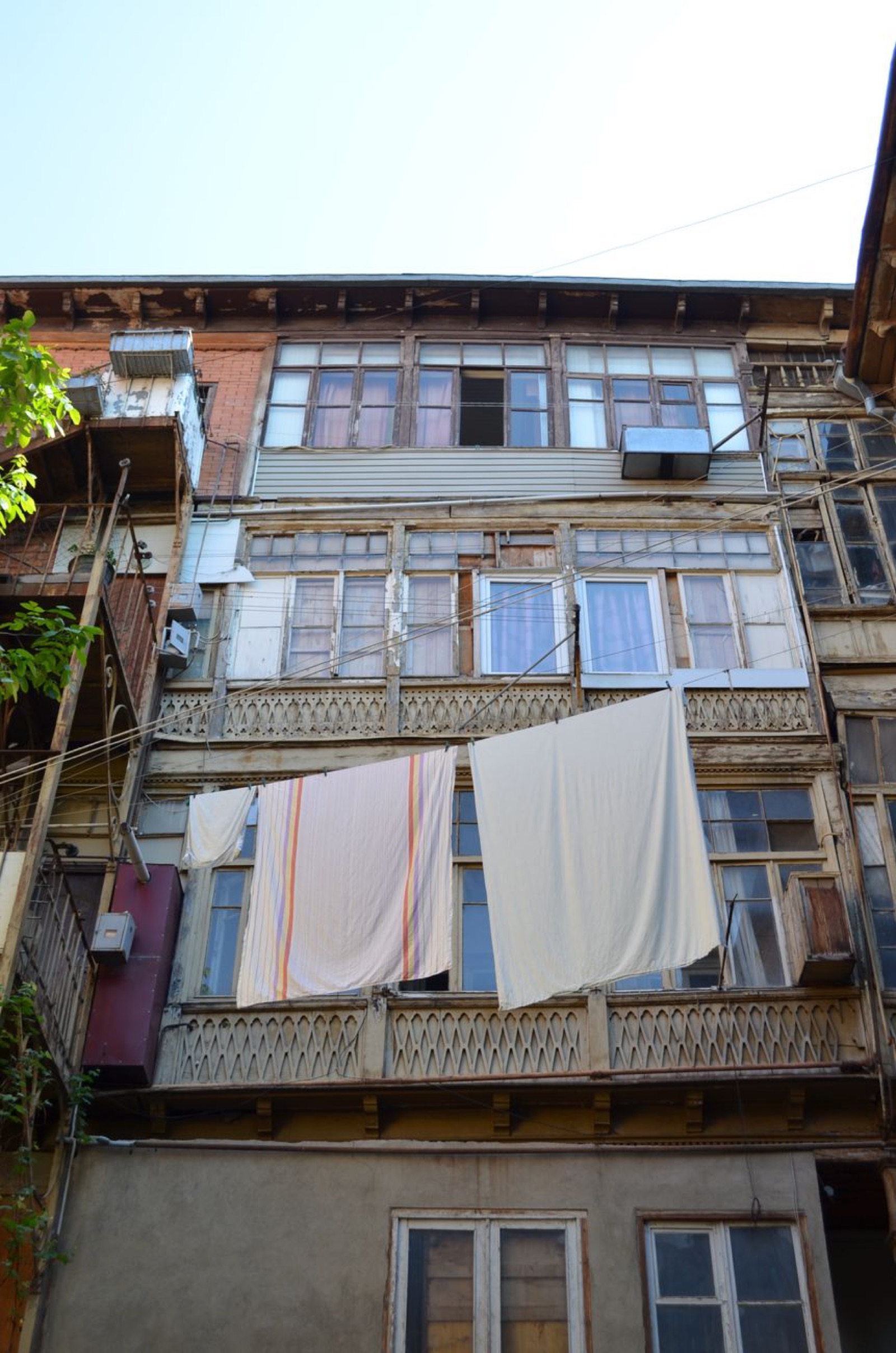
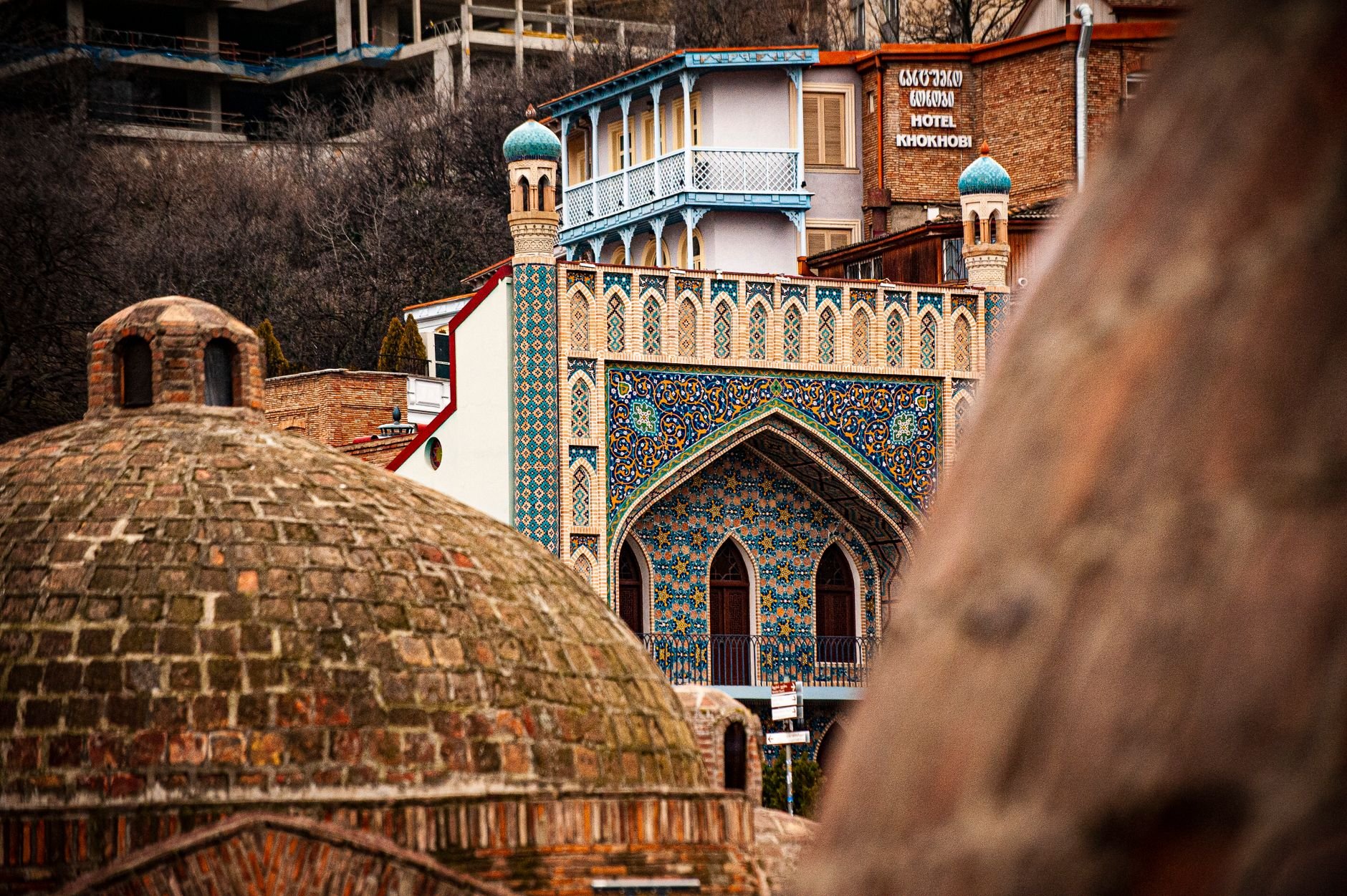
The old town rewards the early hour, walked not long after dawn, before the coach parties, which is the only sensible way to see it. Inside an hour it delivers an Orthodox church, a mosque, a synagogue and a sulphur bathhouse, its brick dome breaking the pavement like a knuckle. Go down into one as it opens, while the attendant is still sweeping the night off the steps and the sulphur hangs in the empty room. The bathhouses are the oldest thing here; the city's founding story starts at these hot springs, and a soak still costs about the price of a coffee. Persian tiles on one façade, Art Nouveau ironwork on the next, a slab of Soviet concrete behind both, then a sheet of glass the government put up to look modern. None of it matches. All of it is Tbilisi.
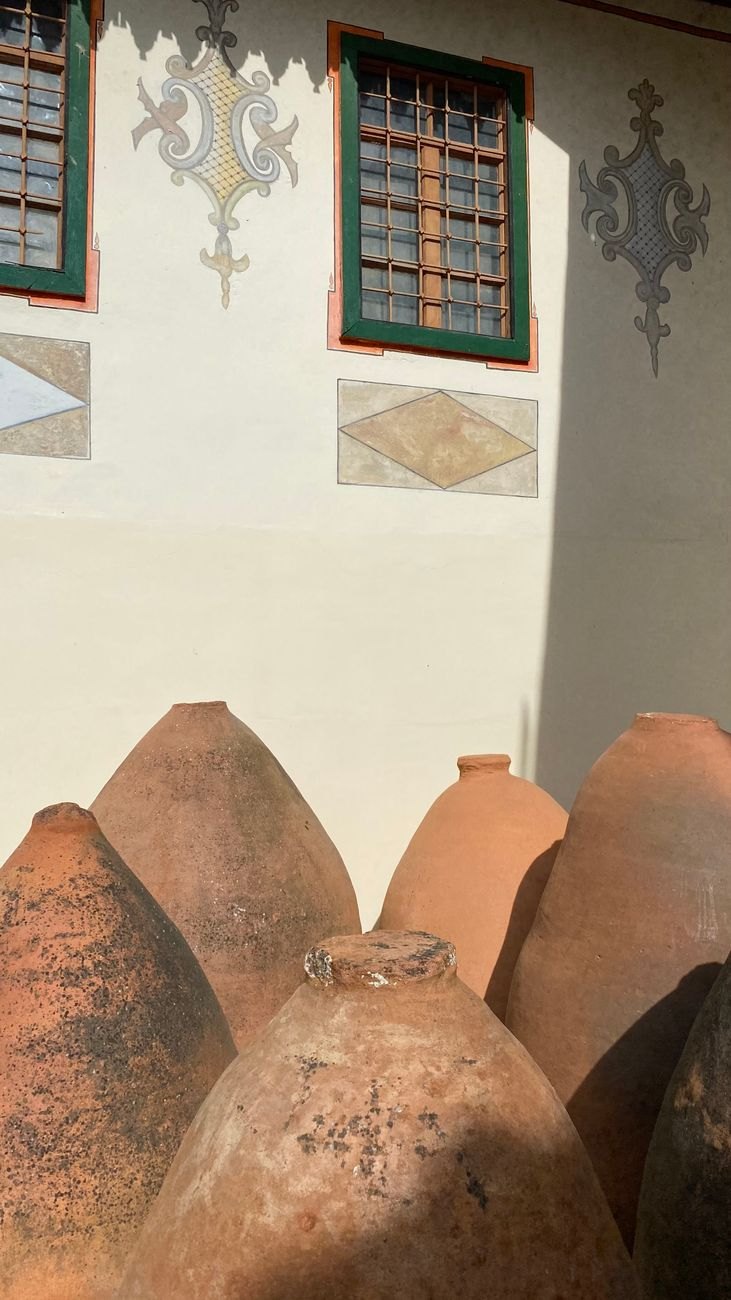
The wine turns up before anyone goes looking for it. In a basement bar near Freedom Square, the pour arrives the colour of weak tea: amber wine, white grapes left to sit on their skins in a clay pot buried in the floor, the way Georgians have done it for eight thousand years. They have the oldest winemaking on earth and they keep it, literally, in the ground. That turns out to be the national habit with anything that matters. When the Soviets wanted big sweet factory wine, the villages went on making the real thing in cellars where no inspector looked. When Russia banned Georgian wine in 2006 to punish the country for facing west, Georgia lost most of its market overnight, shrugged, and went looking for new drinkers elsewhere.
Stay a while and the pattern shows everywhere. Georgia has its own alphabet, one of only a handful on the planet, a looping script related to nothing else. Its language is a loner too, cousin to no major tongue. It was among the first countries anywhere to take up Christianity, seventeen centuries ago, and stayed Christian while the map around it turned Muslim. Its singing is so old and so strange that NASA put a Georgian song on the Voyager record, and it is out past the planets now, still going. None of this is museum stuff here. It is how a small country at a crossroads has kept being itself while empire after empire walked through.
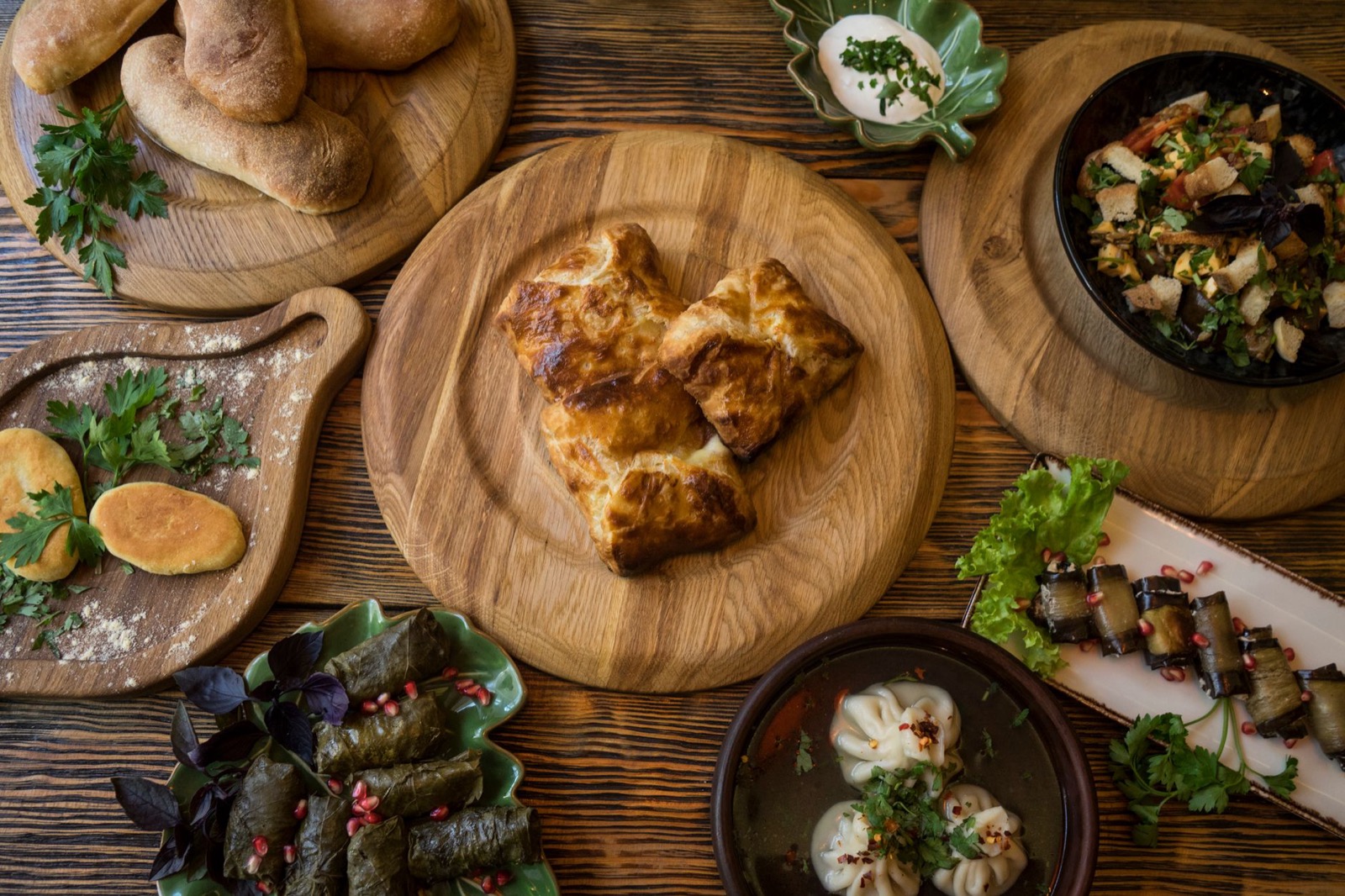
The place explains itself best at a table. The supra, the Georgian feast, can run five hours. A man at the head, the tamada, stands before every glass and makes a toast, real ones, to peace, to the dead, to the people who could not be there, and the table drinks to each in turn. Somewhere in the middle a few of the men begin to sing, those close old harmonies, with nobody asking them to. It is a country telling you, plainly and over wine, exactly who it intends to remain.
Go now, while it is this easy and this cheap and this little known. Walk the old town at first light, boil in a bathhouse before the crowd arrives, drink the amber wine out of the ground, and say yes if anyone asks you to a table. Georgia will not tell you whether it is Europe or Asia, because it has never much cared to decide. What it guards instead is older than that question: whatever the country turns to face next, the part that counts is already buried somewhere safe, in a clay pot, in the dark, where it has always been.