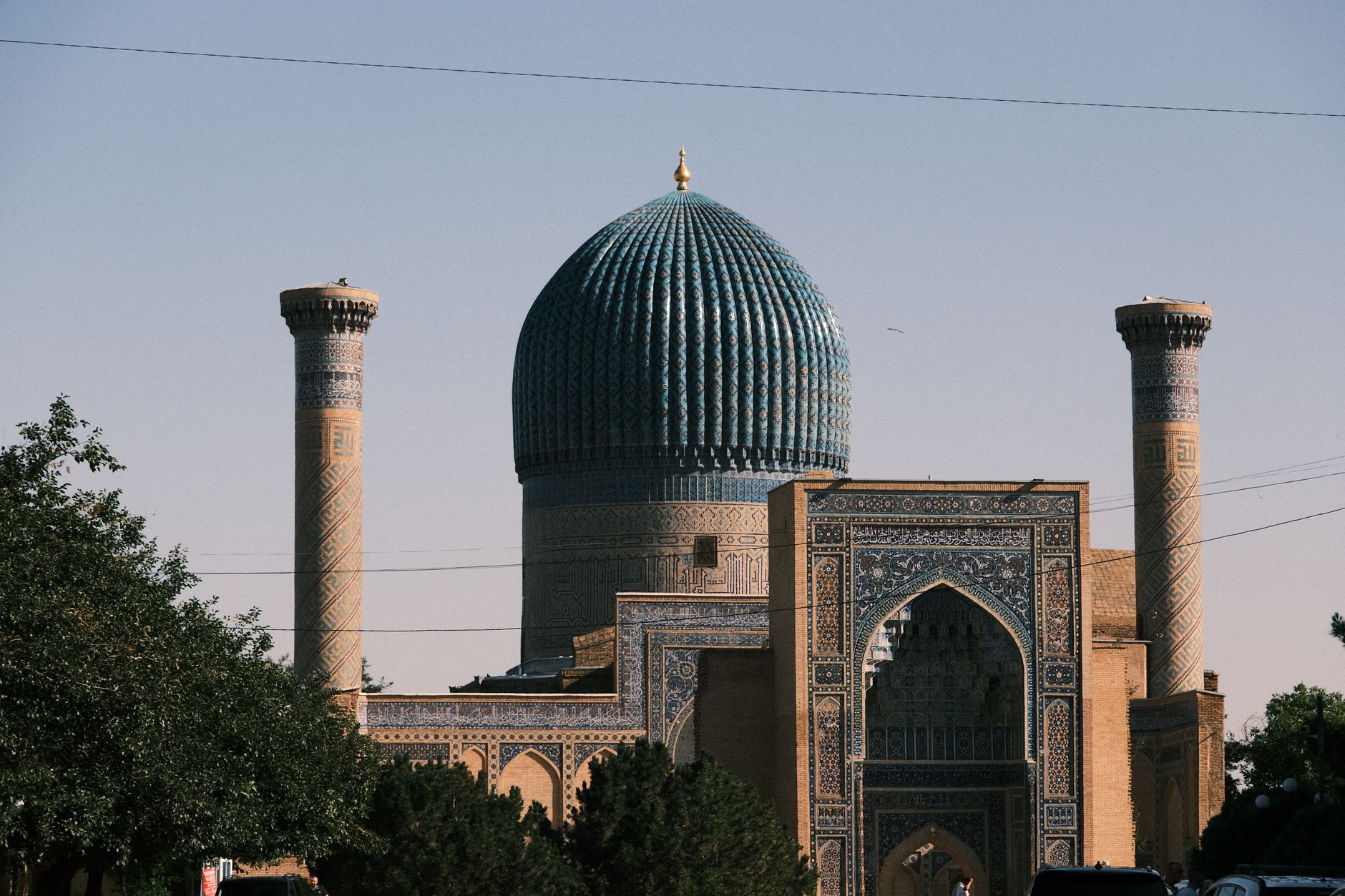
The country on the way into Samarkand is cotton and flat brown desert, and then the first blue dome comes up over the rooftops looking like it belongs to some other place. That colour, a deep cobalt banded with turquoise, is what these cities spent their money on. Samarkand, Bukhara and Khiva grew rich on the old caravan road and were stranded when the sea routes took the trade away, and the tilework is what has lasted.
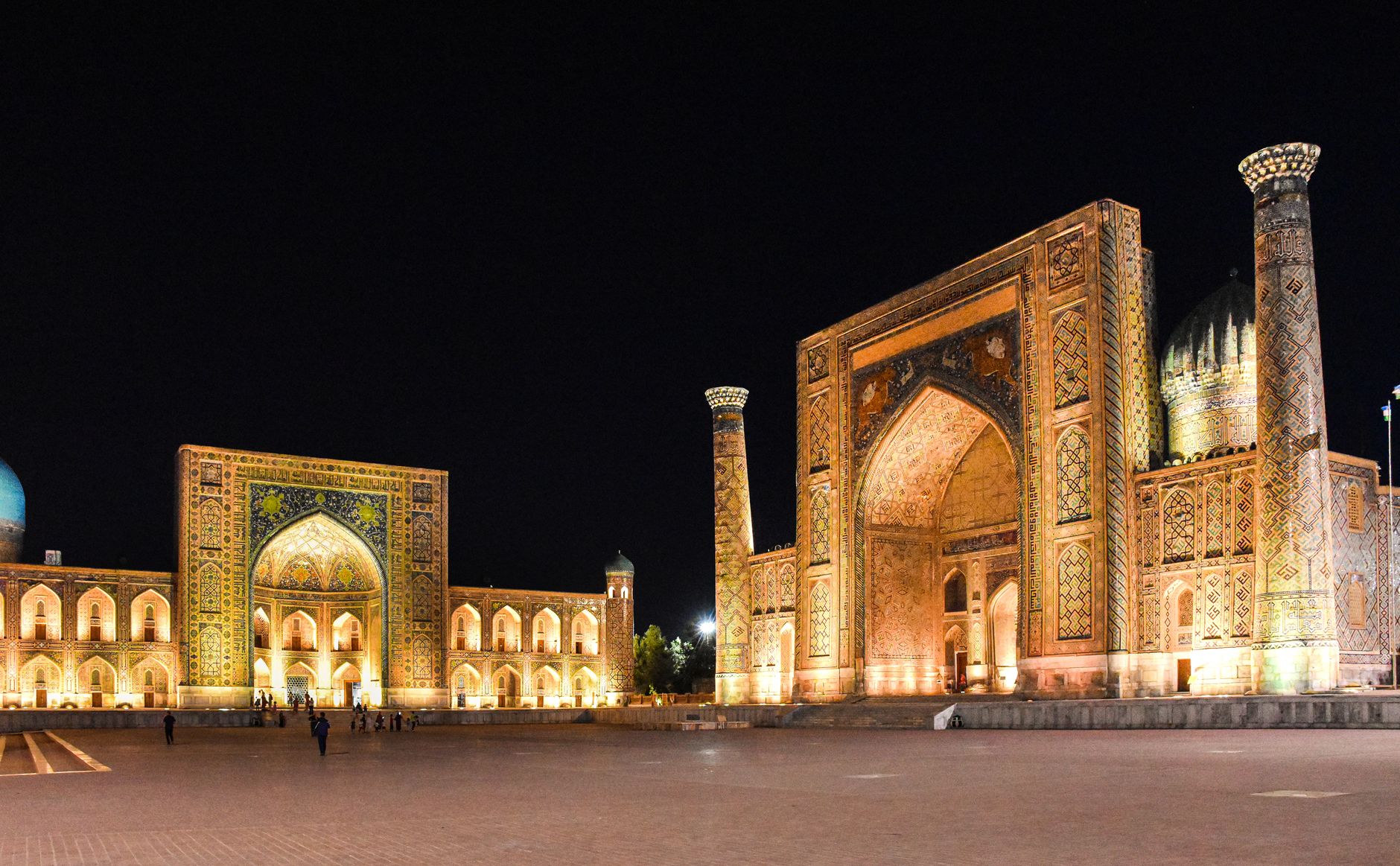
The Registan is Samarkand's set-piece: three tiled schools facing one another across a single square, each a sheer wall of glazed brick and cut mosaic. The oldest was built by Ulugh Beg, a grandson of the conqueror Timur who ran the city in the fifteenth century and, between campaigns, measured the length of the year to within a minute from an observatory on the edge of town. Midday is the time to avoid: the square offers almost no shade and the tile glares flat and white in the heat. It comes into its own at dusk, once the heat lets go and the swifts come out over the domes, and again after dark, when the facades are floodlit. On the school across the square, two big cats, half lion and half tiger, chase white deer beneath a rising sun with a human face, an image painted across the front of a religious college in a faith that traditionally forbids depicting living things at all.
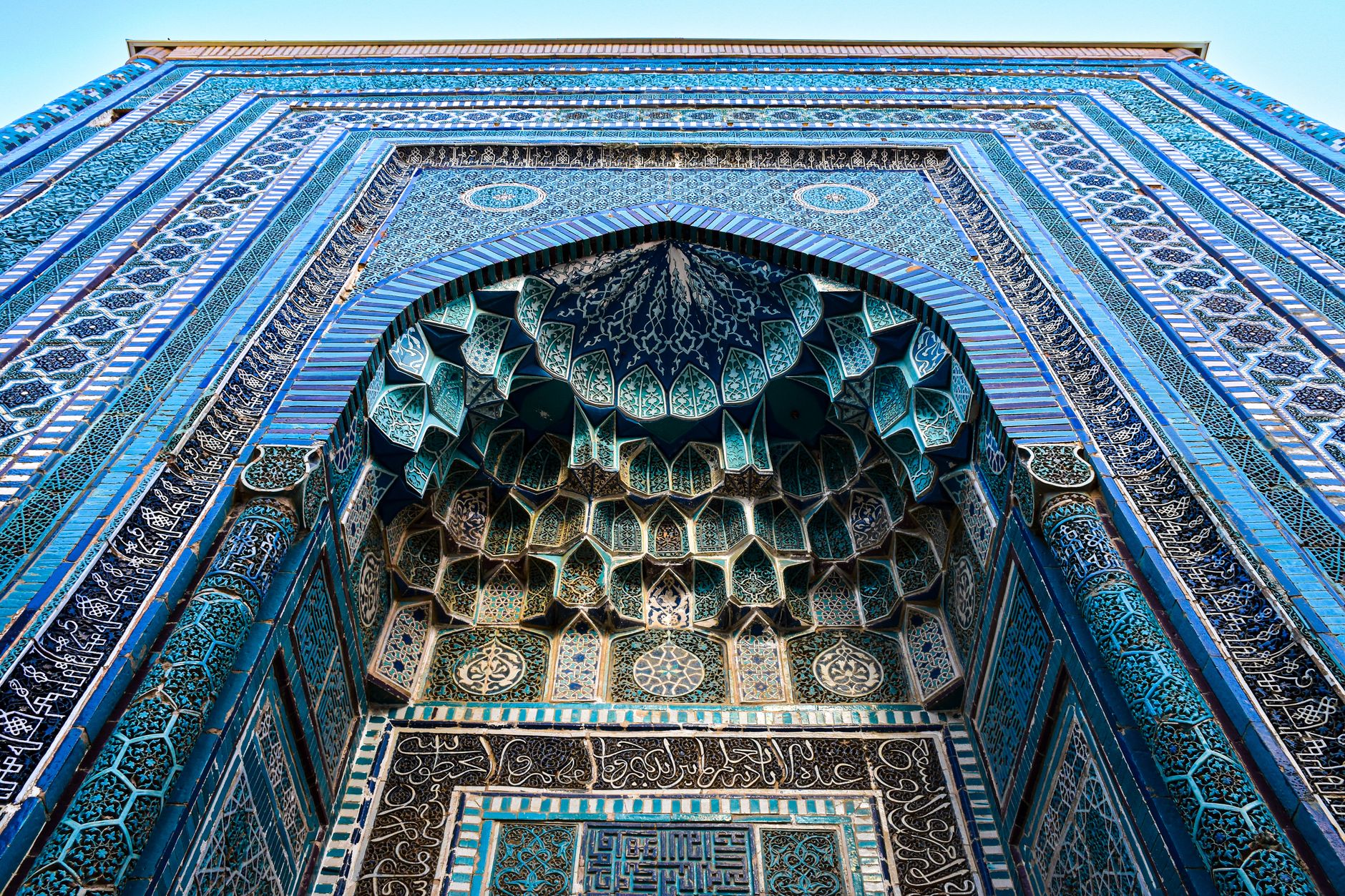
For the tile up close, close enough to lay a hand on, the place is Shah-i-Zinda, a lane of tombs that climbs a low hill at the edge of the city. It is a working shrine, built up over centuries around the grave of a cousin of the Prophet, and the walls hold a catalogue of everything a tiler can do: glazed brick, carved terracotta, painted majolica, mosaic cut from single tiles and set by hand. It fills with tour groups by mid-morning, so the first hour after it opens is the one time the corridor is quiet, both walls close and blue and cold to the touch. It is the single most rewarding half-hour in Samarkand.
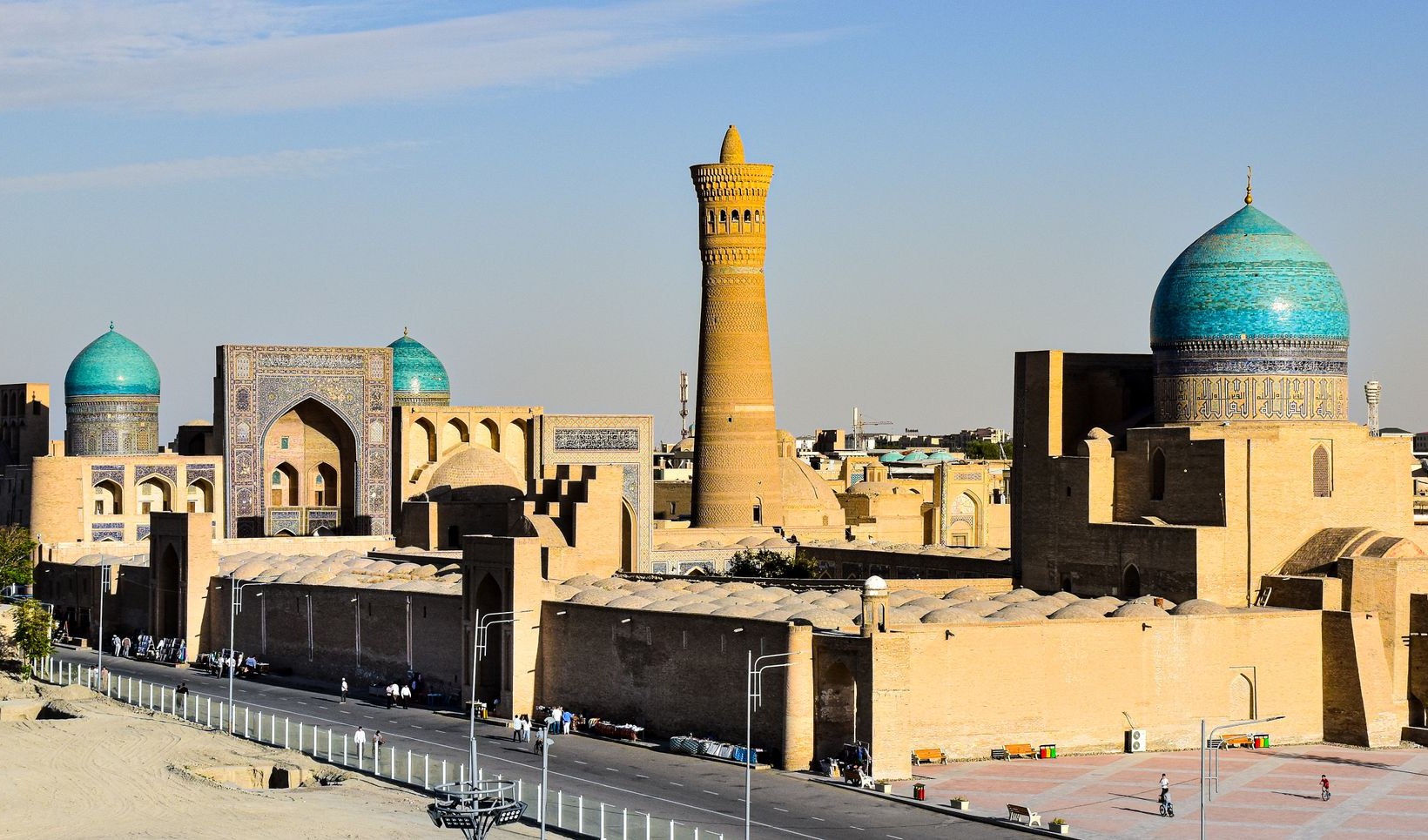
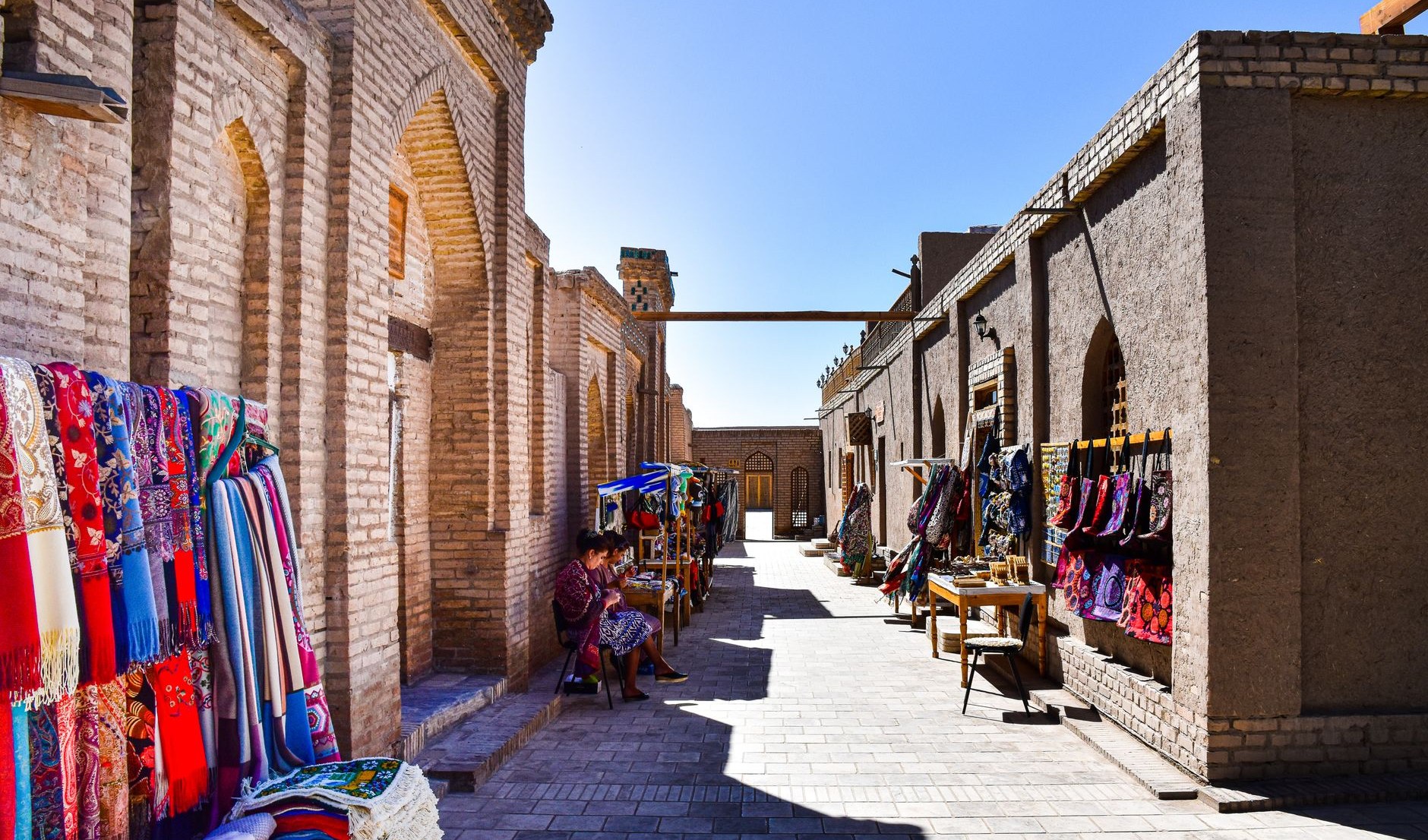
Bukhara is less a set-piece than a whole medieval town left more or less intact, and it rewards wandering on foot with no fixed plan. At its centre stands the Kalyan minaret, a brick tower finished in 1127. Genghis Khan is said to have spared it when he flattened the rest of the city a century later, the kind of legend that has improved with every retelling. The mosque beside it, Mir-i-Arab, is a working seminary and closed to visitors, so its turquoise domes are as near as the public gets. Around the corner the old trading halls still stand, four brick domes that once sorted the commerce by kind. They sell carpets and knives and Fergana pottery now, and the light still falls through the same openings.
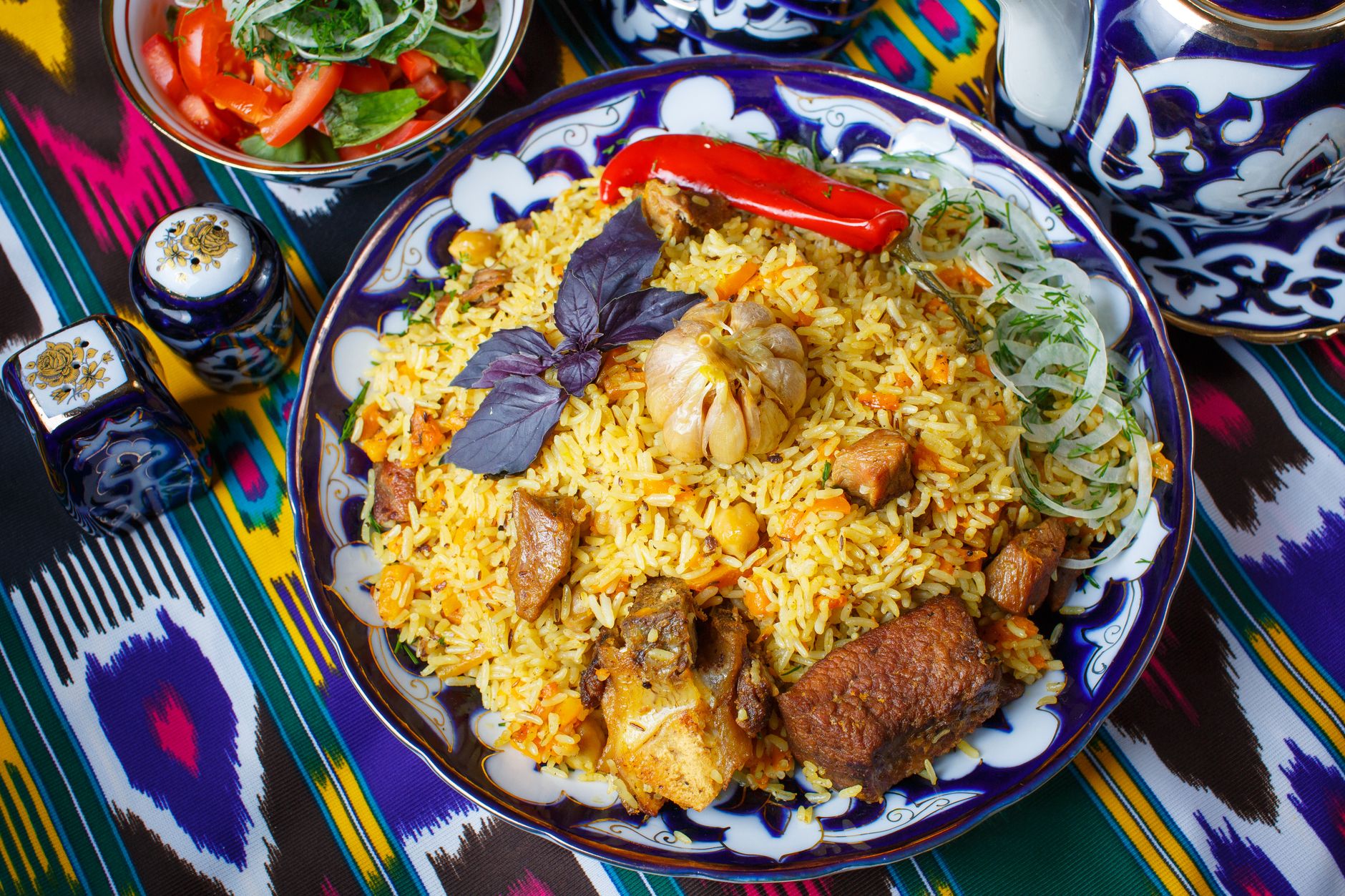
The other reason to cross the country is lunch. Plov, rice cooked down slowly with mutton, onion and yellow carrot in a wide iron pot, is the national dish, and every region is sure its own is the real one: Samarkand lays it in careful layers with cured horse sausage sliced over the top, Bukhara sweetens it with raisins. It is strictly a midday dish, cooked in the morning and gone by mid-afternoon, and the best plov houses sell out well before evening. Arrive in time and it comes on shared platters at long tables, often under a mulberry tree beside a still pool, with green tea poured a splash at a time into a handleless bowl.
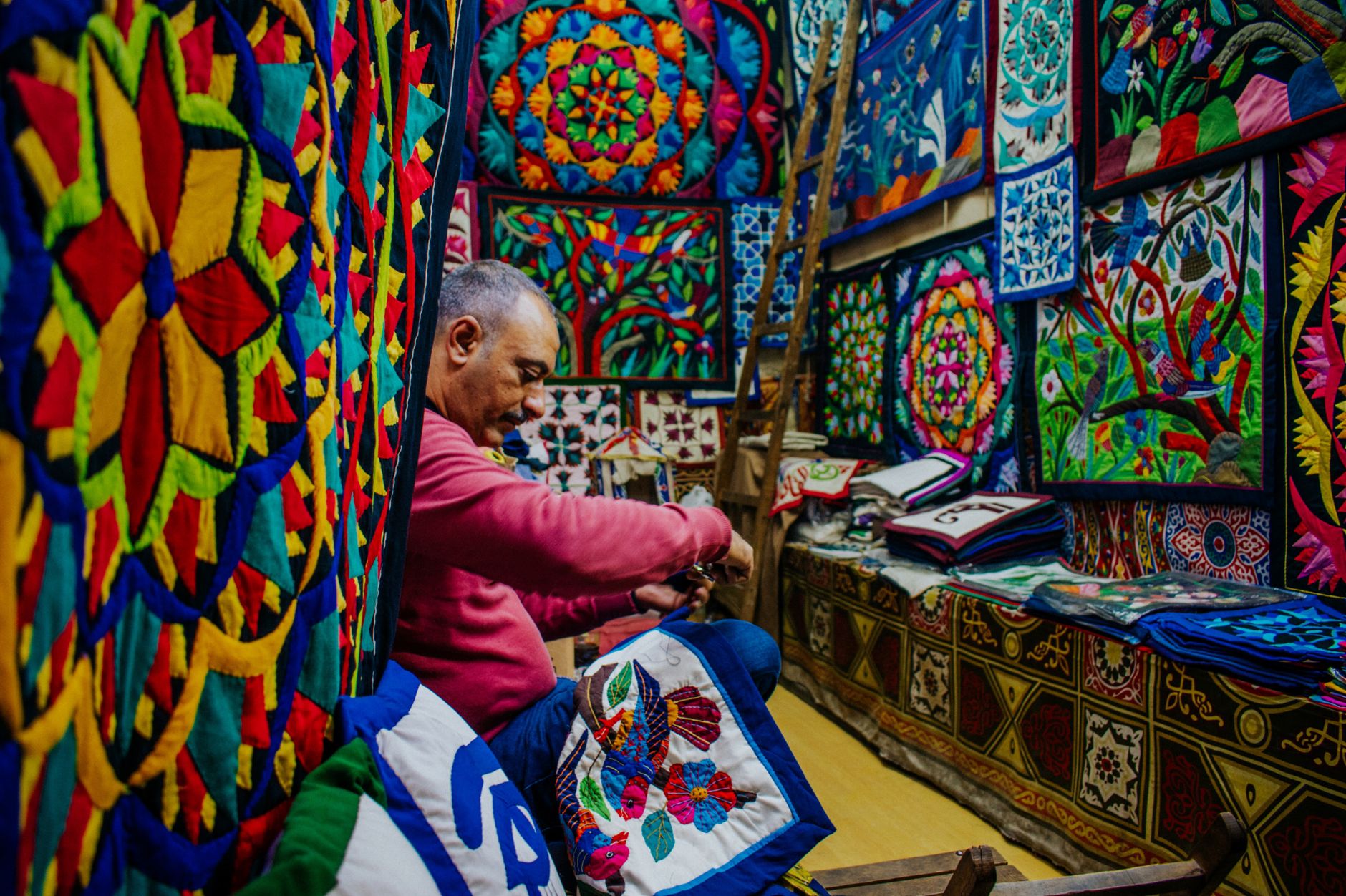
Nothing here was left plain. They spent everything on the surface, and the surface is what has lasted.
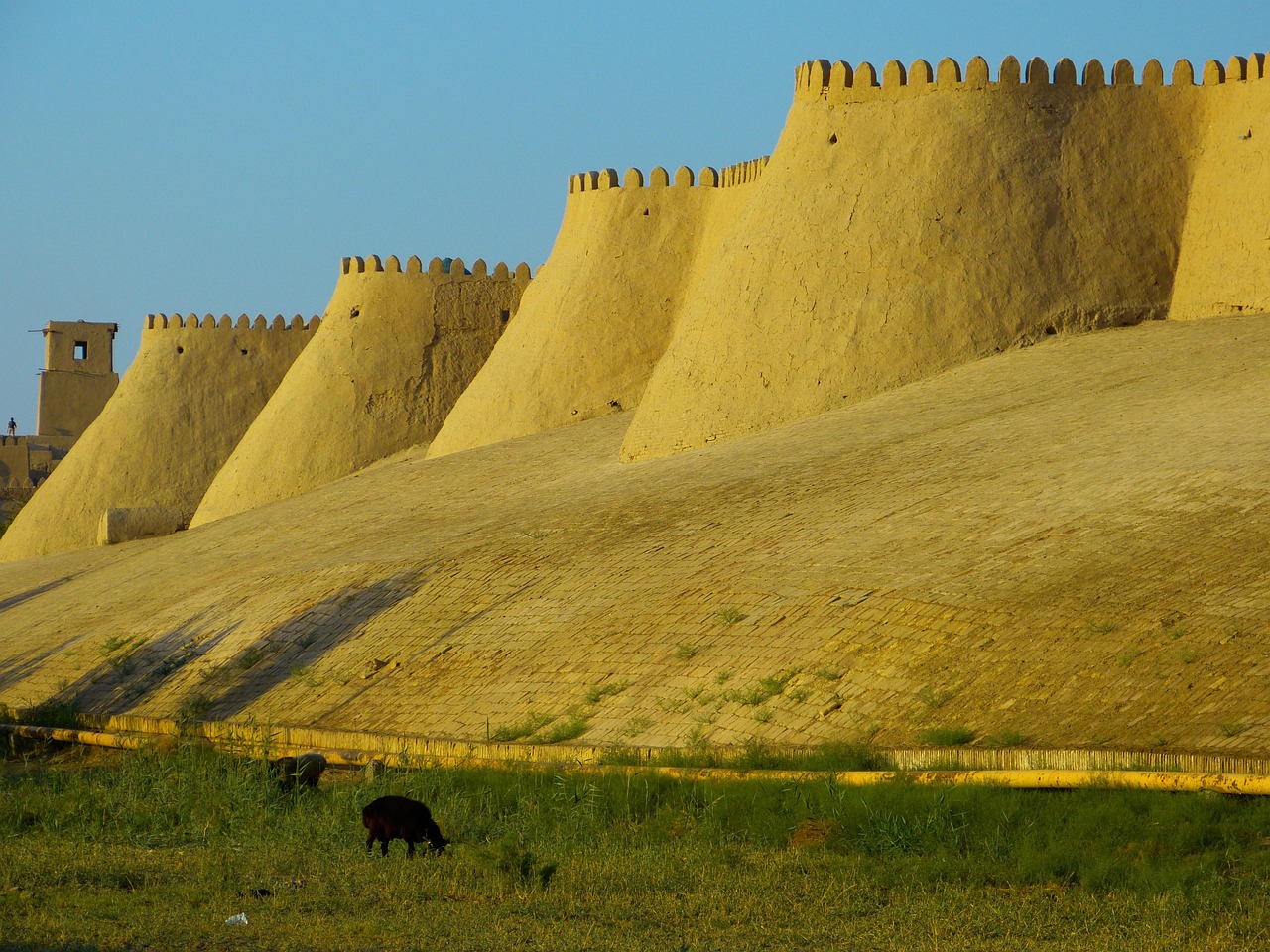
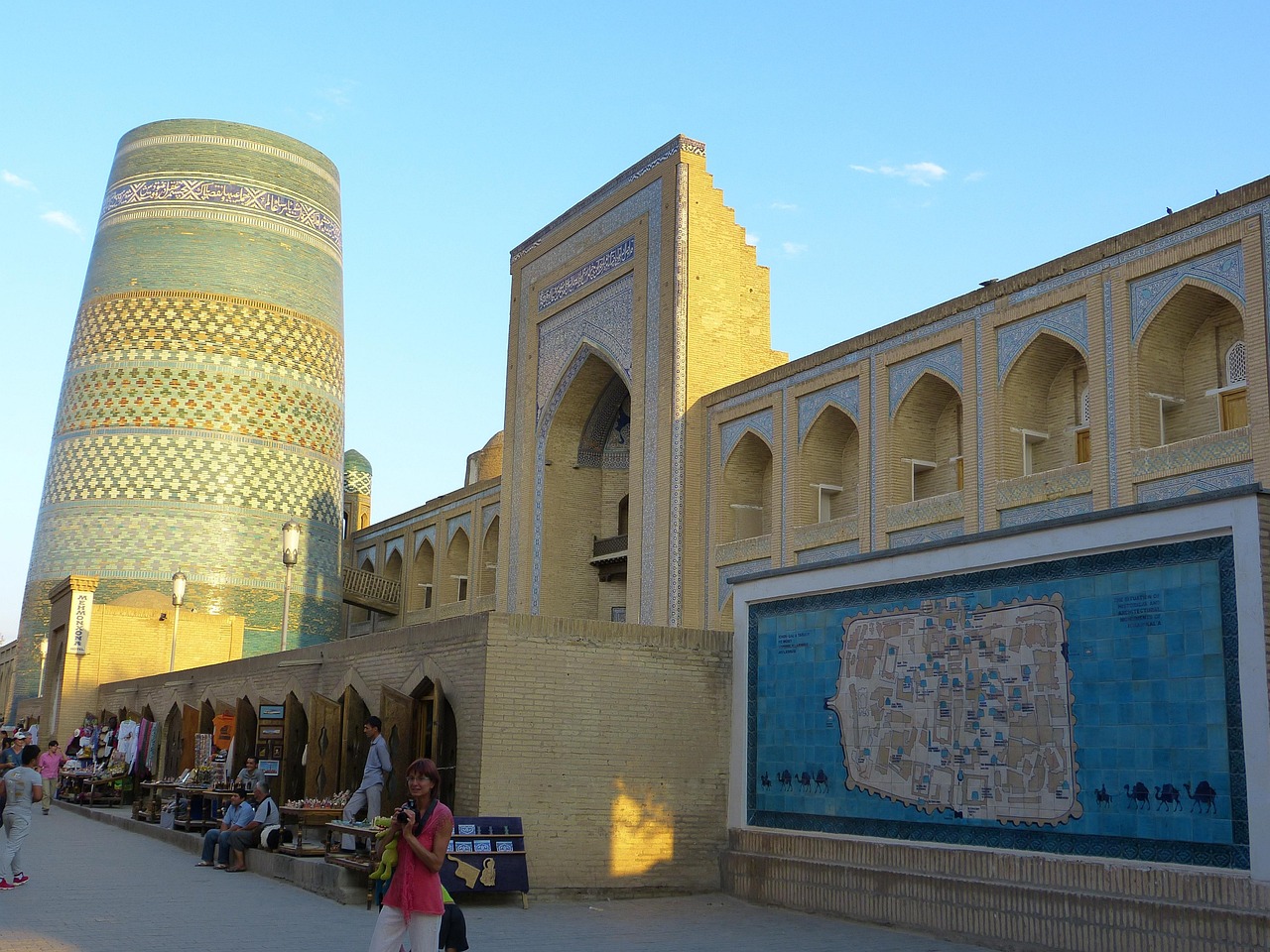
Khiva lies far to the west, at the end of a full day's drive across the Kyzylkum desert, a route the shared taxis take at speed. It is the smallest of the three and, inside its mud walls, so complete that it can feel like a film set, until the side lanes turn up schoolchildren, wood-carvers at their benches, washing strung between the houses. Its emblem is the Kalta Minor, a fat turquoise minaret that was meant to be the tallest in the Muslim world and stops dead a third of the way up, abandoned when the khan who ordered it was killed. In the late afternoon the day-trippers leave and the town empties; the climb onto the western wall for sunset, when the mud towers turn amber and then pink, is the standard way to end the day and a deserved one.
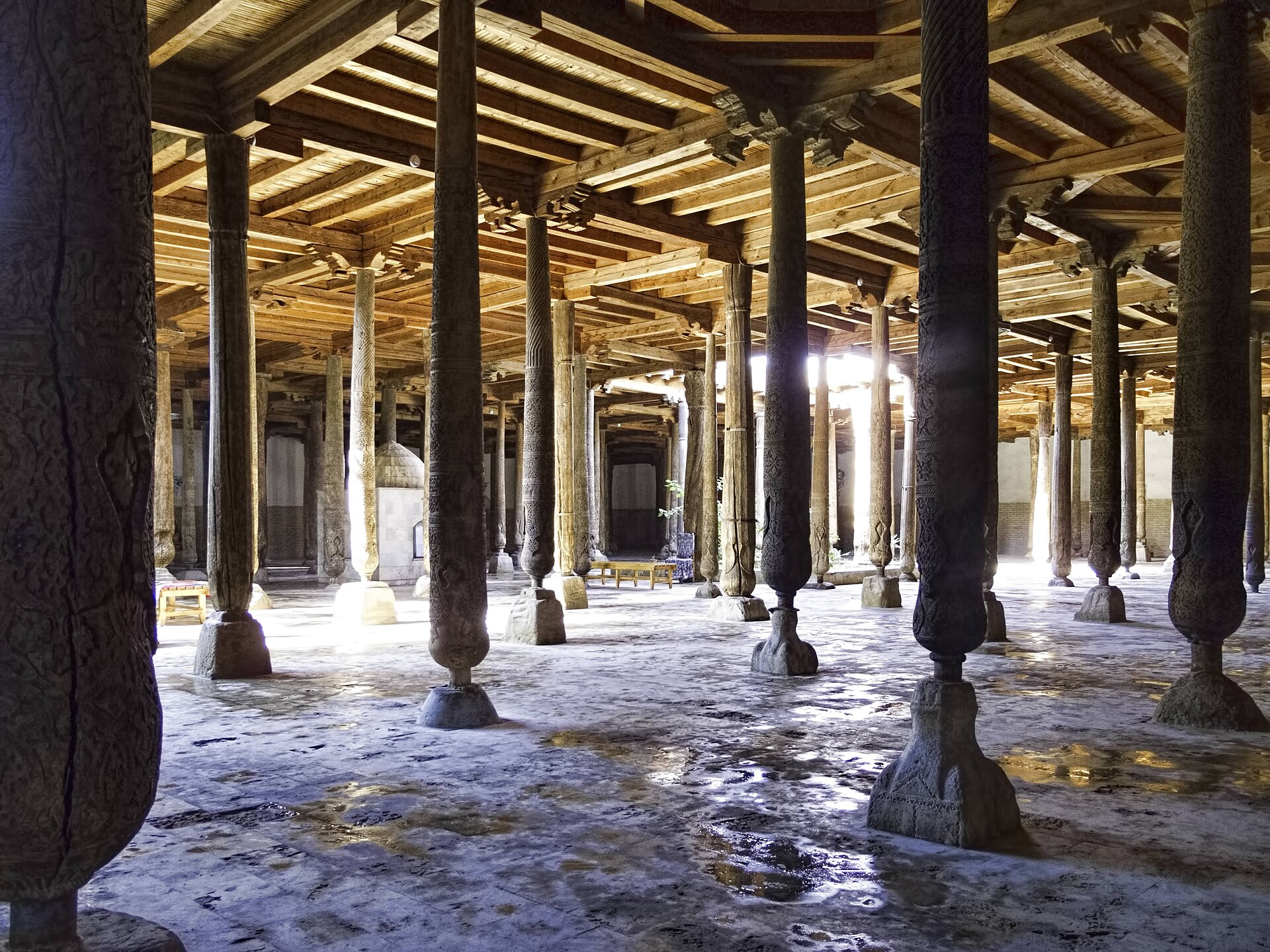
The Juma mosque, inside the same walls, is a different kind of thing altogether: a low, dim hall held up by more than two hundred carved wooden columns, some of them a thousand years old, cool and quiet after all the glazed brick outside. Little happens in it, which is the appeal. The light falls in shafts between the pillars and the whole room smells of old cedar.
Reaching all this used to take real effort; it no longer does. A Spanish-built high-speed train runs the spine of the country, Samarkand a little over two hours from Tashkent, though seats sell out fast and the railway's booking site is temperamental. Since the start of this year most travellers, Americans among them, arrive without a visa at all. For now the crowds are mostly Uzbek and regional, more than eight million visitors in 2024 and rising, with the Western share only beginning to show. It is a rare window: a place this rich, this easy to reach, and not yet overrun.