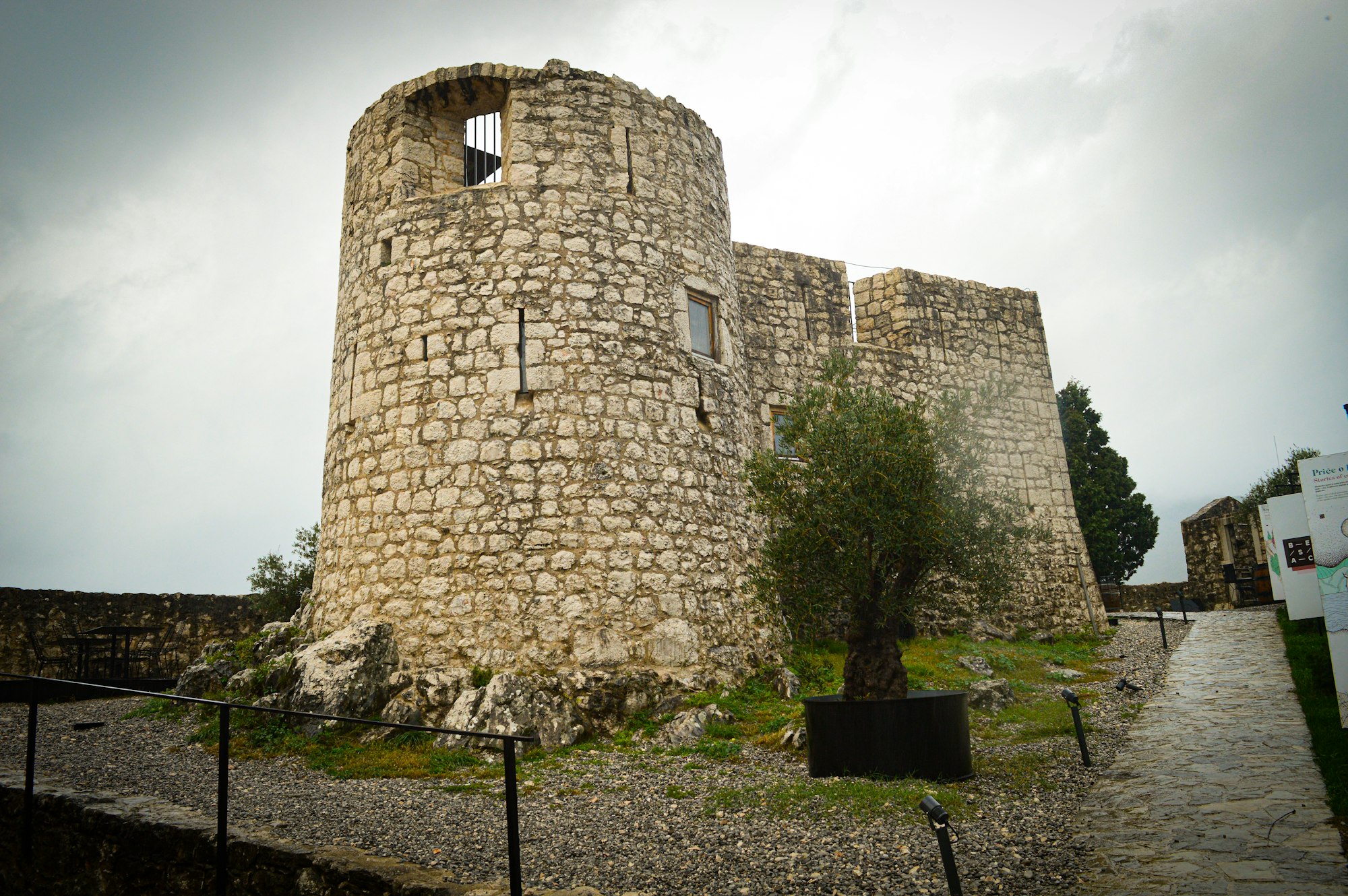
The islands carry most of the history. Grmožur, fortified in 1843 and nicknamed the Montenegrin Alcatraz and the Island of Snakes, later held prisoners under Prince Nikola, and two stories about its guards circulate: that they were chosen because they could not swim, so could not desert, and that a guard who lost a prisoner served out the rest of that prisoner's sentence. Both are what a boatman will tell you. No record supports either. Lesendro, an eighteenth-century fort the Prince-Bishopric had held for eleven years under Petar II Petrović-Njegoš, fell to Osman Pasha in that same year of 1843 along with Vranjina, and the Ottomans fortified all three. Of the monasteries, Beška is the one that can reliably be entered, with a small community of nuns in residence growing vegetables, fruit and medicinal herbs. Kom, built between 1415 and 1427, keeps sixteenth-century fresco work and the graves of four Crnojevići, among them Stefan Crnojević and his wife Mara Kastrioti, the sister of Skanderbeg.
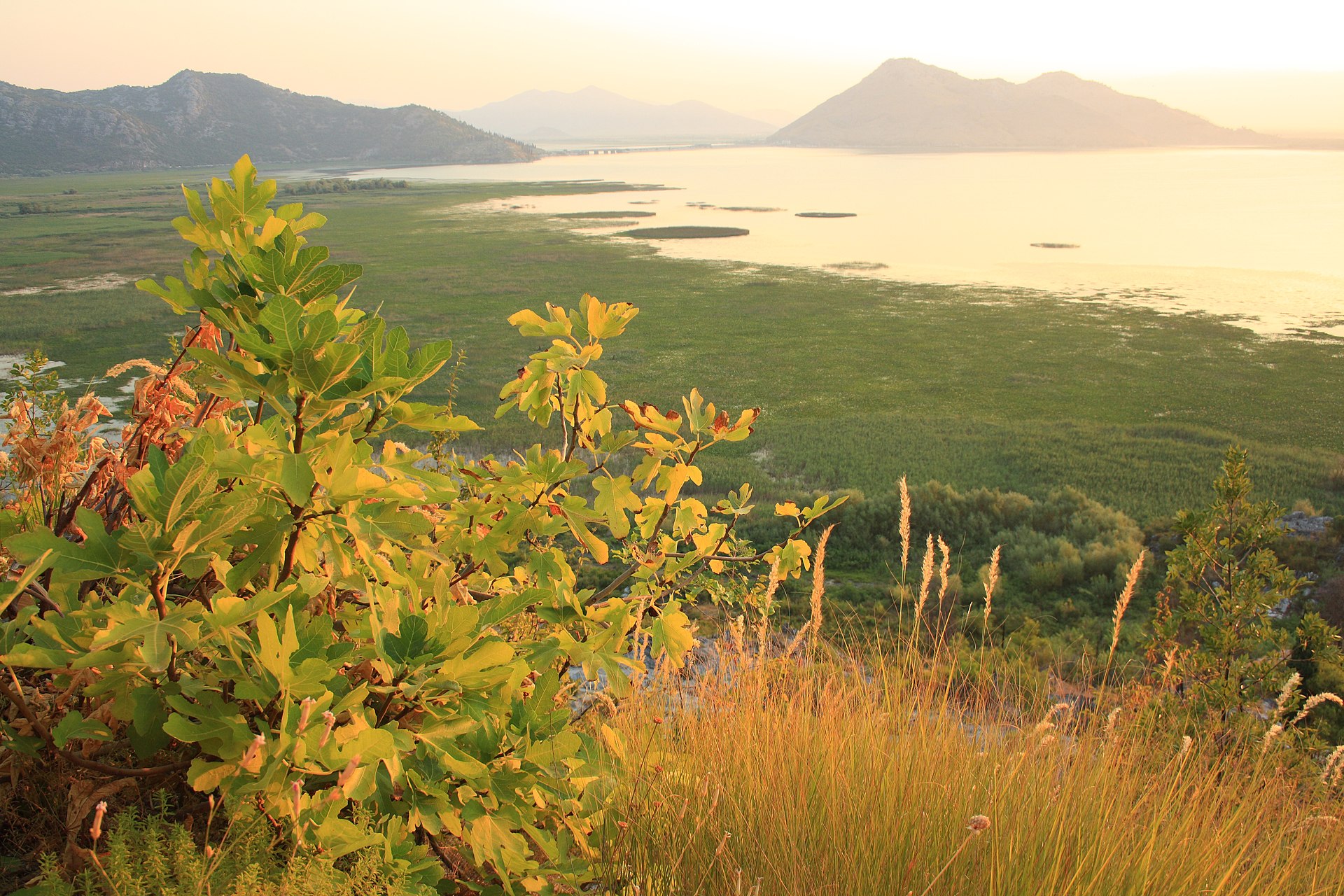
Small waterfront town at the end of Lake Skadar, historically a fishing and nautical settlement with stone houses and a harbor. The town…
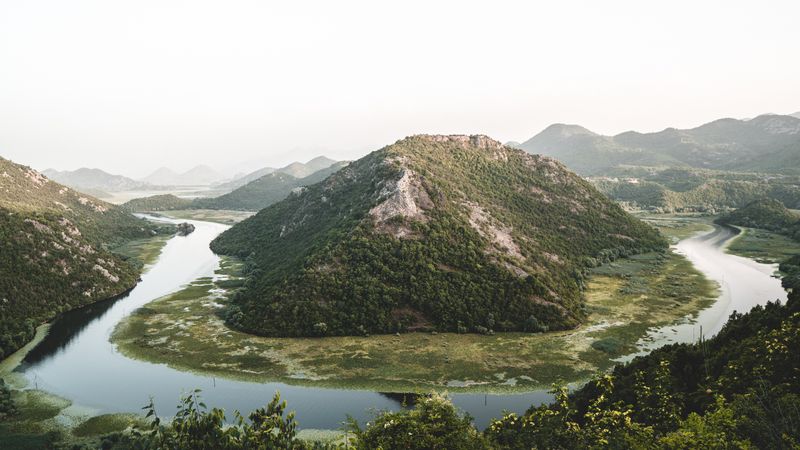
The largest lake in southern Europe, protected as a national park since 1983, straddling the Montenegro-Albania border. It shelters one of…
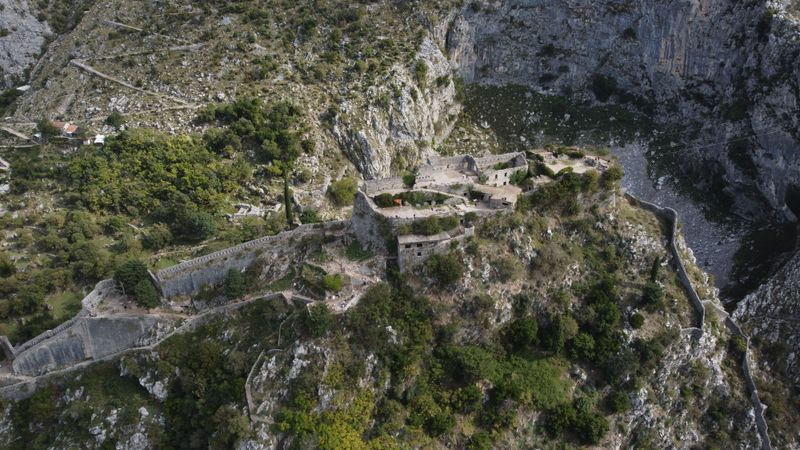
A small Ottoman fort built in 1478 on the hill directly above Virpazar, controlling the approach to Lake Skadar. Its walls and towers…
Every other travel app asks you to start logging. Meridian Dispatch opens with years of your travel already written, from the photographs you already took.