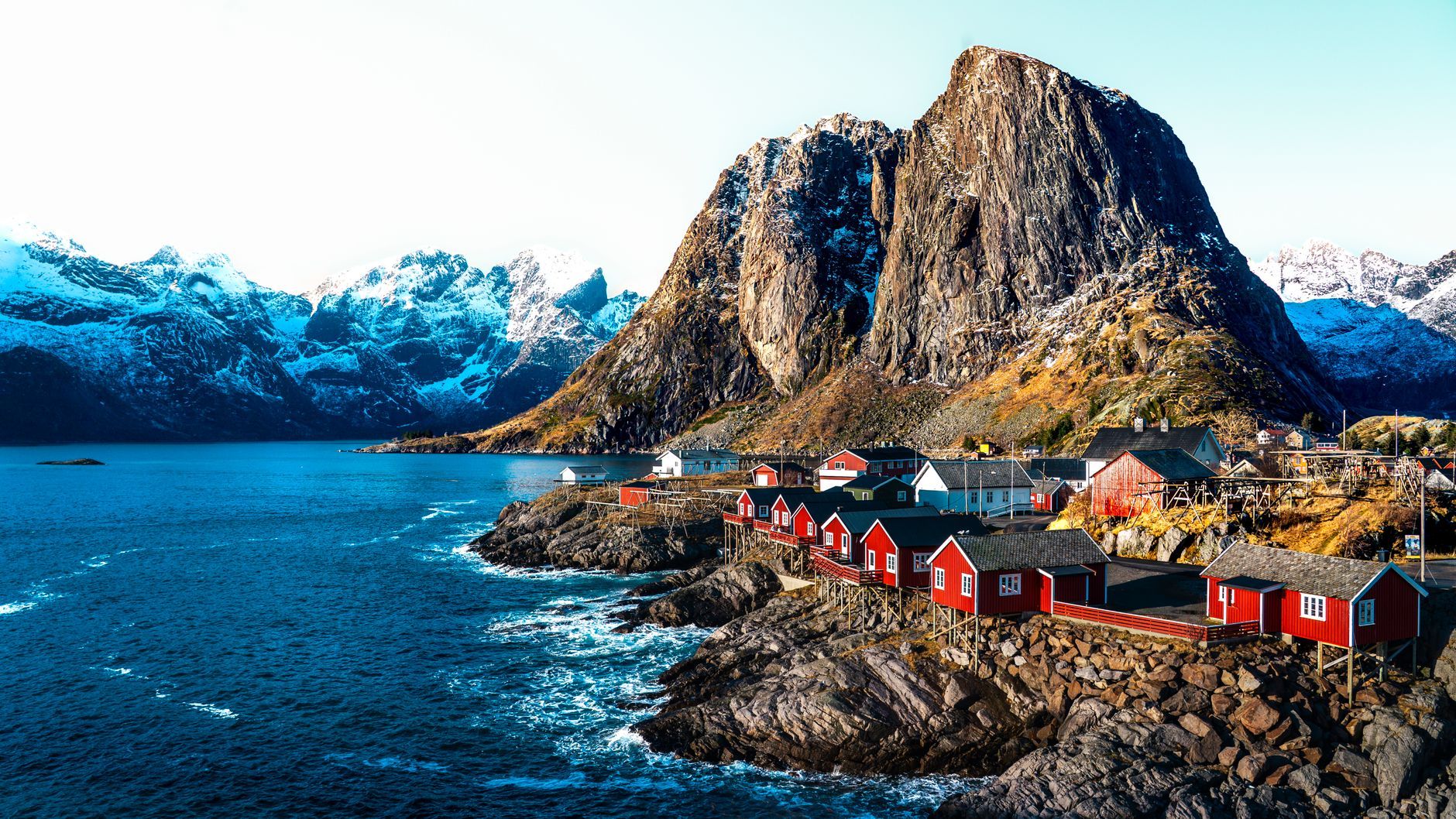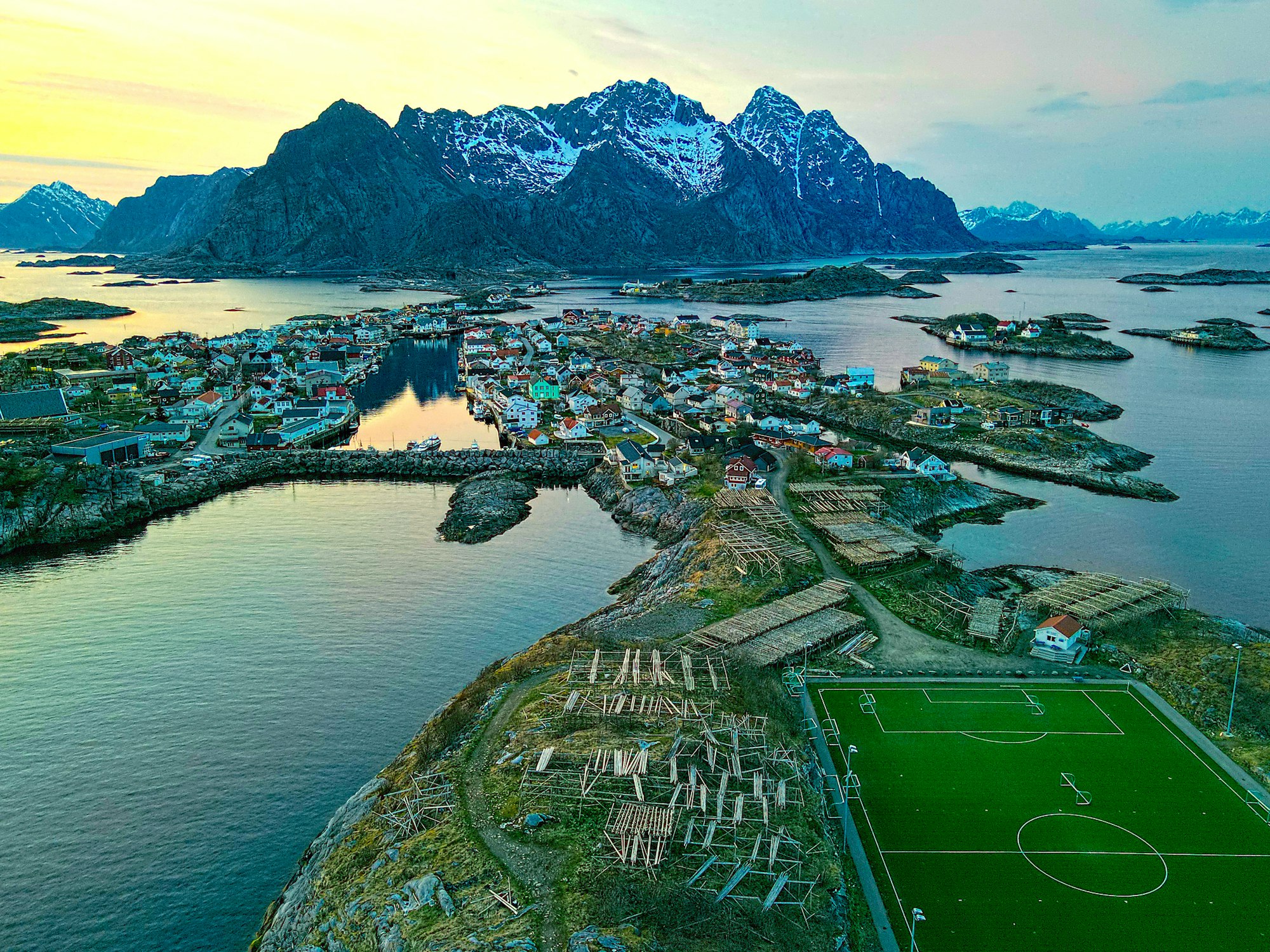
A fishing village built across a scatter of small islands south of Austvågøya, linked to the main road by bridges only since 1983 and known locally as the Venice of Lofoten. The harbour still lands fish, and the old wharf buildings now hold cafes, climbing outfitters and galleries.
Park on the edge and walk in; the lanes are single track with nowhere to turn, and the point of the place is the harbour, the galleries and the pitch out on the bare rocks.
Henningsvær, five hundred people on a knot of rock ten minutes off the E10, makes a natural first night, its harbour restaurants serving fish soup and then cod pulled from the water more or less below the window. The fishermen drink there too. One, on the boats since he was sixteen, called this a thin season: the skrei coming late and staying deep, the drying racks up the road only half filled. Ask him where the road ends and the answer comes flat. Past Å, the last village on the road, there is nothing but water, said the way a local confirms a fact, not the way anyone sells a view.
A two-floor gallery in Henningsvær holding one of the largest collections of North Norwegian painting from the Lofoten golden age of about 1
A museum at Borg built around the largest Viking building ever found, an 83 metre chieftain's longhouse uncovered in 1983 when a farmer's pl
A wide arc of white sand and green shallow water ten minutes west of Leknes, repeatedly named among Norway's best beaches and one of the few
Every other travel app asks you to start logging. Meridian Dispatch opens with years of your travel already written, from the photographs you already took.