Ninety seconds on Old City of Jerusalem
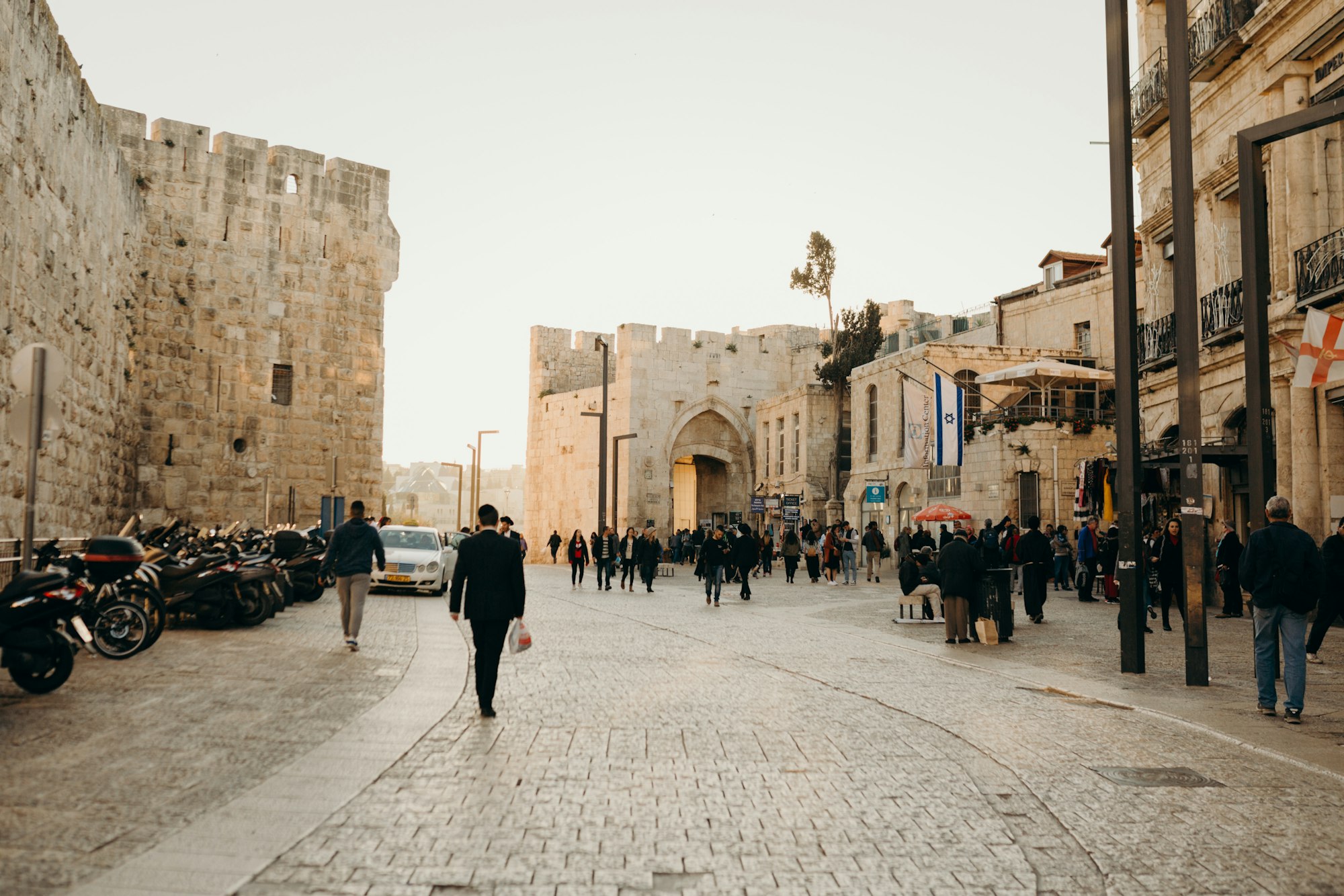
Jerusalem's Old City lets you stand at Calvary, the Western Wall and the Temple Mount in one morning's walk, then climb onto the ramparts that enclose them and follow the wall above all four quarters.
The wall comes first, and you can walk most of it. It runs for about four and a half kilometres at between five and fifteen metres high, and it was built for the Ottoman sultan Suleiman the Magnificent. Seven gates let you through it today, and an eighth stays closed.
Inside, four uneven quarters, Muslim, Christian, Jewish and Armenian, run into one another with no wall between them. The Armenian Quarter is the smallest. The Christian Quarter, in the northwest by the New, Jaffa and Damascus gates, holds about forty holy sites.
The most important is the Church of the Holy Sepulchre, which several Christian churches share. A stairway just inside the door climbs to Calvary, split into a Greek Orthodox chapel and a Catholic one, each with its own altar. The tomb itself is enclosed by a shrine called the Aedicule.
Look up at the front of the church before you go in, for a cedarwood ladder that was in place by 1728 and then stayed exactly where it was for more than two and a half centuries.
The Western Wall fills with tens of thousands of worshippers on the Jewish holidays. On the Temple Mount, non-Muslims may walk the platform but may not pray there or enter the Dome of the Rock or Al-Aqsa Mosque.
Early in the day is best for the church, so on a day without the Temple Mount, walk from Jaffa Gate straight to the Holy Sepulchre. The Stone of Anointing lies just inside the entrance, hidden once crowds build. Then come two queues, a long one for the Aedicule and a short one, up to twenty minutes, for the stairs to Golgotha.
On a Temple Mount day, go first to the Mughrabi Gate beside the Western Wall plaza, the only way onto the platform for non-Muslims. Security is airport-style and passports are checked. Guards turn away anyone not through before the visiting window closes, so leave the church and the Wall until afterwards.
Save the afternoon for the walls. Both ramparts promenades start at Jaffa Gate: the southern one runs over the Armenian and Jewish quarters to Zion Gate, the northern one over the Christian and Muslim quarters past the New and Damascus gates to the Flower Gate.
End the day at the Tower of David beside Jaffa Gate, a museum and archaeological site with an evening sound and light show. Its ramparts give a 360-degree view of the Old City and the New City.
The Western Wall Tunnels can only be seen on a group tour led by the Western Wall Heritage Foundation, so book a place before you go. It runs for over an hour and comes out in the Muslim Quarter near the first stations of the Via Dolorosa, so plan the rest of your walk from there.
Walking tours of the lanes are led by licensed guides, run in all weather and suit a first day. Full-day guided tours of about seven hours start mid-morning and suit a single-day visit; at busy times, allow a few minutes to find your group.
Dress for the strictest site on your route. The Temple Mount requires a knee-length dress or trousers for women and trousers below the knee or a shawl for men, and the church asks for modest dress too, so pack a light scarf for head and shoulders. Carry your passport on a Temple Mount day.
Leave the stroller behind on a ramparts day. One ramparts ticket covers both promenades for two days, so you can split them across two afternoons if one stretch of stairs is enough at a time.
Explore the rest of Jerusalem
Set in the Judean Hills between the coastal plain and the Dead Sea, the city holds a walled Old City of four quarters and acts as the base…
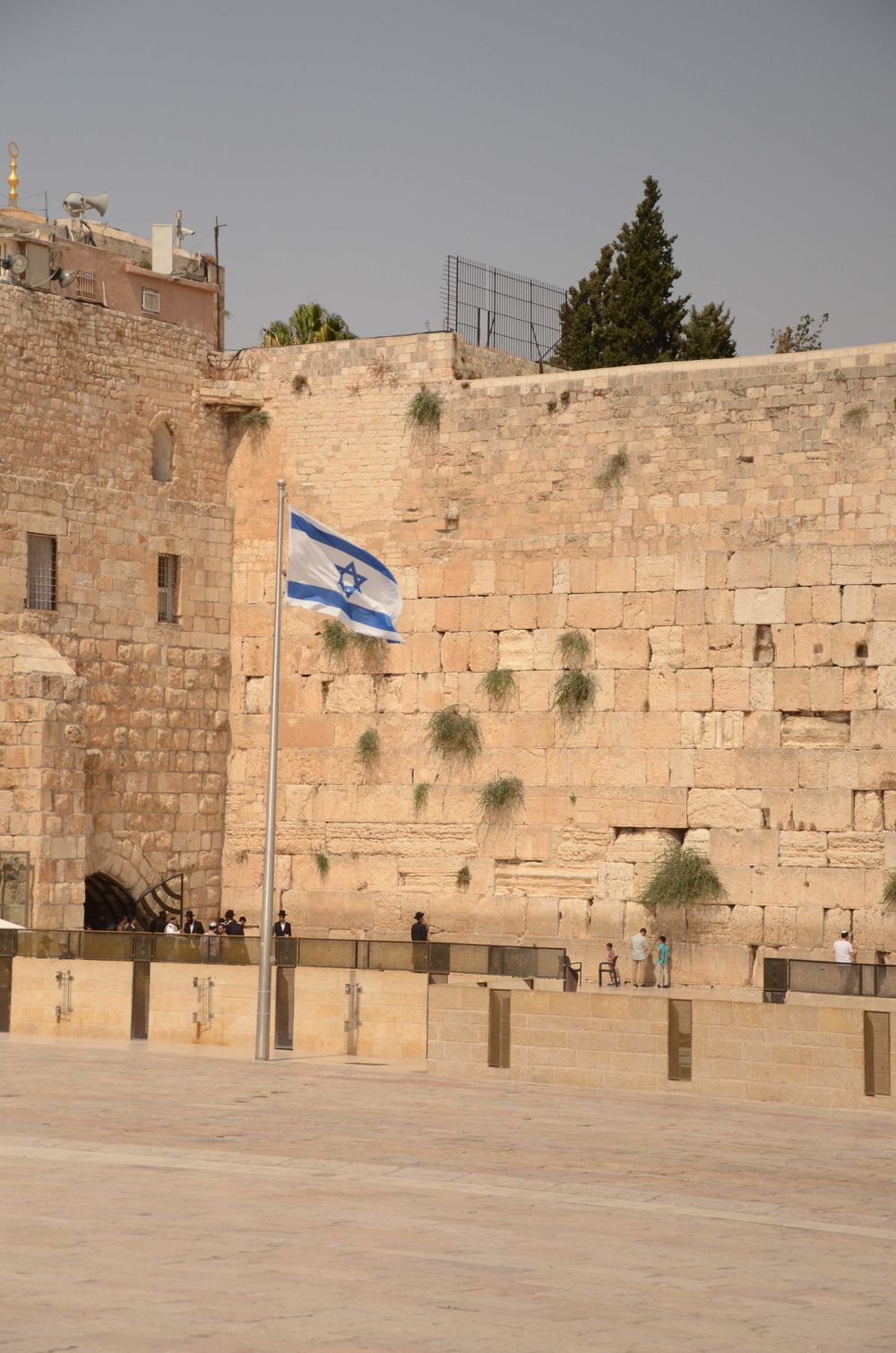
Massive Herodian stones form the exposed western retaining wall of the Temple Mount compound, and the plaza in front of them functions as…
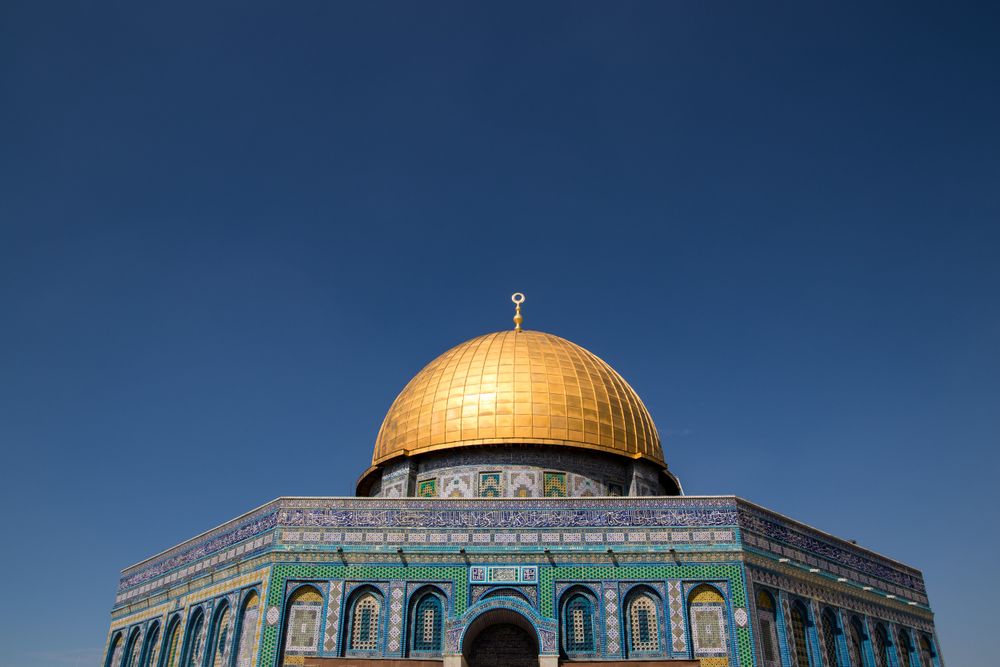
Gold leaf and Ottoman tilework cover an octagonal shrine raised in the seventh century over the rock at the centre of the Haram al-Sharif,…