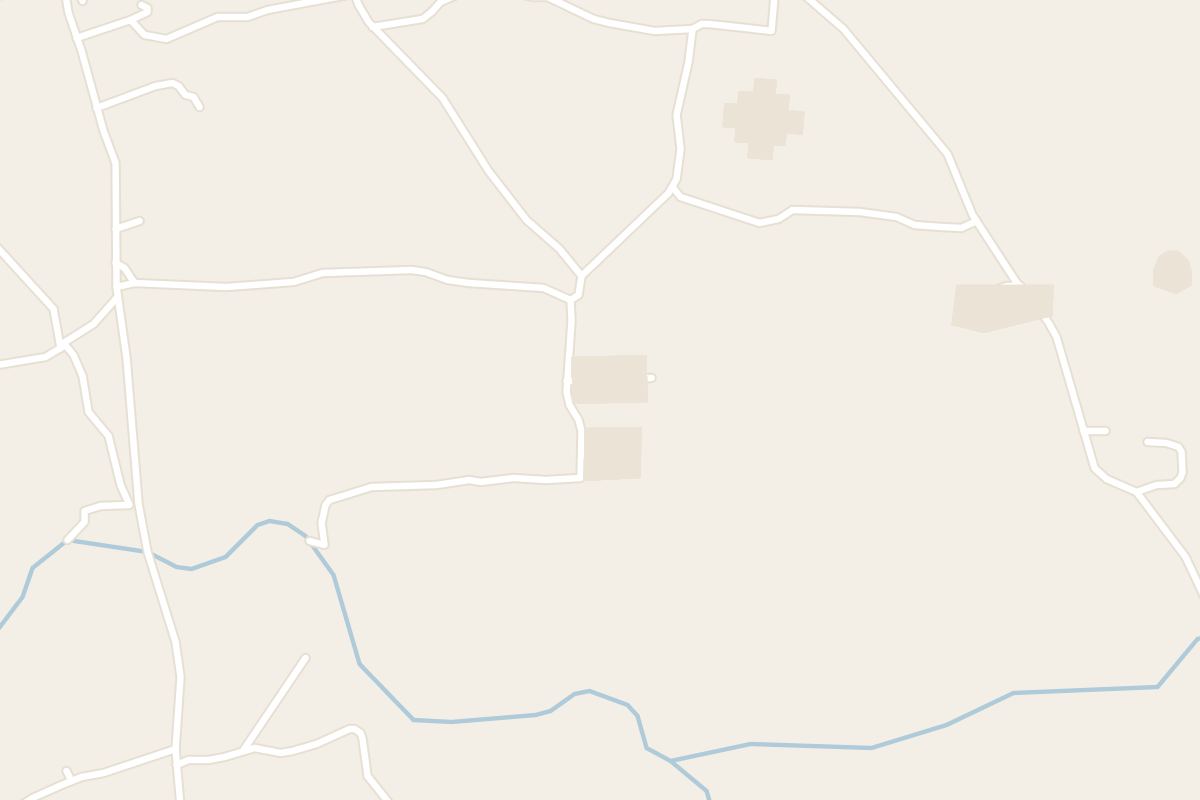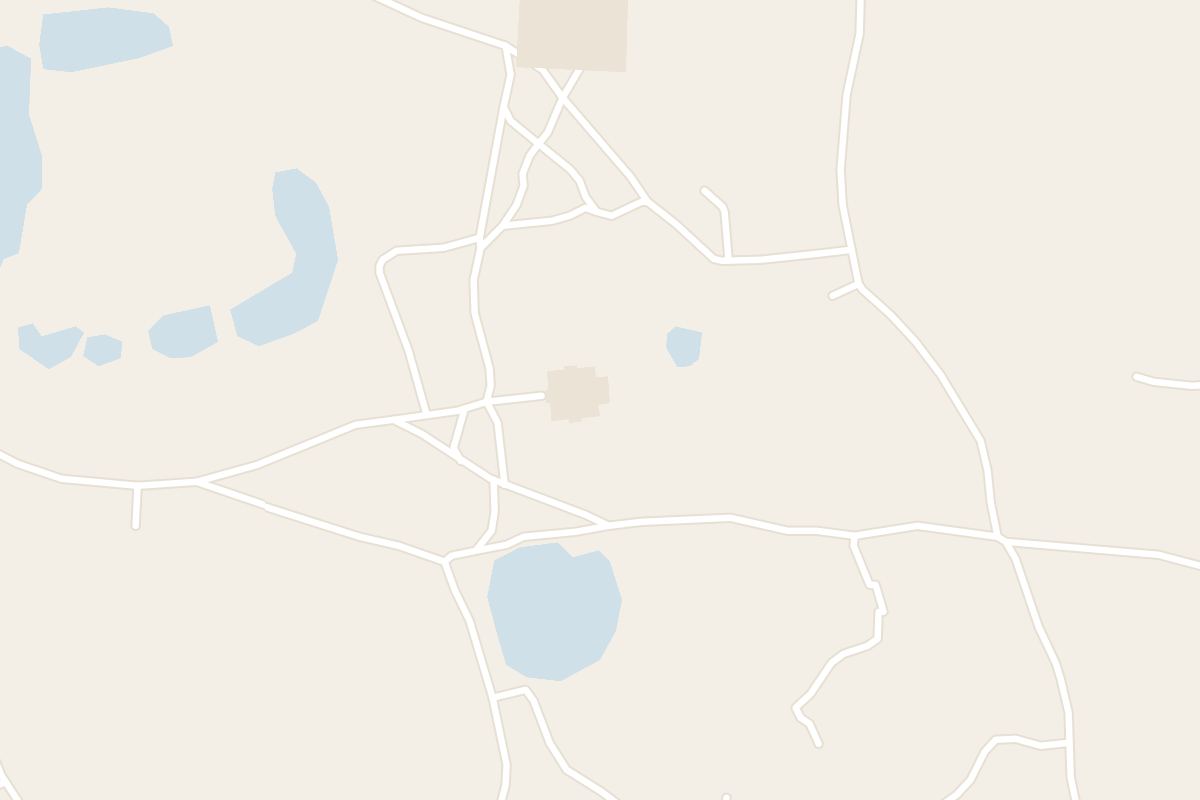
There is a stretch of central Myanmar where the ground gives up temples the way other places give up wheat. More than two thousand of them stand across roughly twenty-six square miles of dry plain on the east bank of the Irrawaddy, brick stupas and shrines and monasteries in every state from gilded and whitewashed to half-swallowed by scrub, and at dawn the whole field goes gold and hazy at once. Bagan is one of the great sights of Asia. It is also, for now, a place to read about rather than book, and the reasons for that come first.
As of this writing the US State Department rates Myanmar (Burma) Level 4, "Do Not Travel", with similar guidance from the UK, Australia and Canada, on account of the armed conflict that has followed the 2021 military coup, compounded by a major earthquake in March 2025. Bagan itself has sat largely outside the active fighting and balloon flights have resumed, but the situation is volatile. Check the live US and UK advisories, and your insurance, before planning anything. Treat what follows as a portrait and a plan for a someday.
What survives is a fraction of what once stood. Bagan was the seat of the first unified Burmese kingdom, fortified around 849 and brought to its height by King Anawrahta, who founded the Pagan Empire in 1044 and turned the country to Theravada Buddhism. For roughly two and a half centuries after that, kings and wealthy patrons built here on a scale that is hard to credit: by some counts more than ten thousand temples, pagodas and monasteries rose on the plain, because to build one was to earn religious merit, and merit was worth spending a fortune on. The empire fell to repeated Mongol incursions, and Kublai Khan's forces overran the city in 1287. The temples outlasted the state that made them. Neglect, looting, weather and earthquakes took most of the rest, leaving the two thousand or so that stand today.
The detail that surprises first-time visitors is that none of this is a lost city. Bagan has been a living place of pilgrimage without interruption, and among the ancient brick are shrines that are gilded, repainted and busy with monks and worshippers. The freshly whitewashed temple next to the crumbling one is not a restoration gone wrong so much as a faith still in use. UNESCO only inscribed Bagan as a World Heritage Site in July 2019, decades later than its stature warranted, the listing held up for years partly over the former military government's heavy-handed, historically loose repairs, and over a golf course and hotels built inside the zone.
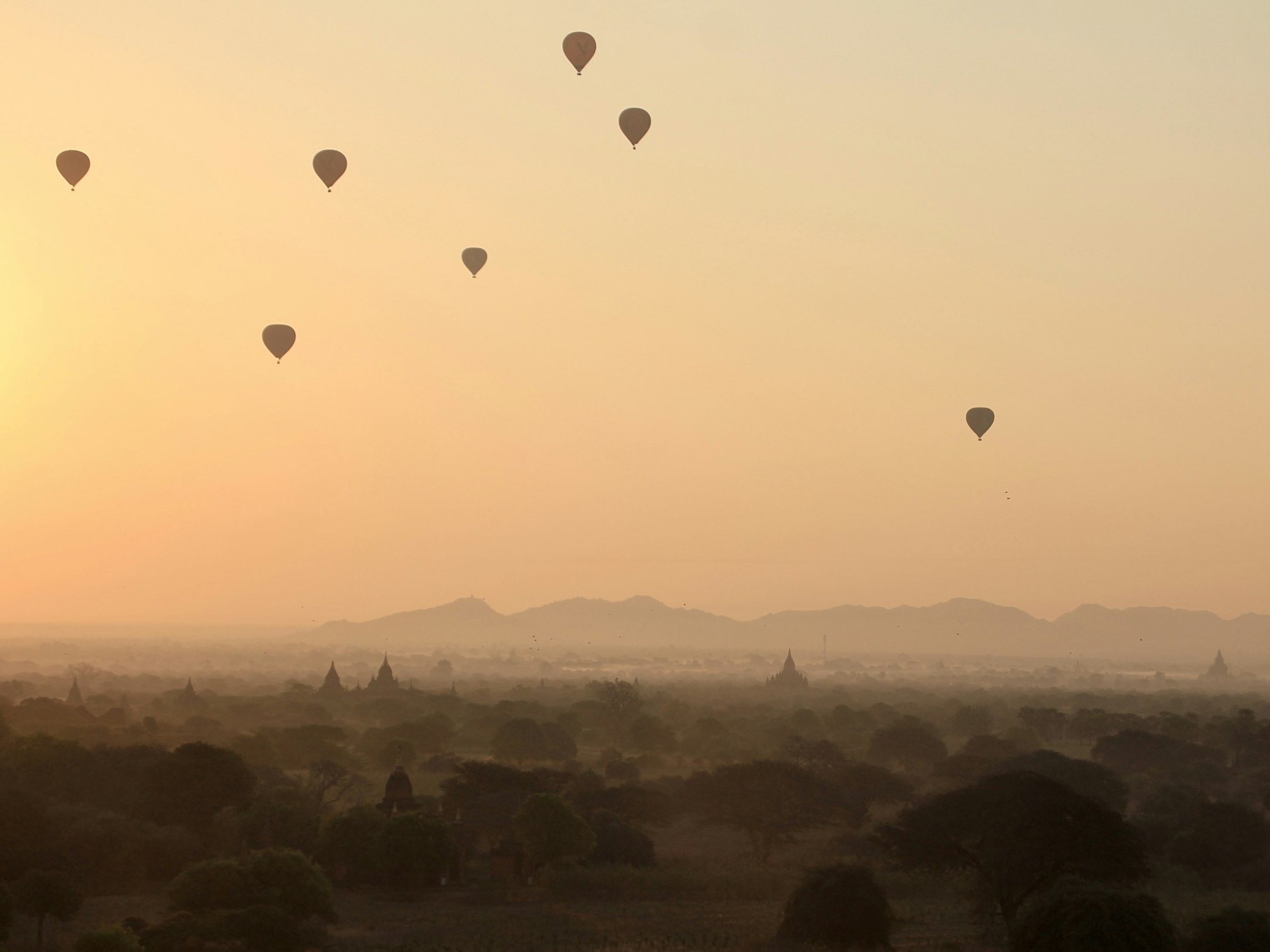
The signature way to take in the scale is from the air. In the dry season, roughly late October to the end of March, three licensed operators fly hot-air balloons over the plain at dawn: Balloons Over Bagan, the longest running, along with Oriental Ballooning and Golden Eagle. Pickup is around five in the morning by vintage bus, launch just before sunrise, and the flight runs three quarters of an hour to about an hour before landing in a field for the traditional champagne-and-croissants toast. It is a serious splurge and it books out weeks ahead in the December-to-February peak. Weather can scrub a flight with no notice, so the rule is to arrive with a spare morning in hand rather than pin the trip to a single dawn.
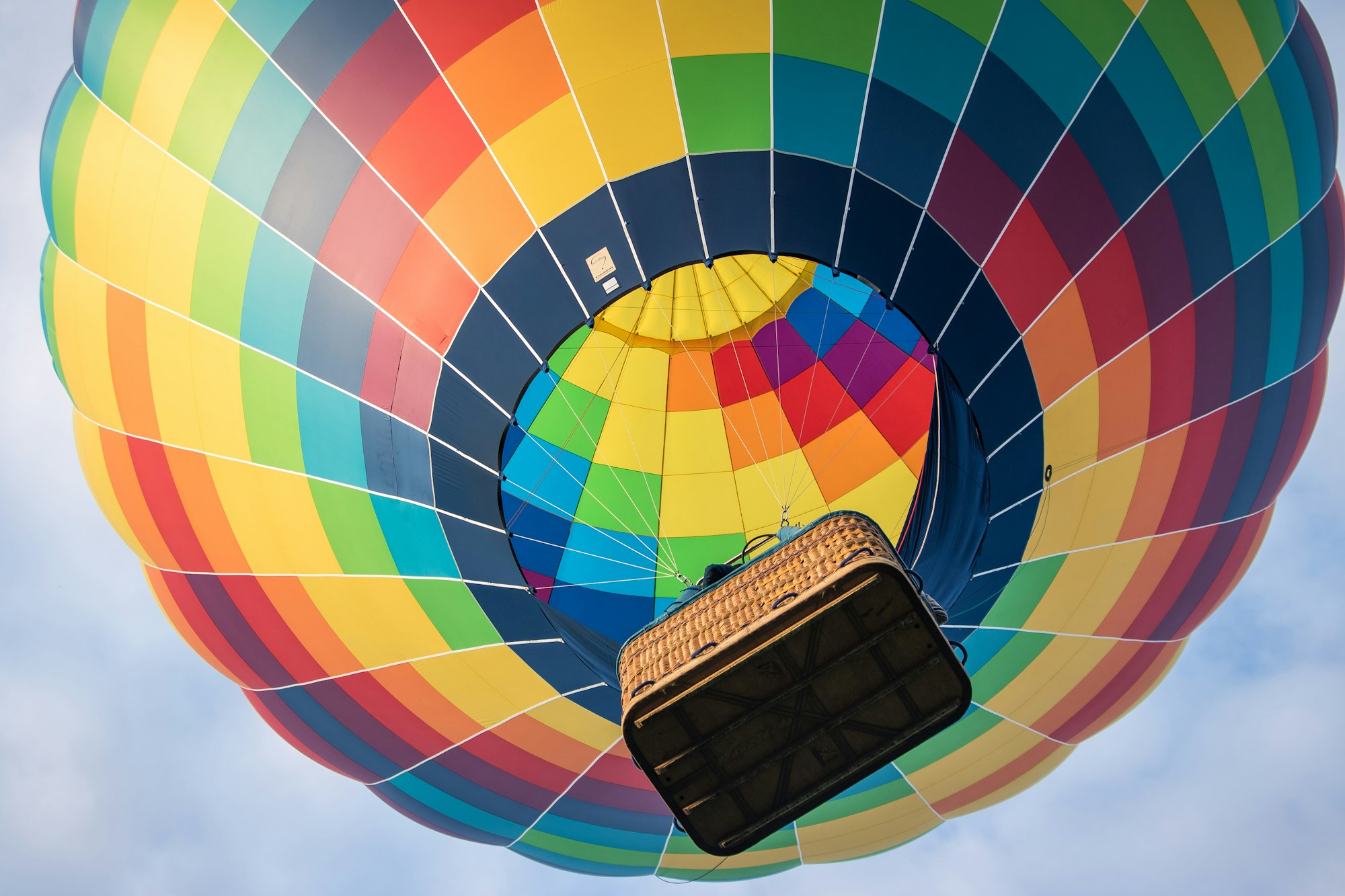
The light is the whole point, and it is worth being blunt about the alternative. Midday on the plain is flat, hot and hazy, the worst time to look at or photograph anything. Dawn and the last hour before sunset are when Bagan performs, the mist burning off the brick with the balloons drifting above it, and everything the rest of the day is a matter of shade and patience.
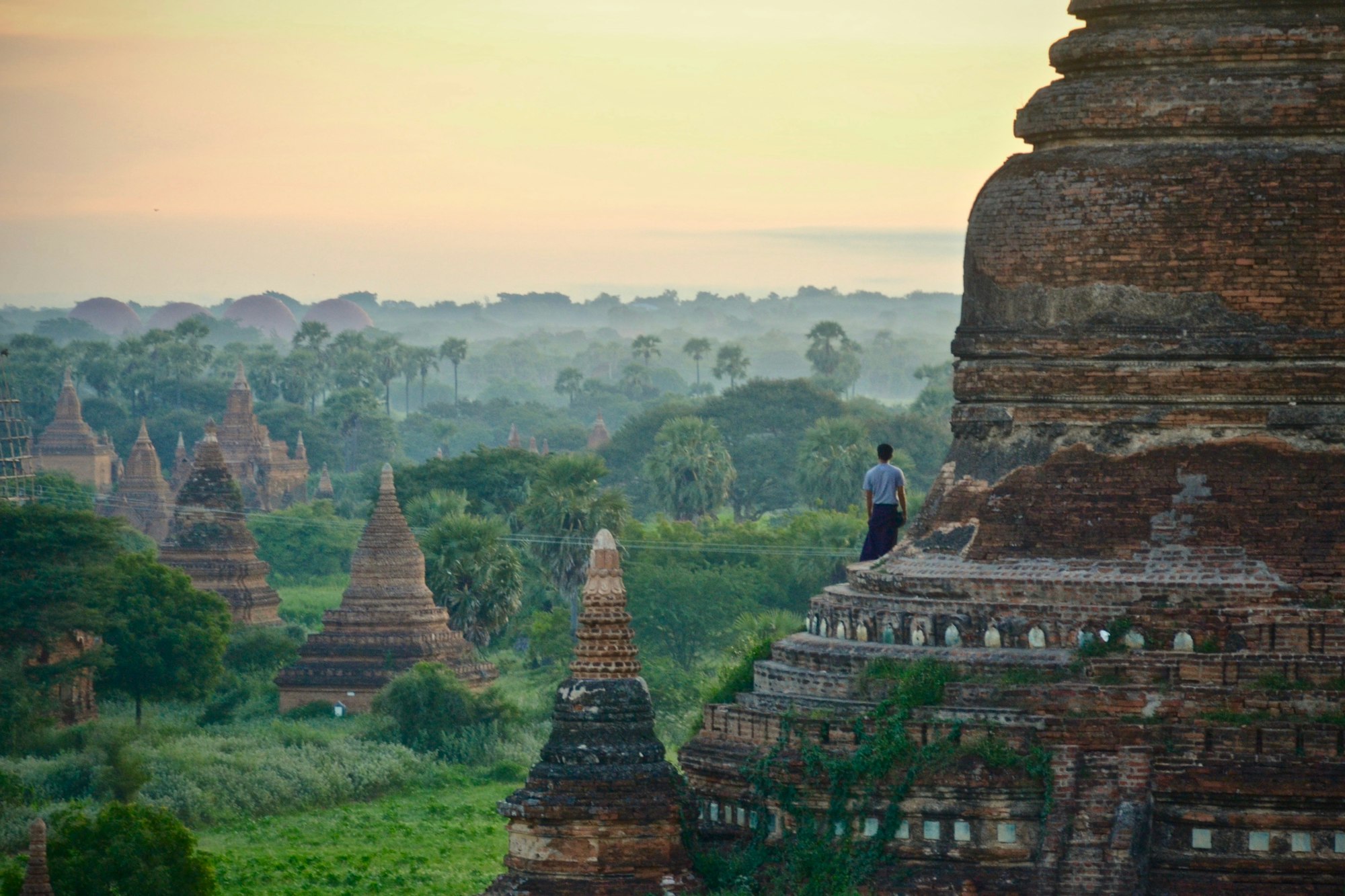
The rule most travellers arrive with is out of date: you can no longer climb the temples. After the 2016 earthquake and a fatal fall in 2017, the authorities banned climbing the monuments for sunrise and sunset, and the ban has been enforced firmly since 2018. The old advice to scramble up Shwesandaw for the classic view is obsolete. In its place the government built artificial viewing mounds, earthen hills set around the plain, near Sulamani, near the village of Pwasaw, and at Nyaung Lat Phet, along with open fields near Dhammayangyi and the riverside platform at Lawkananda. These are where visitors now gather for the balloon-and-sunrise show, and knowing that in advance saves an early-morning argument with a temple guardian.
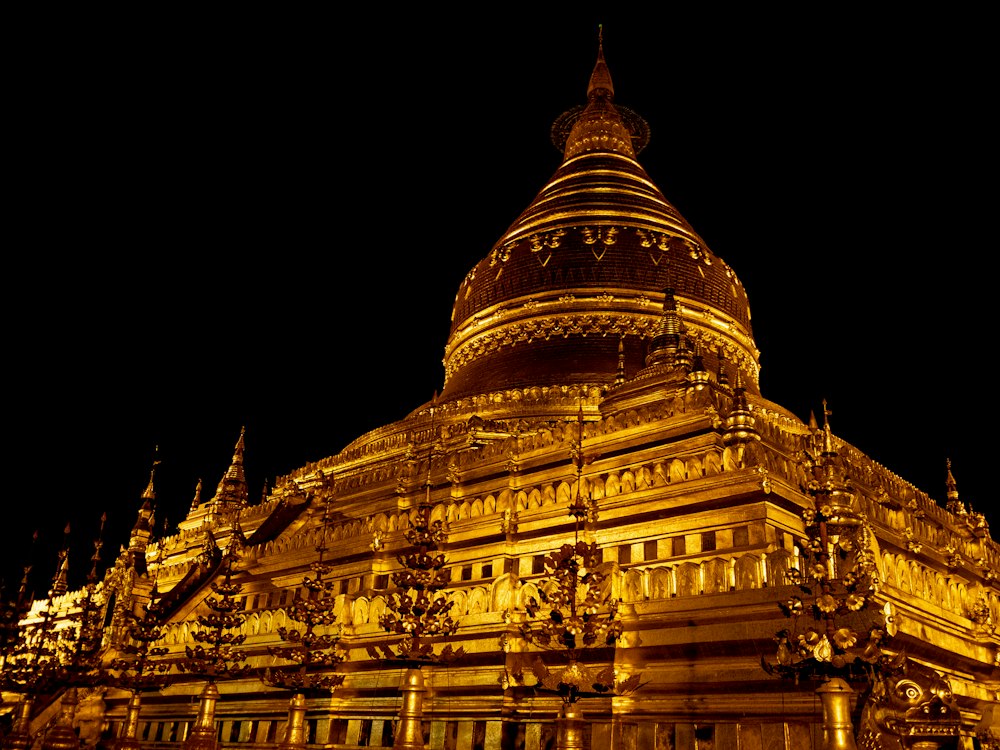
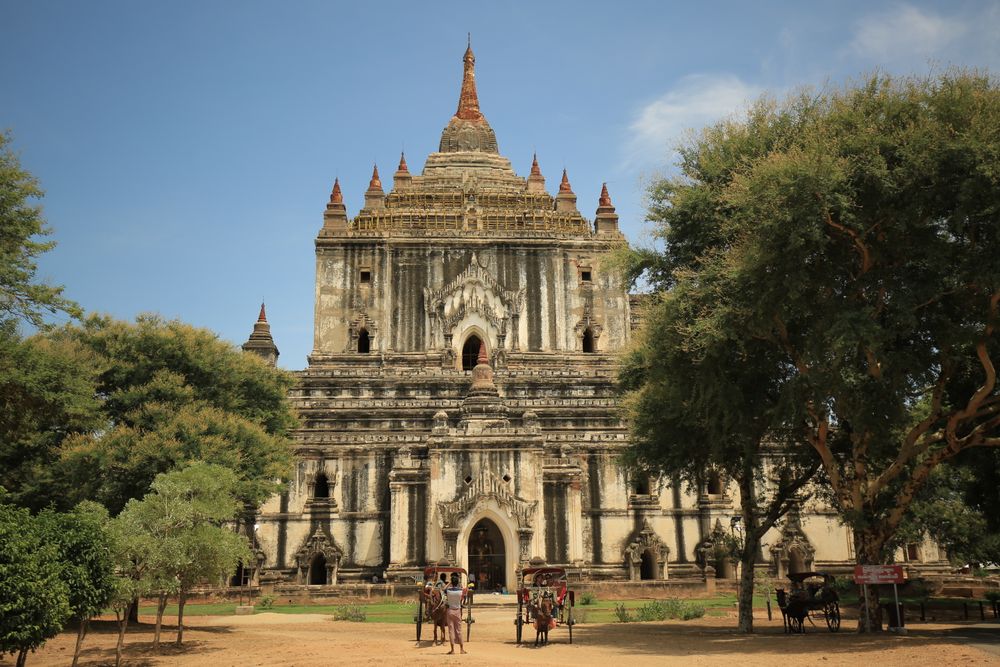
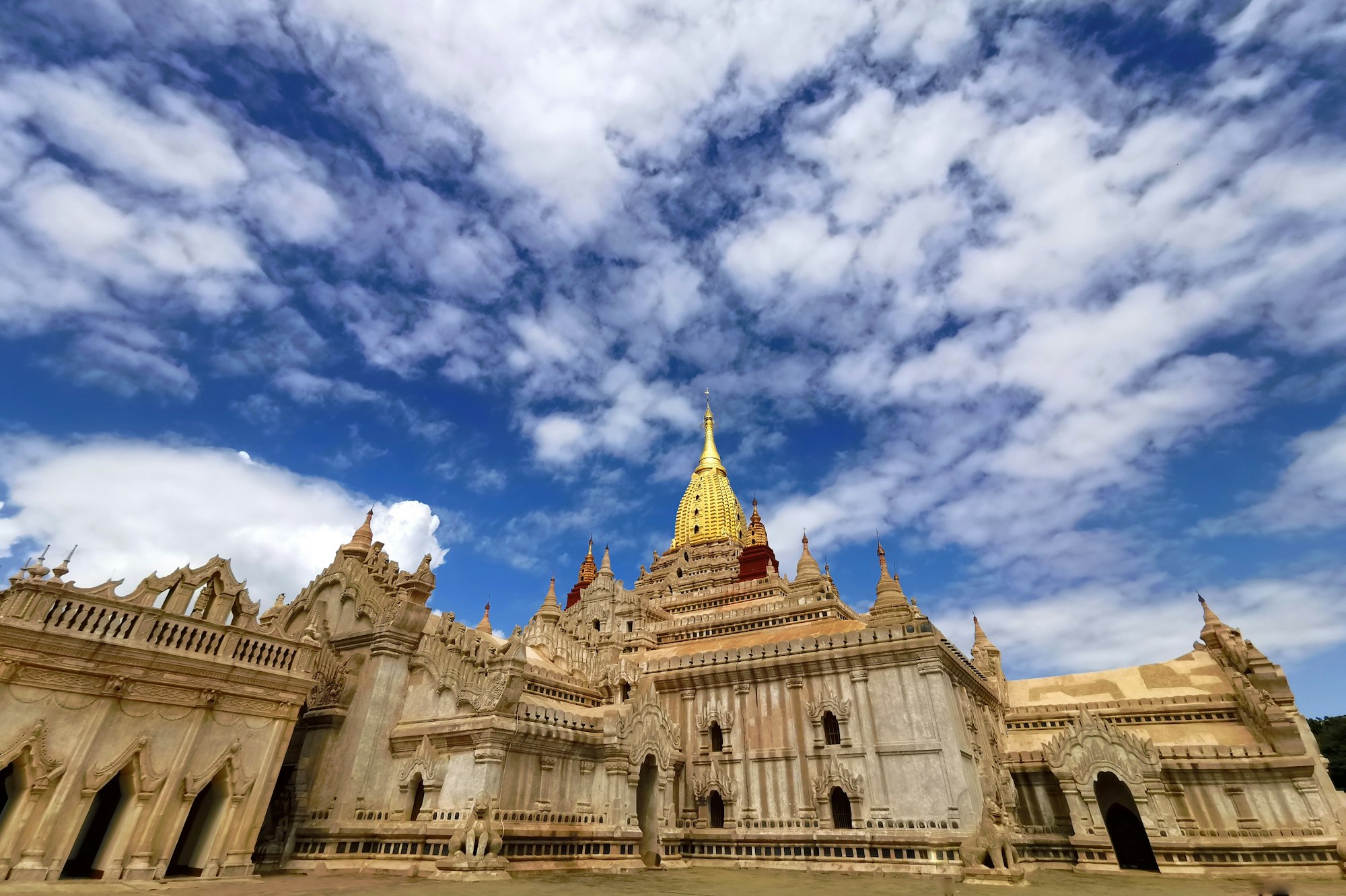
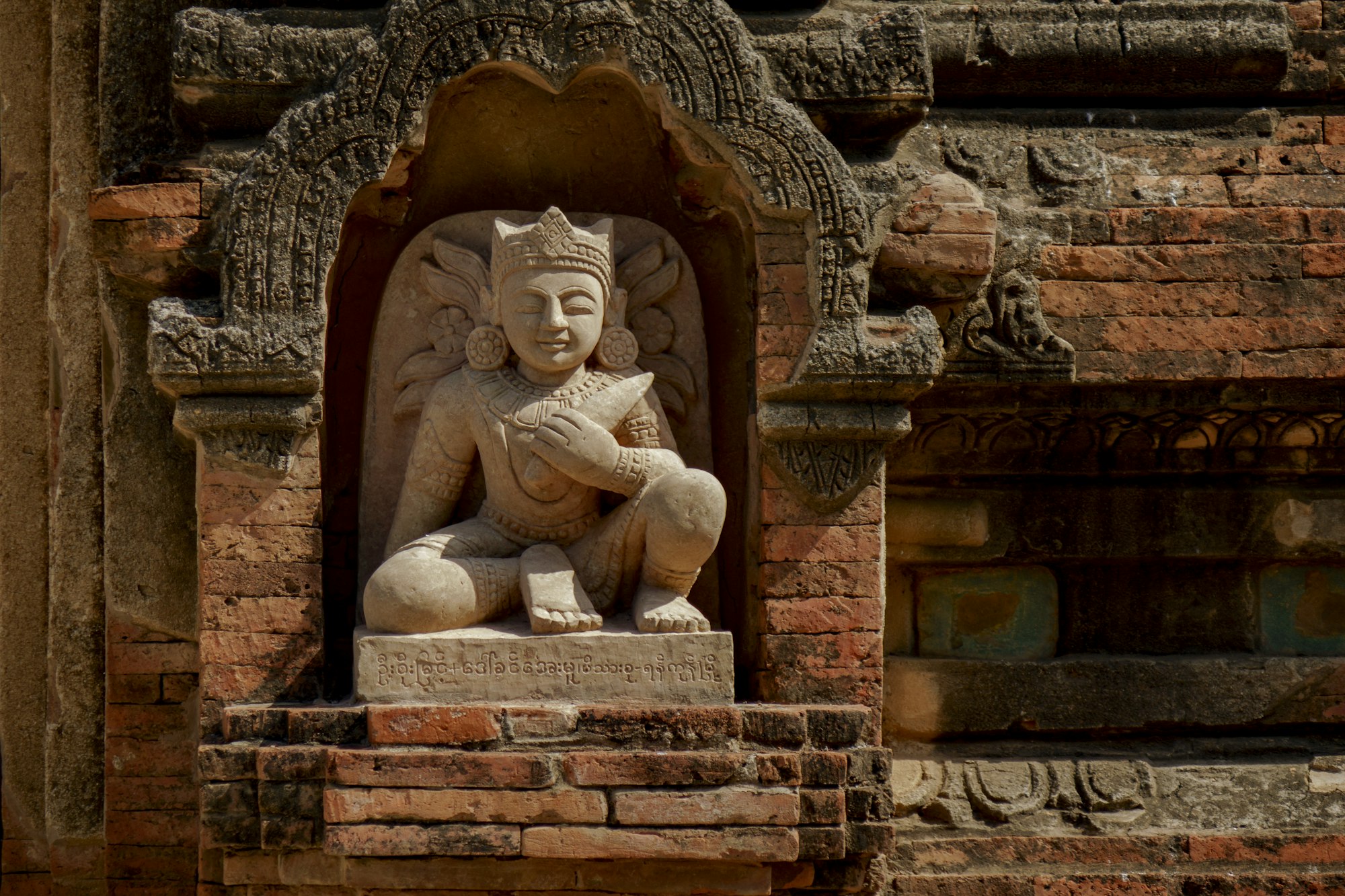
Among the temples themselves, a handful are worth knowing by name. Ananda, finished around 1105, is the most revered and among the most beautiful, a symmetrical white-and-gold shrine holding four standing gilded Buddhas that face out to the cardinal points. Dhammayangyi is the largest mass on the plain, a blunt brick pyramid built by King Narathu in the late 1160s, its interior famously bricked up for reasons no one has settled. Thatbyinnyu is the tallest, Shwezigon the great gilded bell of a stupa that set the template for Burmese pagodas to come, and Sulamani among those hardest hit by the quakes. Between the marquee names lie hundreds of minor brick temples with no fences and no guards, many of which a visitor can wander into alone, which is the quiet pleasure the famous ones cannot offer.
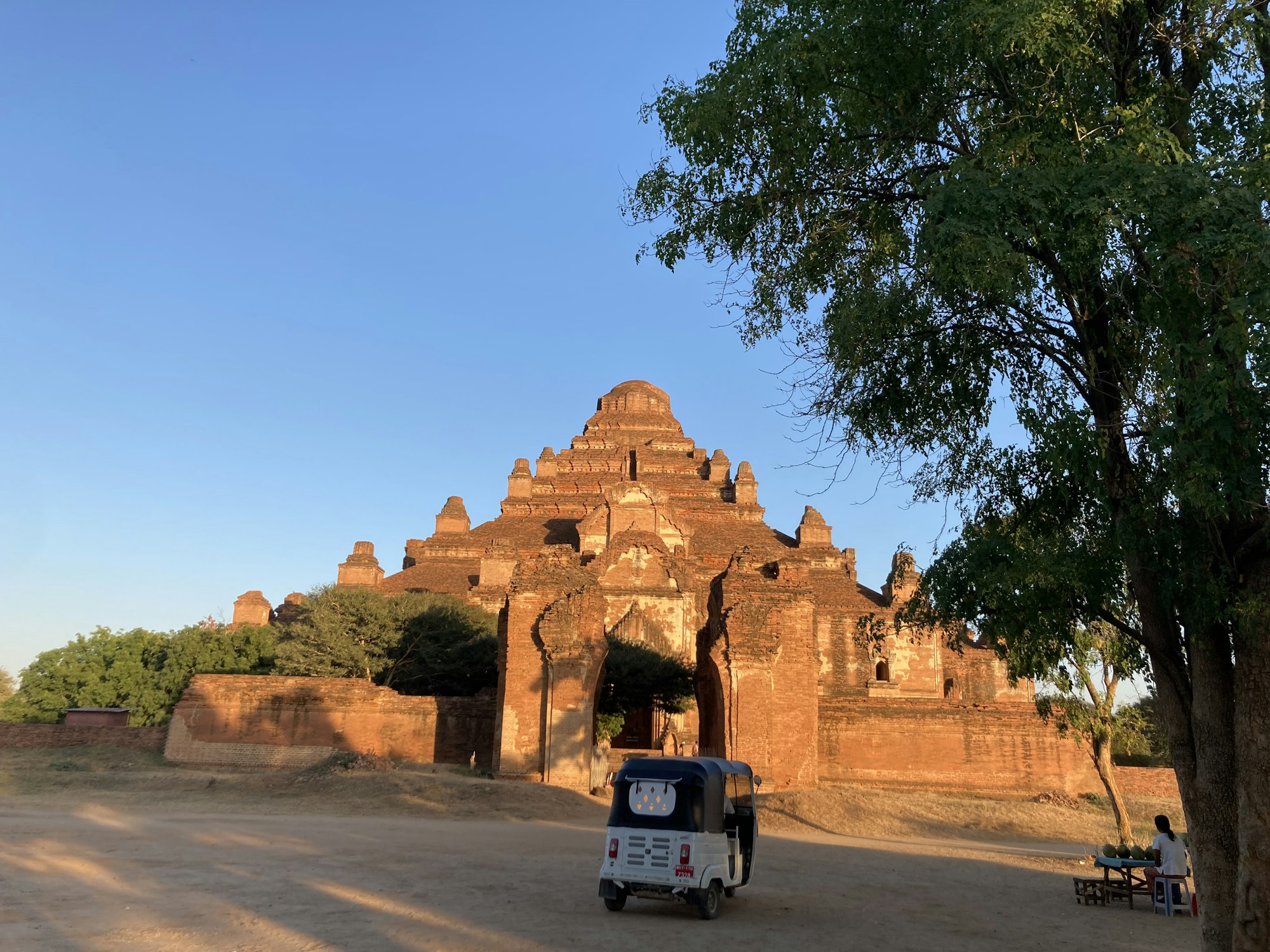
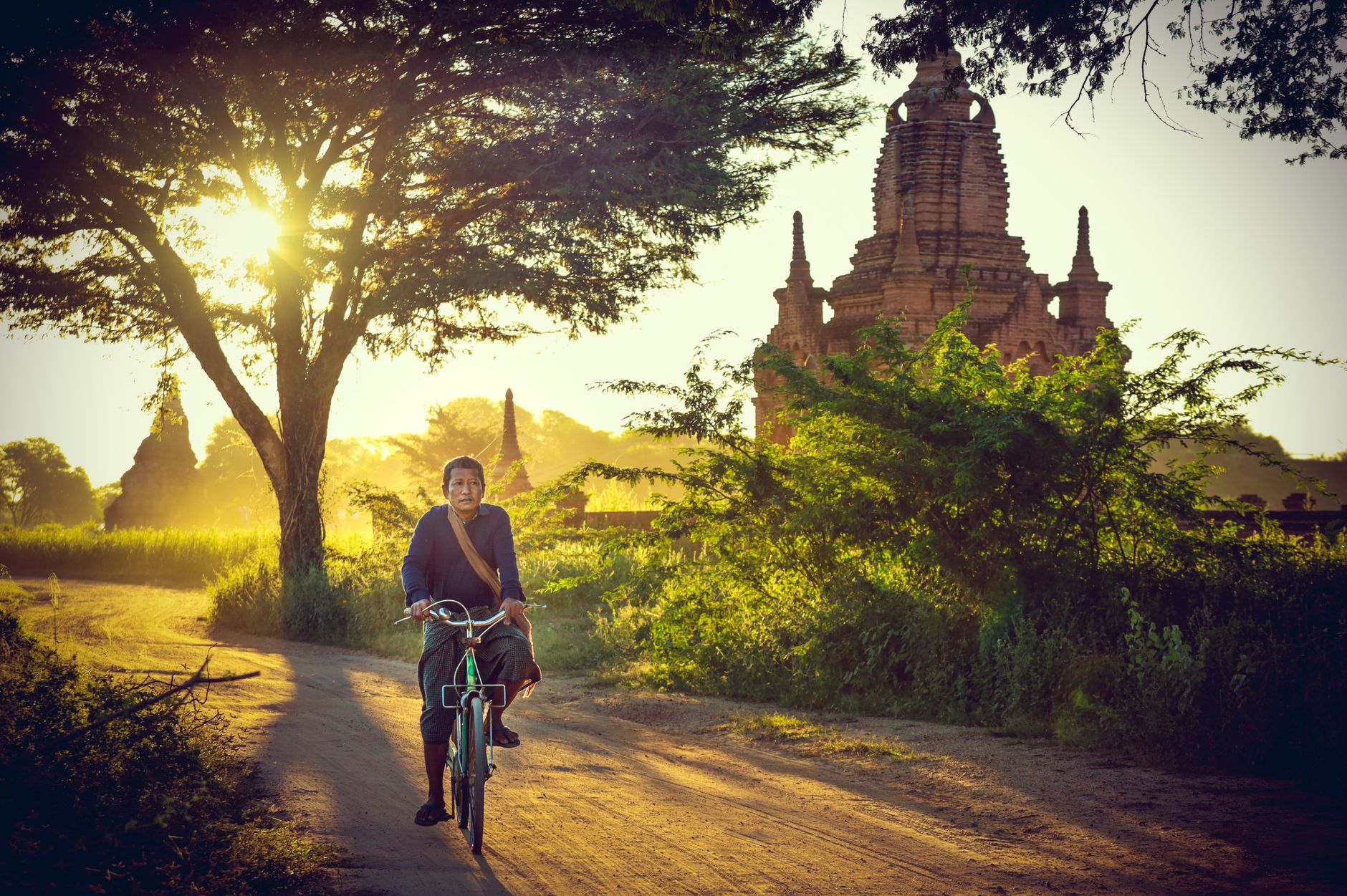
The way to cover the ground is by electric scooter. Petrol motorbikes are off limits to visitors, so the standard is an e-bike rented by the day, and it suits the place: quiet, cheap, and able to turn down the sandy tracks between temples that a car cannot. Travellers who ride them pass on the same warnings. Battery charge fades by late afternoon, so plan the range and keep the sunset cluster near where the charge will still be. The soft sand on the minor tracks catches a front wheel easily, a slow tip-over being a common souvenir. And an offline map earns its keep, because the smaller temples are unlabelled and look much alike once the sun is high.
Practical details are worth carrying in the head. The Bagan Archaeological Zone pass, around 25,000 kyat and valid five days, is real and checked, at the airport, at the entrances and at the major temples, so keep it to hand. Nights are spent in one of three areas. Nyaung U in the northeast is nearest the airport and the bus and boat arrivals, the liveliest and the best value, with the ATMs. Old Bagan, inside the ancient walls, is closest to the great temples, priciest and most atmospheric. New Bagan to the south is quieter, with good mid-range lodging and the lacquerware workshops the region is known for. Old Bagan for proximity, Nyaung U for value, is the usual trade.
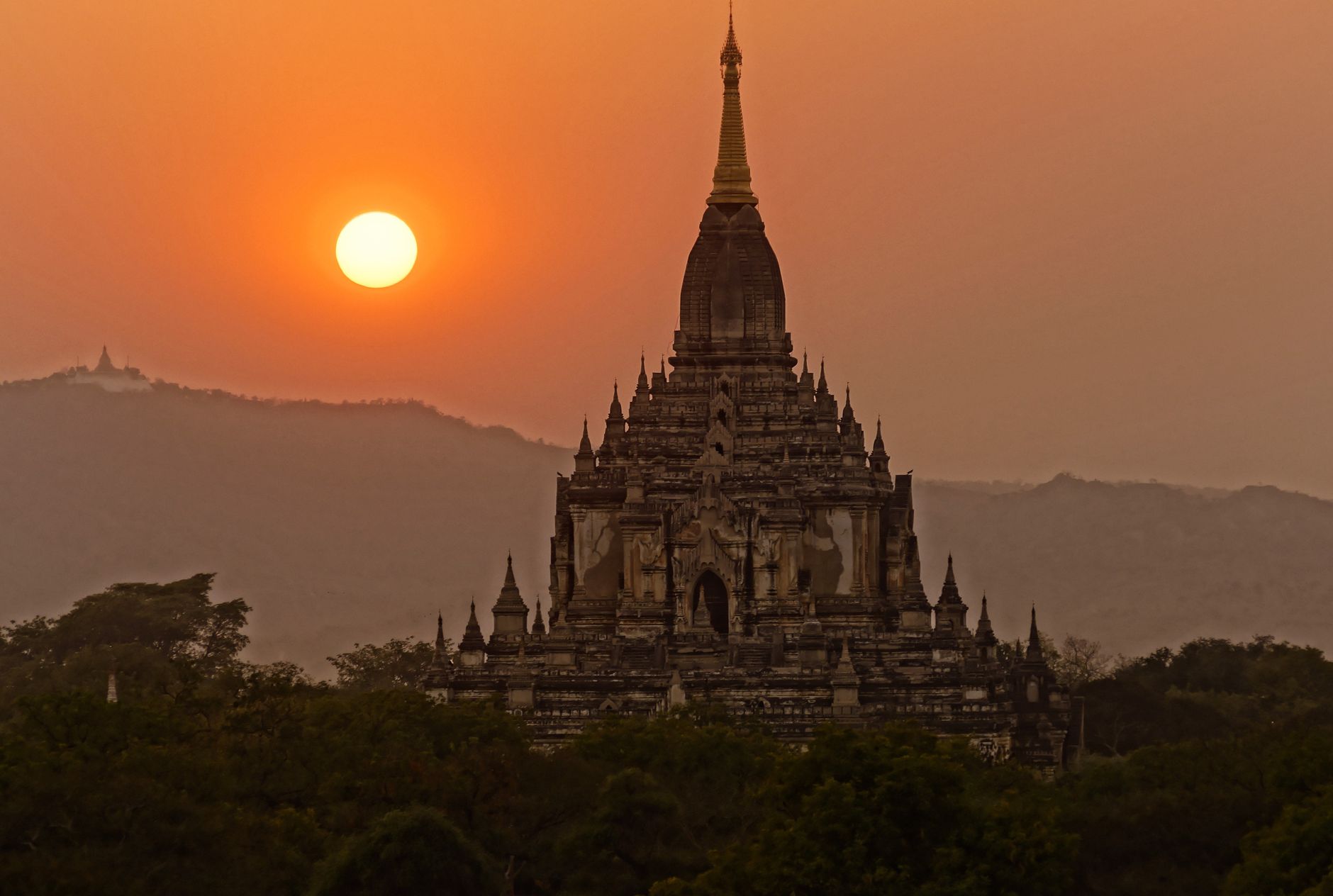
The temples outlasted the empire that built them, and every worse chapter since.
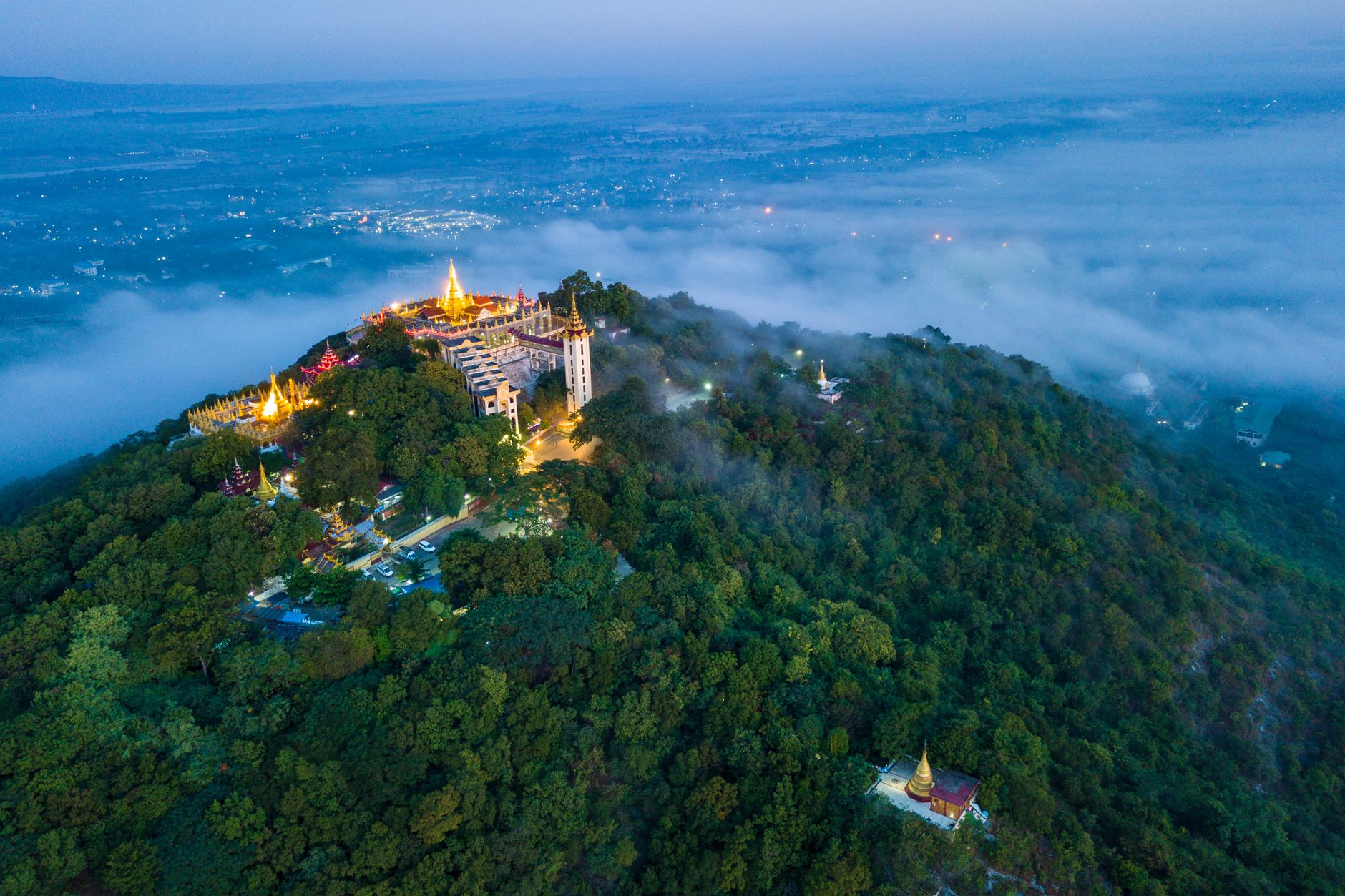
When the temples begin to run together, the standard change of scene is Mount Popa, an extinct volcano about fifty kilometres southeast whose sheer plug of rock, Taung Kalat, is crowned by a gilded monastery reached up 777 steps past resident macaques. It is a Burmese pilgrimage site to the nats, the spirits of pre-Buddhist folk religion, and it makes a half-day trip by car with a temple-free horizon for a change. The slower alternative is the river itself: a sunset boat on the Irrawaddy, the same water the kingdom was built to command, with the spires going dark along the bank.
Earthquakes are part of Bagan's story and worth keeping in mind when reading about which temples are open. A magnitude 6.8 quake in August 2016 damaged or destroyed close to 400 monuments. Then in March 2025 a magnitude 7.7 quake struck the Sagaing region near Mandalay, its epicentre close to Bagan, with fresh damage across the zone and thousands of pagodas reported harmed nationwide. Some monuments are under repair or closed at any given time, and the list changes, so the specifics are best confirmed on the ground rather than from an old guidebook. What does not change is the scale of the place, and the fact that it has already survived far worse than the present. When the advisories ease, and in time they will, the plain will still be there at dawn, and worth the journey.