Things to do
6-
Makgadikgadi Pans
Salt flats left by a lake that dried out long ago stretch east of Maun, flat enough that the horizon curves and quiet enough to hear the wind. Quad bikes, sleep outs on the crust and habituated meerkats are the draw in the dry months. After good rains the pans hold water, zebra move in by the thousand and flamingos breed at Sua.
-
Mokoro Safari
Poled from the stern through reed channels, a shallow dugout moves at eye level with the water, which is how the delta was travelled long before engines. Trips run from the poling stations near Boro, out to an island for a walk and back. Fibreglass hulls have replaced most carved ebony ones, and the polers come from the delta villages.
-
Moremi Game Reserve
Covering the eastern delta, a reserve set aside by the Batawana in the 1960s combines dry mopane country with the permanent water of Chief's Island and Xakanaxa. Game drives here find wild dog, leopard and large elephant herds, and the birding at the heronries is strong. Self drive is possible in a high clearance vehicle, though deep sand and water crossings defeat the unprepared.
-
Nhabe Museum
A small colonial era building near the river holds local history, San and Herero material culture, and changing work by Botswanan artists. It doubles as a community arts centre, with craft for sale and occasional performances. Half an hour fills it, which makes it a reasonable stop on an arrival or departure day when the charter timings leave a gap.
-
Park
Nxai Pan National Park
Grass covered fossil pans north of the main road draw springbok, oryx and the zebra migration that follows the first rains, with lion and cheetah on the open ground behind them. Baines Baobabs stand on the edge of Kudiakam Pan, little changed since they were painted in the nineteenth century. Wet season, December to March, is the time to come here.
-
Okavango Delta
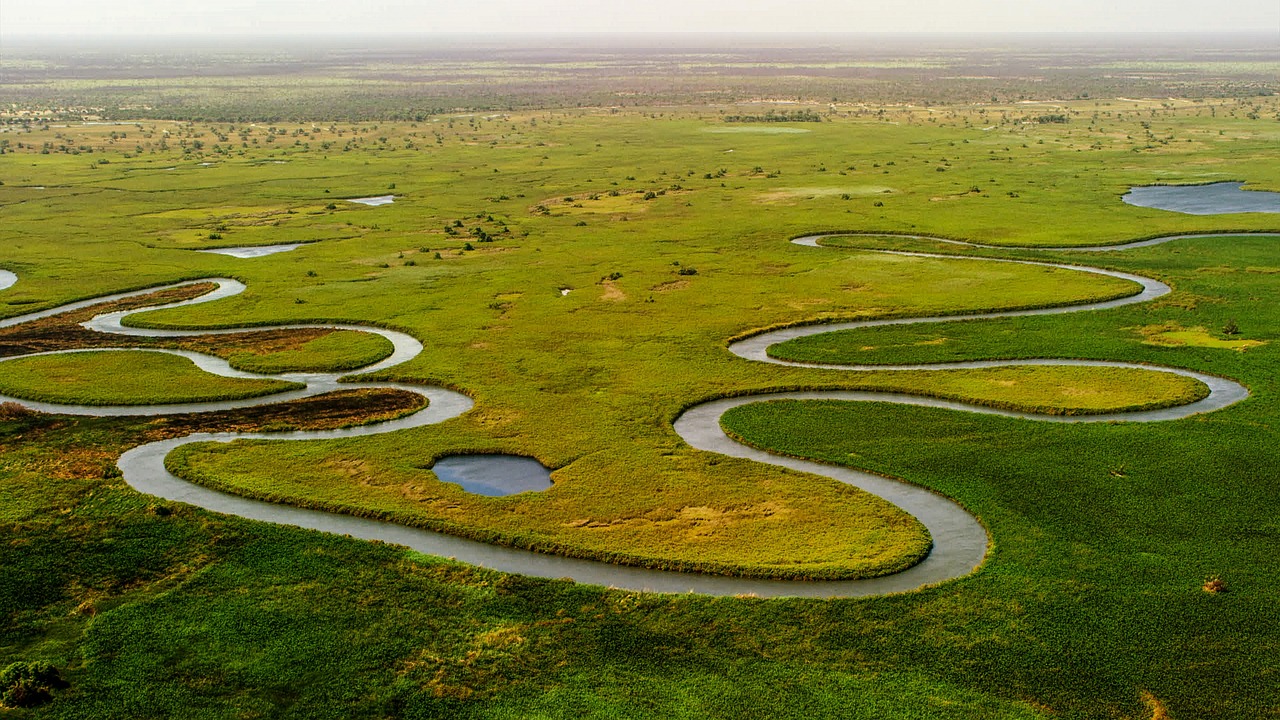
Water off the Angolan highlands spreads across the Kalahari sand and evaporates there, making a seasonal wetland of channels, islands and floodplain that carries elephant, lechwe, buffalo and lion. Access is by light aircraft to camps inside the concessions, or by mokoro from the eastern edge. The flood arrives months after the rain that made it, peaking in the dry winter.