 Submit a photo
Ninety seconds on Galápagos National Park
Every visitor pays a conservation entry tax, collected by park rangers at the Baltra and San Cristóbal airports; children under two are exempt. Travellers also register at a Galápagos Government Council office for a transit control card, which is kept until departure. Stays run to two months at most.
Two metres is the minimum distance from any animal, and the rule covers cameras too. Touching or feeding wildlife is banned, as is taking stones or sand. Visitors must stay on the marked trails and use only authorised tourism services.
The islands work in any month, since air and sea temperatures stay fairly steady on the equator. December to May brings calmer seas and a short shower most days. From June to November the Humboldt Current brings cooler water, the misty garúa rain and rougher seas, but also the richest marine life: albatross arrive on Española and blue-footed boobies mate.
Flights from Quito and Guayaquil land at Baltra and at San Cristóbal. From Baltra a bus runs to the Itabaca Canal in about ten minutes, a barge crosses to Santa Cruz in about ten more, and a second bus reaches Puerto Ayora in 30 to 45 minutes. The park recommends that bus over a taxi, since it cuts emissions and fewer birds are hit on the road.
Yes. The volcanic islands are World Heritage, protected for their geology and for animal and plant species unique to the archipelago. Ninety-seven percent of the land is national park.
Sea lions sleep beside the docks, and most of the wildlife on these islands can be watched from a couple of metres away. Much of it lives nowhere else on Earth, and it stays completely wild.
The park counts more than 45 endemic bird species and 42 endemic reptiles. Its giant tortoises, which gave the islands their name, are the largest of their kind alive.
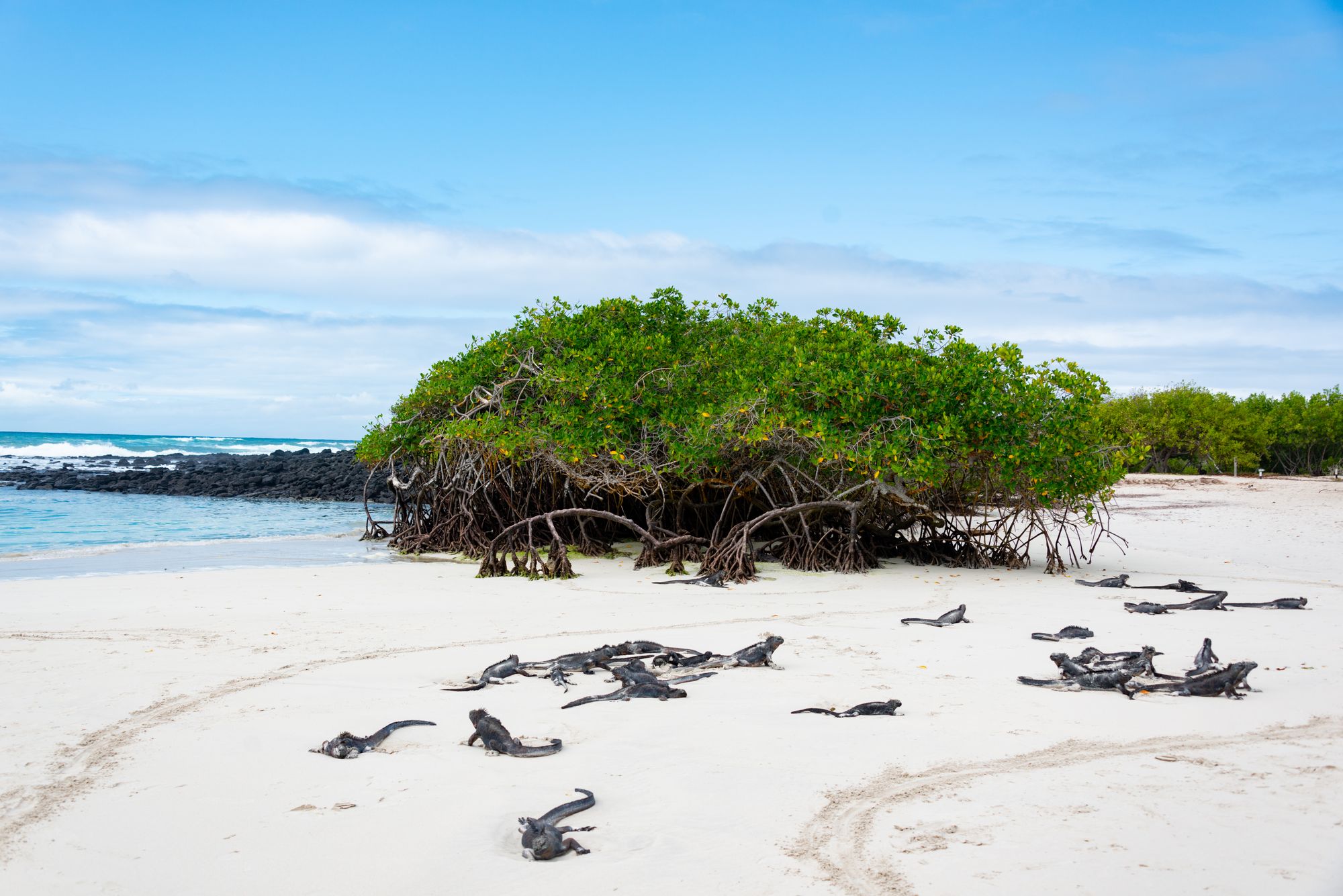
Marine iguanas, the world's only sea-going lizards, gather in large groups on the shoreline lava rocks. On North Seymour, a short loop trail passes the largest colony of magnificent frigatebirds in the Galápagos, with blue-footed boobies and land iguanas along the way.
No other penguin lives in the tropics, and at Bartolomé you can swim and snorkel beside the Galápagos species, with sea lions and reef fish, around Pinnacle Rock. Below the surface, divers come for sharks, rays, mantas and sea turtles.
Decide first between a boat and a hotel. Cruises last from four days to twelve and sail between islands overnight, reaching more islands and species than day trips can. A naturalist guide meets cruise passengers at the airport.
Most visitors stay ashore instead, in Puerto Ayora or a town on San Cristóbal or Isabela, and take day boats to nearby uninhabited islands.
Puerto Ayora's own sites need no boat. A trail of about an hour leads from the main street to Tortuga Bay; swim at the calm beach to the north, since the long open beach has strong undercurrents. For Las Grietas, a water taxi crosses the bay from the municipal pier to a crevice where fresh water sits over sea water.
The Fausto Llerena Tortoise Center, a ten-minute walk from the town centre, shows tortoises from hatchlings to adults. Wild ones roam the farm pastures of the highlands and the El Chato reserve, reached by road from Santa Rosa or Salasaca.
At a wet landing you wade ashore from a raft or dinghy; at a dry landing you step straight onto land. The marked trails beyond are mostly under a mile, about 1.6 km.
If you are travelling in a peak season, mid-June to early September or mid-December to mid-January, book your boat or hotel well in advance.
Further afield in Ecuador
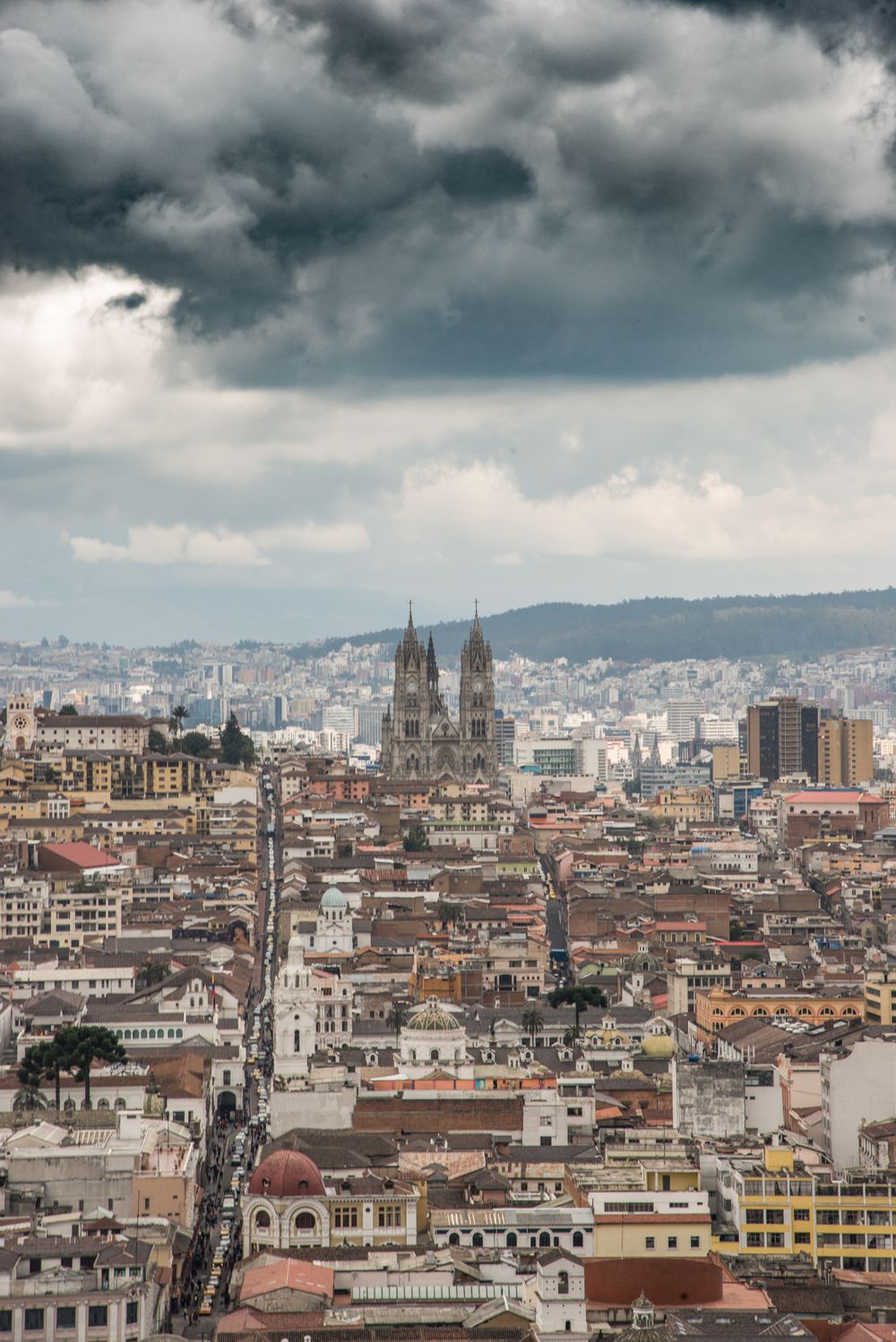
One of the largest colonial cores in the Americas covers some thirty blocks of Quito, all whitewash, carved doorways and monastery walls.…
Four rivers cross the colonial grid of Ecuador's third city, set at about 2,550 metres in the southern Andes and built in red tile and…
Ecuador's capital runs north to south along a narrow Andean valley at around 2,850 metres, with a colonial core of painted facades and…
A steep river valley below Tungurahua holds this small spa town, wedged between waterfalls and hot springs on the eastern edge of the…
Last updated