Globe Countries Cities Itineraries World's Best Hotels Events Login
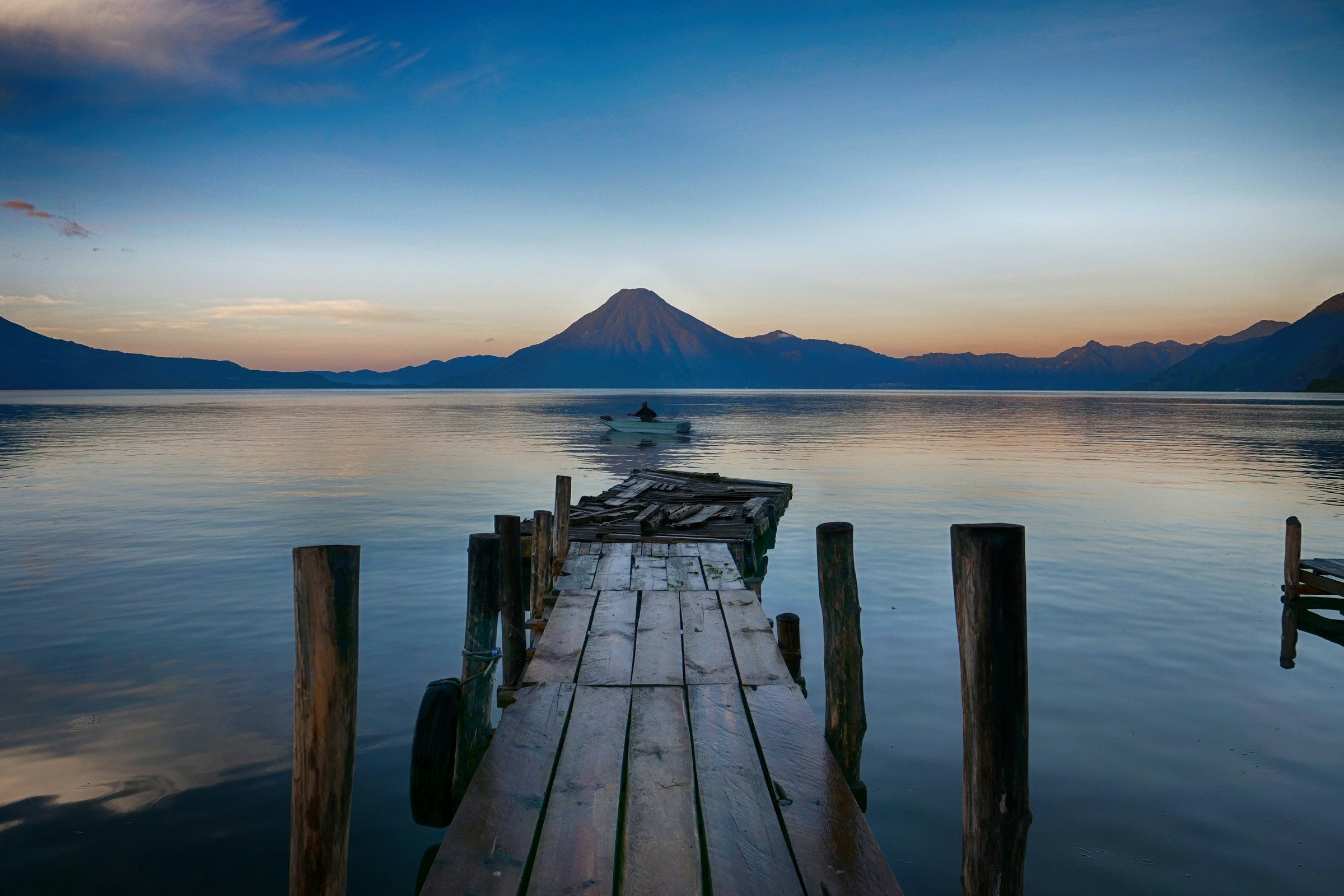
A weathered wooden dock on the Panajachel shore at dusk, a lone boat on still water and a volcano cone across Lake Atitlán under a blue sky with a thin warm band at the horizon
Dusk from a Panajachel dock · the lake's surface lies at about 1,562 metres
Town brief · 14.7407°N 91.1583°W

Panajachel

Give an evening to Panajachel's waterfront, where the lake stretches across to its volcanoes and the sunset is one of the best on Lake Atitlán, and spend your days crossing by public boat to the villages on the far shores.

View on globe

Why you should go

Ninety seconds on Panajachel

How long
One or two nightsthe arrival base for the lake
Getting around
On foot, tuk-tuk and lanchathe town is about 20 minutes across on foot
When
November to Aprilthe dry season; rain falls May to October
Language
SpanishKaqchikel and Tz'utujil round the lake
Money
The quetzal, GTQcash for boats, tuk-tuks and markets
Airports
Guatemala City GUAabout 3.5 to 4 hours to the lake towns by shuttle
How long

How many nights do travellers spend in Panajachel?

One or two, as a rule. Panajachel is the arrival point for Lake Atitlán, with the most rooms on the lake, the shuttles and the most cash machines.

Getting around

How do the boats from Panajachel work?

Public lanchas leave the docks at the lower end of town on demand, with no printed timetable, and are paid in cash. Service is reported to wind down between 16:30 and 17:00, though some docks run later, so the time of the last boat is asked at the dock.

When

When is the best time to visit Panajachel?

The dry season, November to April, with December to February the driest and clearest months; rain falls from May to October. The Xocomil wind rises around midday or early afternoon, blows hardest from November to March and makes the afternoon crossings rough. Lake hotels fill months ahead for Holy Week, and the town holds its fair in the first week of October.

Language

What language is spoken in Panajachel?

Spanish, the official language of Guatemala, spoken almost everywhere visitors go. The Maya communities around Lake Atitlán are mainly Kaqchikel and Tz'utujil, and more than twenty indigenous languages are spoken across the country.

Money

What currency is used in Panajachel?

The quetzal, GTQ. Panajachel has the most cash machines on the lake, along Calle Santander and near the main grocery stores, though they occasionally run empty. Boutique hotels, restaurants aimed at travellers and a few larger shops take cards, while boats, tuk-tuks, markets and small eateries are cash only.

Airports

Which airport serves Panajachel?

La Aurora International, GUA, on the south side of Guatemala City. Shared shuttles from Guatemala City take about 3.5 to 4 hours to the lake. The other route is via Antigua, 45 minutes to an hour from the airport by car, with a second shuttle on to Panajachel.

A day here runs on the boats: across the lake in the morning to one or two villages, a few hours on foot there, and back in the afternoon. Santa Catarina Palopó, the nearest village, is close enough to reach by road.

Spend your first nights in Panajachel, where the shuttles arrive, then move across the water if you want a quieter village: San Marcos La Laguna, San Juan La Laguna and Santa Cruz La Laguna are the usual choices. Each is a single boat ride from the town.

In town, the cheaper rooms cluster around Calle Santander, the main tourist street, lined with shops, and the lakefront hotels look across the water to the volcanoes. Either way the boats are a walk away, and tuk-tuks circle the streets for luggage or the uphill stretch to the market.

Boats to the western shore leave from Tzanjuyú, the main public dock; ask which dock serves your village, and agree the fare before you step in. Cross in the morning and wear the life jacket: in January 2026 a lancha from Panajachel to San Juan La Laguna capsized in strong wind. Be back at the dock by about half past four, or face a night across the lake.

Before you swim, check the cianosemáforo, the colour-coded cyanobacteria alert of the lake authority AMSCLAE, which advises against swimming during a bloom, as in mid-2026. Watch your bags in town, and take local advice on lakeside trails, where hikers have been robbed. Draw cash here before you cross: other lake towns have at least one machine, but it runs out at weekends.

Things to do

13
  1. Chichicastenango Market

    Chichicastenango Market

    Market · 5 hr

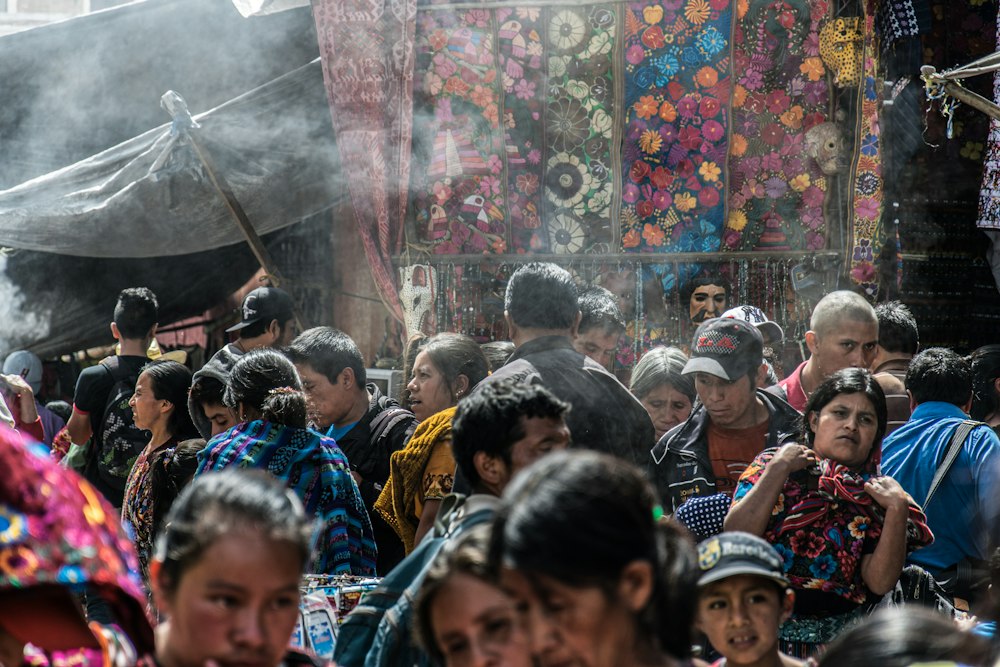
    Thursdays and Sundays are market days in Chichicastenango, when stalls fill the streets beside the church of Santo Tomás, whose 20 front steps stand one for each month of the Maya calendar year. From Panajachel, buses and shuttles run up through Sololá to the Los Encuentros junction, and the last 17 km to the town is a road of switchbacks.

  2. Indian Nose

    Viewpoint · 4 hr

    From this ridge above San Juan La Laguna, the sunrise view runs across Lake Atitlán to its volcanoes. The trailhead is an hour and a half by road from Panajachel, so the climb starts in the dark. The route from San Juan takes one and a half to two hours and the one from Santa Clara La Laguna 30 to 45 minutes, and most hikers go with a local guide.

  3. Iximché

    Archaeological Site · 2 hr

    Just south of Tecpán, about 90 km west of Guatemala City, this ruined Kaqchikel Maya site has several ceremonial plazas, pyramid temples and two ballcourts, with a small museum of sculpture and ceramics. It is open every day from 8 am to 4 pm. The ride back to Panajachel needs arranging before setting out, as return shuttles are hard to find there.

  4. Lake Atitlán

    Lake · 4 hr

    Three volcanoes, Atitlán, Tolimán and San Pedro, rise over this caldera lake, which reaches a depth of about 340 metres and is ringed by Kaqchikel and Tz'utujil Maya towns. Public lanchas from Panajachel link the towns on its shore, and the wind that rises around midday makes the afternoon crossings rough.

  5. Museo Lacustre Atitlán

    Museum · 1 hr

    On Calle Santander, in the middle of Panajachel, this small museum explains across five rooms how Lake Atitlán was formed. One room covers a Maya settlement that has lain under the water of the lake for some 1,700 years, and the museum is open daily.

  6. Reserva Natural Atitlán

    Park · 2 hr

    A walk from the centre of Panajachel, this reserve on an old coffee estate has walking trails with hanging bridges, and zip lines that run above waterfalls and coffee plantations. Its butterfly house fills a geodesic dome, known on site as the Geodomo. The reserve is open from 8 am to 5 pm.

  7. San Antonio Palopó

    Village · 2 hr

    Past Santa Catarina Palopó, further down the shore southeast of Panajachel, this village still weaves on the backstrap loom, and its textiles are known for their deep indigo blues. It is a quiet place that rarely has more than a couple of dozen visitors at a time. Boats and tuk-tuks both make the trip from Panajachel.

  8. San Juan La Laguna

    Village · 3 hr

    Women in this village on the northwest shore run weaving cooperatives that work on the backstrap loom, and local cooperatives have revived dyeing with natural plant colours. Fishermen still take visitors out in traditional boats from the pier, and the trail up Indian Nose starts here. Boats from the Tzanjuyú dock in Panajachel run to San Juan through the day.

  9. San Marcos La Laguna

    Village · 3 hr

    Shuttle boats from the public dock at Panajachel cross to San Marcos in about 45 minutes. The village on the northwest shore is known for its meditation retreats and yoga, and narrow paths wind between the trees and buildings above the dock. The most popular cliff-jumping spot is a ten-minute walk from the centre.

  10. Santa Catarina Palopó

    Village · 2 hr

    Each family in this Kaqchikel village chose the main colour of its house, and the walls carry painted patterns of deer, birds and other animals. Santa Catarina Palopó lies about five kilometres southeast of Panajachel along a paved road, 20 to 40 minutes on foot or about 15 minutes by tuk-tuk.

  11. Santa Cruz La Laguna

    Village · 2 hr

    No road reaches this village from outside, only boats and a footpath, and a single lane climbs from the dock up the steep mountainside to the houses. Lanchas from Panajachel make the short crossing, and the footpath runs west to Jaibalito. A diving school here teaches a four-day open-water course in the lake.

  12. Santiago Atitlán

    Village · 3 hr

    The shrine to Maximón in this town on the southwest shore moves to a different local house every year around May. Santiago Atitlán is also the base for quetzal-watching, which needs a local guide. Direct boats from Panajachel run less often than those to the western villages, and they leave from a different dock in Panajachel.

  13. Volcán San Pedro

    Volcano · 8 hr

    Rising to 3,020 metres over the southwest shore, this volcano is climbed from San Pedro La Laguna at its foot, a public boat ride across the lake from Panajachel. The ascent to the summit takes four to five hours and fills a day. Hikers have been robbed on the trail, so a local guide is advised for safety.

Basemap Meridian · data © OpenStreetMap
Explore

More of Guatemala

Antigua Guatemala
Town

Antigua Guatemala

Three volcanoes ring a grid of cobbled streets in Guatemala's central highlands, an hour west of the capital.

Sumpango Kite Festival
Event · Antigua Guatemala

Sumpango Kite Festival

Giant kites stand upright on the field all morning, and you can walk right up to them.

Lanquín
Town

Lanquín

Sources 4

The official pages this guide was checked against.

Last updated