 Submit a photo
Ninety seconds on Hemis National Park
The Markha Valley walk starts at Chilling, a drive of around two hours from Leh. For the winter route to Rumbak, the road runs along the south side of the Indus as far as the Zingchen gorge.
The Markha Valley walk is a summer trip, at its busiest in July and August. Winter tracking for the cats takes place between the end of December and the end of March, and February and March are the likeliest months for a sighting.
An Inner Line Permit is required for the Markha trail, and it applies to foreigners and non-Ladakhi Indians. It can be obtained online or at the Leh DC office. Entry to the park also requires a permit.
The Markha Valley is a multi-day walk that can be done independently, sleeping in village homestays along the way. Two full days in Leh beforehand are advised, to adjust to the altitude before setting off.
A sighting is never certain. About 200 snow leopards live in the park, mostly in the Rumbak catchment, yet only around half of week-long winter trips end with a cat in view.
In July and August you can cross this park on foot from one village homestay to the next; in February and March you can sit above Rumbak with a local tracker and scan the ridges for a snow leopard.
Vehicles are banned inside Hemis, so you see all of it on foot: high peaks, open valleys, the Markha river and the villages along it. It covers about 4,400 square kilometres, the largest national park in South Asia.
The snow leopard is what made it famous. A breeding population of about 200 lives in the park, most of it around the Rumbak valley, and the same slopes carry blue sheep, Tibetan wolves, Asiatic ibex and urial. Even here, seeing one is never guaranteed.
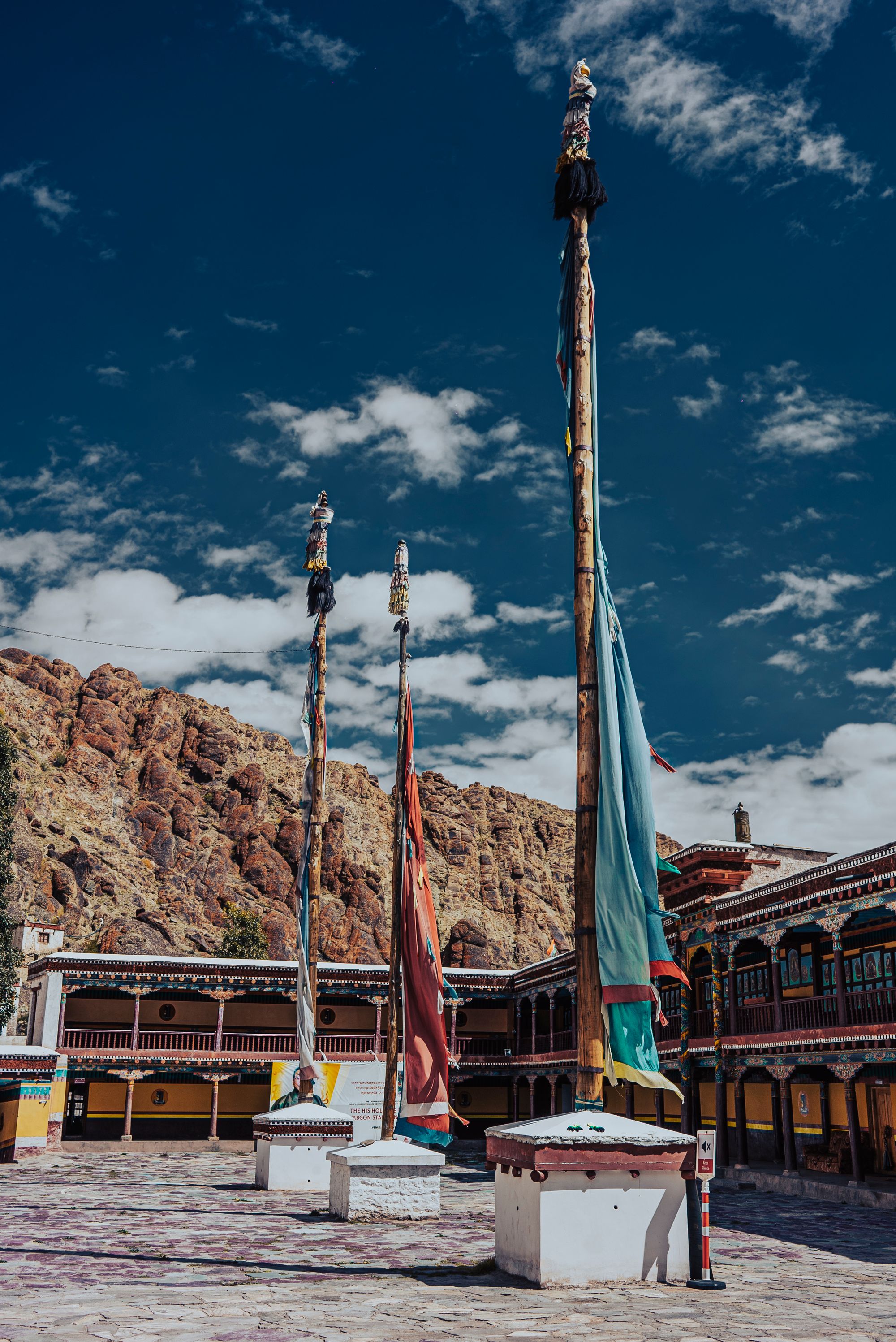
The park is also lived in. Its villages put walkers up in family houses, and its eastern side takes in Hemis Monastery, about 400 years old and still a place of pilgrimage for Tibetan Buddhists, where gold and silver sculptures of the Buddha are kept.
In summer a car drops you at Chilling, you cross the Zanskar on a footbridge, and you walk up the Markha river from village to village.
Each night you sleep in a different family's house: a mattress on the floor of a shared room, no running water and a home-cooked dinner of thukpa, momos or khambir bread. At Nimaling, 4,800 metres up, the only beds are tents pitched for the season, so bring your own sleeping bag.
From Nimaling you climb steeply to Kongmaru La, above 5,200 metres, and the trek ends at Shang Sumdo. Along the valley you cross the river about fifteen times, and after rain it runs hard, so carry two trekking poles.
In winter you head for Rumbak, at about 4,000 metres. The homestay rooms there are basic and thickly insulated against the cold, and the trackers lead you out from the village each morning.
Pack for cold whatever the month: good boots, thermal layers, a down jacket, gloves and a hat. In winter the temperature sits well below freezing and snow lies over much of the trail.
Bring binoculars and a camera with a long zoom, and carry packed food and plenty of water for the walk between villages.
Give the snow leopard a week or more.
Explore the rest of Leh
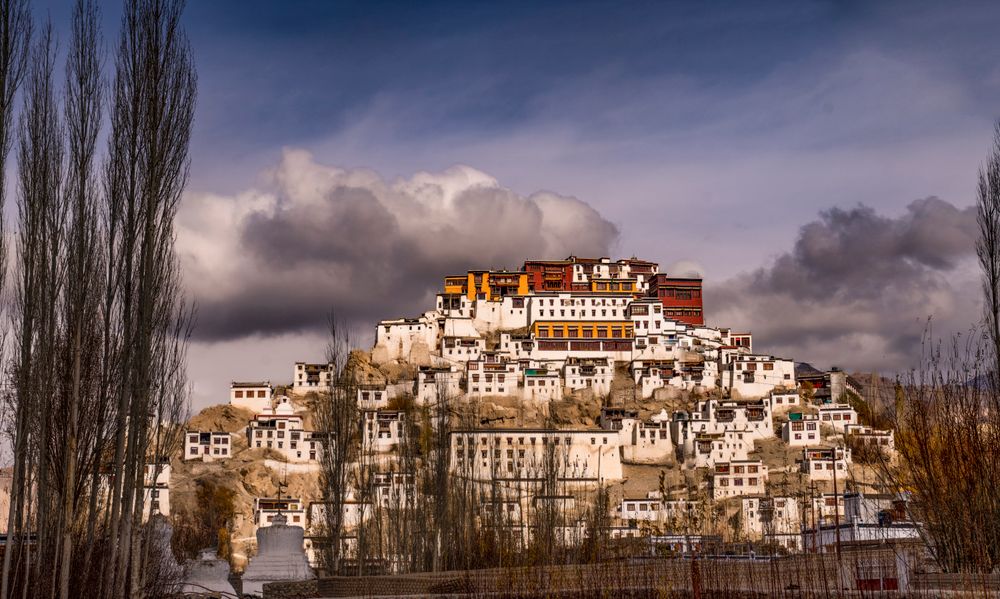
Stacked up a hillside about 19 km south-east of Leh, this Gelugpa monastery climbs in tiers of whitewashed buildings to a red temple at the…
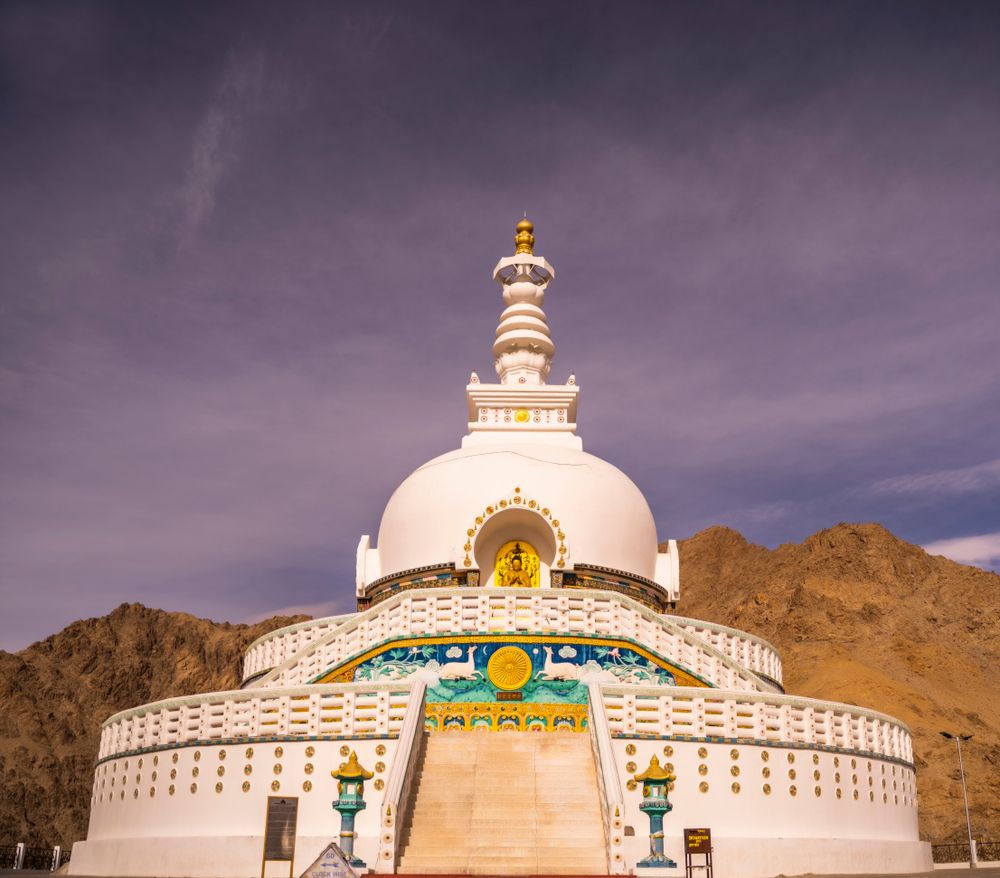
Japanese Buddhists and Ladakhi volunteers built this white domed stupa on a ridge above Changspa, and it was inaugurated in 1991. A long…
Ladakh's old trading town sits at 3,500 metres in a dry valley above the Indus, its mud-brick palace and lanes of guesthouses and cafes set…
Last updated