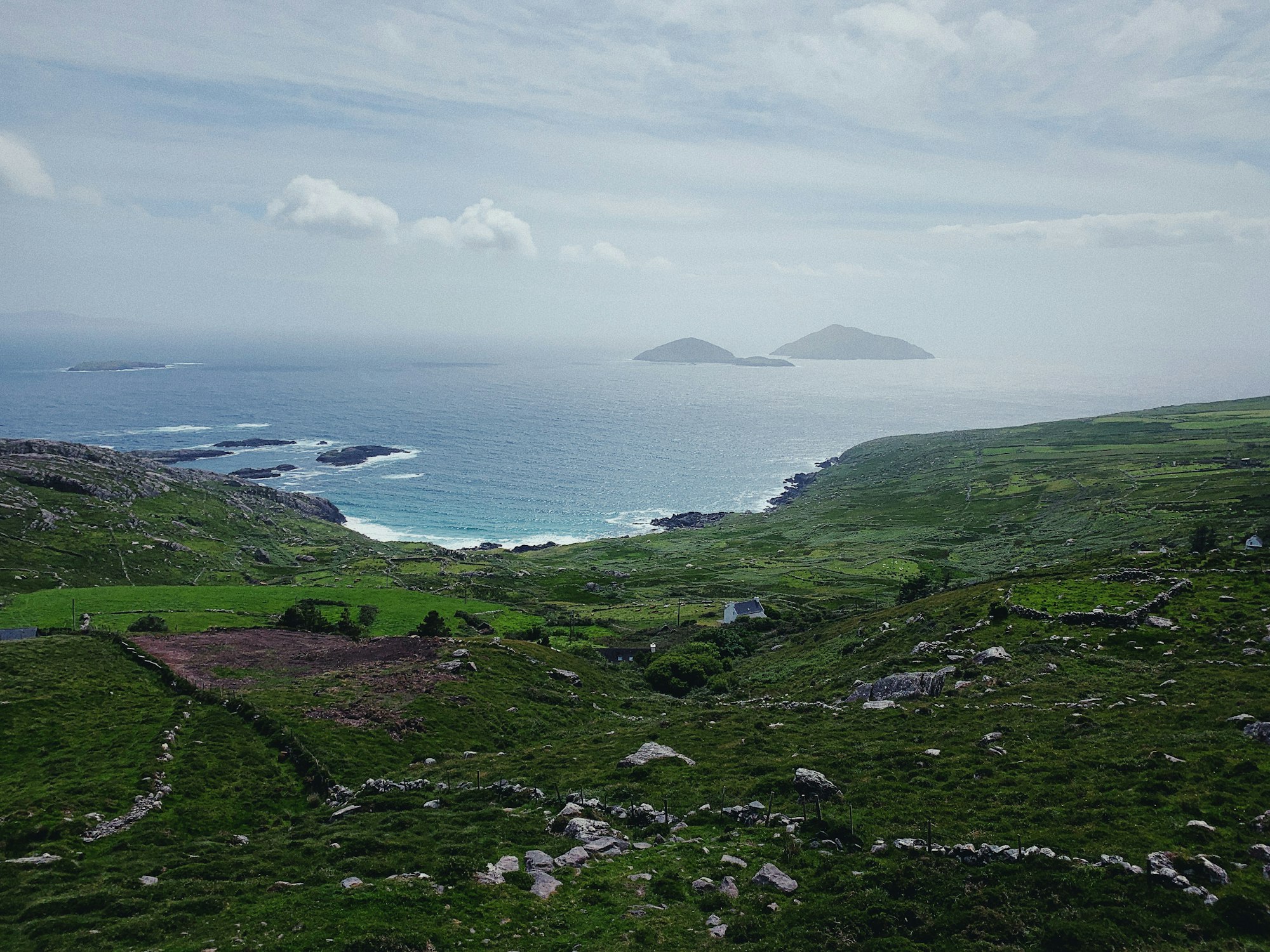
Ninety seconds on Skellig Michael
By mid-morning on a calm day you can be standing inside a monk's beehive hut on the summit of a bare Atlantic rock. The climb is steep with no handrail in places, and boats only land when the swell allows.
The monastery stands on stone terraces near the top of the north peak. Inside its wall are six beehive huts, called clochans, which the monks built by hand from stone with no mortar at all. Duck through a doorway and you will find them dry inside, after centuries of Atlantic weather.
Beside the huts stand two oratories where the monks prayed, one larger and one small, and a graveyard marked with stone crosses. The monks left for the mainland in the thirteenth century, and the island later became a place of pilgrimage.
The stairs you climb are part of the site: the monks built the stone steps over three centuries.
The island is also a bird sanctuary: puffins nest here from late April until early August, and the smaller rock beside it, Little Skellig, holds a gannet colony. From the summit the open sea runs to the horizon on every side.
Step from the boat to the stone pier in one firm move, because the boat keeps bobbing under you. A flat road then runs along the south side of the island, past the helicopter pad and a basic toilet, to the foot of the steps. There an OPW guide gives a five-minute safety talk, and nobody climbs without it.
The stairs climb to Christ's Saddle, the dip between the two peaks, then on to the monastery on the north peak. Keep to the marked path the whole way and do what the guides ask. They also give a talk on the island every hour or so.
Eat lunch on the stone walls at the monastery entrance, and keep it close, because the gulls take food from hands. There is no shop or bin, so carry your rubbish back to the boat. The way down is harder than the climb, so come down sitting, one step at a time, if that feels safer.
You cannot land on your own: the only way ashore is a boat holding an OPW landing permit, and OPW guides meet every landing. At the briefing they will steer anyone unsure away from the climb.
If the steps or the age limit rule you out, take an eco tour instead. It circles Skellig Michael and Little Skellig with no age or fitness limit.
Pack water and lunch, and take motion-sickness tablets before the crossing if you need them. Watch for falling rocks on the climb.
Before you sail, or on a day the boats stay in, the Skellig Experience visitor centre on the mainland explains how the monks lived. Its film and models of the monastery show how the huts were built and used, so they make more sense when you reach them.
Explore the rest of Portmagee
A fishing village of about 120 people on the Portmagee Channel, facing Valentia Island across the Maurice O'Neill bridge, and the main…
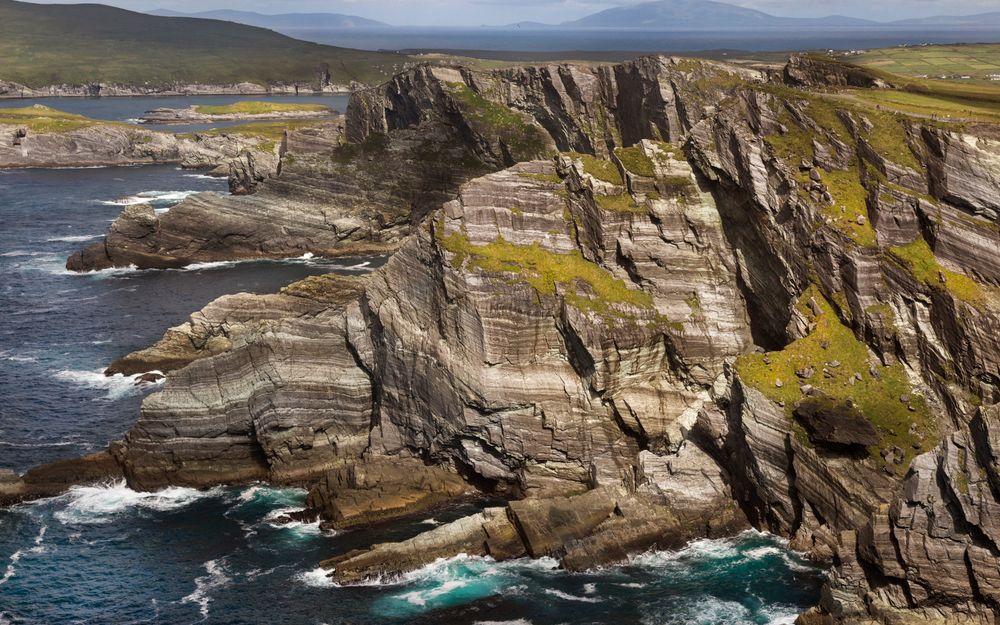
Sea cliffs of about 300 metres a few minutes outside Portmagee, reached across privately farmed land with a small entry charge, and the…
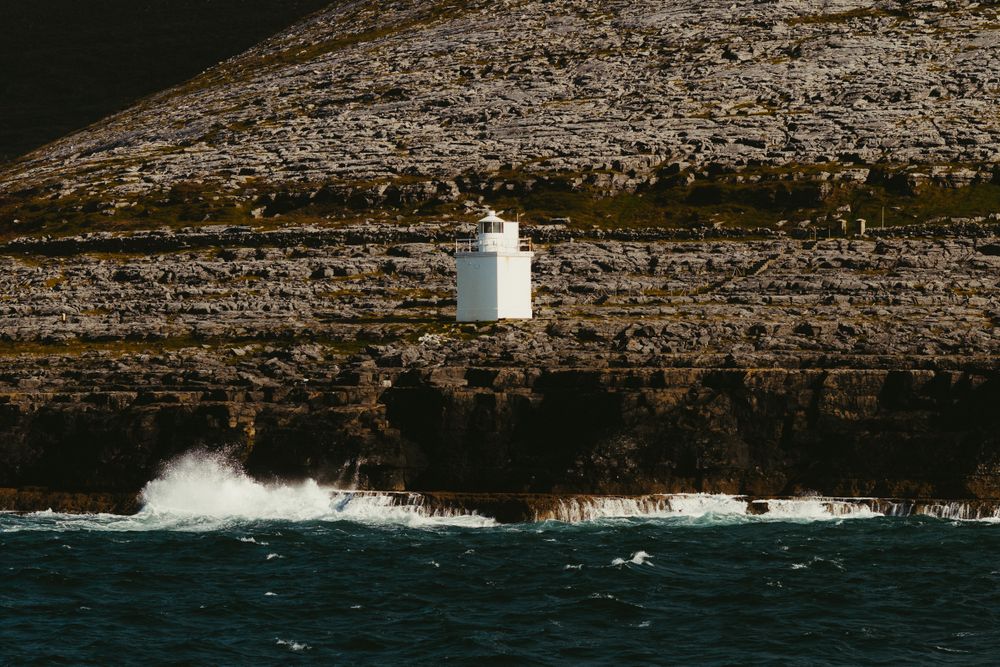
The working lighthouse at Cromwell Point on Valentia Island, built on the footprint of a seventeenth century fort and open for guided…