Things to do
11-
Hazrat Sultan Mosque
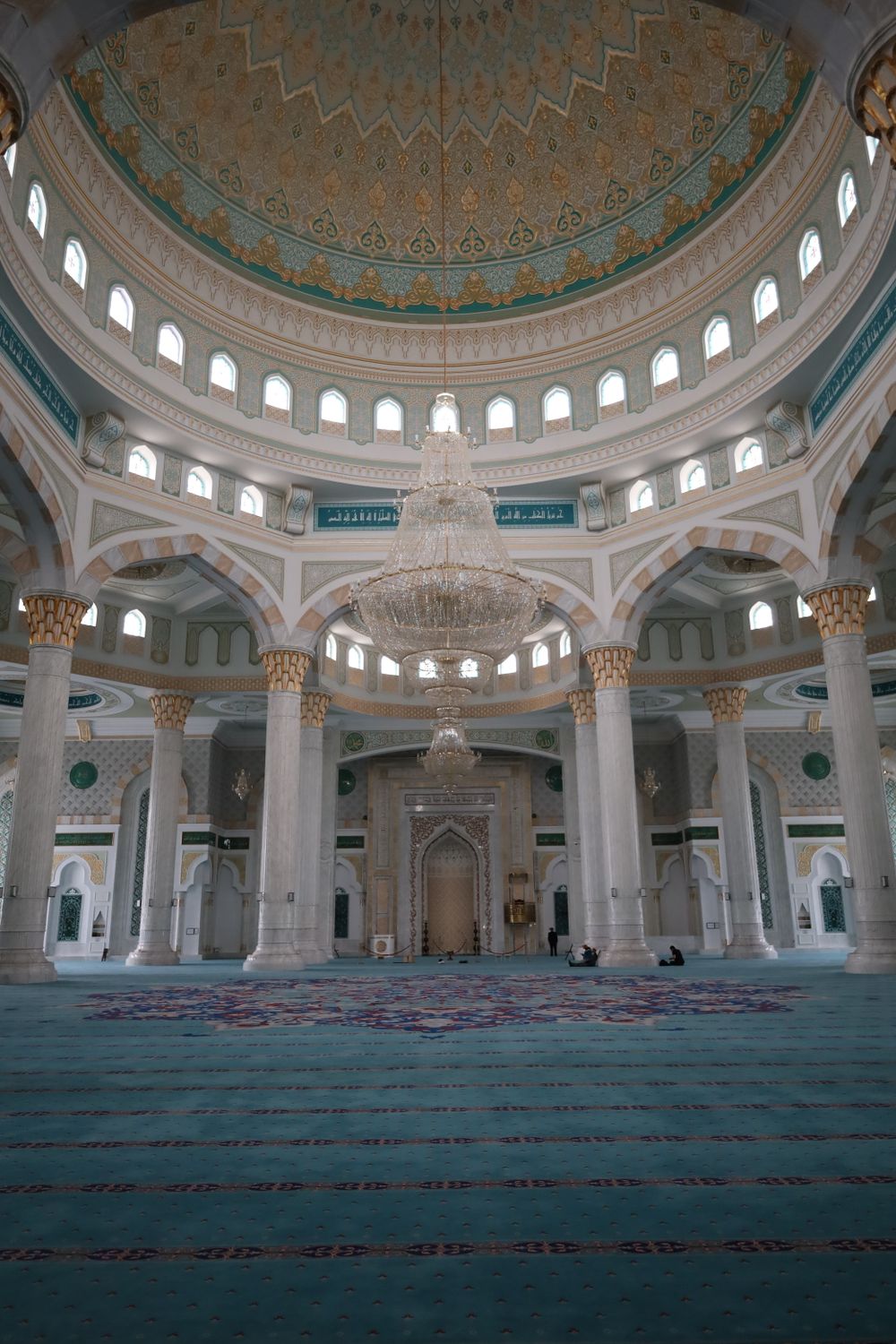
White marble and Kazakh ornament cover this mosque beside Independence Square, almost directly across from the Palace of Peace and Reconciliation and a short walk from the National Museum. It holds five thousand at prayer and up to ten thousand on holidays. Entry is free, non-Muslim visitors are welcome outside the five daily prayers, robes and headscarves are lent at the entrance, and shoes come off before the carpet.
-
Khan Shatyr
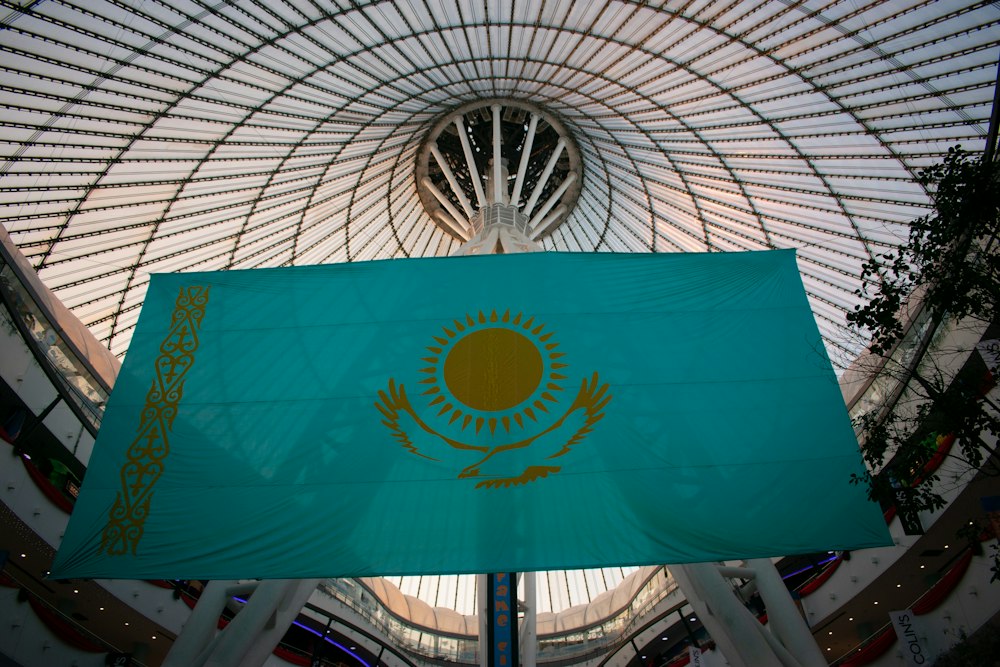
A transparent tent designed by Norman Foster stands at the far end of Nurzhol Boulevard from Ak Orda and is heated through the winter. Under it are shops, a park, a monorail looping the upper level and a warm indoor beach. It opens daily from ten in the morning to ten at night, and until eleven on Fridays and Saturdays.
-
Nur-Astana Mosque
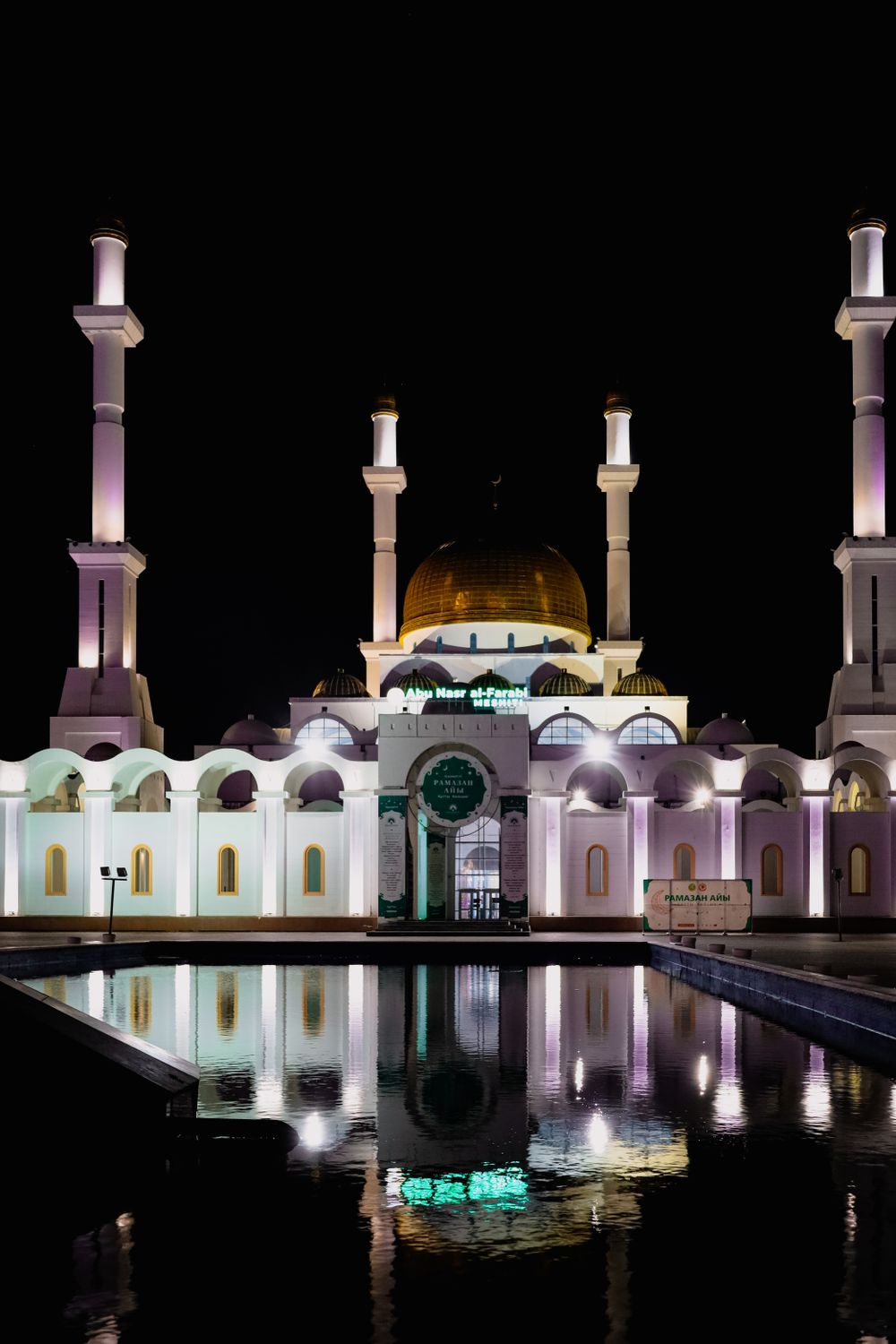
Since 2021 this mosque has officially carried the name of the philosopher Abu Nasr al-Farabi, though many maps and English listings still call it Nur-Astana. It has white walls under a golden dome and four minarets of 63 metres, on Kabanbay Batyr Avenue on the Left Bank. Entry is free outside prayer times, and shoes come off at the door.
-
ALZHIR Museum-Memorial Complex
In the village of Akmol, about forty kilometres from Astana, a museum and memorial stand on the grounds of a Soviet camp for women prisoners. It is a memorial to the women and children repressed under Stalin who were held there. Reaching it takes a dedicated transfer of under an hour each way, so the visit fills half a day, and the complex is closed on Mondays.
-
Astana Grand Mosque
On Mangilik El Avenue near the old Expo site, this mosque is newer than Hazrat Sultan and separate from it. Entry is free, and a deck in one of its minarets is open to visitors for a fee. Non-Muslim visitors are welcome outside prayer times, when the building closes to sightseeing for the prayers themselves.
-
Astana Opera
Opera and ballet are staged in the Main Hall, which seats about 1,250, and chamber concerts in a second hall of 250 seats. Guided excursions of the theatre run daily except Monday, at eleven and at three, for groups of five or more; otherwise the interior is seen by booking a performance. The box office is open until seven in the evening on weekdays and until six at weekends.
-
Atyrau Bridge
Shaped like the skeleton of a fish, this footbridge over the Esil is known locally as the fish bridge. The embankment runs along the river on both sides of the bridge, with cafes, kiosks and catamaran and boat rides on the water, and in the evening residents come out to walk its paths.
-
Bayterek
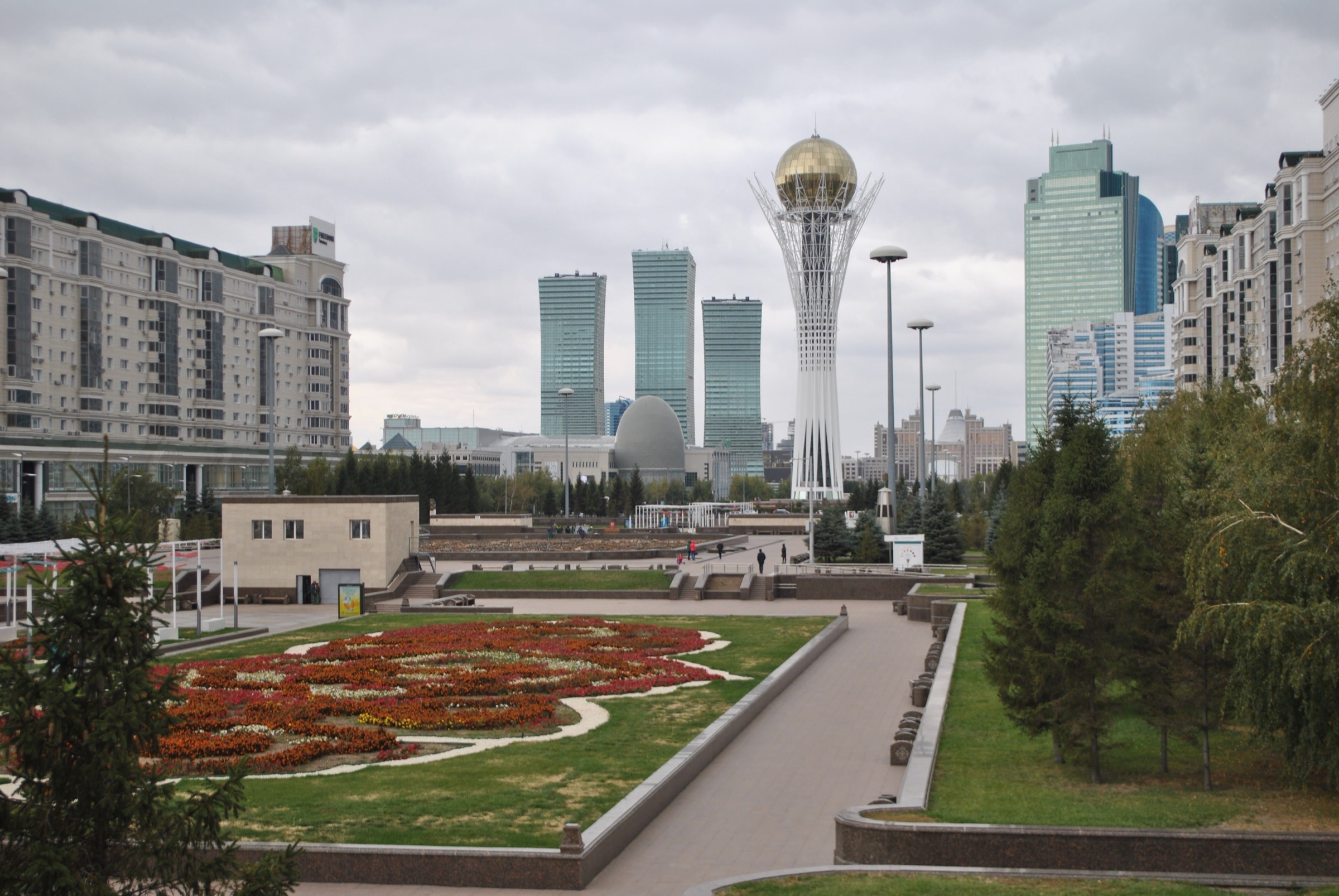
On Nurzhol Boulevard, between Ak Orda and Khan Shatyr, white branching girders hold up a gold-mirrored sphere 22 metres across. Two lifts inside the shaft rise to an observation deck 97 metres above the ground, with the plan of the Left Bank laid out below. At the top a gilded print of Nursultan Nazarbayev's right hand draws a queue waiting to place a hand in it and make a wish.
-
National Museum of Kazakhstan
Housed in blue glass and white marble on Independence Square, the national museum spreads its collection over eleven halls. The Gold Hall holds gold from the tombs of the ancient steppe nomads, and on a short visit the archaeology, gold and ethnography halls come first. It opens from ten to six, Tuesday to Sunday, and also closes on the last Tuesday of each month.
-
Nurzhol Boulevard
About two kilometres of pedestrian gardens run through the Left Bank, from the Ak Orda presidential palace at one end to Khan Shatyr at the other, with Bayterek between them. Ak Orda is seen only from the public areas, and the walk along the whole boulevard takes an hour or a little more with stops.
-
Palace of Peace and Reconciliation
Across Independence Square from Hazrat Sultan Mosque, a glass and steel pyramid by Norman Foster rises 62 metres. The glass at its apex is printed with doves in flight, and the interior is seen on a guided tour. Tours run every day of the week, in Kazakh, Russian and English.


