Things to do
11-
Karakol Ski Base
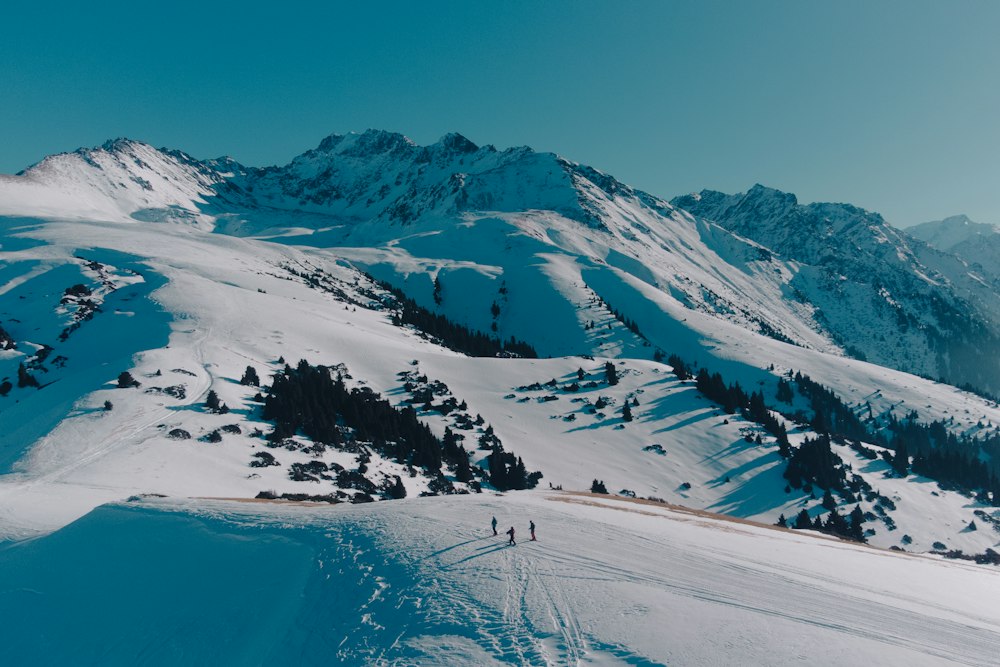
Two published seasons disagree by three months. International listings give early November to late April; the base's own page gives December to March. Book flights against the shorter one.
View more → -
Ak-Suu
Village at the mouth of the Arashan valley, formerly Teploklyuchenka, where the road up to the hot springs begins and where rental car contracts stop being valid. It has thermal baths of its own at the bottom of the valley, busy with Kyrgyz families at weekends, which makes it the low-effort alternative to the long track above.
-
Ala-Kul
Glacial lake at 3,532 metres, reached over a pass at 3,860 metres that stands higher than the water it overlooks. The standard route runs three to four days from the Karakol valley over the pass and down to the hot springs at Altyn Arashan. Snow shuts the pass from autumn until early summer, so the walkable window is mid-July to early September and the huts on the route close outside it.
-
Altyn Arashan
Do not picture an open pool under the peaks: wooden sheds house the sulphurous water. Tour sites put the valley at 2,600 metres; the record says 2,350 to 2,435.
-
Dungan Mosque
Look up rather than round. The cornice and the eaves are the building's argument, and the storehouse years under the Soviets are the reason any of it survived to be looked at.
-
Holy Trinity Cathedral
The congregation worshipped in a yurt while this went up, which is the most Kyrgyz fact about a Russian cathedral anywhere. It spent most of the last century as a school, a sports venue and a coal store.
-
Jeti-Ögüz Rocks
The Broken Heart is a separate formation from the Seven Bulls and stands apart from them, so a stop at one is not a stop at both. Sandstone is the whole attraction; the gorge behind it is forest and waterfalls.
-
Karakol Animal Market
Livestock changes hands here, not souvenirs, and the published window is seven until eleven on a Sunday. Nothing is staged for a visitor and nothing waits: arrive late and the trade is already breaking up.
-
Przhevalsky Memorial Museum
Museum and grave of the explorer Nikolai Przhevalsky, who died at Karakol in 1888 of typhoid contracted from a river hundreds of kilometres west, while preparing an expedition toward Tibet. The town carried his name twice. His own books describe the peoples of the region in terms modern scholarship treats as contemptuous, and he wrote that an explorer should approach Asia with a carbine in one hand and a whip in the other.
-
Pushkin Park
The town park, reopened in August 2026 after a rebuild that also returned the historical museum beside it to use. Poplars, painted railings and Soviet-era statuary, including the first secretary of the Kyrgyz Communist Party, who was shot in the purges of 1938.
-
Yrdyk
The Dungan village outside Karakol, settled in the spring of 1878 by eleven hundred and thirty Hui Muslims who crossed the Tian Shan from Gansu in winter after the Dungan revolt failed. Their descendants still cook the northwest Chinese food the town is known for, and hosted dinners in family houses are arranged through the tourism office in town.