 Submit a photo
Naadam 2027 runs from Sunday 11 to Tuesday 13 July in Ulaanbaatar. The dates are the same every year, so only the weekdays shift. The morning of 11 July matters most: the banner procession leaves Sukhbaatar Square, the National Sports Stadium hosts the ceremony that opens the games, and the first wrestling rounds follow straight after.
The shape is fixed and the exact times are not. On the morning of 11 July the Nine White Banners are carried out of Sukhbaatar Square and on to the stadium, and the opening ceremony follows in the late morning with song, dance, acrobatics on horseback and mounted archery before the wrestling begins. The final rounds and closing events fall on 13 July. The 2027 programme, with the order of each day, comes out nearer the festival.
Only the stadium is ticketed: the opening ceremony, the wrestling and the closing. The official sale runs online at enaadam.mn, opens about a week before the festival and is usually gone within an hour; the site is in Mongolian and works best with a Mongolian bank card. The horse races and the archery are free, with no tickets and no stands.
Yes, and a tour is needed only for a seat at the opening ceremony. From abroad, a package that includes one is the dependable way in, because tour companies buy up most seats the moment sales open. The race day works independently with a hired driver. Flights and hotels are best booked two to four months out, before the city fills for the holiday week.
On two grounds. The opening ceremony and the wrestling are in the National Sports Stadium in the south of the city, with archery and ankle-bone shooting in the fields beside it. The horse races are at Khui Doloon Khudag, on open steppe west of Ulaanbaatar, which means a drive rather than a walk.
Three days of games, 11 to 13 July, inside a public holiday that runs on to 15 July. Many museums, banks and restaurants close for the holiday, so the rest of the city is quiet that week. Roads near the stadium jam on the opening day, and walking there from Sukhbaatar Square is quicker than any car.
Long, fast and ridden by children. The races run cross-country over 15 to 30 kilometres, and the jockeys are between five and thirteen years old. Khui Doloon Khudag is open steppe with no stands, and watching is free. Leaving the city by six in the morning beats the traffic, and the drive back takes several hours.
Warm and bright by day, with typical highs of 20 to 27°C in Ulaanbaatar and strong sun at altitude. Neither the stadium stands nor the steppe at Khui Doloon Khudag has any shade, so a hat, sunscreen and water belong in the bag. A light rain shell and a warm layer cover the cool evenings and the dawn start for the races.
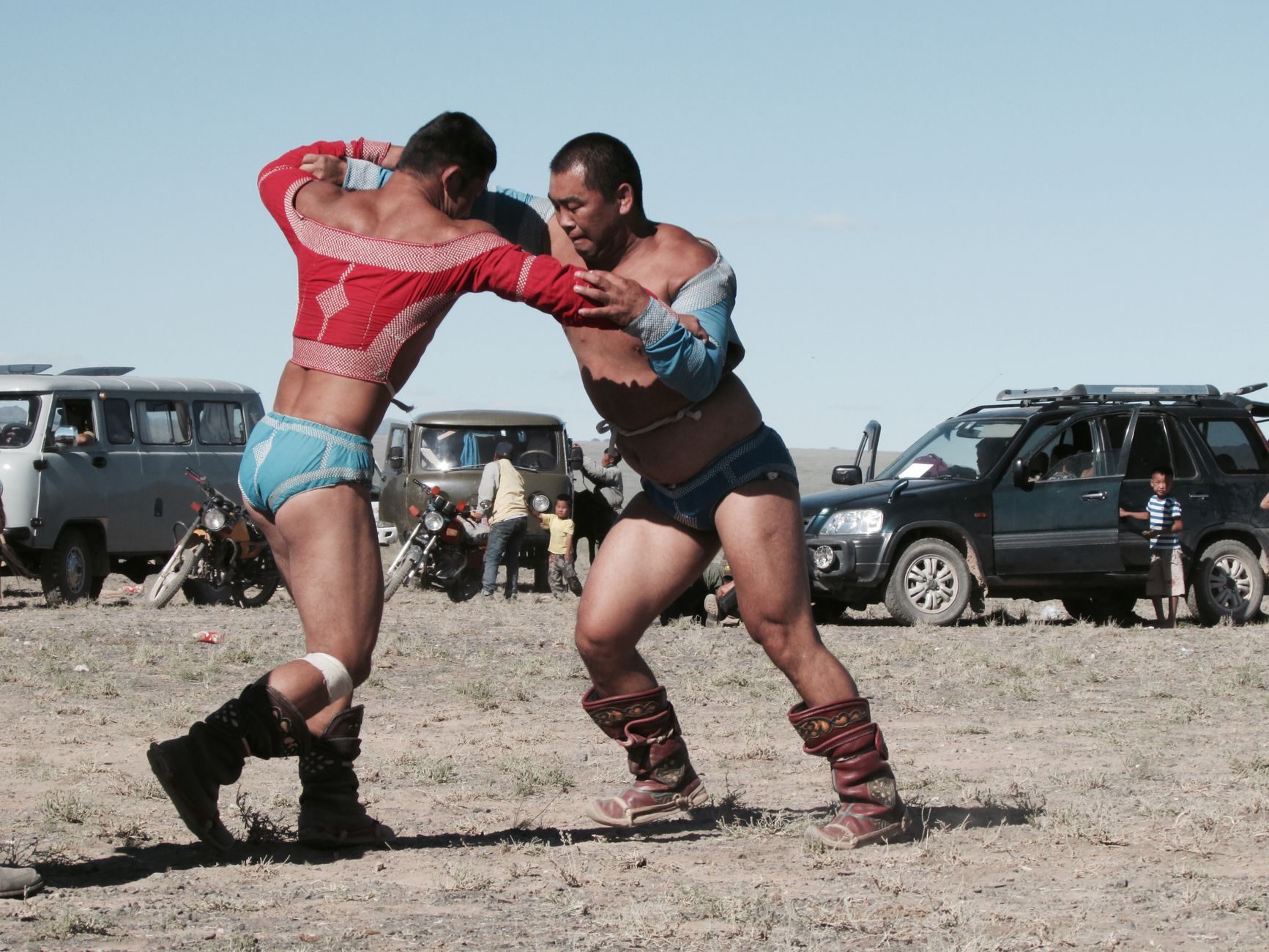
As a straight knockout with no clock. A wrestler loses the moment anything but a foot or a hand touches the ground, and a bout lasts as long as it takes. The draw typically holds 512 wrestlers over nine rounds, so the crowded field of pairs on 11 July narrows to a single champion by the end.
Yes. Naadams are held across Mongolia and in Inner Mongolia, in China, through July and August, and every aimag and soum, the provinces and districts, stages its own. These are smaller affairs than the national Naadam in Ulaanbaatar, which is the largest of them all.
Yes. In 2010 UNESCO inscribed Naadam on its Representative List of the Intangible Cultural Heritage of Humanity, the register for living traditions rather than sites. The first day of the festival is also Mongolia's National Day, which is why the capital stops for it.
It means games. Wrestling, racing on horseback and archery are the three it centres on, all skills of nomadic life. Midsummer games in Mongolia long predate the modern national holiday, which commemorates the revolution of 1921.
Naadam means games, and the festival is built on three of them: wrestling, horse racing and archery, the skills of nomadic life on the steppe. Towns across Mongolia hold their own in summer, and the national Naadam in Ulaanbaatar is the largest, on the holiday of 11 to 13 July.
The holiday marks the revolution of 1921, but the games are centuries older. The jockeys in the horse races are children, and the races run across open grassland for many kilometres.
11 to 13 Jul 2027
Plan around two things: the banner procession from Sukhbaatar Square to the stadium on the eleventh, and a morning at the horse races out west, where there are no stands and no tickets.
11 to 13 Jul 2027. Times are approximate and can change from year to year.
The procession sets off from Sukhbaatar Square toward the stadium. Follow it on foot.
Music, dance and riders in the stadium, then the first rounds of wrestling. Seated, ticketed.
Next to the stadium, free to watch.
The last wrestling and the closing events. The order is fixed only when the programme is published.
Wrestling is the heart of it. On the first day the grass is crowded with pairs grappling at once, and the field thins round by round until one bout is left.
The races are the part to leave the city for. There is no track and no grandstand, only grassland, a finish line and a temporary town of gers, horse trainers and frying pans around it.
At the stadium, the opening ceremony brings singers, dancers, horse acrobats and mounted archers, and the wrestling follows. It is one knockout draw with hundreds of entrants and no clock. Touching the ground with any part of the body other than the feet and hands ends it.
Archery and ankle-bone shooting run in the fields beside the stadium. At the race ground a camp of gers and food tents grows around the finish, and children ride the horses.
Try khuushuur, the fried meat pastry, and airag, fermented mare's milk, if it is offered. Bring a hat, sunscreen and water to both sites, and allow several hours to drive back from the races.
Stay central, within walking distance of Sukhbaatar Square and the stadium, and book months ahead: the city fills for Naadam week and the good rooms go first. There is no need to sleep at the race ground; a driver takes you out and back in a day.
Explore the rest of Ulaanbaatar
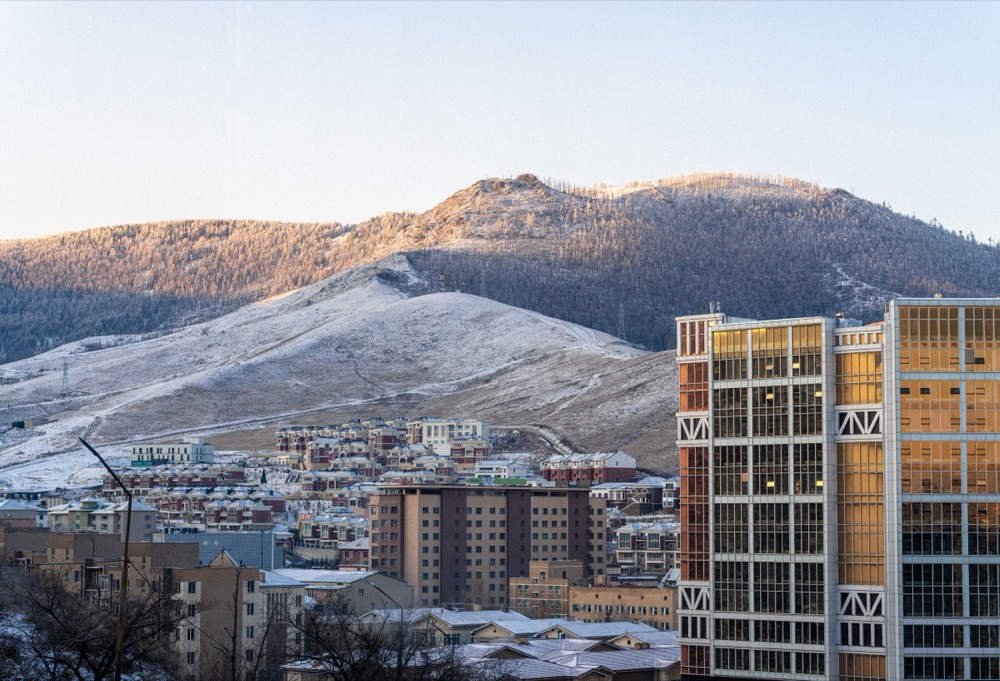
Mongolia's capital sits in a valley on the Tuul river, ringed by four sacred mountains, and holds roughly half the country's population in…
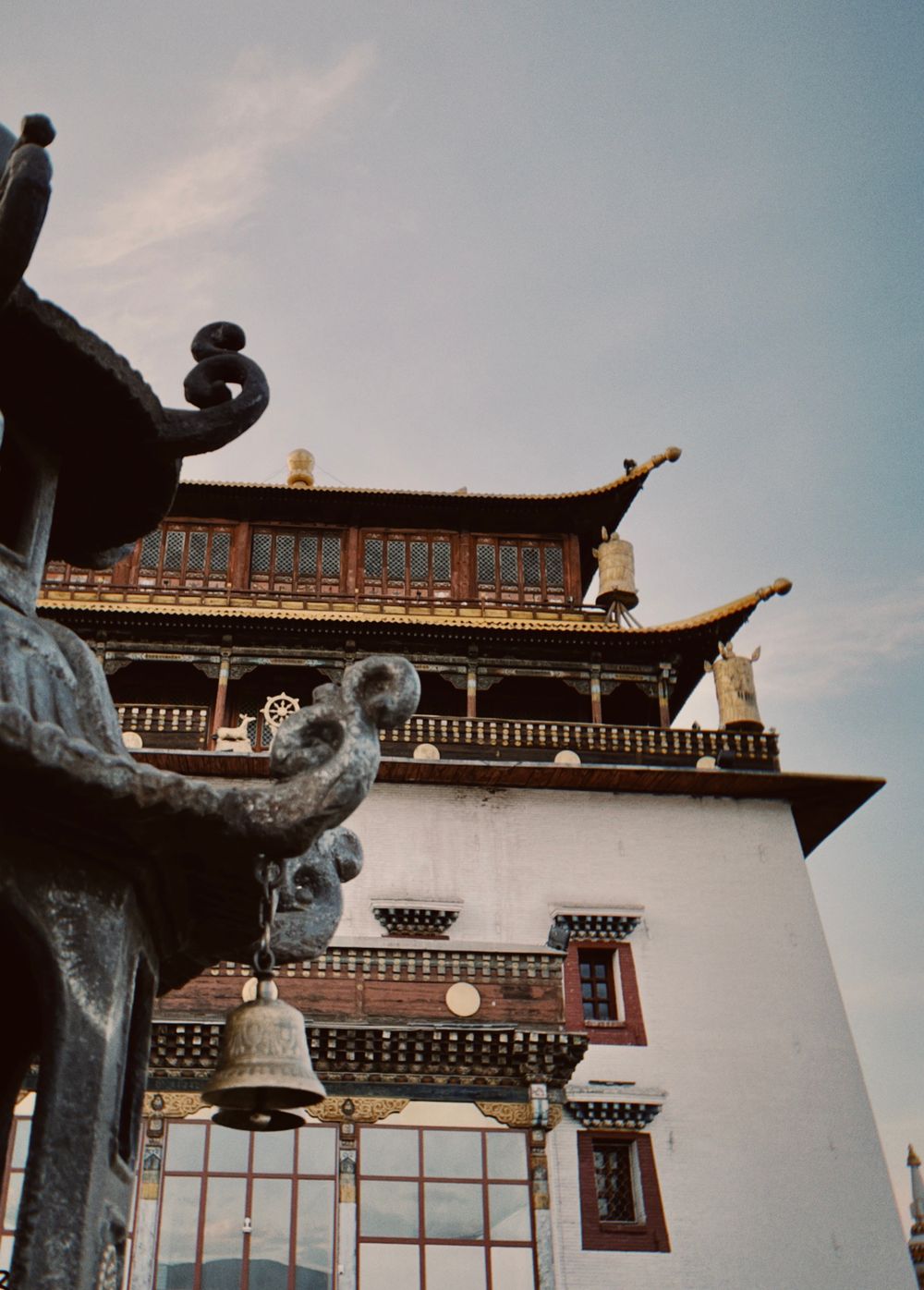
Gandan, in full Gandantegchinlen Monastery, is a Buddhist monastery in Ulaanbaatar, the capital of Mongolia, and its monks hold ceremonies…
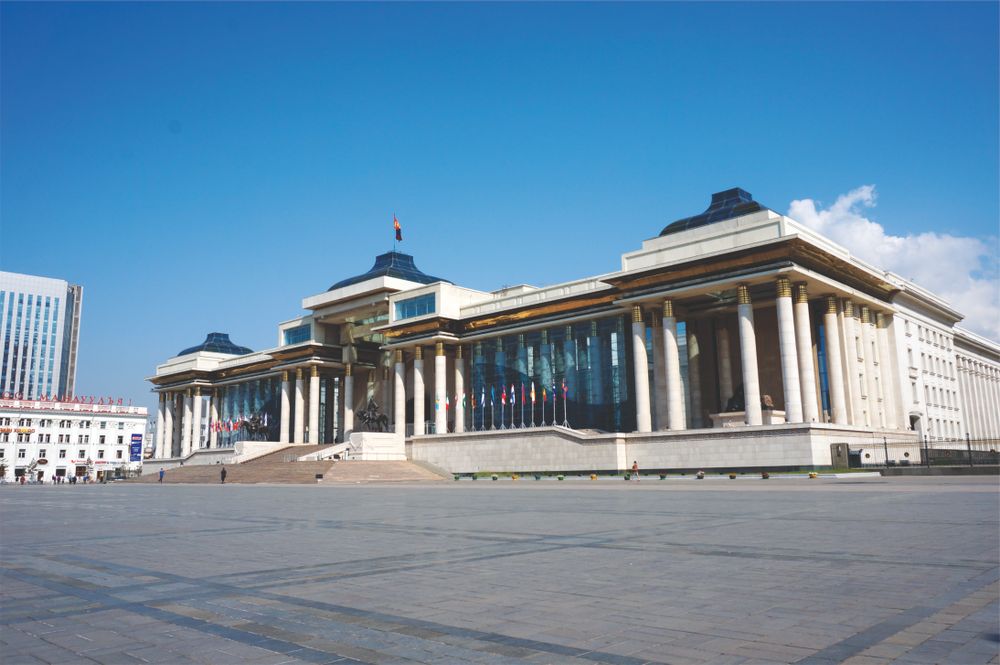
The civic centre of the capital is a wide paved rectangle with parliament along the north side, where a seated Genghis Khan presides from a…
Last updated