Things to do
9-
Al Alam Palace
Gold and blue flared columns front the Sultan's ceremonial palace in Old Muscat, closed to the public and photographed from the gates at the end of a formal avenue. Two Portuguese forts, Jalali and Mirani, sit on the headlands either side. Fifteen minutes covers it, which makes it an easy pairing with the national museum across the road.
-
Bimmah Sinkhole
A limestone collapse on the coast road south of the capital has filled with blue-green water fed from the sea, sitting inside a small park with a stair cut down to the edge. Swimming is allowed and small fish nibble at ankles. Weekend crowds arrive from Muscat, so an early visit makes the difference; shade is confined to the rim.
-
Daymaniyat Islands
Nine islands and a scatter of reefs lie about 18km off the Batinah coast, protected as a nature reserve and reached by dive or snorkel boat from Muscat marinas. Turtles nest through summer, whale sharks pass in season, and coral cover is strong close to shore. Landing is restricted between May and October, so boats work the water only; permits come through the operator.
-
Mutrah Corniche
A waterfront promenade curves for about 3km past the fish market, the harbour and a line of restored merchant houses with carved balconies. Dhows moor off the front and the Portuguese-era watchtowers on the ridge above catch the last light. Walking is pleasant only after sunset in summer; the fish market repays an early start for the auction.
-
Mutrah Souq
Behind the corniche, a covered lane of frankincense, silver khanjars, Kashmiri textiles and halwa runs back from the waterfront into the old quarter. Trading has gone on here for centuries and the roof keeps it cool through the afternoon. Stalls open late morning, close for a long midday break and fill again after dark, which is when the lanes are at their best.
-
National Museum of Oman
Across from the palace, fourteen galleries trace Omani maritime trade, frankincense, silverwork and the Land of Frankincense sites, with English labelling throughout and an immersive gallery on the dhow routes. It opened in 2016 and gives the clearest single introduction to the country's history. Closed on Friday until the afternoon; two hours is enough for most of it.
-
Royal Opera House
Opened in 2011 in Shati Al Qurum, the opera house stages a season of opera, ballet, Arabic music and orchestral concerts between September and May. Marble, Omani woodwork and a Venetian chandelier fill an auditorium seating just over a thousand. Daytime guided tours run when no rehearsal is booked, and evening dress codes are taken seriously.
-
Sultan Qaboos Grand Mosque
Oman's main congregational mosque opened in 2001 and admits non-Muslim visitors on weekday mornings only, outside prayer times. Its prayer hall holds a single hand-knotted Iranian carpet and a chandelier built for the room. Modest dress is enforced at the gate, including a headscarf for women, and the queue thins well before the last admission.
-
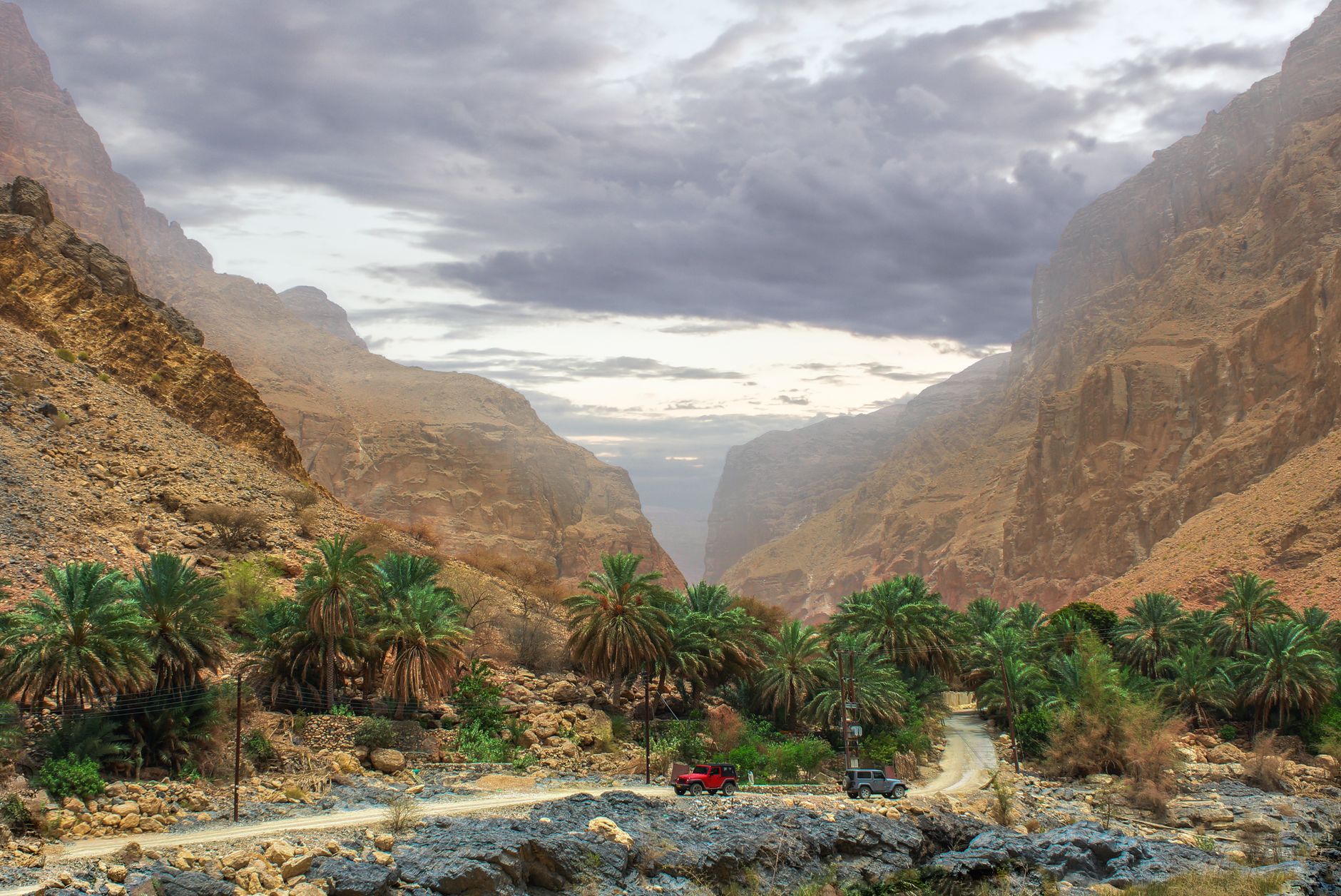
Wadi Shab
Reaching the pools means a short boat ferry across the inlet, then roughly forty minutes of walking over rock and through plantations before the swim begins. Three pools lead to a narrow slot where a waterfall drops into a cave chamber. Dry bags matter, the last squeeze is tight, and the wadi closes to swimming after heavy rain.