Ninety seconds on Warsaw Old Town
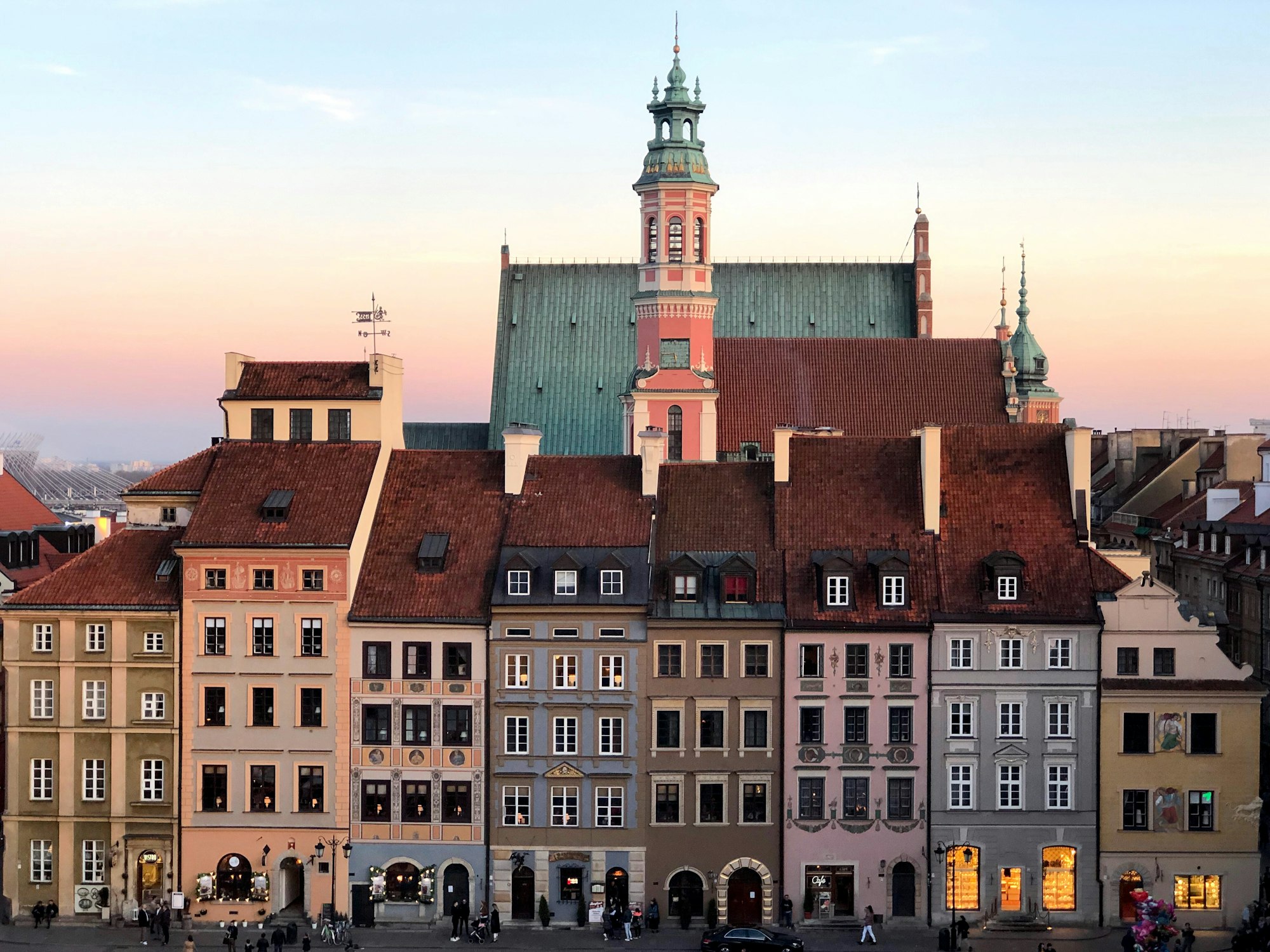
Worth reaching early, when you have the Market Square almost to yourself and can see the painted facades without a crowd in front of them. After dark the square is lit and the restaurant tables come out.
Almost everything you see here was rebuilt after the Second World War. Between 1948 and 1953 the Market Square was reconstructed from Canaletto's 18th-century paintings, archival photographs and surveys, and the builders chose the square's 17th-century look over the one it had just before the war.
Look closely at the facades. Carved and painted details were sifted out of the rubble and set back in the places they came from, so old fragments sit among the new plaster and gilding.
The mermaid with a sword at the centre of the square is the Syrenka, the city's emblem. The statue on the square is a modern copy, and the original is now inside the Museum of Warsaw.
The Barbican, a semicircular brick bastion, was rebuilt after the war from 17th-century etchings. Its bricks came from demolished Gothic buildings in Nysa and Wrocław: look low on the walls for the older bricks, with newer ones laid higher up.
Starting your visit at the Museum of Warsaw, in several houses on the Dekert side of the Market Square, you can watch its film on the city's destruction and rebuilding first. A thorough visit to its five floors of themed rooms takes one and a half to two hours. The fifth-floor viewpoint over the Old Town and New Town roofs needs its own ticket.
Back outside, walk a slow circuit of the square and look up at the painted facades, then sit at a café terrace if you want to stay longer.
Then walk to the Barbican, through its gate and along the defensive walls, which are free all year. On the way back, wander the side streets off the square, such as Krzywe Koło.
You can see the square and the walls on your own. For the story of the rebuilding, the Museum of Warsaw has an audio guide in Polish and English. If you add the Royal Castle on Castle Square, its Royal Route ticket includes a free audioguide.
Expect the square to be busier in the middle of the day than its photographs suggest, and plan the lanes for early or late. If you add the Royal Castle on Castle Square, its tickets run in 20-minute slots, so arrive about five minutes early. Wear comfortable shoes, because seating is limited on the castle's upper floor.
Explore the rest of Warsaw
Two days covers the essentials of the Polish capital: the Old Town, the Warsaw Uprising Museum and Łazienki Park. A third day lets the city…
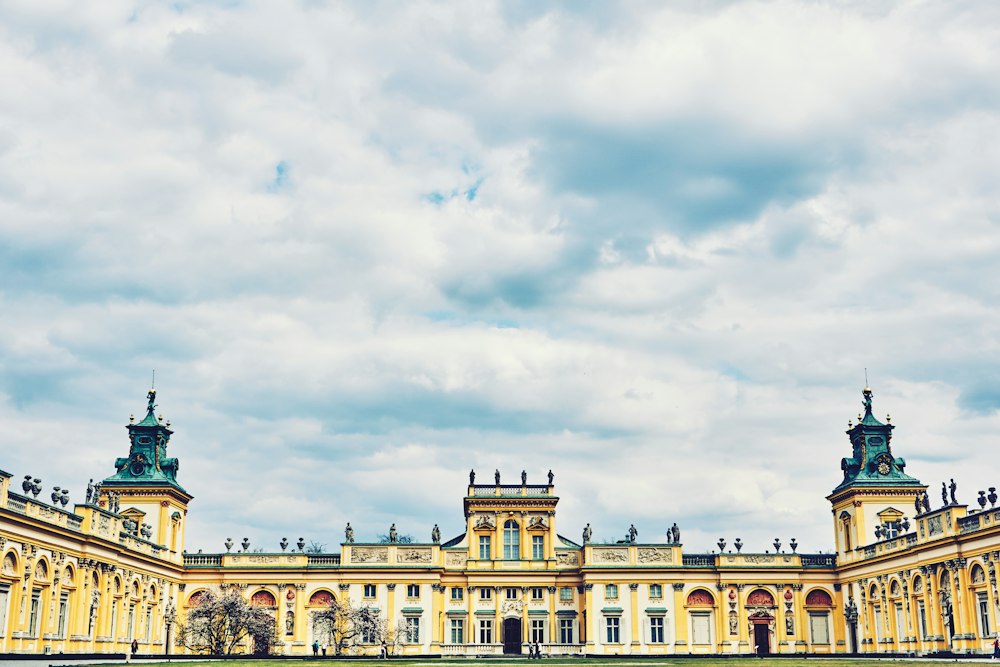
Baroque royal residence built as King Jan III Sobieski's summer house from 1677, at the end of Warsaw's Royal Route. Its painted ceilings…
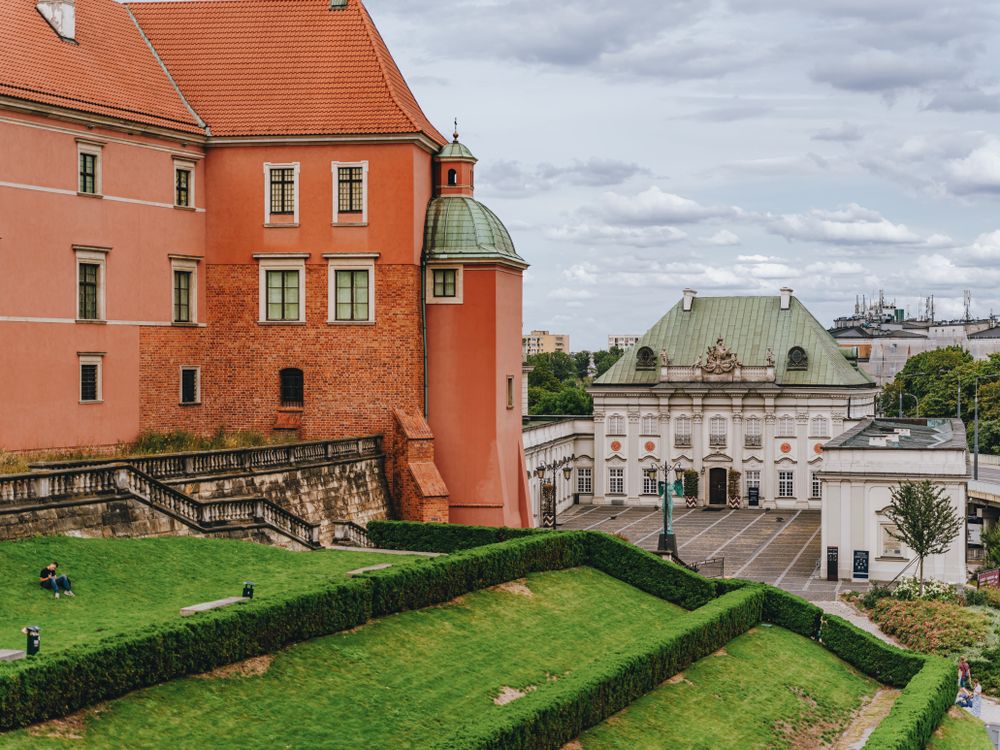
German engineers drilled the walls and blew the castle up in 1944. Staff had hidden furnishings, panelling and even door frames beforehand,…