In 1978 a taxi drove up from Sibiu, nearly four hundred kilometres across the Carpathians, and killed a three year old outside her parents' house in Săpânța. Her grave cross carries a painting of it. The car, the fence, a child in a red headscarf. The verse beneath the painting is written in her own voice, and it curses the car.
Fire take you, taxi. In all the Romanian land there was nowhere for you to stop but beside our house, to hit me. That is close to what the Romanian says; the translations in circulation sharpen it to may you burn in hell. No name is painted on the panel. The last line carries the only other thing recorded: died at three years old, 1978.
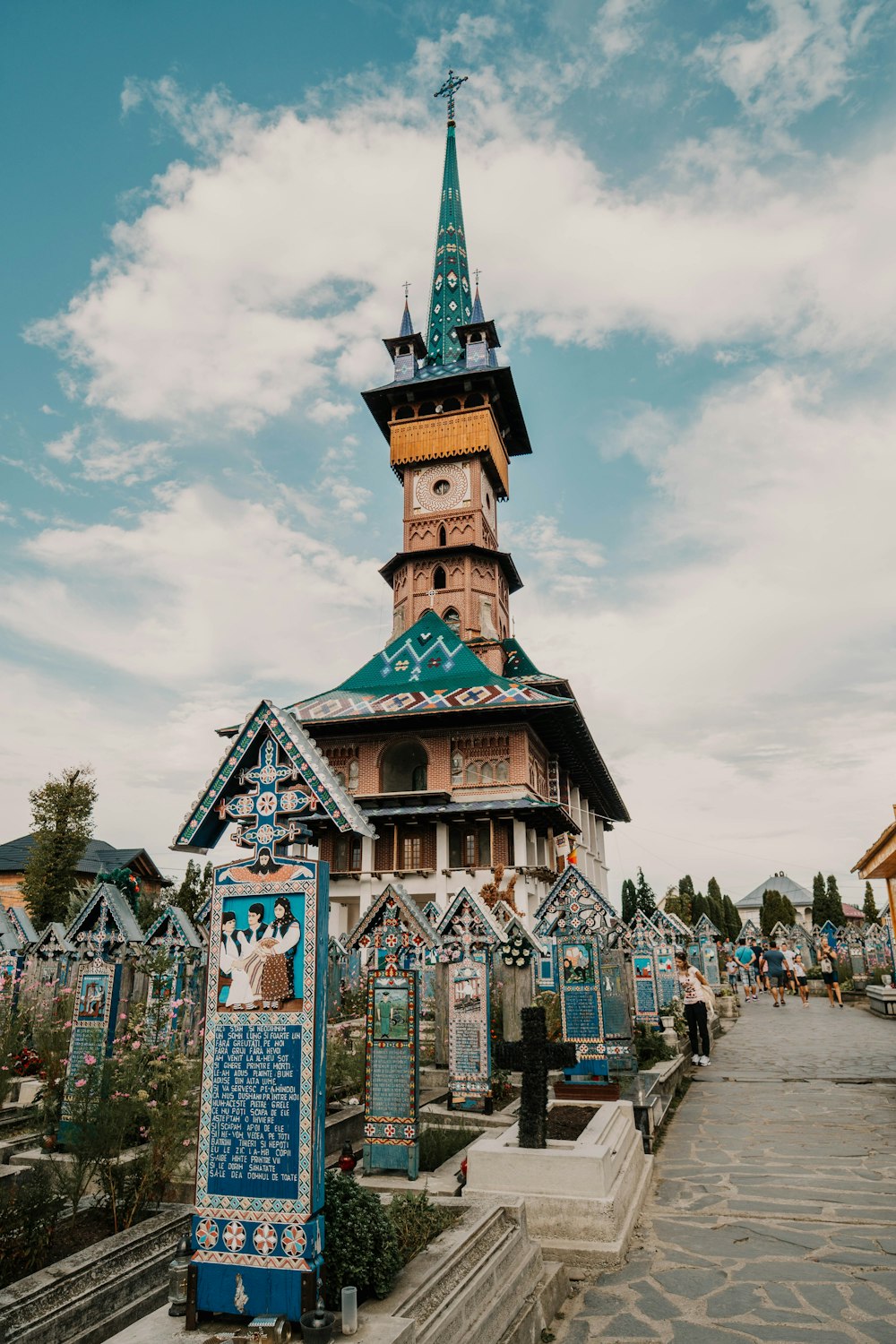
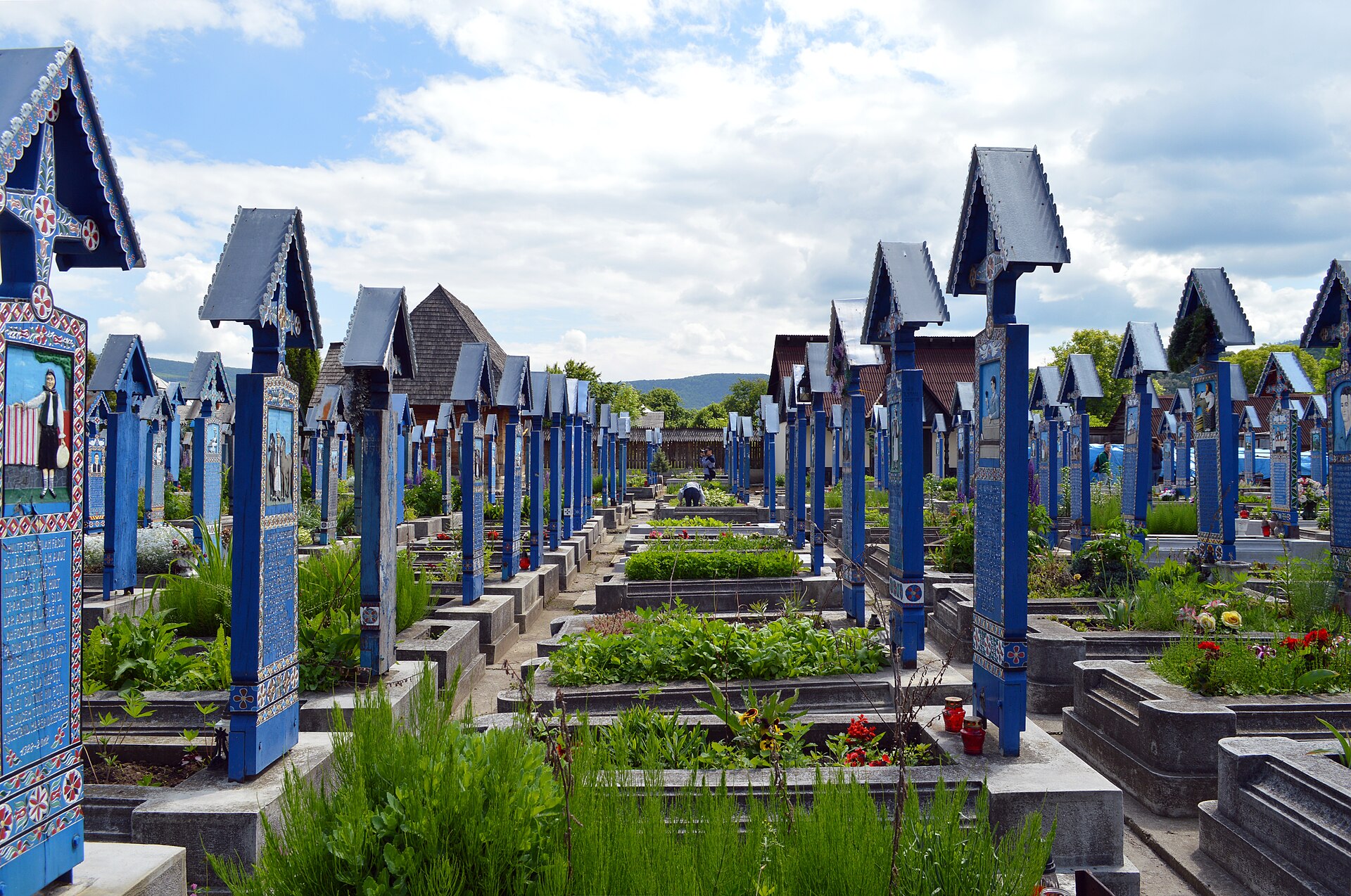
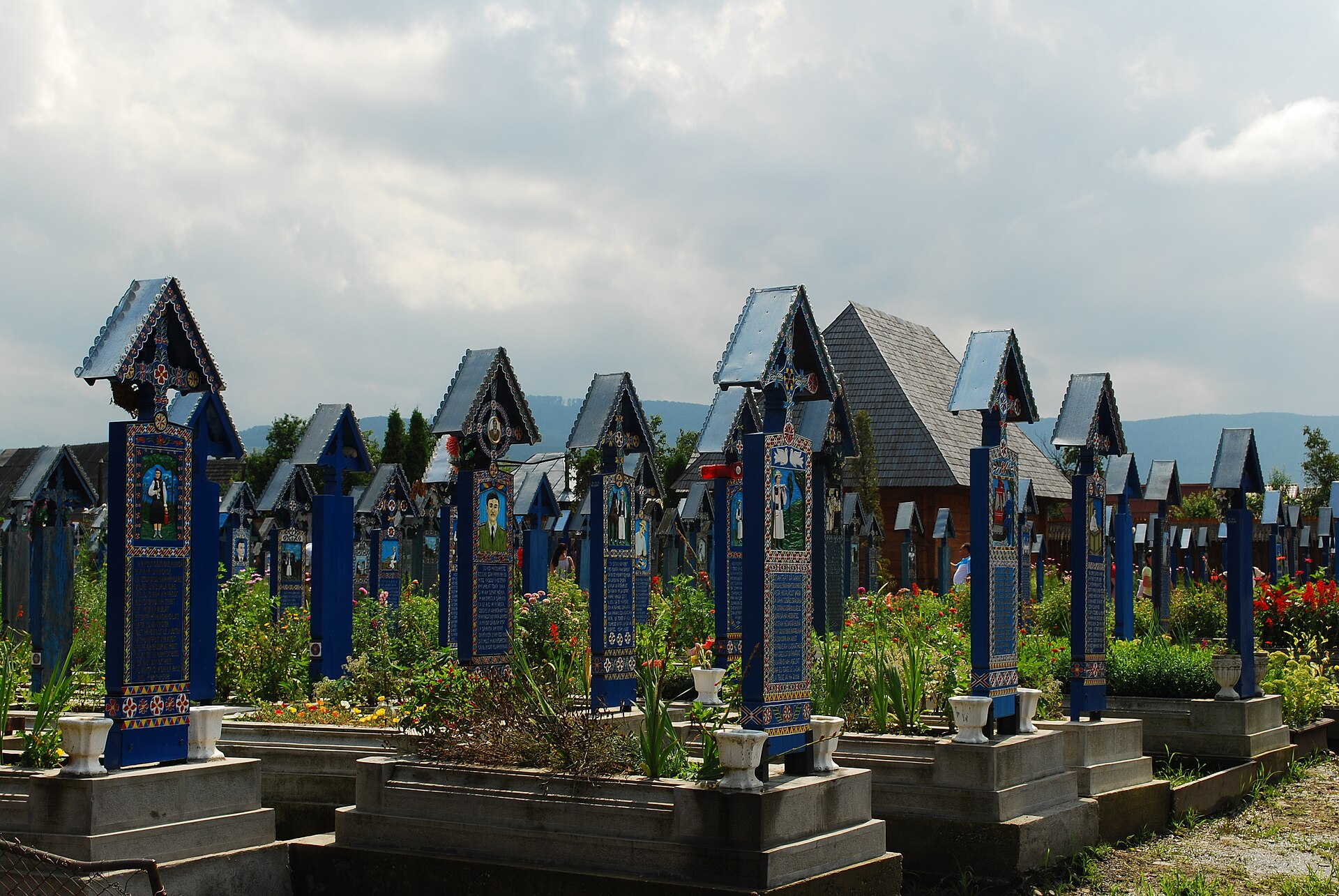
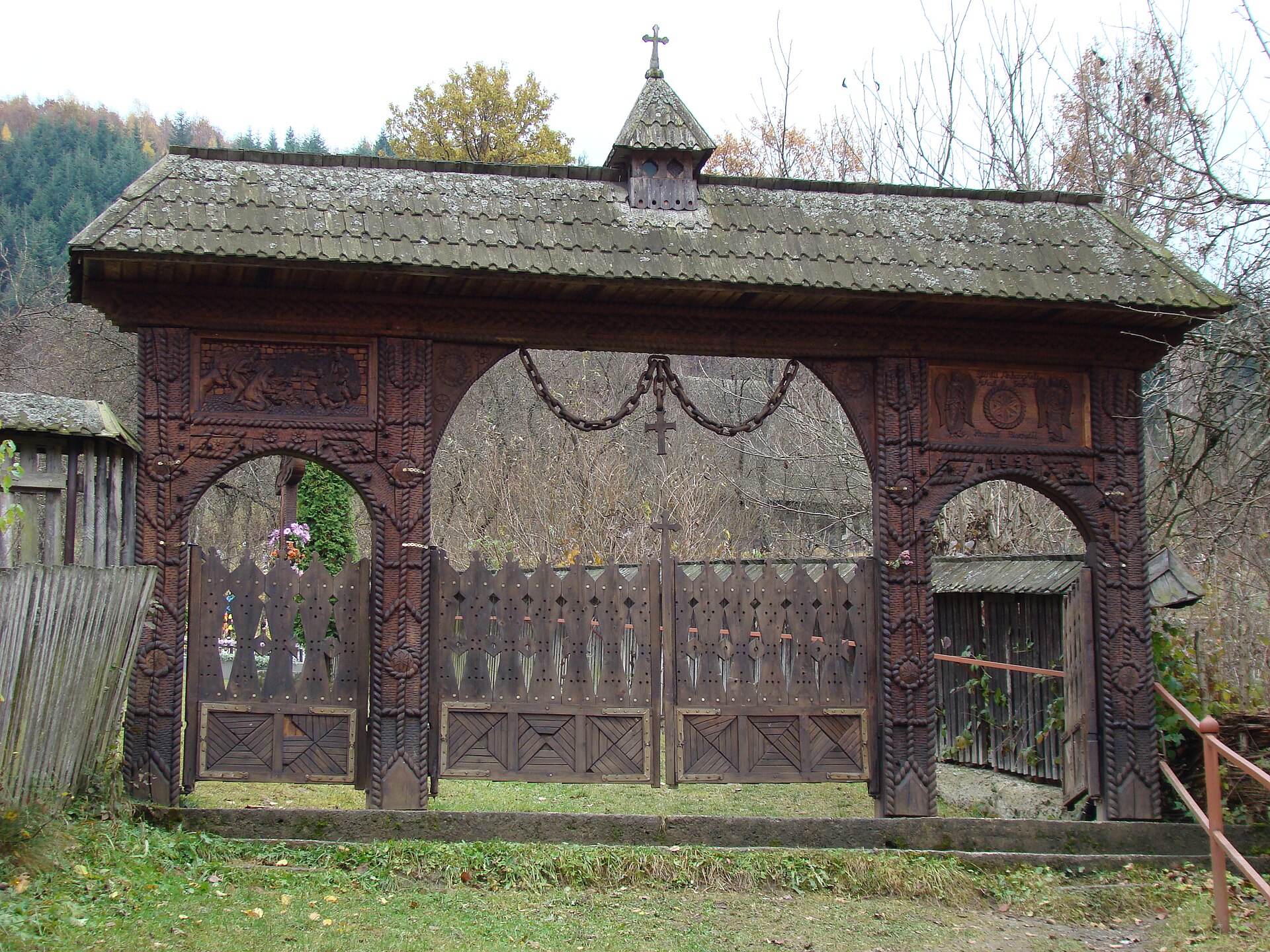
More than eight hundred and fifty crosses stand behind the church, and they are all made the same way. Above each verse sits a panel showing the work the person did, or the thing that killed them: a woman at a table, a shepherd, a soldier, a car coming through a fence. The wood is oak, carved in relief and painted over a hard blue that the village now sells as its own.
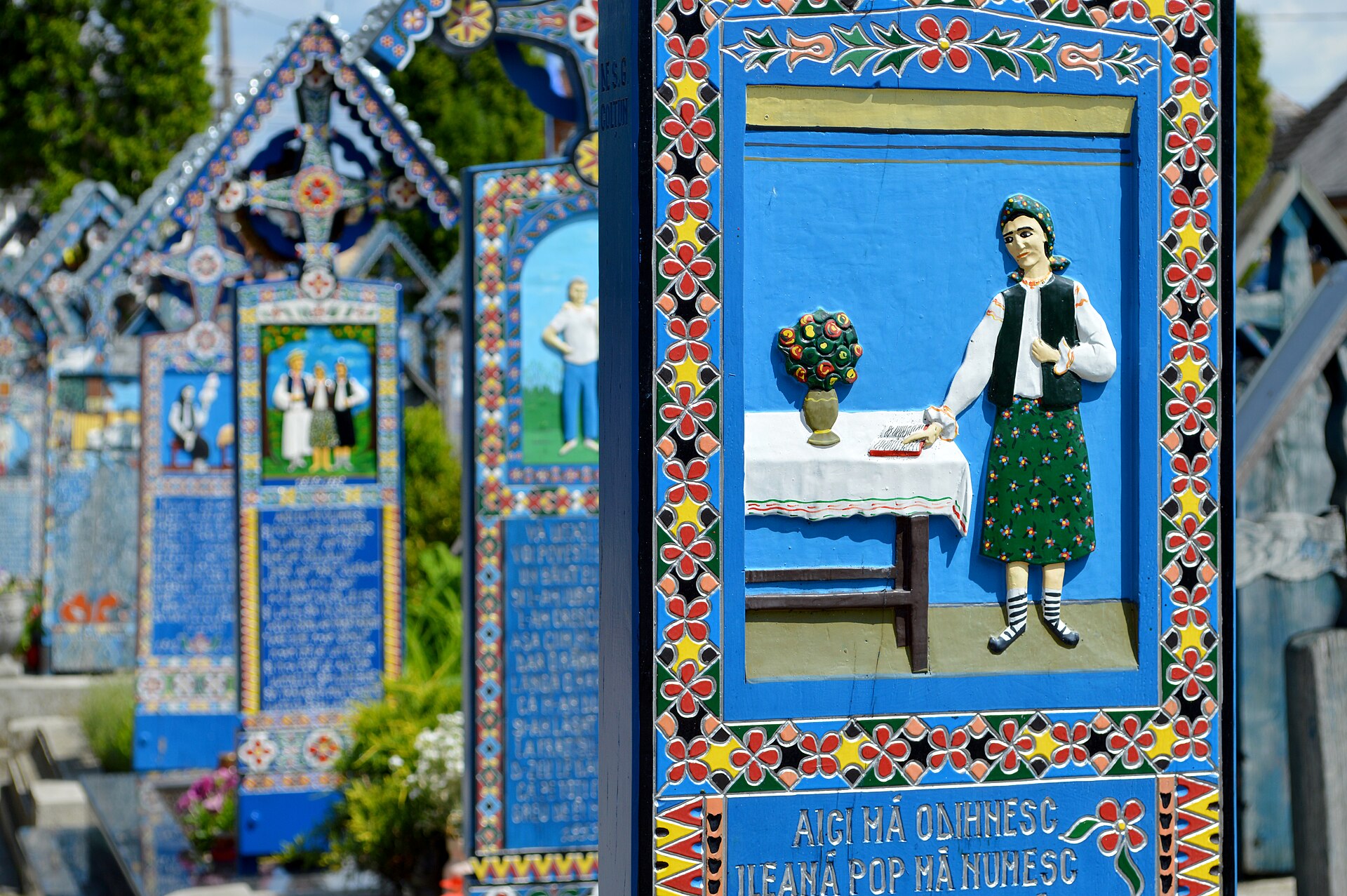
The verse runs underneath in the Maramureș dialect, spelled the way the village speaks rather than the way a dictionary would. Many crosses are painted on both faces. The life goes on one and the ending on the other.
Stan Ioan Pătraș cut the first of them in 1935. The local priest, Grigore Rițiu, is credited with the idea: widen the upright, and there is room to write on it. Pătraș worked from what the village said about its own dead. He made about seven hundred before he died in 1977.
Cimitirul Vesel is usually rendered as the merry cemetery. Some of it earns that. One cross asks passers-by not to wake the mother-in-law lying under it, on the grounds that if she came home she would only start again. The same rows hold the child killed by the taxi, a woman who died in a fire, and men who did not come back from the war.
Nothing on the crosses is translated. There is a sign in English at the gate and no more than that. So most visitors walk a graveyard of bright objects they cannot read, photograph the paintings, and leave inside half an hour. A phone camera translating in place turns that into two hours. It also struggles, because the verses are in dialect and spelled by ear, which is the argument for a local guide.
Entry is a few lei in cash, and photography is charged separately, with more again for video. Published opening hours disagree with one another, so go early. The coaches concentrate through the middle of the day in July and August, and the morning light is better on the paint. There is no shelter in the yard.
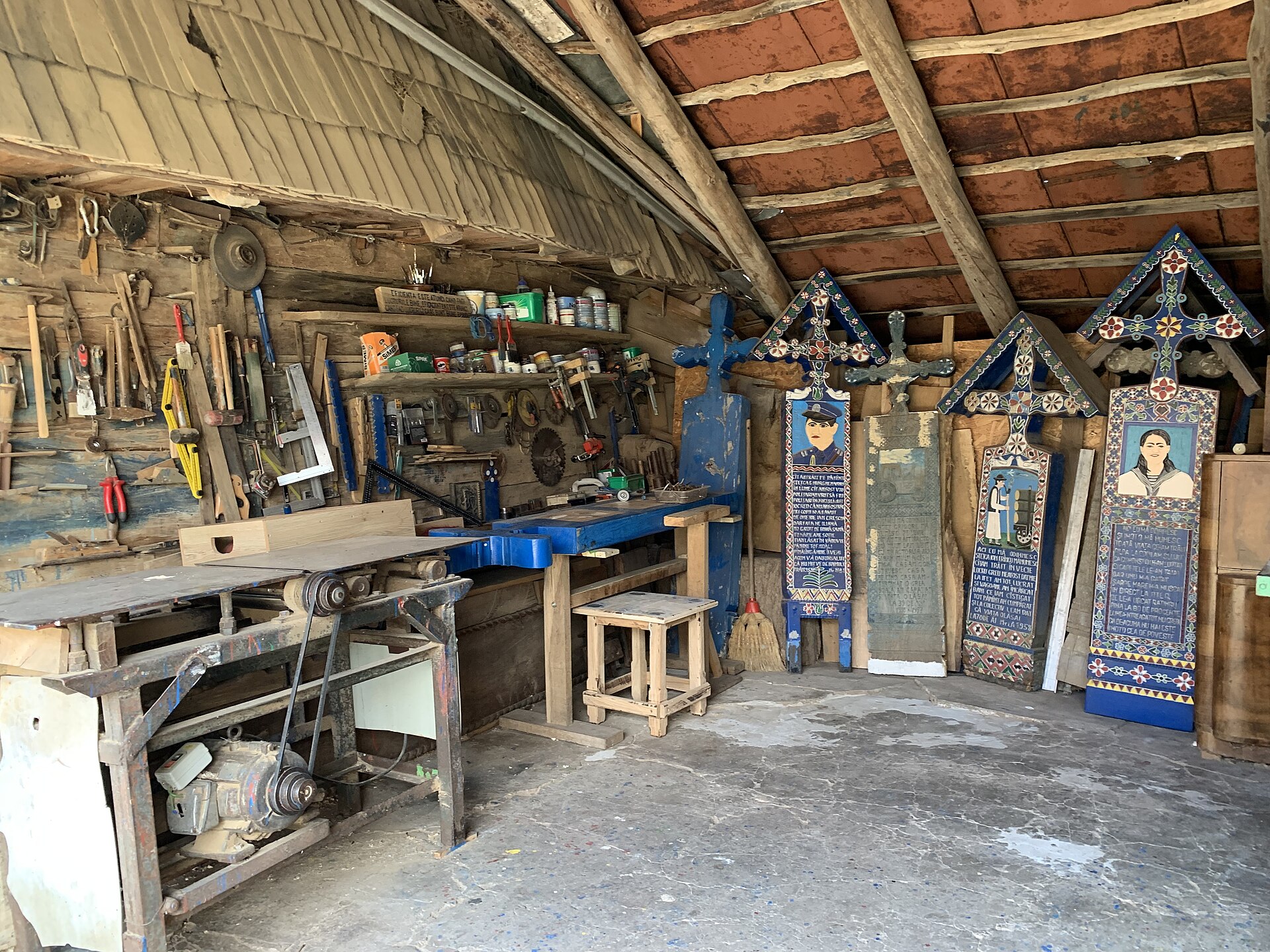
Pătraș left his house to his apprentice, Dumitru Pop Tincu. Pop Tincu carved here from 1977 until his death in December 2022, at 67, and was named a Living Human Treasure the year before. The house is now the memorial museum, and the workshop in the yard behind it is the room the crosses have always come out of. It is worth the second ticket: the tools, the drying timber and the half-painted boards explain the churchyard.
Oak for a cross is cut and left to season about six years before anyone works it. The master carving them now puts the rest at nine crosses in three or four weeks. Every one is made to order, a single household at a time.
The oak is cut six years before anyone puts a chisel to it.
The craft has been fought over as well, which is not the version the coach tours carry. In 2008 Pop Tincu registered the Săpânța cross with the Romanian state office for inventions and trademarks. Other pupils of Pătraș took him to court, won, and went on making crosses of their own. One costs several hundred euros, and the carving season runs roughly March to November.
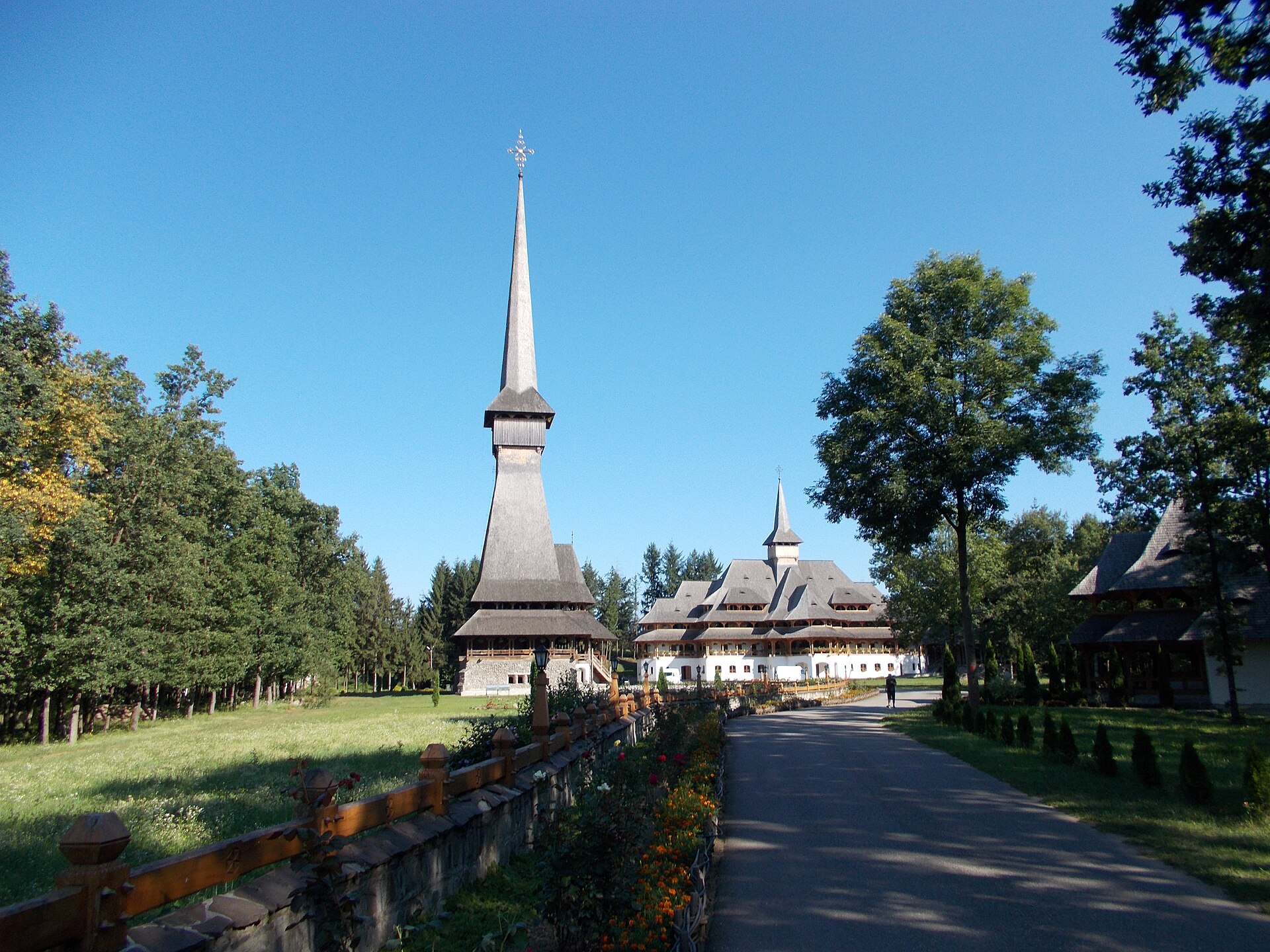
There is a second argument, over the gate. The parish collects the entrance money. Pop Tincu put his position on the record before he died: people come for the crosses, not for the churchyard they stand in. The priest who collects it, Grigore Luțai, also founded the monastery up the road. Its wooden church went up between 1998 and 2003 and is claimed, at 78 metres, as the tallest in the world.
The village weaves as well as it carves. Heavy woollen blankets are finished in a vâltoare, a wooden funnel set in the river that spins the cloth in the current for hours until it thickens. The felting proper is a different machine, the piuă, which beats the cloth with oak hammers for days. Sârbi, Vadu Izei and Budești still have them running.
Most of the wooden churches are locked. Eight of them in Maramureș are on the UNESCO list, out of roughly a hundred old ones still standing. The arrangement is a phone number posted on the door. Ring it and the keyholder comes down, sometimes within a quarter of an hour and sometimes not at all. Reckon on a euro or two a church, occasionally a photography fee, and at some of them no photography inside at all.
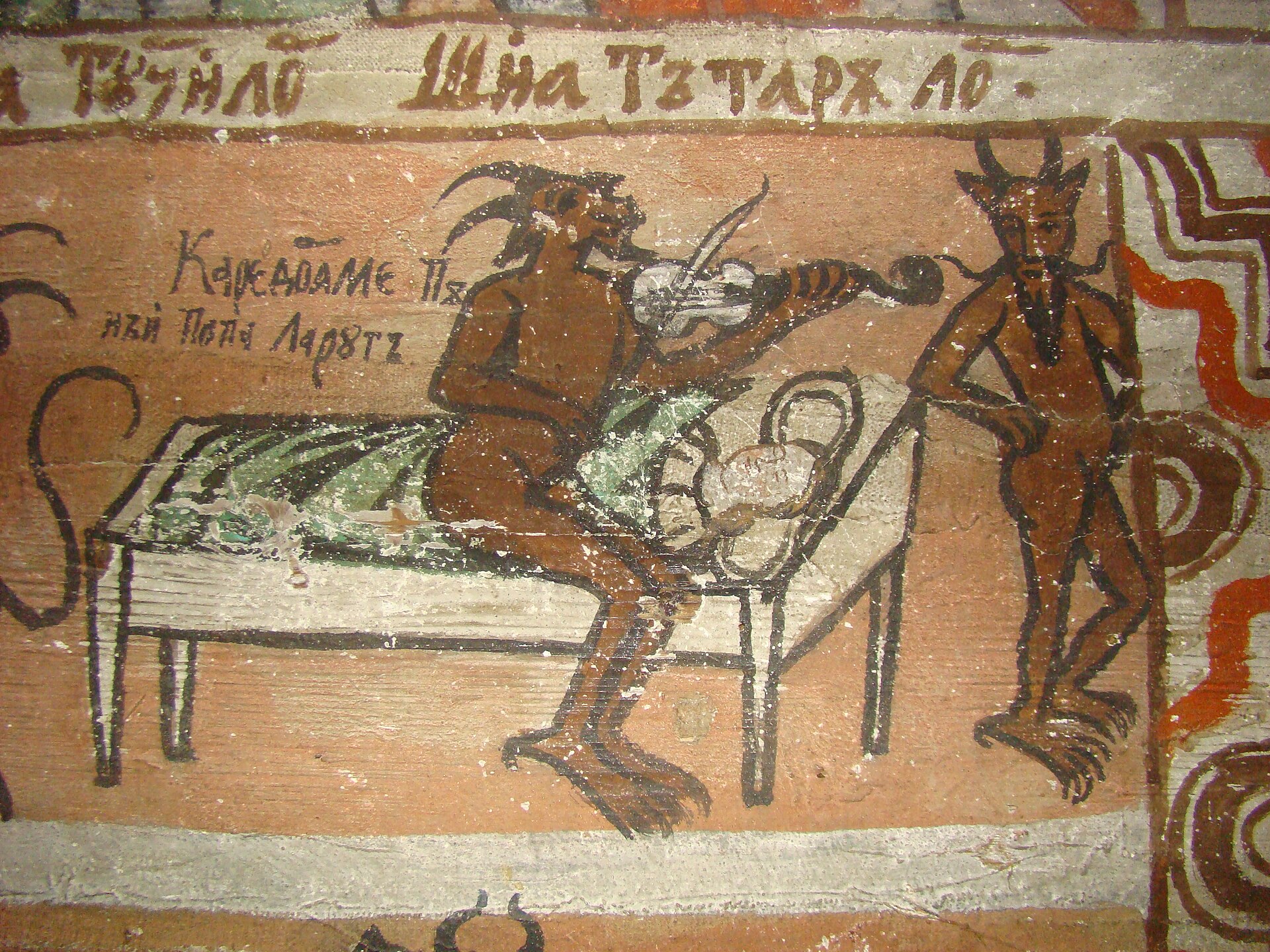
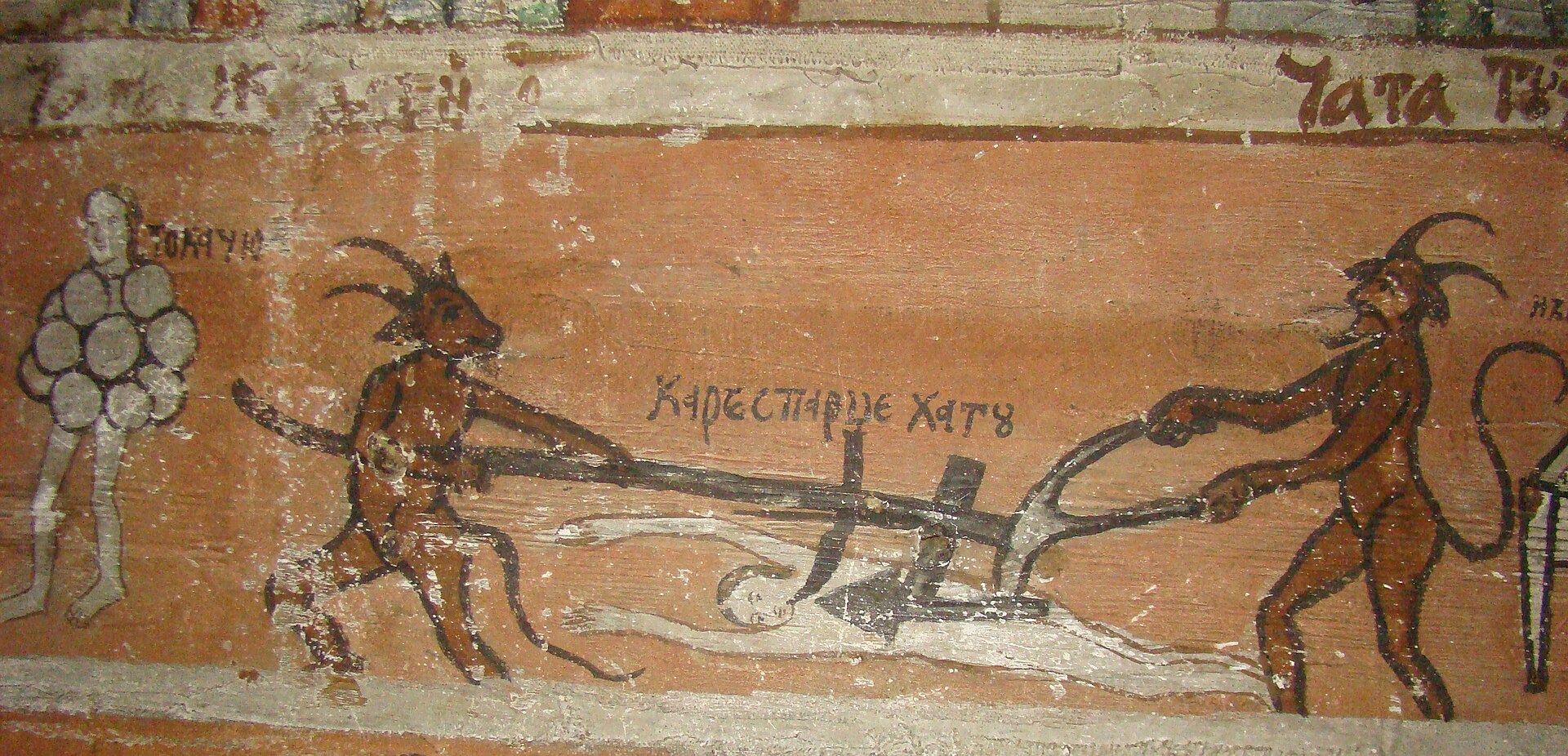
Poienile Izei, from the early seventeenth century, carries one of the most complete painted hells in the region. A devil saws at a fiddle over the man who slept through the sermon. Two more drive a plough across the man who moved a boundary stone. A liar hangs by the tongue. The instinct is the one working in the churchyard at Săpânța: name the fault and paint it where the village will stand and look at it.
Ieud, further up the Iza valley, is worth knowing for a correction. Its hill church was called the oldest in Romania for decades on a date of 1364. Dendrochronology during the 1997 restoration put the timber in the first decades of the seventeenth century, and the build is now given in the 1610s or 1620s.
Sighetu Marmației is the place to sleep, on the DN18 about eighteen kilometres east of Săpânța. The churches are scattered across two valleys on roads that are being rebuilt in stretches, so the gaps between villages take longer than the map suggests.
Pătraș cut his own cross before he died, and two of his apprentices painted it. The workshop is on its third generation now. The man carving there took the trade from his father-in-law, who took it from Pătraș, and he carries the founder's name. About forty crosses have come out of his hands so far, every one of them ordered by a family who wanted one.