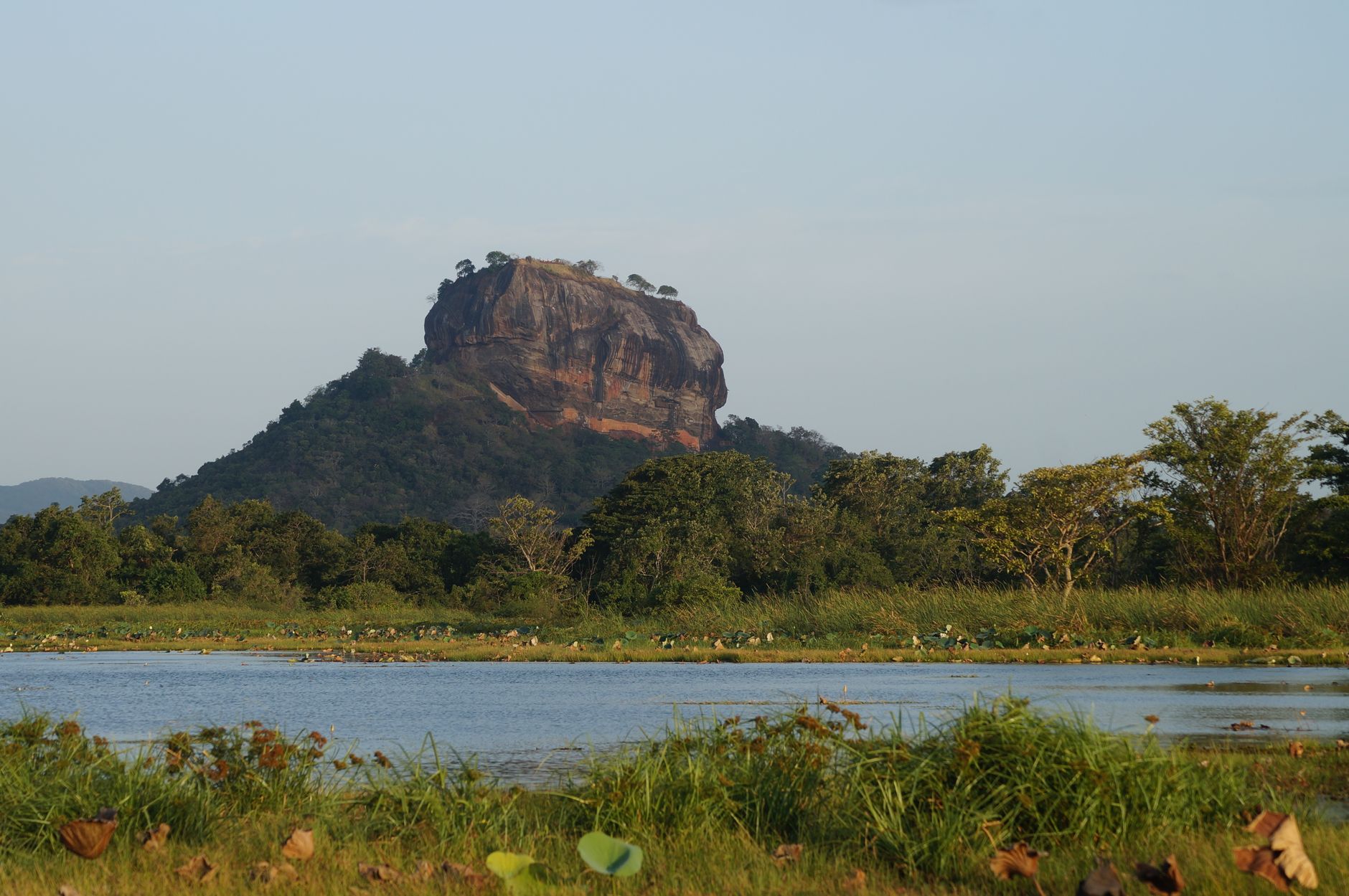
There is a wall at Sigiriya that visitors are forbidden to write on because it is already covered in writing. The Mirror Wall runs along the western face of the rock, a plaster parapet once polished to such a sheen that a king could reportedly see himself in it as he walked. Between roughly the sixth and fourteenth centuries, pilgrims who came up the same path scratched their reactions into that plaster: some 1,800 verses of them, mostly addressed to the painted women in the gallery above. The result is one of the earliest substantial bodies of written Sinhala anywhere, a primary source for how the language and its script actually changed over eight hundred years. The old vandalism is protected, and adding to the Mirror Wall today will get a visitor removed.
That inversion is the useful way into Sigiriya. Most itineraries book the rock as a viewpoint with stairs attached, and then run out of morning. What sits here is an archaeological complex covering about 1.6 hectares on the summit and a great deal more ground around the base, and the frescoes, the Mirror Wall and the water gardens tend to outlast the summit panorama in the memory of people who gave them time.
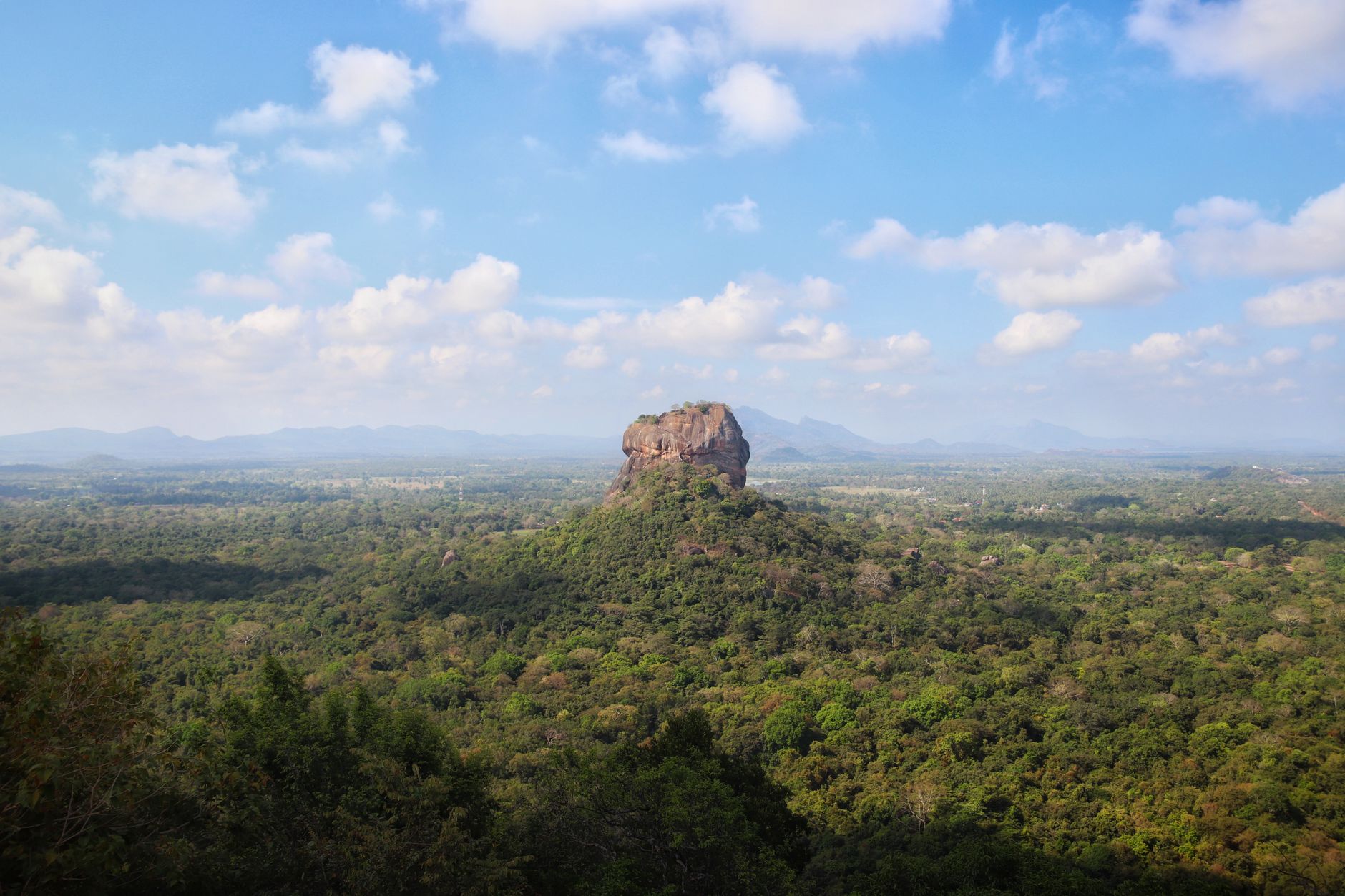
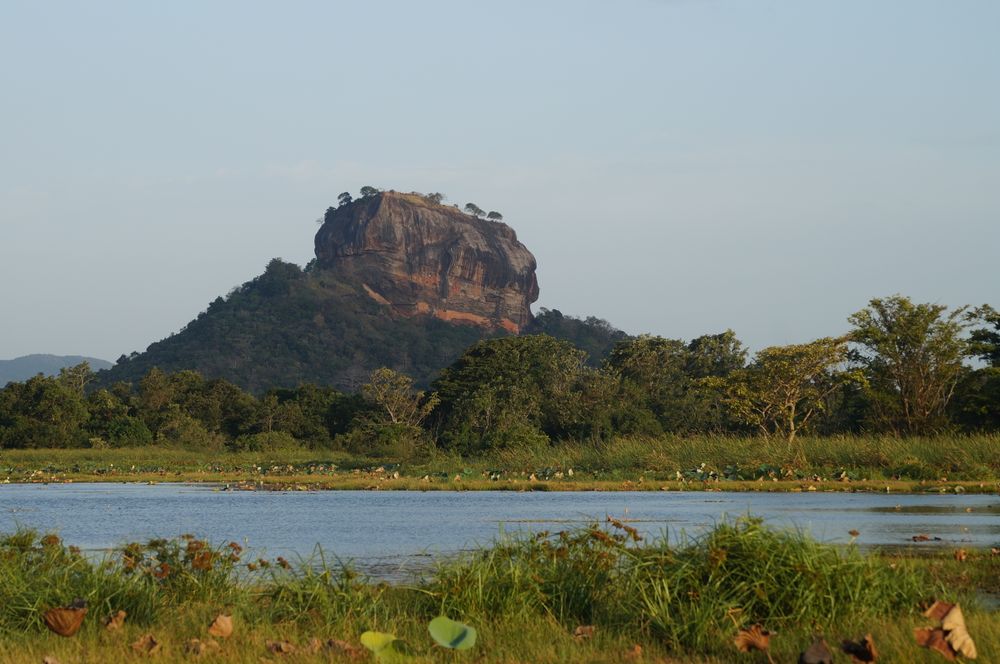
The scale gets inflated in the retelling. The inselberg stands roughly 180 metres above the surrounding plain, about 349 metres above sea level. That is tall enough to dominate everything for twenty kilometres in every direction and short enough that a moderately fit person climbs it in under an hour. The whole thing was once rendered in white plaster, so for a few decades in the fifth century it would have read across the jungle as a single blazing white tower.
The man responsible was Kasyapa I, who ruled from 477 to 495 and who took the throne by killing his father. King Dhatusena was walled up alive; the rightful heir, Kasyapa's half-brother Moggallana, escaped to India promising to come back with an army. Kasyapa did not wait to be found in Anuradhapura. He moved the capital roughly seventy kilometres southeast, to a rock in the middle of nowhere, and spent something like eighteen years fortifying it against a reckoning he knew was coming.
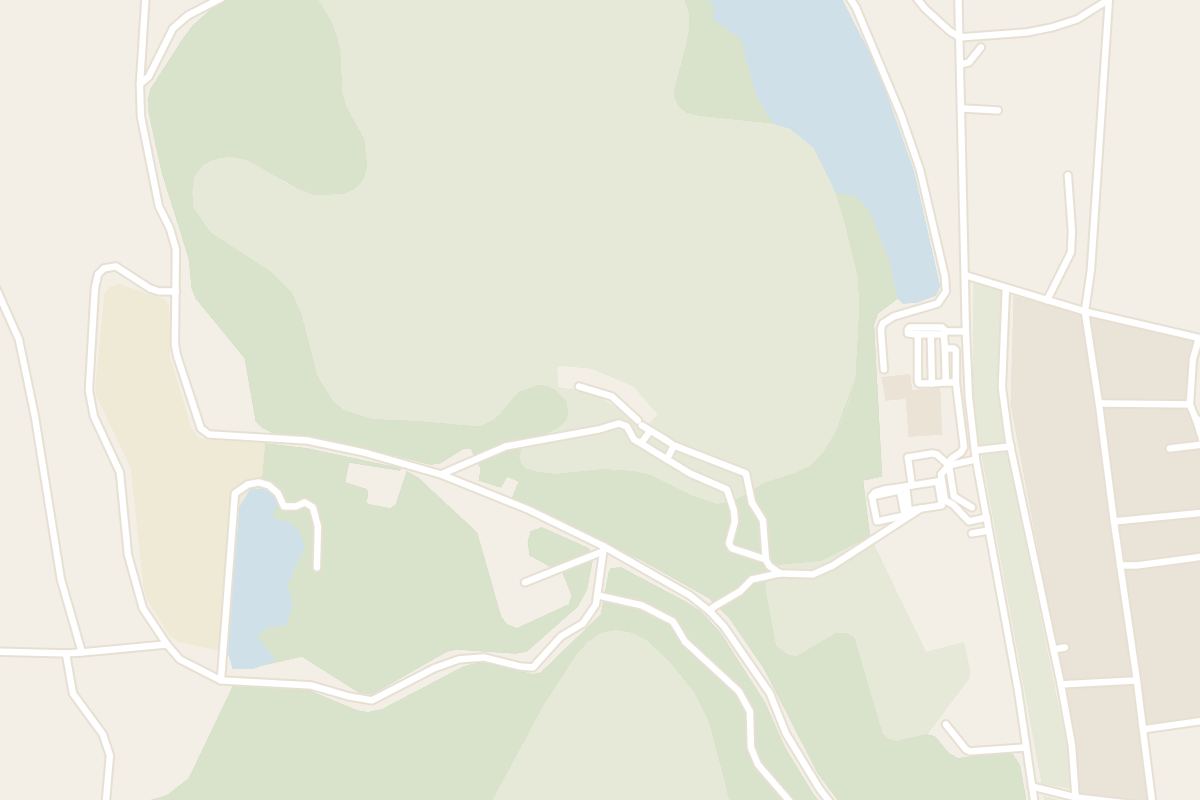
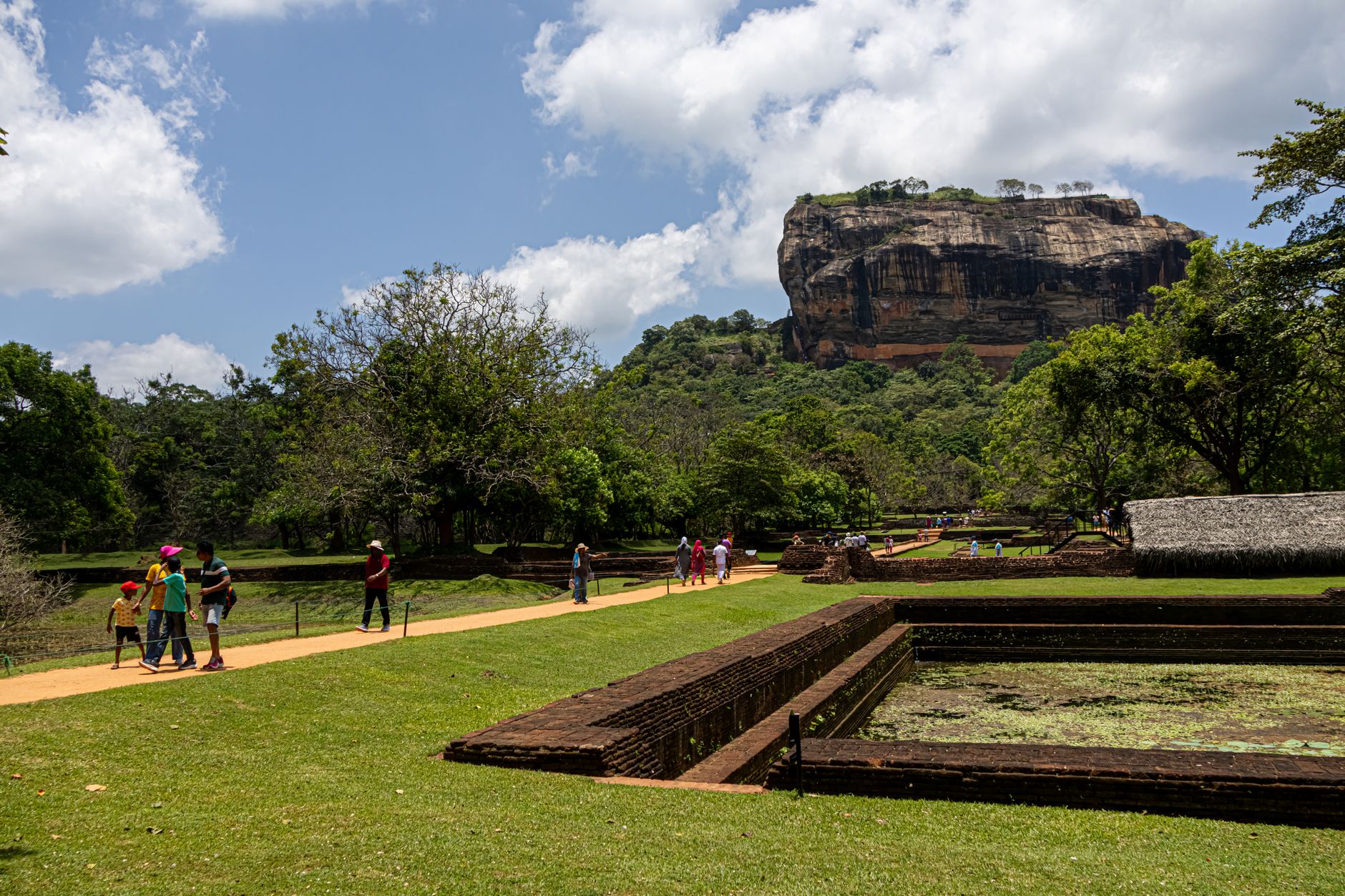
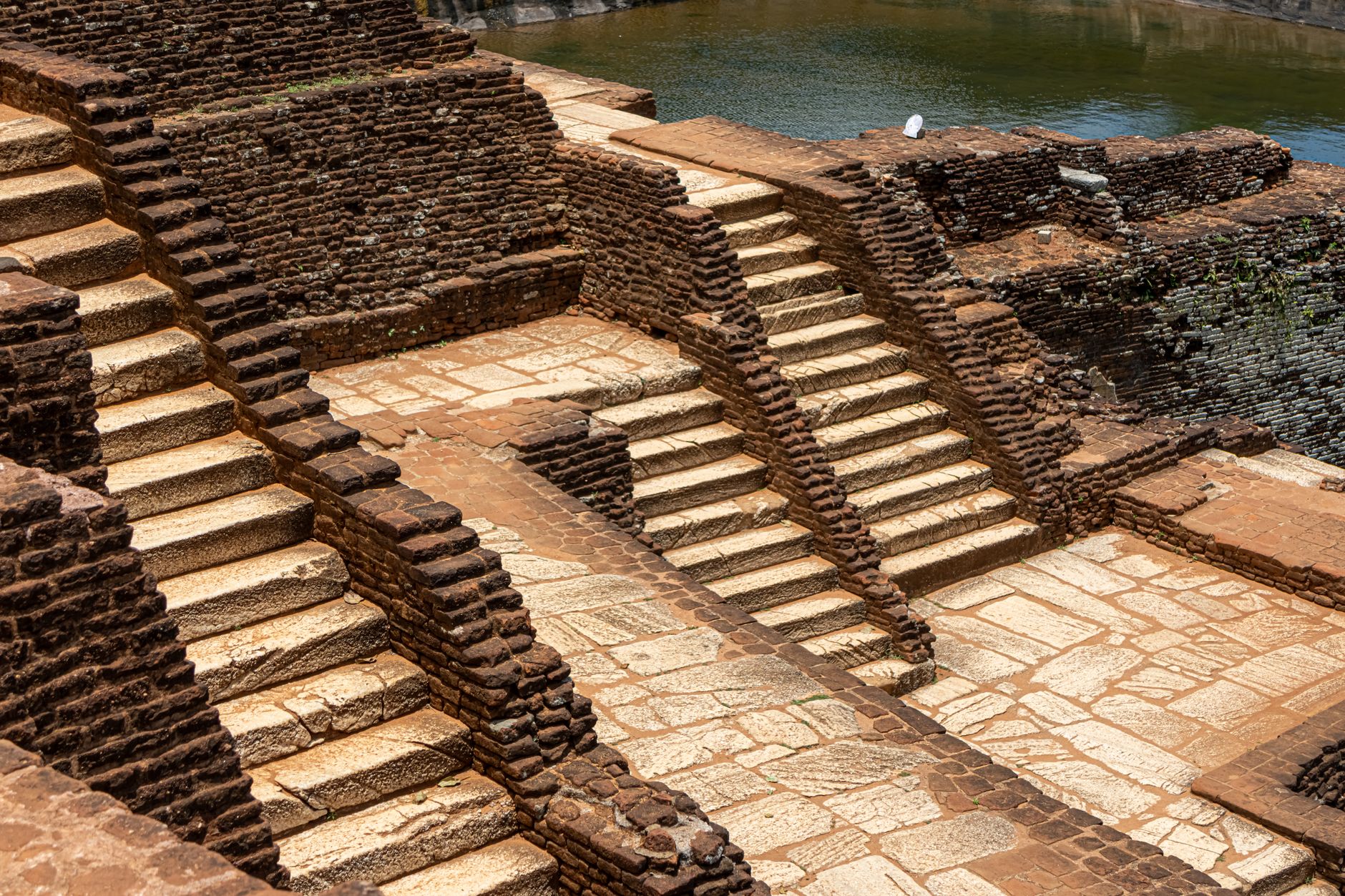
Fear produced an unusually sophisticated piece of urban design. The western approach is laid out as symmetrical water gardens, with pools, islands and fountains fed by pressure and gravity alone, and some of those fountains still spurt after heavy rain fifteen centuries later. Beyond them the boulder gardens use the rock's own scatter of granite as architecture, and terraced gardens climb toward the base of the cliff.
Halfway up, a gallery of painted women was cut into a sheltered pocket of the rock face. Of the hundreds that once wrapped the monolith, about twenty-one survive. Photography of them is banned and the guards enforce it, with confiscated cameras reported often enough that it is not worth testing. The final staircase once ran through the open mouth of a colossal brick and plaster lion, which is where the Sinhala name Sinhagiri, Lion Rock, comes from. Only the paws are left, so the last ascent still begins between two enormous stone feet.
It ended in 495, and not on the rock. Moggallana returned with his army and Kasyapa, holding the least assailable position in the country, rode down to fight him in the open. Mid-battle his war elephant turned aside to skirt a swamp. His troops read the movement as their king running, and broke. Left alone on the plain, Kasyapa cut his own throat. The citadel was handed to Buddhist monks, who kept it as a monastery until roughly the fourteenth century, after which the jungle took it. British archaeologist H.C.P. Bell surveyed it properly around the turn of the twentieth century, and UNESCO inscribed it in 1982.
An impregnable rock, and its owner died because an elephant stepped around a swamp.
More trips are planned around a Sigiriya sunrise than around anything else here, and the site cannot deliver one. Even when the ticket counter opens before dawn, the walk from the counter through the water gardens to the foot of the stairs takes twenty to thirty minutes, and the sun is well up over the plain before anyone is high enough to care.
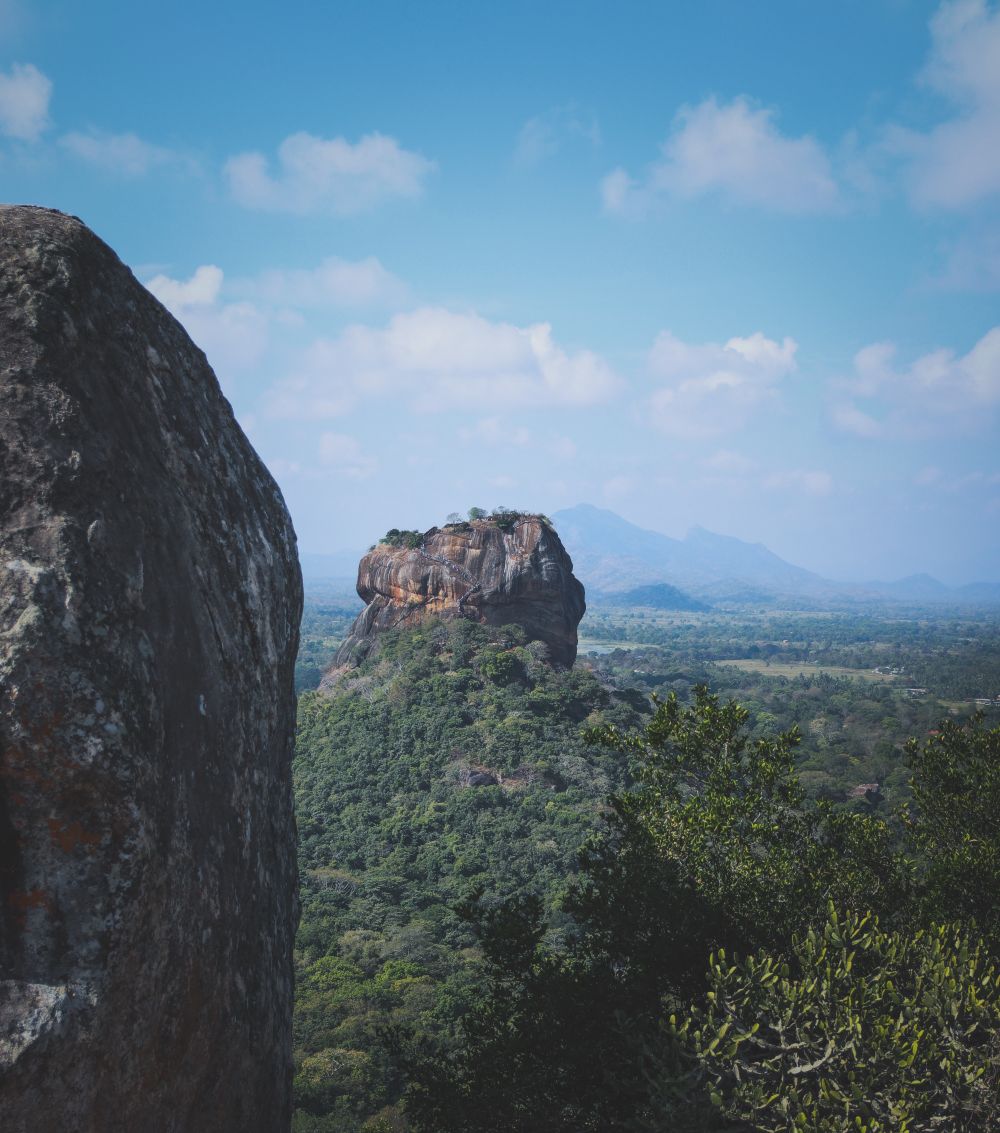
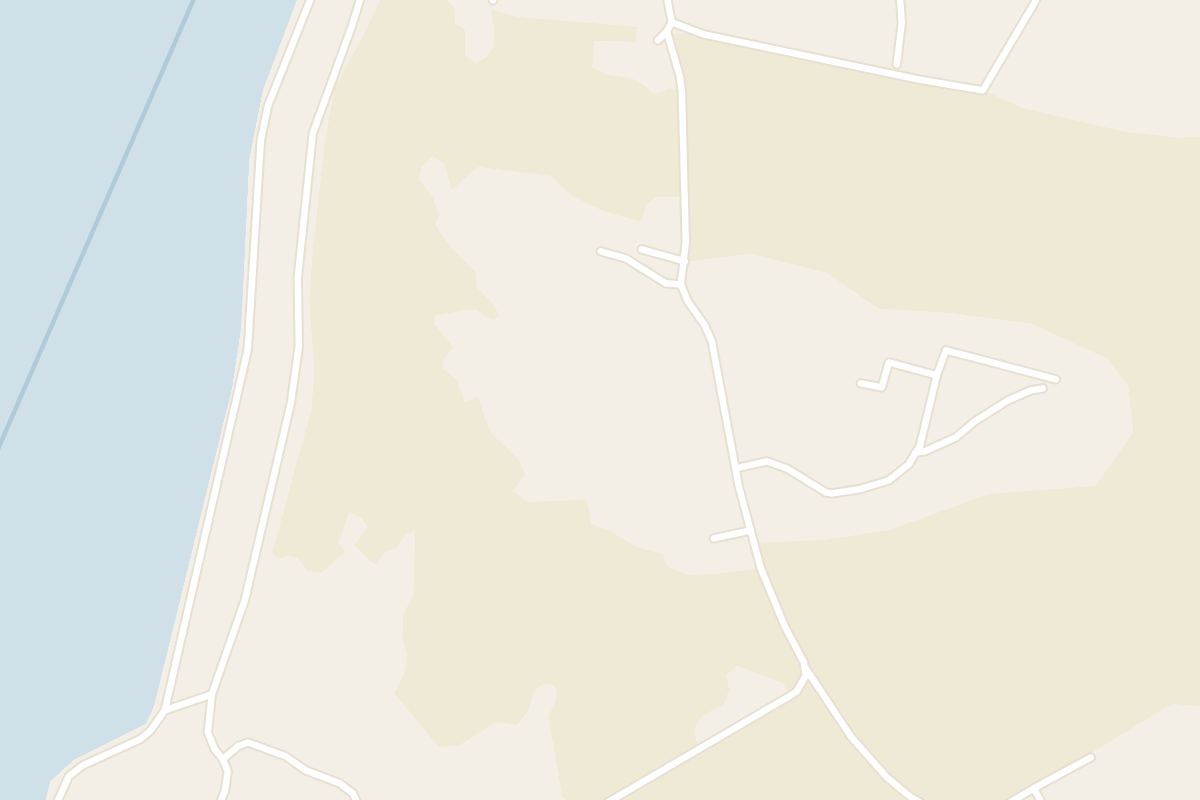
The fix is next door. Pidurangala, about three kilometres away, opens far earlier, costs a fraction of Sigiriya's foreigner ticket, and delivers the photograph everyone actually wants, which is of Lion Rock rather than from it. The route up is a scramble, not a staircase: a stone path to a cave temple with a large reclining Buddha, then a final section over boulders that needs proper shoes and, before dawn, a torch. Shoulders and knees must be covered for the temple and shoes come off there. Reckon on thirty to forty-five minutes up. The summit slab is no private view either; it fills with everyone who had the same idea, and the boulder section becomes a queue on the way down. Descend by around half past six and be at Sigiriya's turnstiles as they open.
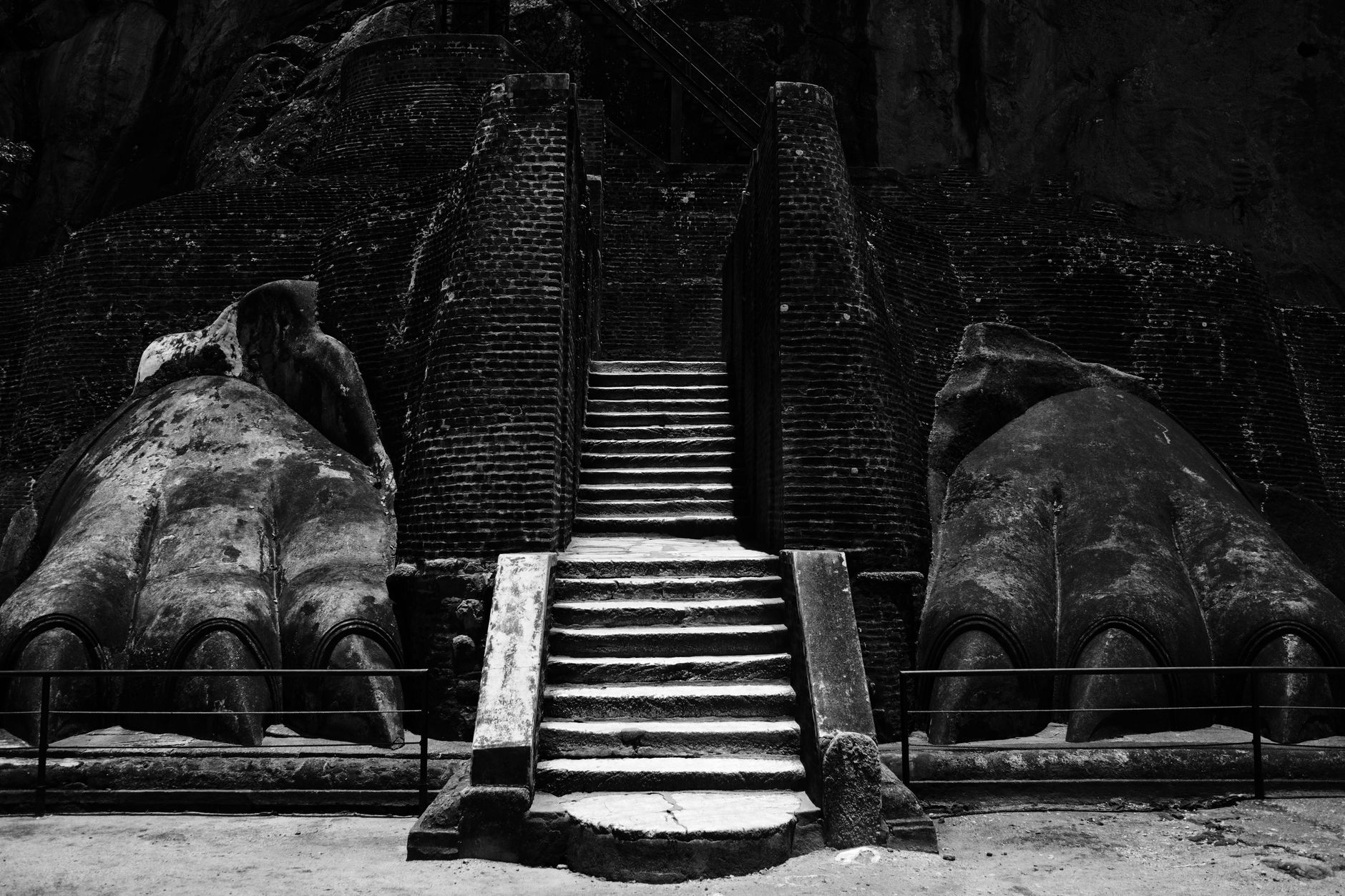
The climb is about 1,200 steps, and they are not continuous. Roughly a hundred are spread thinly across the gardens. A shaded middle section works up through the boulders, past the spiral staircase to the fresco gallery and along the Mirror Wall, to the broad landing at the lion's paws. The last stretch from the paws to the summit is the hard one: steep, narrow, and completely without shade, though it takes most people between six and fifteen minutes. Total ascent runs forty-five minutes to an hour and a half. Vertigo stops more people here than fitness does. The spiral stair and the metal walkways bolted to the cliff are secure but exposed, and the standard advice from people who dislike heights is to look up on the way and at your feet on the way down.
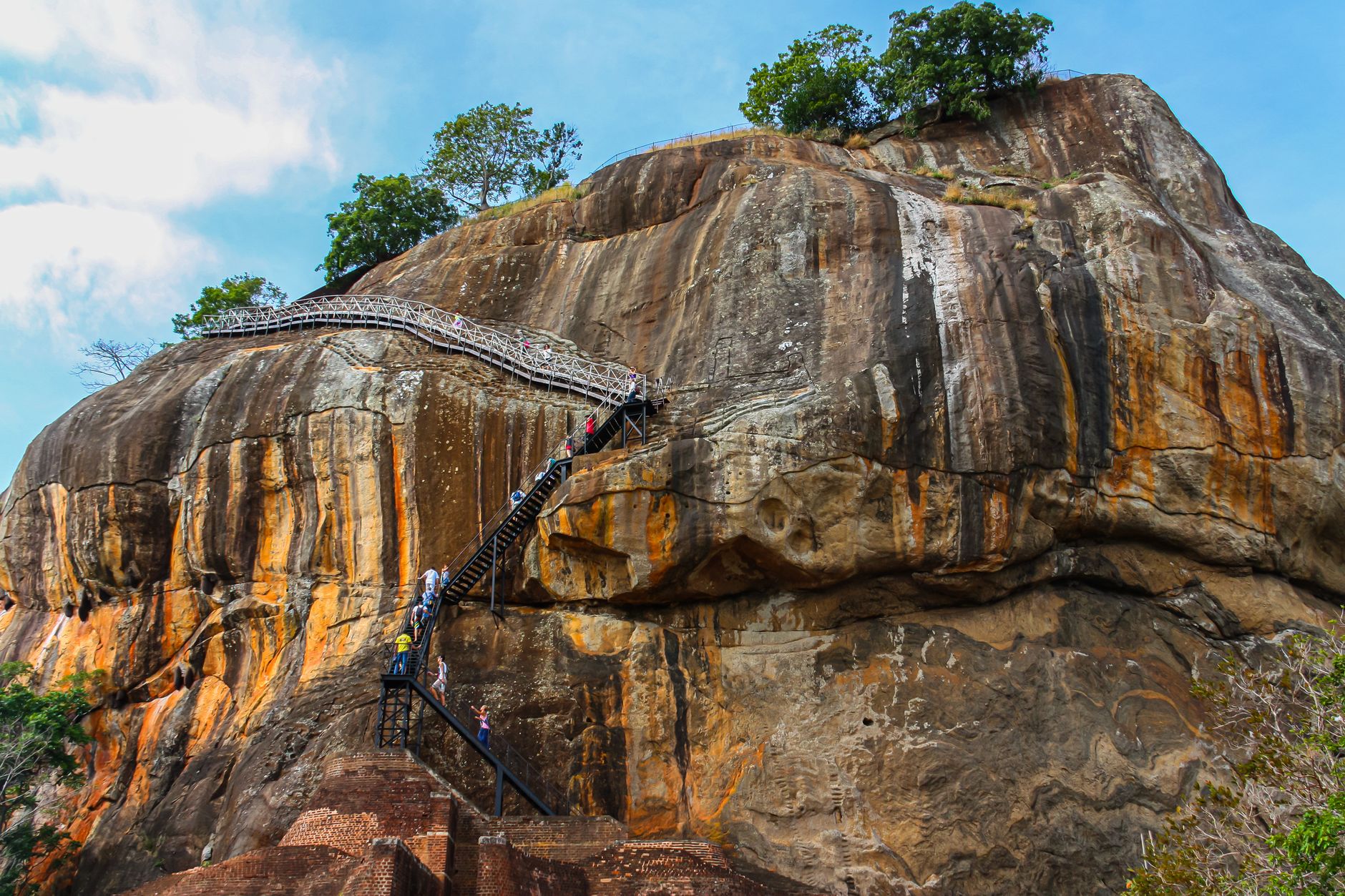
Heat decides everything else. Sigiriya sits in the dry lowland interior and the stone bakes; the window between roughly ten in the morning and two in the afternoon is genuinely punishing on exposed staircases with nowhere to sit. Climb at opening or in the last couple of hours before the site clears, and carry more water than seems necessary, because there is nothing to buy inside the archaeological zone and no toilets beyond the entrance and exit.
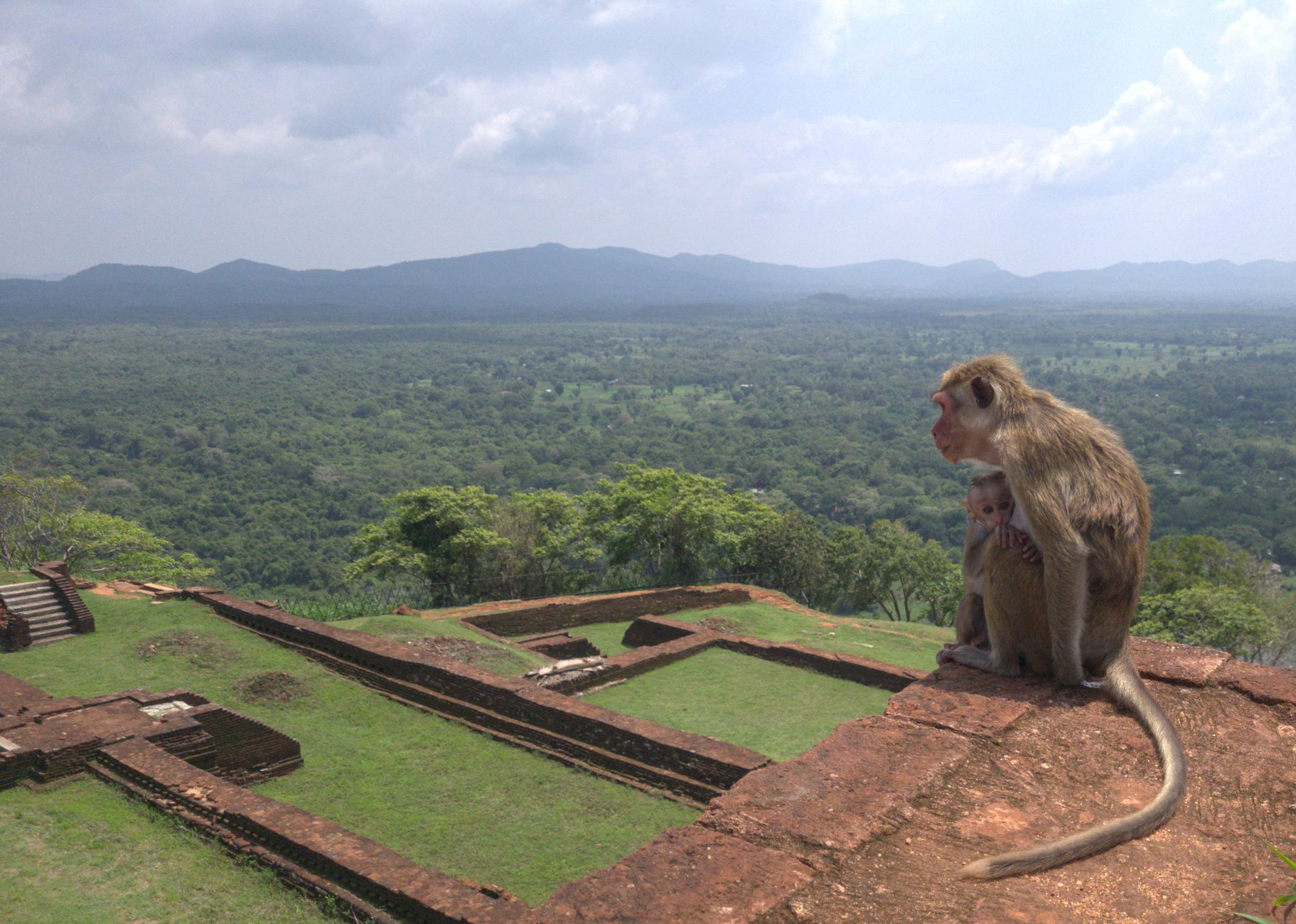
Single-use plastic is officially banned, so a refillable bottle is the practical answer. Buy the ticket before walking to the gate, since the counter is a genuine detour to come back for, and take cash as well as a card because the ATM beside it is unreliable. The wasps are real: large hornet nests hang under overhangs on the rock face, marked quiet zones ask for silence, and wire mesh shelter cages stand along the route for a reason. Staff occasionally close sections. Macaques will take food, sunglasses and water bottles out of open hands. At the Sigiriya ticket gate, unofficial guides and elephant-ride touts are persistent and can be declined flatly.
Allow two and a half to three hours rather than the ninety minutes most people budget. The regret visitors report afterwards tends to be the sprint: arriving late, marching straight for the stairs, and treating the water gardens, the frescoes and the Mirror Wall as obstacles between the gate and the view. Kasyapa's palace is gone. What is left on top is foundations, cisterns cut into the bare rock and a throne-shaped slab at the edge, usually with a macaque already sitting on the best of it.